- Project report – Generator radiator repair, Offenbach
Radiator repair on a standby generator: emergency call-out at a data center in Offenbach
Leak in the radiator brazed and sealed – 4 days before go-live, in a single working day
A data center in Offenbach is about to go live – and there is a gaping hole in the radiator of a standby generator that is already permanently installed. Four days to go, liquidated damages (LDs) looming and barely a hand’s breadth between radiator and silencer. Together with a specialist radiator repair company, we exposed the leak, brazed it and sealed it with a special metal adhesive. The generator was ready for operation again the same day, and the data center went live on schedule.
Project profile
- Scope: Emergency repair of a leak in the radiator of an installed standby generator – exposing the cooling fins, brazing the leak, sealing with special metal adhesive
- Team: 2 people – a master craftsman from the radiator repair company and Tobias Schott (managing director, Omega Mounting)
- Duration: 1 day on site (special call-out, time-critical)
- Location: Data center in Offenbach am Main
What is the radiator on a standby generator?
The radiator is the generator’s cooling unit: a large pack of thin sheets and copper cooling fins that releases the engine heat into the ambient air. In data centers these generators are part of the standby power system – if the public grid fails, they take over the supply to the data halls within seconds. A leaking radiator means loss of coolant, and without working cooling the generator may not be put into operation. So the acceptance of the entire standby power supply depends on one component.
Why was this call-out so time-critical?
The data center was due to go live in four days. Without a working generator there would be no acceptance, and without acceptance the client faced liquidated damages. The generator was already permanently installed in the building, with the silencer and louvre (weather protection slats) mounted directly in front of the radiator. Removing the radiator would have taken weeks: dismantle the silencer, lift the radiator out of the building by crane, procure a new component. There was no time for that. What was needed was a fast, professional repair on the installed component – which is why we drove to Offenbach with our partner.
Why brazing instead of welding?
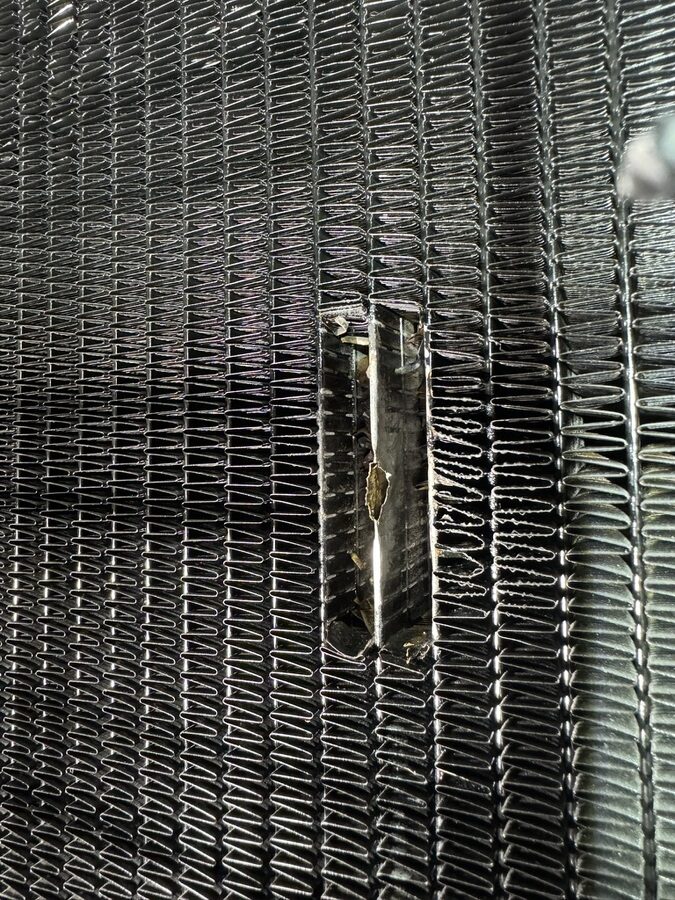
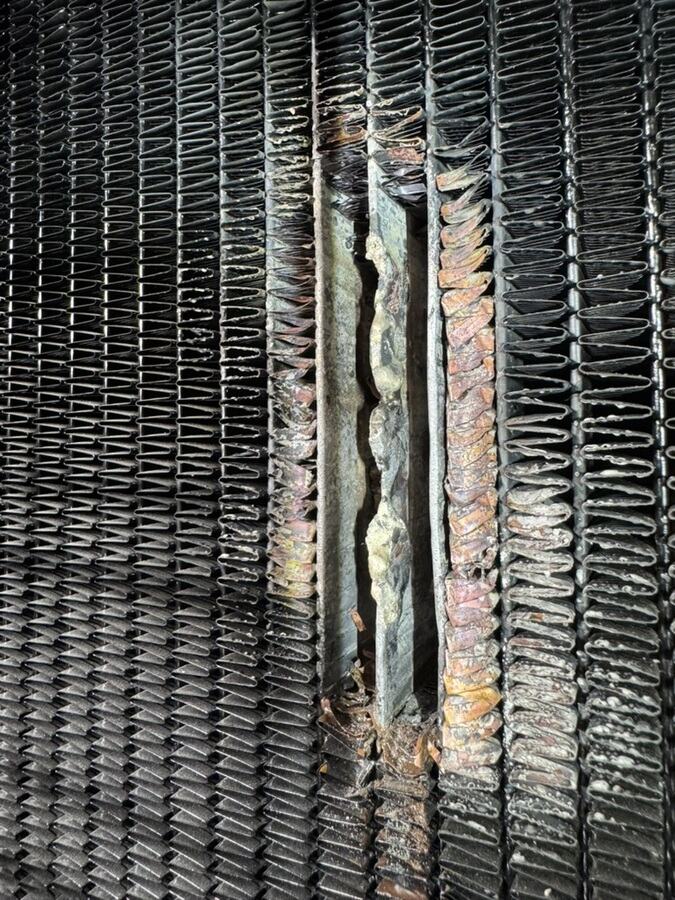
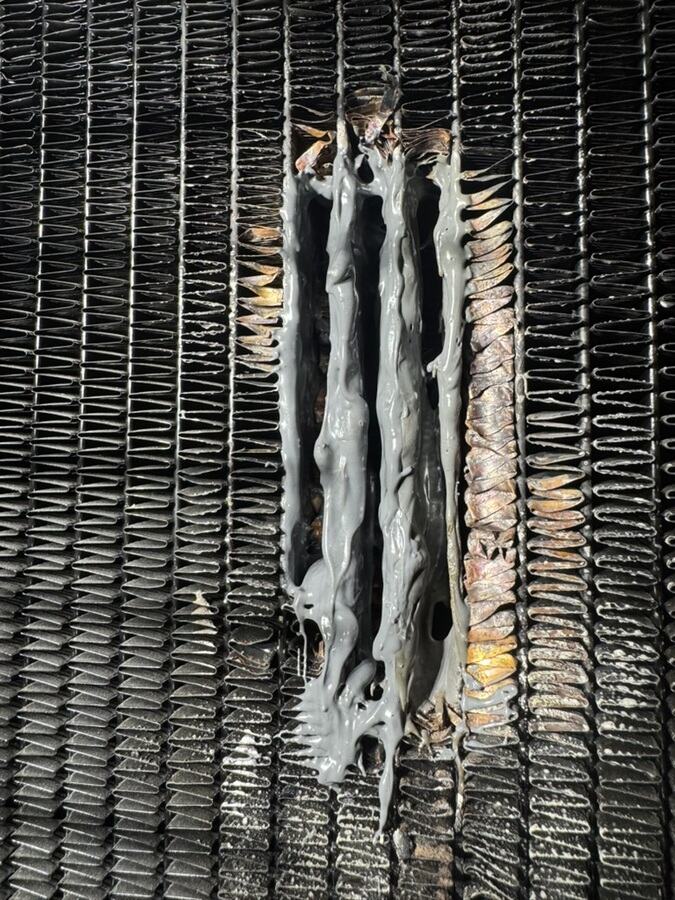
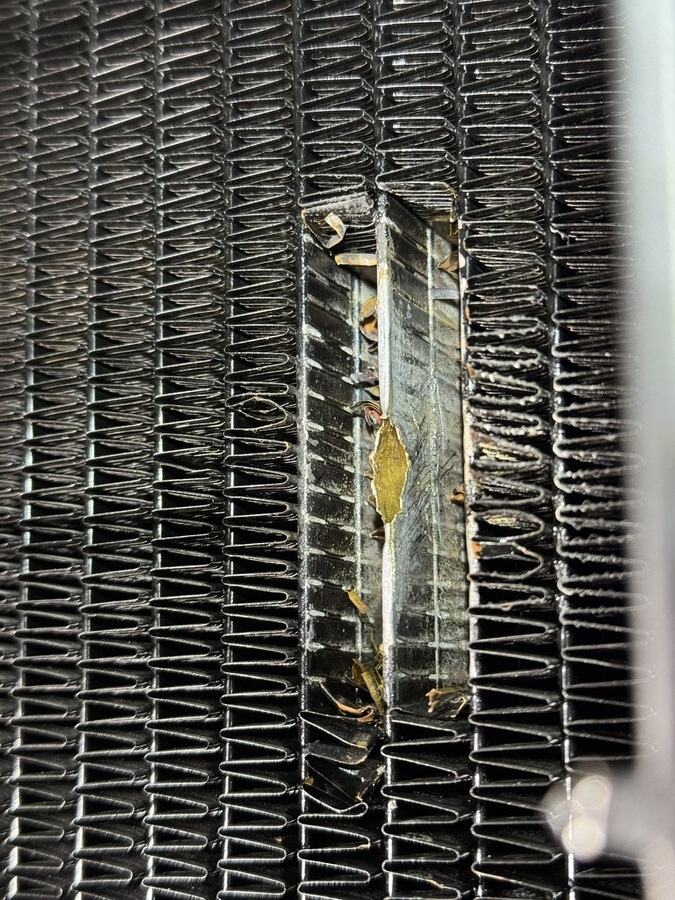
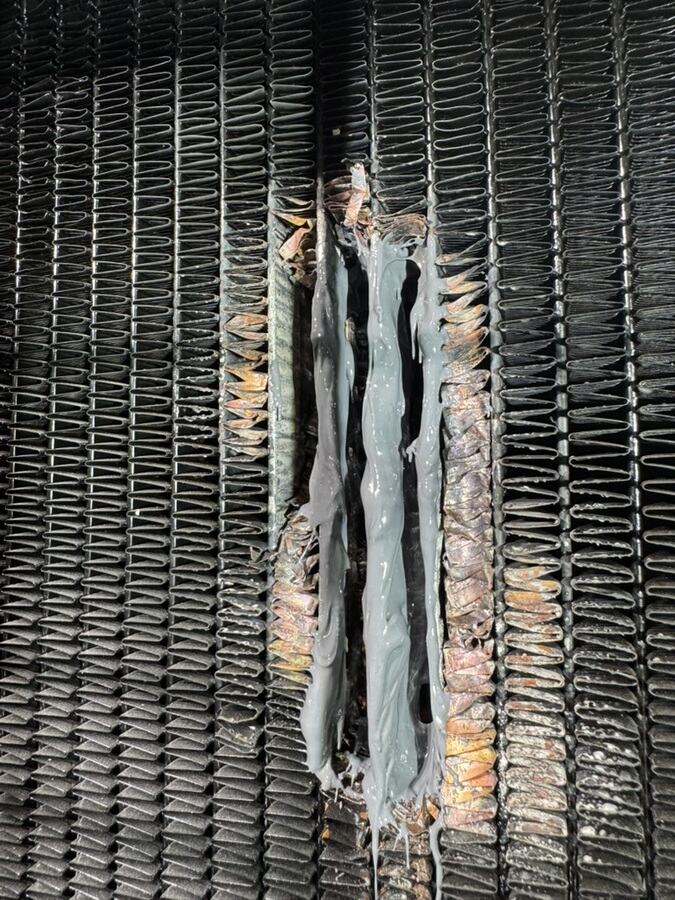
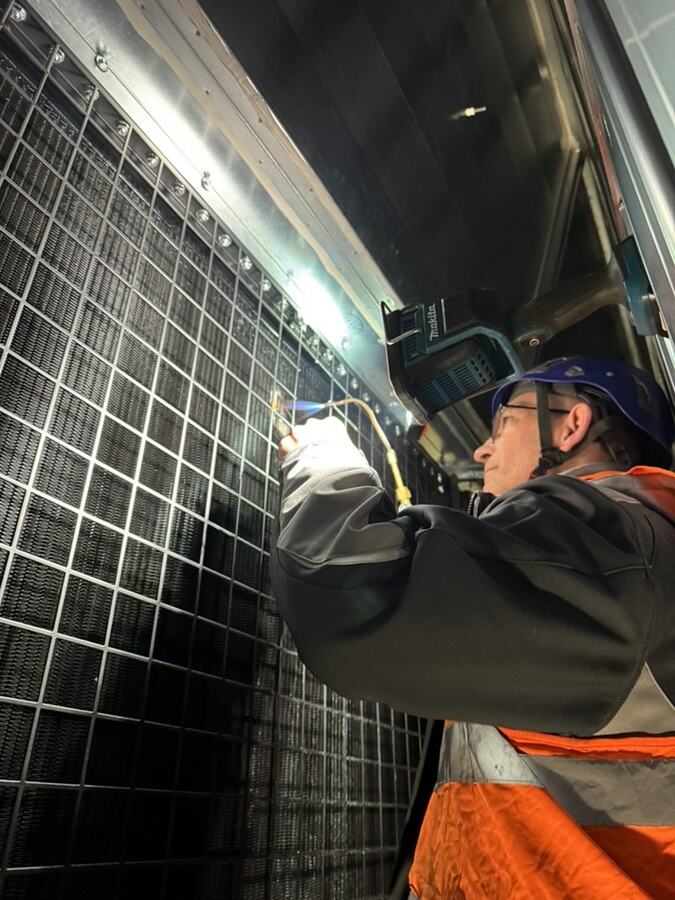
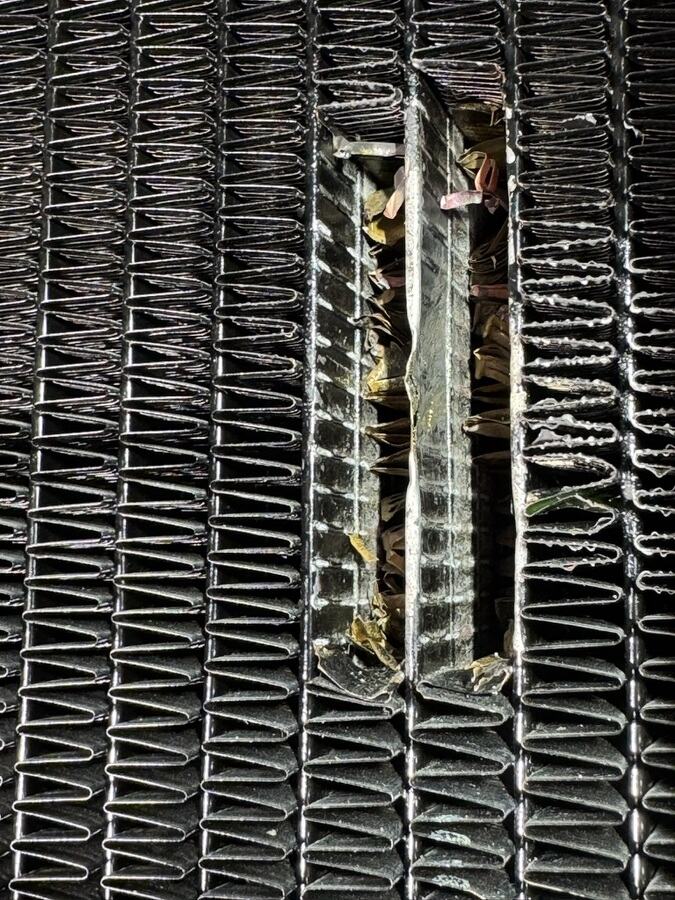
On the radiator, only brazing was an option, because the sheets are too thin and the cooling fins are made of copper. With TIG welding, the heat input would be far too high: the delicate fins would simply burn away, and instead of a sealed spot you would have a bigger hole. With gas-flame brazing, the filler metal is introduced into the leak at a considerably lower temperature – the base material remains intact and the joint becomes tight. The prerequisite, however, is clean preparation: the damaged cooling fins first had to be carefully exposed in order to reach the actual leak in the core at all.
How do you repair a radiator you can barely reach?
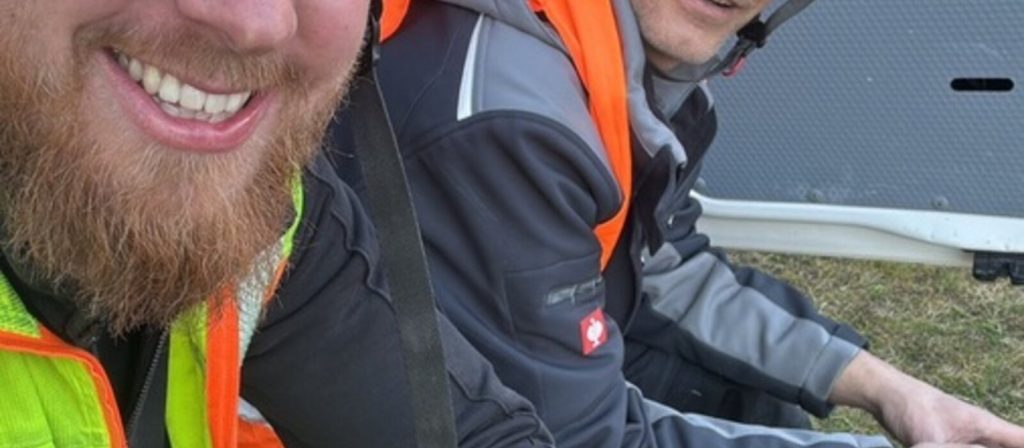
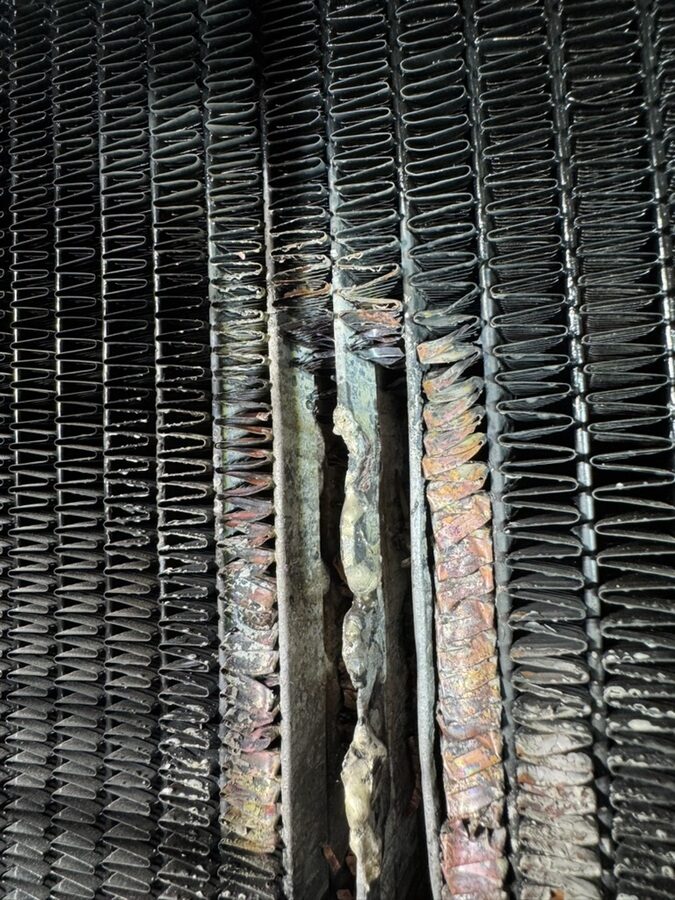
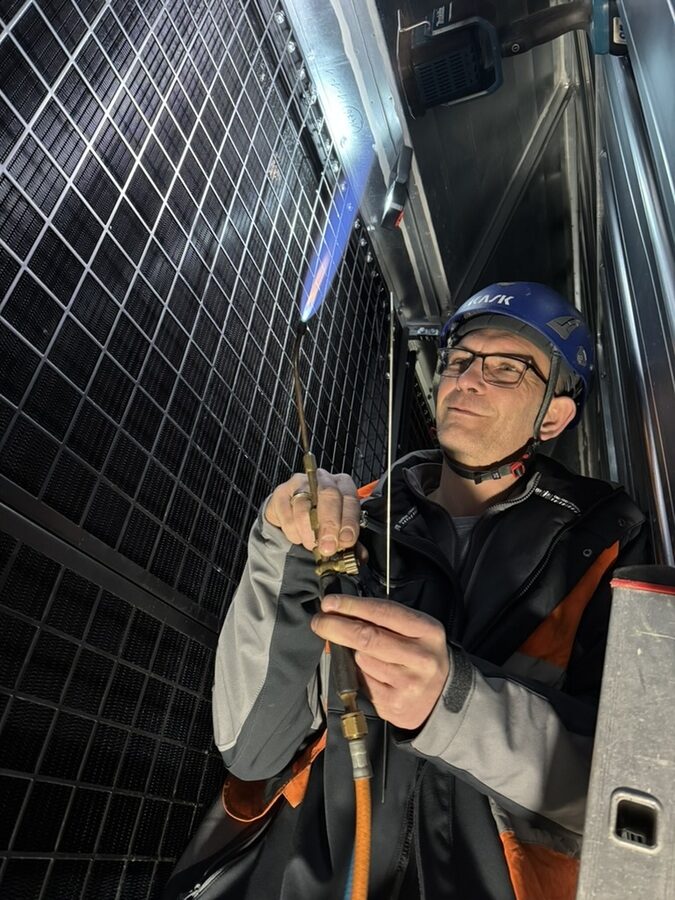
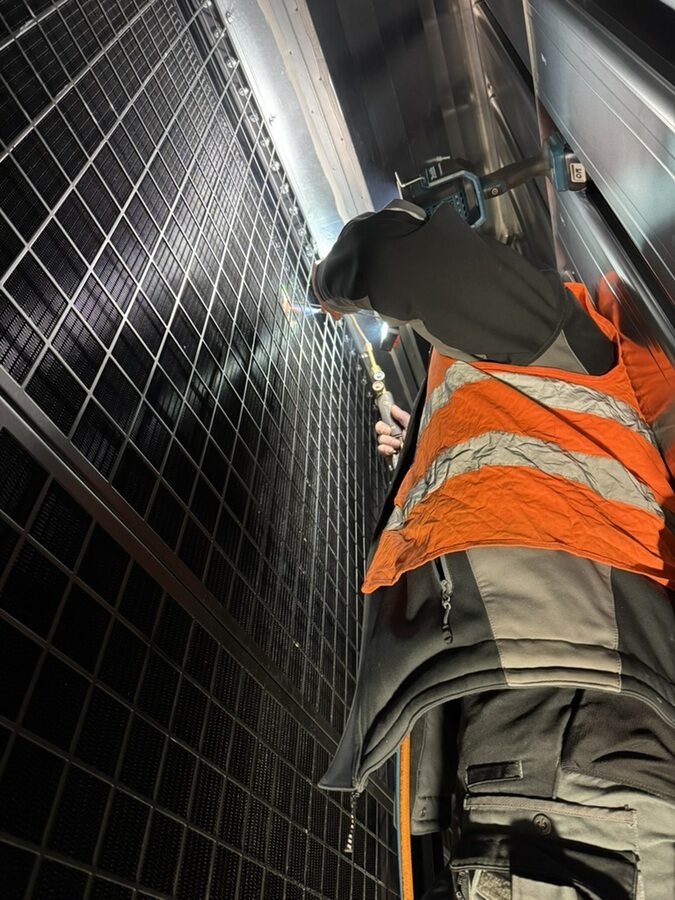
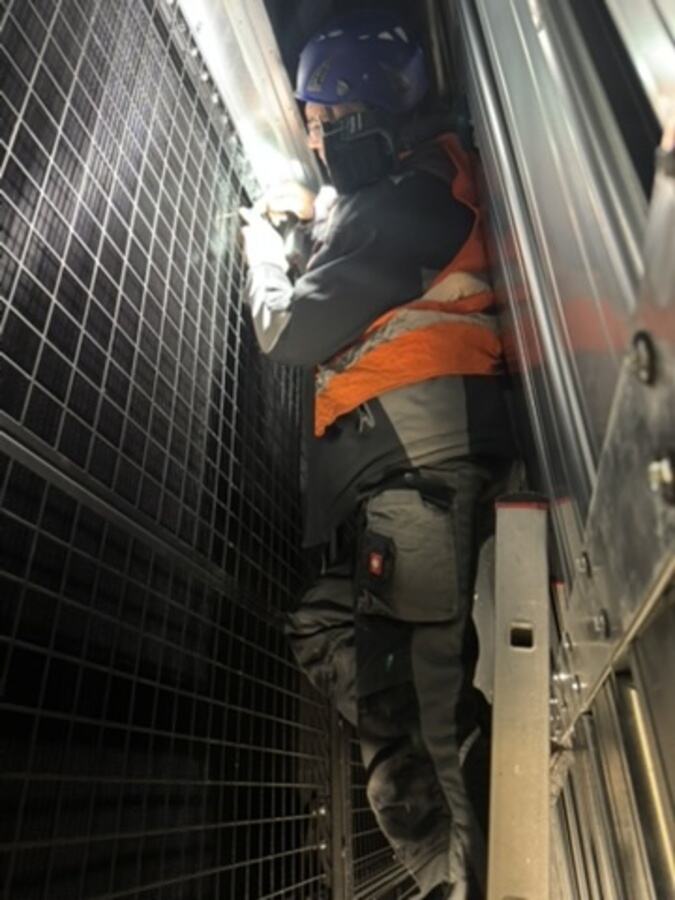
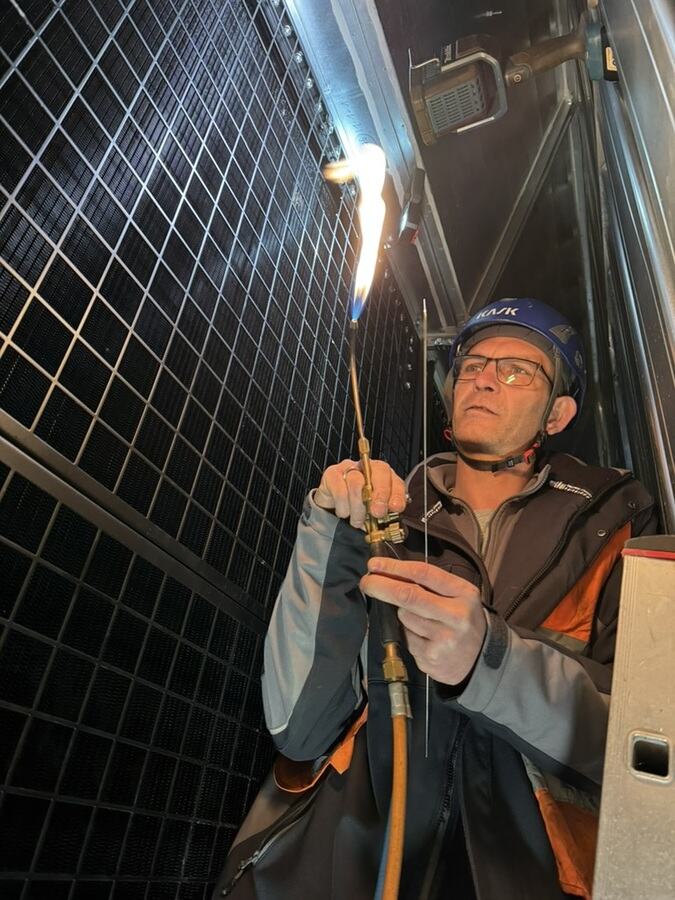
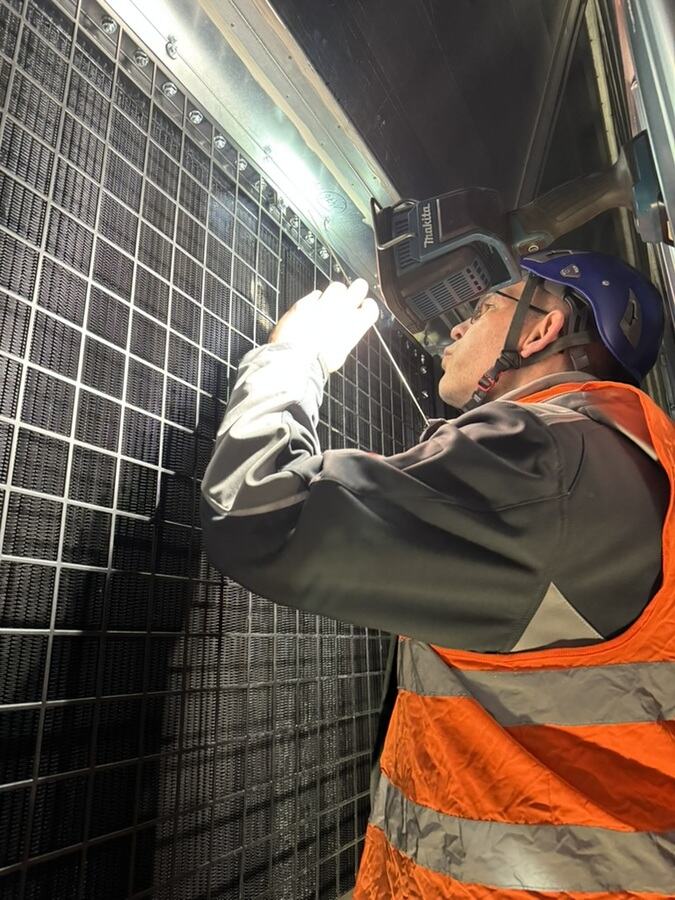
With patience, experience and the right working position. Only a narrow gap remained between the radiator and the louvre with silencer mounted in front of it – the work was done through the protective grille, partly in awkward positions directly at the unit. Together, the master craftsman and Tobias Schott exposed the cooling fins around the damaged area, brazed the leak with a gas flame and then coated the area generously with a special metal adhesive – one handled the flame, the other secured the work, lit it and passed tools and material into the narrow gap. With so little space, the repair is only possible as a team. The adhesive layer acts as an additional protective coat over the brazed joint – a double safeguard for operation under pressure and vibration.
Is this a permanent solution?
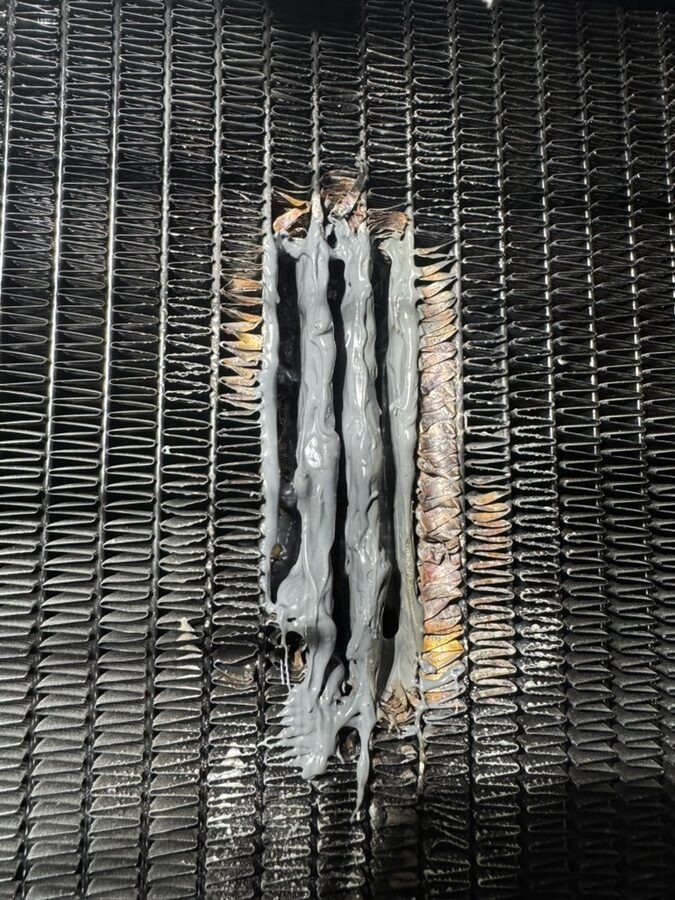
No – and saying so is part of honest advice. The brazing and adhesive repair is a professional interim solution that reliably gets the generator through go-live and the start-up phase. And yes: the spot with its grey adhesive layer does not look pretty – nor does it need to. An emergency repair is judged on two criteria, not on appearance: it must be tight and it must withstand pressure. The subsequent pressure test confirmed exactly that. The permanent repair follows in a planned follow-up job: the silencer will be dismantled and the radiator lifted out of the building by crane – planned, without time pressure and without liquidated damages hanging over anyone. This combination of immediate fix and properly planned follow-up is what helped the operator most.
Safety and quality for brazing work in a data center
Working with an open flame in a data center shortly before commissioning demands particular care: the hot work was registered and secured, the work area protected, and both of us worked in full PPE. The repair was signed off only after an extensive pressure test: the cooling system was pressurised and the brazed and bonded area checked for leaks. The combination of a specialist HVAC company and industrial installation experience meant the job was not only quick, but also documented and ready for acceptance.
Data centers, standby power systems, generators: why this job was in good hands with us
For Omega Mounting, data centers are not a special case but everyday business: our crews work on international data center projects every day. We know the procedures that decide every job there – access rules and safety inductions, hot work permits, the sensitive phases around commissioning and go-live. If you do not know these processes, you lose valuable hours at the gate alone in a time-critical emergency.
Standby power systems and generators are a firm part of our services. We have separated generators from their engines for maintenance and lifted them through installation shafts by mobile crane. We have brought load banks and hire generators for load tests into a Frankfurt data center, replaced CRAH units in live operation and installed PDCs in a multi-hall rollout. As appointed person for lifting operations (AP), Tobias Schott plans and is responsible for lifting operations in exactly these environments. This experience was also the key in Offenbach. We knew at once how tight it gets between radiator, louvre and silencer and what the later crane removal would need. We also knew which repair would save the go-live without compromising the permanent repair.
Why Omega Mounting?
- Fast response in an emergency: We were on site within days of the call – when liquidated damages are looming, every hour counts.
- Strong partner network: We work closely with specialist companies such as this radiator repair company – the right specialist for every task, coordinated by one contractor.
- Honest advice: We say clearly what is an interim solution and what the permanent repair looks like – including planning of the follow-up job.
- Data center routine, not the exception: We work in data centers every day – from CRAH units via load bank logistics to PDC installation – and know the safety and approval processes inside out.
- Generator and standby power experience: Maintenance, crane lift-outs, load test logistics and now the emergency radiator repair – standby power technology is one of our core topics.
- Rooted in the region: From Rodgau, we are quickly on site in Offenbach, Frankfurt and the entire Rhine-Main region.
Conclusion
A hole in the radiator, four days to go-live, hardly any room to work – and in the end a generator that was ready for operation on time after passing its pressure test. This job shows what a well-practised partner network can achieve: the radiator repair company brought the HVAC and brazing expertise, Omega Mounting the coordination and industrial installation experience. If a time-critical fault is jeopardising the start of operations at your site, get in touch.
Request a callback – Omega Mounting GmbH, Rodgau. We work in the Rhine-Main region and throughout Germany.
The radiator is only one part of the system. We describe the complete path from crane lift to commissioning readiness under Standby generator installation in data centers.
For maintenance and repair in Offenbach, see our page Maintenance and servicing in Offenbach (German).
Project photos
Planning a similar project?
Tell us briefly what you need – we'll come back with an honest assessment.
Free, no-obligation callback
Related guides for this project
Maintenance & Servicing
Maintenance & Servicing
About the author
Tobias Schott
Managing director of Omega Mounting GmbH, Rodgau · more than 20 years of hands-on experience in installation and maintenance
A trained mechatronics technician, working in maintenance, servicing and industrial installation since 2004 – first alongside his father, and with Omega Mounting since 2012: from overhead conveyors in Frankfurt to the crane system in a new-build hall. He plans and leads lifting operations as an appointed person (AP) in data centers and on industrial sites in the Rhine-Main region, trains and examines operators of cranes, mobile elevating work platforms and telehandlers, and is a qualified occupational safety specialist. On jobs abroad he is known as the “German Troubleshooter” – the person you call when a site gets stuck. He learned what quality means from his father, not from a manual: Made in Germany as a standard for his own work, not a label. That is why quality comes first at Omega Mounting – ahead of speed and price. The project diary shows jobs his team has planned and carried out – without client names, but with everything there is to learn from them.
Frequently asked questions
Yes, in many cases. Smaller leaks can be brazed on the installed radiator and additionally sealed with special metal adhesive. The damaged area must be accessible and the surroundings secured for hot work. The repair is signed off only after a pressure test proves the repaired area is leak-tight.
Because the sheets are too thin and the cooling fins are usually made of copper. The high heat input from welding would destroy the material. Brazing works at considerably lower temperatures and is the right method for radiators.
In the Rhine-Main region – for example in Offenbach, Frankfurt, Hanau or Darmstadt – we are often ready to go from Rodgau within a very short time. On this project, only a few days passed between the enquiry and the completed repair.
Special metal adhesives are high-strength, temperature- and vibration-resistant two-component compounds that serve as an additional sealing layer over a repaired area. As a protective coating over a brazed joint, they are a proven safeguard – they do not replace the permanent repair.
No. It is a professional interim solution to ensure operation. The permanent repair – such as replacing the radiator with crane support – is then planned and carried out without time pressure.
Yes. For this project, we worked together with a specialist radiator repair company. Through our partner network, we also cover specialist trades – coordinated by one contractor.
Standby generators are the backbone of the standby power system: in a power failure, they take over the supply to the data halls within seconds. Without working generator cooling, there is no acceptance and no go-live.
Our crews work on international data center projects every day. Our services include generator maintenance with crane lift-outs, load banks and hire generators for load tests, CRAH unit replacement and multi-hall PDC rollouts. The lifting is planned and led by an appointed person for lifting operations (AP).
Yes – this job was exactly that. Four days before go-live we brazed a leaking generator radiator in place, with the hot work registered and secured, the work area protected and full PPE. The repair was signed off only after a pressure test. We know the access rules, inductions and hot work permits on data center sites, so in an emergency we do not lose hours at the gate.
Yes – that is the planned follow-up to this repair. The silencer is dismantled, the radiator lifted out by crane and replaced, all without time pressure. How long the genset is out of service is agreed with the operator in advance, so the remaining sets keep the redundancy. We sequence dismantling, crane lift and reinstallation to keep that window as short as possible.
 English
 German