
- Project report – conveyor pin refurbishment on 80 carriers
Squeaking overhead conveyor? 80 EMS carriers overhauled at a food production plant
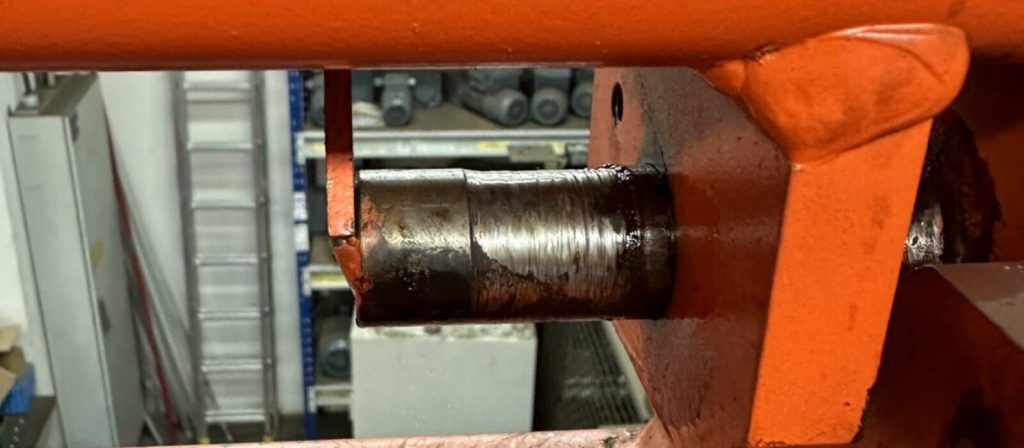
How one pin pulled out exposed the cause of production stoppages – and a weekend series programme made the whole fleet quiet and safe again
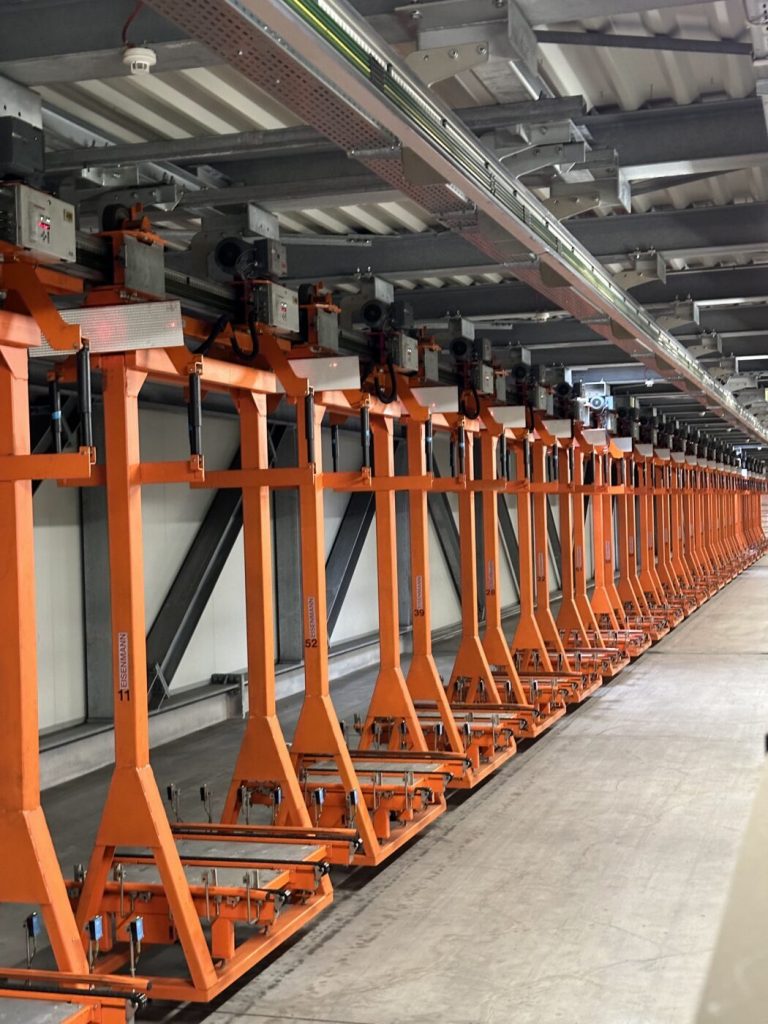
An overhead conveyor that squeals is more than an annoyance – it is a warning. At a food production plant the conveyor was making loud noises, and there were repeated failures during production hours because the system was not working properly. That cost the customer a lot of money, and he wanted to know the cause. With our many years of overhead conveyor experience we examined the system thoroughly – and found the cause with a single pin pulled out: completely worn hanger pins, unmaintained for years. The consequence: a refurbishment programme across all 80 conveyor carriers, worked through weekend by weekend during production-free time.
Project profile
- Scope: Root cause analysis on a noisy overhead conveyor, followed by series repair of all 80 conveyor carriers – propping the hangers, pulling the pins, checking the bearing seats, replacing the bearings, fitting new pins
- Team: 2–3 fitters from Omega Mounting
- Project duration: Several weekend deployments (Saturday + Sunday) during production-free time – 10 to 15 carriers per weekend; project completed
- Location: Food production plant (customer anonymised)
Why does an overhead conveyor squeal?
Because metal is working on metal where a lubricated bearing should be. What stood out on this system: the high-pitched noise occurred on almost every carrier – a clear pattern, not an isolated case. Noises like these typically arise when the lubrication in the pin-and-bearing joints of the hangers is used up and the components run dry against each other. The squealing is only the audible symptom. Underneath it the real problem is happening: wear that eats millimetre by millimetre through pin and bearing seat – right through to malfunctions and production stoppages of the kind this plant had already experienced.
“Maintenance-free” – a mistaken belief that can get expensive
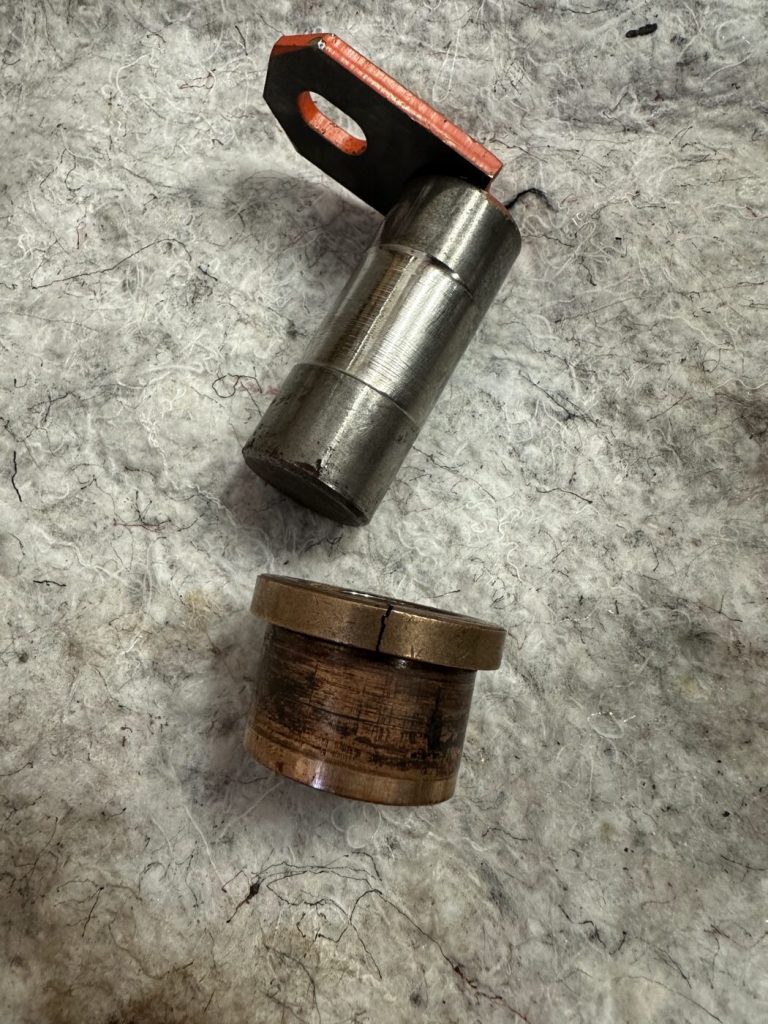
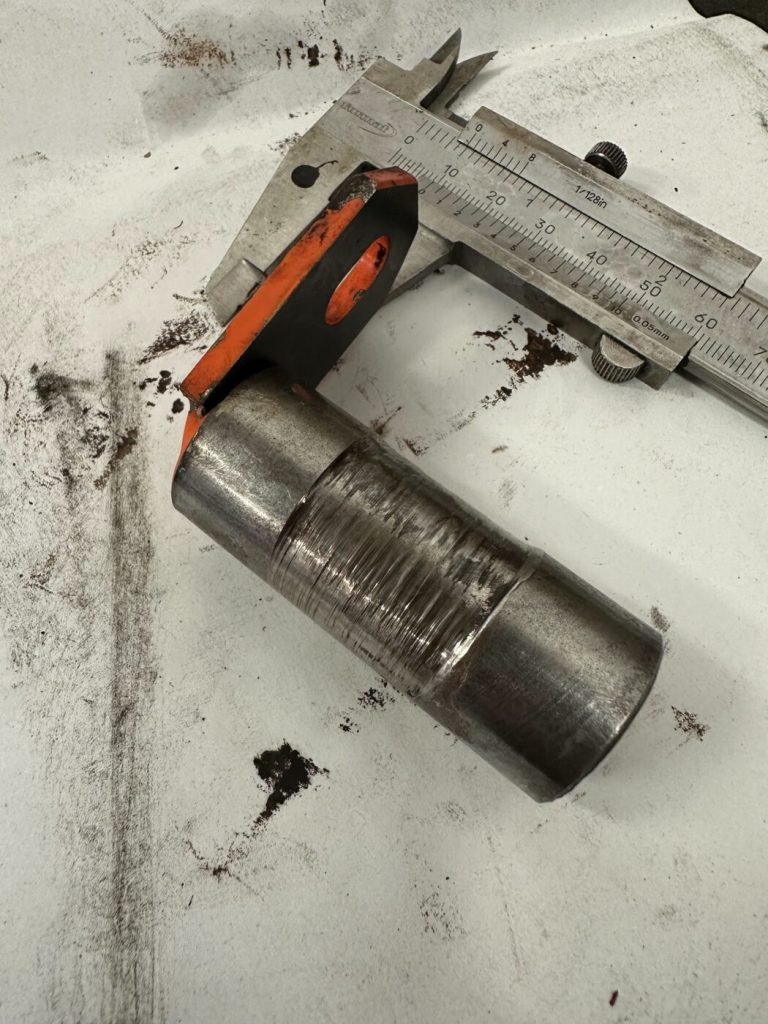
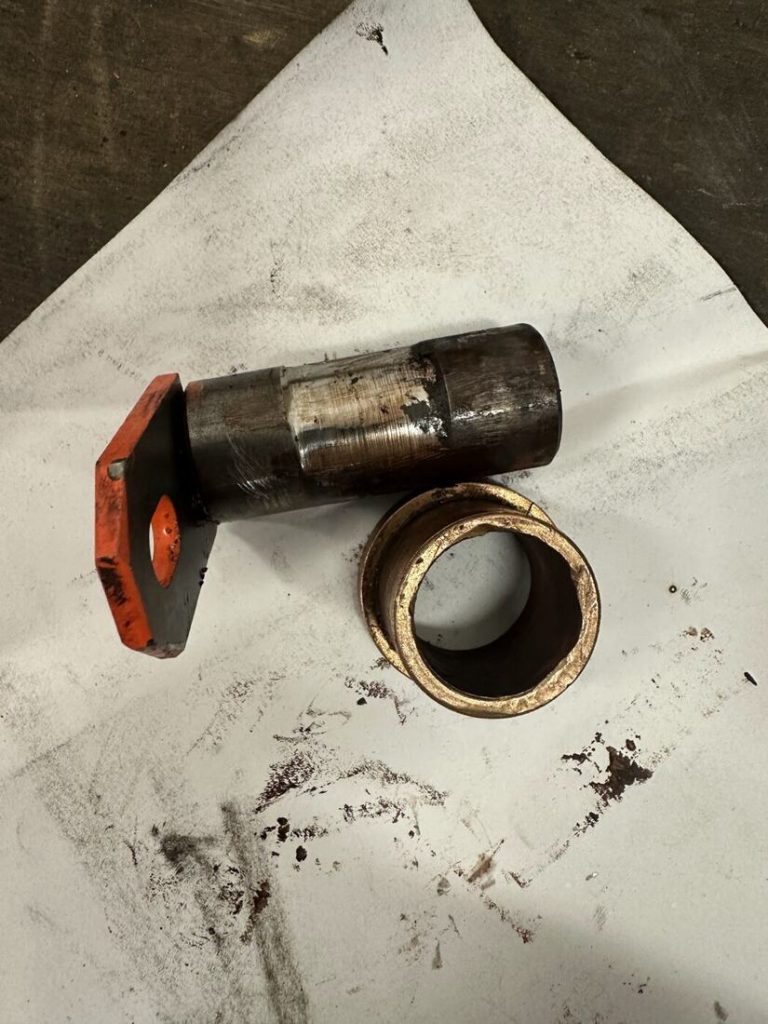
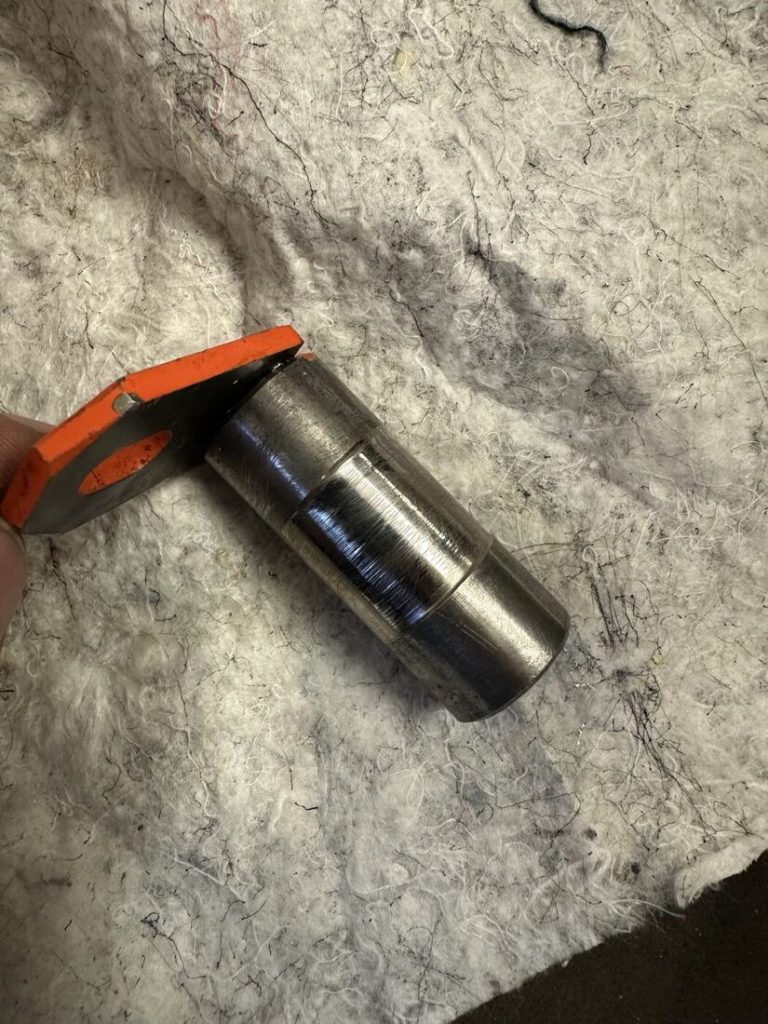
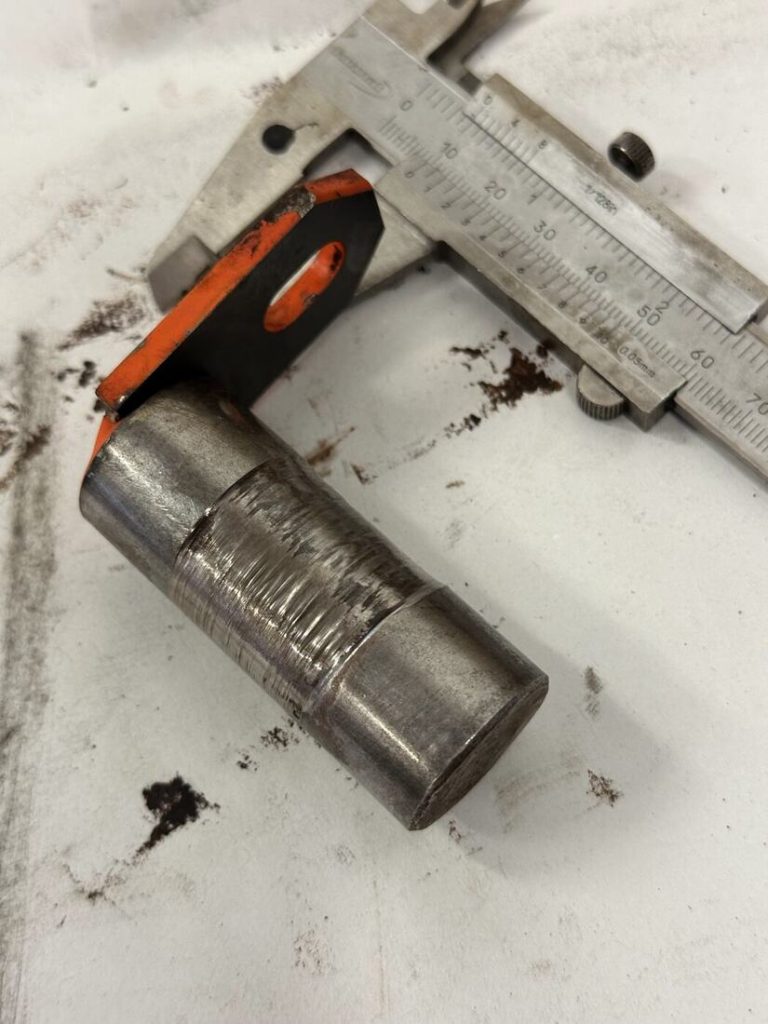
While looking for the cause it emerged that the in-house maintenance team had assumed the pins in the system were maintenance-free. A mistaken belief we come across regularly in practice – and one nobody should be blamed for, because not every maintenance department can hold specialist knowledge for every trade. That is exactly why an outside view pays off: after a short discussion we decided to pull one pin from a hanger – the only way to know for certain what is going on inside the joint. The result was unambiguous: the pin, together with its bearing seat and rear bearing, was completely worn. The lubrication was practically gone, and the pin itself showed deep grooves, cracks and clear loss of material.
What happens if worn pins are ignored?
Then a noise problem becomes a safety problem. At some point a worn pin no longer sits cleanly in its bearing seat – the play grows, the load becomes uneven, and with every run fatigue keeps working. In the end the pin can shear: then the hanger and its load are no longer safely attached to the track. Add the commercial consequences this customer was already feeling: production stoppages, disrupted cycles, expensive downtime. And not least the constant noise exposure for everyone working there – a squealing system is not only irritating, it also makes a poor impression, on the workforce and on visitors and auditors alike.
Worth knowing for maintenance staff: how do pins and bearings in a conveyor hanger wear?
A closer look at the component is worthwhile – because what happened here happens the same way in many systems, just unnoticed. The pin-and-bearing joint in the hanger is a constantly moving joint: with every run, every curve, every acceleration and braking the hanger swings and the pin works in its bearing. These are not large movements but many small pivoting motions under full load – tribologically the most demanding load there is. Because with small, slow movements no load-carrying lubricating film builds up, as it would in a fast-rotating bearing. The joint runs in the mixed-friction range: metal and bearing material touch each other directly again and again, and only the grease in between prevents wear.
That is exactly why lubrication is so decisive here – and why its absence is so fatal. Grease ages, gums up and is used up by heat, abrasion and the surroundings. If it is not topped up, at some point the pin works dry in its bearing. Then a chain reaction starts: the abraded material acts like grinding paste in the joint and accelerates the wear still further. The pin develops running grooves, the bearing widens, and what was once a clean fit becomes growing play. On this project the result could be seen as a textbook case: pin and bearing seat including the rear bearing completely worn, deep grooves and cracks, clear loss of material – and every groove acts as a notch where fatigue takes hold. From growing play through a hammering joint to the pin shearing is then only a question of load cycles.
There are three things any maintenance department can take from this. First: Question “maintenance-free” critically. Genuinely maintenance-free pin joints are the exception – if in doubt, look in the system documentation or ask the manufacturer instead of assuming. Second: Watch for the early warning signs. Squealing and creaking at the hangers, visible play, rust-brown debris at the pin ends (fretting corrosion) – all of these are signs that the joint is running dry. Third: When in doubt, pull a pin. The condition of a pin-and-bearing joint cannot be judged reliably from the outside; one single sample gives certainty about the state of the whole fleet – for us that is exactly what provided the basis for deciding to refurbish all 80 carriers. The pin that is pulled tells the whole story: the pattern of grooves, the loss of material and the state of the grease show how the system really stands.
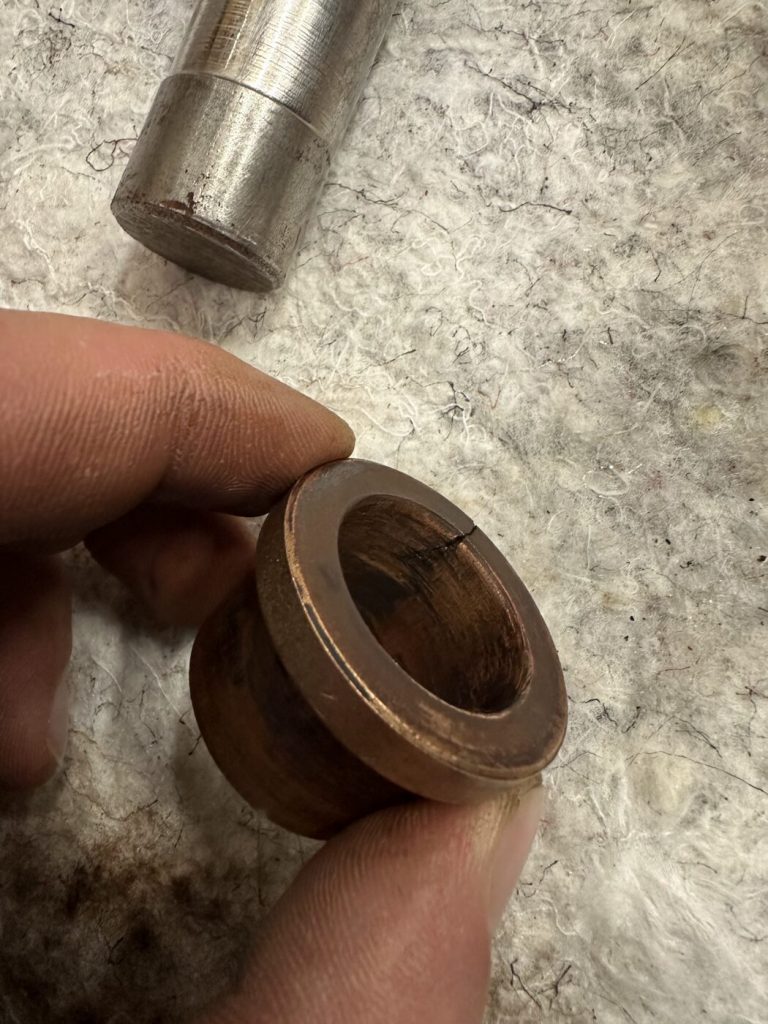
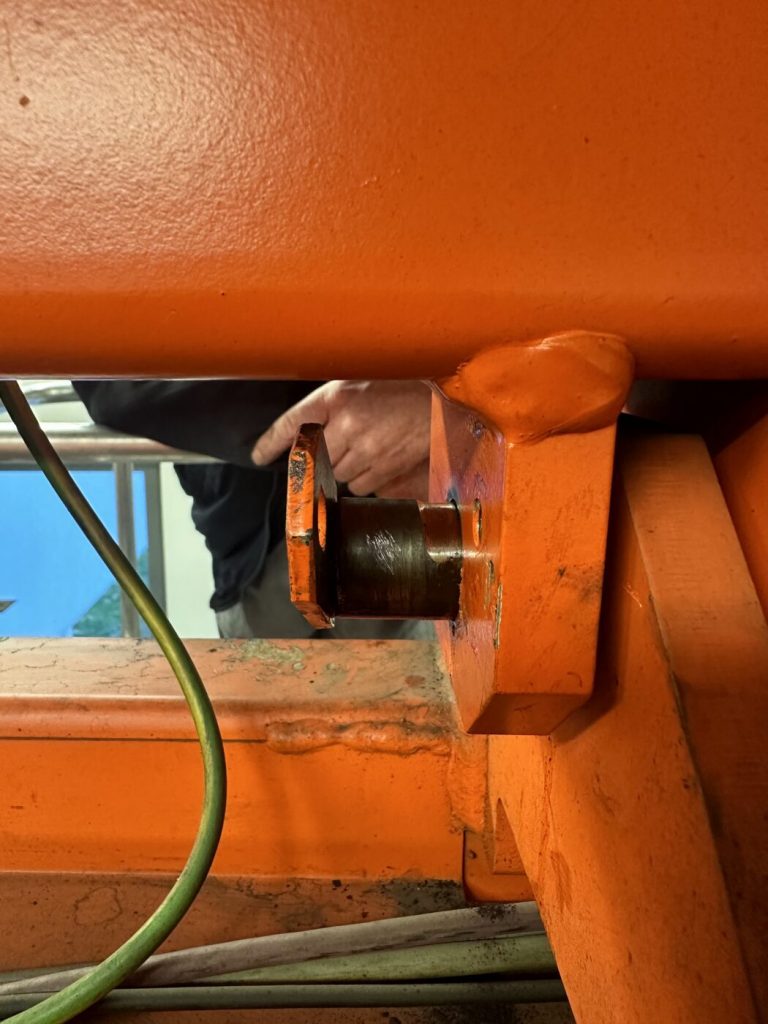
How do you refurbish 80 conveyor carriers without stopping production?
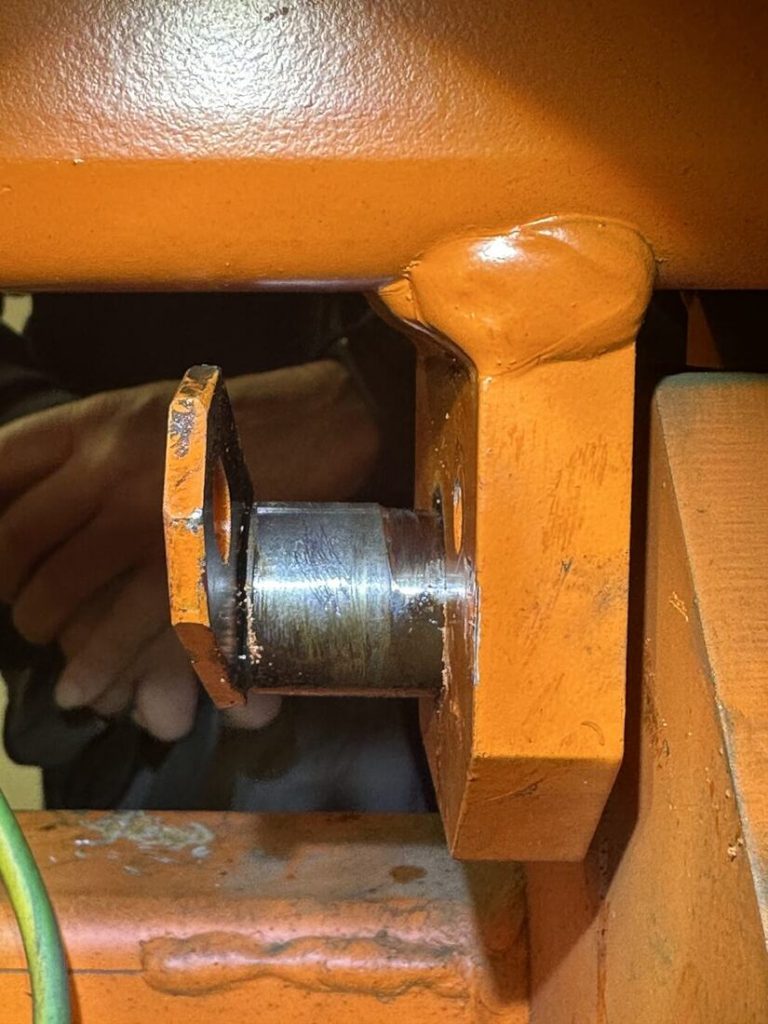
In a weekend rhythm, with a well-practised routine. As this component had seen no maintenance for many years, the decision was taken to repair all 80 carriers – an enormous effort that had to take place entirely during production-free time. A challenge we are happy to take on. The sequence per carrier: the hanger is propped and raised slightly so the pins are relieved of load. Then the pin is pulled, the bearing seat is checked, the bearings are replaced and a new pin is fitted. Working in series, our 2–3 fitters managed 10 to 15 carriers per weekend – Saturday and Sunday, weekend after weekend, until the whole fleet was done. The result: the system reliably keeps up with the production cycle again and, above all, runs safely and silently through the plant.
Overhead conveyors: over 15 years of experience that large plants rely on
When it comes to conveyor infrastructure in industrial plants we are exactly the right people to talk to: in overhead conveyors Omega Mounting has over 15 years of experience, and several large plants rely on that know-how permanently. Over the years we have specialised more and more in the maintenance and servicing of overhead conveyors and their lifters. This job shows why that counts: the cause was clear after one pin was pulled, the refurbishment ran as a plannable series programme in the production breaks – and the customer now knows that “maintenance-free” is a myth for conveyor hangers. From curved rail repair through lifter reinforcement to fleet refurbishment like this one: the overhead conveyor is a speciality for us, not a sideline.
Why Omega Mounting?
- Over 15 years of overhead conveyor experience: Several large industrial plants rely permanently on our specialisation in the maintenance, servicing and repair of overhead conveyors.
- Cause rather than symptom: We do not grease the squeal away – we pull the pin and look at it: diagnosis first, then the right repair.
- Honest advice: “Maintenance-free” is rare in moving pin-and-bearing joints – we say so openly and prove it on the component we pull.
- Systematic series repair: 10–15 carriers per weekend at a practised pace – plannable, calculable, without a single production stoppage.
- Food industry experience: We know the hygiene and access requirements of food production plants – from conduct on site to working cleanly.
- Rooted in the region: From Rodgau we are quickly on site in the Rhine-Main region – and working throughout Germany wherever our customers need us.
Conclusion
A squeal that annoyed everyone, production stoppages that cost money – and in the end one pulled pin was enough to have the cause in black and white: worn hanger pins, unmaintained for years. With the series repair of all 80 carriers over the weekends the system now runs safely, on cycle and quietly again. The lesson: with conveyor technology you should never simply believe “maintenance-free” – checking is cheaper than failing. If your overhead conveyor is making unusual noises, or nobody has looked inside the hangers for years, talk to us.
Request a callback for your project now – Omega Mounting GmbH, Rodgau. We work in the Rhine-Main region and throughout Germany.
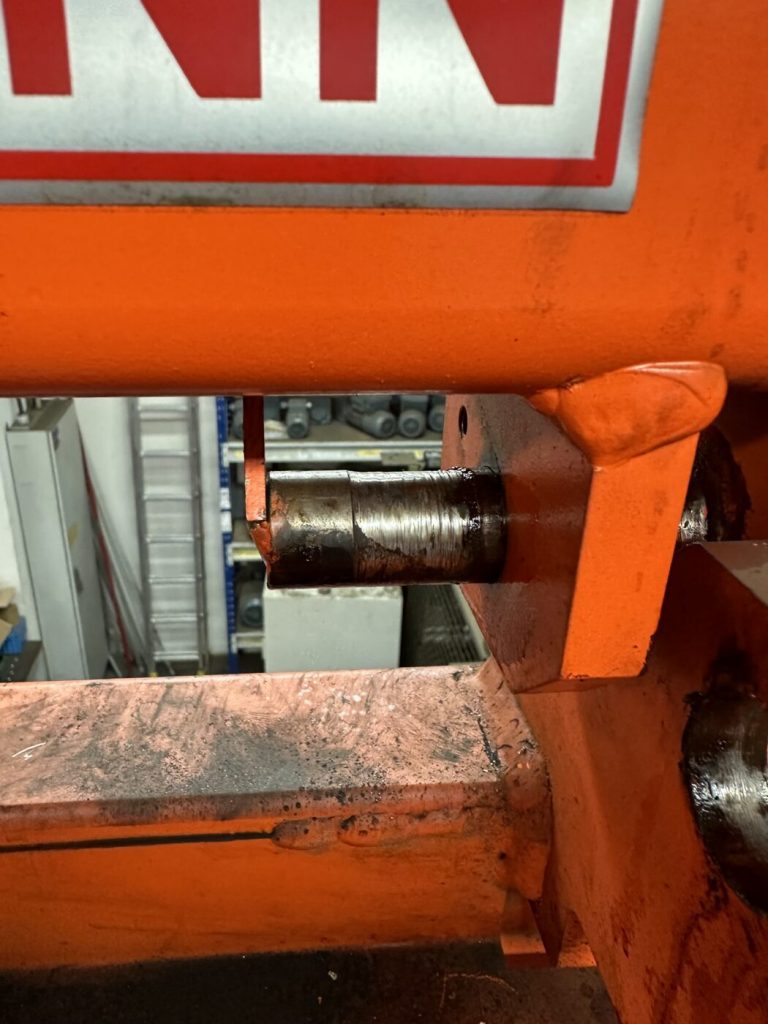
Photo gallery of the job
Are you planning a project of this kind?
Tell us briefly what it is about – we will come back to you with an honest assessment.
100% free and without obligation
Passende Ratgeber zu diesem Einsatz
Maintenance & Servicing
Maintenance & Servicing
Über den Autor
Tobias Schott
Geschäftsführer Omega Mounting GmbH, Rodgau · über 20 Jahre Praxis in Montage und Instandhaltung
Gelernter Mechatroniker und seit 2004 in Wartung, Instandhaltung und Industriemontage zu Hause – zuerst an der Seite seines Vaters, seit 2012 mit Omega Mounting: von der Elektrohängebahn in Frankfurt bis zur Krananlage im Hallenneubau. Plant und leitet als Lifting Appointed Person Hebearbeiten in Rechenzentren und auf Industriebaustellen im Rhein-Main-Gebiet, ist Ausbilder und Prüfer für Krane, Hubarbeitsbühnen und Teleskopmaschinen sowie Sicherheitsbeauftragter. Bei Einsätzen im Ausland kennt man ihn als „German Troubleshooter“ – der, den man ruft, wenn es auf der Baustelle klemmt. Was Qualität heißt, hat er nicht aus einem Handbuch, sondern von seinem Vater gelernt: Made in Germany als Anspruch an die eigene Arbeit, nicht als Etikett. Deshalb steht sie bei Omega Mounting an erster Stelle – vor Tempo und vor Preis. Das Auftragstagebuch zeigt die Einsätze, die sein Team geplant und umgesetzt hat – ohne Kundennamen, aber mit allem, was man daraus lernen kann.
Frequently asked questions
Usually the pin-and-bearing joints in the hangers are running dry: the lubrication is used up and metal is working on metal. The squeal is the audible symptom – underneath it grooves, cracks and material loss are forming that can lead to production stoppages and, in the extreme, to the pin shearing.
In most cases no – that is a widespread misconception. Moving pin-and-bearing joints need checking and lubrication. On this project the system had seen no maintenance on these components for many years; the pins were completely worn.
Reliably only by pulling a pin: relieve the hanger, remove the pin and examine both the pin and the bearing seat. Deep grooves, cracks and material loss are unambiguous findings – this wear cannot be judged reliably from the outside.
The hanger is propped and raised slightly so the pin is relieved of load. Then: pull the pin, check the bearing seat, replace the bearings, fit a new pin. Working in series, 2–3 fitters manage 10 to 15 carriers per weekend.
Yes – on this project all the work took place at weekends during production-free time. On Mondays production carried on as normal, until after several weekends all 80 carriers had been refurbished.
Because they are almost always an early warning of wear – and incidentally a real burden on the workforce. Whoever checks at the first squeal replaces a bearing; whoever waits risks production stoppages and safety problems.
Because the hanger’s small pivoting movements under full load cannot build up a load-carrying lubricating film – the joint runs in mixed friction, with metal touching bearing material. Without regular re-greasing the resulting debris acts like grinding paste, the pin develops grooves, the play grows – and every groove is a notch where material fatigue takes hold.
 English
  German