- Project Report - Hydroelectric Power Plant
Installation of a hydroelectric power plant in an existing building
Project Report: Installation of a Hydroelectric Power Plant in an Existing Building
Delivery and installation support under challenging construction site conditions
Not every project can be planned according to the textbook. When installing a modern hydroelectric power plant in an existing building, the Omega Mounting installation team faced a particularly tricky challenge: a dilapidated access road, limited space, and a riverbed that had to be drained before installation could even begin.
Our task was to bring the individual plant components into the building and actively support the on-site installation team—from crane logistics to the final positioning of the components. This project report shows how the successful installation of hydroelectric power plants can be achieved even under challenging conditions.
A Challenging Situation on the Construction Site
The Mounting Crew in Action
At the time of the project, the building was still undergoing renovation. This presented a number of challenges that had to be addressed first.
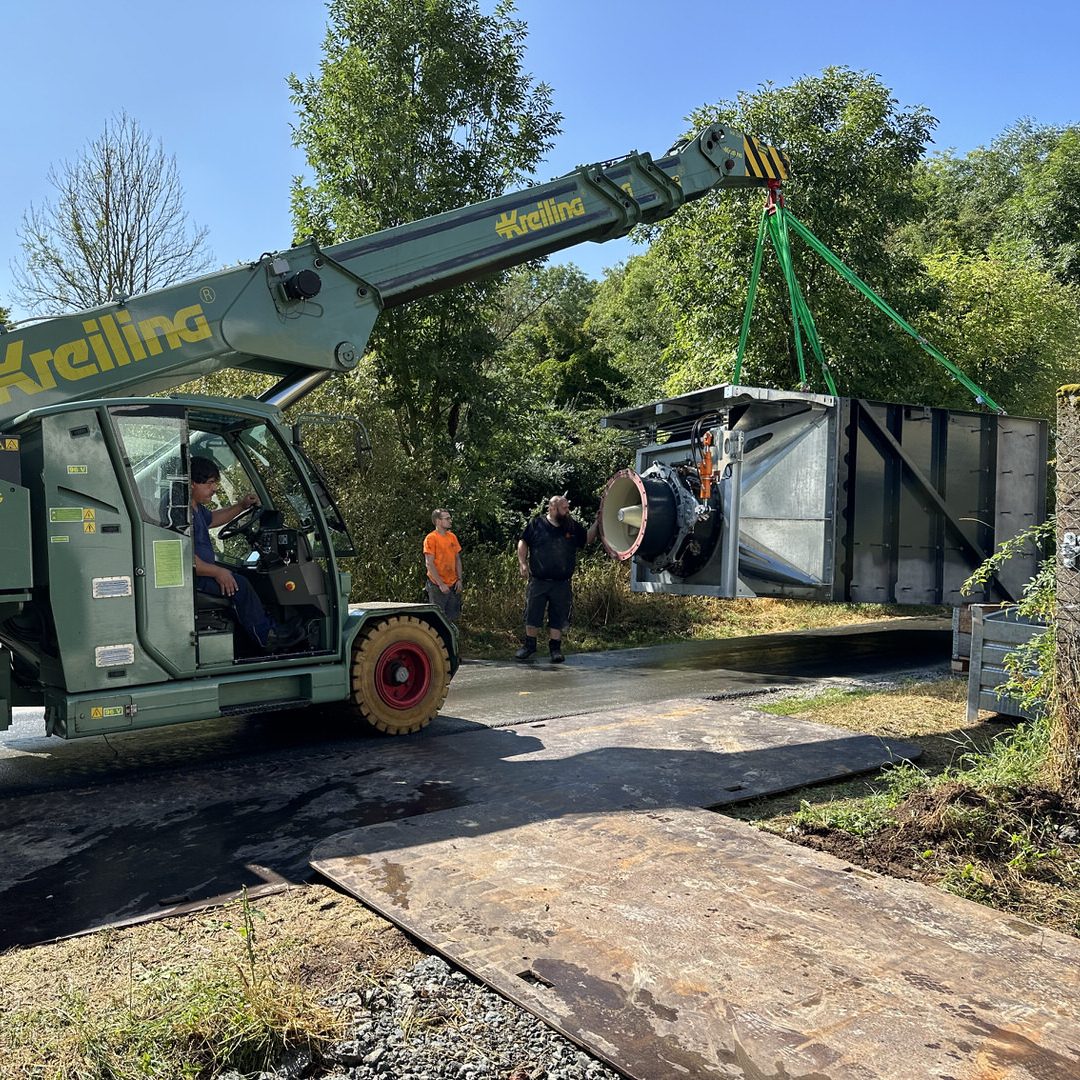
The driveway leading to the building was in disrepair; in some places, the concrete had already eroded away. As a result, it was not possible to drive the crane directly across it.
To ensure the access road could support the load, large steel plates first had to be delivered and laid out in such a way that both the crane being used and our tank rollers could safely travel over them. Only then could the actual assembly begin.
The Right Crane for Tight Spaces
The V-Kart Crane
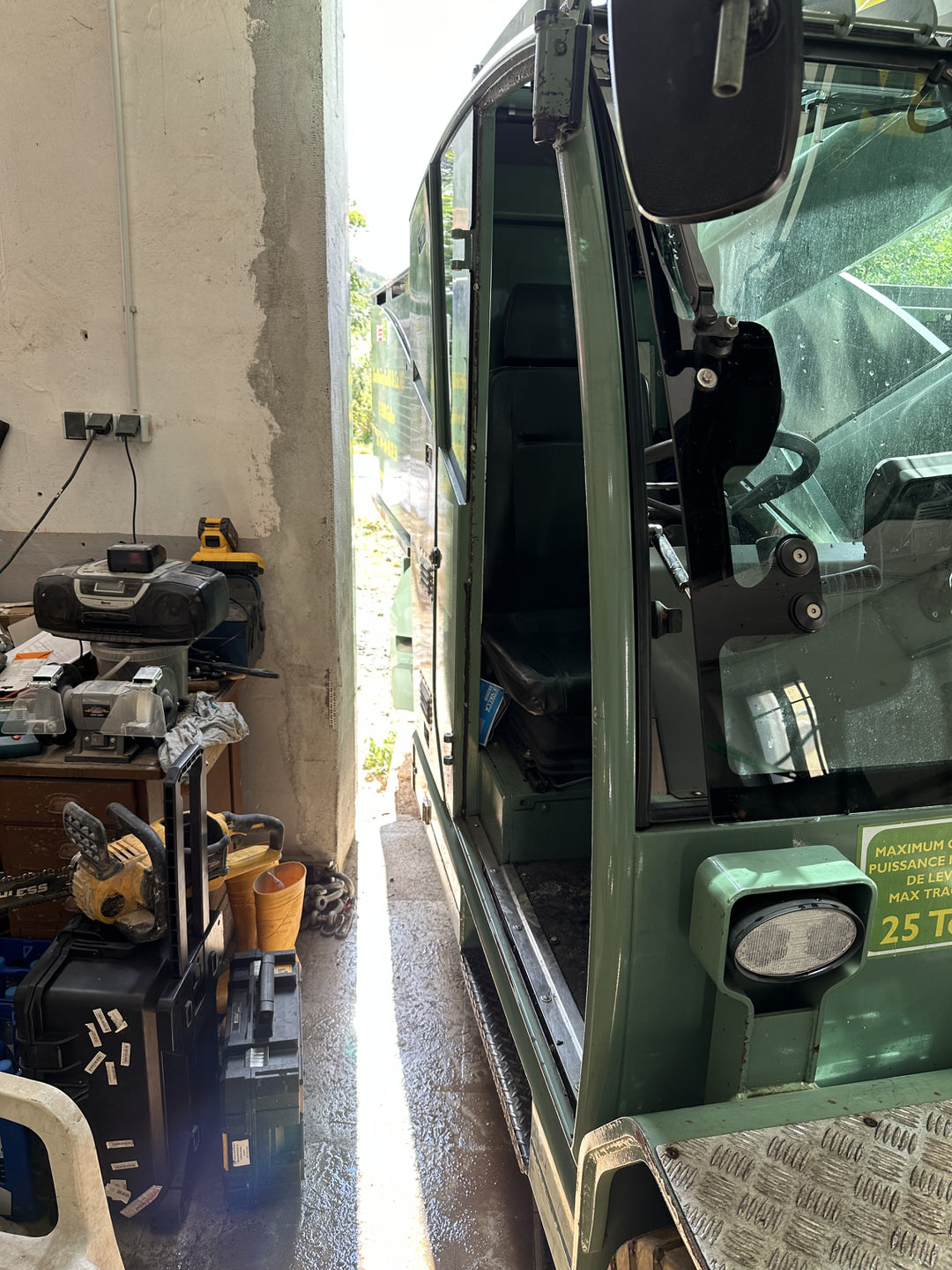
A V-Kart crane was used for this project—compared to a traditional truck-mounted crane, it offers several key advantages: It is more maneuverable, can drive with a load raised, and, thanks to its low, compact design, is ideal for use in tight spaces.
The drawback at this construction site: the tires, which are not designed for off-road use, and the resulting low ground clearance. That is precisely why the preliminary installation of the steel plates was so crucial—it was what made it possible to use the crane on the uneven ground in the first place.
Draining & Initial Filling: The Funnel
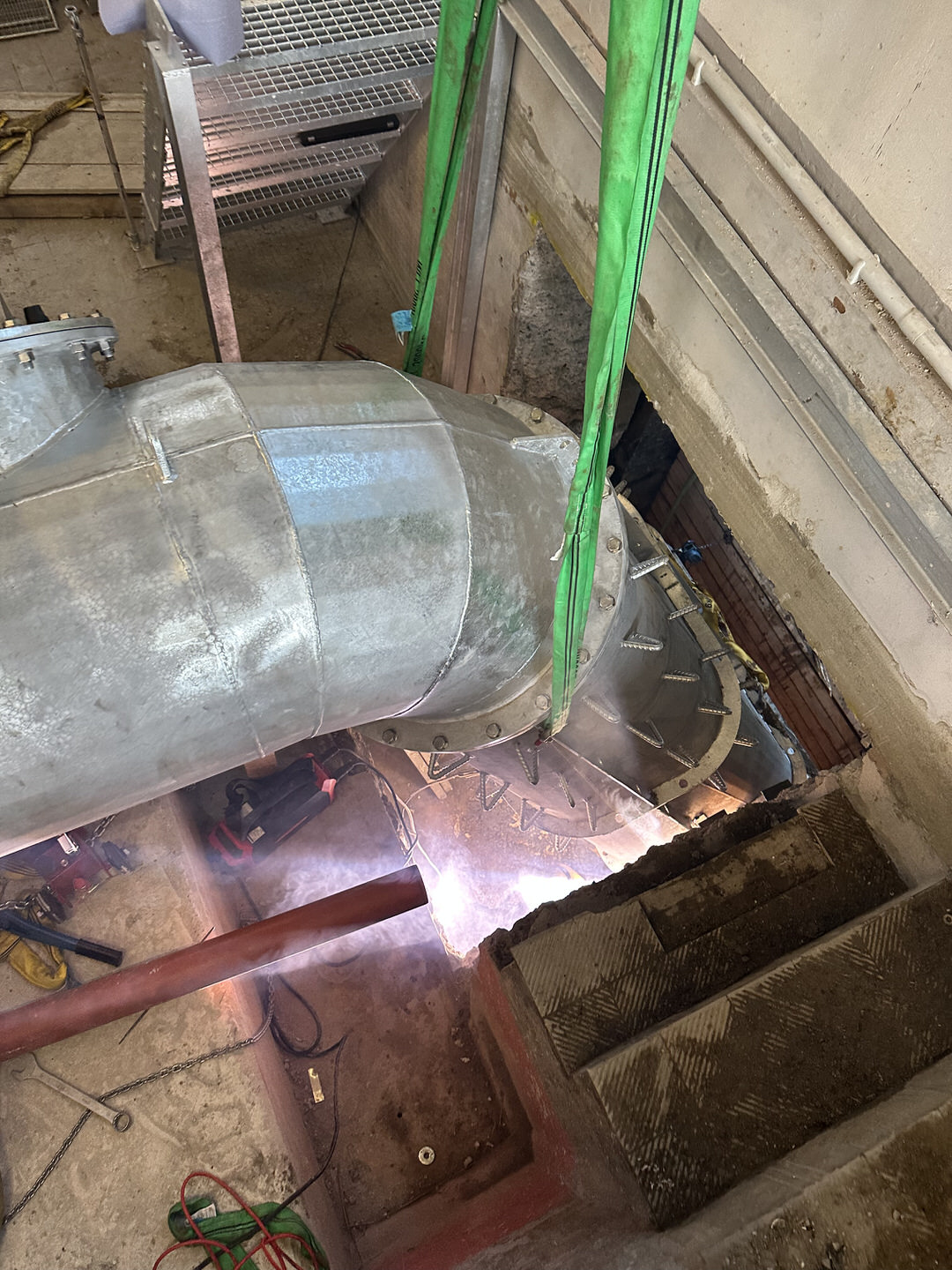
Once the access road had been secured with steel plates, installation could finally begin. The first component to be installed was the hopper.
To do this, it was hoisted up from the river side and initially set down on planks. We then used chain hoists to pull it precisely into the designated opening in the building.
To prevent water from entering the work area during construction, the riverbed and the building were sealed off using wooden shoring and numerous sandbags.
Throughout the entire installation period, the pumps kept the area reliably dry.
On-site Safety and Support
There aren’t always ideal attachment points or a ready-made standard solution. For projects like this, it’s important to assess on-site what’s feasible—and what safety measures are necessary to ensure the components can be hoisted smoothly.
To ensure sufficient stability, several beams were reinforced with steel struts, and square timbers were strategically driven into existing structures. This ensured that the structure could safely withstand the loads encountered during the remainder of the assembly process.
Delivery of the main components of the hydroelectric power plant
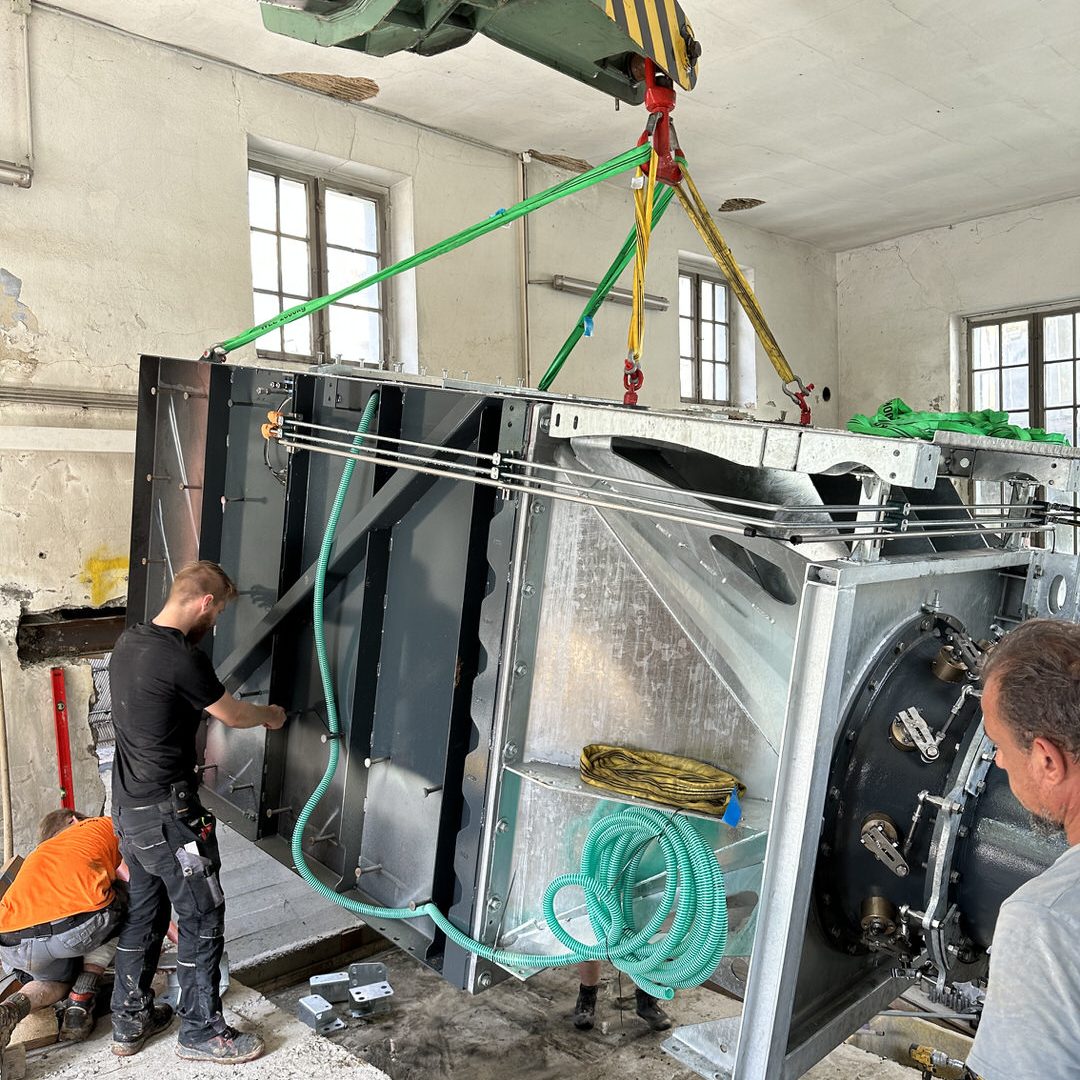
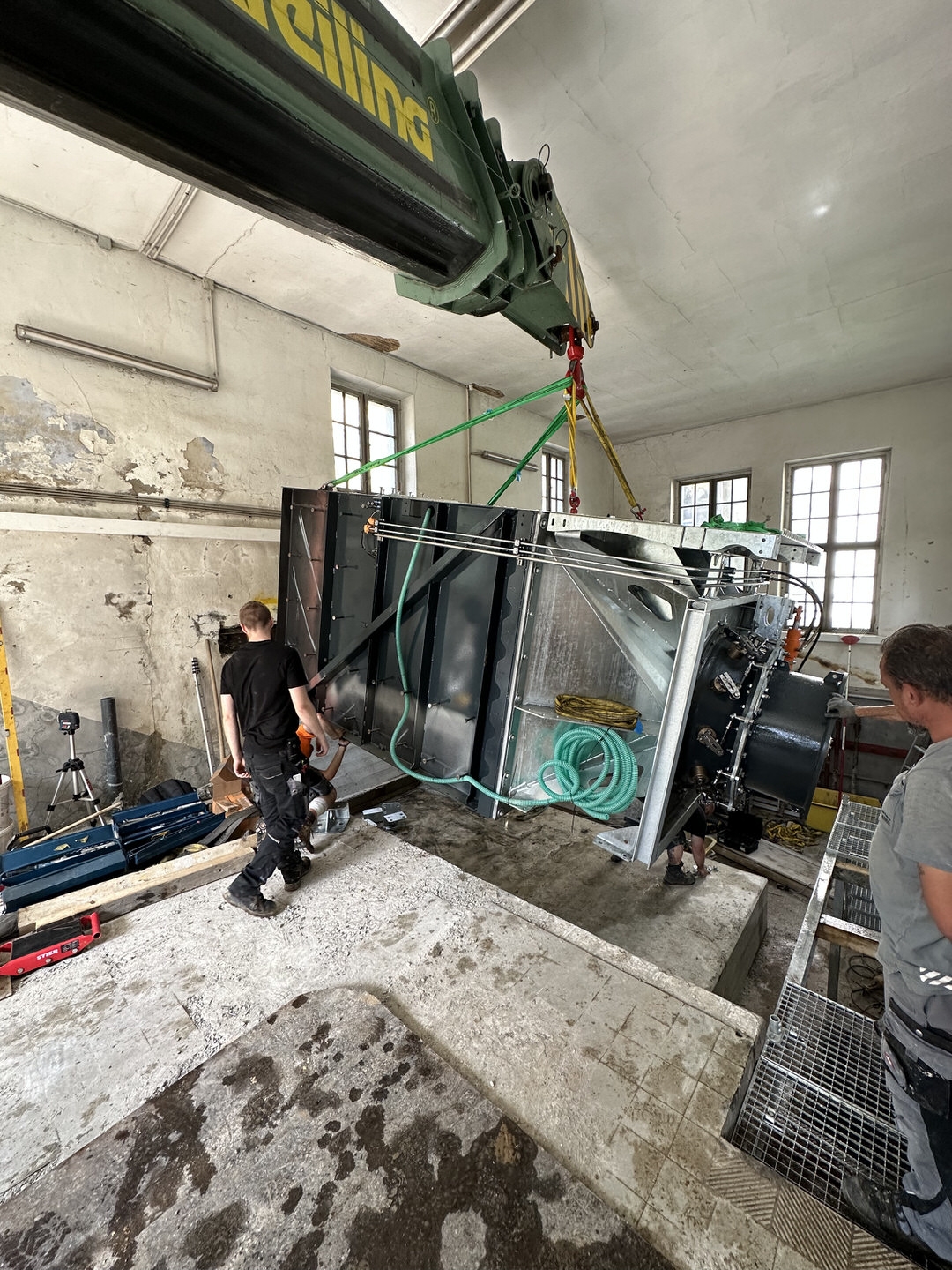
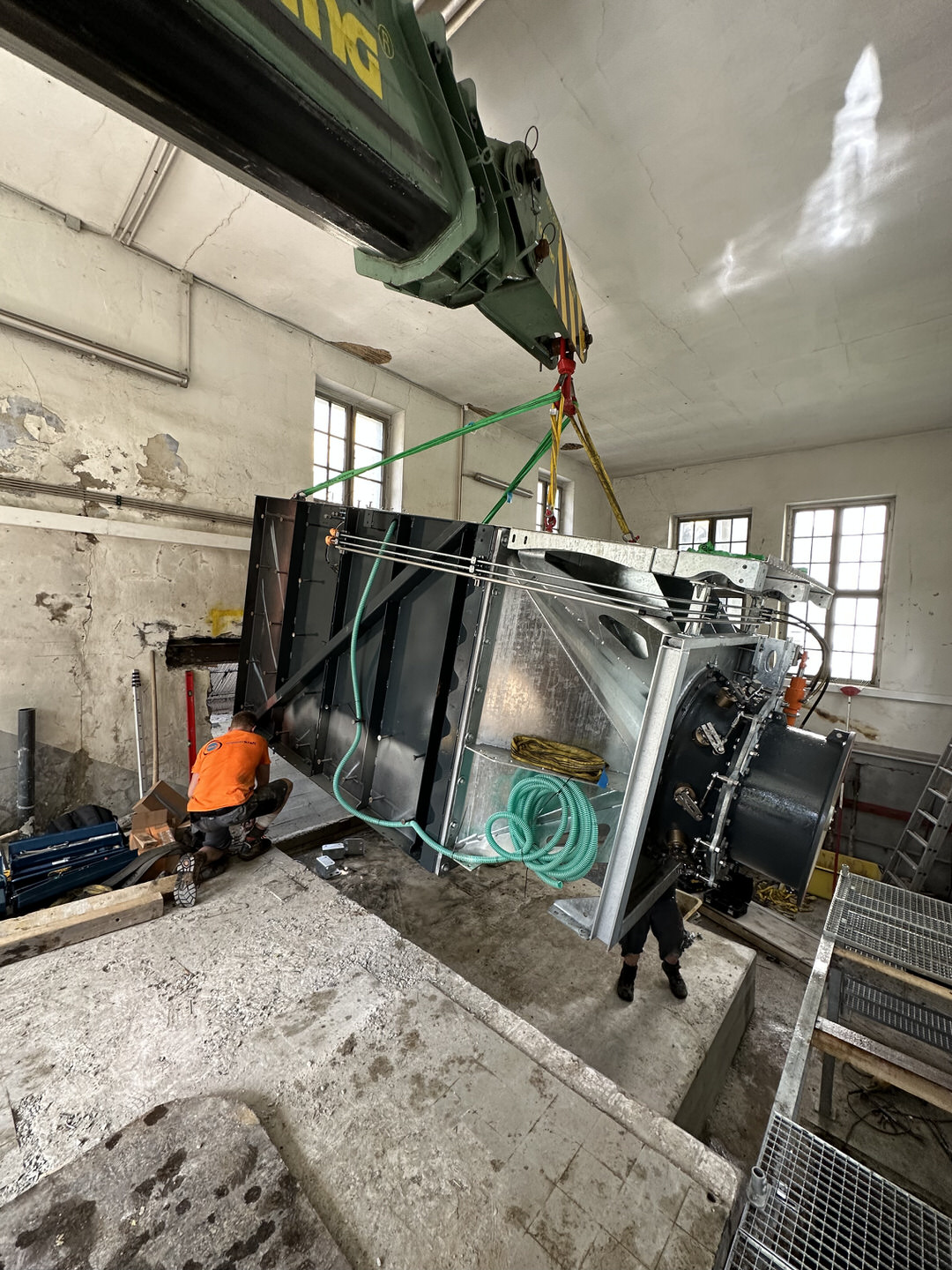
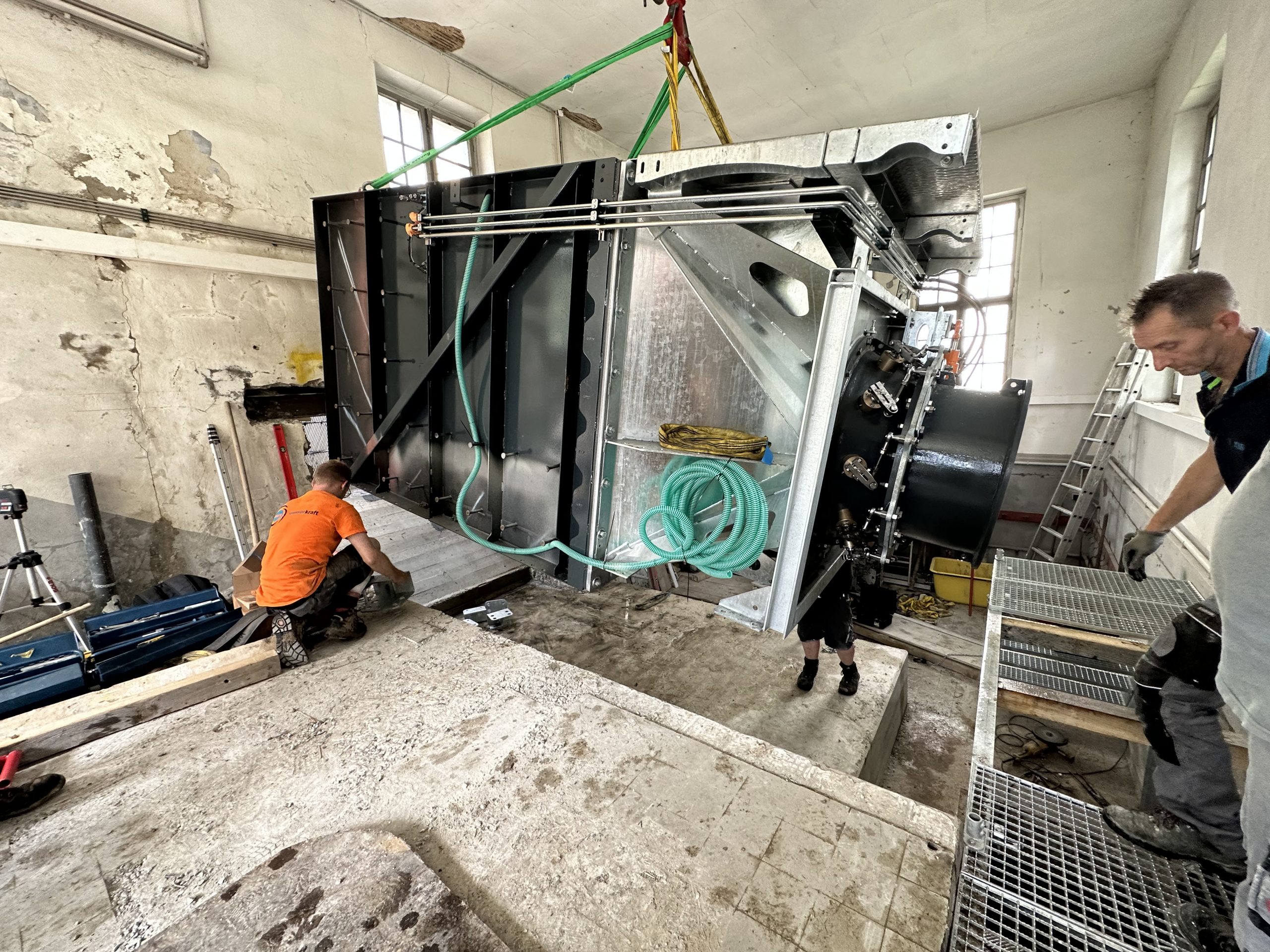
Once the funnel was securely in place, the actual hydroelectric power plant could be hoisted into position. The biggest challenge was determining the slings so that there would be enough space during the hoisting process while ensuring the load remained perfectly balanced. In addition, the slings could not be too long, as the limited clearance between the ceiling and the floor left little room for maneuver.
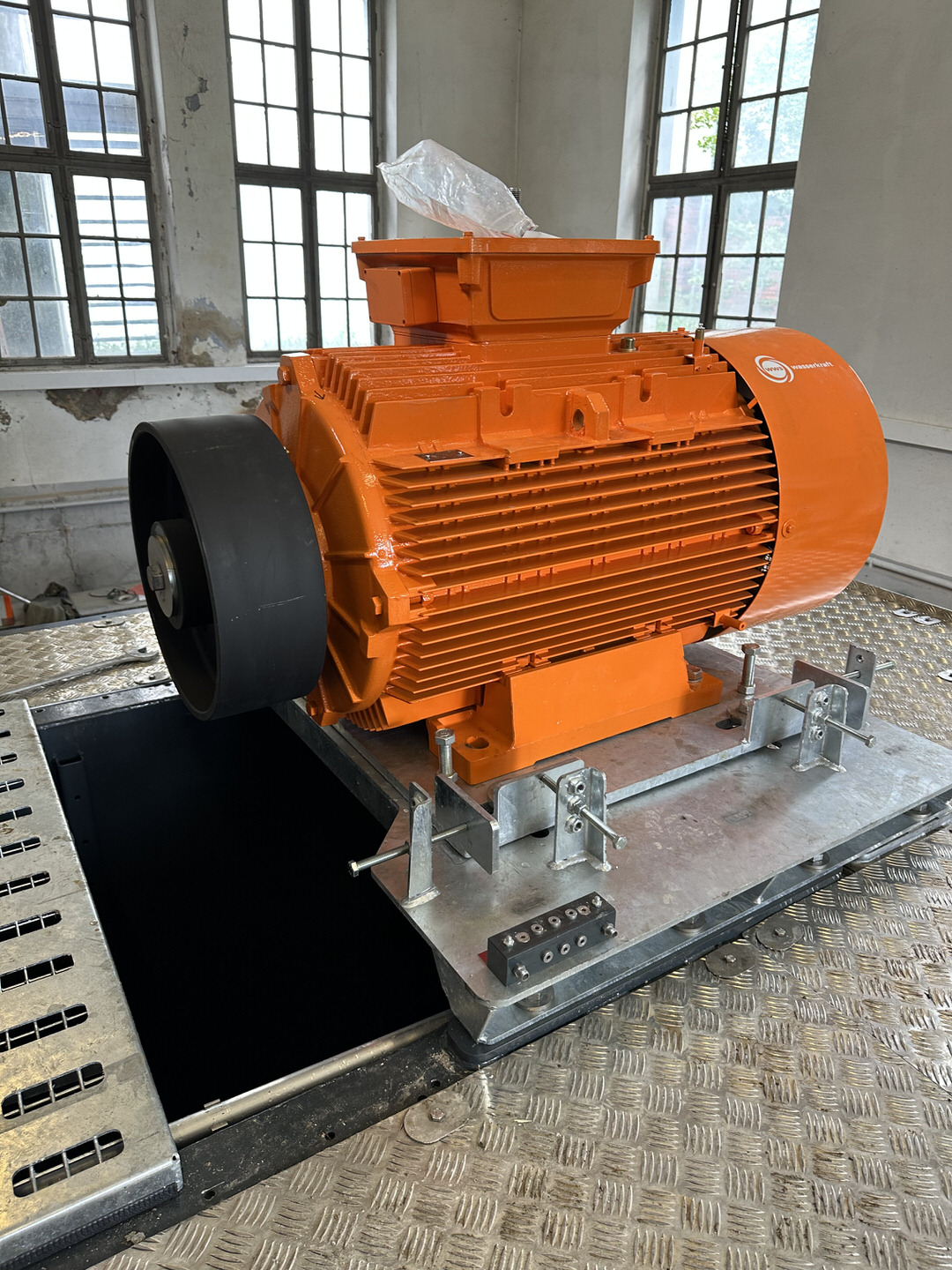
Thanks to clearly defined attachment points and their compact design, installing the large electric motor and the hydraulic unit was relatively straightforward. Positioning the arch was more challenging: it had to be carefully moved into the correct position using a round sling and a chain hoist so that it could be installed precisely.
Securing and Handoff to the Concrete Work Crew
Once all the components had been aligned and positioned, the final step before permanent installation followed: additional supports were installed to keep the system secure. We also used a welding machine to attach brackets and supports at the appropriate locations.
The next day, the system was finally encased in concrete and thus permanently anchored to the building.
Why Companies Choose Omega Mounting
Your advantages with Omega Mounting
Projects like this one demonstrate what really matters in challenging industrial installations: experience in dealing with unpredictable job site conditions, technical expertise in crane and lifting techniques, and the ability to quickly find the right solution on site.
Omega Mounting supports manufacturers, plant engineers, and industrial companies in the installation of sophisticated technical systems—throughout Germany and across Europe. Whether it’s hydroelectric power plants, loading equipment, or complex industrial facilities, our customers benefit from a well-coordinated team that works precisely and safely, even under challenging conditions.
Are you planning to install a technical system under challenging construction site conditions? Contact us—together, we’ll find the right solution for you, from crane logistics to final commissioning.
Passende Ratgeber zu diesem Einsatz
Über den Autor
Tobias Schott
Geschäftsführer Omega Mounting GmbH, Rodgau · über 20 Jahre Praxis in Montage und Instandhaltung
Gelernter Mechatroniker und seit 2004 in Wartung, Instandhaltung und Industriemontage zu Hause – zuerst an der Seite seines Vaters, seit 2012 mit Omega Mounting: von der Elektrohängebahn in Frankfurt bis zur Krananlage im Hallenneubau. Plant und leitet als Lifting Appointed Person Hebearbeiten in Rechenzentren und auf Industriebaustellen im Rhein-Main-Gebiet, ist Ausbilder und Prüfer für Krane, Hubarbeitsbühnen und Teleskopmaschinen sowie Sicherheitsbeauftragter. Bei Einsätzen im Ausland kennt man ihn als „German Troubleshooter“ – der, den man ruft, wenn es auf der Baustelle klemmt. Was Qualität heißt, hat er nicht aus einem Handbuch, sondern von seinem Vater gelernt: Made in Germany als Anspruch an die eigene Arbeit, nicht als Etikett. Deshalb steht sie bei Omega Mounting an erster Stelle – vor Tempo und vor Preis. Das Auftragstagebuch zeigt die Einsätze, die sein Team geplant und umgesetzt hat – ohne Kundennamen, aber mit allem, was man daraus lernen kann.
 English
  German