- Project report – robot dismantling at an organic bakery near Fulda
Robot dismantling at an organic bakery near Fulda
Dismantling an industrial robot in the tightest of spaces –
mini crane job at an organic bakery near Fulda
600 kg robot removed in one piece – with a Hoeflon C6 mini crane, to the centimetre between the conveyor belts, in just one day
An industrial robot has to come out – but it stands "in the far corner" of the production hall, built in between conveyor belts, with a few centimetres of clearance and a tight time window. Tasks like these are exactly what we specialise in.
At an industrial organic bakery near Fulda, we were entrusted with dismantling a Fanuc industrial robot including its base and then converting the robot cell for the safe continued operation of the line. Production was at a standstill for only a few days – and in this window, quite a bit more had to be converted in the area besides the robot removal.
The robot itself had to be out within one day. And because it was to be preserved undamaged and in one piece, dismantling it into parts was out of the question: it was a matter of calculating, planning, slinging and lifting – above a production line that was due to run again two days later.
Project profile
- Project: Dismantling an industrial robot in the tightest of spaces
- Location: Industrial organic bakery near Fulda
- Project duration: Robot removal in 1 day; conversion of the robot cell on the following days – within the short production shutdown
- Scope:
- Dismantling of a Fanuc industrial robot (approx. 600 kg) in one piece
- Disconnection of all supply lines: power, water, compressed air
- Bypassing the bus system for continued operation of the line
- Risk assessment and lift plan
- Crane lift with Hoeflon C6 mini crane in the tightest of spaces
- Removal of the heavy robot base
- Conversion of the robot cell: dismantling of the access points, welded-in reinforcements in the fencing (TIG, stainless steel)
- Team on site: 1 lifting manager, 1 crane operator, 2 mechatronics technicians
- Project duration: Robot removal in 1 day; conversion of the robot cell on the following days – within the short production shutdown
Why is robot dismantling in food production particularly demanding?
The short answer: because three factors come together at once – confined space, sensitive production equipment and a hard time window.
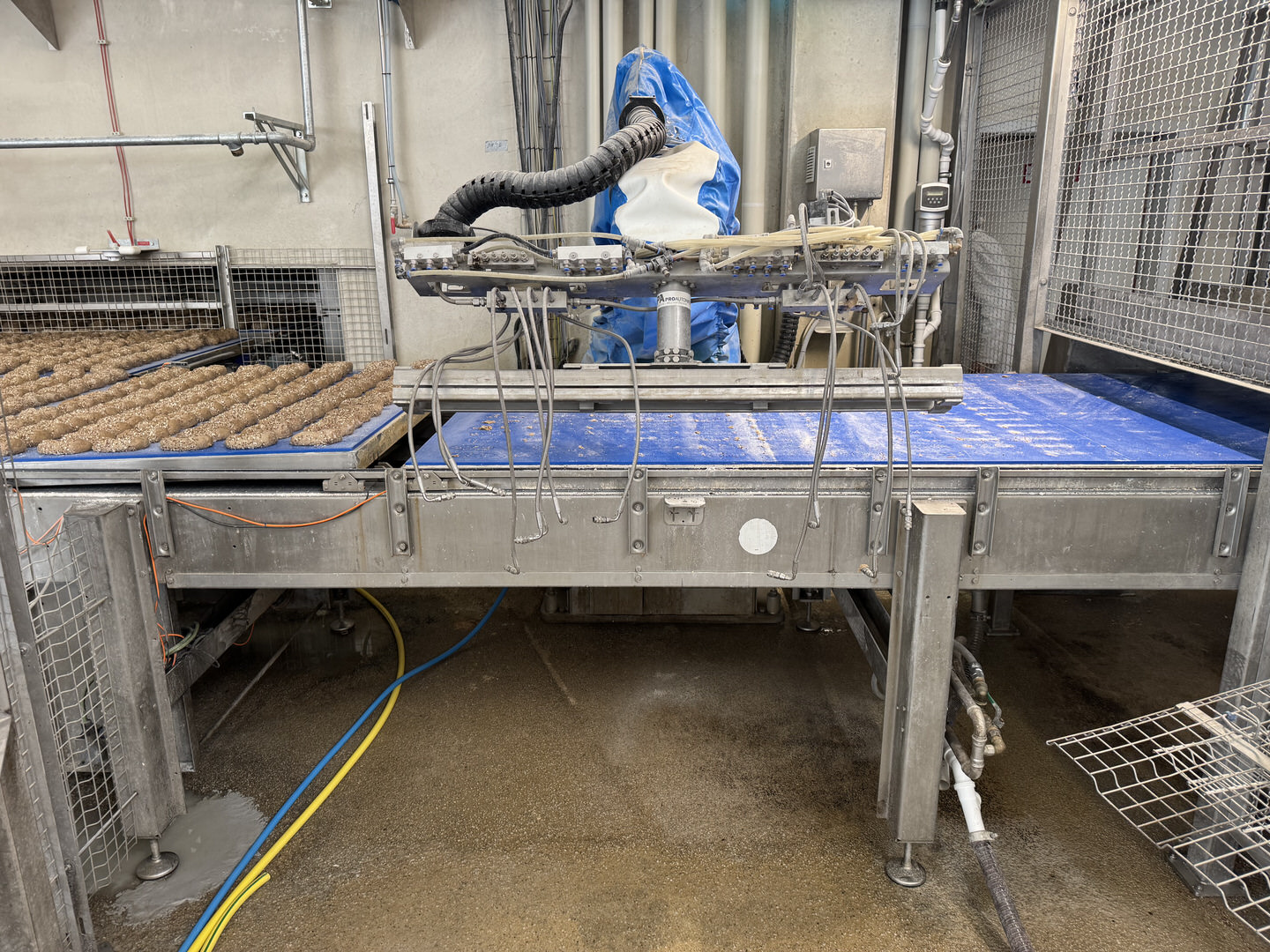
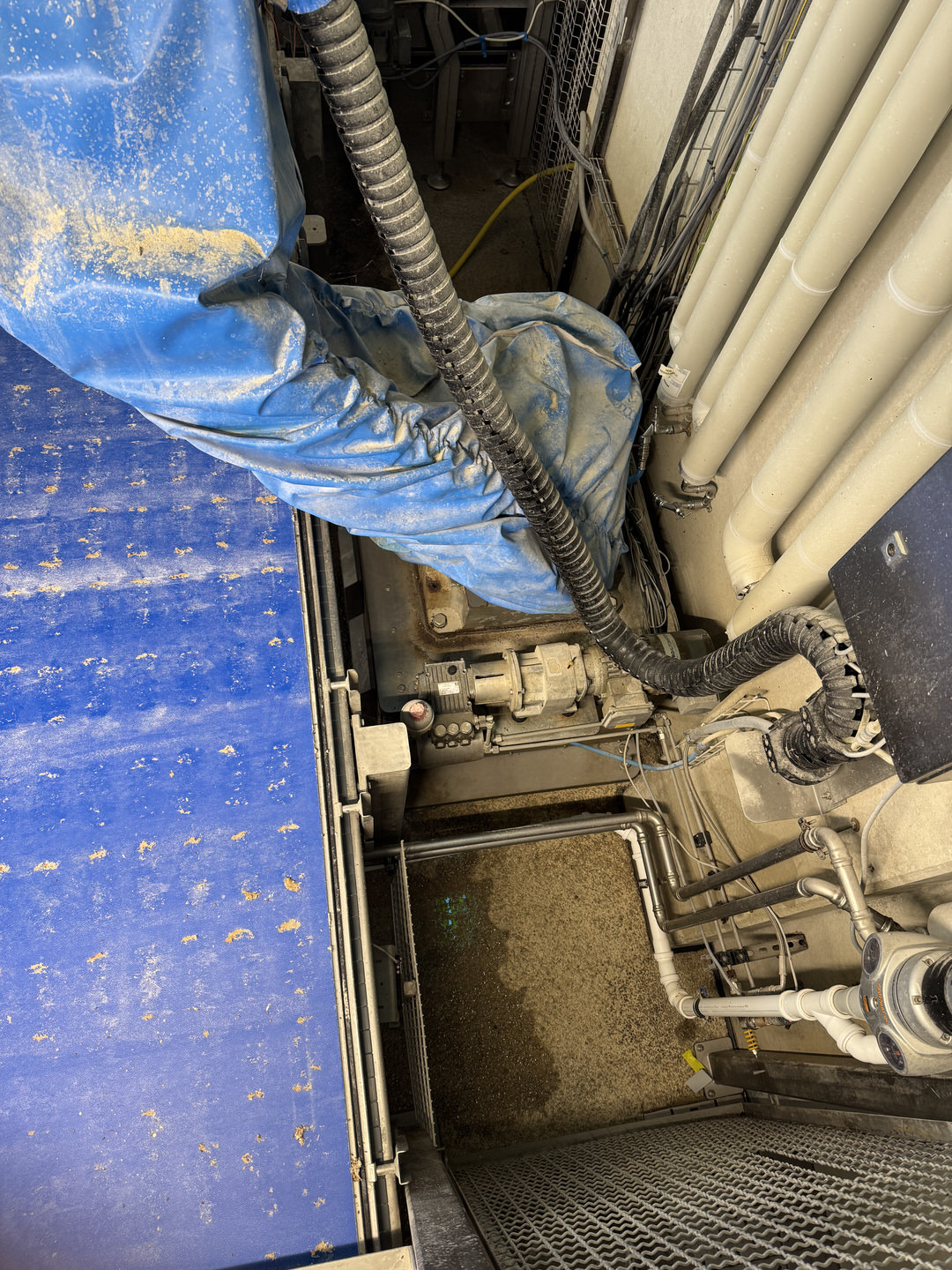
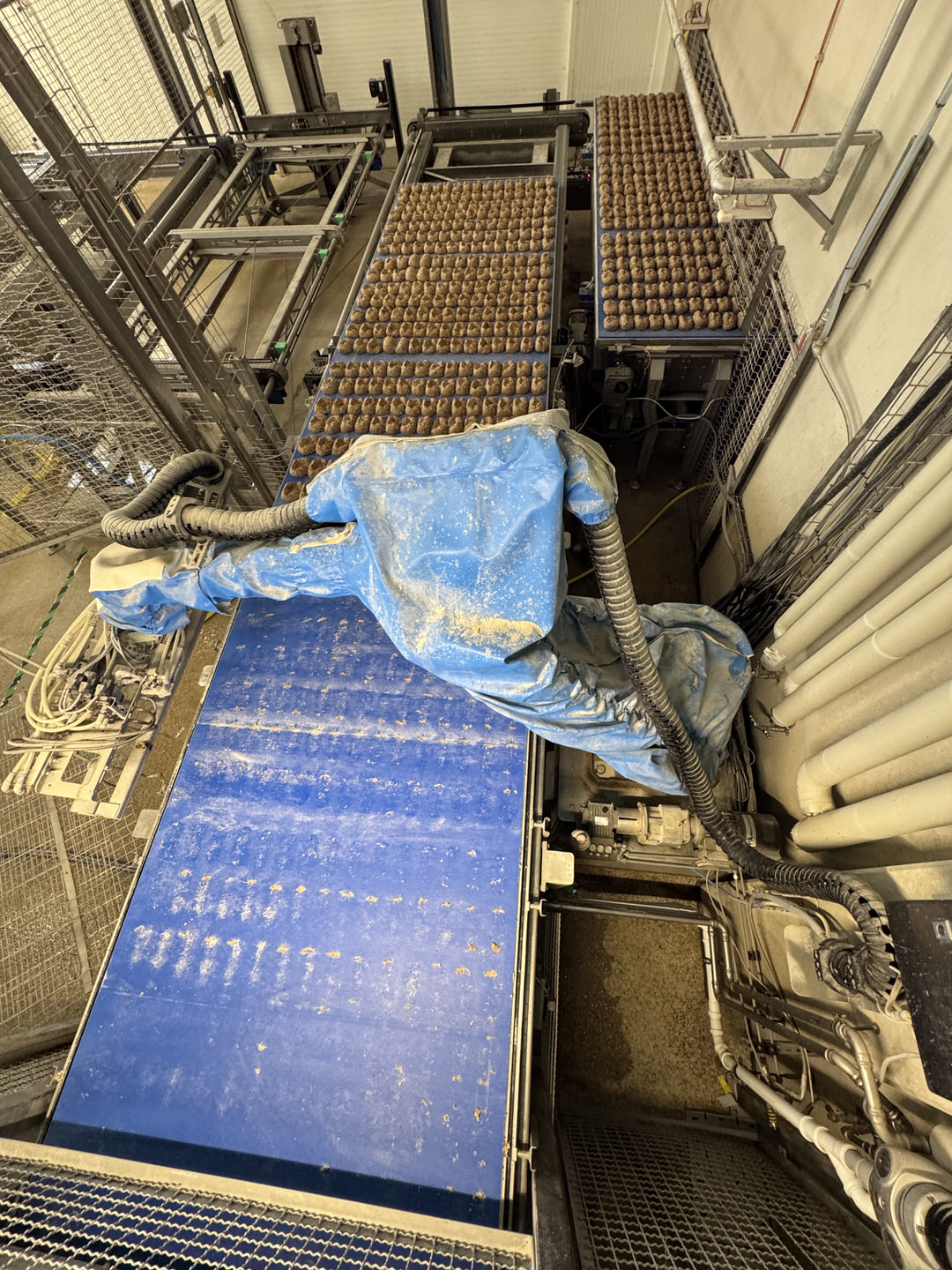
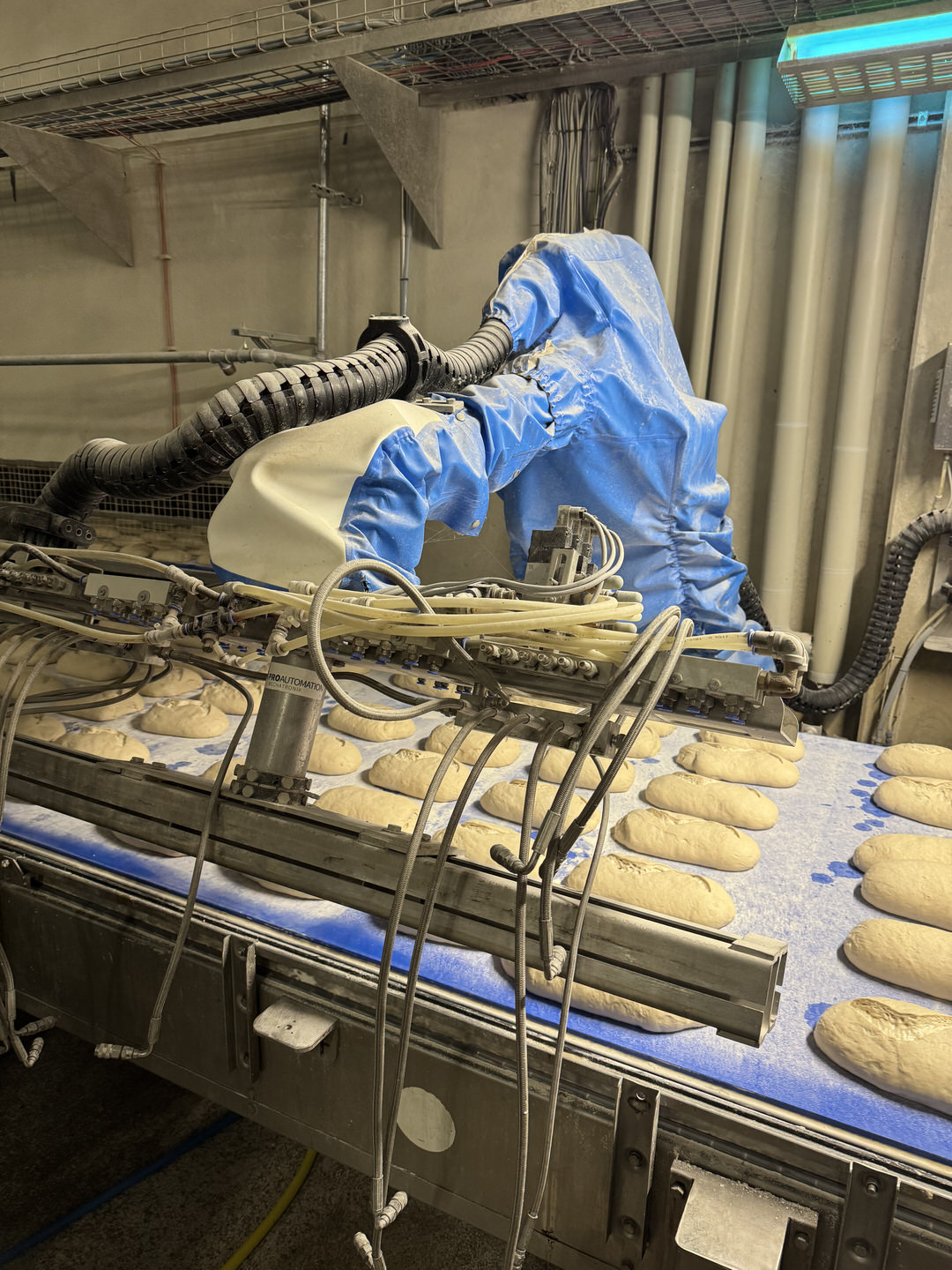
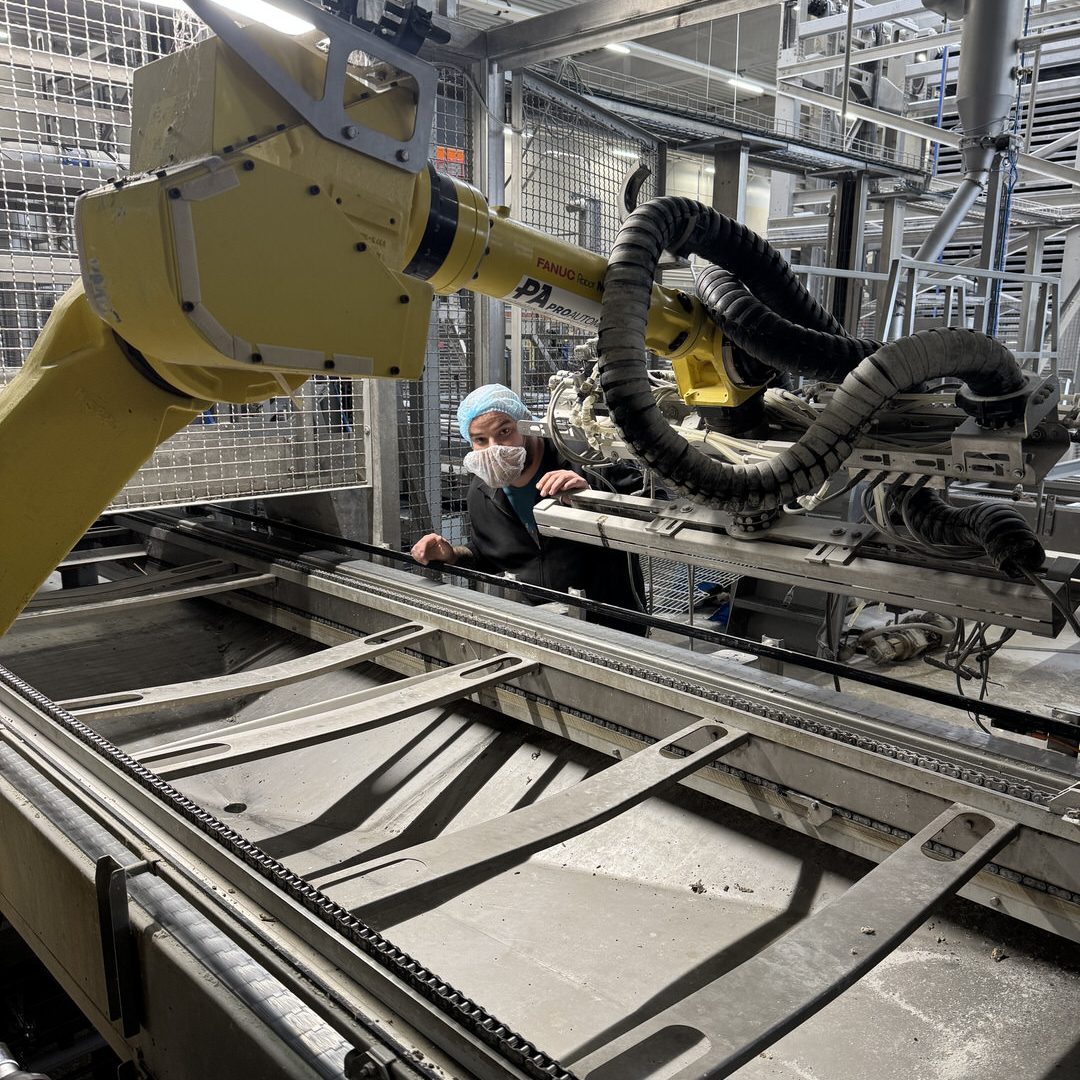
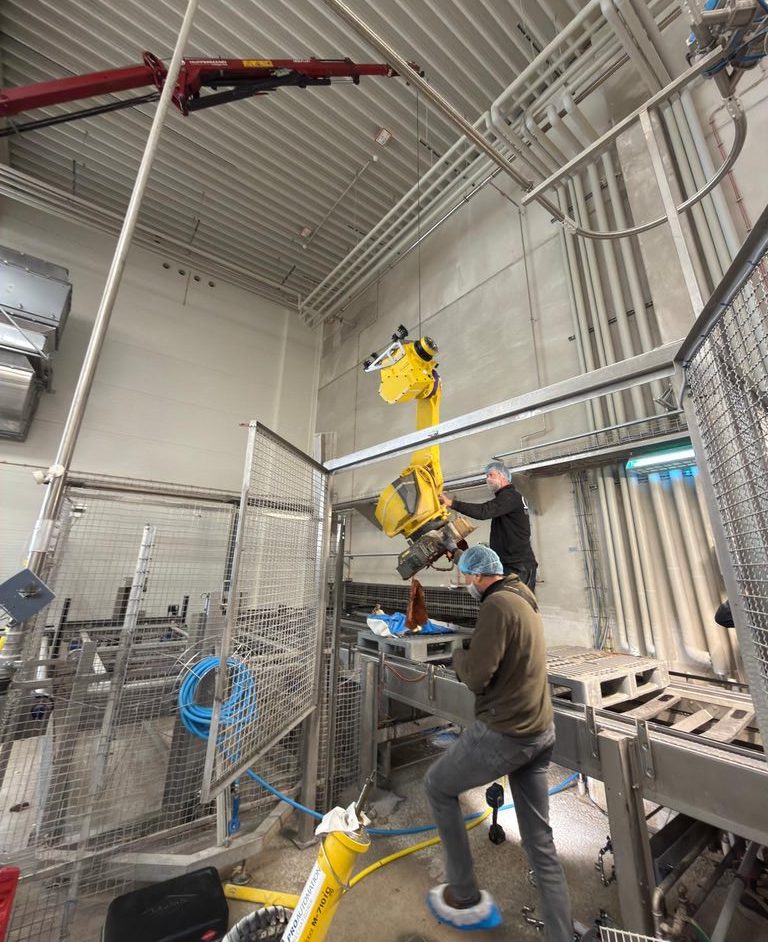
The robot stood deep inside the line, surrounded by conveyor belts and production equipment. In places, only centimetres of space remained between the machines. A larger crane simply would not have fitted between the production lines.
Then there is the environment: strict hygiene requirements apply in an organic bakery. Our team worked throughout with hairnets and face masks and complied with all the operator's requirements – naturally also during crane and welding work.
First step: disconnect the utilities and bypass the bus system
Checking and disconnecting the supply lines at the robot
Before the crane even arrived, our mechatronics technicians disconnected all supply lines to the robot: power, water and compressed air.
Particular care was needed with the control cables. The robot was integrated into the
line control via a bus system – simply disconnecting it would have disrupted communication across the rest of the line. We therefore created a bypass in the bus system so that the remaining production line could continue to run safely without the robot after removal.
It is precisely this combination of mechanics, electrics and control technology that makes dismantling jobs like this a task for mechatronics technicians – not just for fitters.
Why a Hoeflon C6 mini crane?
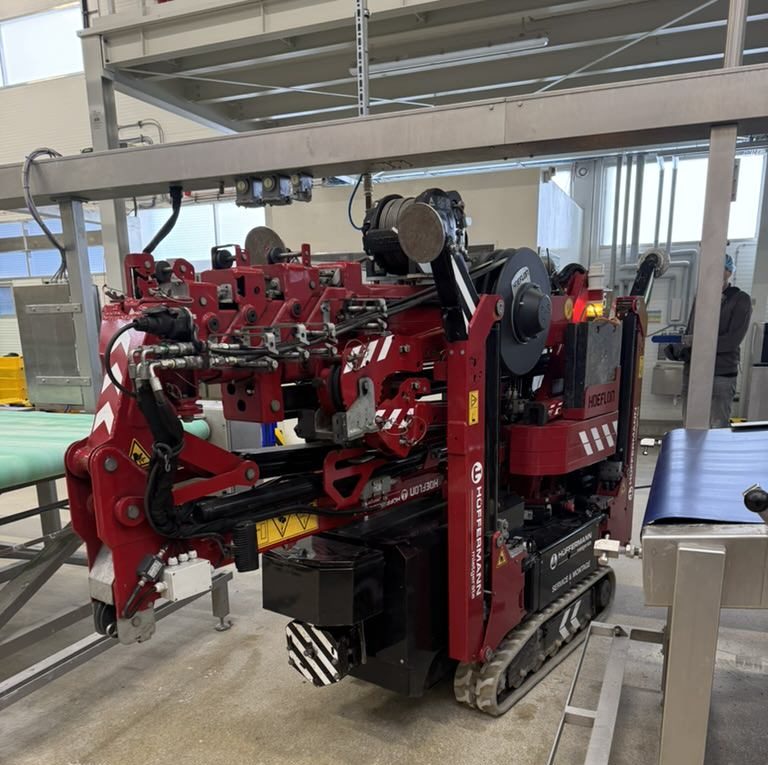
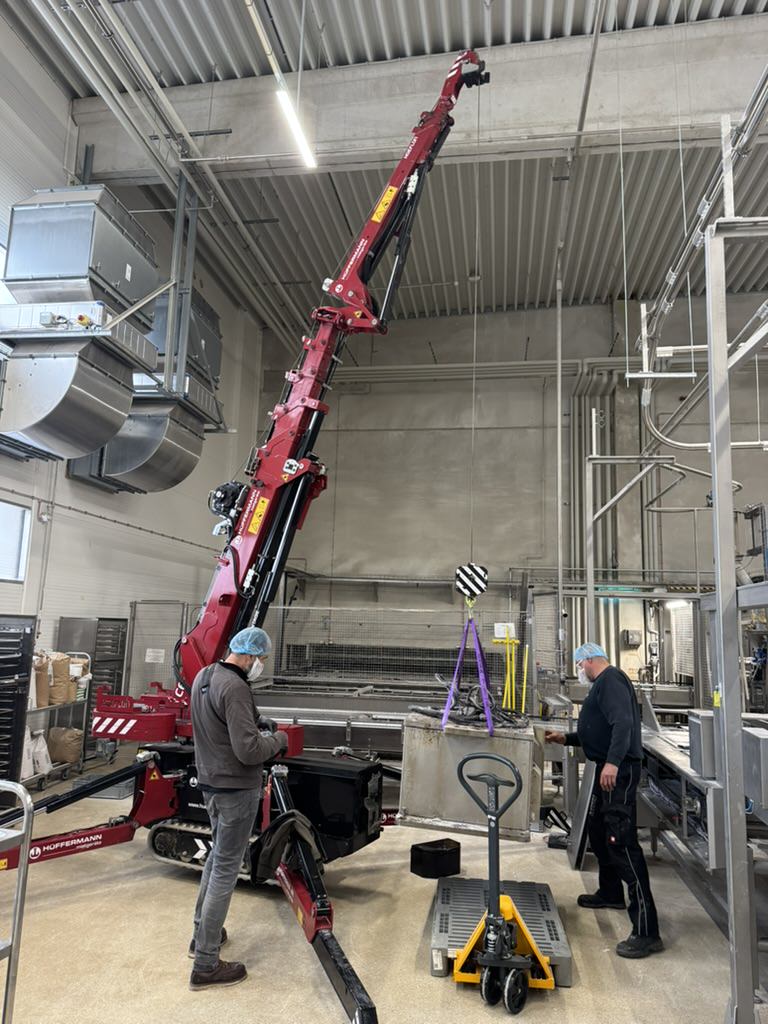
The Hoeflon C6 was the perfect machine for this job – for four reasons:
- It fits through small hall doors and narrow passageways.
- It can turn almost on the spot and so gets round every tight corner.
- With its outriggers extended it needs very little space.
- Despite its compact design, it has the lifting capacity needed for heavy loads.
The photos show clearly just how tight it really was: the folded mini crane manoeuvred between the conveyor belts – it came down to centimetres here.
The lift:
600 kg in one piece above the production line
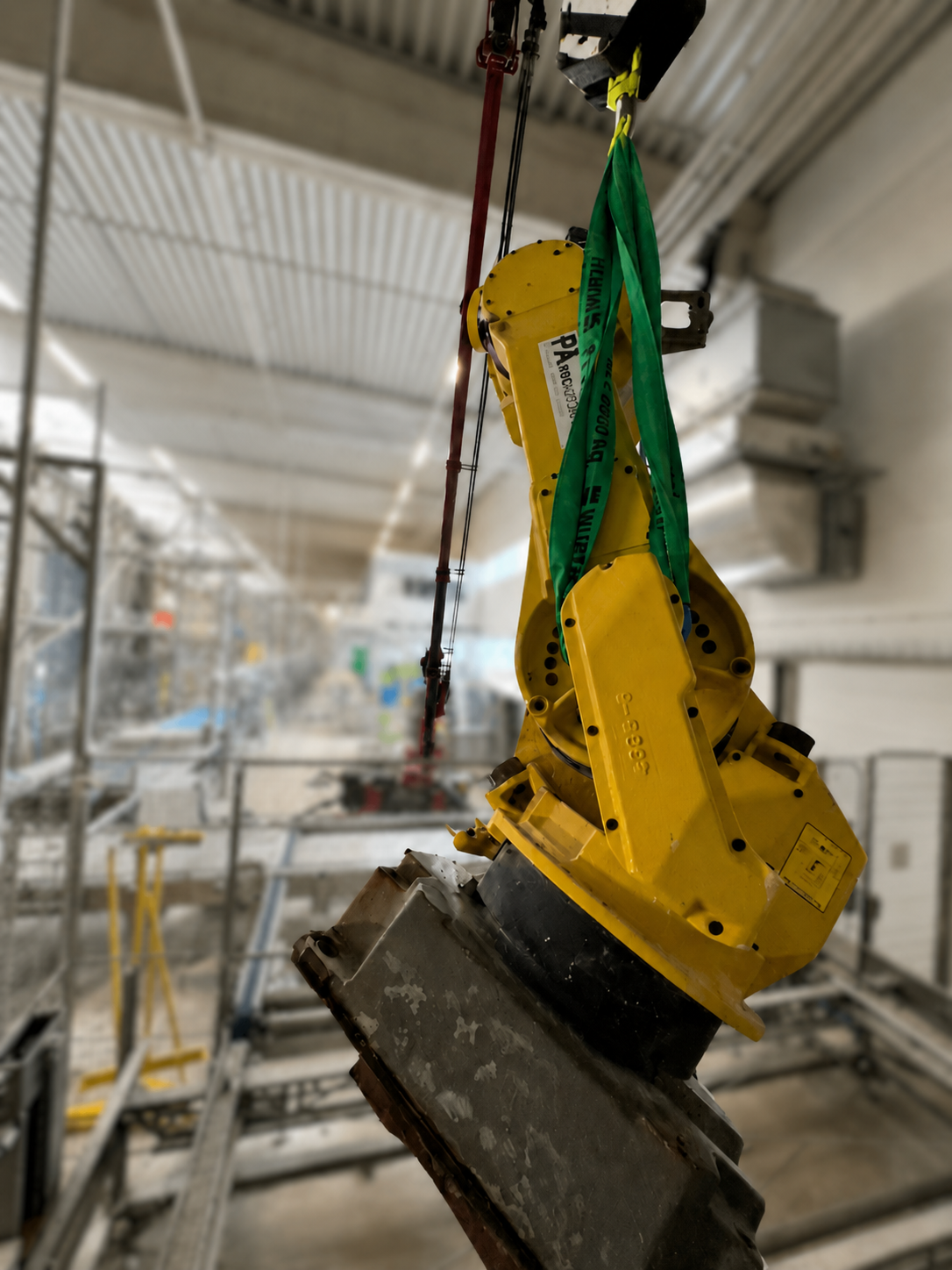
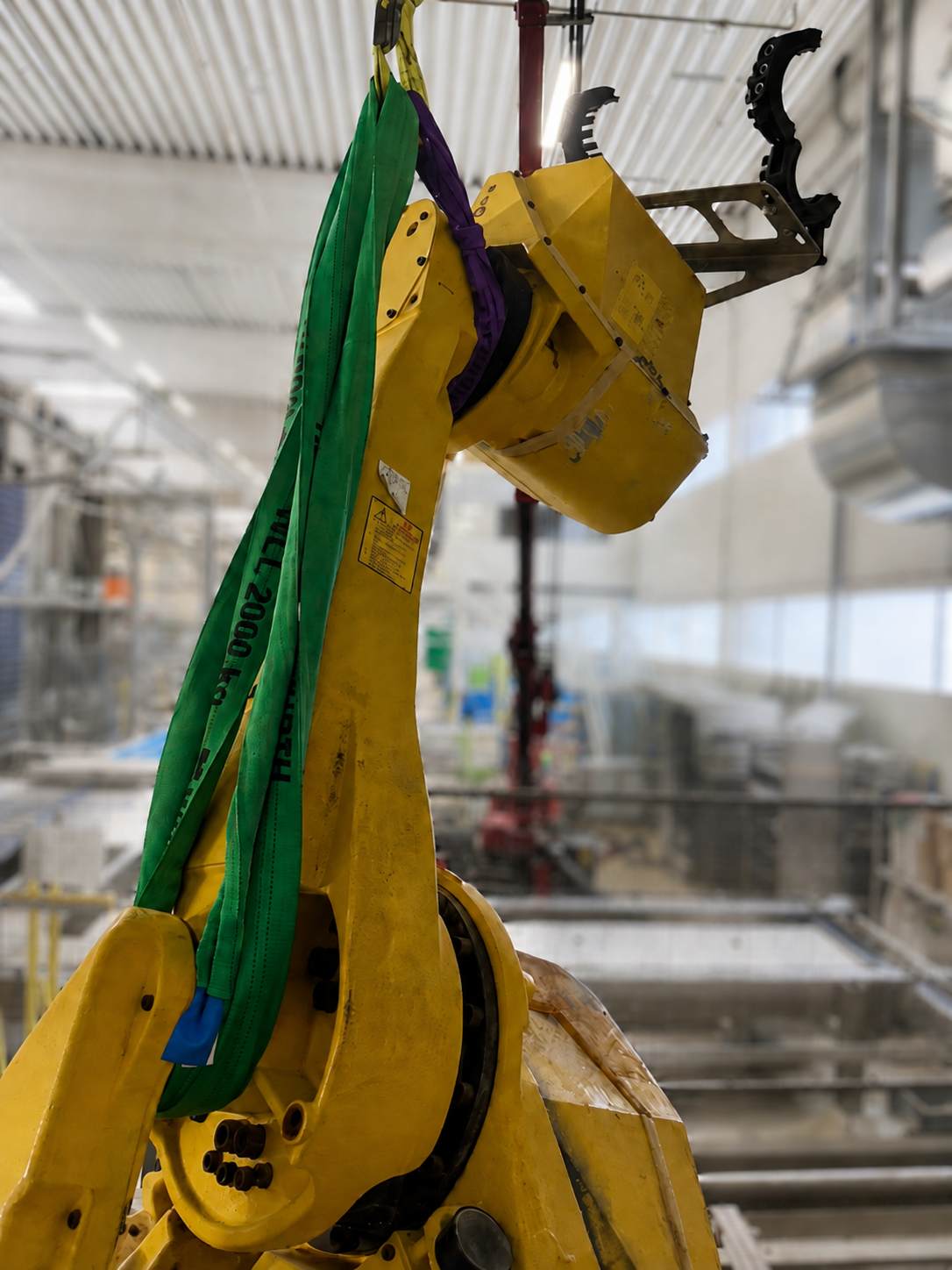
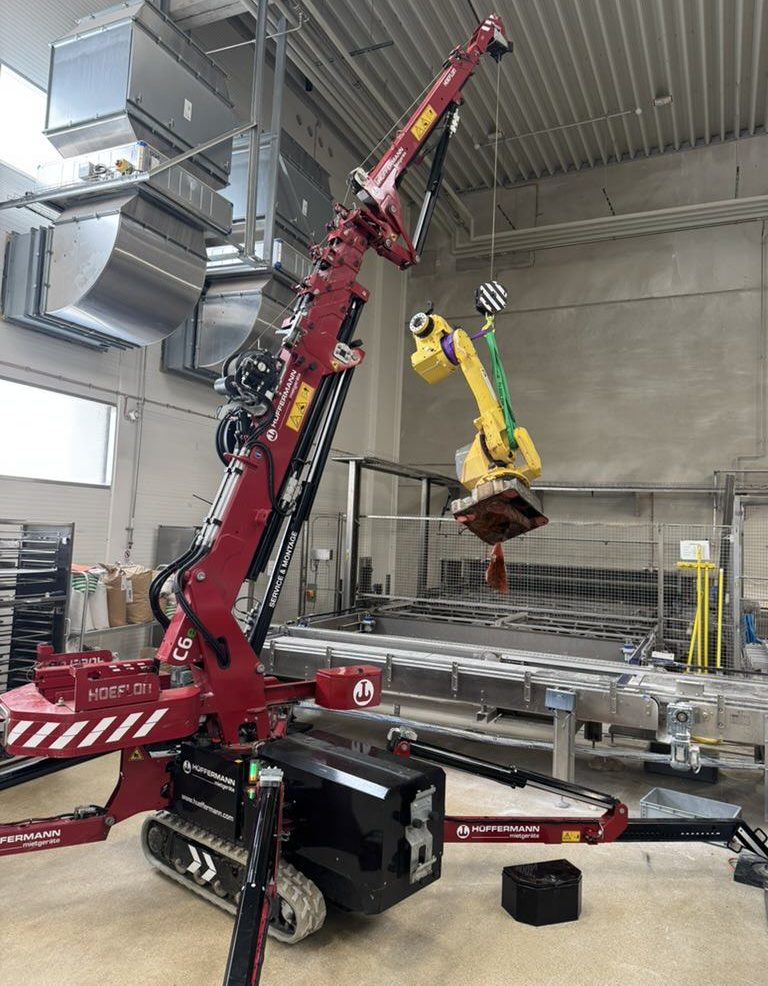
Since the robot was to be preserved undamaged, it was lifted completely in one piece – slung with certified round slings, precisely balanced and guided centimetre by centimetre over the line.
The pictures capture the moment: the Fanuc robot floating from the mini crane's boom above the production belt – the very belt that was to be carrying baked goods again two days later.
An uncontrolled knock would have damaged not only the robot but also the line, and jeopardised the restart of production.
Our lifting manager coordinated every movement, the crane operator guided the load millimetre by millimetre, and the mechatronics technicians secured and guided the robot until it was set down safely.
The robot base:
Even heavier, even tighter
After the robot came the base – and that was a challenge in itself. It was so heavy that a direct lift from its installed position was not possible.
Our solution: the base was first pulled forward beneath the conveyor belt until it lay in a position from which the mini crane could pick it up safely. Only then was it slung and lifted over the actual production belt.
Intermediate steps like these look unspectacular at first glance – but they are exactly what distinguishes a safe dismantling job from a risky one: better one more controlled pull than a lift at the limit.
Conversion of the robot cell:
Safely back into operation
The project did not end with the removal. On the following days we converted the robot cell so that the production line could be operated safely again:
- Dismantling of the previous access points to the robot
- Adaptation of the safety guards
- Welding reinforcements into the fencing – using the TIG process, as it is stainless steel
In food production in particular, stainless steel is standard and TIG welding is the right choice for clean, corrosion-resistant seams that also meet hygiene requirements.
The customer was delighted with the fast and safe execution: robot out, cell converted, production restarted on schedule.
Why Omega Mounting for dismantling in the tightest of spaces?
Our range of services for your job
As an installation company from Rodgau, we specialise in exactly these kinds of jobs – where standard solutions do not fit:
- Dismantling and relocation of robots and production lines
- Mini crane jobs in the tightest of spaces (including Hoeflon C6)
- Mechatronics teams: mechanics, electrics and control technology (incl. bus systems) from a single source
- Risk assessments and lift plans before every lift
- TIG welding work on stainless steel – including in hygiene areas
- Working in tight production shutdown windows
Conclusion: dismantling an industrial robot in the tightest of spaces
Experience that counts
A 600 kg robot in the far corner of the hall, centimetres of space between the conveyor belts, one day's time – and in the end an undamaged robot, a converted robot cell and a production line that restarted on time.
This project shows what modern industrial dismantling is all about: the right crane technology for confined spaces, proper planning with lift plan and risk assessment, mechatronic know-how right down to the bus system – and a team that works calmly and precisely, even when space is tight.
Are you planning a dismantling job or plant relocation?
Whether industrial robot, production line or machinery relocation
We take on planning, dismantling, crane work and conversion – including in the tightest of spaces and in operating plants.
From Rodgau we are quickly on site in the Rhine-Main region – Frankfurt, Offenbach, Hanau, Aschaffenburg – and we work throughout Germany, as here near Fulda.
Get in touch – we will bring your equipment safely to its destination.
100% non-binding & free
Related guides for this project

About the author
Tobias Schott
Managing director of Omega Mounting GmbH, Rodgau · more than 20 years of hands-on experience in installation and maintenance
A trained mechatronics technician, at home in maintenance, servicing and industrial installation since 2004 – first alongside his father, and since 2012 with Omega Mounting: from the overhead conveyor in Frankfurt to the crane system in a new-build hall. As appointed person for lifting operations, he plans and leads lifting operations in data centers and on industrial sites in the Rhine-Main region, is an instructor and examiner for cranes, aerial work platforms and telehandlers, and a safety officer. On assignments abroad he is known as the "German Troubleshooter" – the one you call when things get stuck on site. He did not learn what quality means from a manual, but from his father: Made in Germany as a standard for his own work, not as a label. That is why quality comes first at Omega Mounting – before speed and before price. The project diary shows the jobs his team has planned and carried out – without customer names, but with everything that can be learned from them.
Frequently asked questions (FAQ) – Fulda
Everything you need to know about our services
How do you dismantle an industrial robot?
First, all utilities are disconnected – power, water, compressed air – and the control technology is properly disconnected. If the robot is integrated into a bus system, this must be bypassed so that the rest of the line keeps running. The robot is then slung according to the lift plan and lifted out with suitable crane equipment.
What is a mini crane and when is it used?
A mini crane such as the Hoeflon C6 is a compact crawler crane that fits through normal hall doors, can turn on the spot and needs very little space when set up on its outriggers. It is used wherever larger cranes do not fit – for example between production lines or in confined halls.
Can a robot be removed in one piece?
Yes – if the lifting capacity, lifting points and space allow it. On this project, the robot weighing approx. 600 kg was lifted completely in one piece, as it was to be preserved undamaged. The basis for this is an accurate weight calculation, a lift plan and a risk assessment.
What happens to the line control when a robot is removed?
If the robot is integrated via a bus system, simply disconnecting it would disrupt the line's communication. A bypass is therefore created in the bus system so that the remaining parts of the line can continue to run safely without the robot.
Does Omega Mounting also carry out work in the food industry?
Yes. Our teams regularly work in hygiene areas of food production – with appropriate protective equipment and in compliance with all the operator's requirements. We carry out welding work on stainless steel using the TIG process.
What area does Omega Mounting cover?
Our head office is in Rodgau near Frankfurt – in the Rhine-Main region (Frankfurt, Offenbach, Hanau, Darmstadt, Aschaffenburg) we are on site particularly quickly. Projects like this one near Fulda show that we also travel throughout Germany for our customers.
 English
 German