
- Project report – Replacing a CRAH unit in a live data center in Frankfurt
Replacing a CRAH unit in a live data center in Frankfurt – lift & shift under the strictest safety requirements
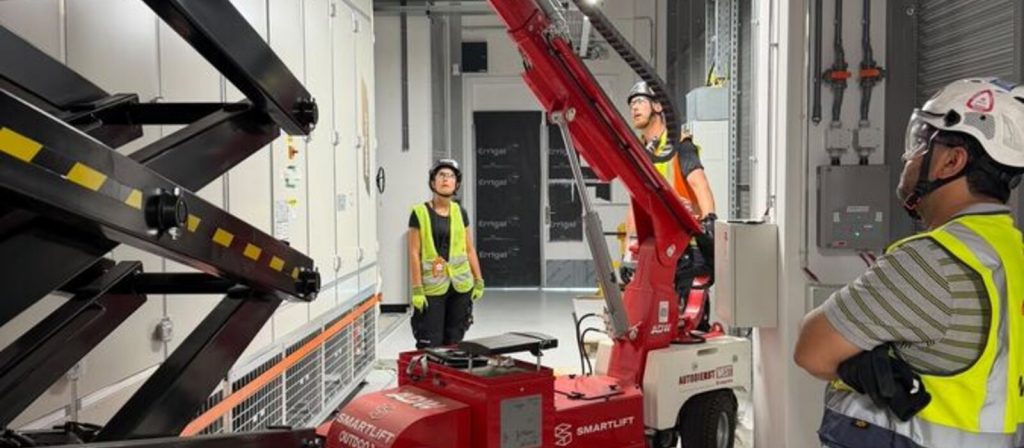
Faulty CRAH unit removed from the CRAH gallery, new unit moved in up to the 2nd floor – with two synchronised Smartlift 1008, in just 2 working days, without a single instance of damage
Replacing a CRAH unit (Computer Room Air Handler) is one of the most demanding tasks within an existing data center. While a new build allows considerably more freedom, in a data center that is already in operation all work must be carried out under the strictest safety, quality and organisational requirements.
That was exactly the challenge our team faced on this project at a data center in Frankfurt am Main: completely removing a faulty CRAH unit from within an existing CRAH gallery and replacing it with a new unit – including transport, moving in up to the second floor, installation and the subsequent removal of the faulty unit.
It was clear during the planning stage: every single step had to be prepared down to the smallest detail.
Project profile
Service
- Replacement of a faulty CRAH unit
- Transport of the new unit and unloading on site
- Moving in up to the 2nd floor
- Removal of the existing unit from the CRAH gallery
- Moving out and loading of the faulty unit
- Lift & shift and rigging
- Preparation of all documentation (RAMS, SPA, lift plans)
- Project management
- Team
- 1 Supervisor
- 3 experienced lift & shift riggers
- Project duration: 2 working days
- Location: Data center in Frankfurt am Main (operator confidential)
What is a CRAH unit?
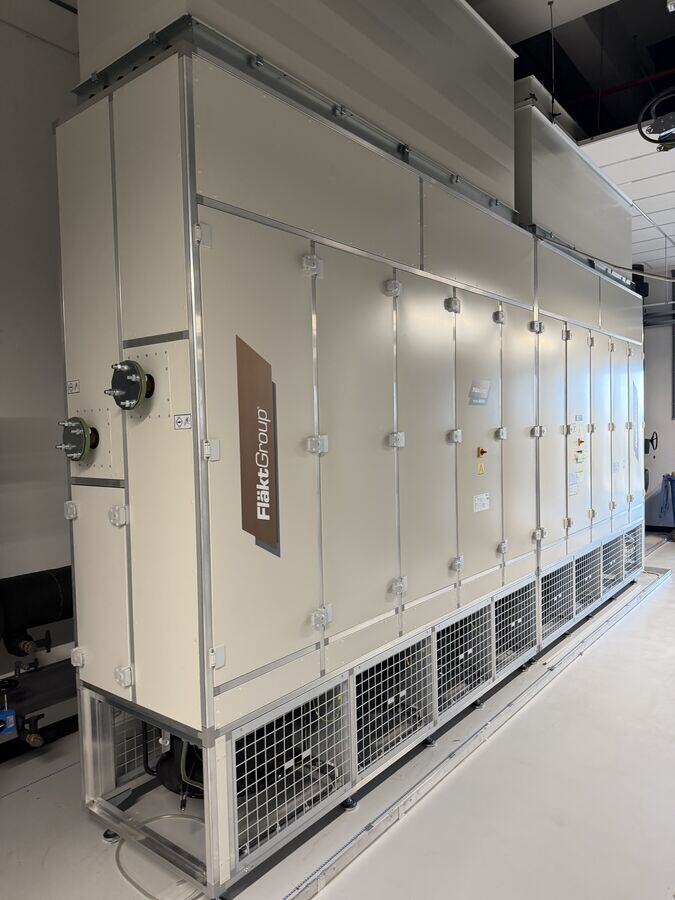
A CRAH unit (Computer Room Air Handler) provides precise climate control within a data center. It cools the server rooms and ensures that temperature and airflow remain within tightly defined limits at all times.
A failure of such a unit can have a considerable impact on the availability of the IT infrastructure. Replacements are therefore usually carried out in closely coordinated maintenance windows and under the highest quality requirements.
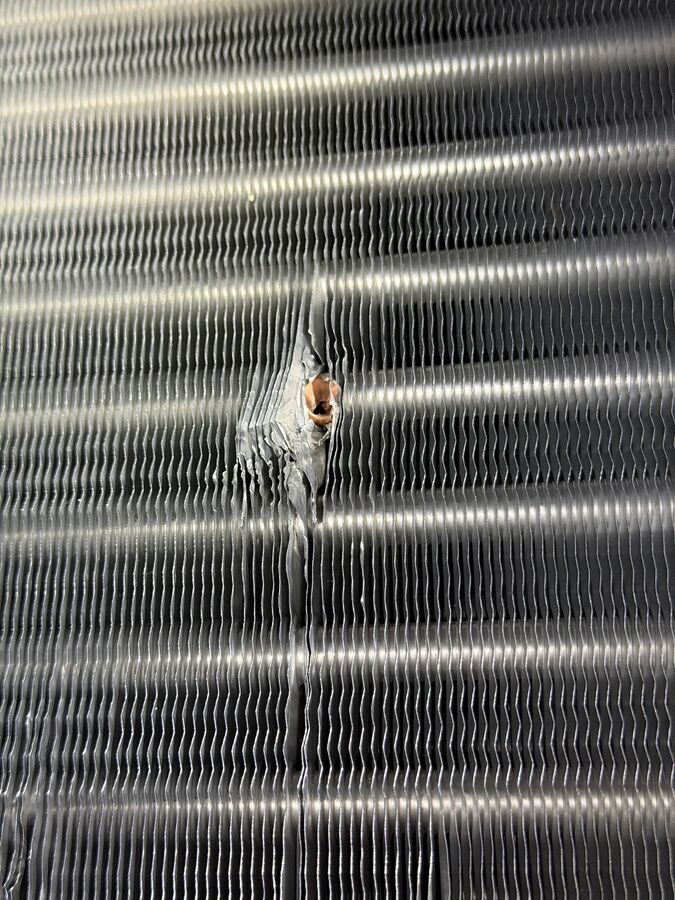
On this project, the reason for the replacement was clearly visible in the photos: a damaged heat exchanger whose fin pack had been torn open down to the copper tube – damage that could not be economically repaired on site.
What is a CRAH gallery?
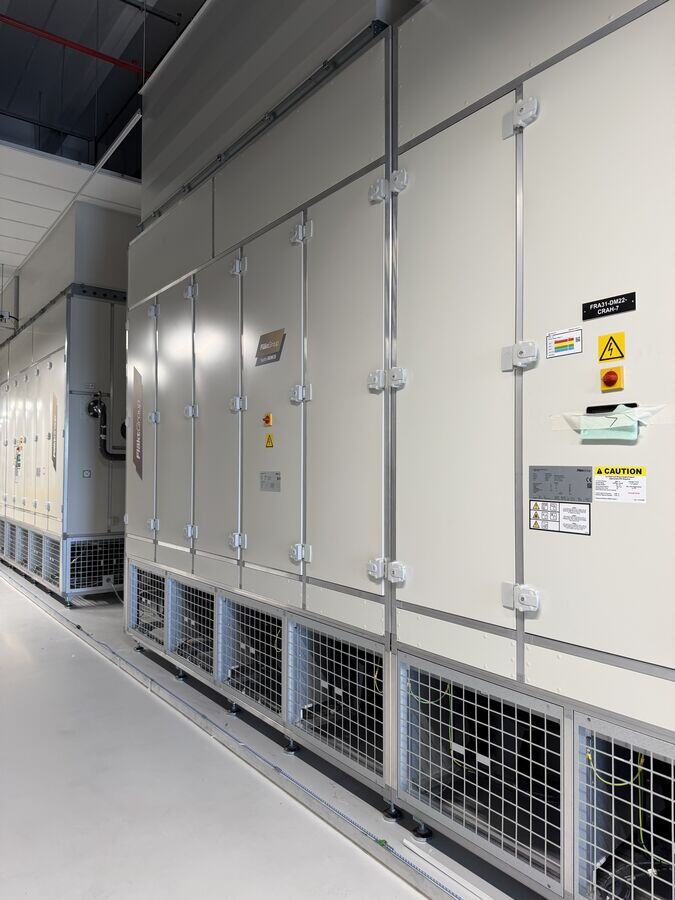
A CRAH gallery (Computer Room Air Handler Gallery) is a dedicated plant area within a data center in which several CRAH units are installed. These units ensure that the server rooms are continuously supplied with air at exactly the right temperature.
While servers generate heat permanently, the CRAH units have the task of removing this heat in a controlled manner and maintaining the required temperatures at all times. Even small temperature deviations can impair the operational reliability of a data center.
Since several units operate in parallel, maintenance or replacement work must be carefully planned. The aim is to replace individual components without jeopardising the cooling capacity of the remaining plant or ongoing operations.
For installation companies this means: it is not only the weight of the unit, but above all the environment that places the highest demands on planning and working methods.
Why is replacing a CRAH unit particularly demanding?
At first glance, a CRAH unit looks like a large ventilation unit. In fact, it is a highly complex technical system that is precisely integrated into the infrastructure of a data center.
Even transport within the building presents particular challenges. The most common difficulties include:
- narrow transport routes and little room for manoeuvring
- finished floor coverings that have already been accepted
- sensitive building services on almost every square metre
- low passage heights
- high weights with compact dimensions
- building operations running around the clock
- streng geregelte Arbeitsfreigaben
An uncontrolled impact or damage to adjacent equipment can have considerable financial consequences. That is why we work exclusively with experienced lift & shift teams specially trained for projects in sensitive industrial facilities.
Engineering decides the success of the project
When people think of lift & shift, they first think of cranes or lifting equipment. In reality, the most important part of our work begins long before the actual installation.
During the engineering phase, we analyse all the framework conditions:
- weight and centre of gravity of the unit
- transport dimensions
- load-bearing capacity of the floors
- movement radii of the lifting equipment
- door and passage dimensions
- escape and rescue routes as well as safety zones
- lifting points
- positioning of the machines
Every transport route was measured, every door opening checked, every machine verified for load capacity and dimensions. The result was a complete installation concept covering all lifting operations, transport routes and the required machines and personnel.
Within a data center in particular, there is hardly any scope for spontaneous changes – which is why everything is planned in detail in advance and agreed together with the customer.
RAMS, SPA and lift plans – safety begins on paper
On data center projects, practical experience alone is not enough: almost every single step must be documented and approved. For this project, we prepared all the documentation ourselves.
RAMS (Risk Assessment & Method Statement)
The RAMS describe all the risks of the project and the planned protective measures. Every work step is assessed individually – so everyone involved knows exactly which measures are required before work begins.
SPA (Safe Plan of Action)
The Safe Plan of Action describes the complete work sequence. Responsibilities, machines, personnel and safety measures are clearly defined – a clearly structured schedule for everyone involved in the project.
Lift plans
We prepare detailed lift plans for all lifting operations – with load weights, lifting points, lifting equipment, machine positions, load paths and safety clearances. This allows all lifting operations to be simulated and agreed before the project begins.
Strict safety requirements in a live data center
As the building was already fully operational, particularly high safety requirements applied. Access was exclusively via several secured areas with security gates and locked doors.
The focus was on:
- protecting the critical infrastructure
- checking all work equipment
- documented machine inspections and approval of all lifting equipment
- abgestimmte Arbeitsfreigaben
- permanent communication with the operator
Before each shift, all machines and lifting accessories were checked again and documented.
Protecting the finished data center floor
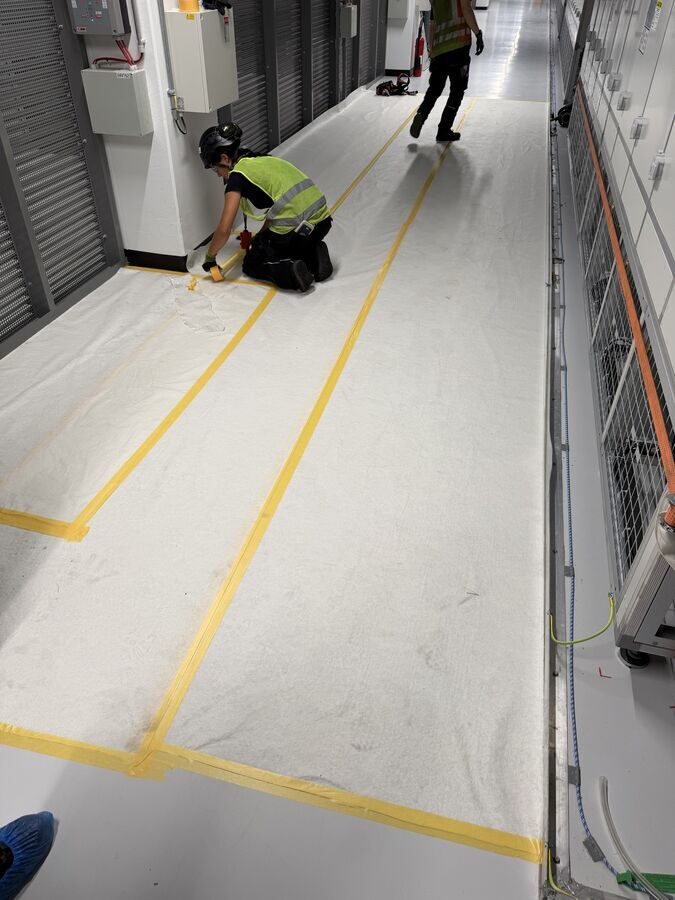
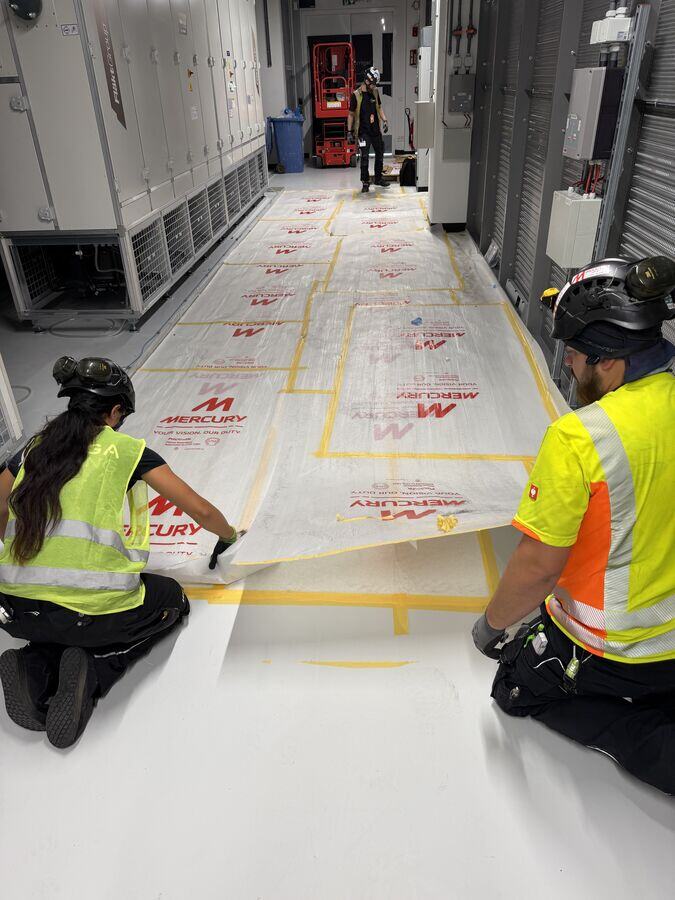
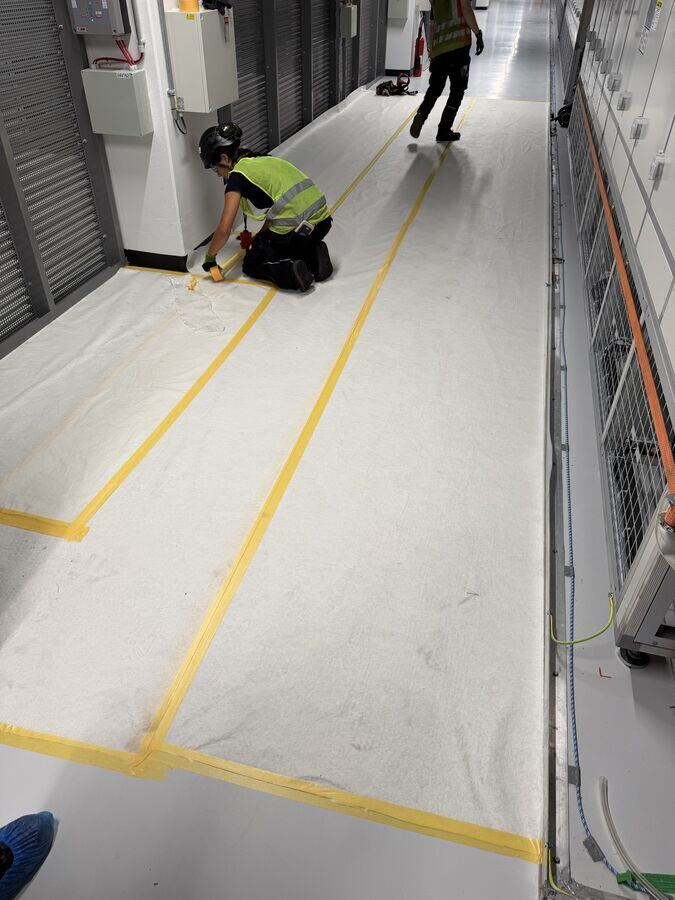
As all transport routes had already been accepted by the operator, no damage whatsoever was permitted. All walkways and travel routes were therefore completely covered with protective fleece and additionally taped off cleanly – the photos show how carefully our team went about this.
All machines were checked for suitable tyres; at critical points, every movement was made exclusively under the direction of our supervisor.
For the customer, this meant: no damage, no rework, no additional cleaning costs and immediate release of the work areas. Professional surface protection plays a decisive role, especially on projects in existing buildings.
Moving in the new CRAH unit
After delivery, we first took over the complete unloading of the new CRAH unit from the lorry. The unit was then transported to the second floor by our lift & shift team.
This step alone required the highest precision: transport routes, door passages and space conditions allowed only small tolerances. The new CRAH unit was positioned exactly and prepared for the subsequent replacement.
Why were two Smartlift 1008 used?
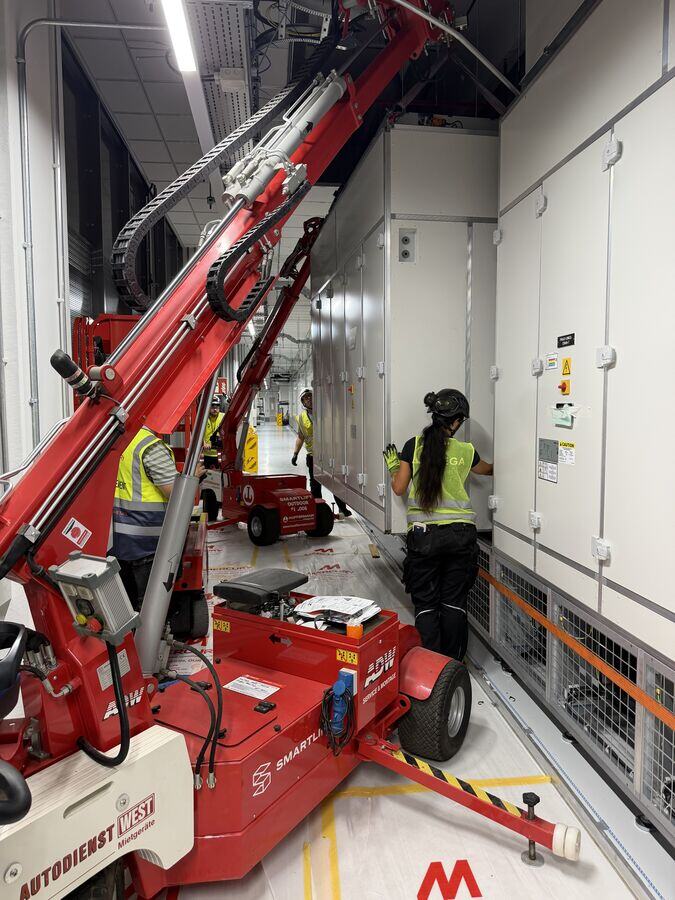
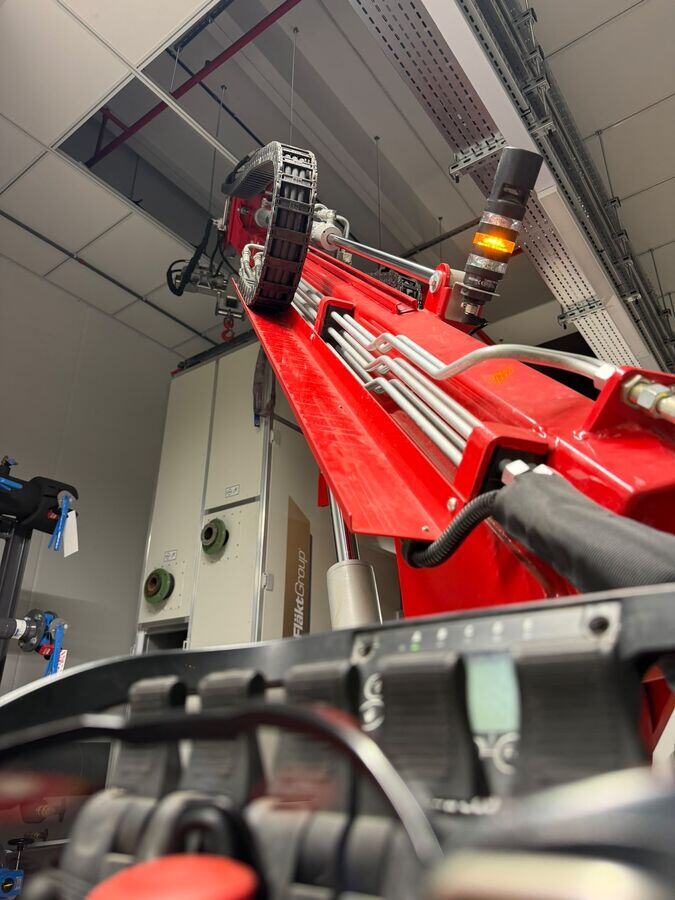
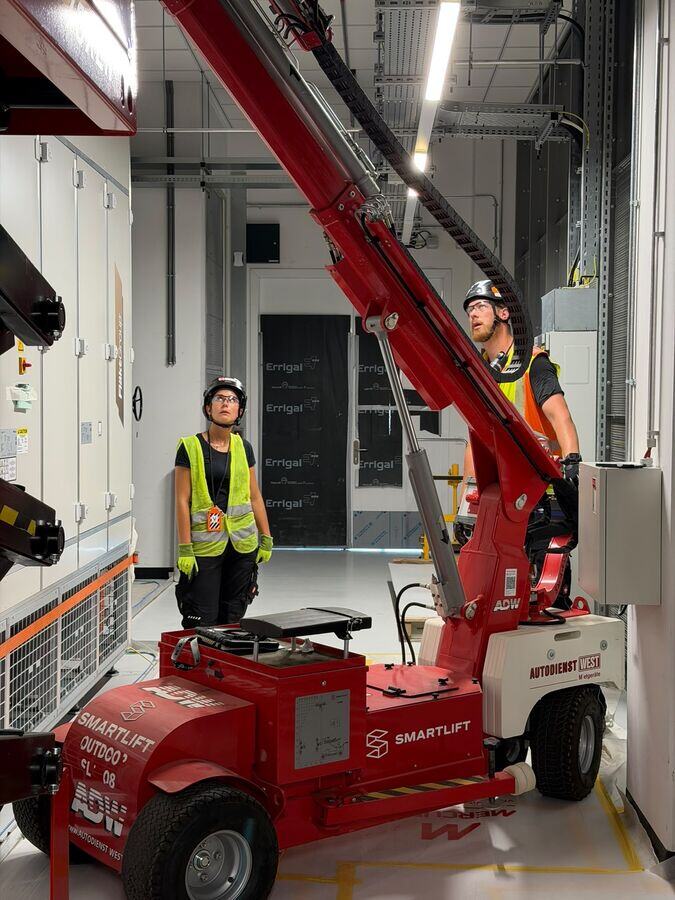
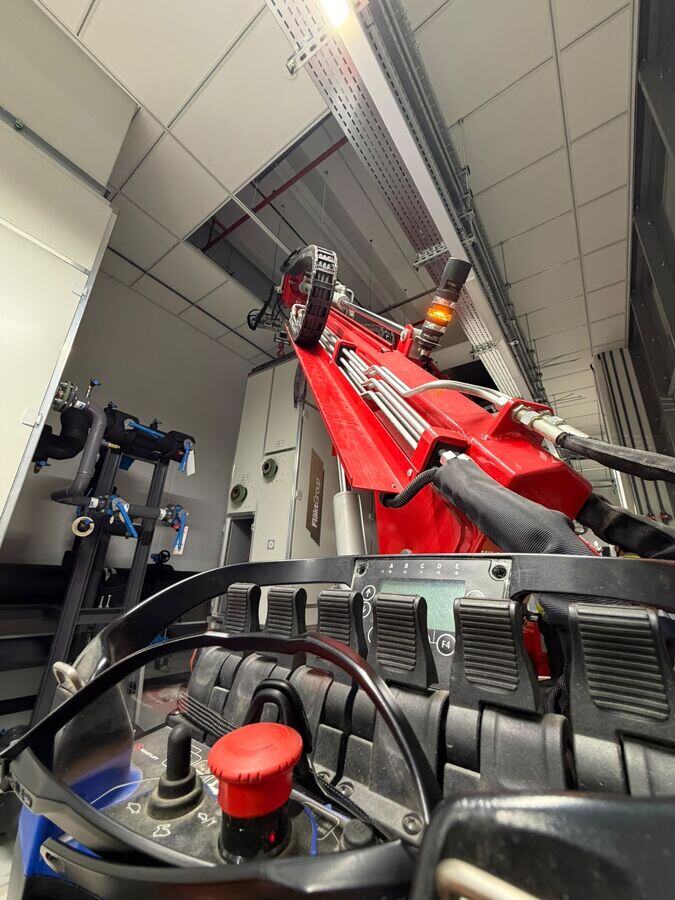
The available working space within the CRAH gallery was extremely limited – a conventional forklift or overhead crane could not have been used here. We therefore opted for two Smartlift 1008 in synchronised operation.
The advantages of these compact lifting devices:
- compact design with high load capacity
- precise control and positioning to the millimetre
- geringer Platzbedarf
- high level of safety
Thanks to the synchronised use of both machines, the heavy CRAH unit could be picked up under control at all times, moved to the millimetre and brought safely into its final position. Exact coordination between the machine operators was decisive, particularly during lifting in – our riggers were in direct communication throughout the entire lifting operation.
Removing the faulty CRAH unit
Once the new unit was in place, removal of the existing CRAH unit began. The faulty unit was picked up under control, moved step by step out of its position and transported out of the CRAH gallery.
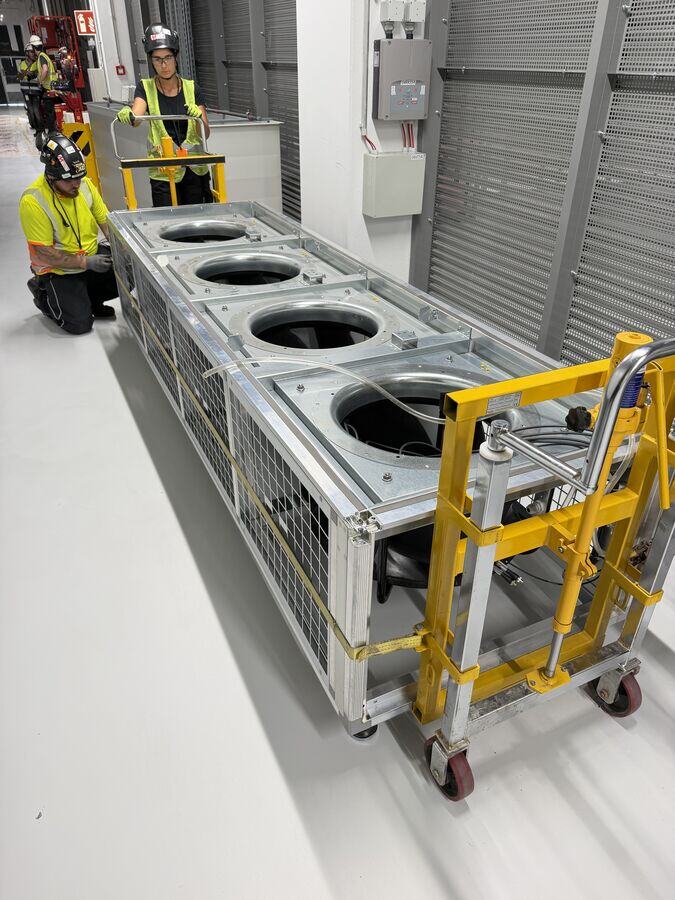
The photos clearly show how the heavy modules – such as the complete fan unit – were secured on hydraulic machine skates and moved through the narrow aisles. Here too, all transport routes had to be followed exactly so as not to damage either the floor or adjacent equipment.
After successful removal, the faulty CRAH unit was loaded by our team and taken away for repair.
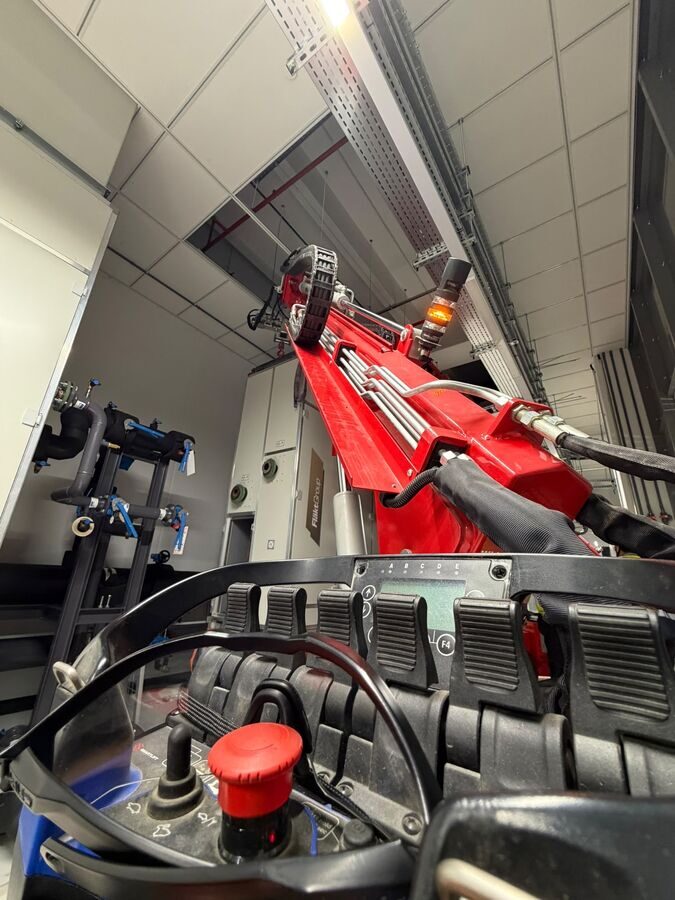

Working at height – right up to the ceiling of the gallery
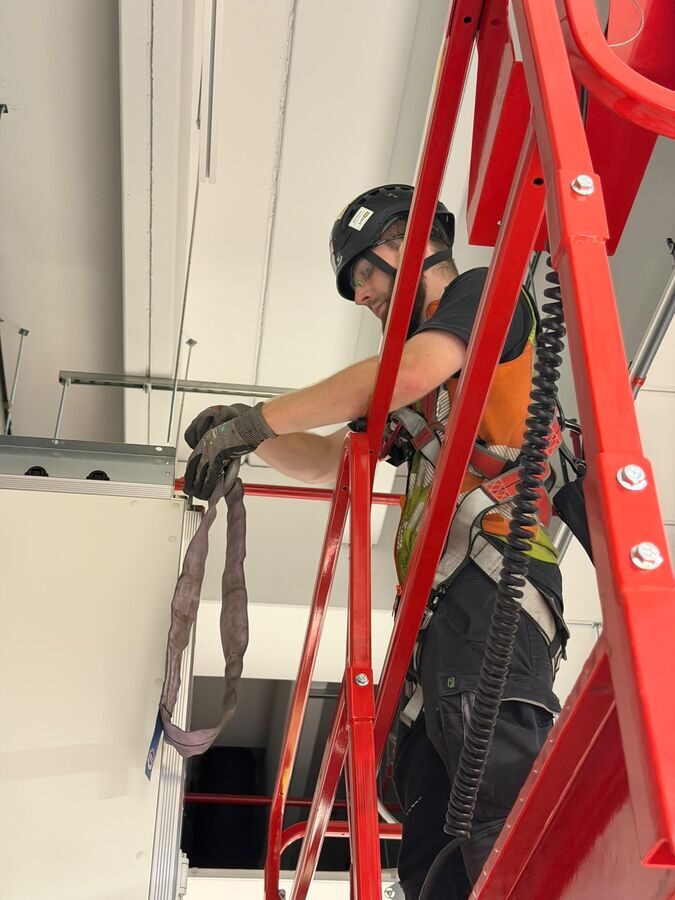
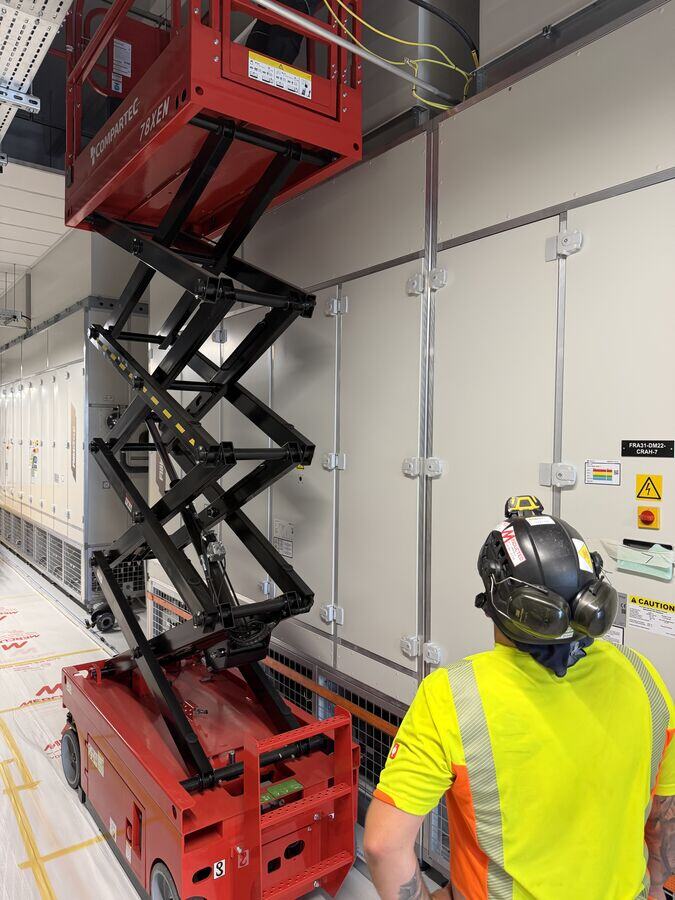
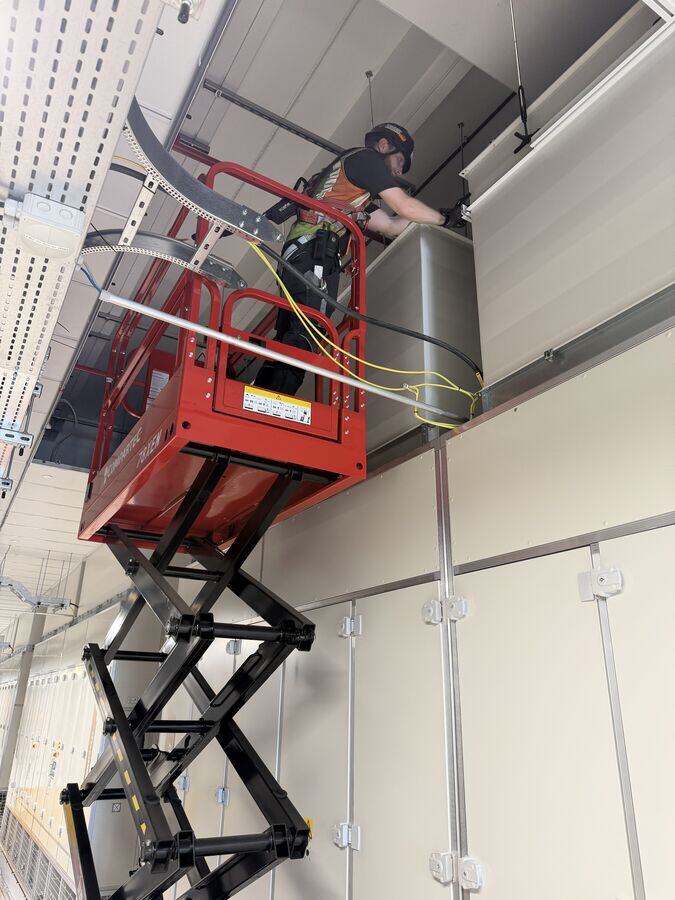
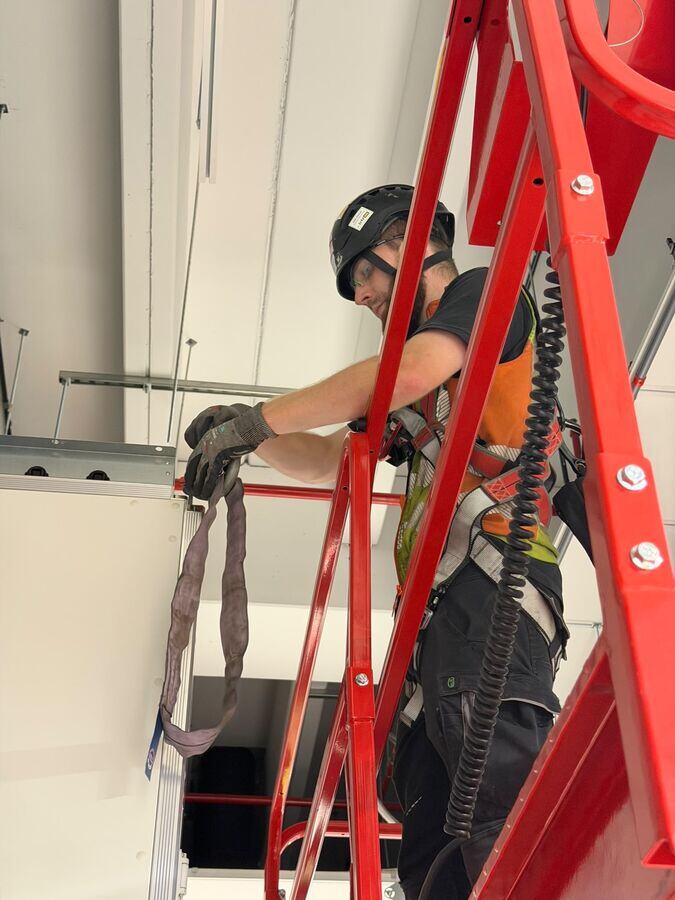
CRAH units are tall – the connections and upper panels are several metres above the floor. Compact scissor lifts were used for this work, allowing our riggers to work safely right up to the ceiling of the gallery: removing panels, setting lifting accessories, disconnecting connections and connecting the new unit.
Naturally with full PPE against falls – for us, that too is part of every work step at height.
Teamwork as the key to success
Lift & shift projects only work if every team member knows their task exactly. While our supervisor took over the entire project coordination, the three experienced riggers worked hand in hand throughout: some operated the Smartlifts, others monitored the load, checked clearances or communicated with the customer.
Every lifting operation was coordinated jointly, every machine movement was carried out under control. In sensitive areas such as a data center in particular, this well-practised cooperation decides safety and project success.


Why specialised lift & shift companies are indispensable
Replacing large technical components is not one of the classic tasks of a plant builder or electrician. Different trades come together here: heavy haulage, rigging, load distribution, lifting technology, occupational safety, engineering, project coordination and documentation.
A specialised lift & shift company takes on exactly this interface and ensures that all work is carried out safely, efficiently and on schedule.
Omega Mounting – your partner for data center installations
Data centers are among the most demanding working environments in industry. Our customers benefit from an experienced team of supervisors, riggers and project managers who regularly carry out complex lift & shift projects in highly sensitive areas.
Our range of services includes, among other things:
- replacement of CRAH units and moving in of technical equipment
- lift & shift, rigging and heavy-duty installations
- machine relocations and transport in existing buildings
- engineering and preparation of RAMS, SPA and lift plans
- project coordination and supervisor/rigger teams
From the first project meeting to successful handover, our customers receive all services from a single source.
Conclusion
A faulty CRAH unit, a fully occupied CRAH gallery, a data center in 24/7 operation – and after two working days: new unit positioned to the millimetre, faulty unit loaded, not a scratch on the floor or existing equipment.
This project shows what professional lift & shift is all about: careful engineering, complete documentation, the right lifting technology and a well-practised team that works calmly and precisely even under the strictest safety requirements.
Planning a CRAH unit replacement or a lift & shift project?
Whether data center, industrial plant or building services – we take on the complete planning and execution of complex heavy-lift and moving-in projects. From Rodgau, we are on site at the data center locations in Frankfurt and throughout the Rhine-Main region in the shortest possible time.
Get in touch – we support you from the engineering phase through to the successful commissioning of your equipment. Request a call-back appointment for your project now.
Photo gallery of the job
Are you planning a project of this kind?
Tell us briefly what it is about – we will come back to you with an honest assessment.
100% free and without obligation
Related guides for this project

About the author
Tobias Schott
Managing director of Omega Mounting GmbH, Rodgau · more than 20 years of hands-on experience in installation and maintenance
A trained mechatronics technician, at home in maintenance, servicing and industrial installation since 2004 – first alongside his father, and since 2012 with Omega Mounting: from the overhead conveyor in Frankfurt to the crane system in a new-build hall. As appointed person for lifting operations, he plans and leads lifting operations in data centers and on industrial sites in the Rhine-Main region, is an instructor and examiner for cranes, aerial work platforms and telehandlers, and a safety officer. On assignments abroad he is known as the "German Troubleshooter" – the one you call when things get stuck on site. He did not learn what quality means from a manual, but from his father: Made in Germany as a standard for his own work, not as a label. That is why quality comes first at Omega Mounting – before speed and before price. The project diary shows the jobs his team has planned and carried out – without customer names, but with everything that can be learned from them.
Frequently asked questions
A CRAH unit (Computer Room Air Handler) is an air conditioning unit for data centers. It cools the server rooms and keeps temperature and airflow within tightly defined limits. If a CRAH unit fails, this can jeopardise the availability of the entire IT infrastructure.
After detailed planning (RAMS, SPA, lift plans), the new unit is delivered, unloaded and brought into position by lift & shift. The faulty unit is then removed under control, transported out of the CRAH gallery and loaded. On this project, the complete replacement took two working days.
Compact lifting devices such as the Smartlift 1008: they combine high load capacities with millimetre-precise control and a small footprint. Conventional forklifts or overhead cranes usually cannot be used in the narrow aisles of a CRAH gallery.
Lift & shift refers to the controlled lifting, moving and positioning of heavy plant and machinery – usually inside buildings, where conventional cranes cannot operate. Engineering, lift plans, suitable lifting technology and experienced riggers are decisive.
In data centers, almost every work step must be documented and approved. RAMS assess the risks of each work step, the SPA defines procedures and responsibilities, and lift plans define every lifting operation in detail – so risks are minimised before the first tool is used.
All walkways and travel routes are covered with protective fleece and taped off cleanly, and the machines are checked for suitable tyres. At critical points, every machine moves only under direction – so floor areas that have already been accepted remain undamaged.
Compact design, high load capacity, precise control and a small footprint. With two machines in synchronised operation, even long, heavy units such as CRAH units can be moved under control and to the millimetre.
Yes – that is exactly what CRAH galleries with several units operating in parallel are designed for. The replacement takes place in closely coordinated maintenance windows, while the remaining units take over the cooling. The prerequisites are detailed planning, approvals from the operator and an experienced lift & shift team.
 English
 German