

- Project report – installing a parts washer in Kassel
Installing a parts washing system: all trades in a single day – from moving it in to the first wash cycle
How 2 fitters moved in, levelled and fully connected a parts washer at a car and commercial vehicle workshop in Kassel – electrics, compressed air, water and exhaust air included
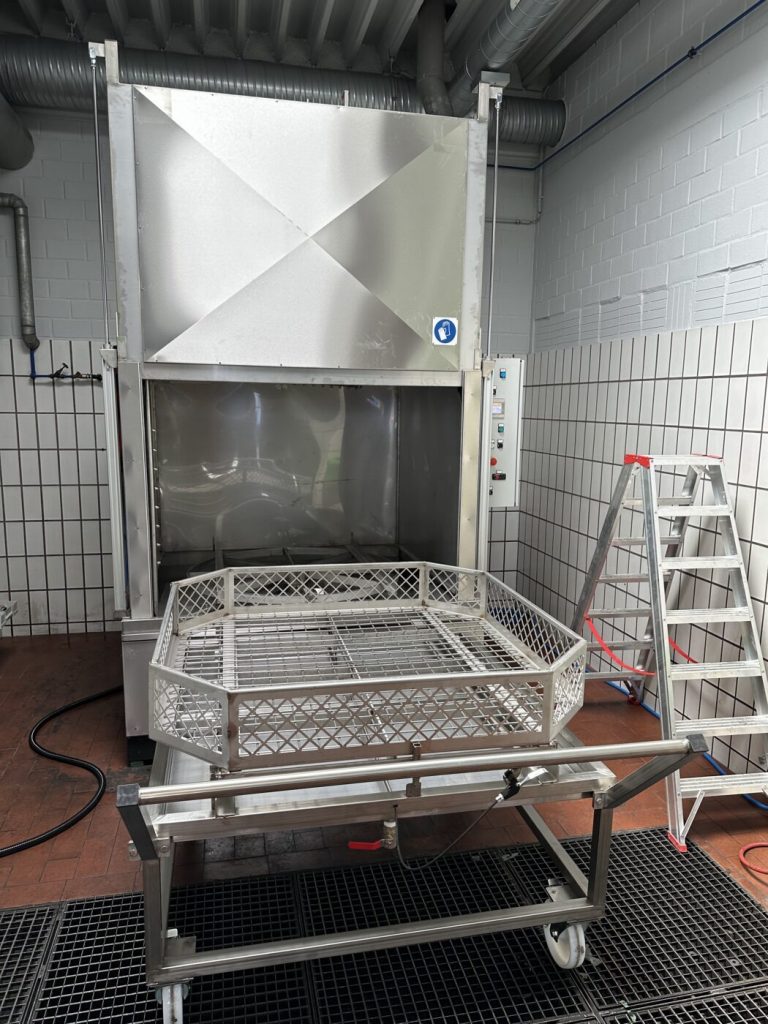
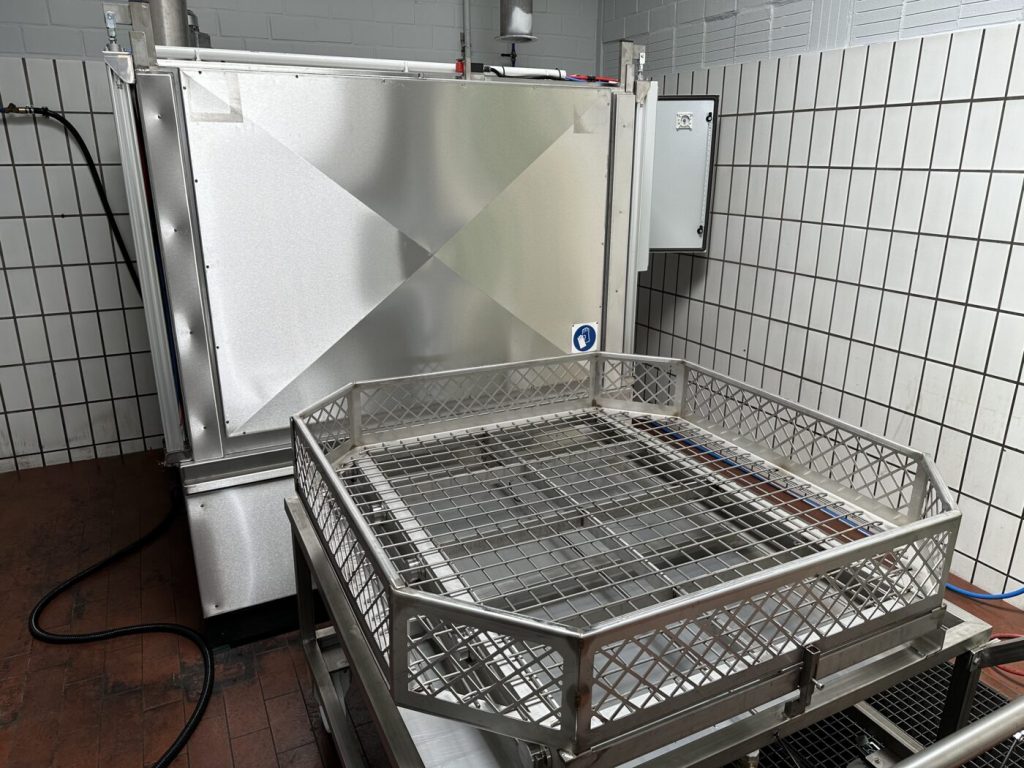
A new parts washer is quickly ordered – but before the first parts actually come out clean, it takes more than a place to put it: millimetre-accurate levelling, electrics, compressed air, fresh water and waste water, and a welded exhaust air system. At a car and commercial vehicle workshop in Kassel, our installation team did exactly that in a single day: moved the unit in, positioned it, levelled it and connected it across all trades. The result: the first parts were washed together with the customer on the day of installation.
Project profile
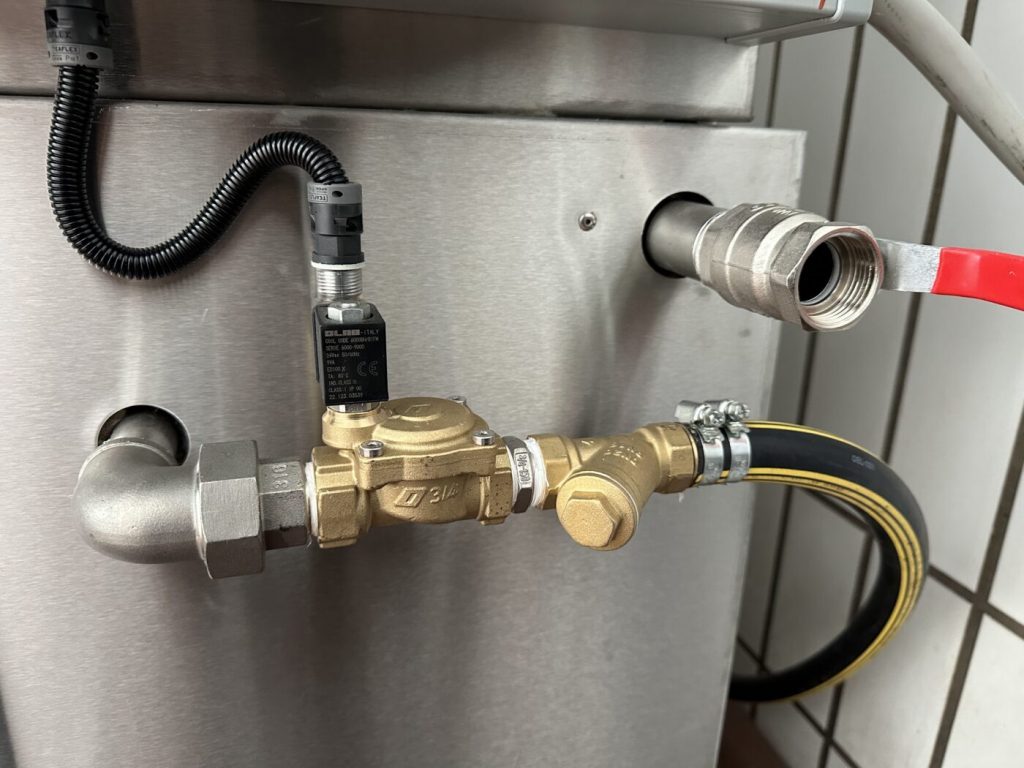
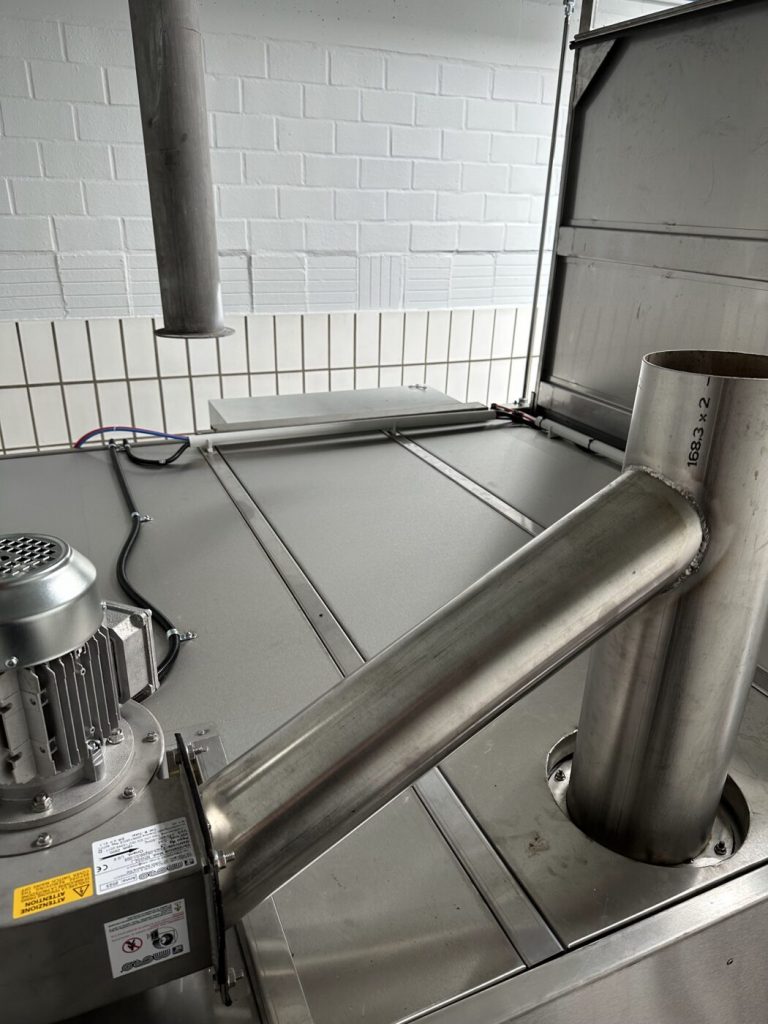
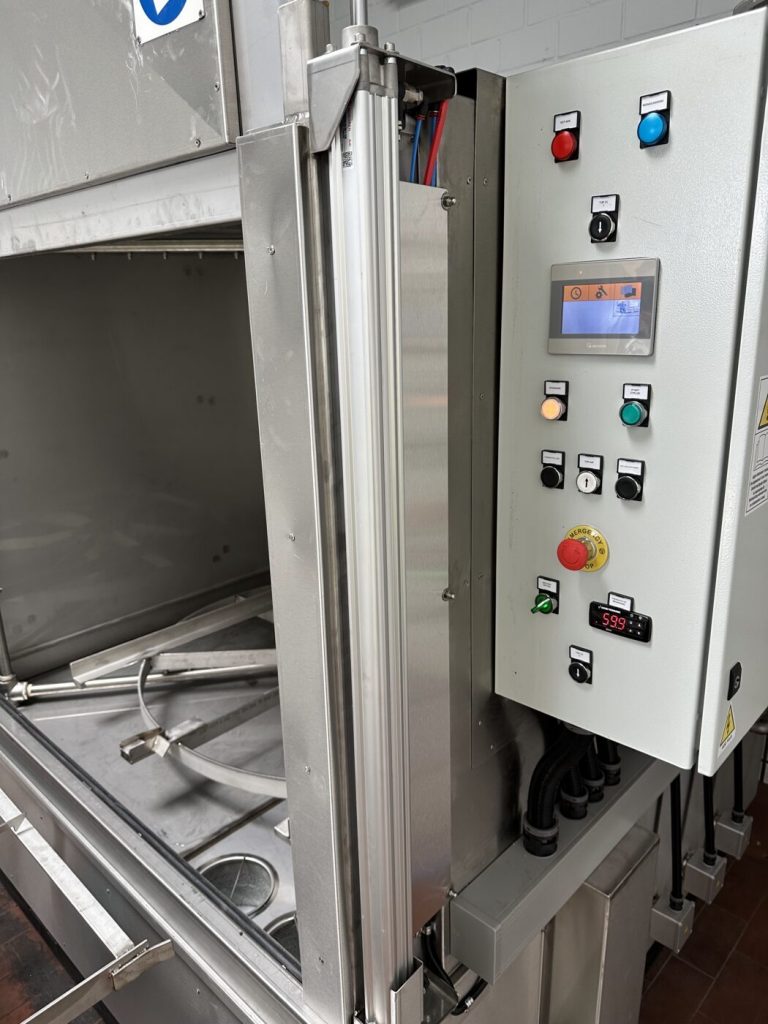
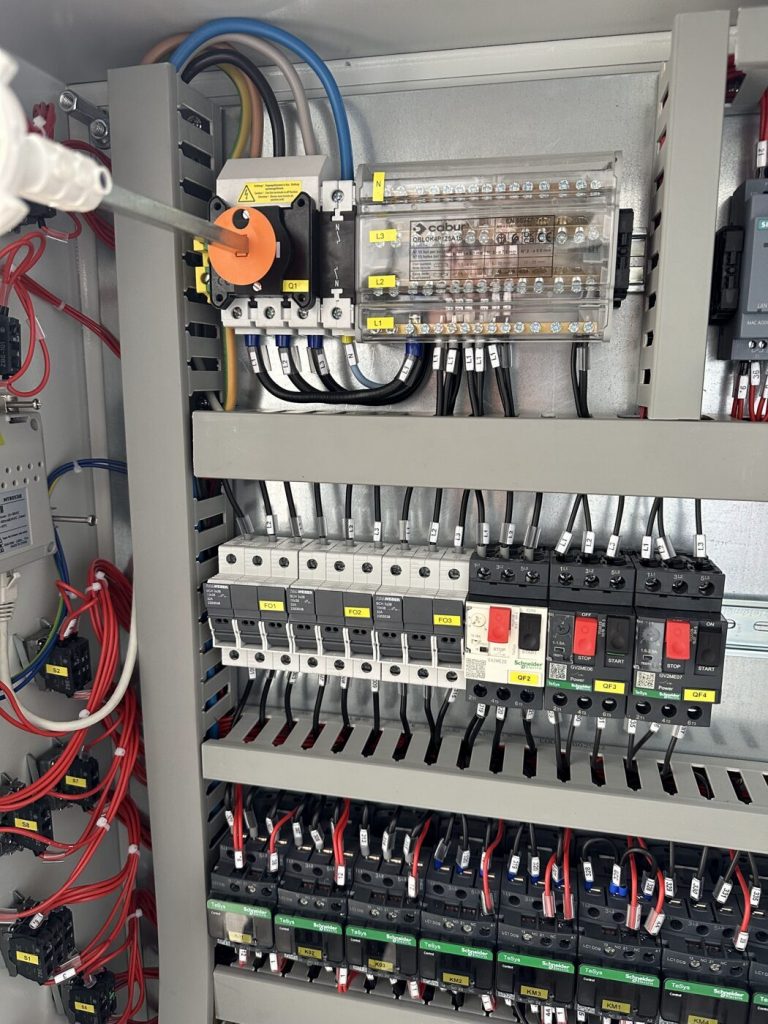
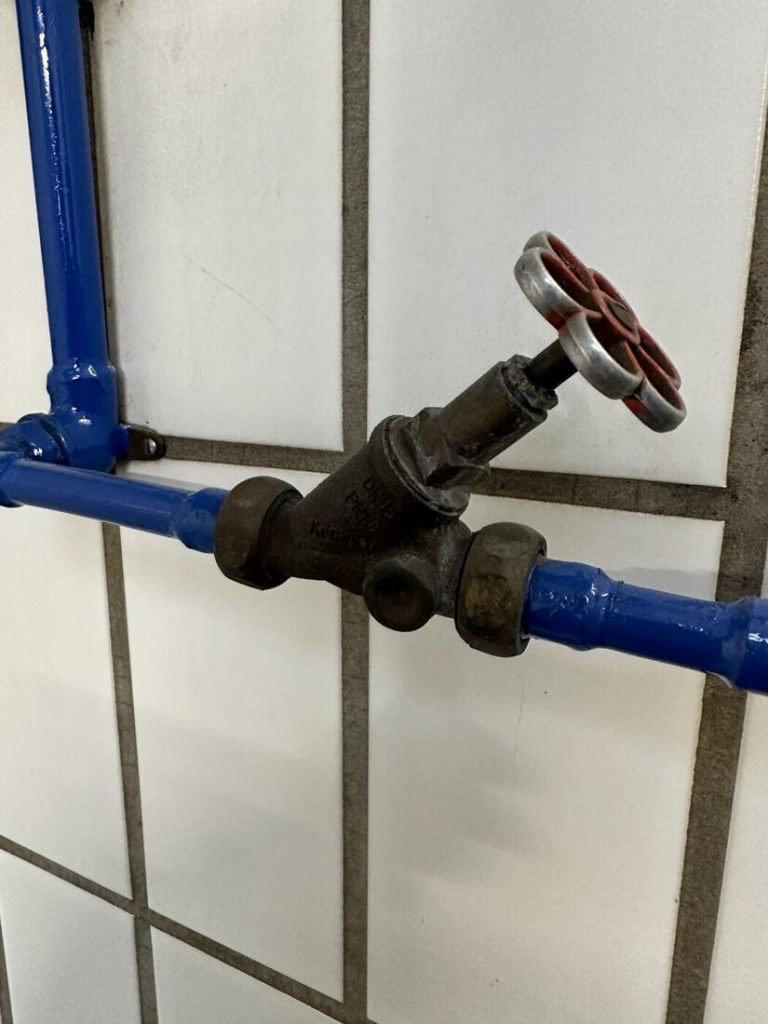
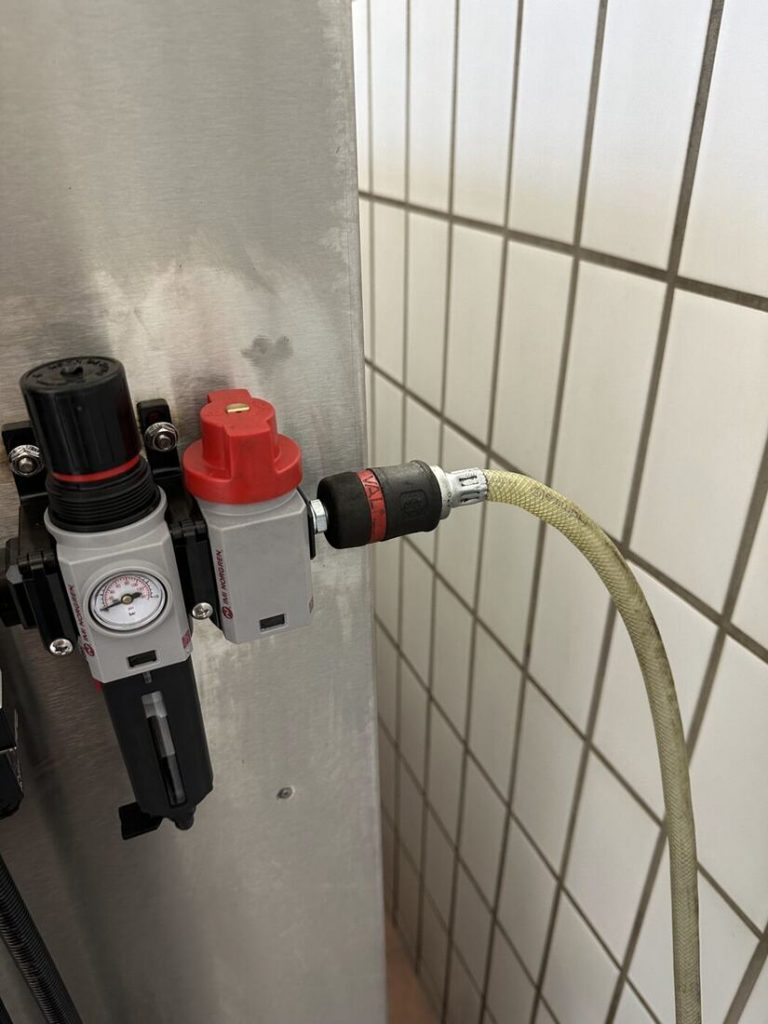
- Scope: Moving in, positioning and levelling a parts washer including feeder trolley and rail; electrical supply line routed through cable ducts to the control cabinet; compressed air installation with pressure gauges and shut-off valves; fresh water supply and waste water line; supply and exhaust air via a welded stainless steel pipework system; joint commissioning
- Team: 2 mechatronics technicians from Omega Mounting – mechanical and electrical work in one
- Project duration: 1 working day – the first parts were washed on the day of installation
- Location: Car and commercial vehicle workshop in Kassel
Why is levelling so important with a parts washer?
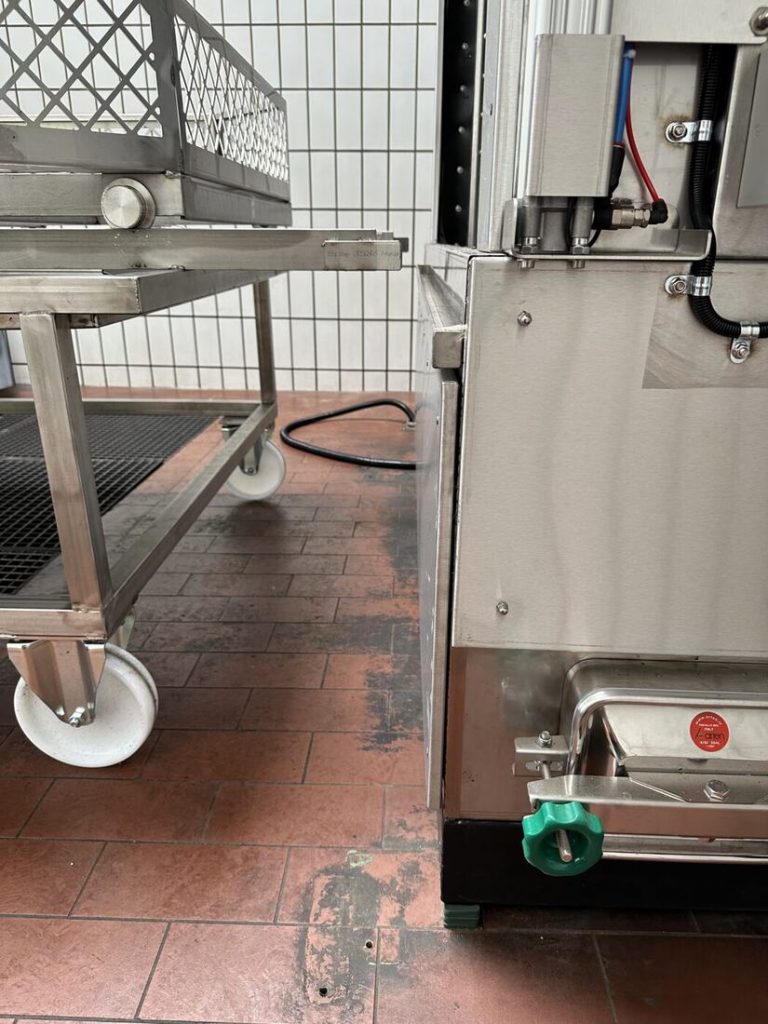
Because nobody should have to lift heavy parts here any more – that is the whole point of the machine. The washer is loaded via a feeder trolley: the parts to be cleaned are first lifted onto the trolley with a small slewing jib crane and then roll in the wash basket along a rail into the machine. For this to work, the unit, the trolley and the rail mounted on it must align exactly – and everything must be level. Even a slight offset or gradient, and the operator would be working against gravity or the basket would not transfer cleanly. Correctly levelled, on the other hand, even a heavy gearbox rolls into the machine with one hand: ergonomics is created during installation, not in the brochure.
What connections does a parts washer need?
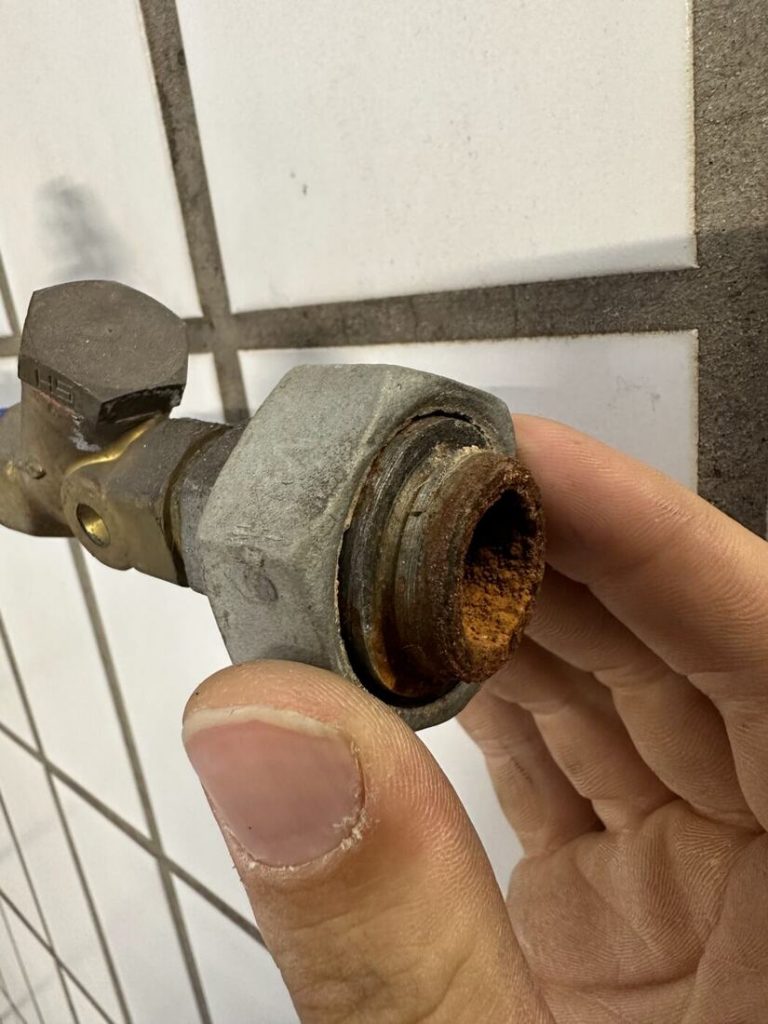
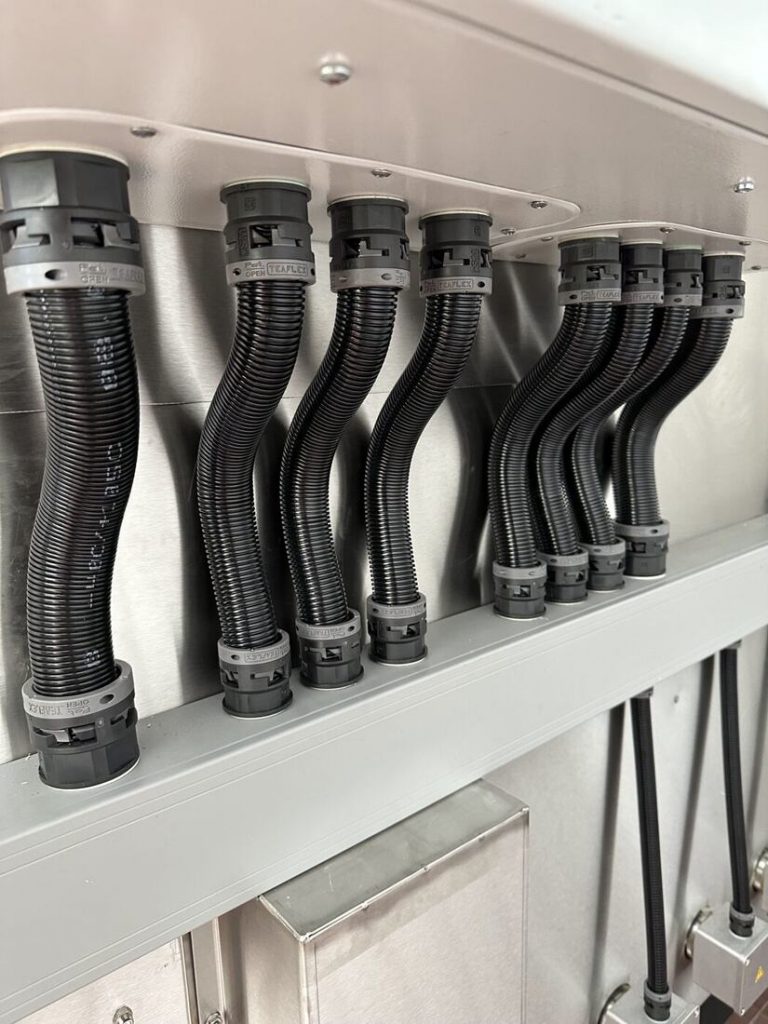
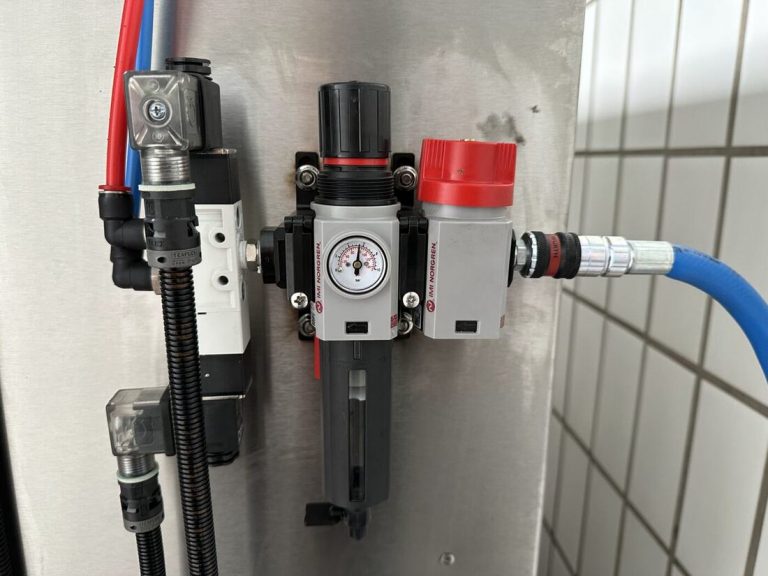
More than you might think – four trades came together here. Once the levelled unit was fixed in place, things moved quickly: first the electrical supply line, neatly routed through cable ducts and terminated in the control cabinet. Then the compressed air: laying hoses, installing pressure gauges and fitting suitable shut-off valves at the hall entrance – so the supply can be isolated centrally and quickly. The fresh water supply and the waste water line followed, because a washer lives on its water circuit. Anyone who contracts all this separately – electrician, plumber, pipework contractor – is coordinating three companies with three appointments. We had mechatronics technicians on site: specialists who master both mechanical and electrical work. That is why one and the same team could level the unit, pipe it up, connect it electrically and finally commission it – all from a single source, in a sequence that has proven itself.
Why is the exhaust air system welded from stainless steel?
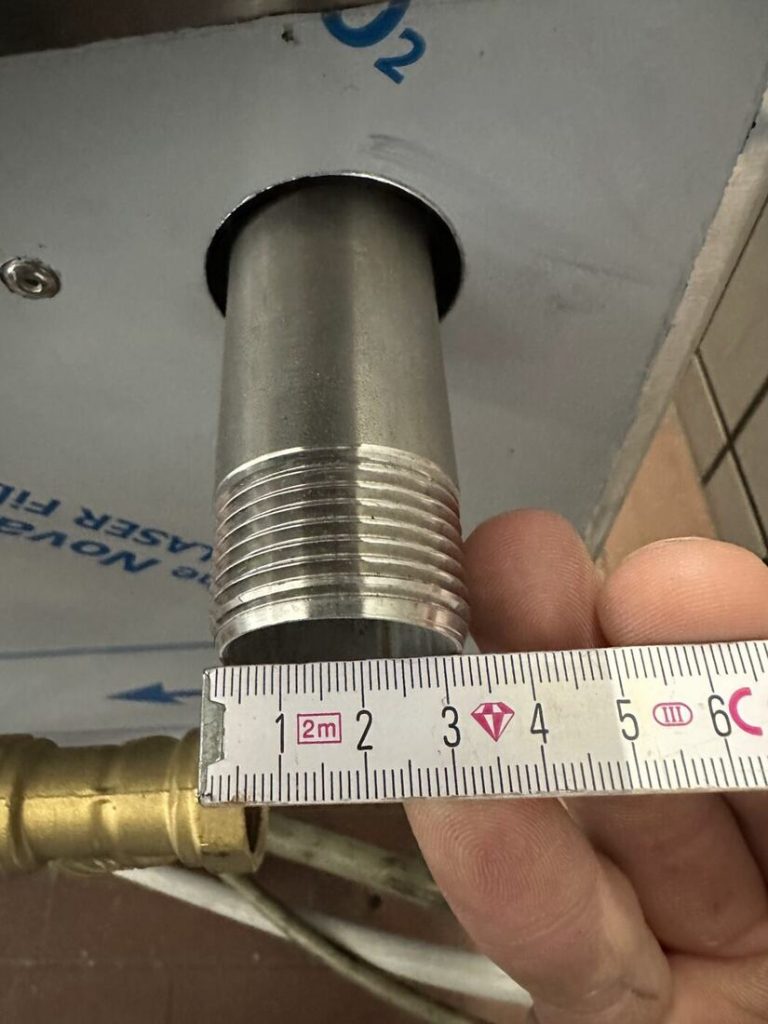
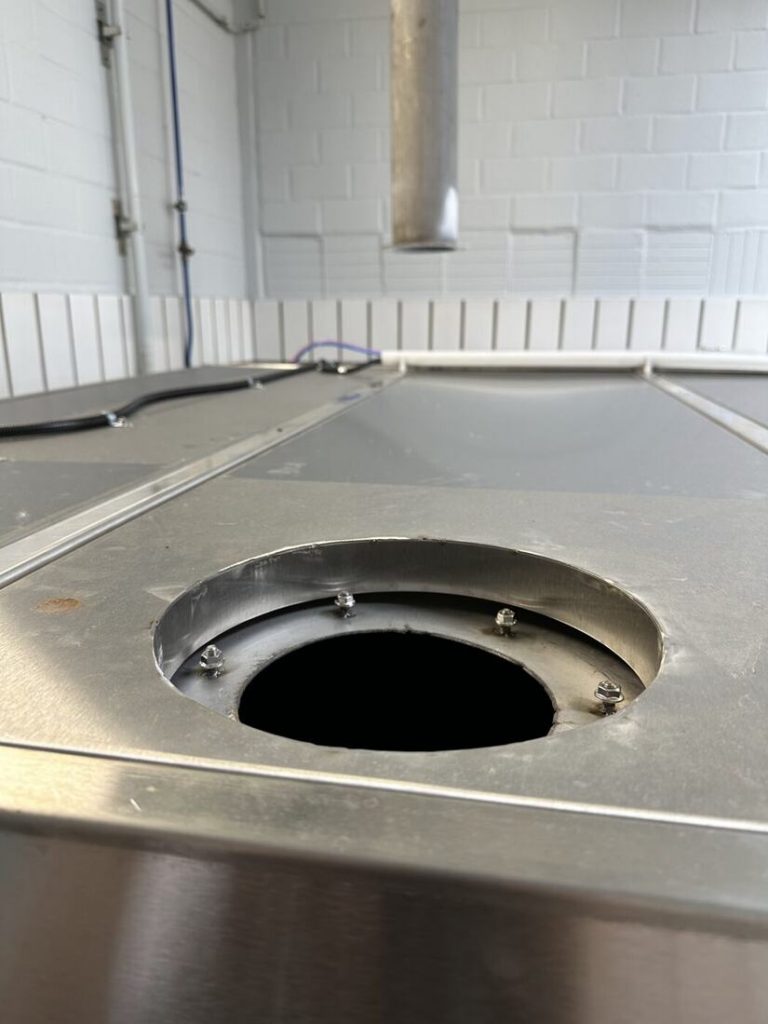
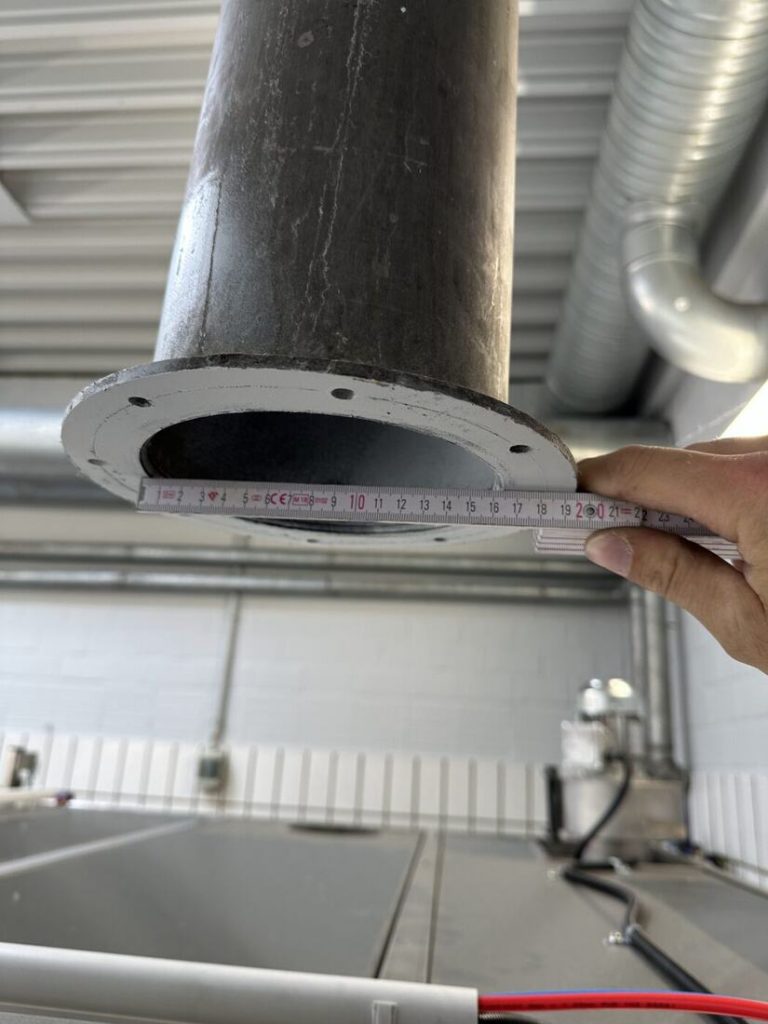
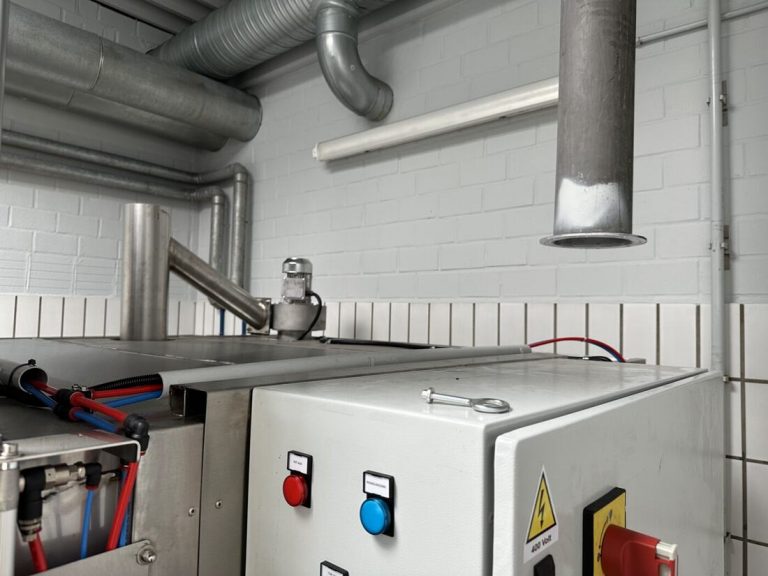
Because washing vapours attack pipework – and because standard parts rarely fit. The unit's supply and exhaust air were connected via a stainless steel pipework system: corrosion-resistant against the moist, detergent-laden vapours and durable in continuous operation. Off the shelf, however, such a system never fits completely – bends, flanges and pipes had to be adapted and welded together until the pipe routing matched the hall and the unit exactly. This is where it pays off that our fitters can weld: instead of waiting for special parts, whatever is needed is fabricated on site.
How quickly is a unit like this ready for use?
With good preparation: one day. Moving in, positioning, levelling, electrics, compressed air, water, exhaust air – and then the moment that matters: joint commissioning with the customer. Because our mechatronics technicians had connected the unit themselves, they could also commission it themselves – without waiting for an external electrician or the manufacturer's service: checking functions, giving the operator briefing, running the first wash cycles. The first parts went through the new machine on the day of installation. For the workshop, that means no days-long outage of parts cleaning and no interim solution – a construction site in the morning, productive by the evening.
Why Omega Mounting?
- Mechatronics technicians on site: Our people master both mechanical and electrical work – installing, connecting and commissioning, all from a single source.
- All trades, one team: Compressed air, water, pipework, electrics – one day instead of coordinating three companies.
- Ergonomics through precision: Unit, feeder trolley and rail exactly level – so heavy parts roll instead of being lifted.
- Welding on site: Stainless steel bends, flanges and pipes are adapted and welded until the pipe routing fits – with no waiting for special parts.
- Commissioning included: We do not hand over a connected machine, but a running one – with a joint test run and operator briefing.
- Workshop and washing technology experience: From wall-mounted high-pressure cleaner stations to parts washers – equipment for car and commercial vehicle workshops is part of our repertoire.
- On hand in northern Hesse too: Whether Rhine-Main or Kassel – we install wherever our customers need us, throughout Germany.
Conclusion
A parts washer is only a good investment once it is properly levelled, fully connected and actually in operation. In Kassel, 2 fitters delivered exactly that in one day – from moving in, through four trades, to the first wash cycle with the customer. And thanks to the exact alignment of unit, feeder trolley and rail, nobody in this workshop will lift heavy parts by hand again. If you have a machine or plant that needs to be installed and fully connected, get in touch with us.
Request a callback for your project now – Omega Mounting GmbH, Rodgau. We work in the Rhine-Main region and throughout Germany.
Photo gallery of the job
Are you planning a project of this kind?
Tell us briefly what it is about – we will come back to you with an honest assessment.
100% free and without obligation
Related guides for this project
About the author
Tobias Schott
Managing director of Omega Mounting GmbH, Rodgau · more than 20 years of hands-on experience in installation and maintenance
A trained mechatronics technician, at home in maintenance, servicing and industrial installation since 2004 – first alongside his father, and since 2012 with Omega Mounting: from the overhead conveyor in Frankfurt to the crane system in a new-build hall. As appointed person for lifting operations, he plans and leads lifting operations in data centers and on industrial sites in the Rhine-Main region, is an instructor and examiner for cranes, aerial work platforms and telehandlers, and a safety officer. On assignments abroad he is known as the "German Troubleshooter" – the one you call when things get stuck on site. He did not learn what quality means from a manual, but from his father: Made in Germany as a standard for his own work, not as a label. That is why quality comes first at Omega Mounting – before speed and before price. The project diary shows the jobs his team has planned and carried out – without customer names, but with everything that can be learned from them.
Frequently asked questions
Considerably more than just setting it down: moving in and positioning, exact levelling including feeder trolley and rail, electrical supply line to the control cabinet, compressed air installation with pressure gauges and shut-off valves, fresh water and waste water connections, and the supply and exhaust air – here as a welded stainless steel pipework system.
So that the heavy parts in the wash basket roll effortlessly into the machine and nobody has to lift any more. The parts are lifted onto the feeder trolley by slewing jib crane and then transferred along the rail – that only works with exact alignment, without offset or gradient.
Because the moist, detergent-laden vapours corrode ordinary pipework. Stainless steel is resistant and durable; bends, flanges and pipes are individually adapted and welded so that the pipe routing matches the hall and the unit exactly.
On this project: one working day with 2 fitters – including all connections and joint commissioning. The first parts were washed on the day of installation.
Yes, completely: supply line through cable ducts and termination in the control cabinet, compressed air with pressure gauges and shut-off valves, fresh water and waste water lines, and the pipework for supply and exhaust air. This is made possible by our mechatronics team – mechanical and electrical work in one, including commissioning.
Yes – this project was in Kassel, where we work regularly. From our base in Rodgau we operate in the Rhine-Main region and throughout Germany.