
- Industrial dismantling
Industrial dismantling in Germany: plant, machinery and structures taken out cleanly
When a line comes out, the building usually stays in use. We dismantle machines, production lines, racking, steelwork and complete plants inside working buildings – with our own fitters, our own lifting equipment and a schedule planned backwards from the day the floor has to be clear.
owner-managed, core crew of 15 fitters, scaled to 30–40 at short notice
mechanical, electrical, control systems, welding and lifting in one crew
metalwork, welding and a milling machine in Rodgau, 30 km from Frankfurt
permits, method statements and handover documentation in English or German
- The difference
Taking a plant apart is harder than putting one in
A new installation comes with drawings. A dismantling comes with whatever is actually behind the cladding: anchors nobody documented, a pipe that still holds medium, a cable that is live although the drawing says otherwise. That is why we do not quote a dismantling from a photograph. We walk the route first, and only then does a price and a sequence exist.
The order of work decides whether it is safe. Isolation and lock-out before anything is touched, media drained and documented, power proven dead by our own qualified electricians, only then the mechanical work. Where hot work is needed we run it under permit with a fire watch. Our own EHS standard, risk assessment and method statement come before the first shift, in English or German, in your format if you have one.
What comes out is usually worth something. If the plant is going back up somewhere, we label, crate and map every part so the rebuild does not become guesswork – that is the same crew that does the reinstallation. If it is going for scrap, we cut it to transportable size and sort it. The disposal contract itself stays with you or your waste contractor; we hand the floor over swept and sorted rather than selling you a disposal package we do not control.
The building around it keeps working. Dust screens, noise windows, protected routes, night shifts, weekends and shutdown windows are the normal case for us, not the exception – in the security area of Frankfurt Airport, in data centres with escorted access, in chemical and pharmaceutical parks and in a nuclear facility.
- What we take out
Six kinds of dismantling we do regularly
Mechanical, electrical, control, welding and lifting come from one crew. That removes the interfaces between four companies – which is where dismantling projects usually lose their schedule.
Lines and single machines
Disconnected, de-energised, drained and broken down into transportable units. Every part labelled, every connection photographed, so the line can go back up somewhere else.
Racking and storage systems
High-bay racking, shelving, automated storage units, paternosters, conveyors and sorting systems – taken down field by field so the rest of the warehouse keeps running.
Steelwork and platforms
Mezzanines, walkways, stairs, pipe racks and impact protection: unbolted or cut, lowered with our own lifting equipment, anchors ground flush afterwards.
Plant out of live buildings
Generators, transformers, CRAH units and power distribution cabinets removed while the building stays online – including a spider crane that had to come out of a basement.
Robots and cells
Fencing, cells, robots and their services removed with a mini crane where no hall crane reaches and no truck can get close.
Complete plant clearance
A whole workshop, depot or hall: dismantled, sorted, loaded and handed over swept – with a record of what left the site and in what condition.
- How it runs
From the first site visit to a swept floor
Site visit and inventory
Weights, dimensions, anchors, media, access routes, door heights, floor loading and the rules of the building. No fixed price without a walked route – a dismantling quoted from a list is a quote for a surprise.
Isolation, permits, sequence
Lock-out and tag-out, media drained and documented, power proven dead by our own electricians, permits for hot work, fire watch where needed. The sequence is written down before anyone starts.
Dismantling in sections
Section by section, so the rest of the building keeps working. Parts labelled and crated for reuse or cut and sorted for scrap, loaded with our own lifting equipment.
Handover
Floor swept, anchors ground flush, openings closed, records handed over: what was removed, what was kept, what was scrapped – in English or German.
- Evidence
Jobs from our own project log
Client names are withheld where confidentiality applies. The following jobs are published on our site, in German – the pictures tell the story either way.
Robot cell removed with a mini crane
No hall crane, no room for a truck – the cell came out with a mini crane working inside the building.
Read the jobSpider crane out of a basement
A machine that had to leave a data centre basement while the building stayed online.
Read the jobOffice container complex dismantled
Taken apart, loaded and the area handed back clear.
Read the jobAutomated storage units removed
Dismantled floor by floor through an existing building, then rebuilt and reconnected.
Read the jobCompany profile as a PDF
Company profile, scope of services and documents at a glance – to pass on to procurement, engineering or security management (German).
Open the PDFMachinery relocation in Germany
What comes out often has to go back up somewhere else – the same crew does both ends.
Open the pageIndustrial fitters in Germany
Installation crews for machine builders and plant engineers on German sites.
Open the page- Questions
What clients ask before a dismantling
Do you also transport and rebuild what you take out?
Yes. Dismantling, transport and reinstallation are one job for us, done by the same crew – we label, crate and map the parts during the dismantling precisely so the rebuild is not guesswork. We have our own lifting equipment, lift plans and an appointed person for lifting operations.
What happens to the material – do you handle disposal?
We cut to transportable size, sort and load, and we hand the floor over swept. The disposal contract itself stays with you or your waste contractor; we do not sell a disposal package we do not control. Scrap value stays with the owner.
Can you work while the building is in use?
That is the normal case. Night windows, weekends and shutdown windows, dust screens, protected routes and noise limits. We plan backwards from the moment the area has to be usable again and have the material and tools on site before we start.
Who does the electrical isolation?
We have several qualified electricians in house, so isolation, proving dead and the disconnection are not a separate contract. Control systems and welding are also in house; larger network or sanitary work goes to our partner trades.
How many people can you put on site?
Our core crew is 15 own fitters. Through long-standing subcontractors we scale to 30 to 40 at short notice. A binding date comes after the site visit, not before.
Do you work in access-controlled sites?
Yes – for years in the security area of Frankfurt Airport, in data centres with escorted access, in chemical and pharmaceutical parks with contractor clearance and in a nuclear facility. The required security clearances for our fitters are complete and on file.
Where do you work?
Rodgau near Frankfurt is our base; the Rhine-Main region and a radius of around 150 kilometres are day-to-day business. Germany-wide and elsewhere in Europe we work project by project. Documentation and communication in English or German.
A line that has to be out by a fixed date?
Send us weights, dimensions and the window – or call. We look at the route before we quote, and the quote follows the site visit.
100 % unverbindlich & kostenfrei · Omega Mounting GmbH, Rodgau bei Frankfurt
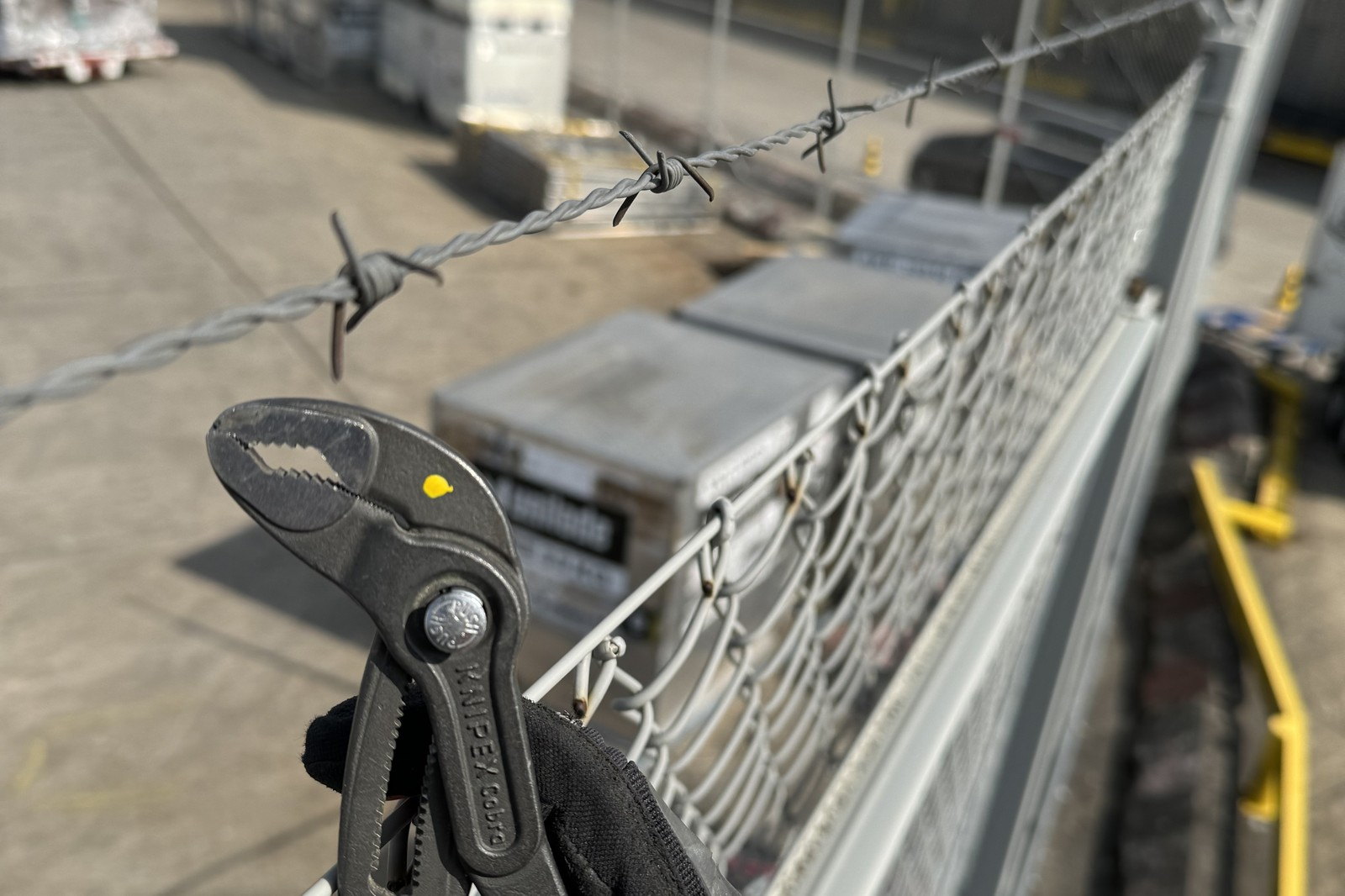
Sicherheitszaun im Frachtbereich: Geflecht nachziehen, Spannschlösser prüfen – Instandsetzung im laufenden Betrieb.
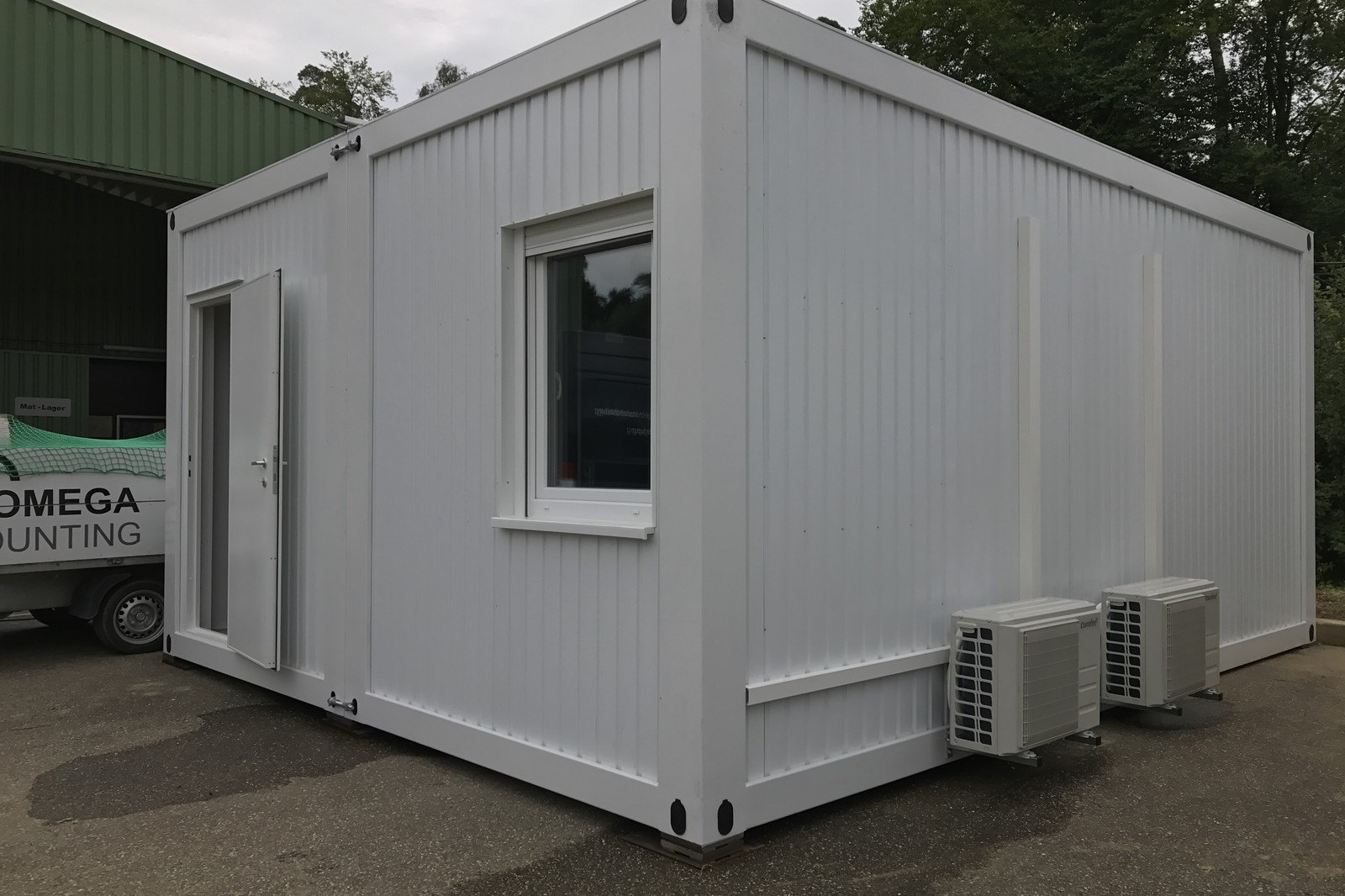
Fertig ausgebautes Raummodul: Fenster, Tür, Klimatechnik – übergabefertig aufgestellt.
 German
  English