- Machinery relocation
Machinery relocation in Germany: dismantle, move, rebuild, run again
Moving a machine is not a transport job. It is a dismantling, a heavy move and a reinstallation with one date that matters: the day production starts again. We do all three with our own fitters and our own lifting equipment, from a single machine to a complete works.
owner-managed, core crew of 15 fitters, scaled to 30–40 at short notice
gantries, skates, hydraulic jacking, lift plans and an appointed person for lifting
mechanical, electrical, control systems, welding and lifting in one crew
lift plans, method statements and handover documentation in English or German
- The difference
The move is the easy part
Most machinery relocations do not fail on the road. They fail at a door that is four centimetres too low, at a floor that will not take the point load, at a bolt pattern that does not match the new foundation, or at a control cabinet that nobody labelled before it was unplugged. We plan a relocation backwards from the restart, and we walk both routes – the one out and the one in – before we quote.
One crew from start to finish. The people who take the machine apart are the people who put it back together. Everything is labelled and photographed as it comes apart, media and cables mapped, so the reassembly is not an archaeological exercise. Mechanical, electrical, control systems, welding and lifting are all in house, which removes the interfaces where a relocation normally loses a week.
Heavy loads into finished buildings are our normal work. Gantries, skates, hydraulic jacking, rollers and rigging where the hall crane does not reach or does not exist yet. Every lift runs on a written lift plan with a named appointed person for lifting operations. We have put standby generators of up to 54 tonnes into data centres that stayed online while we worked.
And we finish the job mechanically. Aligned, levelled, anchored, connected, protocols signed – then handed over to your commissioning engineer or the machine builder. If something is missing, we make it: we have our own metalwork shop with welding and a milling machine in Rodgau, so an adapter plate or a bracket does not become a delivery date.
- What we move
Six kinds of relocation we do regularly
From one injection moulding machine to a complete workshop. What they have in common is that the receiving building is usually already in use.
Single machines and lines
Injection moulding, machining centres, presses, packaging and filling lines: dismantled, labelled, transported, rebuilt, aligned and mechanically finished.
Heavy loads into finished buildings
Through a door, over a roof, down a staircase or across a live floor – with gantries, skates and hydraulic jacking, on a written lift plan.
Racking and storage systems
High-bay racking, automated storage units, paternosters, conveyors and sorting systems taken down, moved and recommissioned mechanically.
Generators, transformers, UPS
Standby generators up to 54 tonnes, transformers on push-beams, UPS and power distribution cabinets moved into and out of buildings that stay online.
Complete workshops and depots
A whole production, workshop or depot relocated: inventory, sequence, transport, rebuild – planned so the two sites overlap as briefly as possible.
Moving machines a few metres
The underrated job: repositioning inside the same building, often overnight, with the neighbouring lines still producing.
- How it runs
Planned backwards from the restart
Both sites walked
Weights, centres of gravity, lifting points, door and ceiling heights, floor loading, turning circles, crane coverage, power and media at the new location. No fixed price without a walked route – in both buildings.
Lift plan and schedule
Written lift plan with a named appointed person, rigging and equipment list, transport sequence, and a schedule built backwards from the agreed restart. Material and tooling on site before the first shift.
Dismantle, move, rebuild
Labelled and photographed as it comes apart, transported, set down, aligned, levelled, anchored and reconnected. Night and weekend windows where the receiving building cannot stop.
Mechanical completion and handover
Alignment and torque records, function checks within our scope, then handover to your commissioning engineer or the machine builder – in English or German, to your format.
- Evidence
Jobs from our own project log
Client names are withheld where confidentiality applies. These jobs are published on our site in German – the pictures carry most of it.
Injection moulding machine relocated
Taken apart, moved and set back down – with the receiving hall still in production.
Read the jobTransformers moved in on a push-beam
Heavy units brought into a data centre where no crane could reach the final position.
Read the jobAutomated storage units relocated
Dismantled floor by floor through an existing building, rebuilt and reconnected.
Read the jobPaternoster storage system moved
A vertical carousel moved and recommissioned – mechanics, electrics and control from one team.
Read the jobCompany profile as a PDF
Company profile, scope of services and documents at a glance – to pass on to procurement, engineering or security management (German).
Open the PDFIndustrial dismantling in Germany
Taking the plant out cleanly – the first half of most relocations.
Open the pageIndustrial fitters in Germany
Installation crews for machine builders and plant engineers on German sites.
Open the page- Questions
What clients ask before a relocation
Do you do the transport as well, or only the handling?
We plan and run the whole move and do the mechanical work at both ends. The road transport itself we place with the haulier that fits the load – a low-loader, a crane truck or an oversize permit – and we coordinate it. You get one contact, not three.
How long does a machine relocation take?
It depends far more on the receiving building than on the machine. A single machine within one hall can be an overnight job; a complete works is planned in sections over weeks. After the site visit you get a schedule with the restart as the fixed point, not an estimate.
Can you move machines into a building that is already finished?
That is a large part of our work. Through doors, over roofs, down staircases, across live floors – with gantries, skates and hydraulic jacking, on a written lift plan with a named appointed person for lifting operations.
Do you also reconnect power and media?
Mechanical, electrical and control work are in house, so isolation, reconnection and function checks within our scope are covered. Larger network installations and sanitary work go to our partner trades. Process commissioning stays with the machine builder; we hand over mechanically complete.
What if a part is missing or does not fit the new foundation?
We make it. Our workshop in Rodgau has metalwork, welding and a milling machine, so an adapter plate, a bracket or a spacer is manufactured rather than waited for. That is often the difference between finishing on Sunday night and losing a week.
How many people can you put on site?
Our core crew is 15 own fitters, scaled to 30 to 40 at short notice through long-standing subcontractors. Mechanical, electrical, control systems, welding and lifting come from the same crew.
Where do you work?
Rodgau near Frankfurt is our base. The Rhine-Main region and a radius of around 150 kilometres are day-to-day business; Germany-wide and elsewhere in Europe we work project by project. Documentation and communication in English or German.
A machine that has to run again on a fixed date?
Send us weights, dimensions and both addresses – or call. We walk the route before we quote, and the schedule works backwards from your restart.
100 % unverbindlich & kostenfrei · Omega Mounting GmbH, Rodgau bei Frankfurt
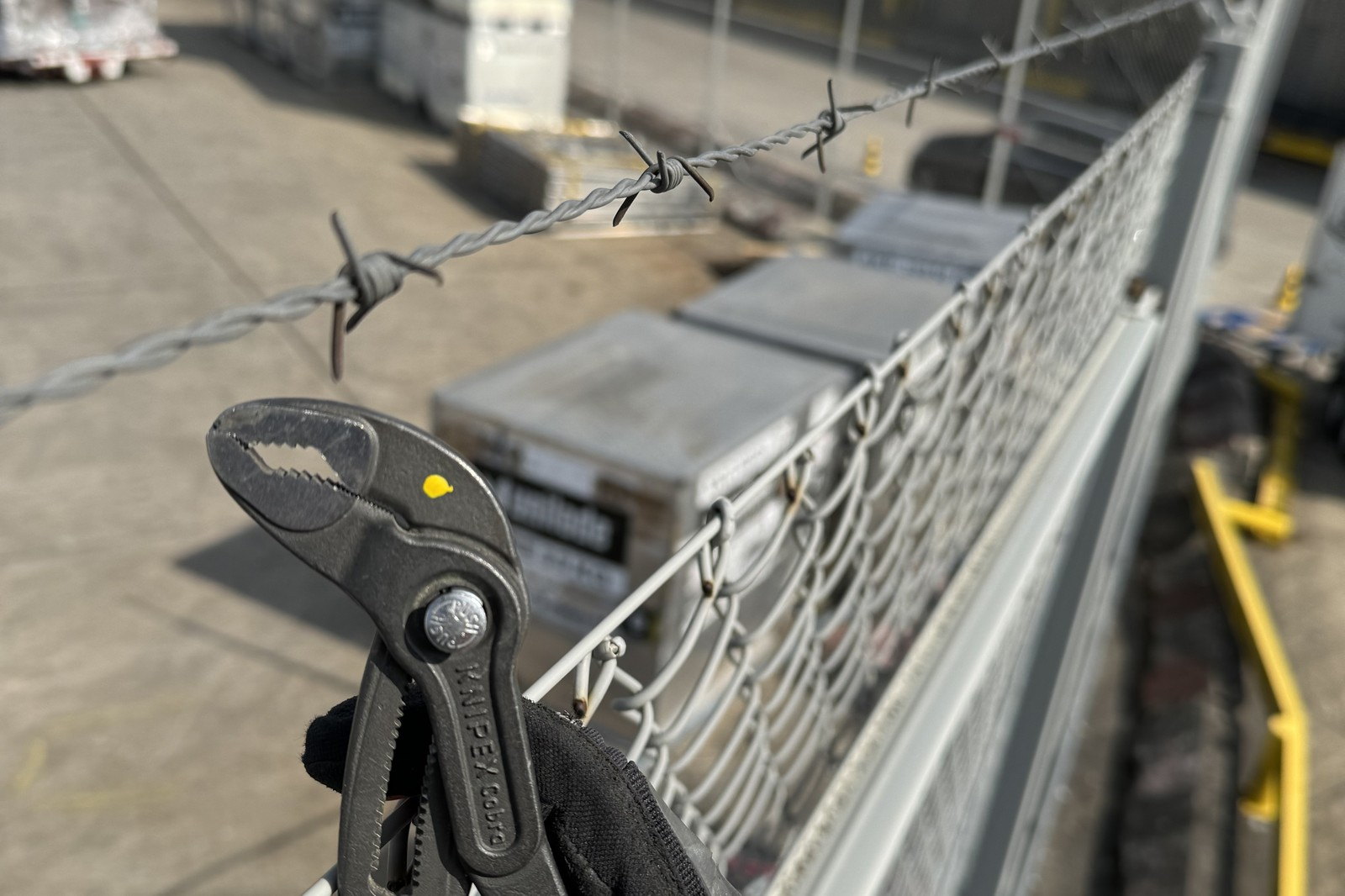
Sicherheitszaun im Frachtbereich: Geflecht nachziehen, Spannschlösser prüfen – Instandsetzung im laufenden Betrieb.
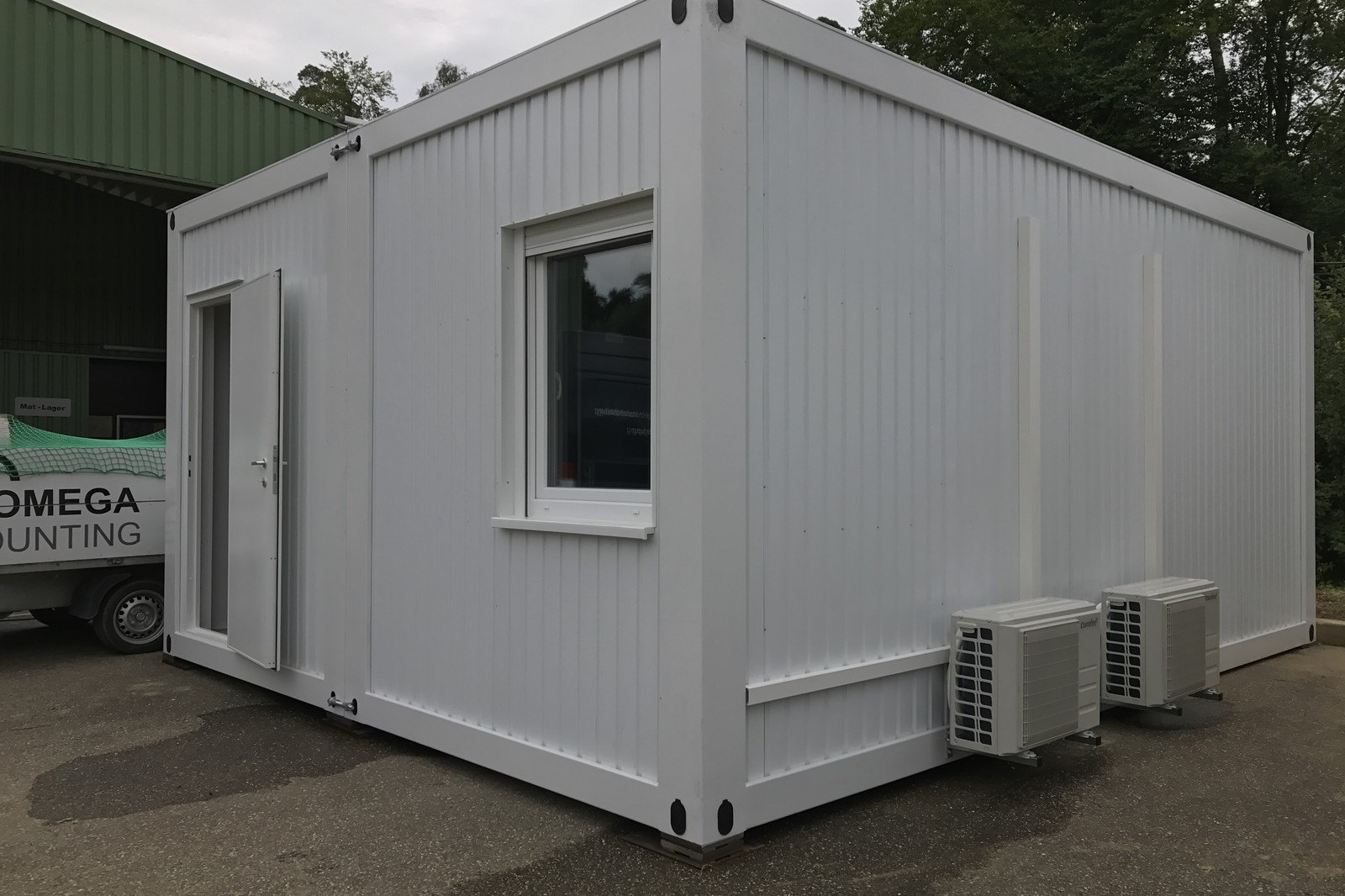
Fertig ausgebautes Raummodul: Fenster, Tür, Klimatechnik – übergabefertig aufgestellt.
 German
  English