- Project Report - GfK Tanks Fulda
Installing GfK tanks for the hybrid burner conversion in Fulda
- Fulda
Installing GfK tanks for the hybrid burner conversion in Fulda
Project Report: Transport, Lifting, and Securing of Fiberglass-Reinforced Plastic Tanks for a Hybrid Burner Plant in Fulda
The energy crisis and rising gas prices have prompted many industrial companies to rethink their burner systems. A customer of Omega Mounting at its Fulda location also decided to convert its burner systems to Weishaupt hybrid systems in order to reduce its dependence on gas. In addition to replacing the burners, this required the installation of new tanks and silos to supply the burners with the necessary fuel.
Our installation team handled the entire process of installing and connecting these tanks—from navigating the tight logistics on the plant grounds to the final securing of the tanks in the concrete foundation. This project report highlights the key technical considerations involved in installing fiberglass-reinforced plastic (FRP) tanks and answers the questions that decision-makers in industry and plant engineering ask themselves when undertaking such a project.
Occasion
Switch to Hybrid Burners
Components
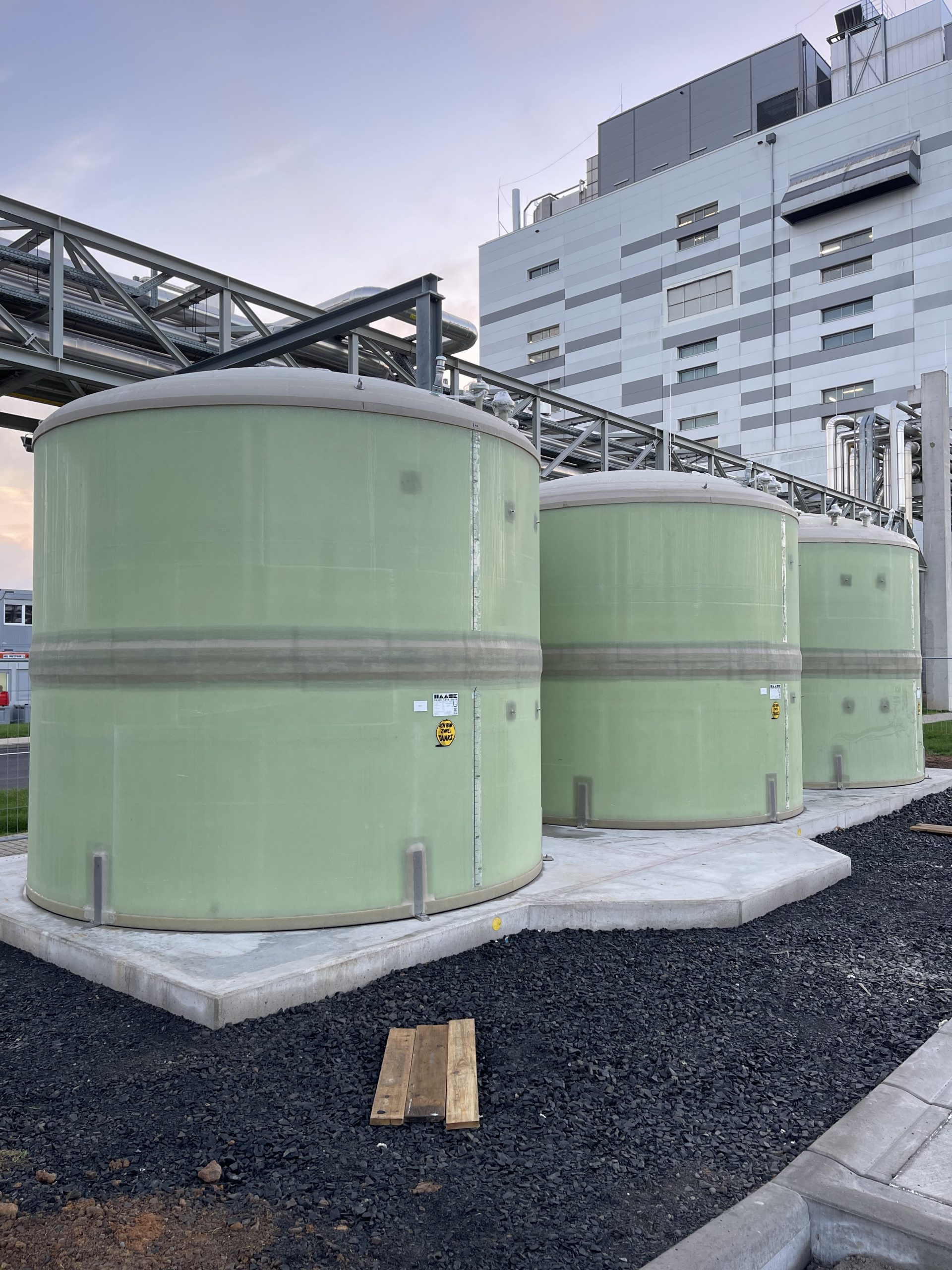
FRP Tanks/Silos for Fuel Supply
Delivery
Trucks & Flatbed Trailers
Discharge
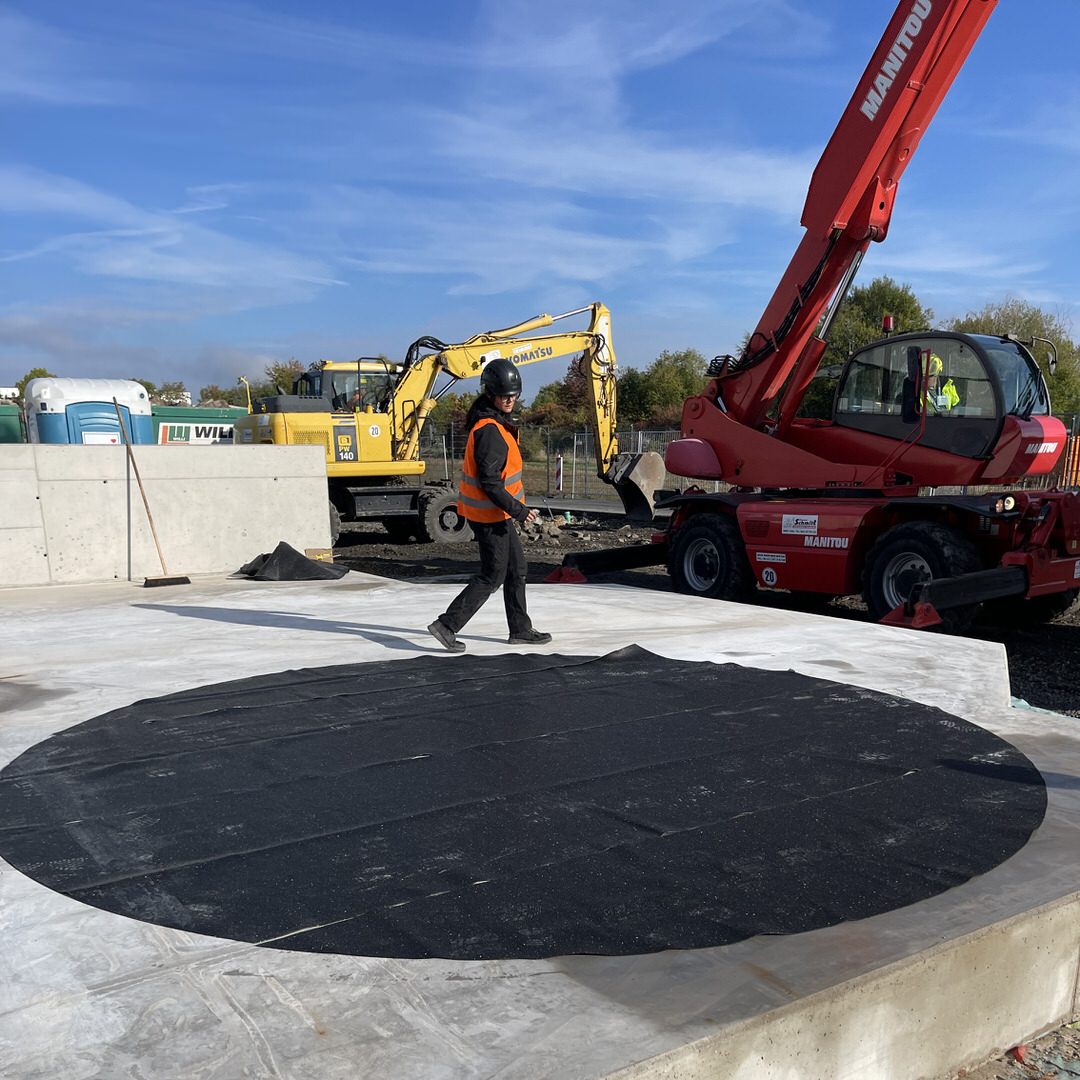
Telescopic loaders right on the construction site
Lifting equipment
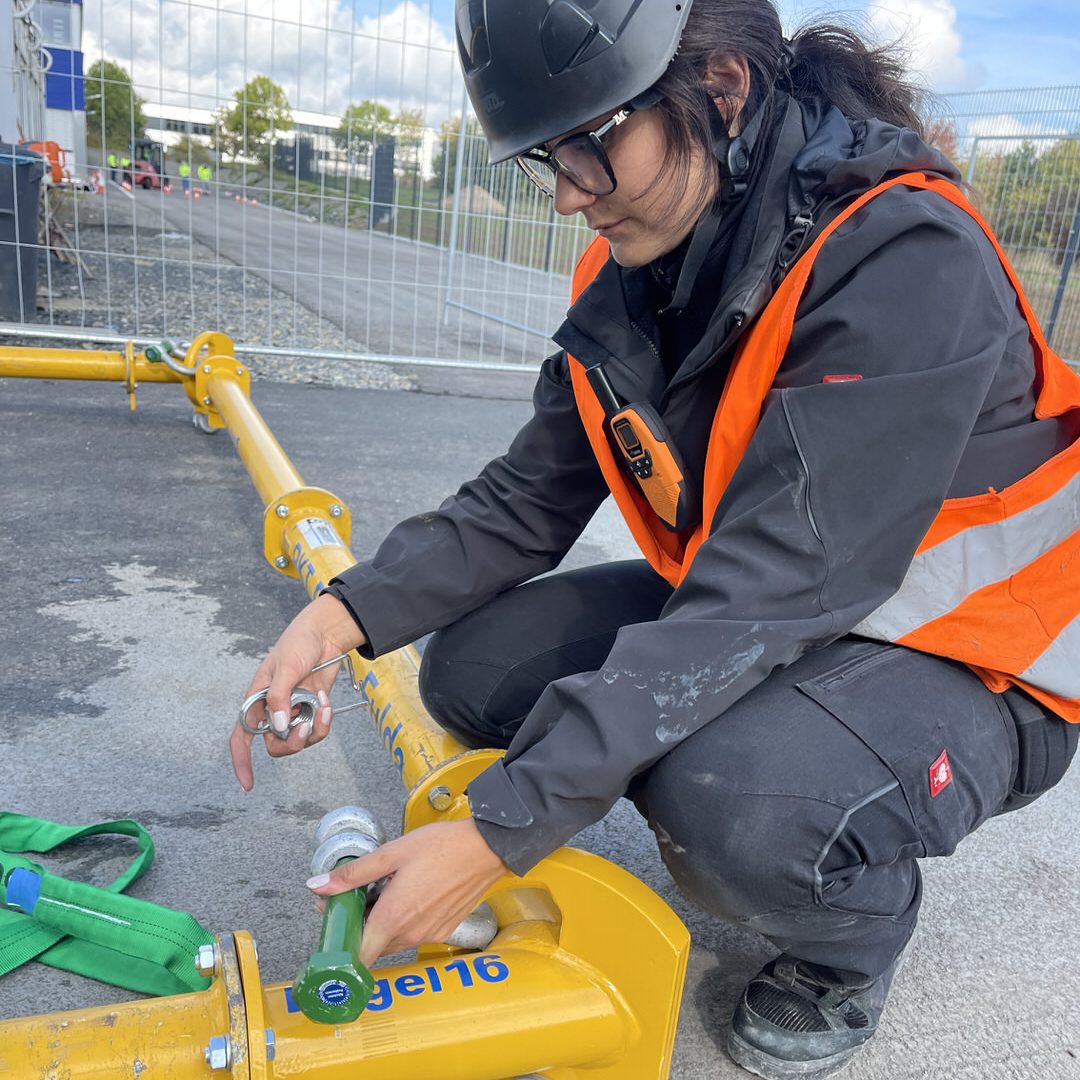
Custom-made lifting crossbeam
Fixation
Heavy-duty anchors in concrete foundations
Why are industrial companies currently switching to hybrid burners?
Independence from Gas Through Hybrid Technology
By switching to a hybrid system, customers will be able to flexibly switch between different energy sources in the future, making them significantly less vulnerable to gas price fluctuations and supply shortages.
However, this requires the right infrastructure: large-capacity tanks that are stable, securely anchored, and properly connected.
Delivery to a confined company premises
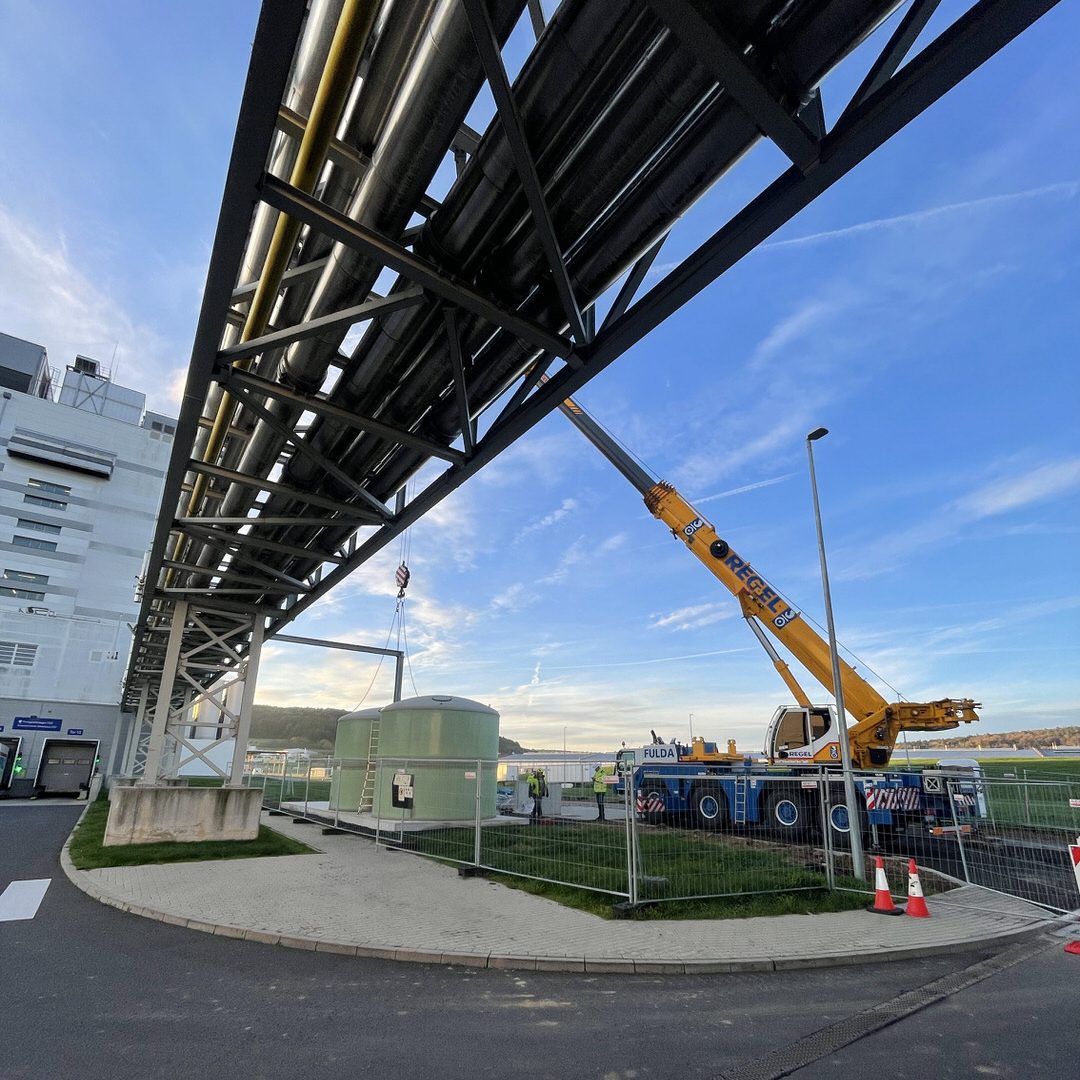
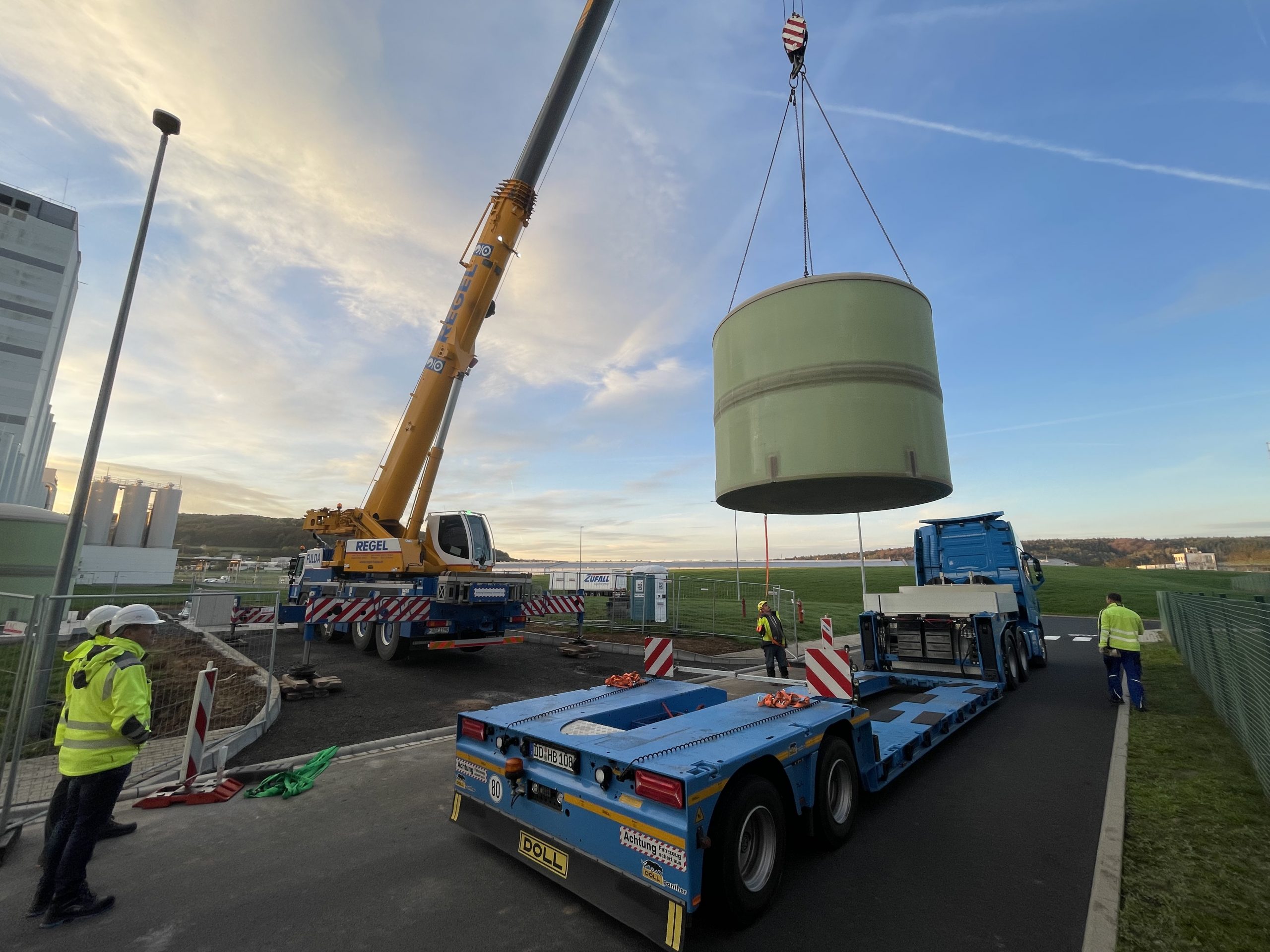
The tanks were delivered by truck and flatbed trailer. Since there was limited space on the company grounds in Fulda, precise maneuvering was required: Our technicians guided the vehicles across the grounds so that the tanks could be unloaded directly at the construction site using a telescopic loader —without any detours and without requiring additional space.
Crane Lifting for FRP Tanks
Why a lift plan is essential
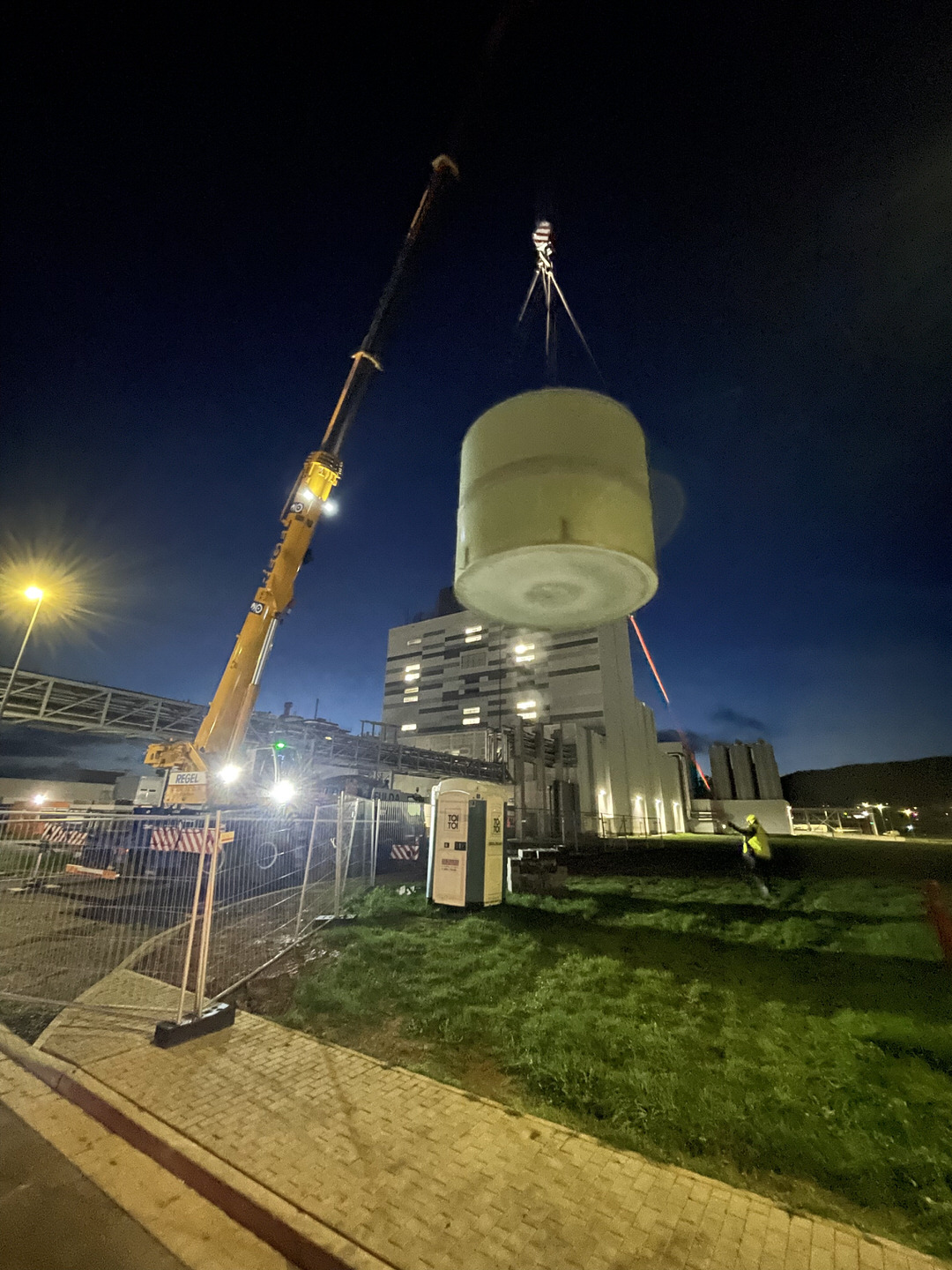
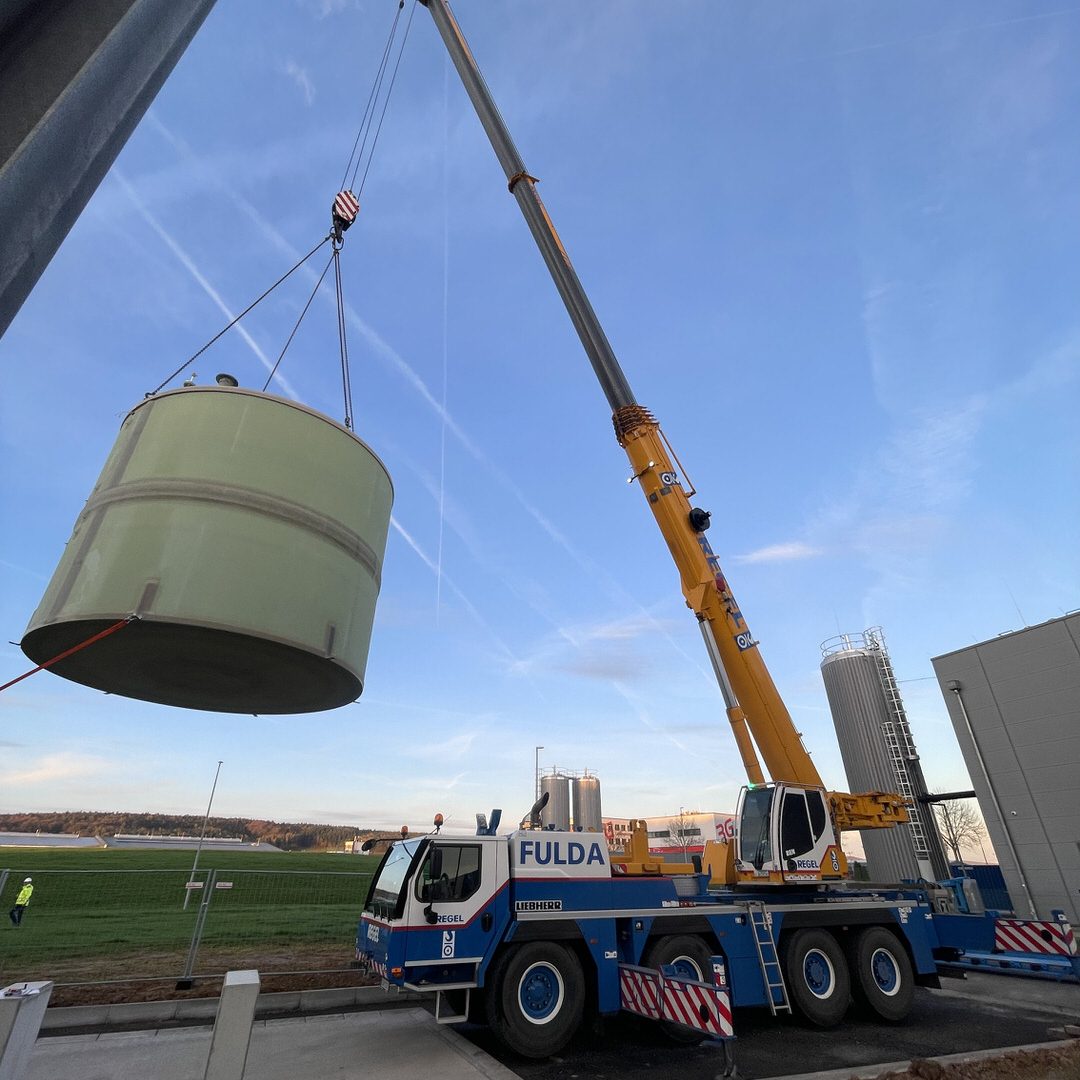
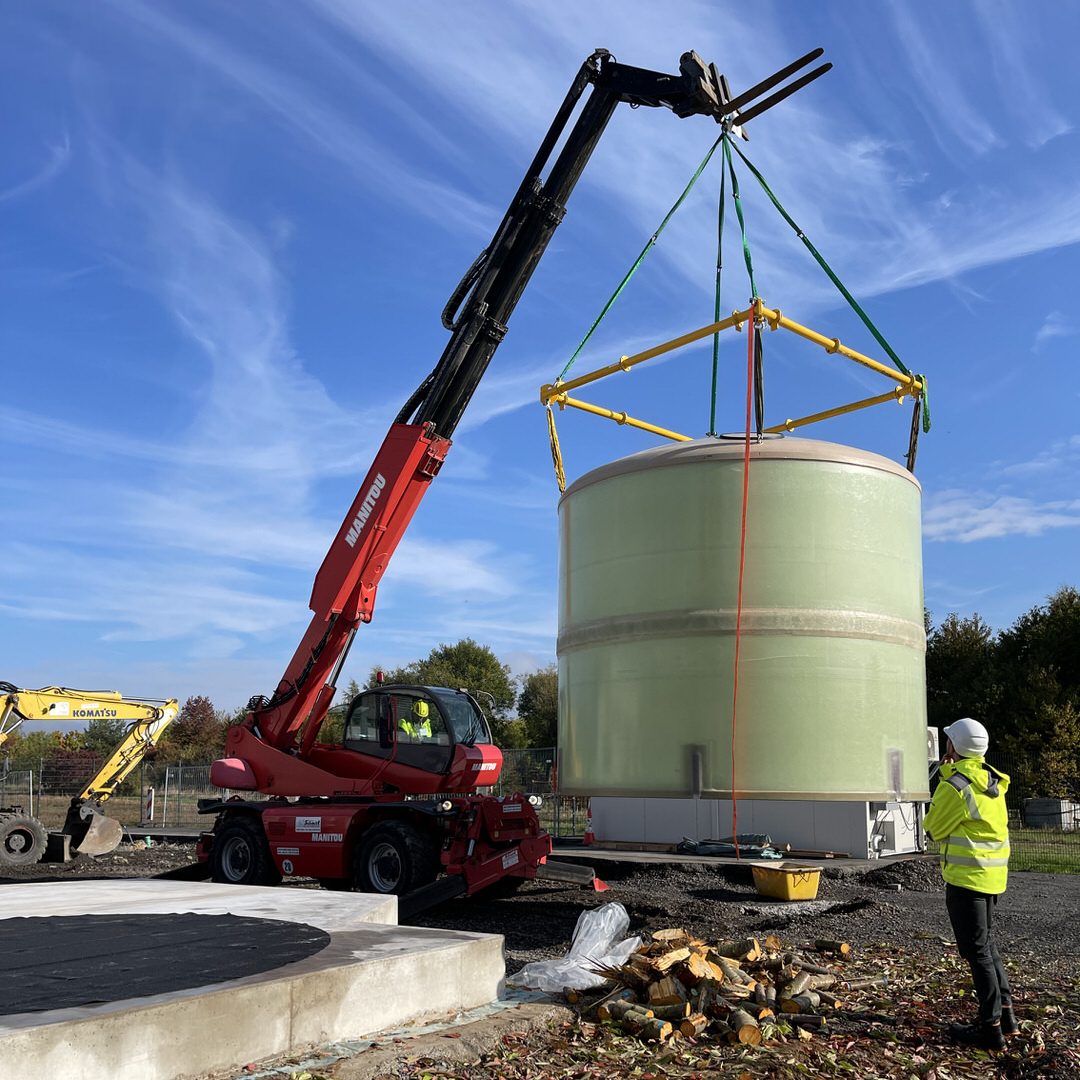
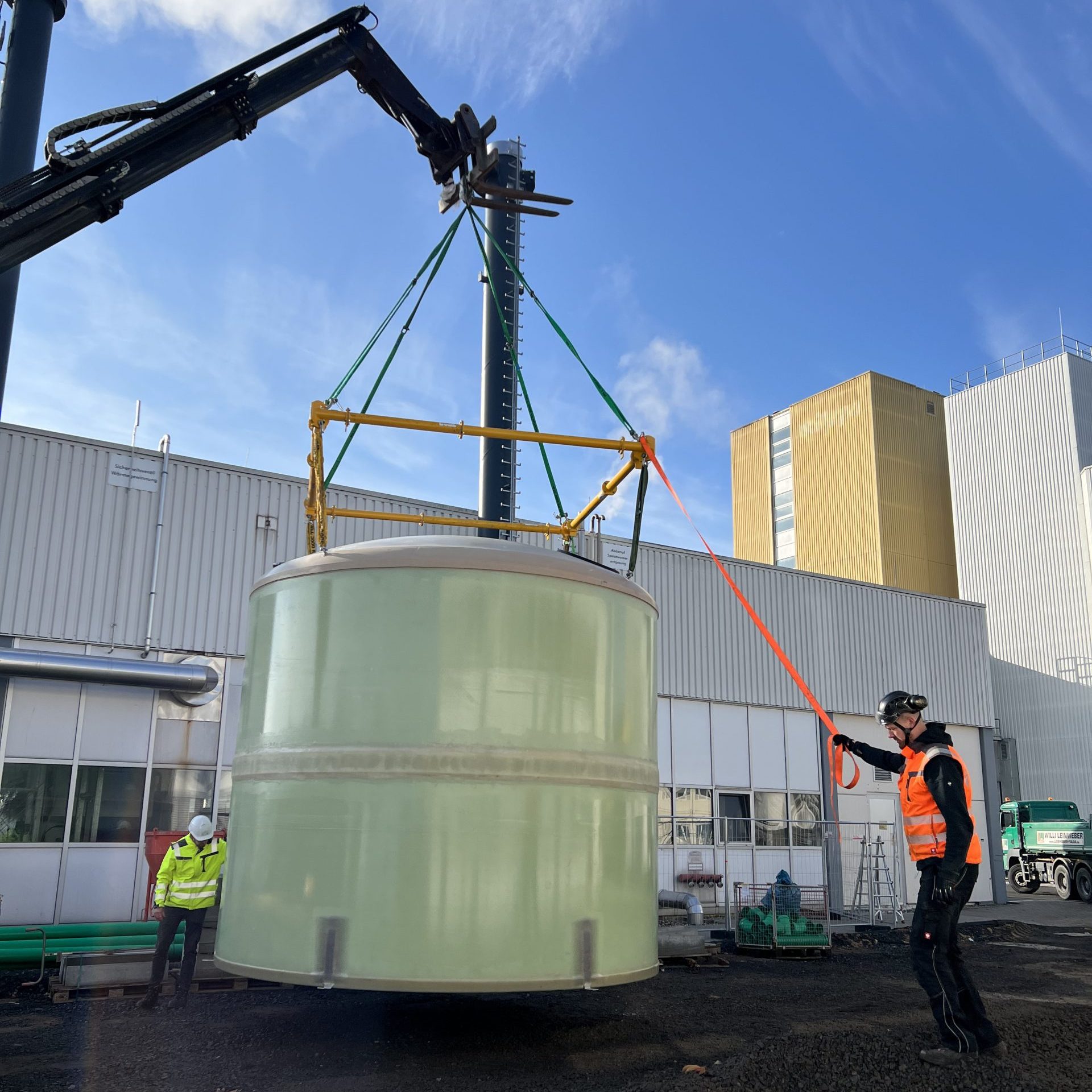
Since the tanks are made of glass-fiber-reinforced plastic (GFRP), special care must be taken when lifting them. A custom-made lifting crossbeam ensured that no “diagonal pull” occurred during lifting—as this could tear the glued-on eyelets out of the tank.
- To prevent exactly that, every refueling stop with us includes:
- a detailed elevatorschedule prepared in advance
- Coordinating the lifting points and lifting equipment with the manufacturer
- the use of a guide ropethat prevents the tank from swinging uncontrollably during the lift, thereby preventing damage to the tank and surrounding buildings
Crane Safety
The Role of the Crane Guide
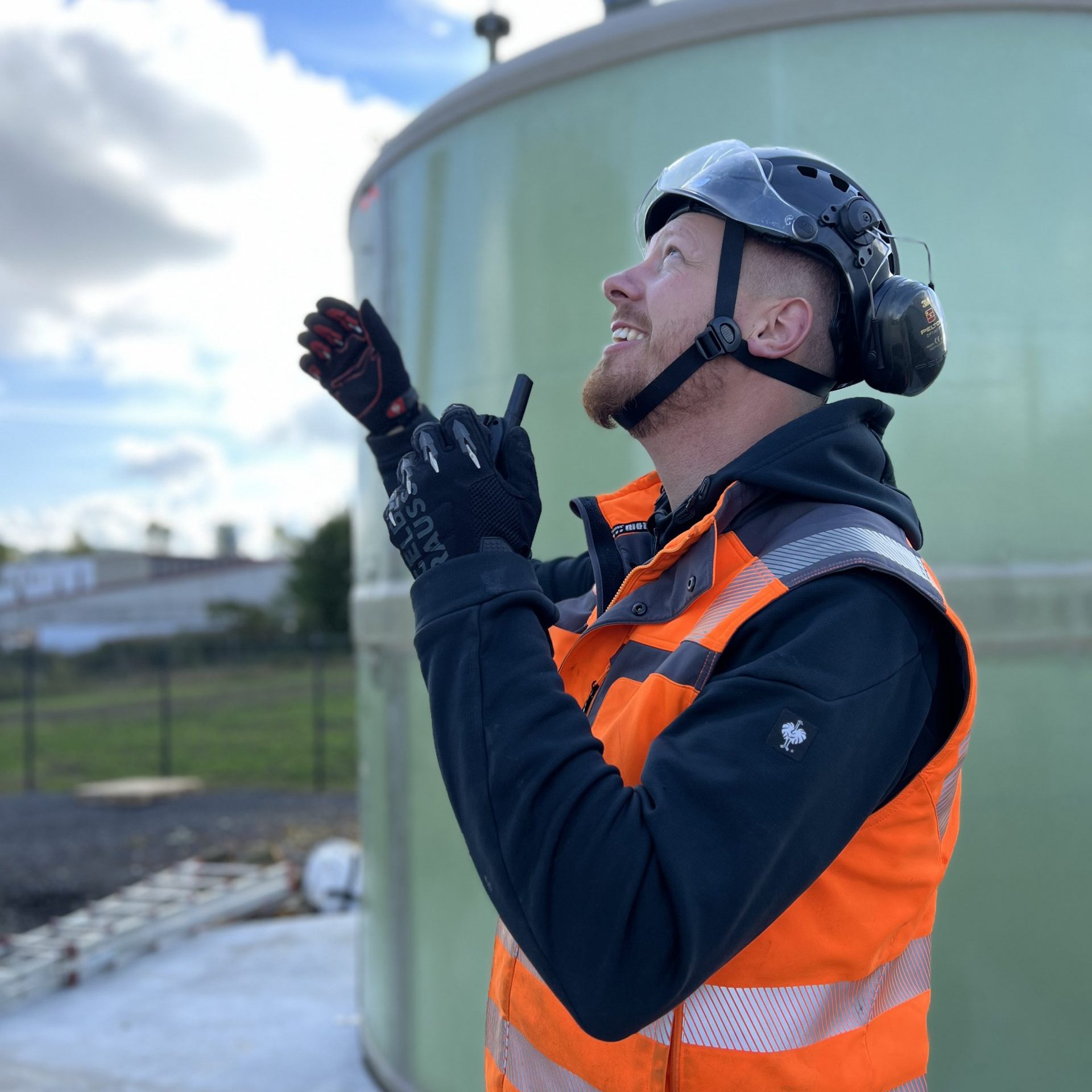
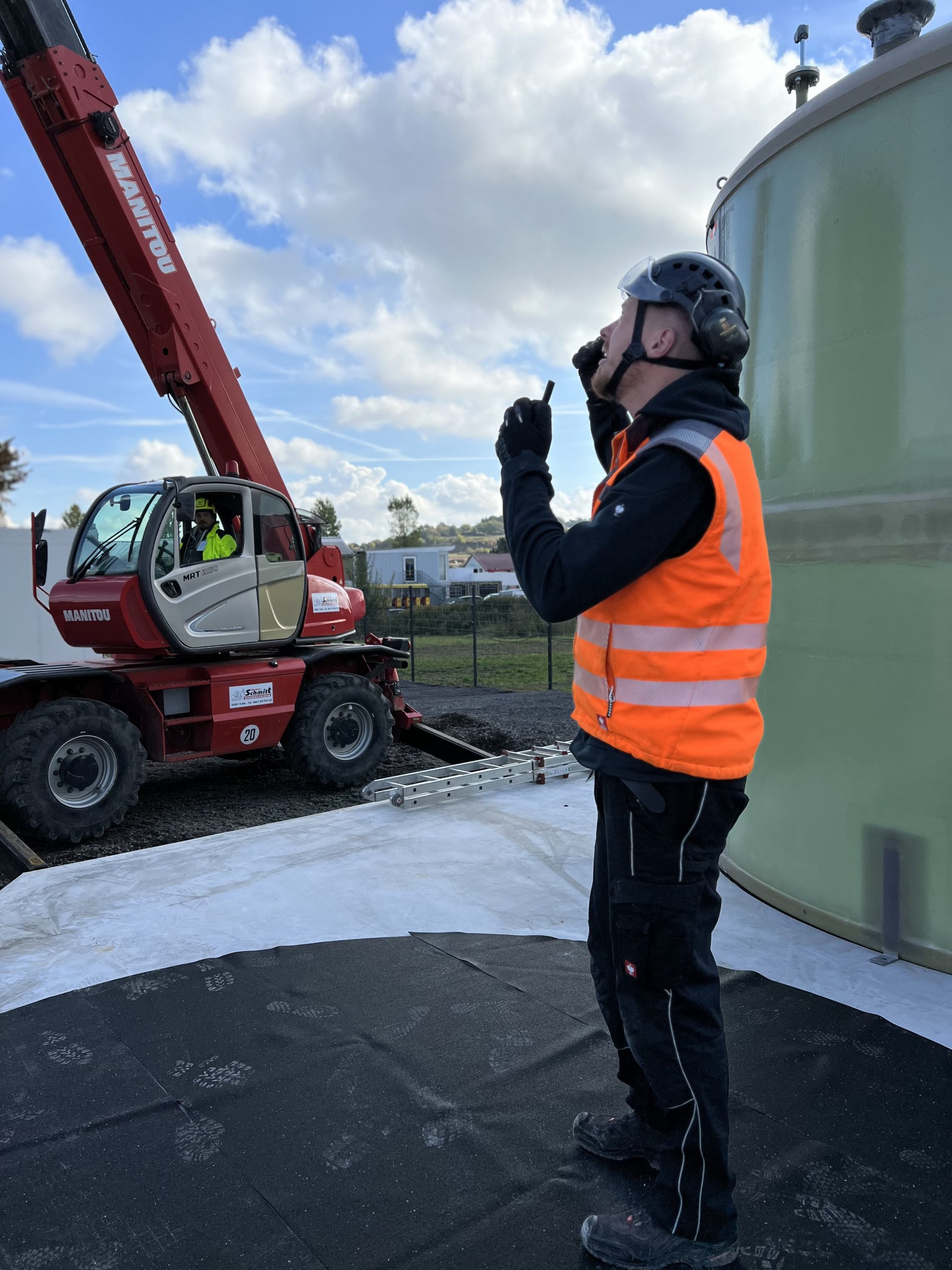
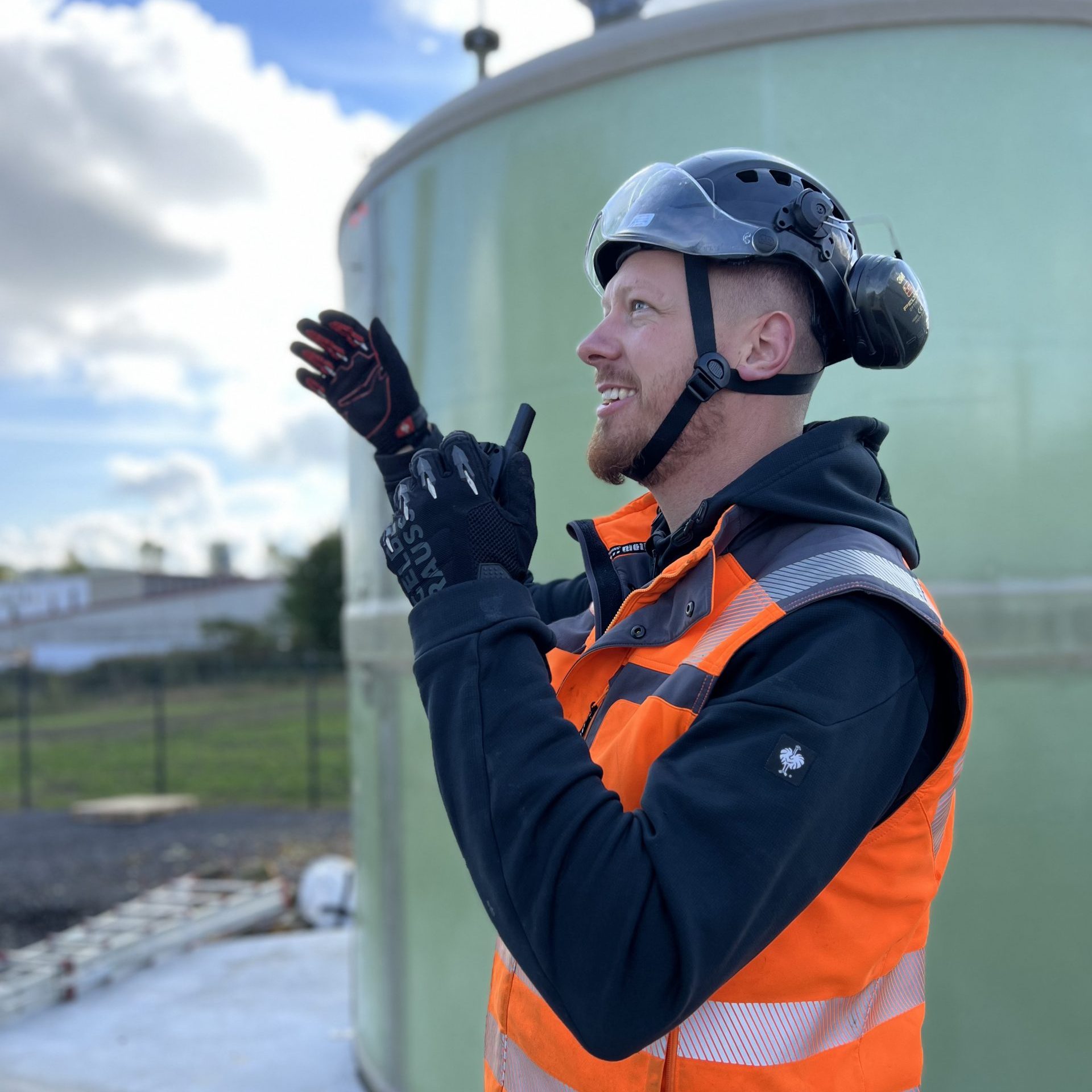
With components this large and heavy, the crane operator’s field of vision alone is not sufficient to safely assess every movement. That is why a second person is on site to guide the operation during every lift.
Using radio and hand signals, he maintains constant contact with the crane operator and gives him precise instructions on height and direction—a crucial safety factor in every tank lift.
Foundation & Substrate: The Basis for Stability
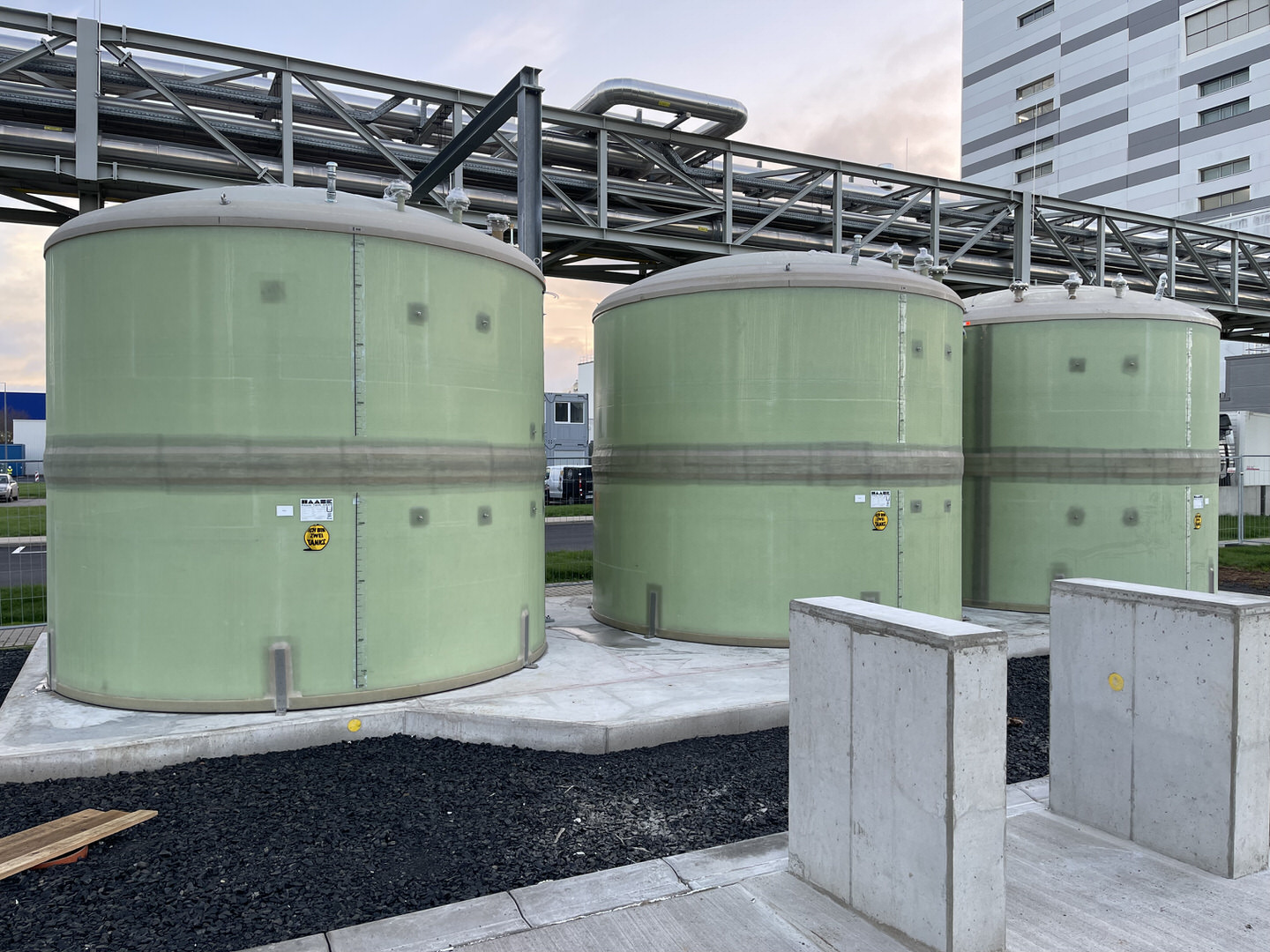
To ensure that the fiberglass tanks remain stable and level over the long term, the subgrade is crucial. In Fulda, the tanks were placed on concrete foundations that had been cleaned beforehand. Our installers also laid a protective mat between the tank and the foundation slab.
It evens out minor irregularities in the concrete and protects the tank from localized stress from below.
Conclusion: Deploy tanks in Fulda
Experience that matters
From tight delivery conditions to precise crane lifts to final anchoring in the foundation: Installing fiberglass-reinforced plastic (FRP) tanks for hybrid heating systems requires planning, experience, and well-coordinated teams.
With a well-thought-out lifting plan, trained staff, and the right lifting equipment, our installation team safely installed the tanks for the customer in Fulda on schedule—another step toward greater energy independence.
Are you also planning to switch to a hybrid system, or do you need assistance with installing tanks or silos?
Contact us—we’ll safely transport your equipment to its destination.
Passende Ratgeber zu diesem Einsatz
Über den Autor
Tobias Schott
Geschäftsführer Omega Mounting GmbH, Rodgau · über 20 Jahre Praxis in Montage und Instandhaltung
Gelernter Mechatroniker und seit 2004 in Wartung, Instandhaltung und Industriemontage zu Hause – zuerst an der Seite seines Vaters, seit 2012 mit Omega Mounting: von der Elektrohängebahn in Frankfurt bis zur Krananlage im Hallenneubau. Plant und leitet als Lifting Appointed Person Hebearbeiten in Rechenzentren und auf Industriebaustellen im Rhein-Main-Gebiet, ist Ausbilder und Prüfer für Krane, Hubarbeitsbühnen und Teleskopmaschinen sowie Sicherheitsbeauftragter. Bei Einsätzen im Ausland kennt man ihn als „German Troubleshooter“ – der, den man ruft, wenn es auf der Baustelle klemmt. Was Qualität heißt, hat er nicht aus einem Handbuch, sondern von seinem Vater gelernt: Made in Germany als Anspruch an die eigene Arbeit, nicht als Etikett. Deshalb steht sie bei Omega Mounting an erster Stelle – vor Tempo und vor Preis. Das Auftragstagebuch zeigt die Einsätze, die sein Team geplant und umgesetzt hat – ohne Kundennamen, aber mit allem, was man daraus lernen kann.
 English
  German