- Performance
LIFT & SHIFT: HEAVY LOADS INTO FINISHED BUILDINGS
The machine is in the yard, the building is finished, and no crane can reach inside. That is exactly where we start.
schwerste gehobene Last
data centres worked in
years of industrial installation
Fitters on the job, DE & EN
- What it is about
WHEN THE CRANE NO LONGER REACHES IN
Lift & shift means getting heavy equipment to where it belongs – even when the building has long been closed up, the routes are tight and work continues next door. We move things in, relocate them and take them out, with our own lifting equipment instead of hired improvisation.
The difference from a classic crane job lies in the preparation. Before anything is suspended, it is settled: which machine fits through which door, what floor loading the route can take, where the slings go and how the load can be set down if something goes wrong. In a data centre nothing is lifted before the lift plan is approved – working to permit and RAMS is standard for us, not the exception.
And when nothing fits any more, we dismantle: far enough for the machine to get in, then reassemble it at its final position. That is almost always cheaper than opening up a wall.
Ein eigenes Kapitel im Lift & Shift sind Transformatoren: mehrere Tonnen, wenige Zentimeter Luft in der Zelle, oft im Untergeschoss. Wie wir sie einbringen, setzen, ausrichten und bei einem Tausch wieder herausholen, steht auf der Seite Transformatoren einbringen und montieren.
- Why us
FOUR REASONS WHY CLIENTS CALL US IN
Our own lifting equipment for finished buildings
Mini cranes, spider cranes and lifting gear that fit through a standard door and still lift. That is how we recovered a spider crane from a data centre basement after it had worked down there.
Rigging to lift plan and permit
Lifting points, load paths, floor loadings and fallback options are settled before anything is suspended. We know RAMS, permits and lift plans from the data centre business – in German and in English.
Dismantle outside, assemble inside
If the machine will not fit through the opening, we dismantle it far enough to get it in and reassemble it at its final position – including alignment and commissioning.
Heavy loads up to 100 tonnes
The heaviest load we have lifted weighed 100 tonnes. Depending on the situation we use mobile cranes up to 220 t to move things in – or our own equipment where no mobile crane can reach.
- Services
WHAT WE TAKE ON IN LIFT & SHIFT
From the feasibility check through the lift plan to the machine set down and aligned – one point of contact for the whole journey.
Einbringen & Ausbringen
Moving machines, units and equipment into finished buildings and back out again – up ramps, through doors, along service corridors, up stairs and into basements.
Innerbetriebliches Umsetzen
Moving plant to another position in the same hall: lifted, shifted, realigned, anchored and recommissioned – without any transport route outside.
Liftplan & Rigging-Konzept
Load paths, floor loadings, lifting points, spreader beams and fallback options documented – as the basis for approval by the client or main contractor.
Zerlegen & Wiederaufbau
Where the opening is too small: dismantled properly, secured for transport, reassembled at its final position, aligned and commissioned.
Crane positioning & heavy lifting
Mobile cranes up to 220 t coordinated, lifts up to 100 t carried out: we plan the set-up area, cordoning, briefing and sequence as well – not just the lift itself.
Floor protection & route safeguarding
Laying out travel routes, protecting floor coverings, relieving lifts and suspended ceilings. Whatever is not damaged does not have to be repaired afterwards.
- Routes into the building
THREE WAYS TO GET A LOAD INTO A BUILDING
Which route is possible is decided during the site visit – not at a desk. Usually it is a combination of two.
The direct route
Through a roof opening, the façade or large doors. Fast and economical when the set-up area, reach and opening all line up – rarely the case with finished buildings.
The route through the building
Mini cranes, spider cranes and lifting gear that fit through standard doors. The load is moved along existing routes – where no mobile crane can reach.
The route in sections
If nothing fits in one piece, it is dismantled and rebuilt inside. More work during installation, but almost always cheaper than opening up the building.
- Process
HOW A HEAVY LIFT IS PREPARED
- From the job diary
PROJECTS FROM LIFT & SHIFT
No marketing copy – documented jobs with real findings, all in our job diary.
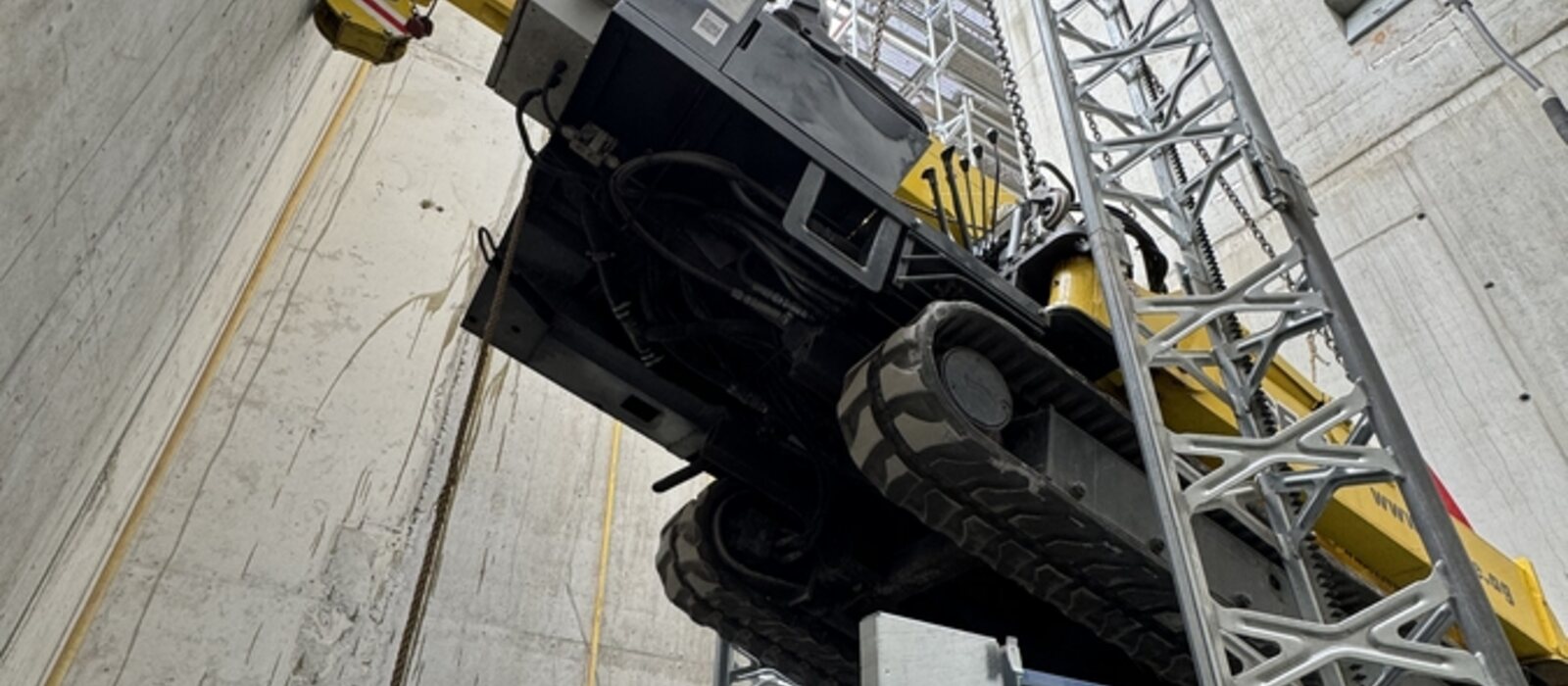 OUR OWN LIFTING EQUIPMENT · DATA CENTRE BASEMENT
Spider crane recovered from the basement
Millimetre work on the way back: the machine that had been working in the basement had to come out along the same tight routes.
Read the project
OUR OWN LIFTING EQUIPMENT · DATA CENTRE BASEMENT
Spider crane recovered from the basement
Millimetre work on the way back: the machine that had been working in the basement had to come out along the same tight routes.
Read the project
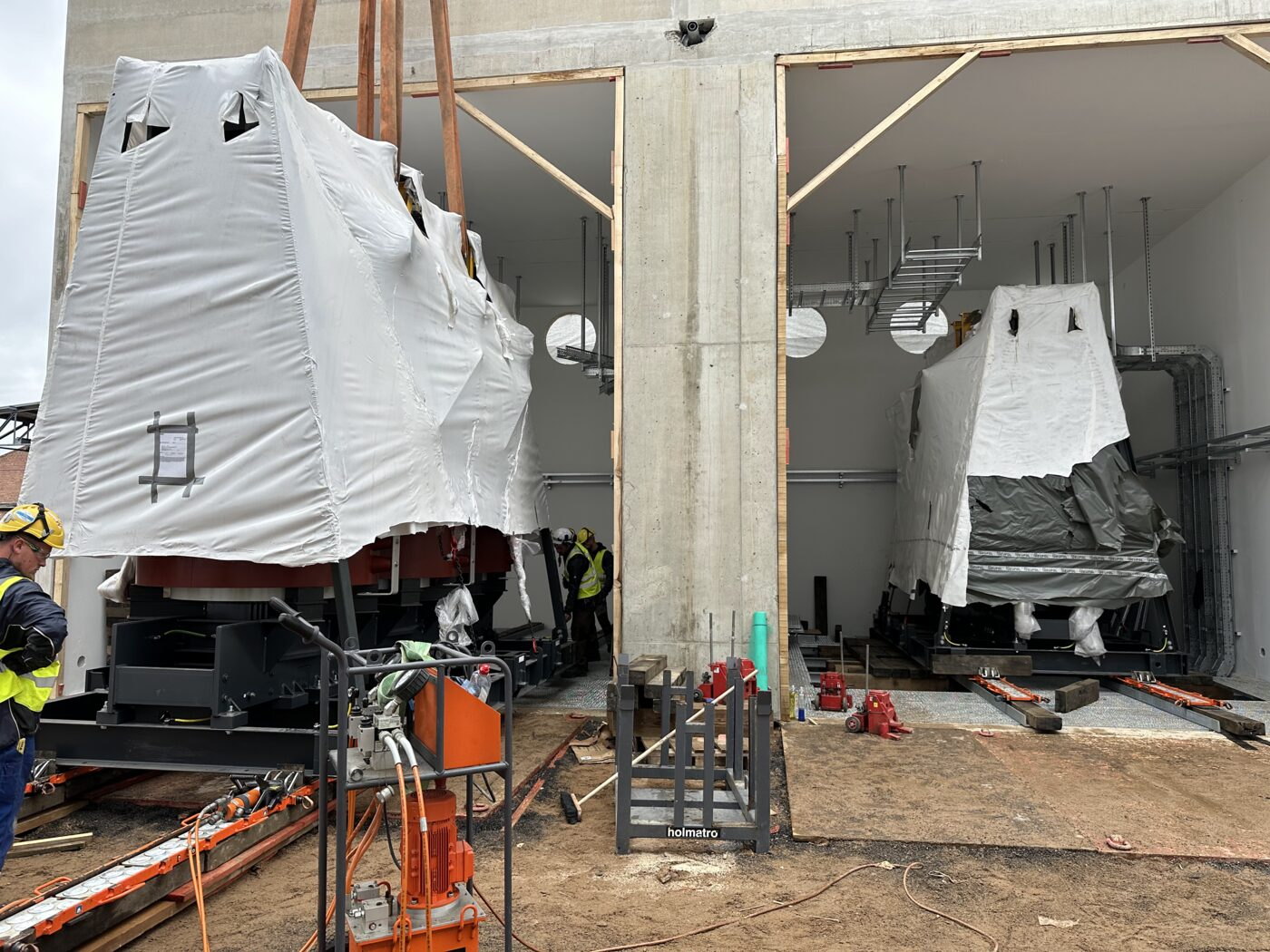 SCHWERLAST · VERSCHUBBAHN
Zwei 52-t-Transformatoren eingebracht
Zwei Transformatoren à 52 Tonnen über die Verschubbahn ins geschlossene Gebäude geschoben – millimetergenau bis auf die Fundamente.
Read the project
SCHWERLAST · VERSCHUBBAHN
Zwei 52-t-Transformatoren eingebracht
Zwei Transformatoren à 52 Tonnen über die Verschubbahn ins geschlossene Gebäude geschoben – millimetergenau bis auf die Fundamente.
Read the project
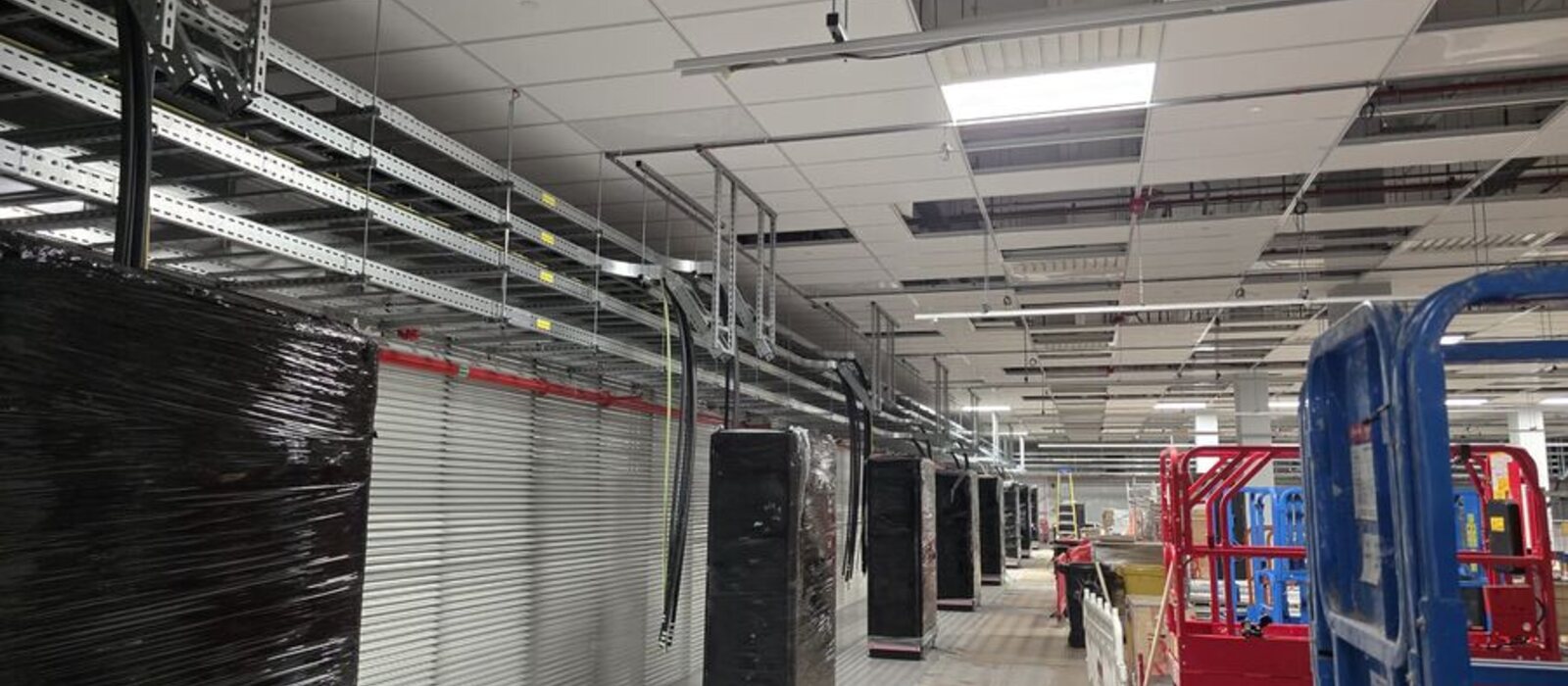 SERIES MOVE-IN · RHINE-MAIN
160 PDCs moved in and installed
One hundred and sixty power distribution units brought to their positions along protected routes, aligned and installed – one by one, to plan.
Read the project
SERIES MOVE-IN · RHINE-MAIN
160 PDCs moved in and installed
One hundred and sixty power distribution units brought to their positions along protected routes, aligned and installed – one by one, to plan.
Read the project- Frequently asked questions
LIFT & SHIFT: DIREKT BEANTWORTET
What do you do when no crane can reach the building?
Then we work from the inside. Mini cranes, spider cranes and lifting gear fit through standard doors and move the load along existing routes – up ramps, along service corridors, into the basement if need be. We recovered a spider crane from a data centre basement, where it had been working, along that very same route.
How heavy can the load be?
The heaviest load we have lifted weighed 100 tonnes. For moving things in from outside we coordinate mobile cranes up to 220 t; inside the building it is not the weight alone that decides but the floor loading along the route. That is exactly what we check during the site visit, before anything is promised.
Do you need a lift plan – and do you produce it?
Yes, and yes. We define load paths, lifting points, spreader beams, floor loadings and the fallback option and document it so that your client or main contractor can sign it off. In data centres it is mandatory anyway – RAMS, permits and lift plans are everyday work for us, in German and in English.
What happens if the machine does not fit through the opening?
Then we dismantle it. Far enough to get it in, secured for transport, and reassembled at its final position – including alignment and commissioning. That is almost always cheaper and faster than opening up a wall or roof and closing it again afterwards.
Do you also work during ongoing operations?
Yes – in data centres in particular that is the norm. We work in cordoned-off areas, with floor protection, banksmen and agreed time windows – while the systems next door keep running. Which steps are permitted is agreed with the operator beforehand.
Do you handle the connection and commissioning as well?
Yes – on request we carry straight on after setting down: aligning, anchoring, connecting, adjusting sensors and supervising the test run. Mechanics, electrics and welding come from the same team here – for us, lift & shift does not end with the machine set down.
- Weitere Leistungen
WHAT ELSE WE TAKE ON
Installation in existing facilities
You are here
Cause rather than symptom
What cannot be bought
Dismantling and clearance
Abbauen, umsetzen, anfahren
Nine industries at a glance
Eigener Bereich, DE & EN
DOES SOMETHING HEAVY NEED TO GO SOMEWHERE DIFFICULT?
Send us dimensions, weight and a few photos of the route – we will tell you whether and how it can be done.
100% free of charge and without obligation · Omega Mounting GmbH, Rodgau near Frankfurt
 English
  German