
- Project report – spider crane out of a data centre basement
Spider crane recovered from the basement: millimetre work at the Raunheim data centre
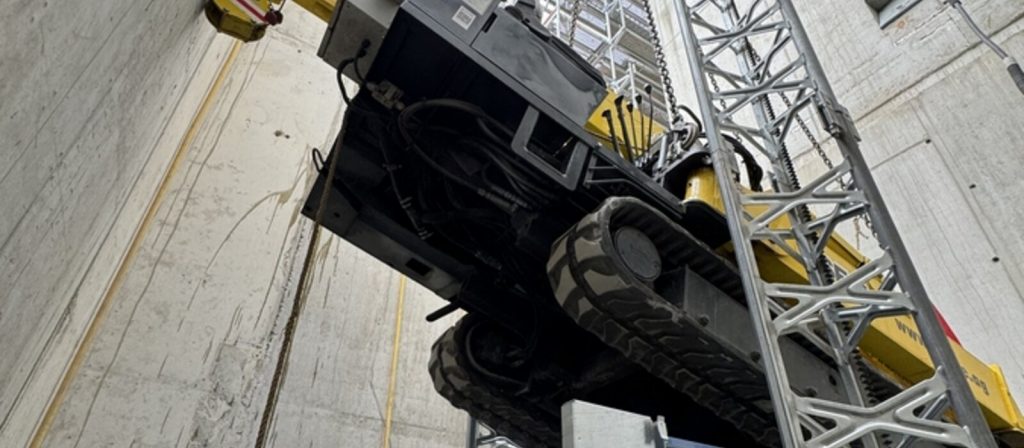
How 4 fitters manoeuvred a mini crane, around which the building had been finished, through the basement and pulled it up the shaft with a tower crane – even though it was 2 centimetres too big
This was a tight squeeze in more than the figurative sense: on this job we used every millimetre available. We were hired to lift a spider crane out of the basement of a data centre in Raunheim. A tower crane on site was to help us – so far, so normal.
The problem: the crane had been brought in while the building was still a shell. No partition walls, no fittings, no site hoist in the shaft. Since then the data centre had been built on around the crane – and what had rolled in comfortably back then now had to come out again through a fully fitted-out basement.
So it meant planning a route through the basement in advance, measuring everything, drawing up a lift plan with all the details – and in the end it still came down partly to trial and error. This supposedly quick little job turned into a full day’s work for four people.
Project profile
- Scope: Removing a spider crane from a data centre basement – route planning and site survey, lift plan, laying a temporary three-phase power supply, moving through the basement to the millimetre with banksmen, propping the site hoist with timber baulks, angled slinging with an adjustable chain, lifting up the shaft by tower crane
- Team: 4 fitters
- Project duration: 1 day
- Customer: Datacenter in Raunheim (Betreiber bleibt ungenannt)
- Result: The spider crane is back in daylight with no damage to the building, the hoist or the crane
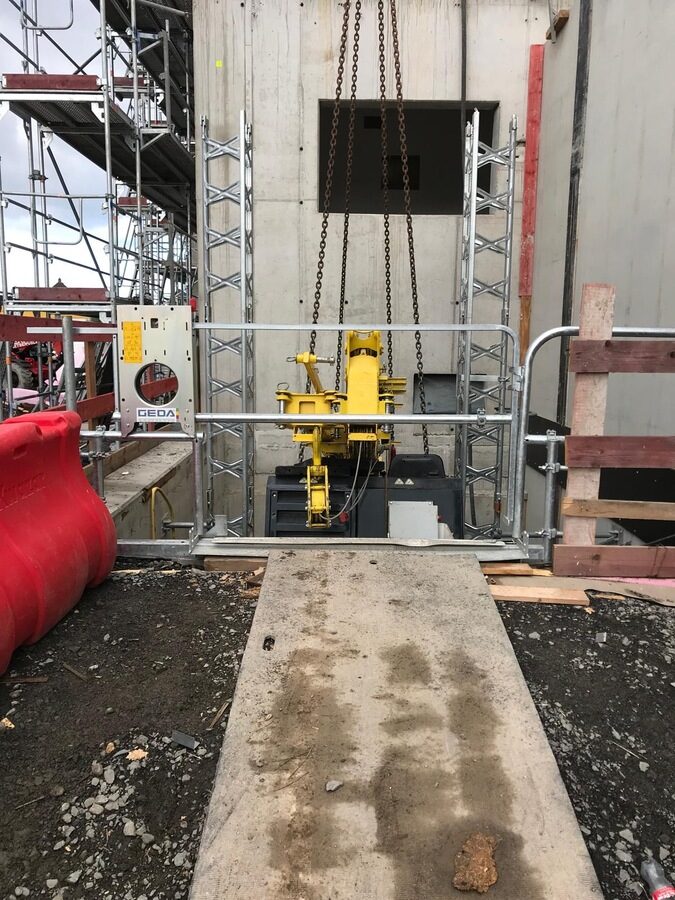
What is a spider crane?
A spider crane – also called a mini crane – is a compact tracked crane that fits through ordinary doorways and lifts where large cranes can never reach: in halls, basements, courtyards. Its outriggers spread out like a spider’s legs, hence the name. On its rubber tracks it can turn almost on its own axis – worth its weight in gold inside a building – while being gentle on sensitive floors.
Many spider cranes are hybrids: diesel for outdoors, electric drive for indoors. Exactly those qualities made the machine so useful during the construction phase of the data centre – and exactly that is why it was now sitting in the basement, long after the building had lost its shell openings.
Why was the crane stuck in the basement in the first place?
Because the building was finished around it. During the shell phase getting it in was easy: no partition walls, no fittings, an open shaft. But with every construction stage the routes got tighter – walls, building services – and by now there was a site hoist in the removal shaft that could not simply be taken out for us.
On top of that: the crane had not been forgotten in a corner – it had been working right up to that moment. We ourselves used it on the job to install CRAH units, the precision air conditioning units that cool the computers in the data centre. The spider crane lifted the units onto the so-called fan bases – the substructures with the fans that the units sit on. Only when the last unit was in place was the crane’s job in the basement done – and getting it out became a project of its own.
This is a classic on large sites: machines that come in early and are needed inside eventually have to leave again through a much tighter building. Then you need people who measure, plan – and keep their nerve when there are only millimetres between crane and wall.
The sequence: from route planning to the lift up the shaft
- Site survey and route planning: Beforehand we measured the entire route through the basement – every door, every corner, every obstacle – and set the route.
- Lift plan: A lift plan with all the details was drawn up for the lift up the shaft – lifting points, geometry, sequence, responsibilities.
- Laying on power: In the shell there was not yet enough power. So we laid a very long three-phase cable – the longer the run, the greater the voltage drop, and that has to be allowed for. The crane is a hybrid, but starting the diesel engine in the basement of a data centre was out of the question. It stayed on electric drive.
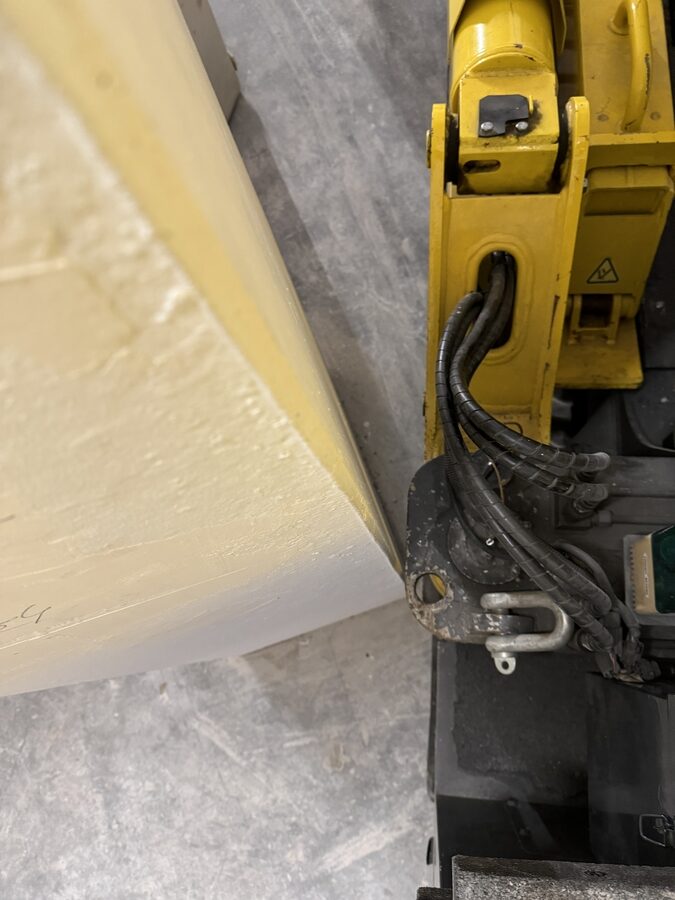
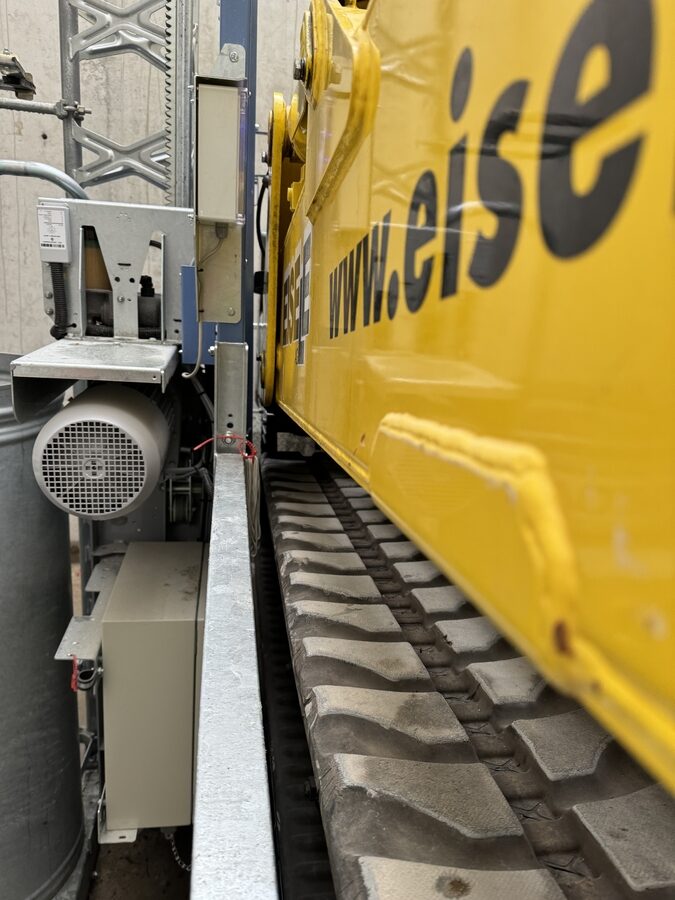
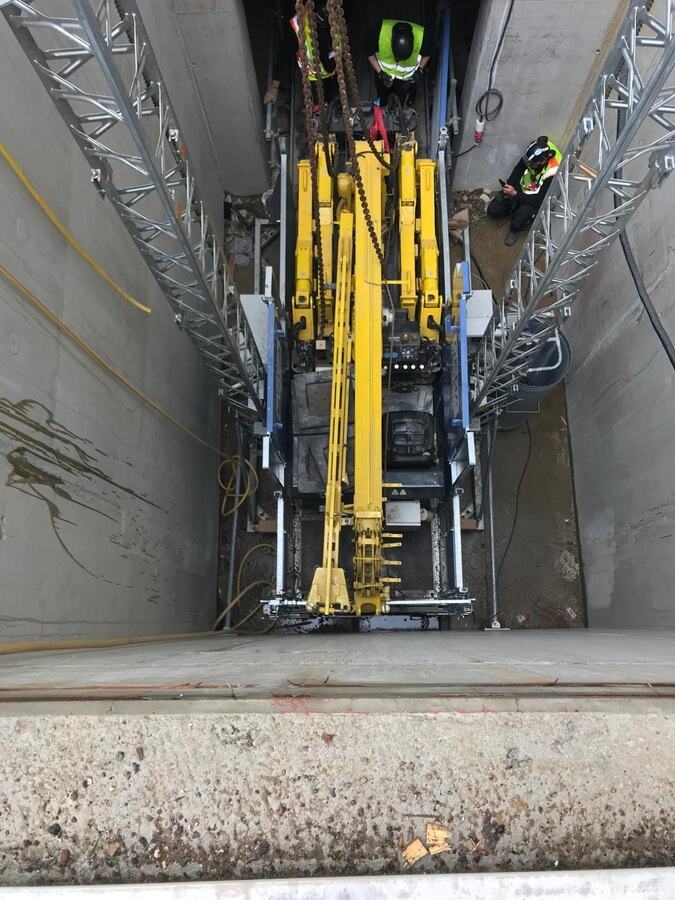
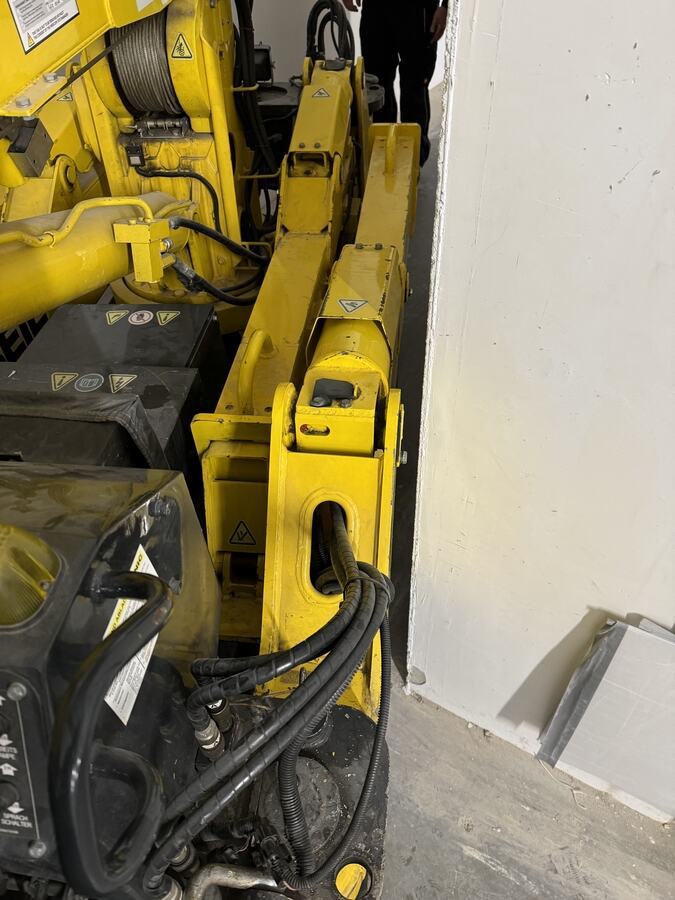
- The drive through the basement: An experienced driver plus banksmen on every side – that is how the whole route was driven. In places there were only millimetres to spare: forward, back, forward, back, until it fitted. At every obstacle we rethought the best line. The crane’s old lever controls are not as sensitive as you would wish for a job like this – which made the eyes on every corner all the more important.
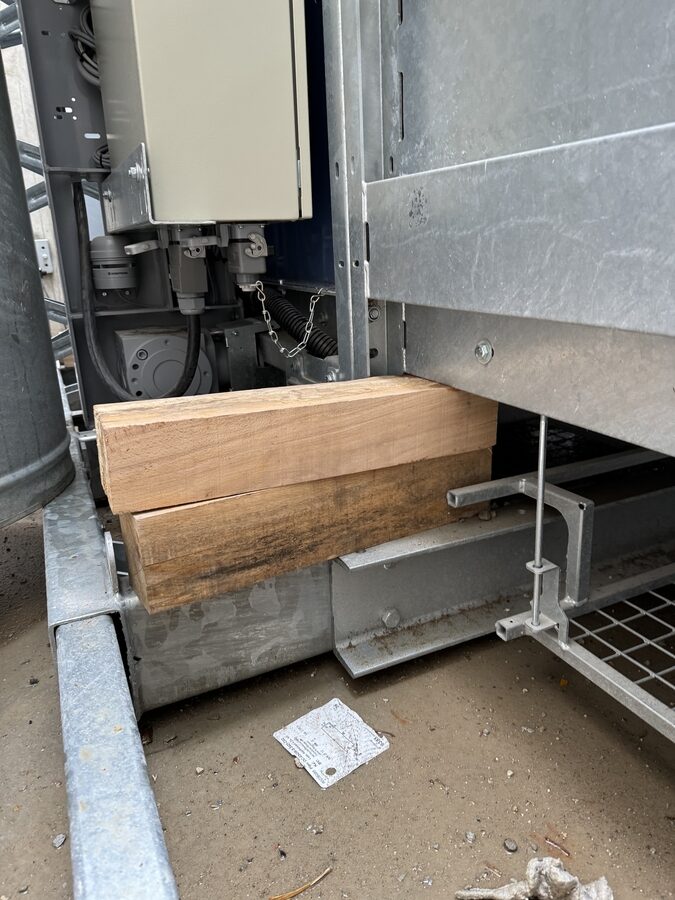
- Propping the site hoist: At the removal shaft the biggest obstacle was waiting – the site hoist. We propped up the hoist and the ramp completely with timber baulks to take the load and avoid bending the platform.
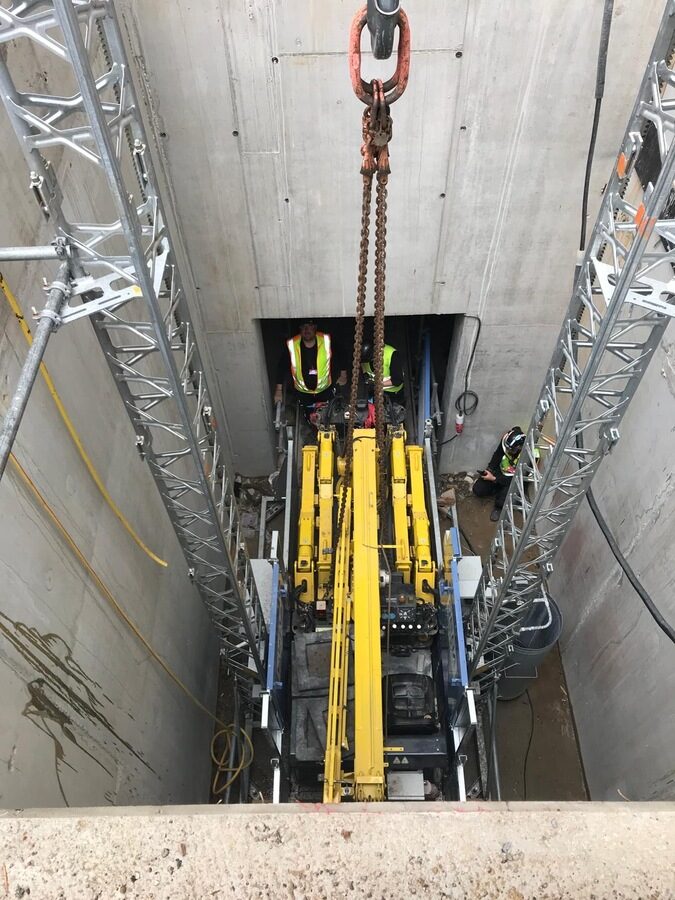
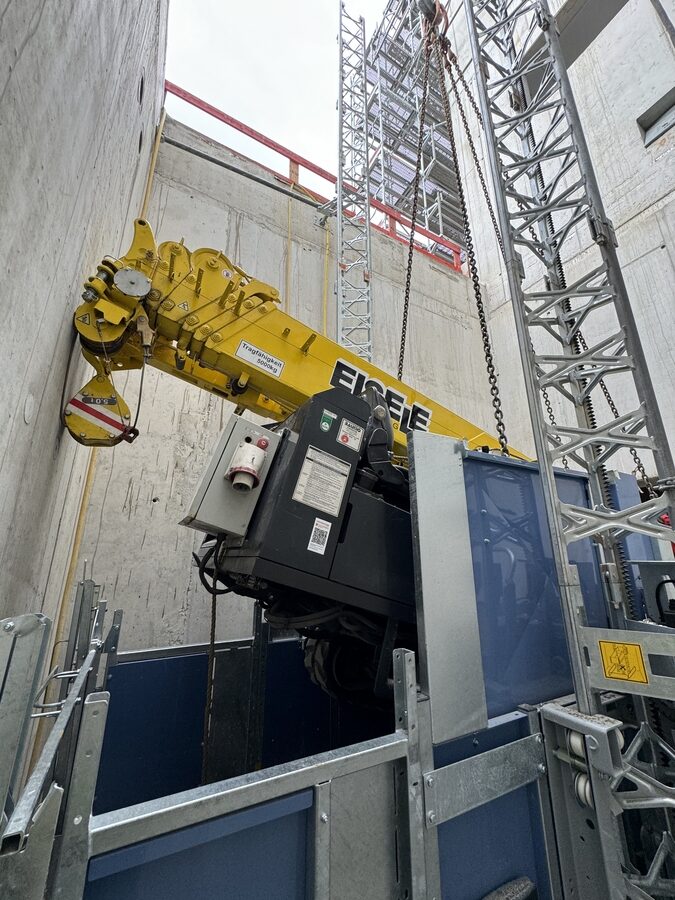
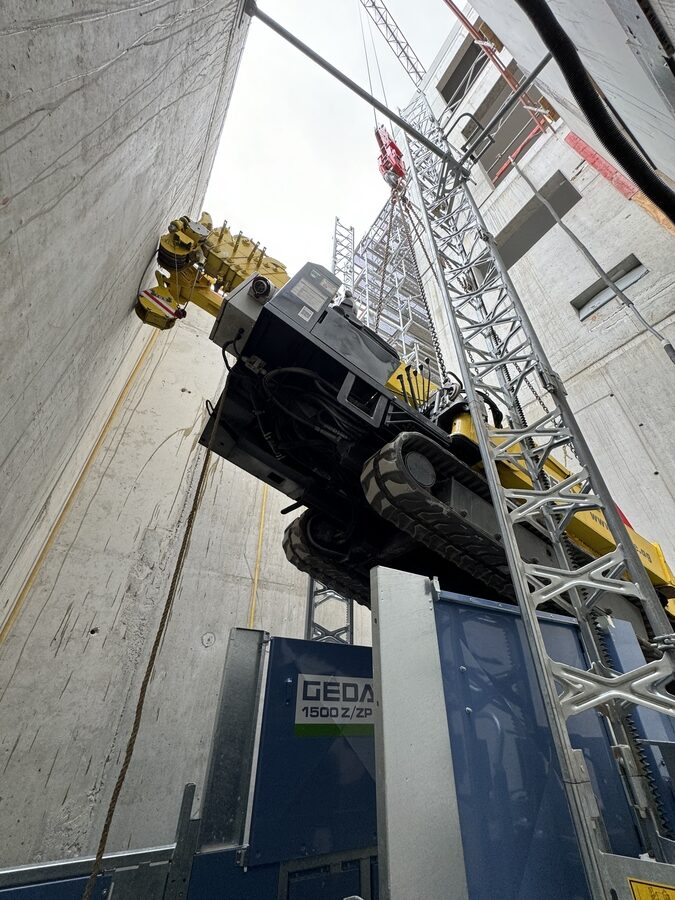
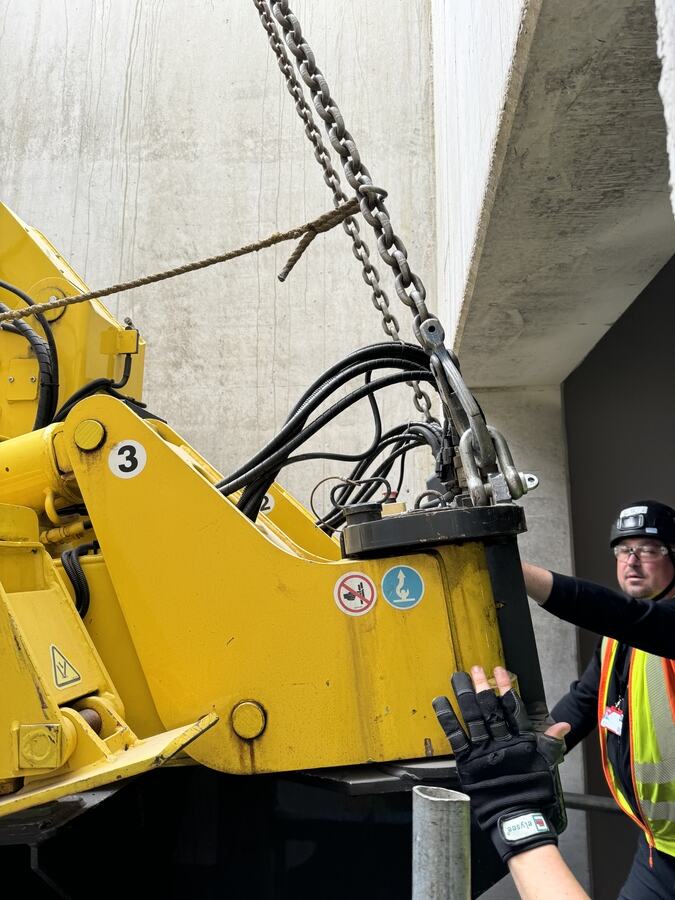
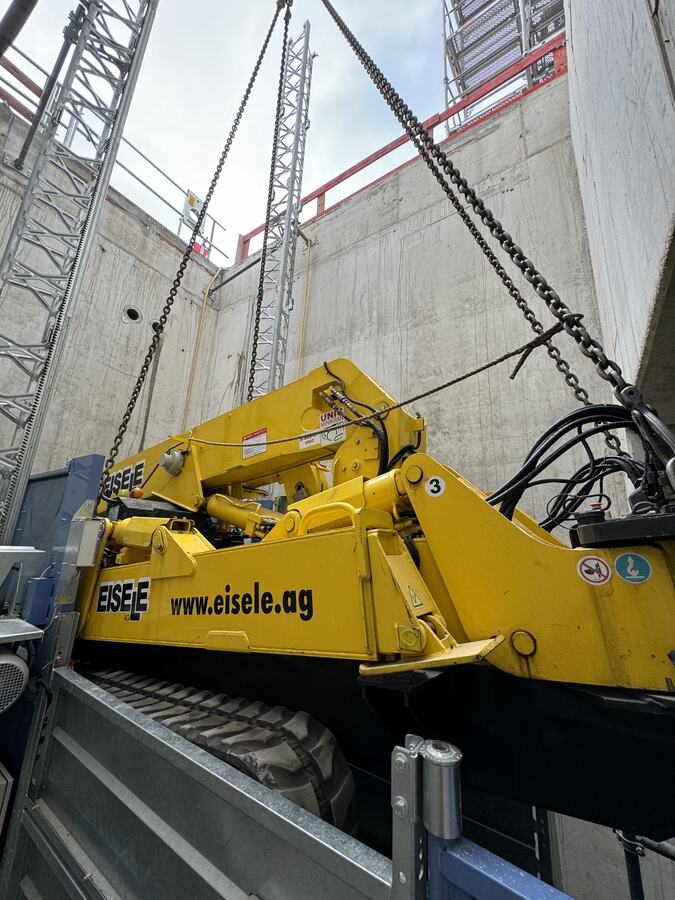
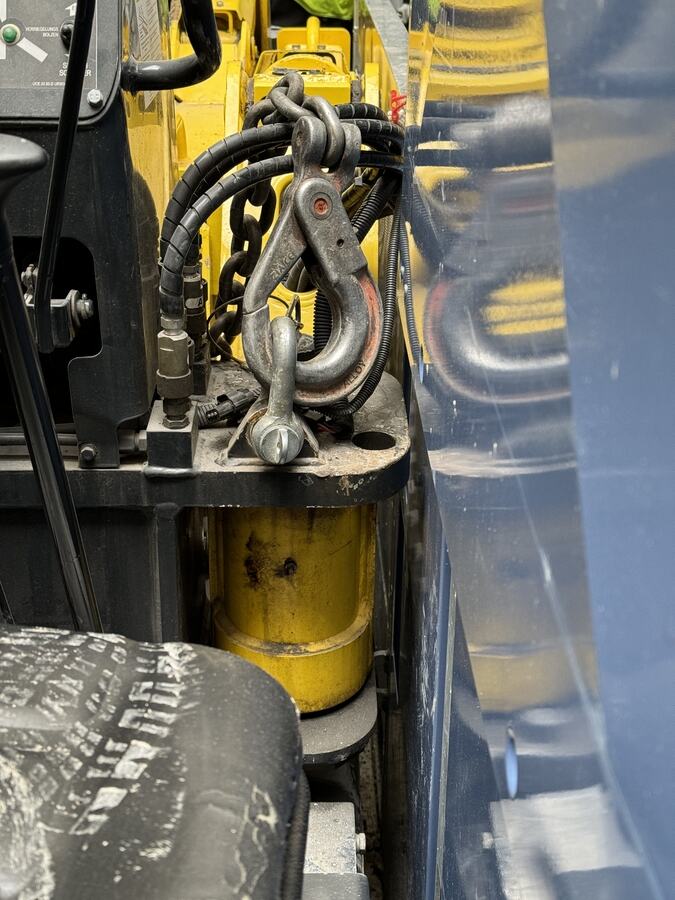
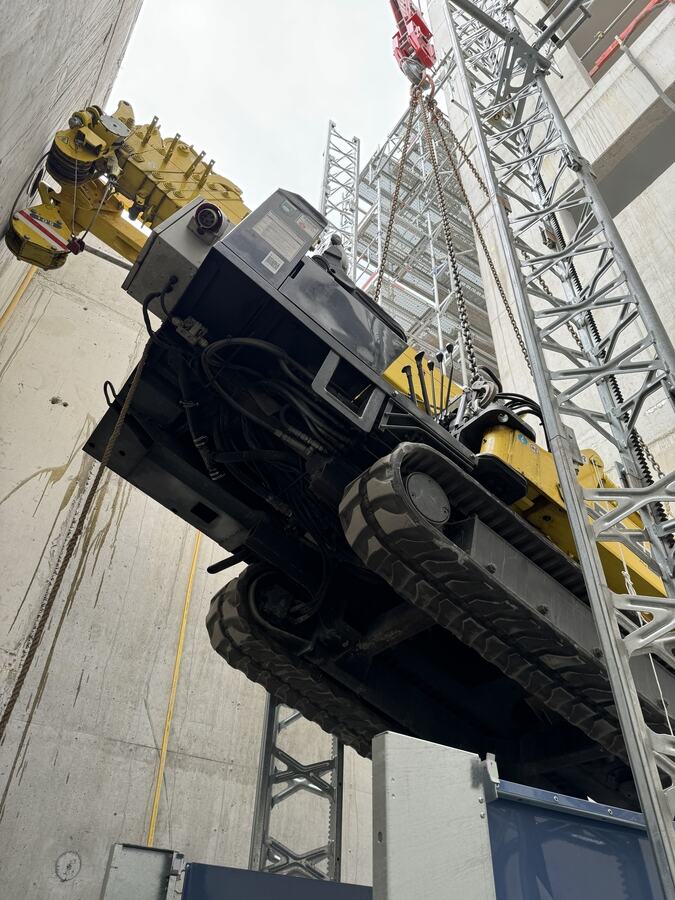
- Slinging at an angle: In the shaft one thing became clear: unfortunately we had measured correctly – it was 2 centimetres too big. So we slung the crane at an angle with an adjustable chain and were able to pull it up out of the shaft that way.
- The lift: For the tower crane that was a tricky task – very slowly and with great precision it drew the spider crane up through the shaft. The load itself was no problem, only the extremely tight space. With good crane supervision and clean teamwork that worked too.
2 centimetres short – and the answer hung on a chain
Sometimes 2 centimetres decide a whole job. Our survey had predicted it, the shaft confirmed it: hanging upright, the crane would not fit through. We could not rebuild the building – so we changed the geometry of the load.
Using an adjustable chain – whose legs can each be shortened individually with shortening claws – the crane was deliberately slung at an angle. A load hanging at an angle needs less room in one direction than one hanging straight: that hand’s breadth of geometry gave us back the missing centimetres. What matters is that the slinging is still properly calculated – centre of gravity, leg forces, protection against swinging. Angled, with us, means controlled angle, not “it will probably hold”.
The site hoist that could not be moved
A site hoist cannot simply be dismantled for a day – that would have blown every schedule on the site. So the crane had to go over the hoist, and partly onto its ramp. To make sure the platform survived the machine’s tonnes unscathed, we propped up the hoist and the ramp completely with timber baulks: the timbers take the load and pass it into the floor instead of pressing it into the hoist structure.
Timber baulks are permanent residents on our loading bed anyway – as a safeguard under a suspended counterweight, as a stack under a machine weighing tonnes, or as load distribution as they were here. Unspectacular material that saves structures and schedules at the right moment.
Planning beats panic – and still the moment decides
Of course there was a lift plan beforehand setting out every detail: route, slinging, path of the lift, responsibilities. For lifts inside tight buildings such a plan is not a formality but the basis for everyone involved – our team, the tower crane operator, the site – having the same picture in their heads.
And still, in a basement with millimetre tolerances: the plan gets you up to the obstacle, manoeuvring through it is down to you. An experienced driver, banksmen on every side, a short pause and a rethink before every bottleneck – that is the kind of teamwork you do not learn from a manual but from many jobs of this kind.
Why Omega Mounting?
- Data centre routine: This job was already our tenth documented data centre reference – we know the rules of these environments, from access control to the absolute ban on diesel inside the building.
- Lift & Shift in beide Richtungen: We do not just move machines into buildings, we get them out again – even when the building has become tighter than it was when they went in.
- A lift plan, not gut feeling: We plan demanding lifts with a lift plan, crane supervision and clear responsibilities – and keep the flexibility for when reality turns out 2 centimetres different from what we hoped.
- Improvisation with method: Angled slinging with an adjustable chain, timber baulks under the site hoist – solutions that come about on site but are based on real knowledge of rigging.
- Gentle on the site: Site hoist, floors, walls – everything came through undamaged, and no schedule on the site was touched.
- Rooted in the region: At home in Rodgau, quickly in Raunheim, Rüsselsheim, Frankfurt and the whole Rhine-Main region – and working throughout Germany.
Conclusion: every millimetre used
A spider crane that had rolled comfortably into the shell, a basement full of fittings, a site hoist in the only removal shaft and 2 missing centimetres: a quick little job turned into a full day of precision work for four fitters. In the end the crane hung at an angle on the adjustable chain, the tower crane drew it centimetre by centimetre up the shaft – and the site was able to carry on without interruption.
If a machine at your site is stuck deeper inside the building than the doors allow: talk to us. There is usually a way out – it just has to be measured.
Request a callback for your project now – Omega Mounting GmbH, Rodgau. Your partner for machine moving and industrial installation in the Rhine-Main region: Frankfurt, Rüsselsheim, Raunheim, Wiesbaden – and throughout Germany.
Wenn kein Autokran an die Einbaustelle kommt, entscheidet das Verfahren. Welche drei Wege es bei Netzersatzanlagen gibt, steht unter Notstromgeneratoren einbringen im Datacenter.
Photo gallery of the job



Do you have a machine that is stuck?
Tell us briefly what it is about – we will come back to you with an honest assessment.
100% free and without obligation
Passende Ratgeber zu diesem Einsatz
Über den Autor
Tobias Schott
Geschäftsführer Omega Mounting GmbH, Rodgau · über 20 Jahre Praxis in Montage und Instandhaltung
Gelernter Mechatroniker und seit 2004 in Wartung, Instandhaltung und Industriemontage zu Hause – zuerst an der Seite seines Vaters, seit 2012 mit Omega Mounting: von der Elektrohängebahn in Frankfurt bis zur Krananlage im Hallenneubau. Plant und leitet als Lifting Appointed Person Hebearbeiten in Rechenzentren und auf Industriebaustellen im Rhein-Main-Gebiet, ist Ausbilder und Prüfer für Krane, Hubarbeitsbühnen und Teleskopmaschinen sowie Sicherheitsbeauftragter. Bei Einsätzen im Ausland kennt man ihn als „German Troubleshooter“ – der, den man ruft, wenn es auf der Baustelle klemmt. Was Qualität heißt, hat er nicht aus einem Handbuch, sondern von seinem Vater gelernt: Made in Germany als Anspruch an die eigene Arbeit, nicht als Etikett. Deshalb steht sie bei Omega Mounting an erster Stelle – vor Tempo und vor Preis. Das Auftragstagebuch zeigt die Einsätze, die sein Team geplant und umgesetzt hat – ohne Kundennamen, aber mit allem, was man daraus lernen kann.
Frequently asked questions
A spider crane is a compact mini crane on crawler tracks whose outriggers fold out like a spider’s legs. It fits through narrow openings, turns almost on its own axis on rubber tracks and lifts where mobile cranes cannot reach – in halls, basements and courtyards. Many models are hybrids: diesel outdoors, electric inside buildings.
With a site survey, route planning and patience: first the whole route is measured and a lift plan drawn up, then the machine is moved through the building to the millimetre with a driver and banksmen and lifted at the shaft by crane. Where the numbers do not fit, tricks like angled slinging help – or something is dismantled, closely coordinated with everyone involved.
Because of the exhaust fumes: combustion engines are off limits in enclosed spaces – all the more so in a data centre with sensitive equipment and fire detection systems. So on this job the hybrid crane ran purely on electricity, via a long three-phase cable laid specially for it – whose voltage drop over that length has to be allowed for.
A lift plan documents a crane lift in detail: load data, lifting gear, centre of gravity, path of the lift, positions, responsibilities. For demanding lifts – narrow shafts, site hoists in the way, several parties involved – it is the shared working basis for crane operator, supervisor and installation team.
Change the geometry of the load: on this job it was 2 centimetres too big, so the crane was slung at a controlled angle with an adjustable chain – hanging at an angle it needed less room in the critical direction and fitted through the shaft. The prerequisite is properly calculated slinging with a secured centre of gravity.
By propping with timber baulks: the timbers take the load and pass it into the load-bearing ground instead of bending the hoist’s platform and ramp. That way the site hoist did not have to be dismantled for our job – and the site schedules stayed untouched.
Yes, regularly: this job in Raunheim was already our tenth documented data centre reference in the Rhine-Main region – from chiller replacement through SCR systems and fire suppression to machine moving. Our base in Rodgau sits in the middle of the data centre corridor around Frankfurt.
 English
  German