
- Data Center Services – Maintenance & 24/7
Maintenance & 24/7 service: downtime is not an option
Critical infrastructure does not wait for the next business day. So we work in shutdown windows, at night, on weekends and on call – with 24/7 availability, a mobile workshop and a warehouse just 20 minutes from the Frankfurt data centers.
Critical equipment needs a partner who picks up the phone
Maintenance for us is not a checklist but causal work: we want to know why a component wears – not merely when it next needs replacing.
The range spans emergency power systems, cooling equipment, conveyor and special systems. One example of reliability in continuous operation: a sorting facility at Frankfurt Airport that we have supported 24/7 for more than a year.
At a glance
- 24/7 on-call service for critical equipment
- Maintenance in shutdown windows – nights and weekends
- Warehouse & workshop in Rodgau: short routes across Rhine-Main
- Mobile workshop for on-site repairs
- Root-cause analysis instead of symptom patching
- Audit-proof documentation, English on request
What to expect on this page
Click any topic to jump straight to that section:
Reference case: 24/7 support for more than a year
A sorting facility at Frankfurt Airport runs around the clock – and has been in our continuous care for over a year: planned maintenance in production breaks, fault clearance on demand, repairs completed “across the day shift” before night sorting resumes.
We transfer that principle to data centers: fixed contacts, practiced procedures, material in stock – and the certainty that someone answers when it matters.
Cause, not symptom
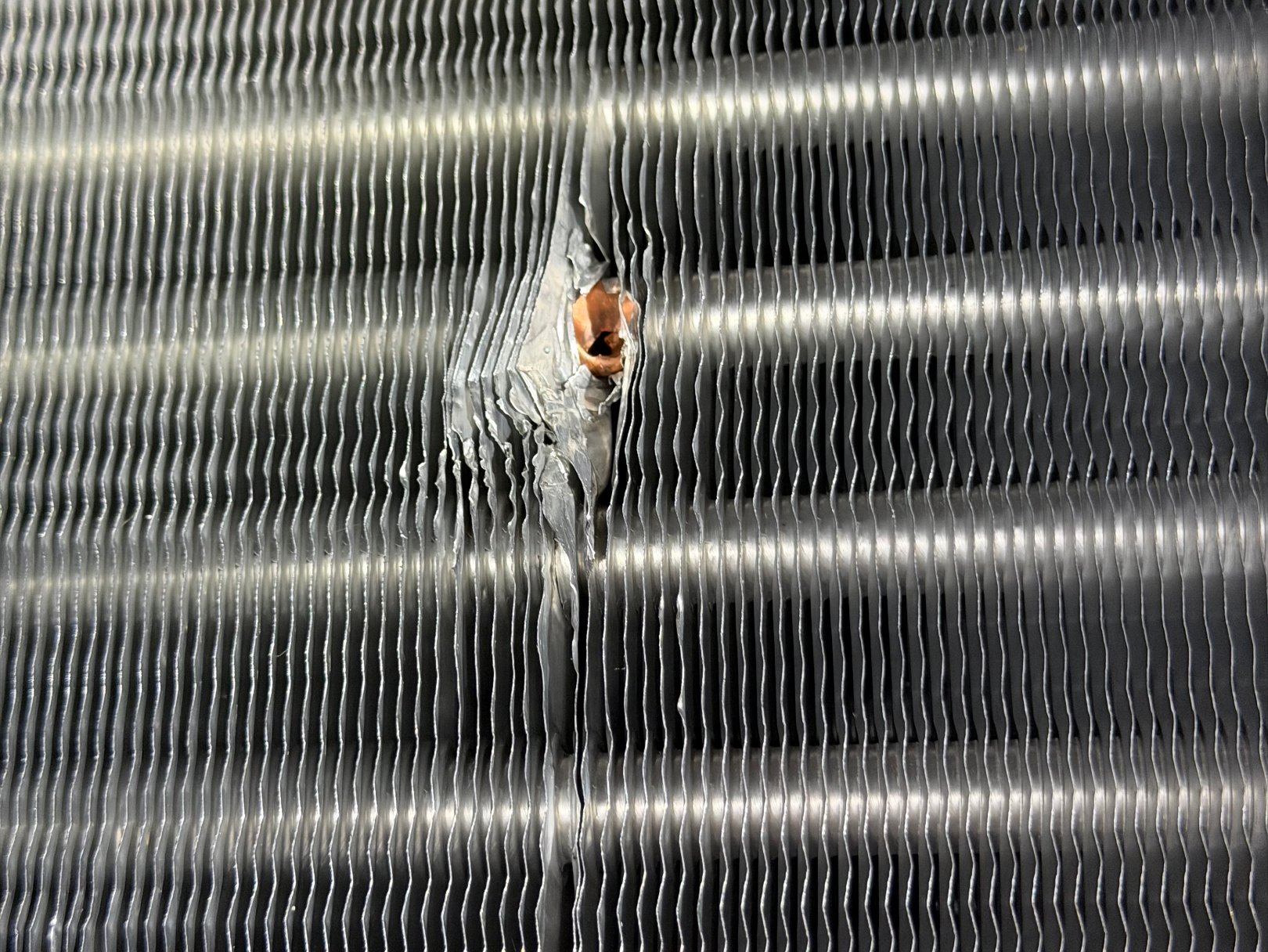
When a heat exchanger fails for the third time, the heat exchanger is not the problem. Our fitters are trained to question findings: why does the bearing wear? Why does the coupling drift? Whoever finds the cause maintains less often.
Documented examples fill our project diary: a mounting face machined crooked at the factory – found, milled flat on our own machine, problem permanently solved. That depth is what separates maintenance from parts replacement.
Planned maintenance in the shutdown window
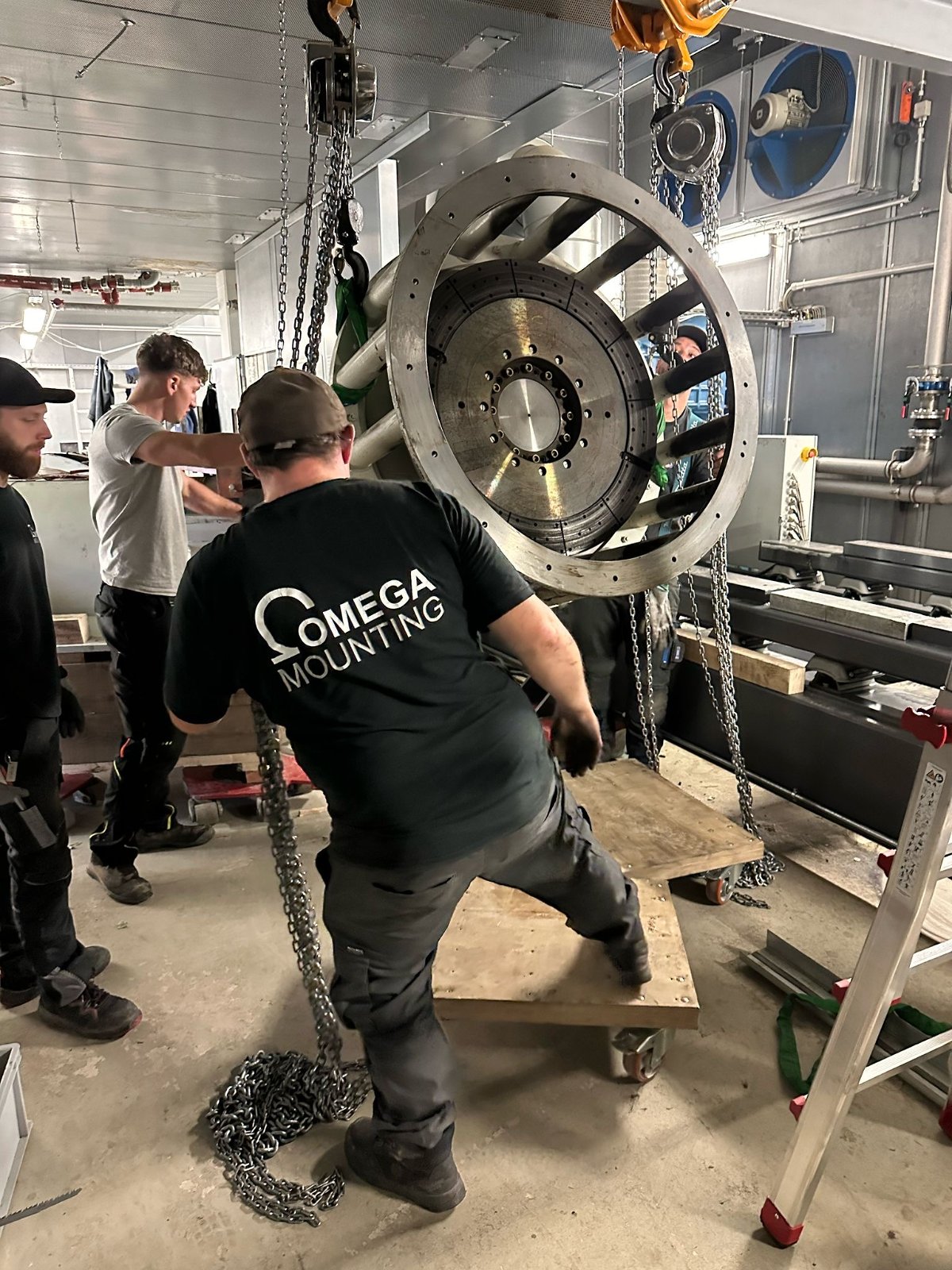
A maintenance window from Saturday noon to Sunday noon is not an obstacle – it is our normal. We plan material, tooling and staffing so the system runs on Monday morning, including reserve for the finding nobody expected.
With Cat. II refrigeration certification, welding capability (TIG/MAG) and our own machining, we solve the surprises inside the window – without waiting on third parties.
Availability is a process – not a state
A data center sells, at its core, a single product: availability. Every system we maintain either supports that product or endangers it. We therefore think of maintenance as managing two quantities: how rarely does something fail, and how quickly is it back when it does?
Preventive maintenance, wear analysis and causal work drive the first quantity. Reachability, spare-part availability, short routes and fitters who know the system before the emergency drive the second. Together they produce what operators actually want to buy: quiet nights.
Our evidence is daily practice: critical systems in continuous care for years, emergency call-outs that started the same evening, maintenance windows handed back on time for production. That reliability is why single jobs become contracts with us.
From single job to maintenance contract: the proven path
Hardly any operator hands a maintenance contract to a stranger – rightly so. The proven entry looks different: a concrete occasion – a fault, an upcoming replacement, a “qualified second opinion” on a chronic problem – becomes a first job. We deliver findings, solution and documentation. Then we talk structure.
A maintenance contract with us is a tailored package: defined systems, fixed intervals, clear scopes per visit, agreed response channels for faults – with 24/7 cover and named contacts on both sides where wanted. No blanket promises; a plan that fits your equipment and your risk.
The advantage over pure on-demand: we know your systems before something happens. History, weak points, access, contacts – in a fault, work starts with the solution instead of with orientation.
Spare parts and material logistics: 20 minutes from FRA
In a fault, logistics often decides more than skill: is the part there, and how fast is it at the machine? Our site in Rodgau – warehouse, metal shop and machining – lies about 20 minutes from the Frankfurt data centers. Fast-moving and wear parts are stocked per project; for contract systems we define together what sits on the shelf.
Our trump card is in-house fabrication: what cannot be delivered, we build. A documented case shows the principle – a deflection block whose mounting face had been machined crooked at the factory was milled flat and square on our machine, fitted with new gears and bearings, and reinstalled within the weekend window. No waiting for a manufacturer, no improvising at the machine.
For operators this combination of proximity and fabrication depth is a rare promise: even the unforeseen has a plan B here – and it is parked half an hour away.
The mobile workshop: repair where the equipment stands
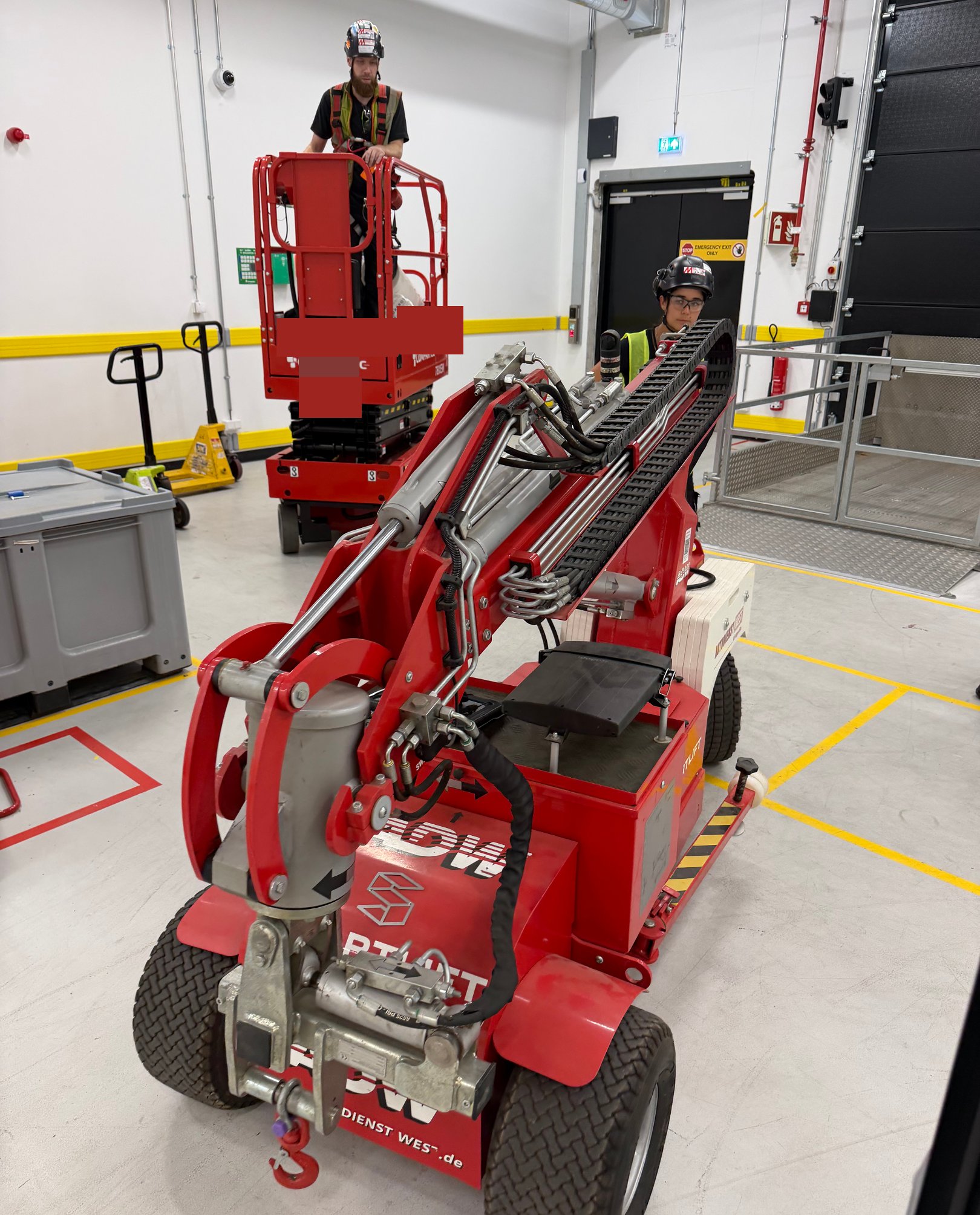
Some repairs fail not for skill but for distance: the part would have to go to a workshop, removal takes time, return transport too – and the system stands still. Our answer is the mobile data center workshop: a fully equipped response vehicle with tools, welding equipment, measuring instruments and consumables that brings the workshop to the machine instead of the other way round.
Clients have called this solution a model – because it cuts downtime exactly where it is most expensive. If a plate does not fit, it is adapted on site. If a bracket is missing, it is made at the machine. If welding is needed, we weld – with extraction, permits and fire watch per the site’s rules.
Combined with the Rodgau workshop this creates a tiered system: small things immediately on site, larger things overnight in fabrication – both documented in the same system history.
Documentation that passes audits
In the data center world, maintenance is only finished when it is provable. Our service reports contain findings, work performed, parts used, measured values and photo documentation – continued per system into a history from which patterns emerge: which component keeps appearing? Which assembly nears end of life? Where is an early replacement worth it?
That history belongs to you, not us: you receive the reports audit-proof and, on request, in English – compatible with the requirements of international operators, insurers and auditors. When someone asks when this system was last maintained and what was found, the answer is a document, not a memory.
Internally we use the same data for the next step: maintenance plans that improve with every cycle because they learn from their own history – cause over symptom, made systematic.
Night, weekend, holiday: working to your equipment's rhythm
Maintenance windows do not follow office hours. In data centers as in industry they fall where the equipment allows: nights, weekends, holidays – or the short span in which a redundant unit can cover for its partner. Our scheduling is built for this, not bent to it.
Two documented examples: a generator set replacement that began as an emergency on a Sunday evening – and a hoist overhaul pulled through completely in a window from Saturday noon to Sunday noon, including milling work in our own shop between removal and reinstallation. In both cases production ran on Monday as if nothing had happened.
To make such windows work, we plan them like projects: material and tooling complete in advance, staffing with reserve, fallback scenarios for the finding nobody expected. The weekend is too short for surprises – so we take away their opportunity beforehand.
Taking over existing systems: the equipment health check
Many maintenance inquiries start with an uneasy feeling: the system runs, but nobody knows its true condition – the last contractor is gone, documentation is patchy, history is oral. For exactly this we offer the equipment health check: a structured survey with visual inspection, functional checks, wear assessment and photo documentation.
The result is an honest condition report with prioritized recommendations: what is critical and needs doing now? What can be scheduled? What is cosmetic? On that basis you decide – with numbers instead of gut feeling – between repair, maintenance contract or replacement.
The check also pays before takeovers and audits: whoever knows the documented condition of their equipment negotiates better. And should our honest recommendation be that a repair is no longer worth it, we say that too. Advising, for us, does not mean selling.
Obsolescence: keeping old systems alive
Not every system can be replaced when a part fails – lead times, budgets and certifications often say otherwise. Then the supreme discipline of maintenance begins: keeping systems alive whose manufacturer no longer supplies parts, or no longer exists.
Our answers: machining that re-creates wear parts from samples or drawings – from the milled deflection block to the turned pin. Repair welding in TIG and MAG on assemblies others would write off. And conversions that integrate modern components into old systems when originals cannot be sourced.
Documented examples fill our project diary: re-made pins for eighty vehicles of an electric monorail, repaired curved rails at six meters height, overhauled gearbox blocks. This is not nostalgia – it is economics: every year a system keeps running under control is earned money for its operator.
One call is enough: fault reporting that works
In a fault, the first fifteen minutes count. So we keep the reporting path radically simple: one number, one reachable human, no ticket required before the callback. On the phone we clarify the essentials – which system, what behavior, since when, what was tried, how critical – and then decide together: remote diagnosis, planned visit or immediate departure.
For contract clients we store equipment data, access details and contacts in advance – in an emergency, the drive starts parallel to the call instead of after it. That turns 24/7 from a phone number into a process prepared for your system before it is needed.
Does your equipment need a reliable maintenance partner?
Tell us what you operate and what keeps you up at night – we will come back with an honest proposal for maintenance concept and on-call cover.
100 % non-binding & free of charge · Direct line: +49 6106 239 25 88
Frequently asked questions
Very fast across the Rhine-Main region: our base in Rodgau is about 20 minutes by road from the Frankfurt data centers, and the on-call service is reachable around the clock. A documented case: a generator set replacement that started on a Sunday evening.
Yes. We take over existing systems after a survey and initial assessment – happily also as a “qualified second opinion” when a recurring problem has so far only been treated with workarounds. Our ambition: find the cause, not build the third workaround.
Yes, by design. Maintenance windows in data centers and industry almost always fall at night or on weekends – our scheduling is built around those windows, including material logistics and pre-production handover.
That depends on the equipment, scope and accessibility – flat rates without a survey would be unserious. After a site survey you receive a clear offer with defined services; for contracts with on-call cover we agree fixed terms.
Every job is documented with findings, work performed, photos and inspection records where applicable – audit-proof for operators, insurers and auditors. In English on request.
Yes – within maintenance contracts we agree fixed reporting channels and response windows, matched to the criticality of the equipment and the site. We deliberately avoid blanket promises made without knowing the system; reliable ones we make gladly.
Work on refrigeration circuits is done with the appropriate certification – Cat. II is held in-house. We cover mechanical maintenance, component replacement and leak-related work; where manufacturer depth is needed, we coordinate with the respective service organisation.
With a survey: we record your equipment, produce an initial condition report and propose intervals and scopes. Often the relationship starts with a concrete single job – after which both sides know where they stand.
It depends on scope and number of systems – after a short call we quote a fixed price for the survey. The report is yours afterwards, whether or not you commission any follow-up work.
In many cases, yes: our workshop machines mechanical parts from samples or drawings – turned, milled, welded. Limits exist for certified and electronic components; we tell you that clearly before any commitment.