
- Guide – Crane technology
Crane System Maintenance & Replacement: Crane Inspection, Service Life, New Crane
By Tobias Schott · Reading time approx. 24 minutes · Last updated: October 2026
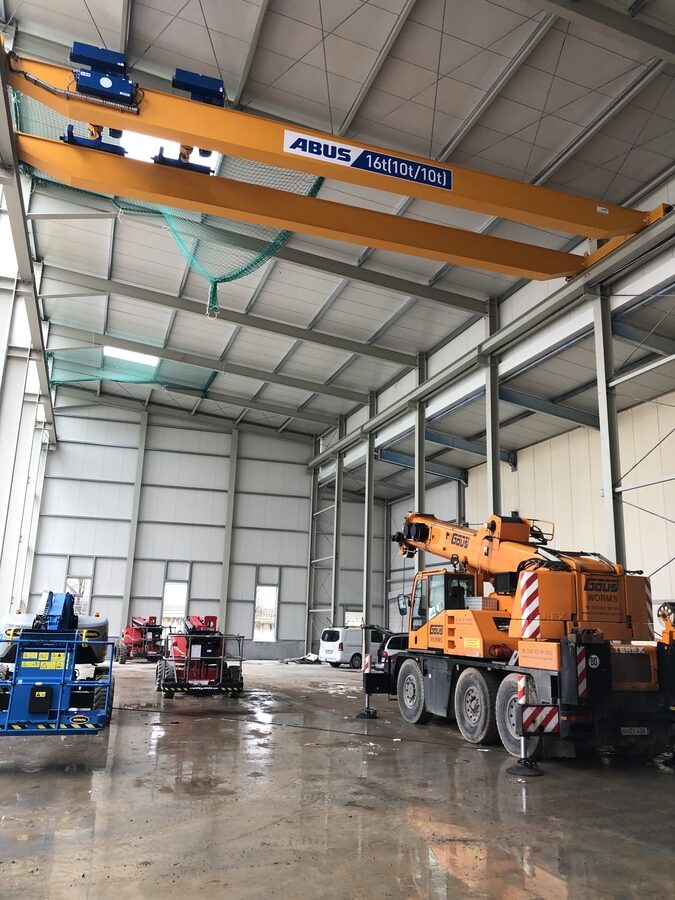
A crane system lives longer than most machines in the hall – but only if the annual crane inspection, maintenance according to load and timely replacement are planned as one continuous life cycle.
The overhead crane is one of the items of work equipment that gets the least thought in a plant – until it stops. Then everything it moves stops too. For maintenance managers and buyers, the crane system is therefore a subject better handled with foresight than in a breakdown. Crane system maintenance – behind this search term there is usually a double question. How do I keep the crane safe and available? And when is the point reached at which I should replace the crane rather than repair it once more?
The answer has three parts. First, the crane inspection, which is mandatory and which you as the operator organise. Second, the maintenance of the assemblies that actually wear – hoist, travel drives, brakes, rope or chain, power supply, crane runway. Third, the remaining service life: every crane is designed for a certain number of load cycles, and when they are used up, a general overhaul or replacement is due.
This guide leads through all three parts and shows at the end how a crane replacement proceeds – from surveying the crane runway through the lift-in to acceptance with test load. With examples from our crane installations in Aschaffenburg, Babenhausen and elsewhere in the Rhine-Main region – from the perspective of the installation and maintenance partner, not the crane manufacturer.
Key points at a glance
- A crane system consists of crane runway, crane bridge or gantry, trolley with hoist, power supply and control – each of these assemblies has its own wear patterns and inspection points.
- Cranes must be inspected by a qualified person before first use, after substantial modifications and thereafter at least once a year; all results belong in the inspection logbook.
- Maintenance depends on loading and manufacturer specification – a crane in three-shift operation needs different intervals from a workshop crane that lifts three times a day.
- Every crane and every hoist has a theoretical service life; once it is used up, it must be overhauled or replaced – determining the remaining service life is part of the annual crane inspection.
- Whether to repair, overhaul or replace the crane is decided by condition, remaining service life, spare parts situation, lifting capacity requirement and the condition of the crane runway.
- Replacement begins with surveying the crane runway and ends with test load, acceptance, inspection logbook entry and briefing of the crane operators.
- Overhead crane, gantry crane and pillar jib crane solve different tasks – in existing buildings, the building structure often decides which type of crane is possible at all.
What is a crane system – and who is responsible for its maintenance?
A crane system is a fixed or rail-travelling lifting device that raises loads with a hoist and moves them with travel drives in one or more directions. Essentially it consists of crane runway, crane bridge or gantry, trolley with hoist, power supply and control.
Three designs are common in industrial halls: the overhead crane (bridge crane), whose bridge travels on a crane runway on the hall columns. The gantry crane on its own columns without connection to the building. And the pillar jib crane, whose jib rotates around its own pillar. Overhead cranes come as single-girder and double-girder cranes; the double-girder carries the trolley on top of the girders and achieves higher lifting capacities and lifting heights.
Legally, a crane is both a machine and work equipment. In practice this means: the manufacturer is responsible for the crane's conformity. You as the operator are responsible for inspection, maintenance, the inspection logbook and the authorisation of your crane operators. An installation and maintenance partner takes on installation, maintenance, repair and inspection preparation, not the operator's responsibility.
Which crane inspections are mandatory – and what do you do with them?

A crane must be inspected by a qualified person before first use, after substantial modifications and thereafter at least once a year – this is required by the accident-prevention regulation DGUV Regulation 52 "Cranes". For you this means: you need a fixed inspection date for each crane, a maintained inspection logbook and a way of turning findings into work orders.
| Reason for inspection | When | Who inspects | What you prepare |
|---|---|---|---|
| Inspection before first use. | After installation, before the first operation under load. | Authorised expert or qualified person, depending on crane type. | Installation and survey report, declaration of conformity, test loads. |
| Inspection after substantial modification. | After conversion, change of lifting capacity, crane runway or control. | Authorised expert or qualified person, depending on crane type. | Description of the modification, structural approval. |
| Periodic crane inspection. | At least once a year, more often under heavy loading. | Qualified person (competent person). | Inspection logbook, operating hours, defect list from the previous inspection, access. |
| Determination of remaining service life. | As part of the periodic inspection. | Qualified person. | Operating hours counter or usage records. |
| Inspection of load-handling attachments and lifting accessories. | At least annually, plus visual check on every working day. | Competent person. | Inventory list, marking. |
Qualified person or competent person?
The crane regulation speaks of the qualified person (Sachkundiger), the BetrSichV (Industrial Safety Ordinance) of the competent person (zur Prüfung befähigte Person), whose requirements are described in the German technical rule TRBS 1203. The same qualification is meant: specialist training, professional experience and current knowledge of crane and regulations. Ask to see your inspector's qualification once. For certain crane types and before first use, an authorised expert (Sachverständiger) is required. Before a replacement, clarify who will carry out the final acceptance so that the date is fixed when the crane is in place.
The inspection logbook
Every crane has an inspection logbook in which the results of all inspections, identified defects and their rectification, and substantial modifications are documented. It is the memory of the system – and, when replacing, the most important source for the condition survey. If it is missing or incomplete, the replacement begins with a more extensive survey and assessment. How to keep track of inspection intervals across all plant is shown in our guide on the inspection obligations for plant operators.
What happens with the findings
A finding from the crane inspection is only dealt with when it is recorded in the inspection logbook with deadline, responsible person and proof of rectification. The inspector classifies whether a defect rules out continued operation – such as a rope due for discard or a failed limit switch – or may be monitored until the next maintenance. You organise the implementation. The route from inspection report to re-release is described in our guide Rectifying UVV defects.
The crane operator
Crane operators must be of legal age, suitable and briefed in operating the crane, and must have demonstrated their competence. For many crane types, a written authorisation is additionally required. After a replacement, the crane operators are briefed on the new crane – control, radio remote control, safety devices – before it goes into operation. Plan this firmly for the handover day.
Crane system maintenance: what does it include?
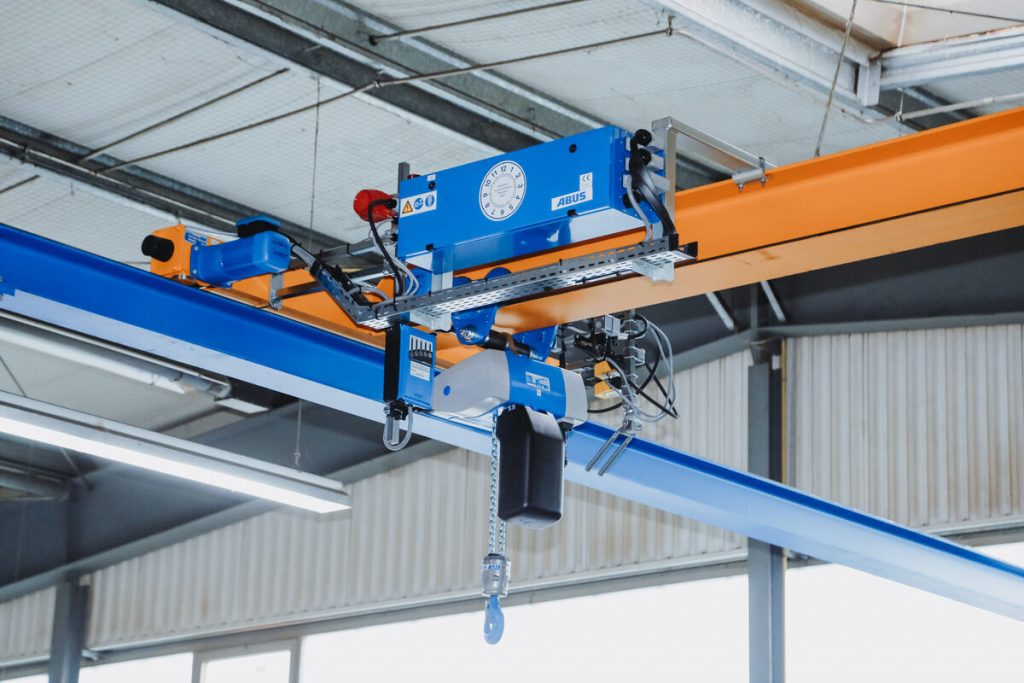
The maintenance of a crane system covers all assemblies that wear – each according to manufacturer specification and actual loading:
- Hoist with rope or chain and brake.
- Trolley travel drive and crane travel drive with wheels and drives.
- Crane runway with rails, fixings and end stops.
- Power supply via conductor rail or festoon cable.
- Control with safety devices.
- Load-handling attachments.
Hoist, rope, chain, brake
The hoist is the heart of the crane. Wire rope or load chain are checked for discard criteria – i.e. for wire breaks, wear, corrosion and deformation that rule out further use. Plus rope drum and rope sheaves, bottom block and hook with safety latch, the hoist brake for lining thickness and release travel, gearbox and oil level, as well as overload protection and hoist limit switch. A hoist that "still works" can nevertheless be due for discard – you only see that during the inspection.
Travel drives and wheels
Trolley and crane travel drives wear on wheels, flanges, drives and brakes. One-sided flange wear is a typical signal of skewing – and that almost always has its cause in the crane runway, not in the travel drive. Anyone who only replaces wheels without surveying the runway will soon replace them again.
Crane runway and power supply
The crane runway itself is checked for span, elevation, lateral alignment, rail wear, rail joints, fixings and end stops with buffers. The power supply is usually a conductor rail (busbar) along the crane runway, from which current collectors with carbon brushes draw the current. It wears at the brushes, transitions and feed points. Contamination leads to faults that look like control errors.
Control and safety devices
Pre-limit and limit switches for all travel and hoisting movements, emergency stop, overload protection, warning light or horn, radio remote control with main switch – everything must function at every inspection. The pre-limit switch reduces speed before the end of the runway, the limit switch stops; both protect crane and crane runway from a hard impact. Bridged safety devices regularly lead to shutdown at the crane inspection – avoidable like hardly any other defect.
Maintenance intervals according to loading
The intervals are defined by manufacturer and risk assessment, and they depend on the loading. A crane in multi-shift operation with frequent lifts close to the rated capacity needs shorter intervals than a workshop crane. For this, hoists are classified into mechanism groups that reflect running time and load spectrum – i.e. how often, how heavily and how long the crane works. Anyone who knows their load spectrum can tailor maintenance to it instead of working by the calendar. Anyone with several cranes in-house – not unusual in Frankfurt, Offenbach or Hanau – combines crane inspection and maintenance so that the hall does not stand still twice a year.
How long does a crane last? Remaining service life and general overhaul
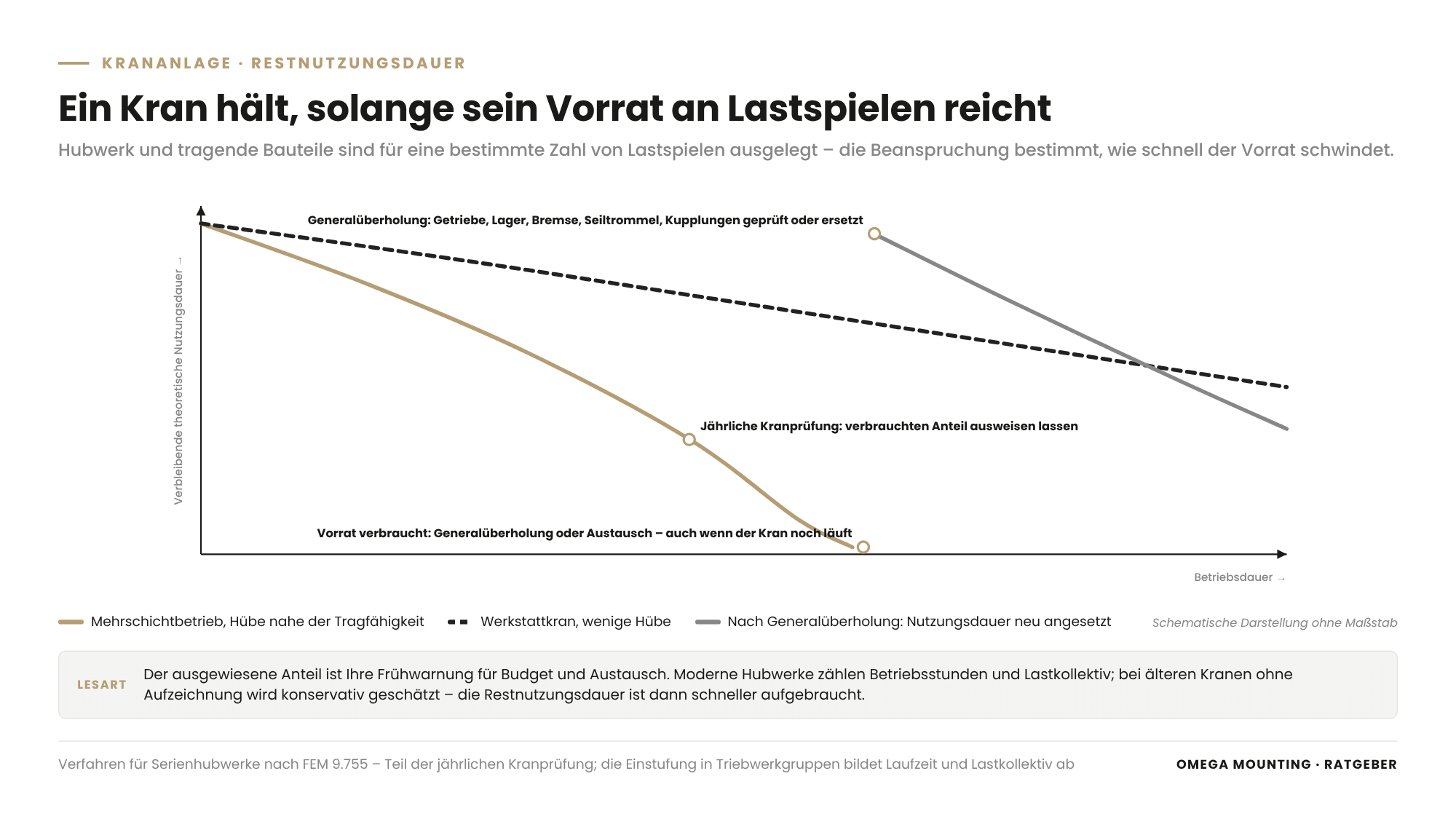
A crane lasts as long as its theoretical service life. Hoists and load-bearing components are designed for a certain number of load cycles in a certain mechanism group. Once this stock is used up, a general overhaul must be carried out or the component replaced – regardless of whether the crane still "runs well".
The procedure behind this is described for series-produced hoists in the FEM 9.755 guideline and is part of the annual crane inspection. From operating hours, load spectrum and mechanism group, the qualified person determines the used-up share of the theoretical service life and enters it in the inspection logbook. For you this means: have this value shown at every inspection – it is your early warning for budget and replacement. Modern hoists have operating hours counters or load spectrum recorders for this; for older cranes, conservative estimates are made, which uses up the remaining service life faster.
During the general overhaul, the hoist is dismantled. All stressed parts – gearbox, bearings, brake, rope drum, couplings – are checked and replaced if necessary, and the theoretical service life is reset. Whether this is worthwhile depends on age, spare parts situation and the condition of the other assemblies. Often a new hoist is more economical than the overhaul – or the time has come to replace the entire system.
When is it worth replacing the crane instead of repairing it?
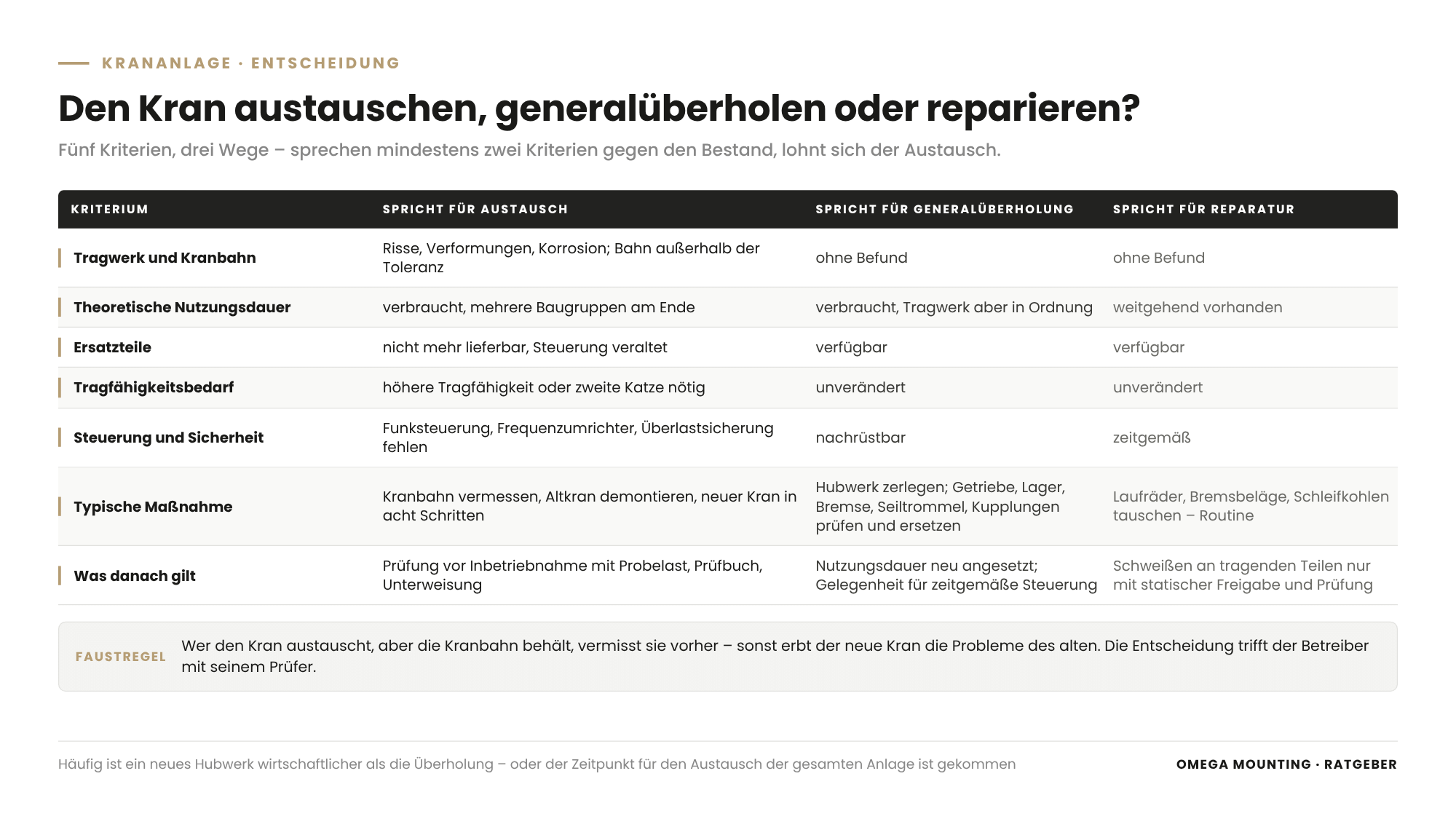
Replacing the crane is worthwhile when at least two of the five decision criteria speak against the existing crane. The criteria: condition of structure and crane runway, remaining theoretical service life, spare parts situation, current and future lifting capacity requirement, control and safety technology.
| Criterion | Favours repair | Favours general overhaul | Favours replacement |
|---|---|---|---|
| Structure and crane runway. | No findings. | No findings. | Cracks, deformation, corrosion, runway out of tolerance. |
| Theoretical service life. | Largely remaining. | Used up, but structure in order. | Used up, several assemblies at the end. |
| Spare parts. | Available. | Available. | No longer available, control obsolete. |
| Lifting capacity requirement. | Unchanged. | Unchanged. | Higher lifting capacity or second trolley needed. |
| Control and safety. | Up to date. | Can be retrofitted. | Radio control, frequency converter, overload protection missing. |
A repair – such as replacing wheels, brake linings or carbon brushes – is routine. Welding work on load-bearing components is not: it requires structural approval, qualified welders and is usually considered a substantial modification subject to mandatory inspection before recommissioning. A general overhaul is the opportunity to bring control and safety technology up to today's standard. And anyone who replaces the crane but keeps the crane runway must survey it beforehand – otherwise the new crane inherits the problems of the old one. In the end, the operator makes the decision with their inspector; we provide assessment, survey and an estimate of which route means the least downtime.
How is a crane system replaced? The eight steps
A crane system is replaced in eight steps:
- Condition survey with measurement of the crane runway.
- Planning of moving-in route and lifting equipment.
- Dismantling of the old crane.
- Adaptation or renewal of the crane runway.
- Pre-assembly of the new crane on the ground.
- Lift-in and placing on the runway.
- Installation of conductor rail, safety devices and control.
- Inspection with test load, acceptance, inspection logbook entry and briefing.
Step 1: surveying the crane runway
Span, elevation of both rails relative to each other, lateral alignment and straightness, joint offsets and the condition of rails, fixings and end stops are measured. This is done with laser or total station over the entire travel length. Which deviations a crane runway may have is set out in the standard ISO 12488-1. For you, the result counts: a runway out of tolerance makes the new crane skew and eats wheels and flanges. That is why it is straightened or renewed before the lift-in, not afterwards.
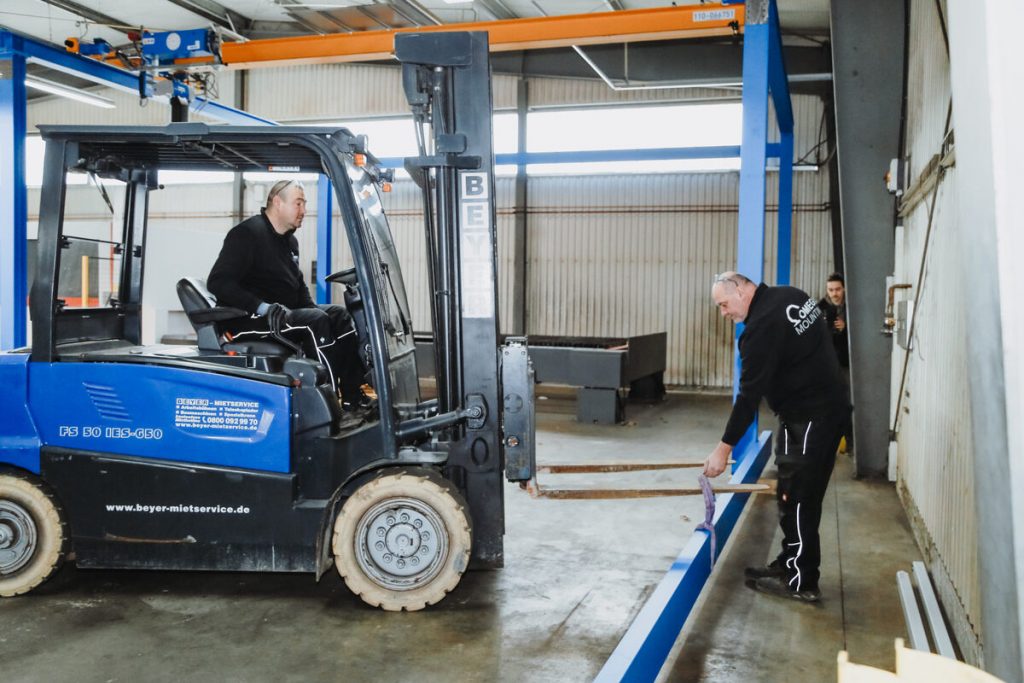
On one overhead crane project, together with the plant's maintenance department, we shortened the crane runway and welded on new end stops and support blocks. The columns were positioned with anchors and adjusting screws, all base points brought to the same height with a rotating laser and the base plates grouted. Finally, the runway was lifted with two forklifts and aligned to the exact track gauge. Read more at installation of a crane runway for an overhead crane.
Step 2: planning the moving-in route and lifting equipment
The new crane has to get into the hall and onto the runway. In a new build, this is done through still-open wall bays or the open roof with a mobile crane. In existing buildings, it is doors, installation openings or the route through the hall with forklift or mobile gantry. The diagonal dimension is decisive: the diagonal of the crane bridge is larger than its span, and when rotating it onto the runway, this diagonal must fit through the hall. Added to this are the ceiling clearance for slinging, crane set-up area, floor loads and exclusion zones. How an installation day is scheduled from preparation to release is described in our guide on the sequence of a machinery moving-in operation. With a crane, the same logic applies, only the load stays up at the end.
Step 3: dismantling the old crane
The old crane is isolated and secured against reactivation, the conductor rail de-energised, hoist and trolley secured. Then the bridge is slung, lifted off the runway and dismantled on the ground or moved out in one piece. Buffers and end stops are checked for reusability; assemblies with remaining service life can serve as spare parts donors.
Step 4: adapting the crane runway
Depending on the findings from step 1, the runway is straightened, shortened or extended, rails and fixings are renewed, end stops and buffers adapted to the new bridge. For new gantry crane runways, the sequence from our installation in Babenhausen applies: erect columns, place runway girders, laser-survey height and diagonal dimension, grout base plates with high-strength grout, allow to cure, retighten. Only then comes the crane.
Step 5: pre-assembly on the ground
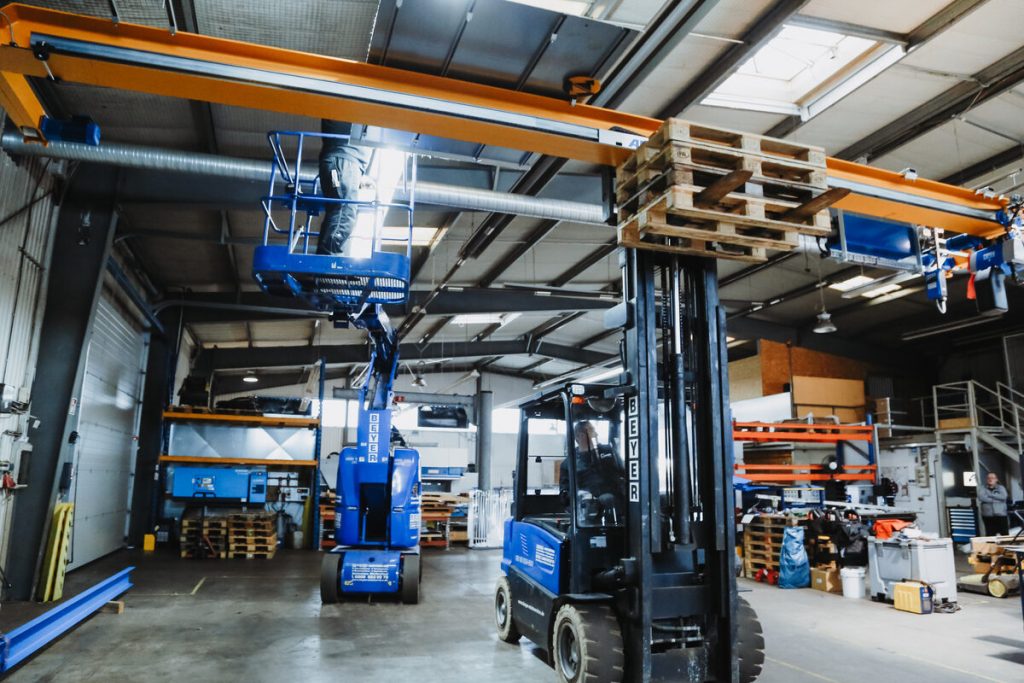
As much as possible is assembled on the ground: hoist, travel drives, cable tray, attachments, preparing the wiring. Every hour on the ground saves several at height – and is safer. On a double-girder overhead crane with 16 tonnes lifting capacity and two trolleys of 10 tonnes each in a new hall in the Aschaffenburg area, two fitters worked exactly this way. Pre-assembly on the ground, lift-in with a mobile crane with jib extension, rotating in through the open wall bays onto the runway – in a single working day.
Step 6: the lift-in
The lift-in follows a lift plan – the written planning of the lift with load assumptions, slinging geometry, crane position and radius. Slinging is done at the points designated by the manufacturer with inspected lifting accessories; which round sling, chain or spreader beam suits which load is explained in our guide on lifting accessories for heavy loads. Exclusion zones are set up, one person gives the commands and is responsible for the lift – who that is, is set out in our guide on the appointed person for lifting operations. The bridge is lifted over the runway, rotated in, lowered and placed on the wheels; then follow a check of the seating and securing against travel.
Step 7: conductor rail, safety devices, control
Along the crane runway, the conductor rail is installed over the entire travel length and the current collector set up on the crane. Pre-limit and limit switches for crane and trolley travel are set, the radio remote control with main switch and warning light installed, and the cable routing established via cable tray or festoon cable. The interface to the plant is at the main power switch: from there, the operator's plant electrician takes over the supply – define this in writing beforehand.
Step 8: inspection, test load, acceptance
Before the first operation under load, the inspection before commissioning follows. This includes the function test of all movements and safety devices and test loads above the rated capacity, as defined by manufacturer and inspector. Then: inspection logbook entry, handover of the documentation with declaration of conformity and operating instructions, briefing of the crane operators, release. Anyone who assembles a crane from components from different suppliers may become the manufacturer of the complete machine under the Machinery Directive – with the obligation to carry out their own conformity assessment. This is not legal advice, but a reason to clarify the route beforehand with inspector and supplier.
Which type of crane suits which task?
Overhead crane, gantry crane and pillar jib crane solve different tasks. The overhead crane uses the entire hall area and needs a load-bearing crane runway on the building. The gantry crane stands on its own columns and is independent of the hall structure. The pillar jib crane serves one workplace in a circle around its pillar.
Overhead crane
Single-girder or double-girder cranes on a crane runway on the hall columns – the standard solution for production and assembly halls. The double-girder allows higher lifting capacities, greater lifting heights and several trolleys; with two trolleys in tandem operation, long, bulky loads can be lifted on two hooks simultaneously. The prerequisite is a crane runway designed for the wheel loads of the crane – in existing buildings the most common hurdle when a stronger crane is wanted. Anyone wanting to replace an overhead crane therefore first checks the crane runway and the hall structure.
Gantry crane
A gantry crane stands on its own rows of columns with runway girders on top and needs no connection to the building. That makes it the solution when the hall structure cannot support a crane runway. Likewise when a crane is needed outdoors or above a storage yard, or when a production island is to get its own crane. We erected such a gantry with a single-girder crane bridge for a steel construction company in Babenhausen.
Pillar jib crane
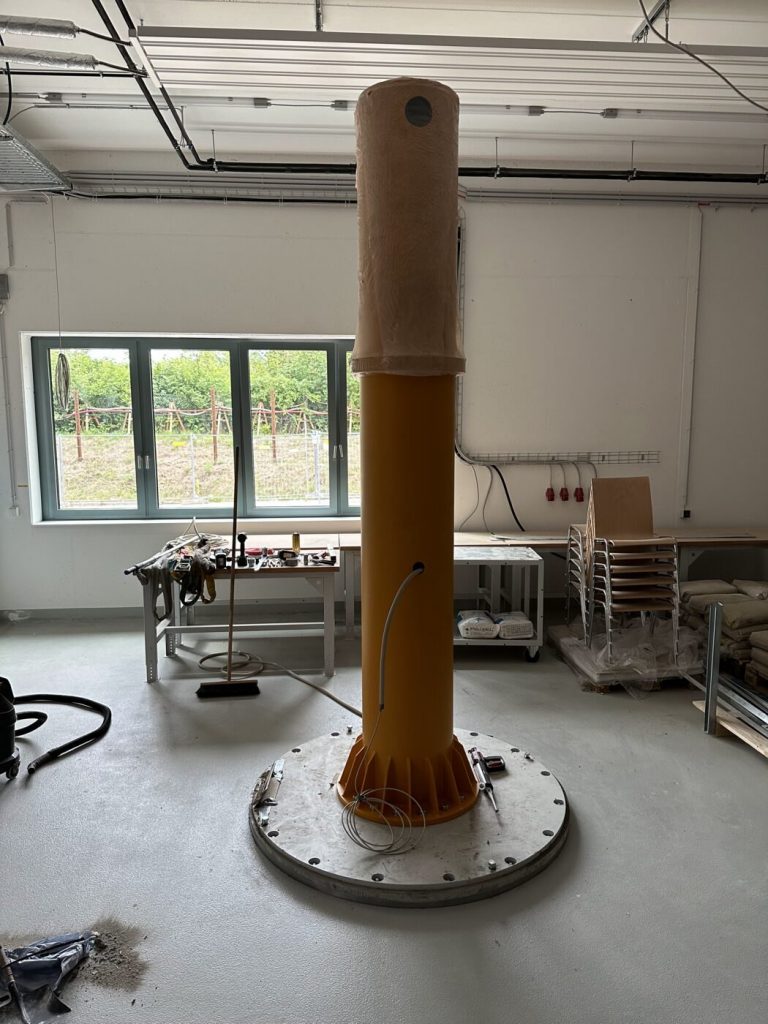
The pillar jib crane stands on its own base; its jib rotates around the pillar – depending on design up to 360 degrees. The wall-mounted jib crane, by contrast, is fixed to a load-bearing wall or column and serves about 180 degrees. It needs no crane runway and no connection to the building, but loads the floor on one side and variably depending on jib position. The foundation or anchoring must absorb this overturning moment. Anyone having a pillar jib crane installed clarifies the floor slab beforehand. Thickness, reinforcement, joints and services decide whether chemical anchors are sufficient or a separate foundation is needed.
Which occupational safety rules apply to crane replacement – translated into the sequence?

In crane replacement, the rules for lifting operations, for working at height and for working on electrical installations apply. In the sequence this means: lift plan and release of every lift, exclusion zones and nobody under a suspended load. Fall protection with priority for technical measures, isolation according to the five safety rules and coordination with ongoing operations agreed in advance.
For lifting operations this means: only inspected lifting accessories, slinging exclusively at the designated points, one person gives the commands. Work at height is carried out from MEWPs or scaffolding. Fall arrest PPE is the exception and requires a rescue plan before the first harness is put on. Before work on conductor rail and control, the five safety rules of electrical engineering apply. Isolate, secure against reactivation, verify absence of voltage, earth and short-circuit, cover adjacent live parts.
In ongoing operations, exclusion zones under the crane runway, time windows and coordination with the operator's contractor coordinator are added. For you this means: request lift plan, risk assessment and the names of the responsible persons from the installation contractor before the first working day.
How we do it in practice
Four jobs from our project diary show the life cycle of a crane system – from the crane runway to the finished crane.
Double-girder overhead crane with 16 tonnes in Aschaffenburg
In a new hall in the Aschaffenburg area, two fitters completely installed a double-girder overhead crane with 16 tonnes total lifting capacity and two trolleys of 10 tonnes each in tandem operation in a single working day. From unloading to the main power switch, from which the plant electrician took over. The jib extension on the mobile crane allowed short slinging with low ceiling clearance, the open wall bays allowed the bridge to be rotated in, its diagonal being larger than the span. Read the whole job at Double-Girder Overhead Crane Installation: 16 t Under the Roof; for the region you can also find us via industrial installation in Aschaffenburg.
Gantry crane in Babenhausen in two days
For a steel construction company in Babenhausen – a few kilometres from Rodgau – two fitters erected a gantry crane in two working days. Day one belonged to the steelwork: erect columns, place runway girders, laser-survey height and diagonal dimension, grout base plates, allow to cure overnight. Day two to the bridge: pre-assemble the single-girder crane bridge with 2-tonne electric chain hoist on the ground, place it on the gantry runway with the forklift. Then install conductor rail, pre-limit and limit switches and crane electrics, final assembly from the articulating boom platform. Read more at Installing a gantry crane in Babenhausen: a crane that stands on its own feet.
Two pillar jib cranes in a nuclear facility
In a completed nuclear facility, two mechatronics technicians installed two pillar jib cranes in two one-week jobs – one in the test laboratory, one in the workshop. Plus workbenches and power distribution. The pillars were fixed in the concrete floor with chemical anchors: drilling with dust extraction, blowing out and brushing the drill holes, setting chemical mortar cartridges and anchor rods, waiting for the curing time. Then aligning plumb with two spirit levels at 90-degree offset, fine adjustment with shims. The finished hall floor was covered all round before the first tool was unpacked; a prerequisite for access was a personal background check under nuclear law with weeks of lead time. Details at Workshop Fit-Out in a Nuclear Facility: Two Pillar Jib Cranes Installed.
A 16-tonne crane at over 30 metres height
That crane installation also works at great height is shown by a job with three fitters and other trades. A 16-tonne crane was installed at over 30 metres height in one day – for a customer from the hygiene and healthcare sector with high safety requirements. Briefly documented at Installation of a 16 t overhead crane at a height of over 30 m.
How we do it in the Rhine-Main region
Aschaffenburg, Babenhausen, Hanau, Darmstadt, Offenbach, Dieburg – the crane installations of recent years are all within a short drive of Rodgau. That helps twice over: the condition survey with crane runway measurement is a short appointment. And defects from the annual crane inspection can be rectified before they lead to a shutdown. Whether crane installation in Frankfurt or overhead crane maintenance in Offenbach – we bring crane runway, steelwork, electrics and lifting equipment from a single source. An overview is given on the page crane installation and crane construction.
Is something comparable coming up for you – a crane whose inspection logbook is getting thicker, a crane runway that nobody has surveyed any more, or a new hall that is to get a crane? Then get in touch with us: a site visit with a look at the inspection logbook and the crane runway clarifies which route fits.
What this means for your role
For buyers: A crane replacement is more than the crane. The enquiry should include condition survey and crane runway measurement, dismantling and disposal of the old crane, crane runway adaptation, lifting equipment and crane set-up area, conductor rail and electrics up to the main switch, inspection with test load, documentation and briefing. Anyone who asks for these items from the outset compares quotations that contain the same thing – and avoids change orders.
For designers: The crane runway is part of the load-bearing structure – define wheel loads, span, hook height and buffer forces together with the structural engineer before the crane is designed. In a new build, plan the moving-in route for the crane and for the replacement after next. A wall bay that can be opened, or a door through which the diagonal of the bridge fits.
For project managers and site managers: As project manager, you schedule crane runway, crane, electrics and inspection so that curing times, survey report and inspector's appointment are in the construction schedule. The crane only comes once the runway has been released. As site manager, you brief on site, set up exclusion zones and crane set-up area, coordinate the trades around the lift-in and release the interface at the main power switch. Request the lift plan before the working day.
For maintenance managers: Keep the inspection logbook complete and have the remaining service life shown at every crane inspection. Have the crane runway surveyed before you replace wheels for the third time. And plan general overhaul or replacement while the crane is still running – not when the qualified person shuts it down.
For operations and plant managers: Use the replacement to think ahead to the next twenty years: is the lifting capacity sufficient when production grows? Is a second trolley or tandem operation needed? Is the crane runway designed for it? Set the maintenance window so that dismantling, crane runway adaptation and curing times fit into it.
For safety officers and HSE coordinators: Check the installation contractor's lift plan, risk assessment and rescue plan before the job. Define exclusion zones under the crane runway and the isolation rule for conductor rail and control. And clarify who briefs and authorises the crane operators after handover.
Crane replacement checklist: template on request
Our crane replacement checklist lists the eight steps of this guide as a tick-off list with responsible persons and dates. From the condition survey with inspection logbook and crane runway measurement to inspection with test load, documentation and briefing. It helps maintenance managers with preparation, buyers with a complete enquiry and site managers with scheduling the working day. Request the checklist via our Contact form – keyword "crane replacement checklist".
Why Omega Mounting?
Omega Mounting is based in Rodgau near Frankfurt and installs, maintains and replaces crane systems in the Rhine-Main region and beyond – overhead cranes, gantry cranes, pillar jib cranes, crane runways, conductor rails and electrics up to the main power switch. We are not a crane manufacturer but the installation and maintenance partner that places the crane of your choice on a surveyed runway, maintains it over the years and prepares the inspections. Our own workshop in Rodgau supplies end stops, support blocks, brackets and fitted pieces; the 24-hour hotline can be reached when a crane stops unexpectedly. The linked jobs show how we work: crane runway first, pre-assembly on the ground, inspection before release. For us, cranes are part of maintenance and servicing of industrial plant. For you this means: one contact for crane runway, steelwork, installation, electrics, maintenance and lifting equipment with short distances in the Rhine-Main region. Get in touch with us, before the inspector sets the date.
Conclusion
Crane system maintenance, crane inspection and replacement are one continuous life cycle – and it can be planned. Annual crane inspection with the remaining service life stated, maintenance according to loading, general overhaul or hoist replacement when the service life is used up. And replacement when structure, crane runway or lifting capacity requirement demand it. Anyone who keeps the inspection logbook, has the crane runway surveyed and prepares the replacement while the crane is still running decides the timing themselves – instead of being forced into it by the inspector. And anyone who replaces the crane starts with the runway, not with the catalogue. Send us an extract from the inspection logbook, the lifting capacity and the hall dimensions – we will get back to you with an honest assessment of whether repair, overhaul or replacement is the better route.
Further reading: If the crane skews or the wheels keep wearing out, the cause often lies in the runway: Surveying and aligning a crane runway: measurement, correction, verification.
Planning maintenance, moving in or installation in the Rhine-Main region?
Tell us briefly what it is about – we will come back to you with an honest assessment.
100% free and without obligation
You may also be interested in these guides

About the author
Tobias Schott
Managing director of Omega Mounting GmbH, Rodgau · more than 20 years of hands-on experience in installation and maintenance
A trained mechatronics technician, at home in maintenance, servicing and industrial installation since 2004 – first at his father's side, since 2012 with Omega Mounting: from the overhead conveyor in Frankfurt to the crane system in a new-build hall. Plans and leads lifting operations as appointed person in data centers and on industrial sites in the Rhine-Main region, is an instructor and examiner for cranes, mobile elevating work platforms and telehandlers, and a safety officer. On jobs abroad he is known as the “German Troubleshooter” – the one you call when things get stuck on site. He learned what quality means not from a manual but from his father: Made in Germany as a standard for his own work, not as a label. That is why it comes first at Omega Mounting – before speed and before price. He writes these guides from that practice: what works on our sites is in them – what only exists in the standard is not.
Frequently asked questions
At least once a year by a qualified person – this is required by the accident-prevention regulation for cranes. Under heavy loading, the risk assessment sets shorter intervals. Added to this are the inspection before first use and after substantial modifications. All results are documented in the inspection logbook, and every finding needs a deadline and a person responsible for rectification.
The qualified person (Sachkundiger) – elsewhere called the competent person (zur Prüfung befähigte Person) – carries out the periodic crane inspections and needs specialist training, experience and current knowledge of crane and regulations. The authorised expert (Sachverständiger) has a more extensive qualification and is required for certain crane types and inspection triggers, in particular before first use.
Only if structure, crane runway and hall structure are designed for it or are reinforced accordingly – this is checked by a structural engineer. An increase in lifting capacity is usually considered a substantial modification subject to mandatory inspection before recommissioning. Often the safer and ultimately simpler solution is to replace the crane and design the crane runway to match.
Because a new crane on a runway out of tolerance skews, and wheels and flanges wear prematurely. Span, elevation, lateral alignment and joint offsets are measured over the entire travel length. Deviations are corrected before the lift-in – afterwards every correction costs downtime, and the new crane inherits the defects of the old one.
That depends on crane size, crane runway condition and moving-in route. The installation itself can be short. Two fitters installed a double-girder overhead crane with 16 tonnes in a new hall in a single working day, a gantry crane including steelwork in two days. In existing buildings, dismantling, crane runway adaptation and curing times are added. Preparation begins weeks beforehand.
Yes. Whether steel construction, mechanical engineering, food production, logistics or nuclear facility: inspection duties, assemblies, remaining service life and the eight steps of replacement are the same. What differs are the framework conditions – hygiene, security areas with background checks, ongoing production – and thus time windows, floor protection and access procedures.
The rules for lifting operations, for working at height and for working on electrical installations. In the sequence this means: a lift plan with release of every lift, inspected lifting accessories, exclusion zones and nobody under the load. Plus work from MEWPs or scaffolding with a rescue plan for the exceptions, and the five safety rules before work on conductor rail and control. Request these documents from the installation contractor before the first working day.
Yes, if exclusion zones, time windows and coordination with the operator allow it – often at weekends or in shift breaks. From Rodgau, Frankfurt, Offenbach, Hanau, Darmstadt and Aschaffenburg are short distances, so that condition survey, maintenance and installation can be scheduled flexibly. Which work is possible during ongoing operations, we clarify at the site visit.
Via a short enquiry with three details: crane type and lifting capacity, age and the last inspection logbook entry with findings, and the hall situation (span, hook height, moving-in options). We arrange a site visit with a look at the crane runway, hoist and inspection logbook. We then send you a written assessment with the route that means the least downtime for your plant. Your contact is Tobias Schott – reachable via our Contact form.
 English
 German