- Project Report - Frankfurt Overhead Conveyor System
Maintenance of an Electric Overhead Conveyor System in Frankfurt
- Frankfurt
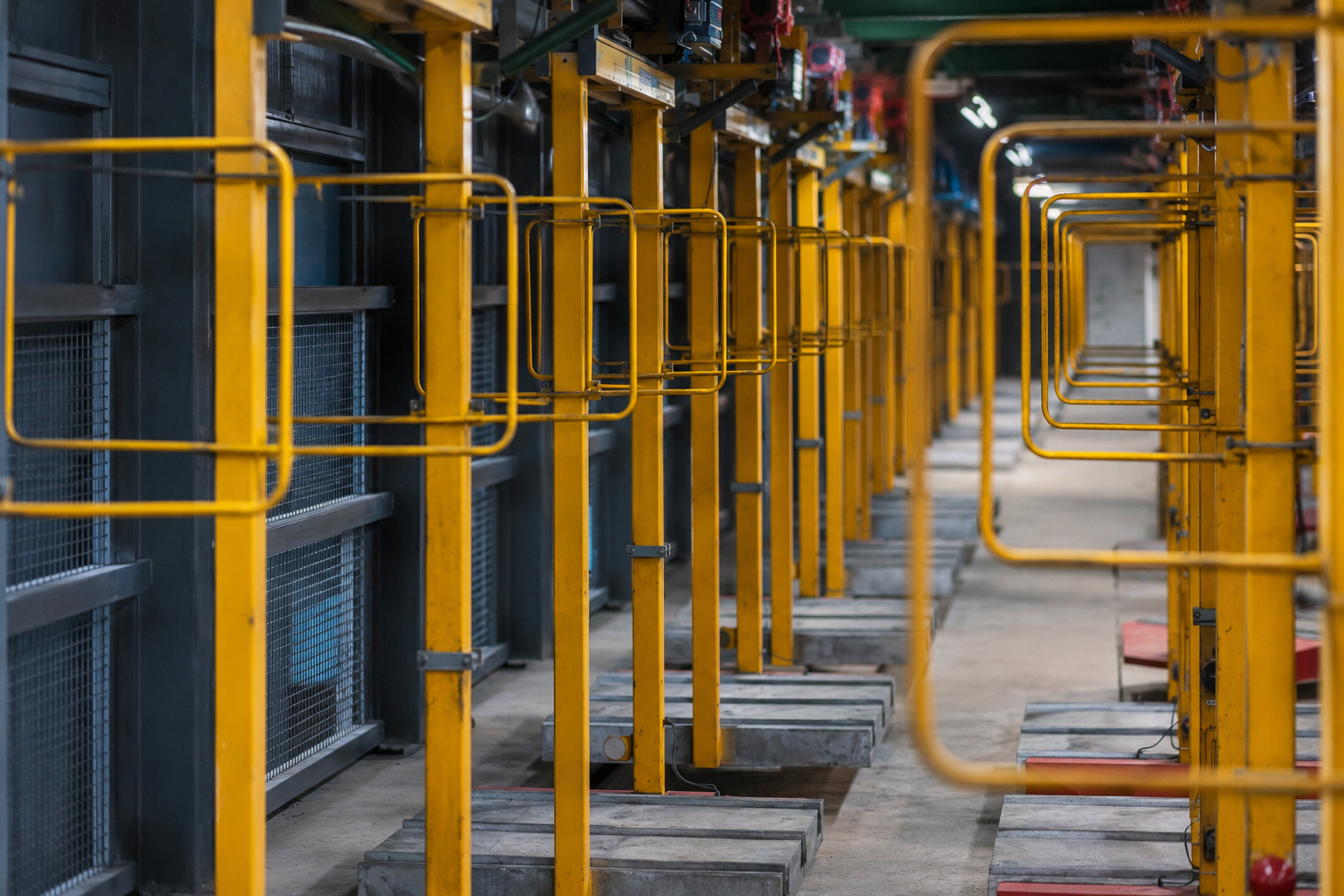
Complete overhaul of an overhead monorail system:
About 100 switches were repaired during the weekend shutdown
Electric overhead conveyor systems perform key transport functions in many manufacturing facilities. If such a system fails, it can have a direct impact on entire production areas. This makes regular and proactive maintenance all the more important—especially when a conveyor system has been in daily use for several decades.
For this project, we assisted a manufacturing company in Hesse with the comprehensive maintenance of an overhead monorail system that was approximately 30 years old. The focus was on about 100 switches in two operational areas,which were inspected, prioritized, and gradually repaired during several scheduled weekend shutdowns.
Attachments
100 pieces
Location
Frankfurt
Installation Team
4 Technicians per weekend
Performance
Maintenance & servicing
Why was comprehensive maintenance of the overhead conveyor system necessary?
The company's in-house maintenance team had kept the plant running reliably for many years. However, during normal production operations, there was usually only time for repairs that were absolutely necessary.
Major disassemblies or a complete overhaul of individual switches were virtually impossible during regular production hours.
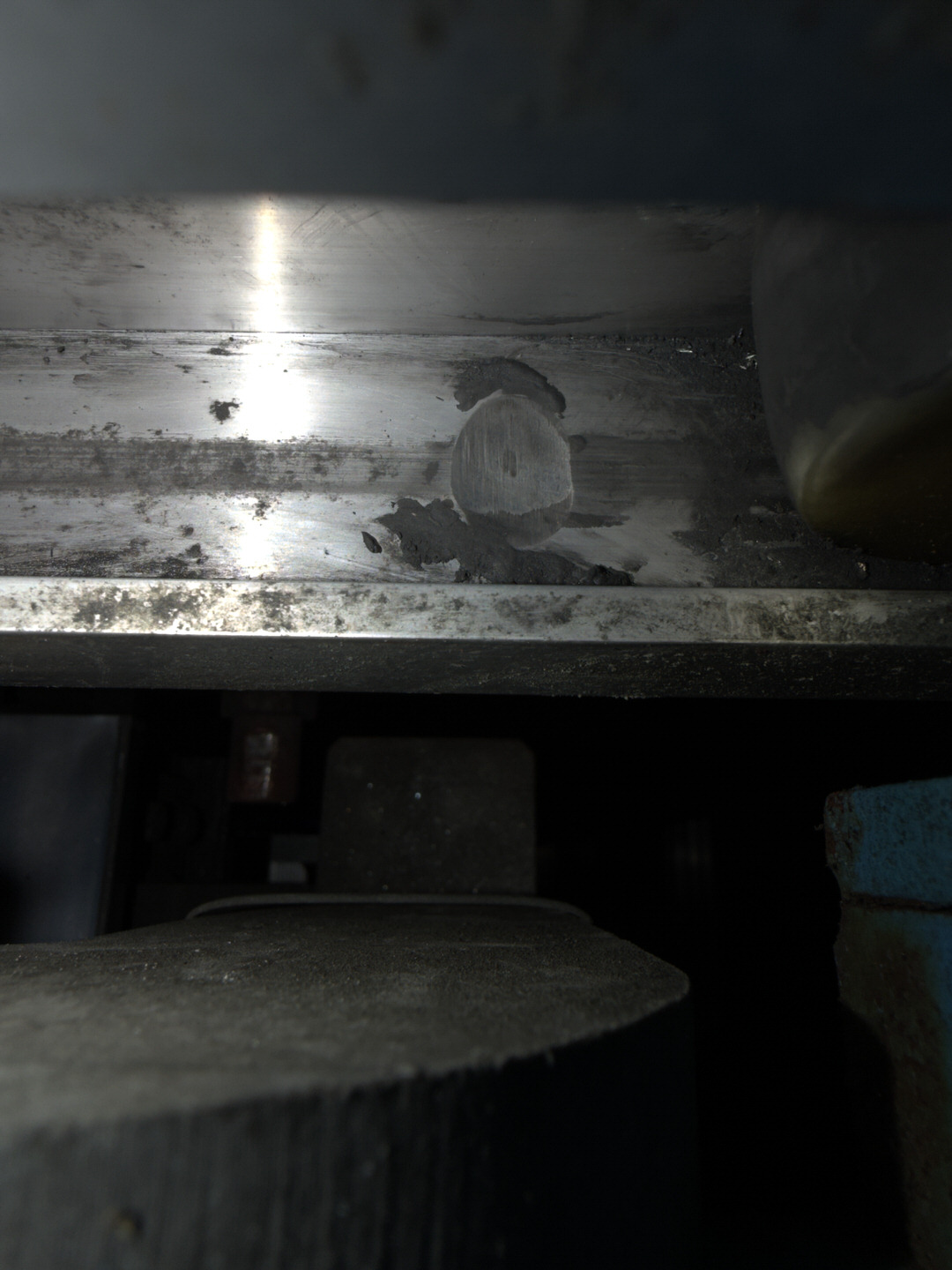
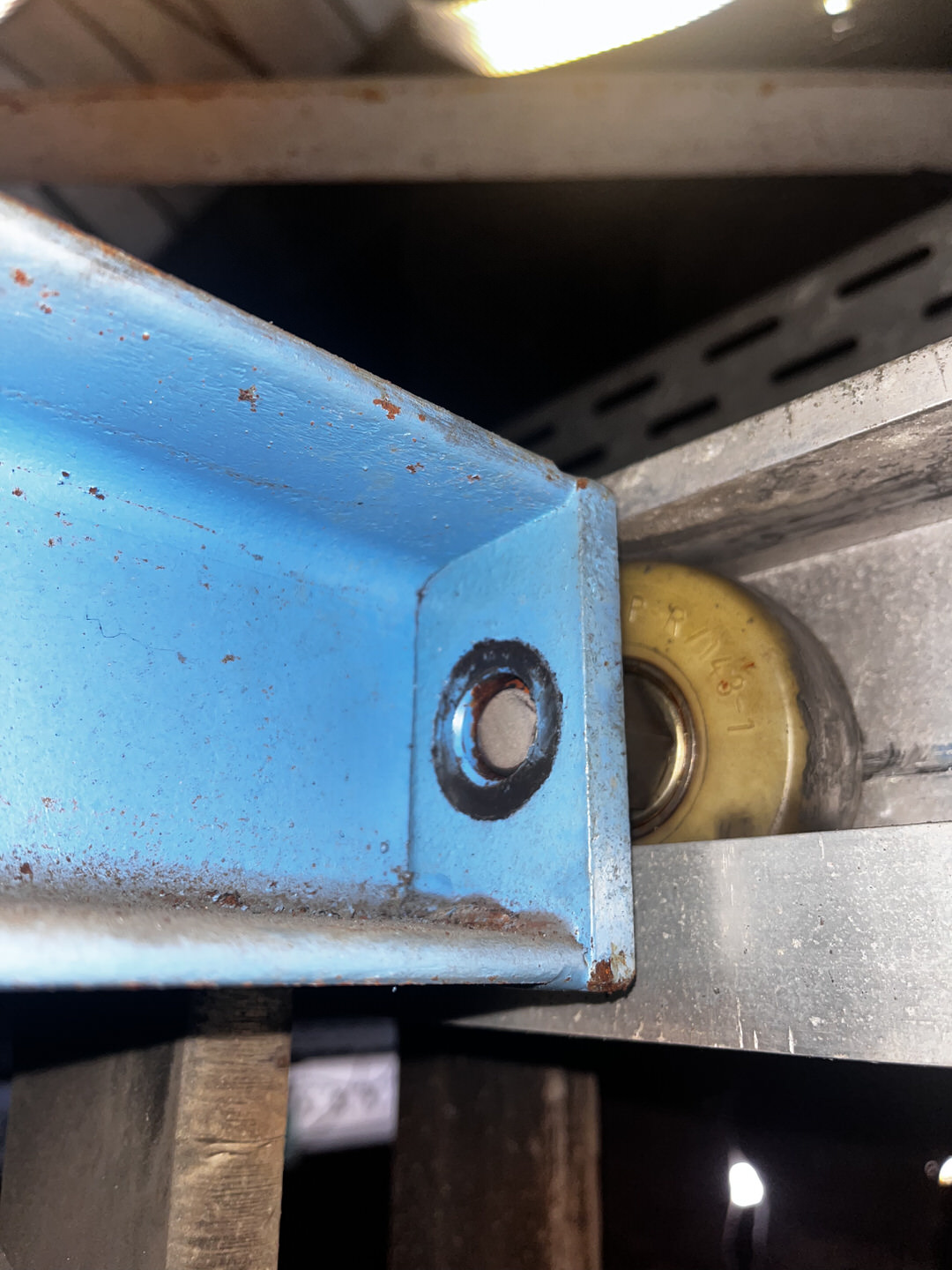
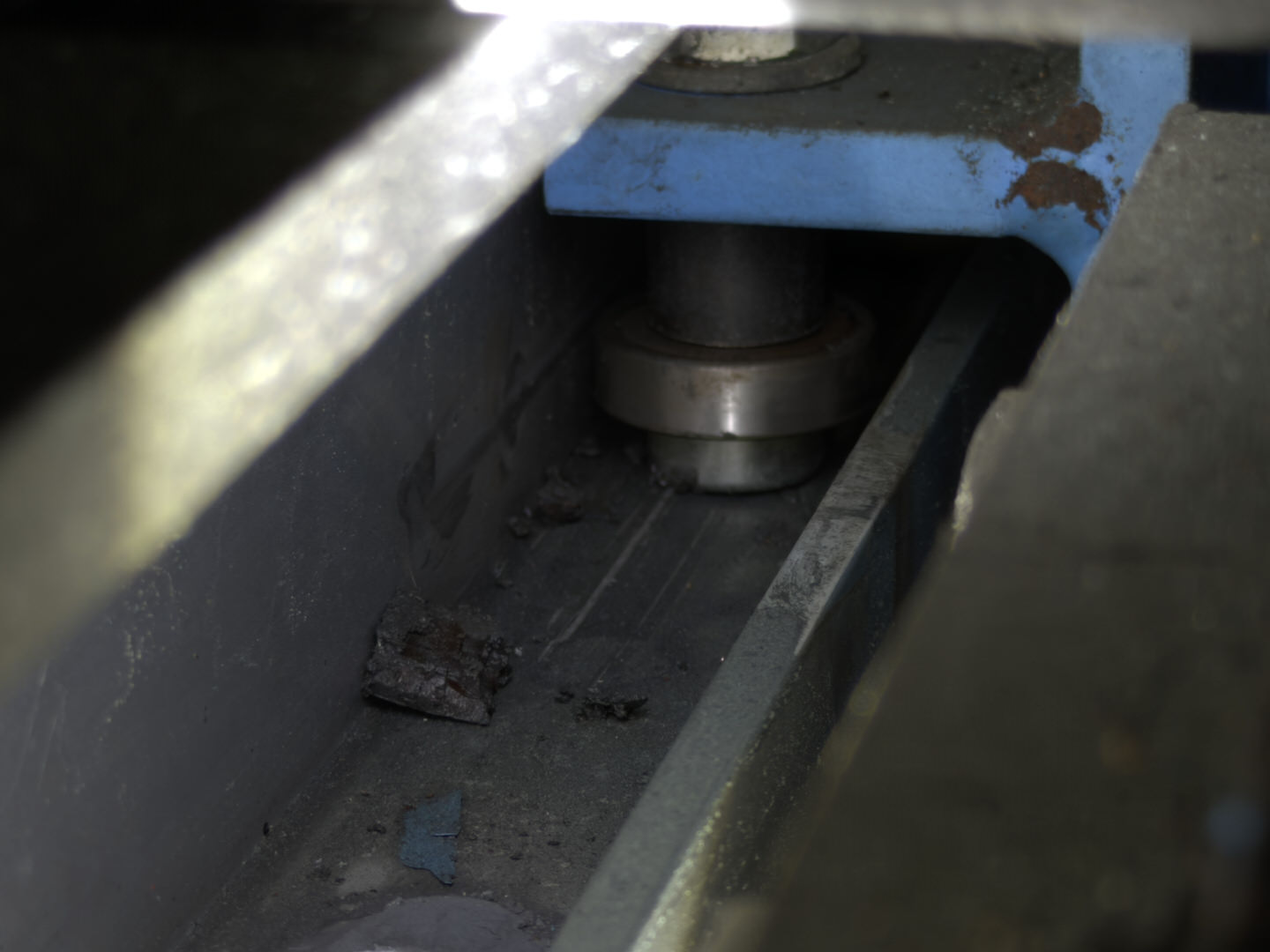
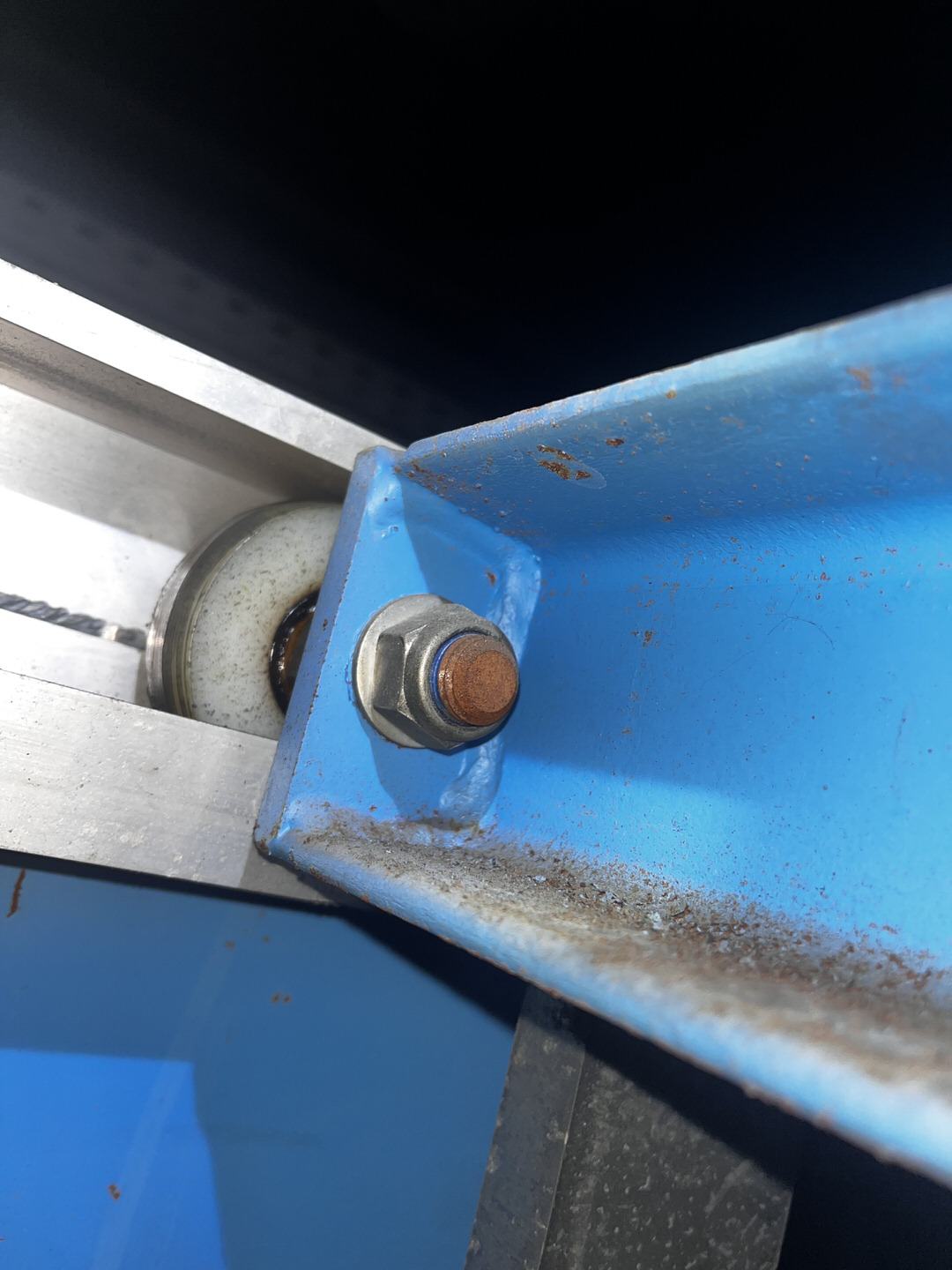
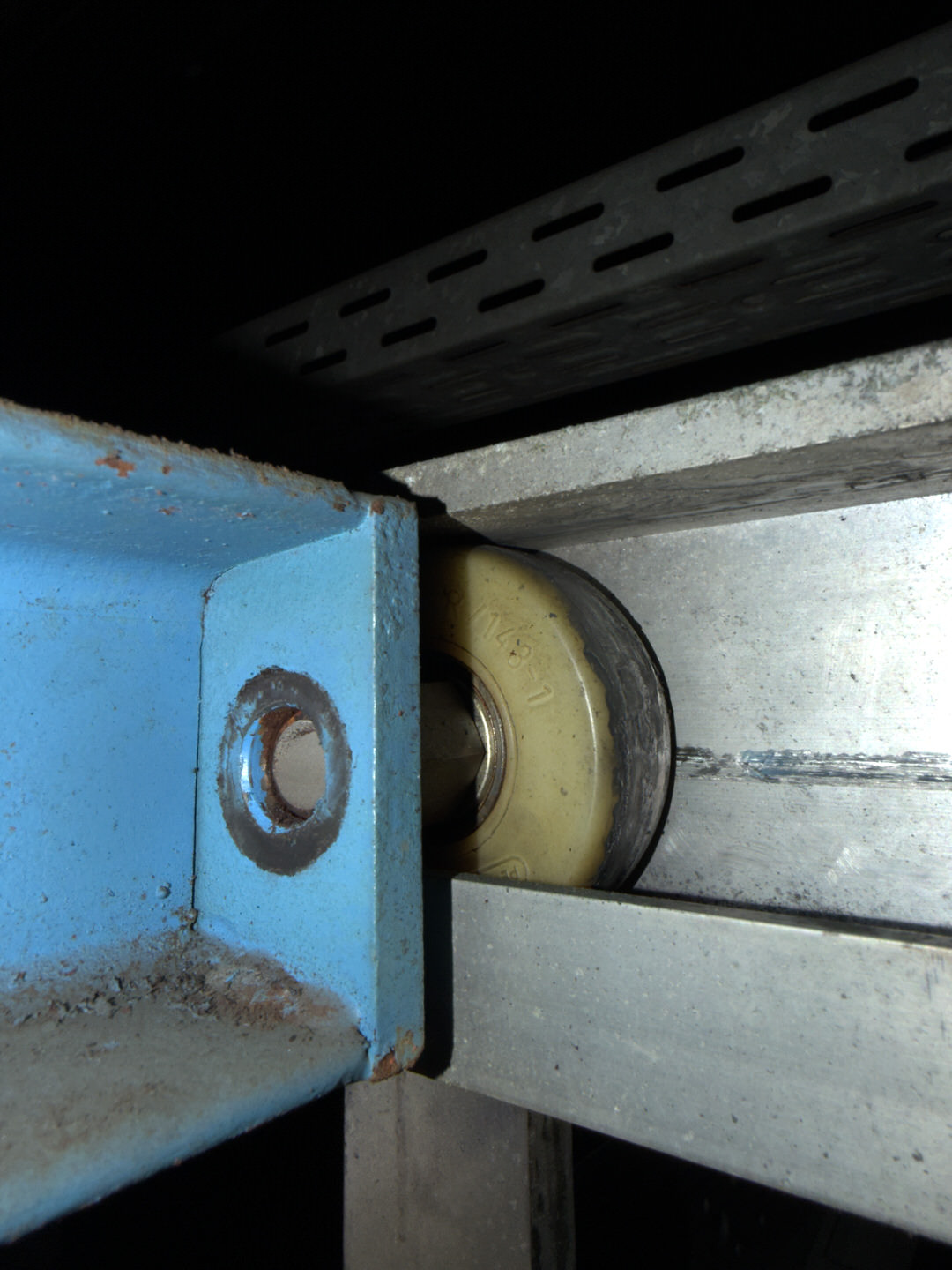
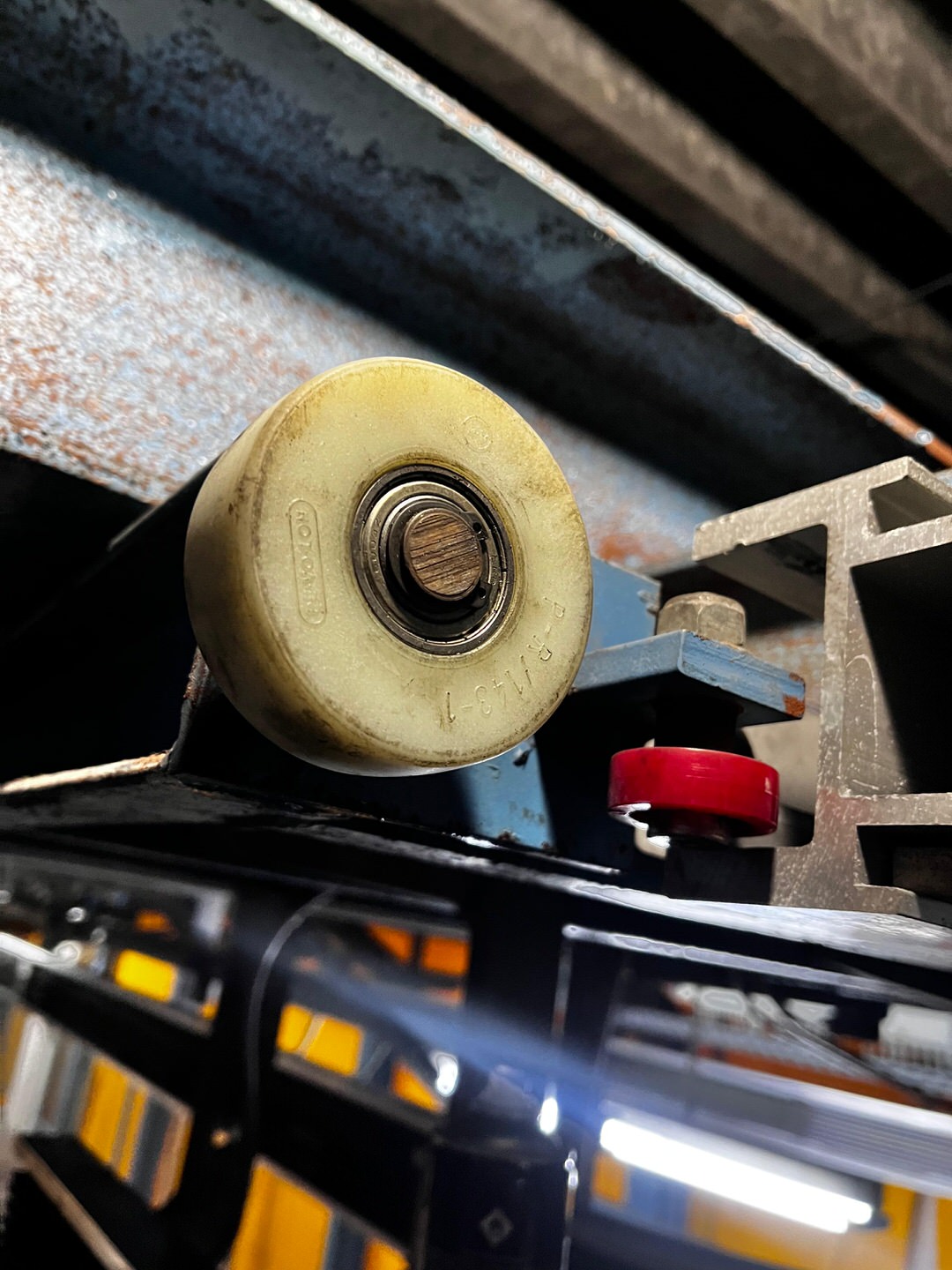
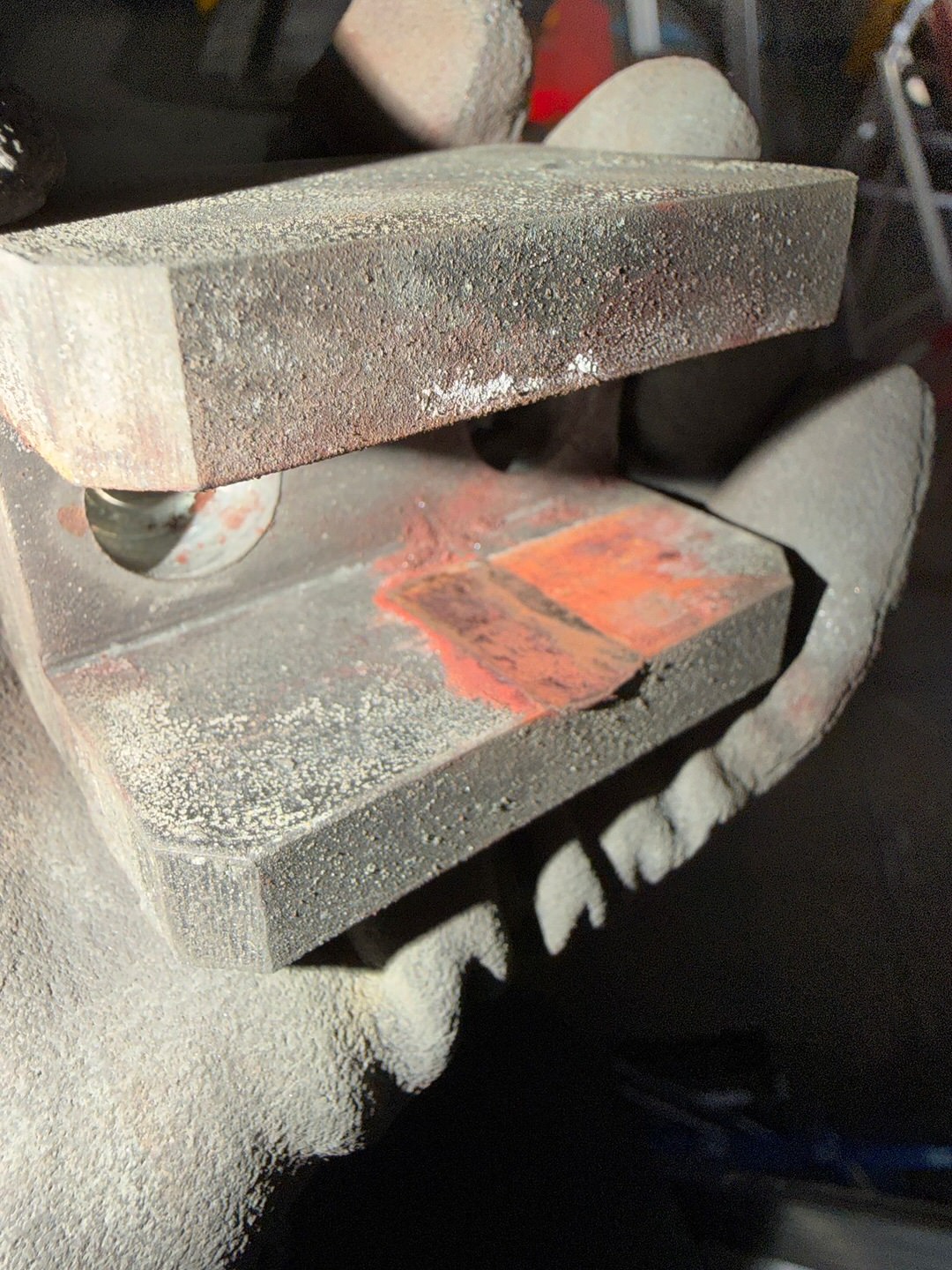
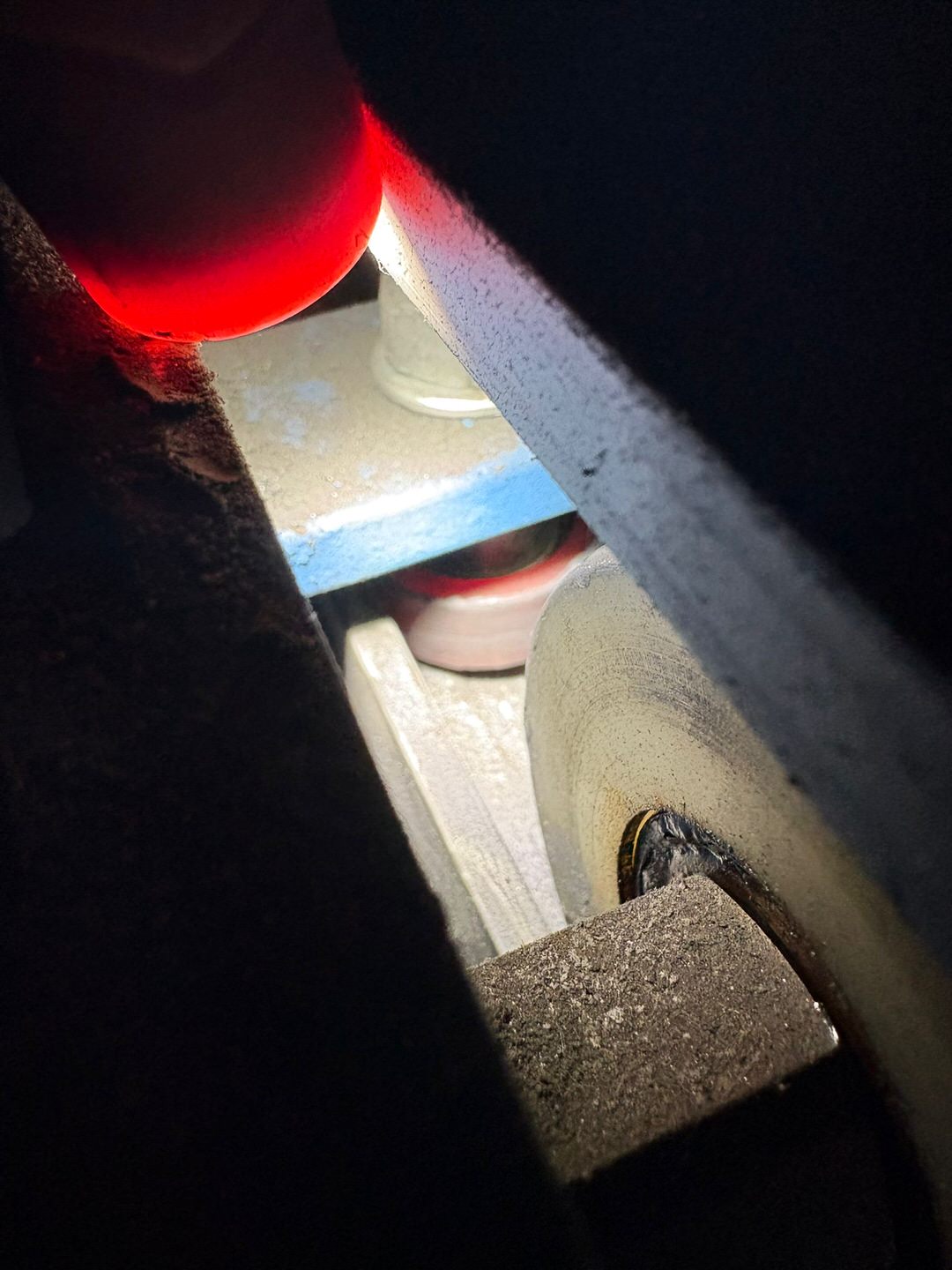
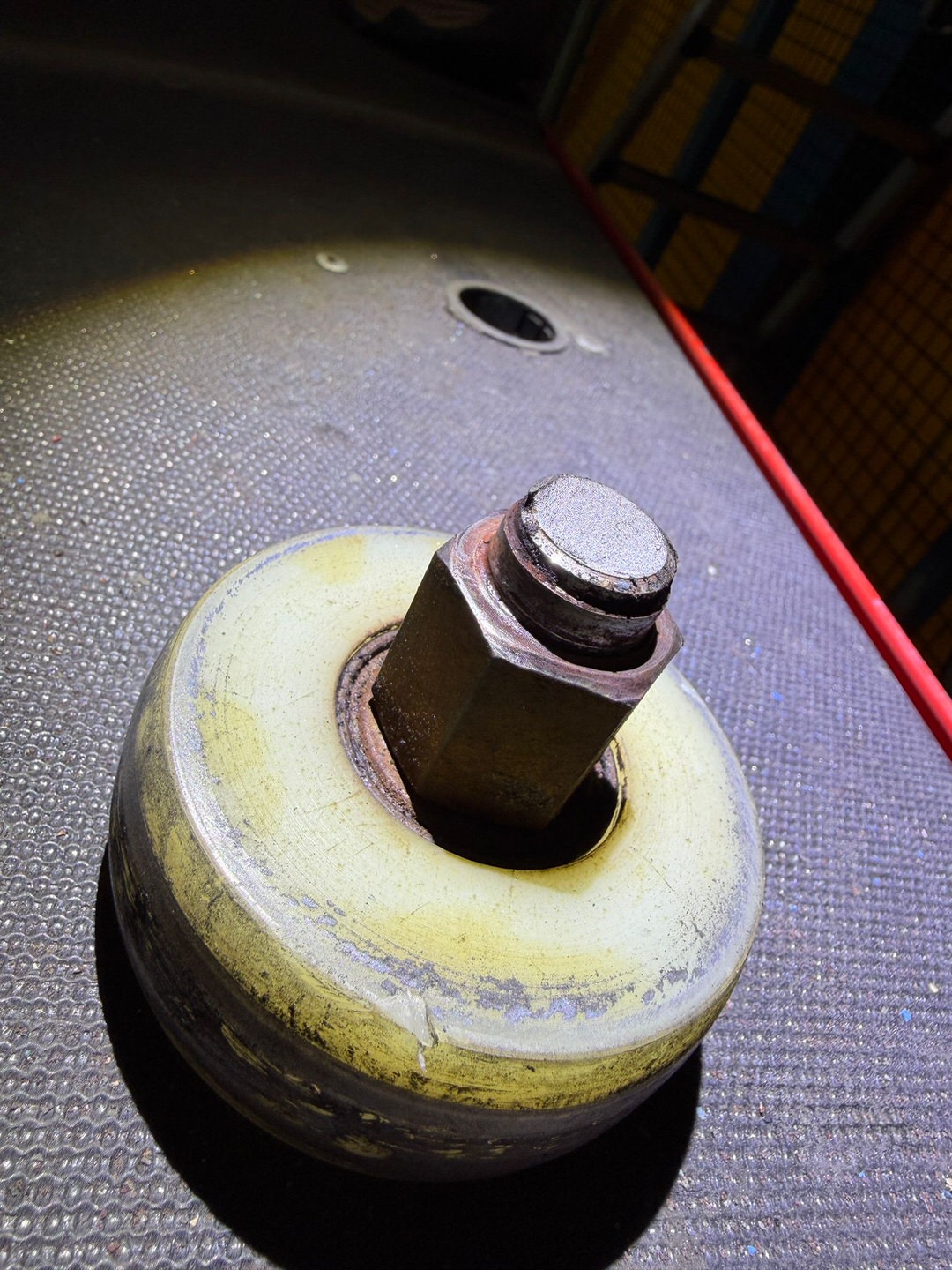
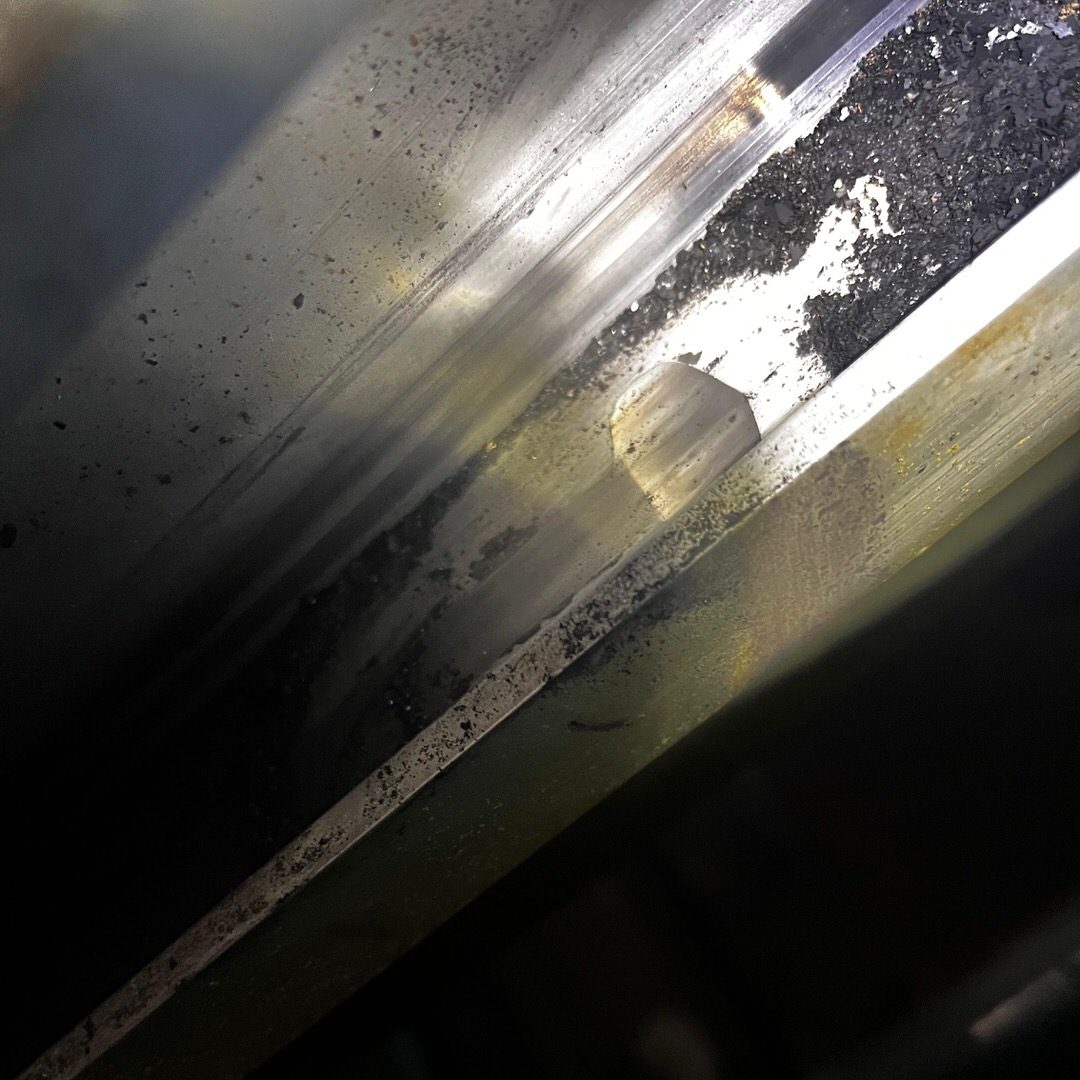
As a result, numerous signs of wear had accumulated over the years. The close-up photos revealed, among other things, severely worn running surfaces, deep grooves, damaged rollers, and mechanically stressed rail sections.
In addition, there were switches that had already been taken out of service for mechanical reasons due to damaged or torn-off components.
What damage was found on the overhead conveyor system?
The inspection revealed damage typical of a conveyor system that had been used intensively for decades.
Several rollers and guide rollers were severely worn, partially damaged, or had already broken off. On various guide rails, the rollers had visibly gouged into the running surfaces. This resulted in indentations and uneven running surfaces.
In addition, some rail joints were no longer precisely aligned. On certain components, there were damaged brackets, mechanical wear, and fastening points that had already been subjected to heavy stress.
The system’s electrical contact areas were also affected by the mechanical problems. If vehicles and pantographs are no longer guided smoothly along the rails, this can lead to increased wear on the contact strips, drive rollers, and data bus contacts.
- Possible consequences include:
- Damaged or torn current collectors
- Increased wear on the drive rollers of the EHB vehicles
- Rough ride at railroad crossings
- erroneous or interrupted data transmission
- Recurring disruptions in production operations
The individual instances of damage could not, therefore, be considered in isolation. A worn-out or improperly adjusted switch can, over time, damage other components of the overhead monorail system.
How were approximately 100 EHB decision points identified and prioritized?
Before the actual repair work could begin, we conducted a thorough inspection of the existing switches.
The condition of each switch was documented and assessed based on the damage identified. On this basis, the necessary replacement parts, the scope of work, and the order of repairs were determined in consultation with the customer.
This led to the development of a concrete plan for priorities and operations. Switches with severe damage or those critical to the production process were addressed first.
The required rollers, guide rollers, switch shoes, and other replacement parts were prepared prior to each operation and assigned to the individual work areas. This allowed the available downtime to be utilized as efficiently as possible.
Why were there only 36 hours available for the work?
Weekend Maintenance
The electric overhead conveyor is directly integrated into the production process. Therefore, it could only be shut down outside of regular production hours.
In some cases, there was only a time window of about 36 hours between the end of production on Saturday and the planned restart on Monday.
During this time, the work areas had to be set up, the switches dismantled, replacement parts installed, adjustments made, and all functions checked. Afterward, the system had to be ready for production again in a timely manner.
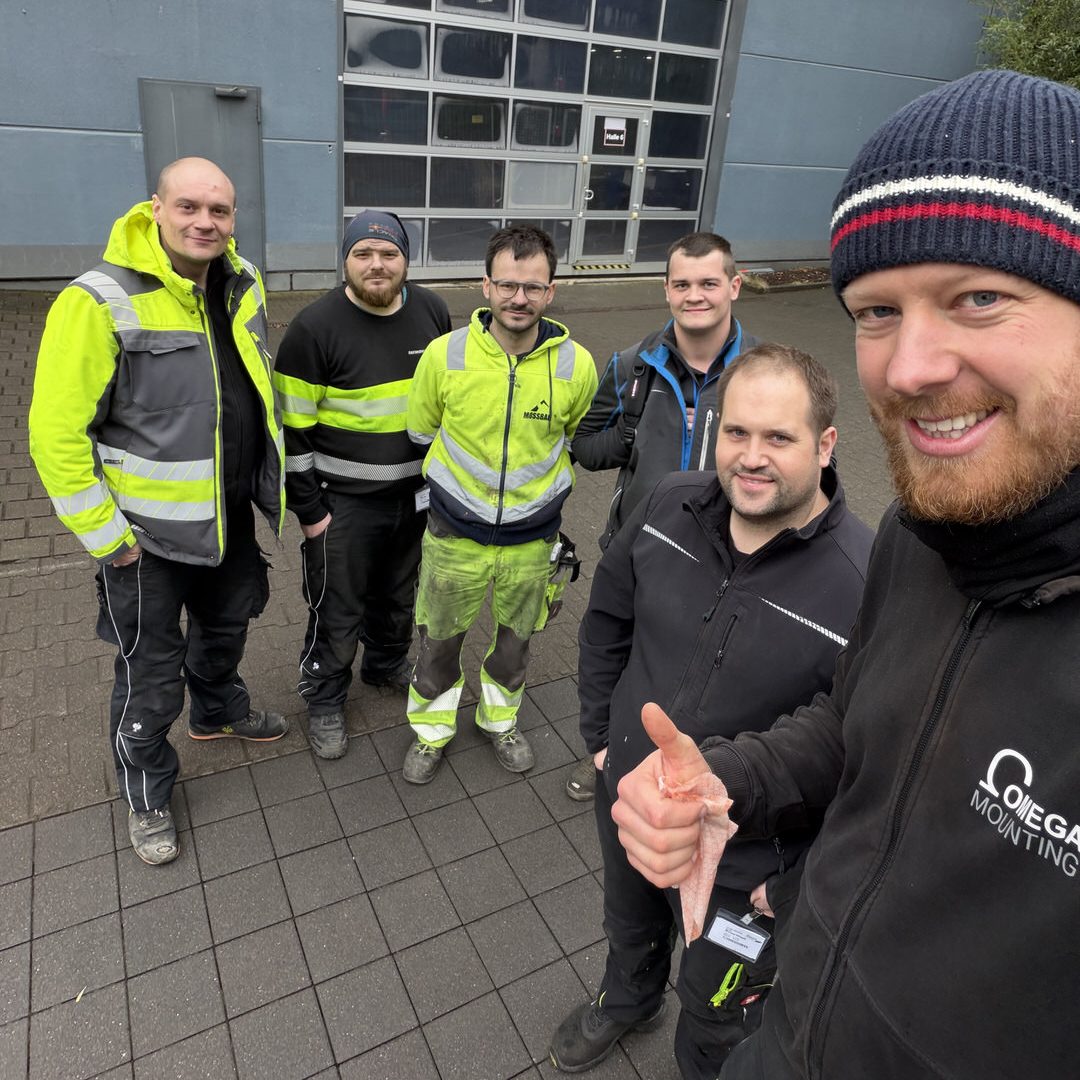
Jobs like these, which are carried out under intense time pressure, require meticulous preparation, sufficient staff, and a clear division of tasks. Omega Mounting specializes in time-sensitive industrial projects, particularly those carried out on weekends, at night, and during production shutdowns.
What work was performed on the overhead monorail switches?
The scope of work varied depending on the condition of each switch. The most important services included replacing worn-out running rollers and guide rollers, as well as a complete mechanical overhaul of heavily used switches.
Replacing the internal rollers was particularly time-consuming. These are not easily accessible once installed. To replace them, each switch had to be partially or completely disassembled.
This is exactly where it becomes clear why such work cannot be carried out by the company's in-house maintenance department on short notice while production is underway.
- In addition, we carried out the following work:
- Replacing the Side Guide Rollers
- Replacing Internal Rollers
- Replacement and Adjustment of Switch Blades
- Replacement and Adjustment of Switch Bolts
- Alignment of Non-Flush Rail Joints
- Adjustment of the mechanical and electrical limit switches
- Inspection of the switch motors and limit switches
- Inspection of Power and Data Contact Areas
- Remise into Service of Mechanically Deactivated Turnouts
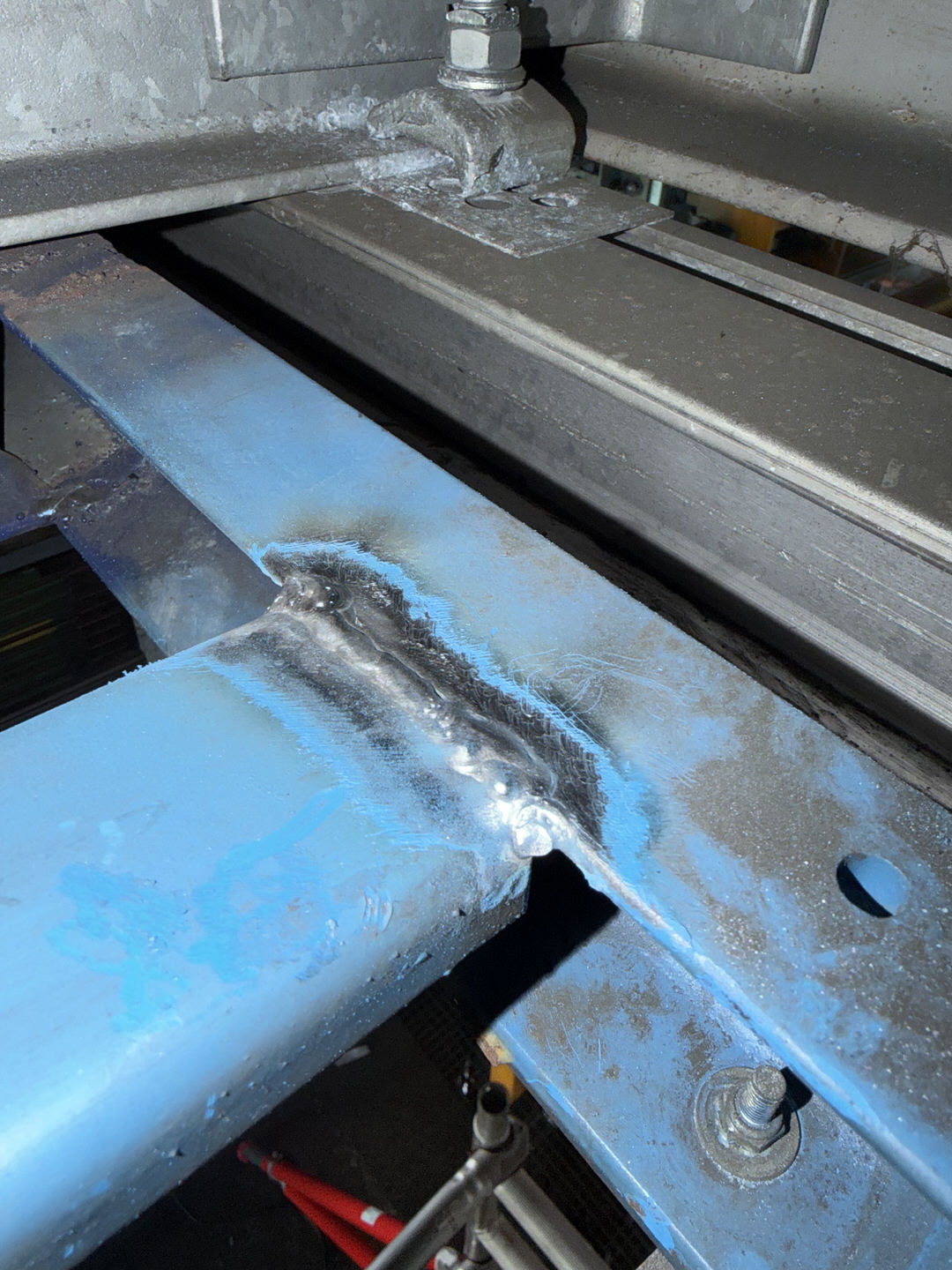
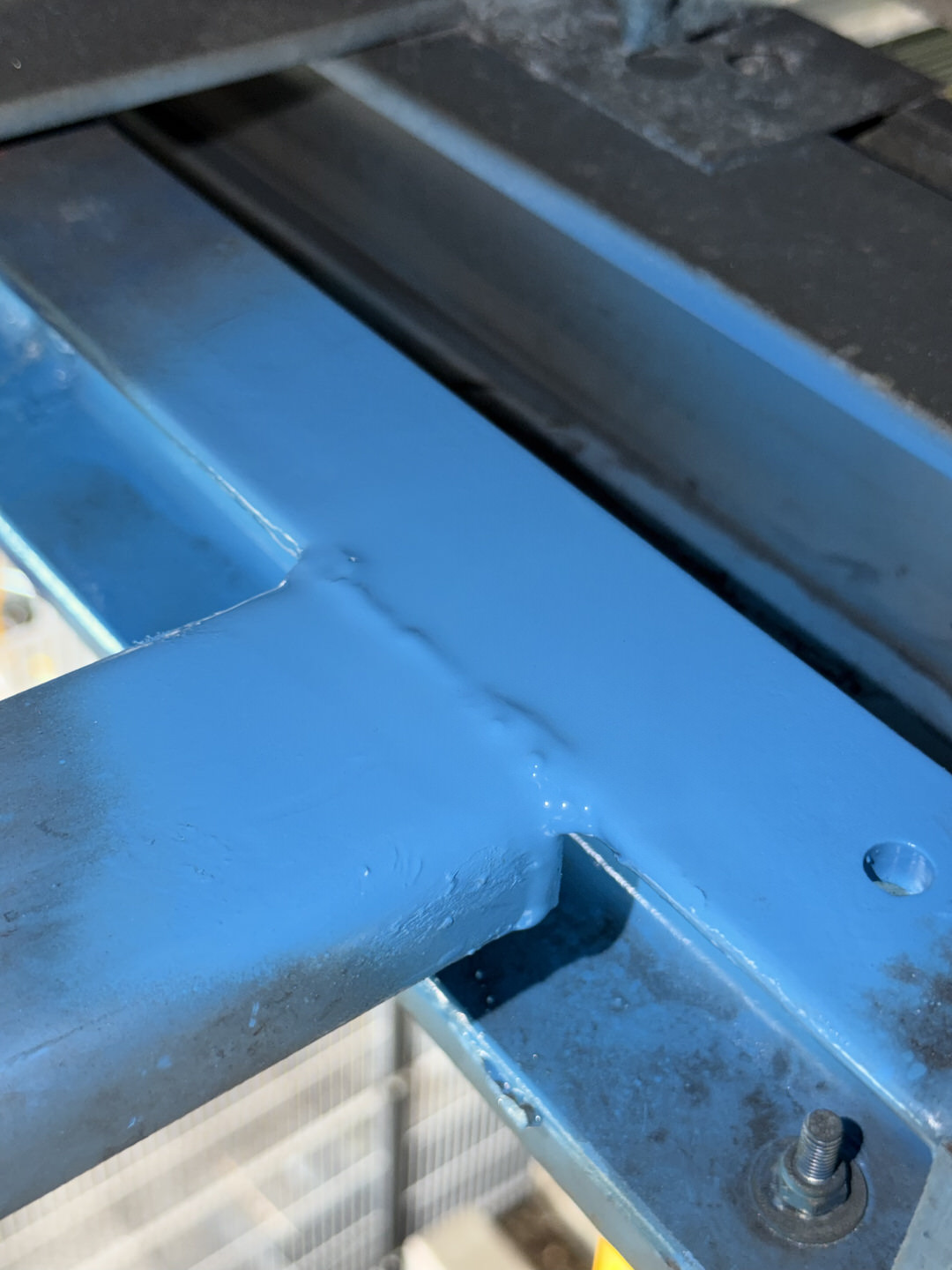
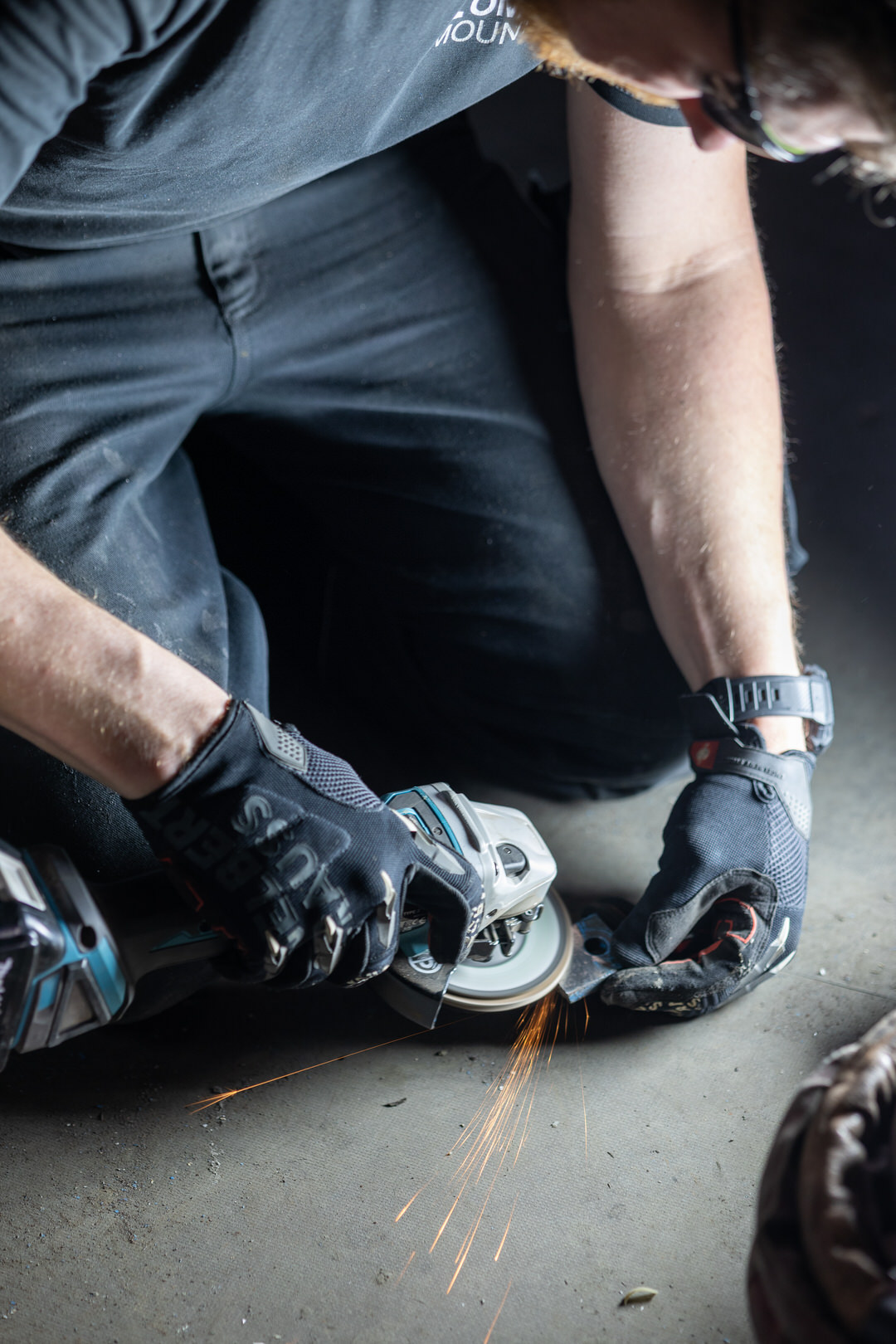
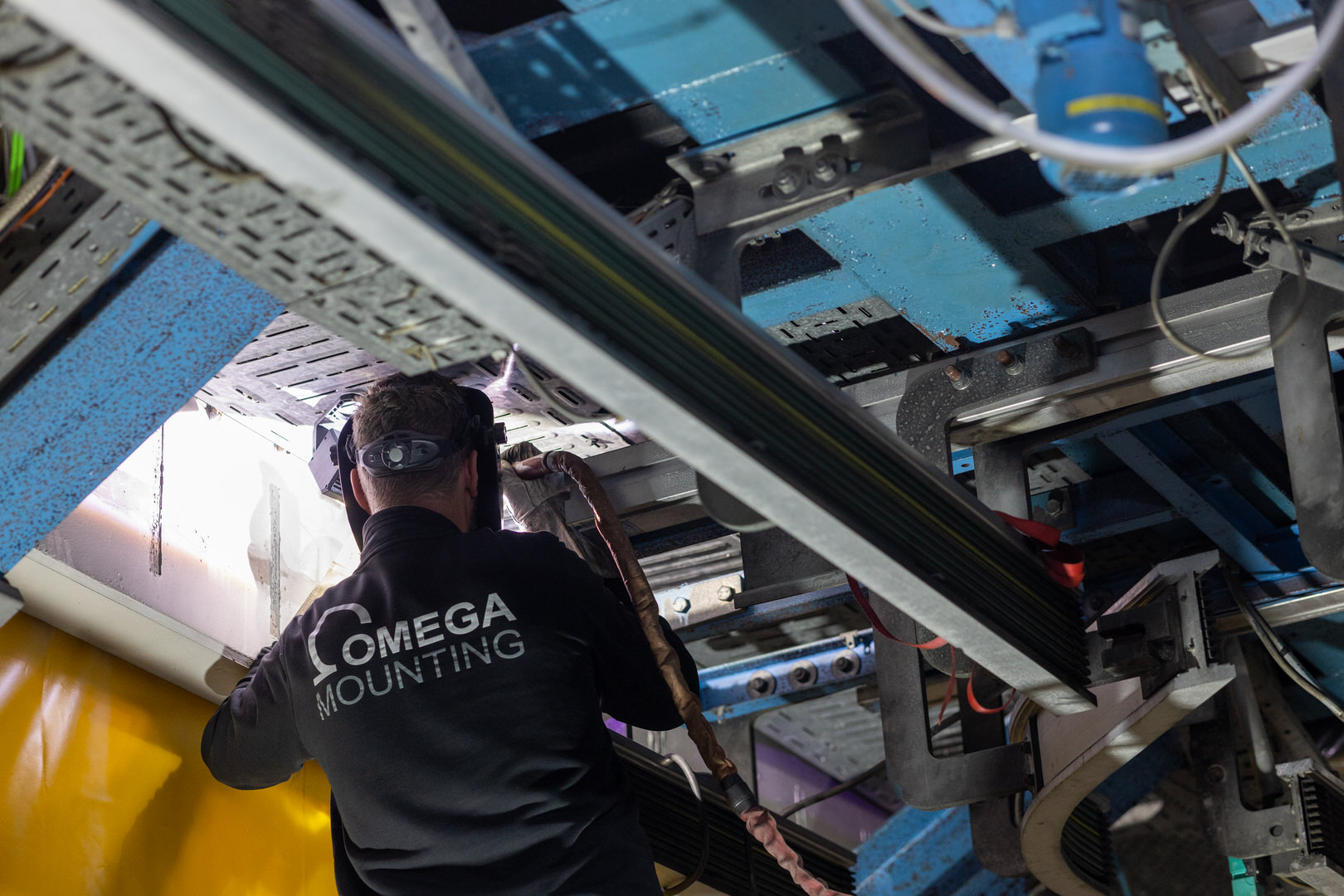
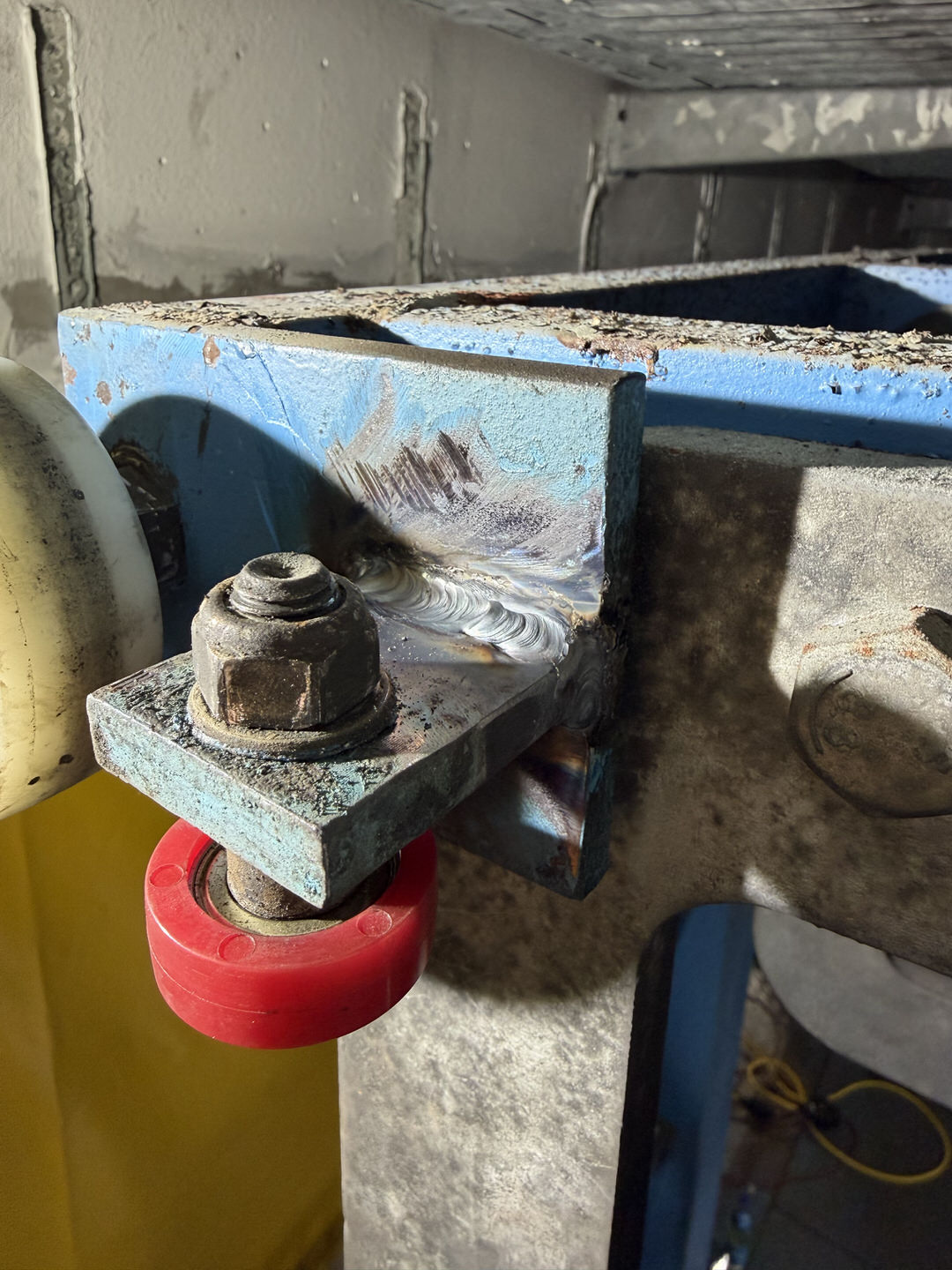
- Welding work on torn-off brackets and damaged mounts
How were warped rails repaired?
A particular problem was the wear that had accumulated on the track sections over decades. The repeated movement of the rollers had caused distinct wear marks and indentations to form at the end positions of individual switches.
Completely replacing the entire track sections would have required a significantly greater amount of work. Therefore, where technically possible, the affected rails were shifted by several centimeters.
This made it possible to relocate the switch end positions to a less worn section of the existing track. The end positions, switch blades, and transitions were then readjusted with precision.
This solution made it possible to carry out a cost-effective repair without having to replace unnecessarily large parts of the existing system.
How were decommissioned switches put back into service?
Some switches had already been taken out of service due to torn-off components. As part of the repair work, the damaged areas were exposed, prepared, and properly repaired.
Broken brackets and mounts were repositioned and welded. This was followed by the installation of the mechanical components, the adjustment of the motion sequences, and the electrical functional test.
This made it possible to fully reintegrate the switches that had previously been taken out of service into the system.
Working at Heights & in Confined Spaces
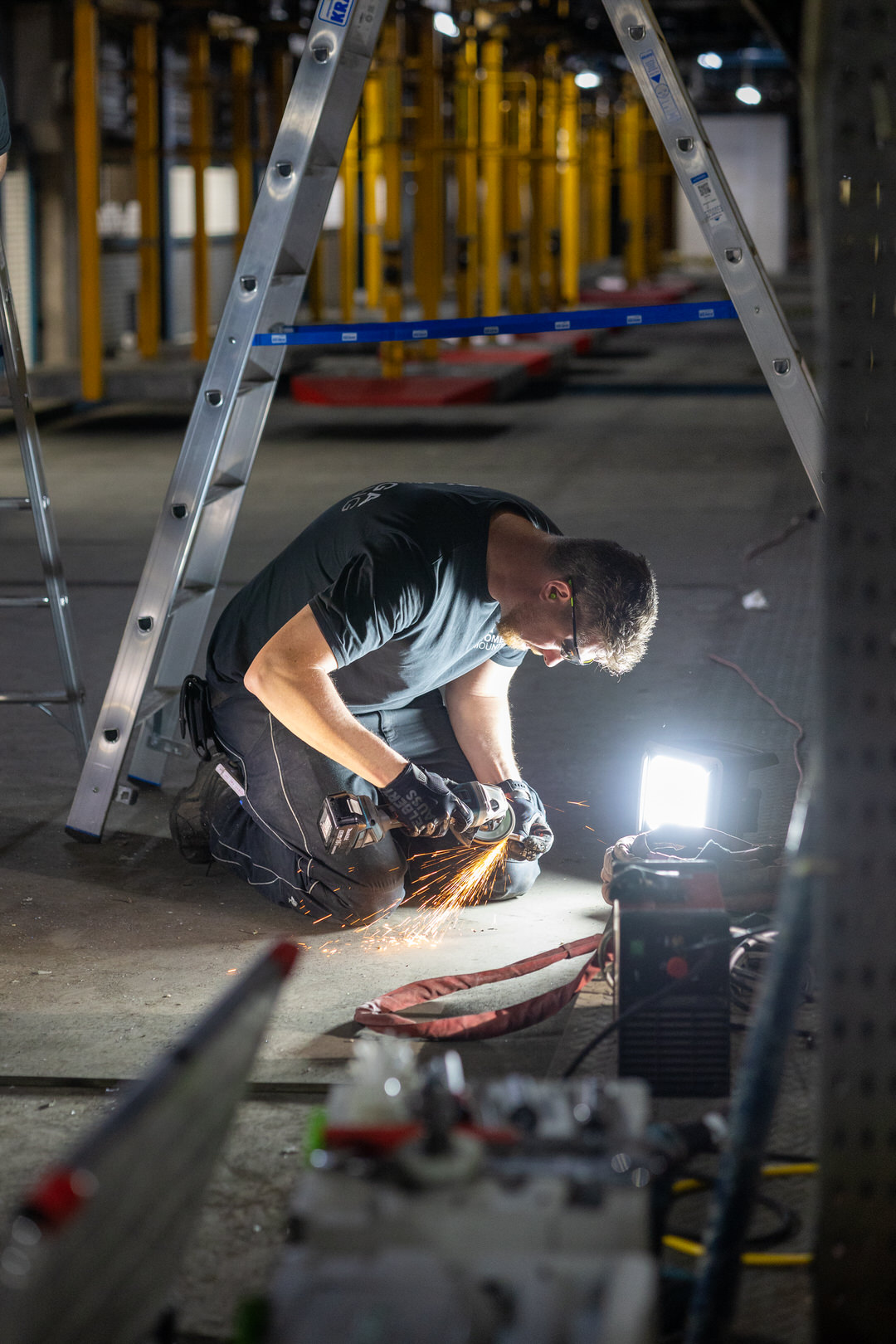
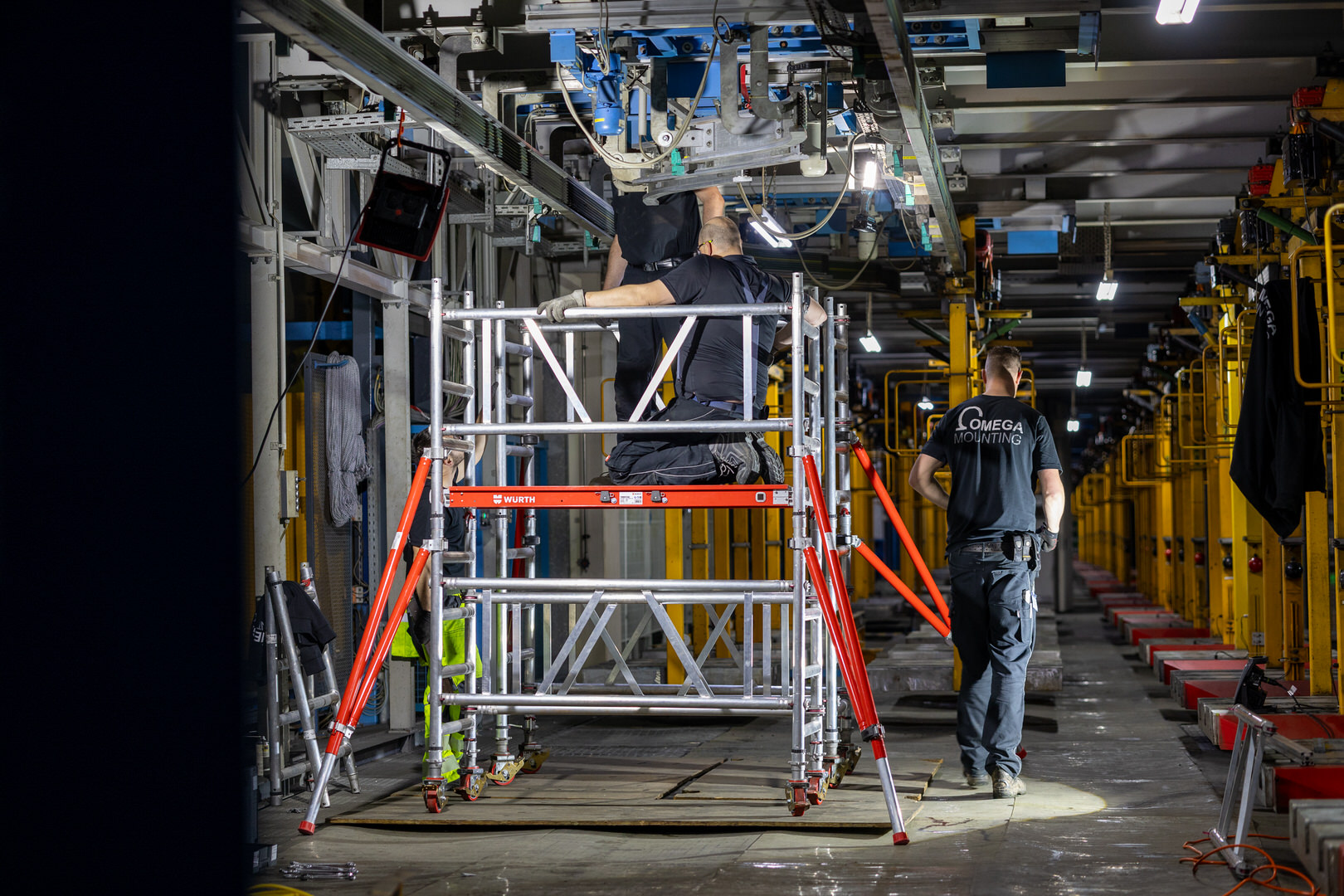
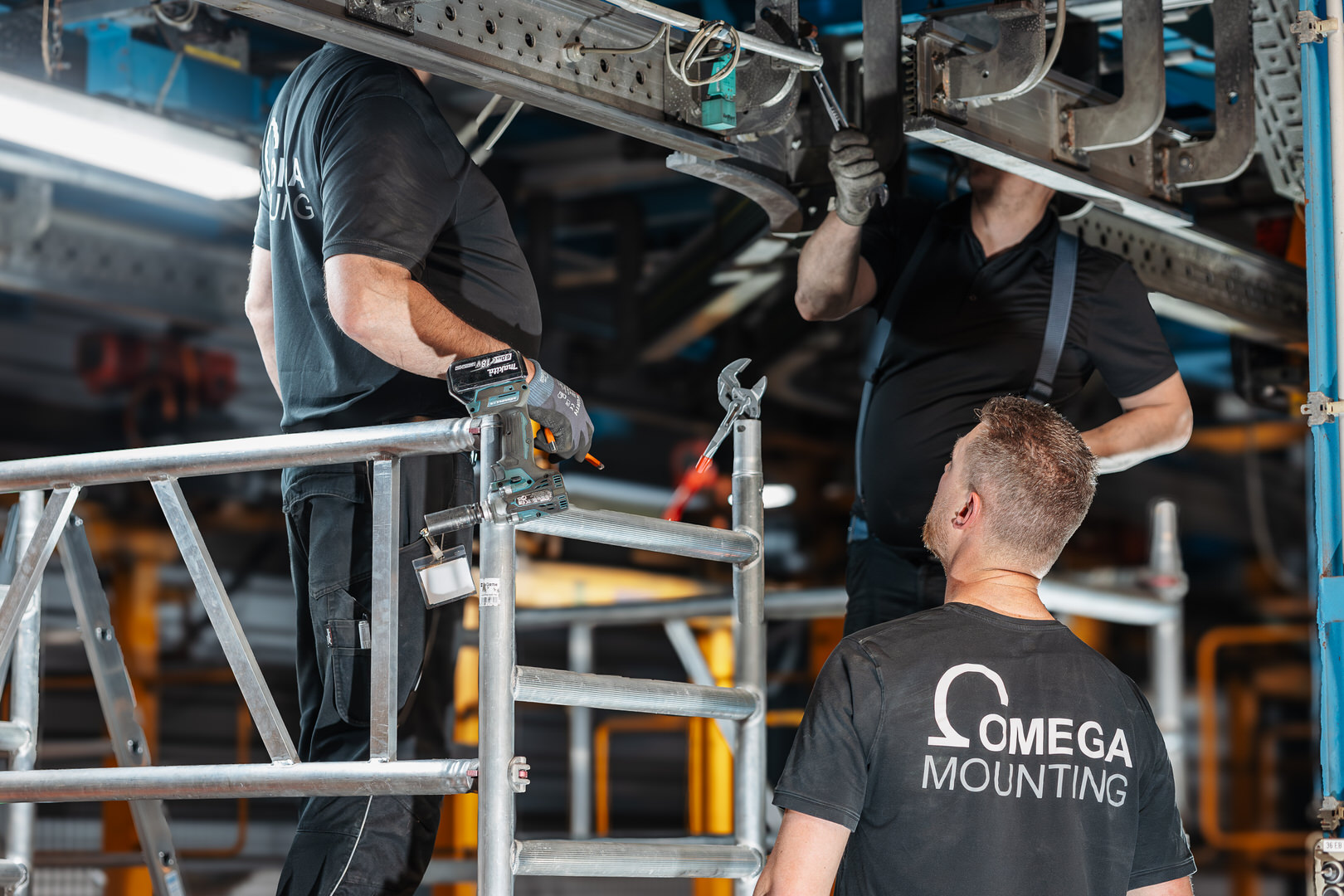
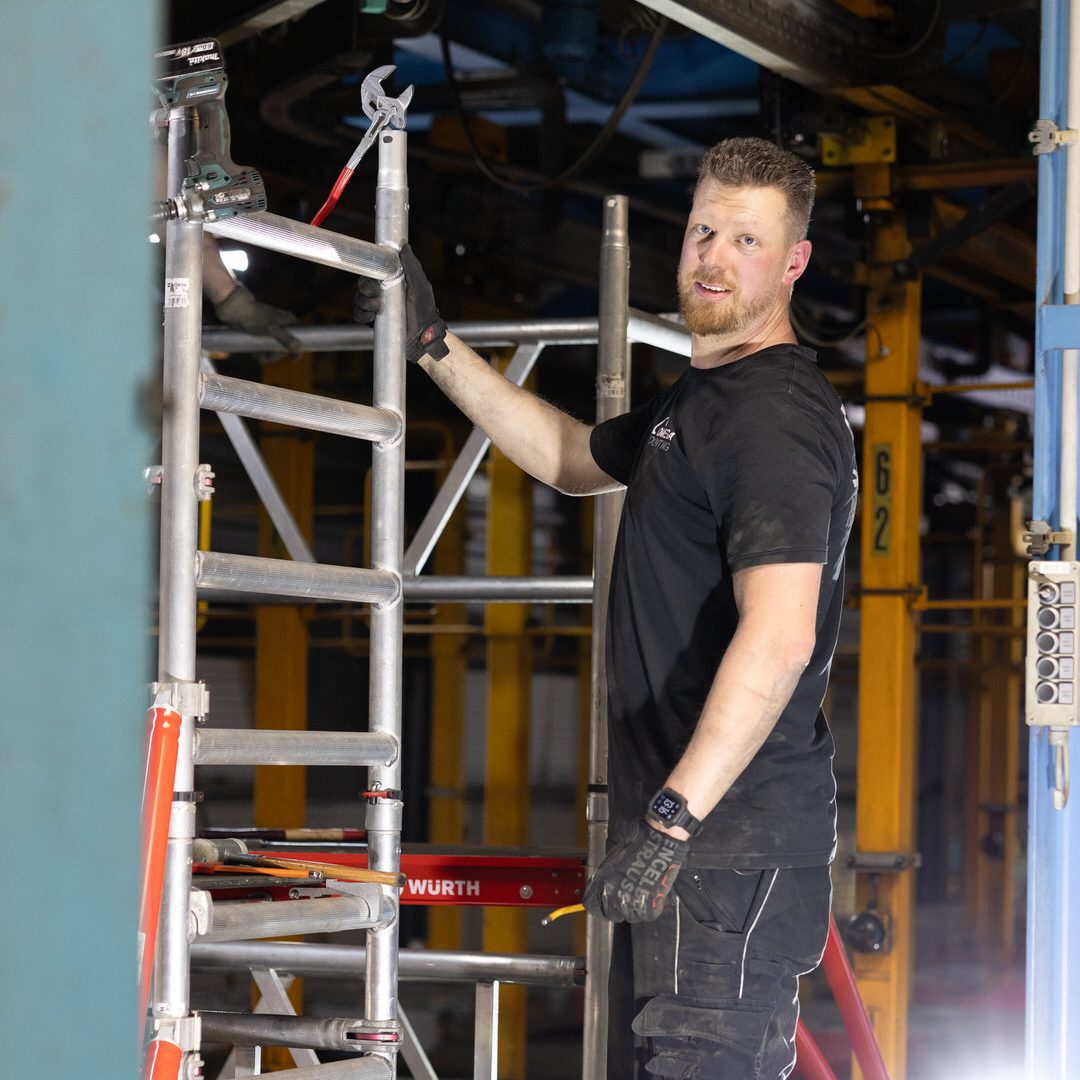
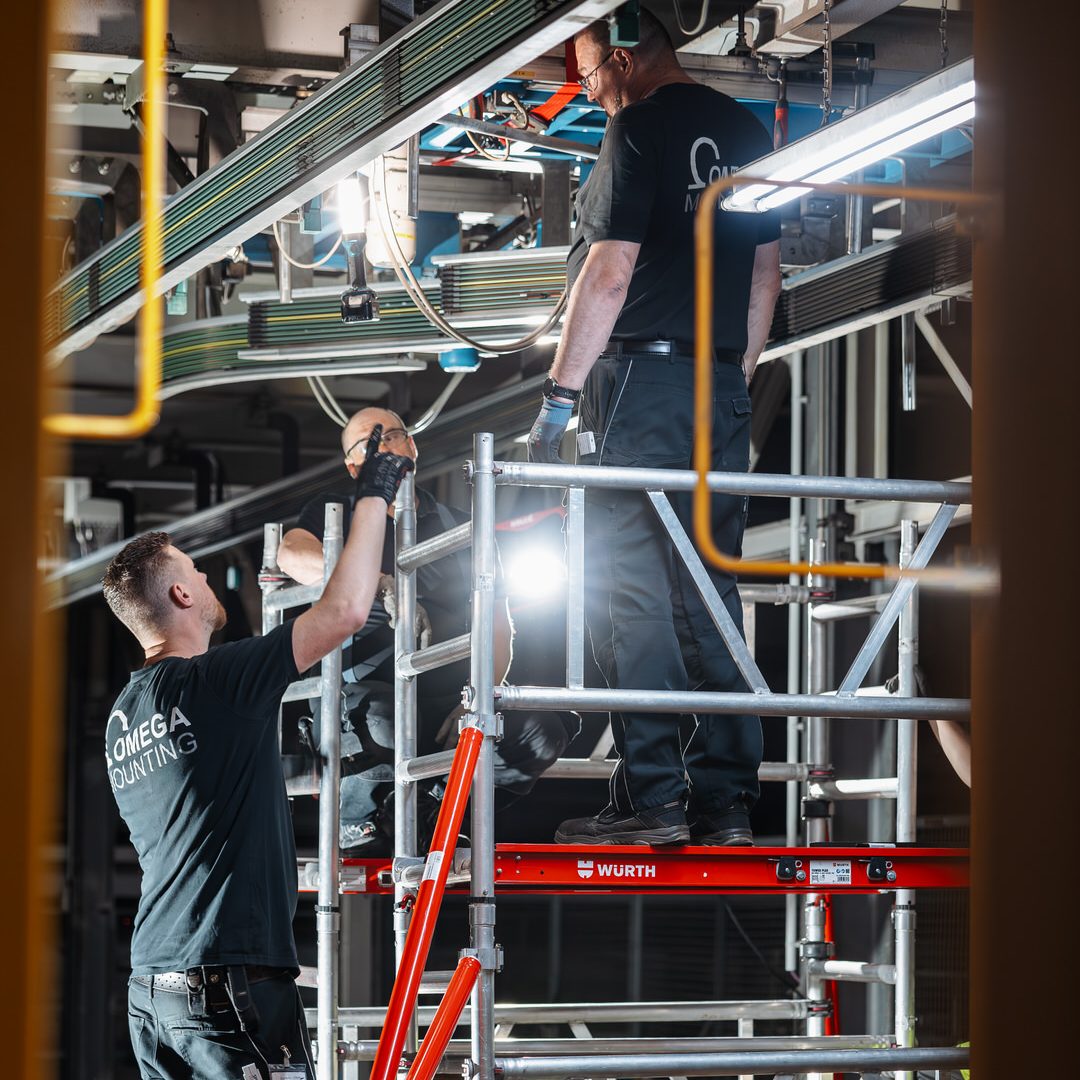
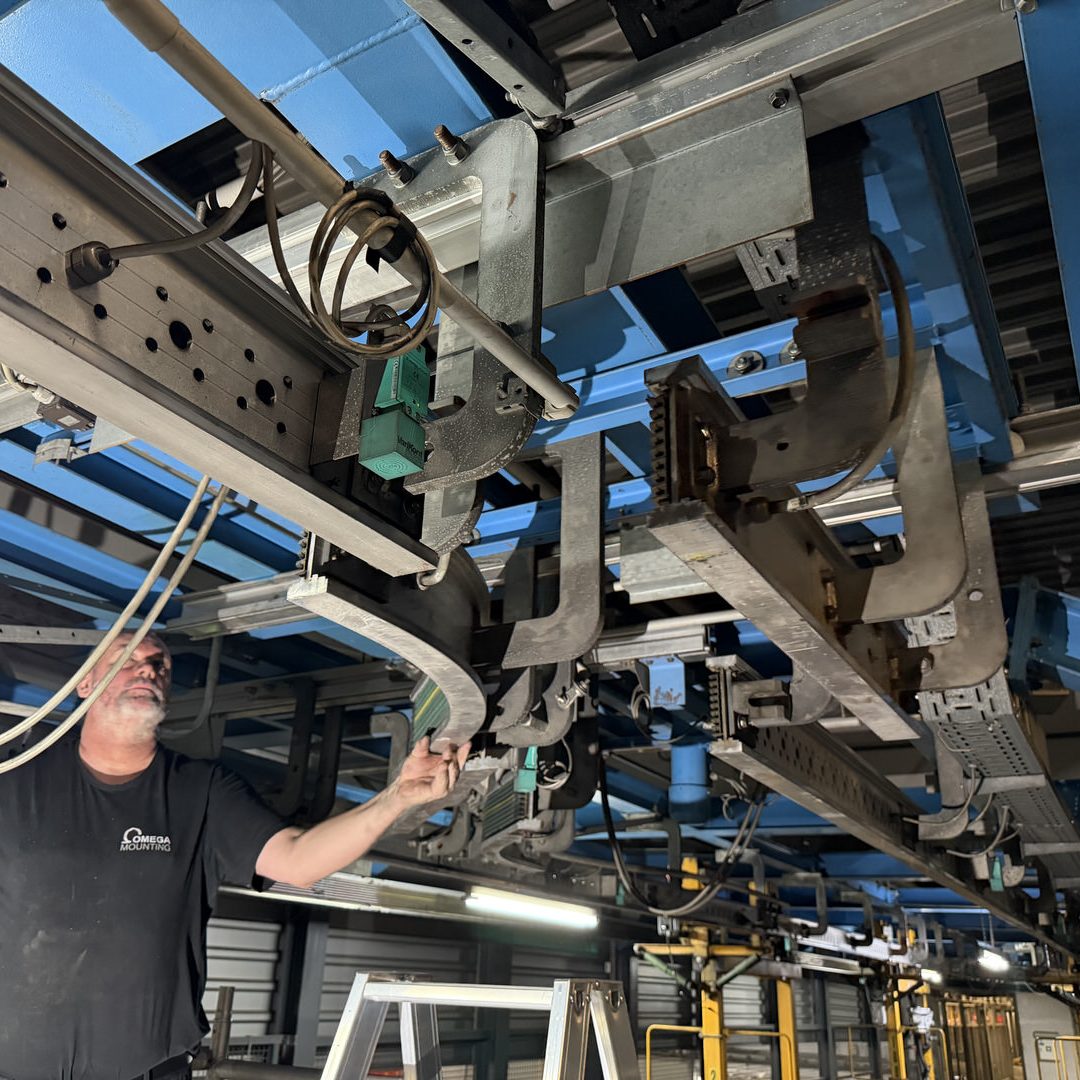
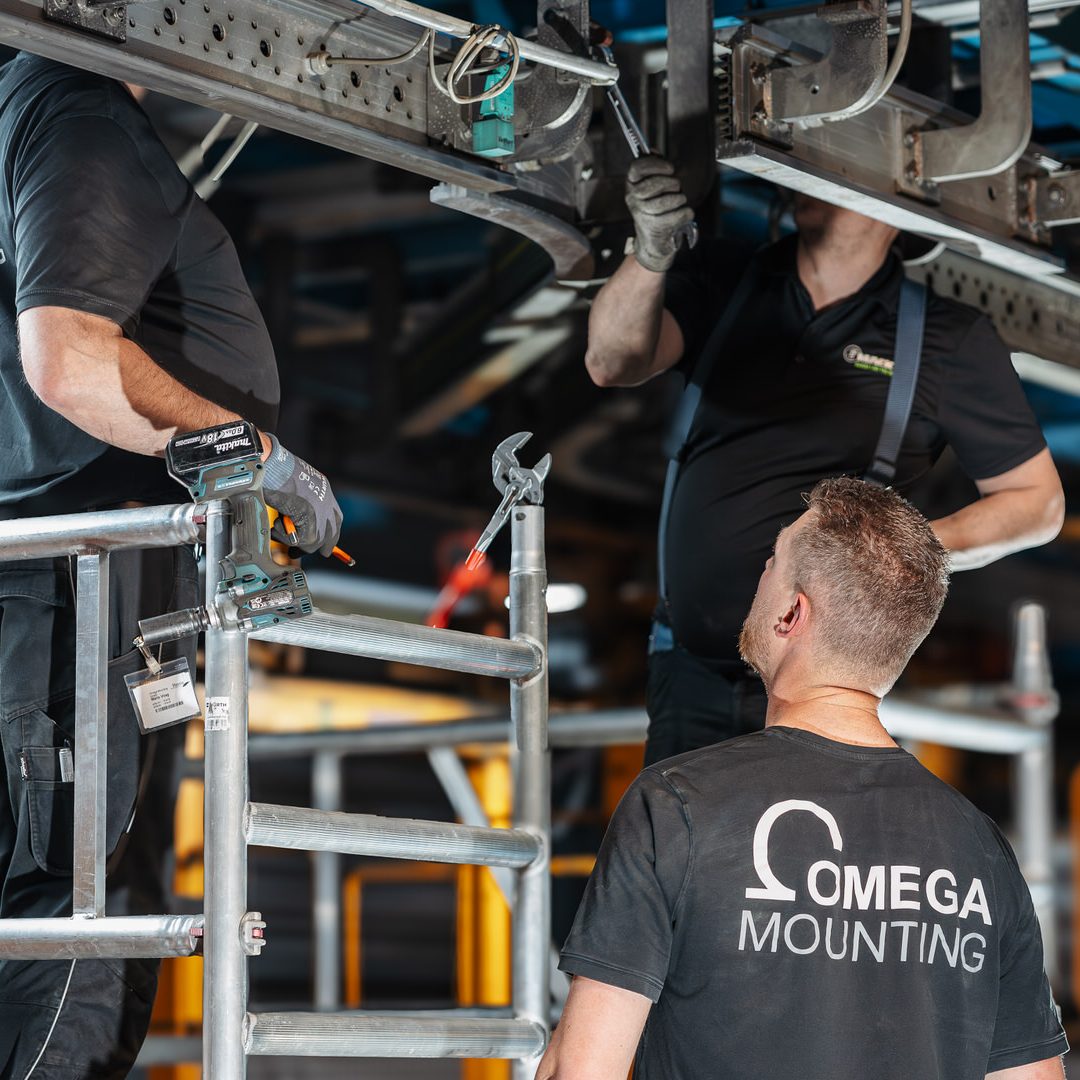
The switches for the overhead monorail are located above the production and traffic areas. For this reason, the work required the use of mobile scaffolding, ladders, and additional work lighting, among other things.
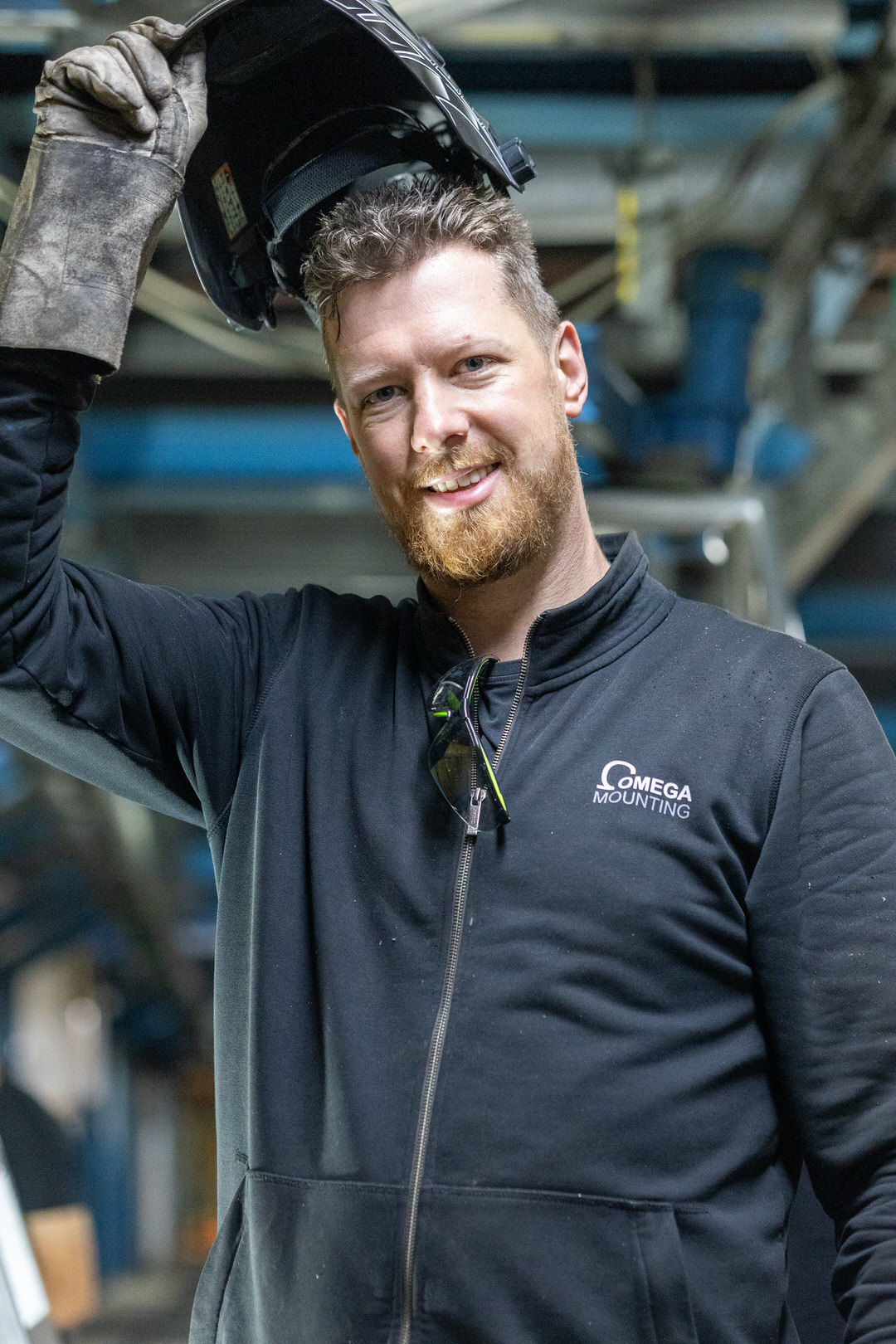
The photos show that several technicians were working on individual switches at the same time. While part of the team was dismantling and securing the components, other employees were able to prepare replacement parts, make adjustments, or coordinate the next steps in the process.
This parallel approach was crucial for being able to fully process as many switches as possible during the brief shutdown.
What are the benefits of a scheduled major overhaul?
A systematic overhaul not only eliminates acute malfunctions, but also helps reduce consequential damage to vehicles, drive systems, pantographs, and data contacts.
- Among other things, a planned maintenance project offers:
- higher system availability
- fewer unplanned production stoppages
- less wear and tear on EHB vehicles
- more reliable power and data transmission
- extended service life of the existing system
- better planning of future maintenance work
Especially in the case of older overhead monorail systems, a complete replacement is not necessarily required. With a professional assessment, targeted repairs, and clear prioritization, many systems can continue to be operated cost-effectively.
Wartung und Instandsetzung im Frankfurter Stadtgebiet bündeln wir unter Wartung und Instandhaltung Frankfurt.
Maintenance of overhead conveyor systems during scheduled production shutdowns
Omega Mounting assists industrial companies with the maintenance, repair, and mechanical overhaul of overhead monorail systems and other conveyor systems.
Our services range from assessment and documentation to spare parts and operational planning, as well as mechanical repairs, welding, electrical testing, and subsequent recommissioning.
Even for tight time frames, weekend work, or time-sensitive production shutdowns, we provide experienced installation teams to carry out the planned work.
Is your overhead conveyor showing signs of wear or causing an increasing number of malfunctions? Contact us. Together, we’ll develop a maintenance and repair plan tailored to your system and your production schedule.
Passende Ratgeber zu diesem Einsatz
Maintenance & Servicing
Über den Autor
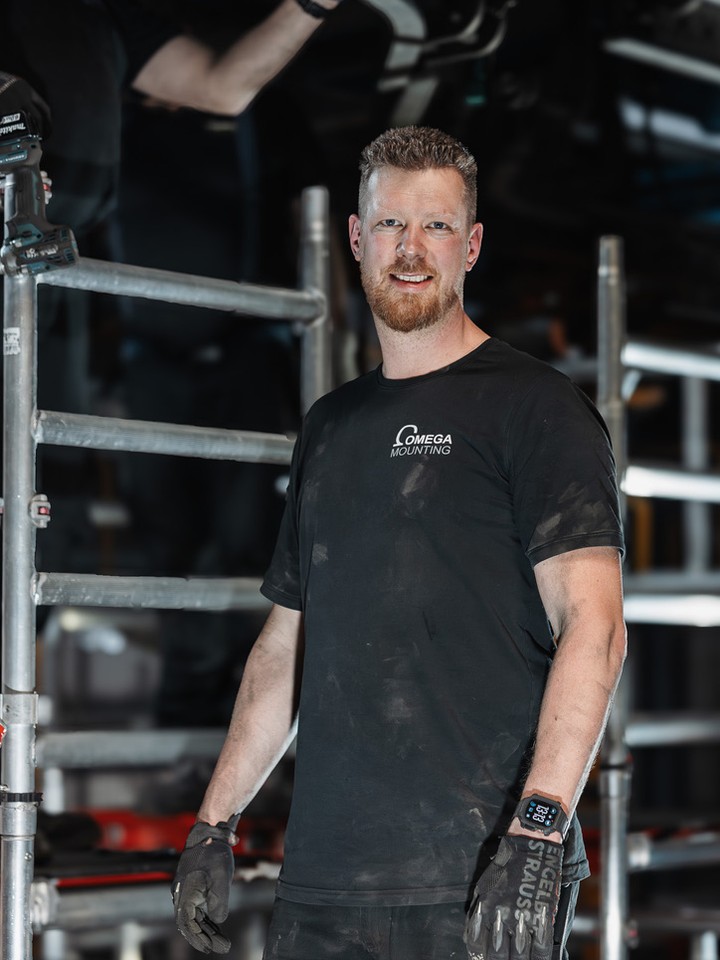
Tobias Schott
Geschäftsführer Omega Mounting GmbH, Rodgau · über 20 Jahre Praxis in Montage und Instandhaltung
Gelernter Mechatroniker und seit 2004 in Wartung, Instandhaltung und Industriemontage zu Hause – zuerst an der Seite seines Vaters, seit 2012 mit Omega Mounting: von der Elektrohängebahn in Frankfurt bis zur Krananlage im Hallenneubau. Plant und leitet als Lifting Appointed Person Hebearbeiten in Rechenzentren und auf Industriebaustellen im Rhein-Main-Gebiet, ist Ausbilder und Prüfer für Krane, Hubarbeitsbühnen und Teleskopmaschinen sowie Sicherheitsbeauftragter. Bei Einsätzen im Ausland kennt man ihn als „German Troubleshooter“ – der, den man ruft, wenn es auf der Baustelle klemmt. Was Qualität heißt, hat er nicht aus einem Handbuch, sondern von seinem Vater gelernt: Made in Germany als Anspruch an die eigene Arbeit, nicht als Etikett. Deshalb steht sie bei Omega Mounting an erster Stelle – vor Tempo und vor Preis. Das Auftragstagebuch zeigt die Einsätze, die sein Team geplant und umgesetzt hat – ohne Kundennamen, aber mit allem, was man daraus lernen kann.
 English
  German