
- Data Center Services – Commissioning & Electrical
Commissioning & electrical work: from connection to handover
Our mechatronics engineers do not just install: they connect, wire, test and commission – through to documented handover. One trade less on your interface list, one partner more who understands the whole system.
Installed is half the job – commissioned is the whole job
Mechanics and electrics from one hand is our DNA: Omega Mounting grew out of the mechatronics trade. Our work therefore does not end at the last anchor bolt but at the successful trial run.
From the emergency power system to crane systems and conveyors: we wire controls, make connections and run functional tests – aligned with manufacturer, general contractor and specialist trades.
At a glance
- Mechatronics engineers with electrical competence in-house
- Connection and wiring work on installed equipment
- Mechanical-electrical commissioning & functional testing
- Load bank testing and commissioning support
- Measurements & test records, English on request
- Cleanly documented interfaces to specialist trades and utilities
What to expect on this page
Click any topic to jump straight to that section:
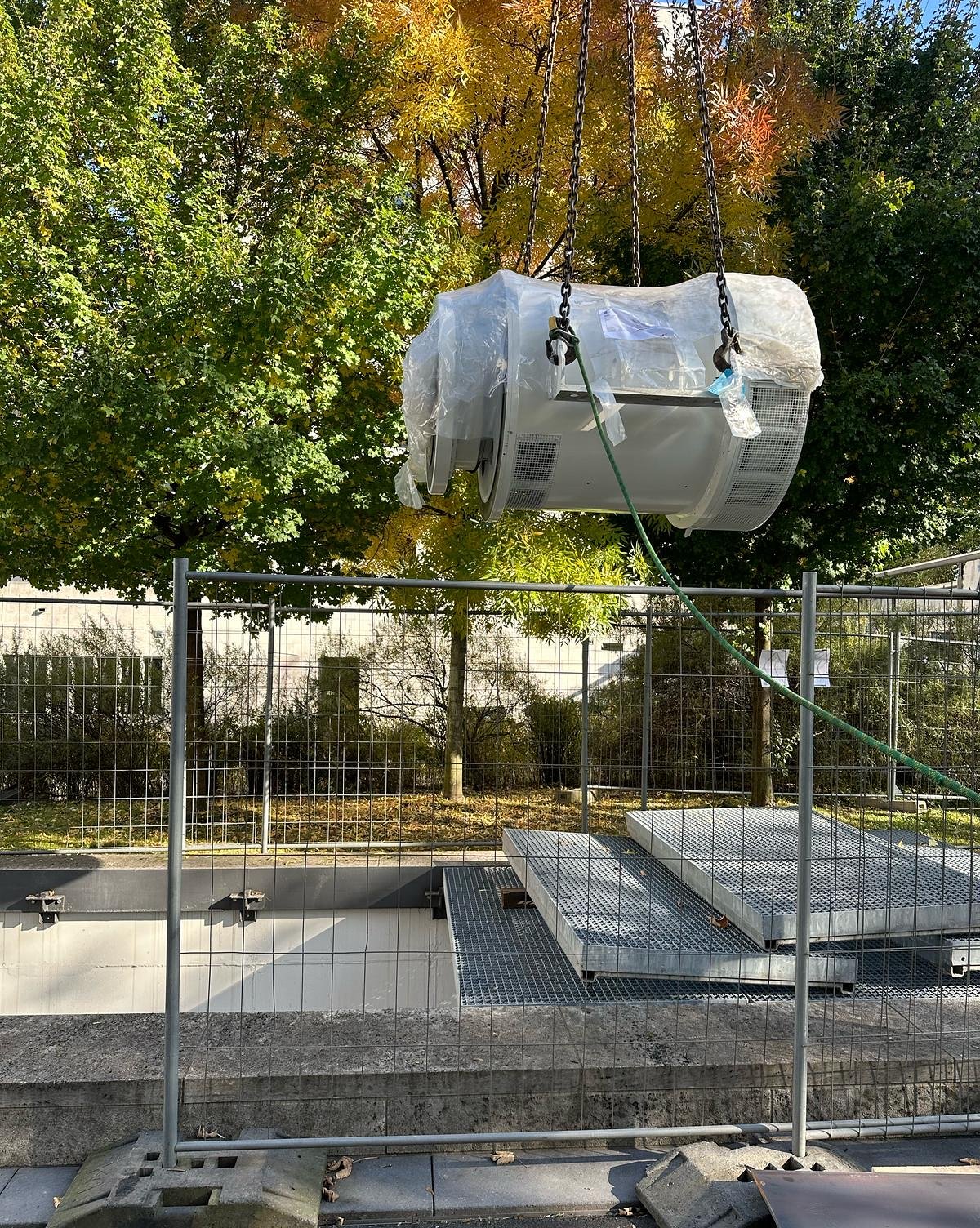
Electrical work: from connection to controls
Documented in our project diary: connecting a generator set in an emergency call-out, wired junction boxes on conveyor systems, emergency-stop chains with 32 buttons and sensors, busbars with pre-limit and limit switching on crane systems – up to a complete temporary power infrastructure with 63 A main runs.
In short: the electrics around the machine are not a foreign language to us – they are part of the installation.
Commissioning: functional tests instead of paper handovers
A system counts as finished for us when it runs – not when it stands. Functional checks, trial runs and load tests therefore close every installation: from the crane approaching its limit switches to the emergency power system proving itself under load-bank load.
During data center commissioning we work to the test schedules of operator and general contractor – with staff on call so no test window fails for logistics.
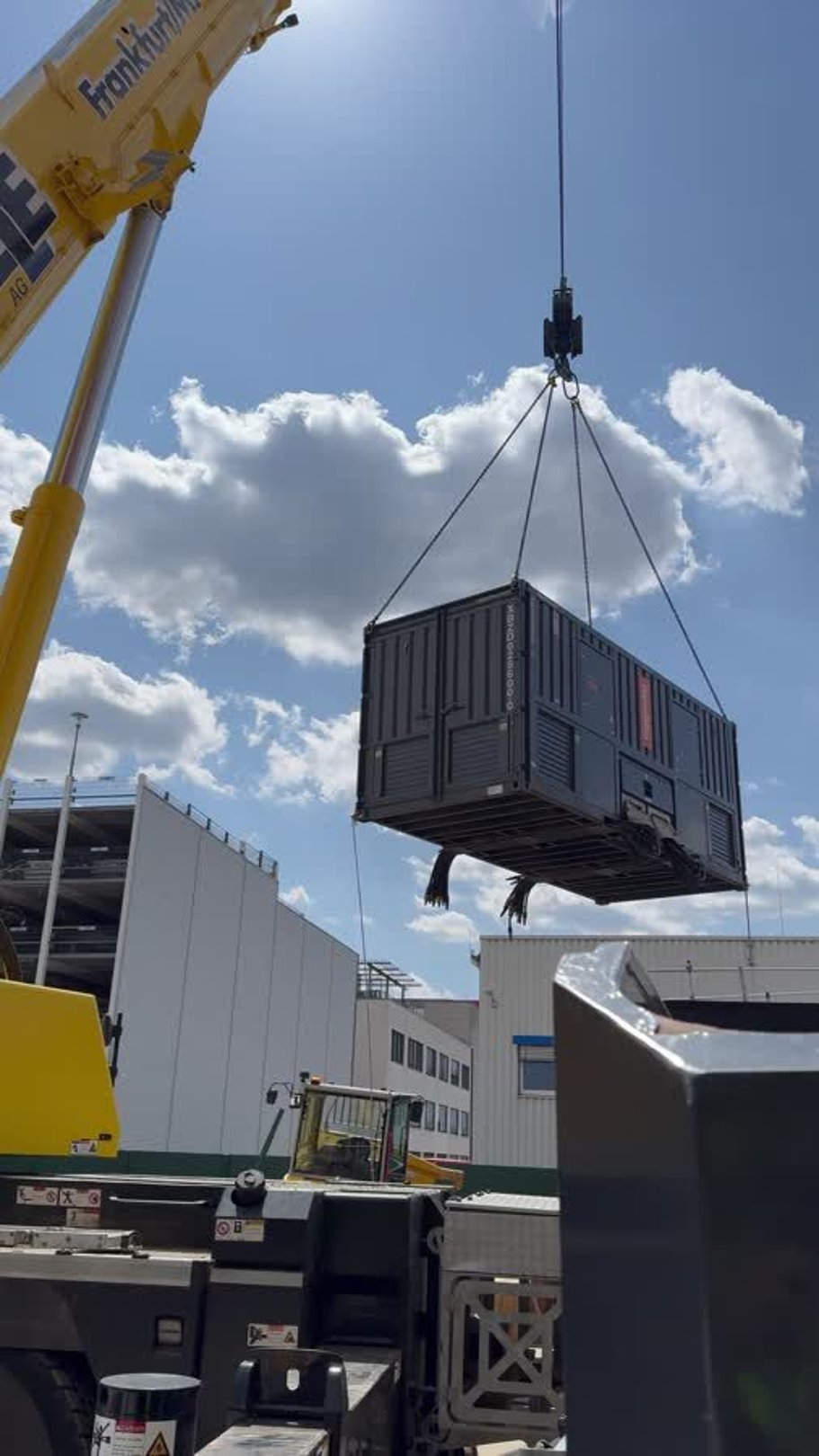
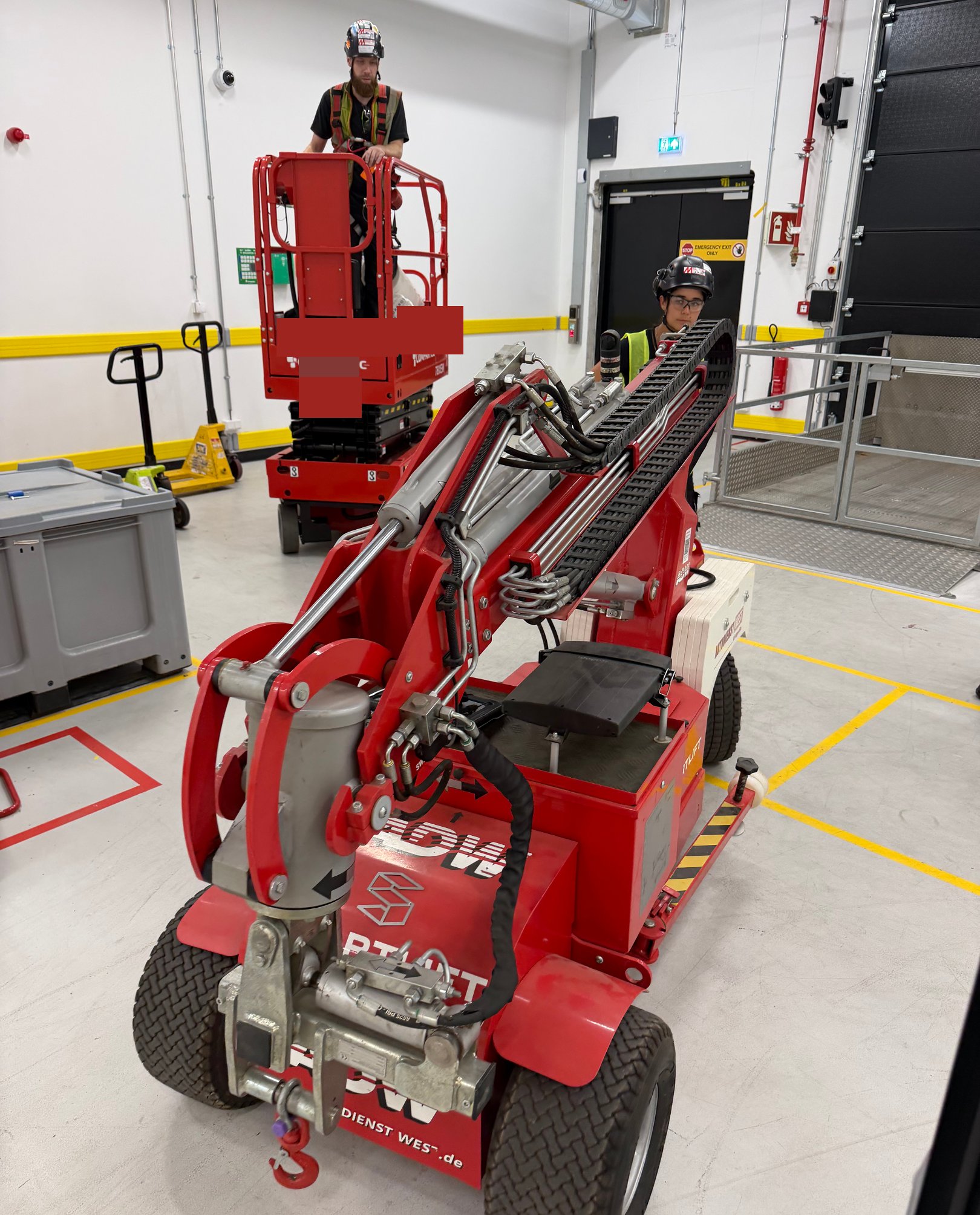
Mechatronics: one trade less on your list
Where a mechanical firm, an electrical firm and a commissioning engineer would otherwise pass interfaces around, we deliver one thing: accountability from one hand. Drive in, install, connect, test, hand over – and where the law requires specialist firms, for example on the medium-voltage level, we coordinate the handover points cleanly and in writing.
Commissioning in data centers: level by level to handover
Before a data center goes live it passes a multi-stage test process – usually described as commissioning levels: from factory acceptance of components, through post-delivery verification and individual start-up, to system tests and finally integrated tests proving the interplay of all trades under realistic conditions.
Our role in that process is clearly defined: we deliver the mechanical-electrical basis the tests build on – correctly installed, connected and individually function-tested equipment – and support the test phases operationally: positioning and connecting load banks, making measurement points accessible, staff on call for reconfigurations between runs.
Why that matters to you: commissioning schedules are the bottleneck of every data center project. An installation partner who understands the test logic and works with it, instead of slowing it down, makes the difference between a kept and a missed go-live date.
Electrical details that matter: from phase rotation to strain relief
Electrical connection work shows its quality in the details. A wrong phase rotation runs motors backwards. A terminal without the correct torque becomes a creeping fire load. A missing strain relief transfers every movement into the connection. Unclear labelling turns the next maintenance into detective work.
Our mechatronics engineers therefore work to fixed standards: phase-rotation check before every motor start, torques to manufacturer tables, clean cable routing with strain relief and bend radii, unambiguous labelling of conductors, terminals and devices, protective-conductor and bonding checks as mandatory items. Small things? Availability and safety are made of exactly these small things.
Documented practice: control and junction-box wiring on conveyor systems, emergency-stop chains with 32 buttons and sensors, busbars with pre-limit and limit switching on cranes – work where a mistake shows immediately, not theoretically.
Measure, don't assume: instruments and records
“The system runs” is not a statement – “the system meets its measured values” is. Our connection and commissioning work therefore closes with electrical tests using calibrated instruments: continuity, insulation values, protective-conductor resistance, phase rotation, functional checks of all safety devices – guided by the relevant VDE standards and the manufacturer’s specifications.
Every measurement lands in the record: system, measuring point, target, actual, instrument, tester, date. These records are more than formality – they start the system history and are the reference every later maintenance measurement is compared against. Deviations become trends before they become failures.
For general contractors and operators this means: at handover you receive not only working equipment but the robust documentation behind it – bilingual on request and compatible with your commissioning files.
Four documented cases: electrical competence in action
Our project diary backs the electrical side of our work with concrete projects:
- Generator set replacement in an emergency: started on a Sunday evening – old unit disconnected, new set positioned and electrically connected, supply restored.
- 32 emergency-stop buttons and sensors: a safety chain on a sorting facility at Frankfurt Airport, installed and tested – work where every terminal decides whether the emergency stop works.
- Controls and junction box on a sorter diverter: rewired after mechanical overhaul, initiators and limit positions adjusted – cause fixed instead of symptom patched.
- Temporary power infrastructure: nearly one kilometer of buried cable, 63 A main runs and site distribution planned and built for an entire camp – load balancing included, because a generator does not forgive chaotic distribution.
Working alongside manufacturer commissioning
For major components such as generators or cooling systems, final commissioning is often performed by the manufacturer – with their own engineers, software and release procedures. Our job is to clear the way for those expensive, scarce appointments: equipment mechanically complete, electrically connected, tested and ready before the manufacturer’s engineer walks in.
In practice: we work through the manufacturer’s checklists in advance, document the connection state, and stand by with staff during commissioning – for the terminal change, the readjustment, the extra measuring lead that is always missing exactly when the schedule is tightest.
The result is an appointment that holds: the manufacturer commissions instead of writing defect lists, the general contractor ticks off the milestone, and the operator gets a system whose warranty starts on a clean footing.
Temporary power: construction, testing, backup
Construction sites and test phases need power before the final supply exists – and reliably so, because cranes, hoists, drying and the test runs themselves hang on site power. We plan and build temporary power supplies: feed-ins, distribution structures, cable routes, protection – sized from the load profile, not from gut feeling.
The competence comes from a special chapter of our company history: for a relief camp in the Ahr valley we built a complete power infrastructure with nearly a kilometer of buried cable and 63 A main runs – under conditions that make any construction site look comfortable. We deliver such electrical projects many times a year; the scale changes, the diligence does not.
In the data center context this complements our load bank services: test loads need feeds, distribution and connections for a limited time – planned, tested and removed without residue after the test.
The five safety rules of electrical work – lived, not quoted
Anyone working on electrical systems knows them by heart: disconnect; secure against reconnection; verify absence of voltage; earth and short-circuit; cover or barrier adjacent live parts. These five rules are the foundation of all electrical work – and the difference between routine and risk lies in whether they are truly applied on every job.
With us they are non-negotiable: work starts only when isolation is verified and documented – aligned with the operator and the site’s lockout procedures. The person doing the work verifies absence of voltage personally, with a tested instrument. No “my colleague already measured”, no “it’s switched off anyway”.
That discipline protects our people and your equipment alike: most electrical accidents and many equipment losses happen exactly where routine has replaced the rules. Critical infrastructure has no room for that.
The handover documentation in detail
At the end of a commissioning stands a handover package that earns the name:
- Test records: all electrical measurements with target and actual values, instruments and testers – the reference for every later maintenance measurement.
- Functional evidence: documented trial runs and tests of all safety devices, from the emergency-stop chain to the limit switches.
- Connection documentation: terminal diagrams, labelling and photo documentation of the as-built state – so the next extension does not start with guesswork.
- Open points and recommendations: named honestly instead of talked away, each with an owner and a date.
Interface matrix: who delivers what, and up to where
The most common dispute in commissioning is not technology but responsibility: who connects, who tests, who releases – and who is liable if something happens in between? Our answer is an interface matrix created before project start: for every scope it states in black and white who performs it, who checks it, which documentation closes it and to whom it is handed over.
Typical handover points in a data center project: the terminal strip between our equipment wiring and the building installation, the main switch between mechanical completion and grid connection, the release between our functional test and the manufacturer’s commissioning. At each point the rule is: documented handover with measured values and signature instead of silent passing along.
This clarity costs an hour of alignment before the project – and saves exactly the discussions that eat schedules and strain relationships. General contractors who have worked with a clean matrix once demand it from every trade on the next project.
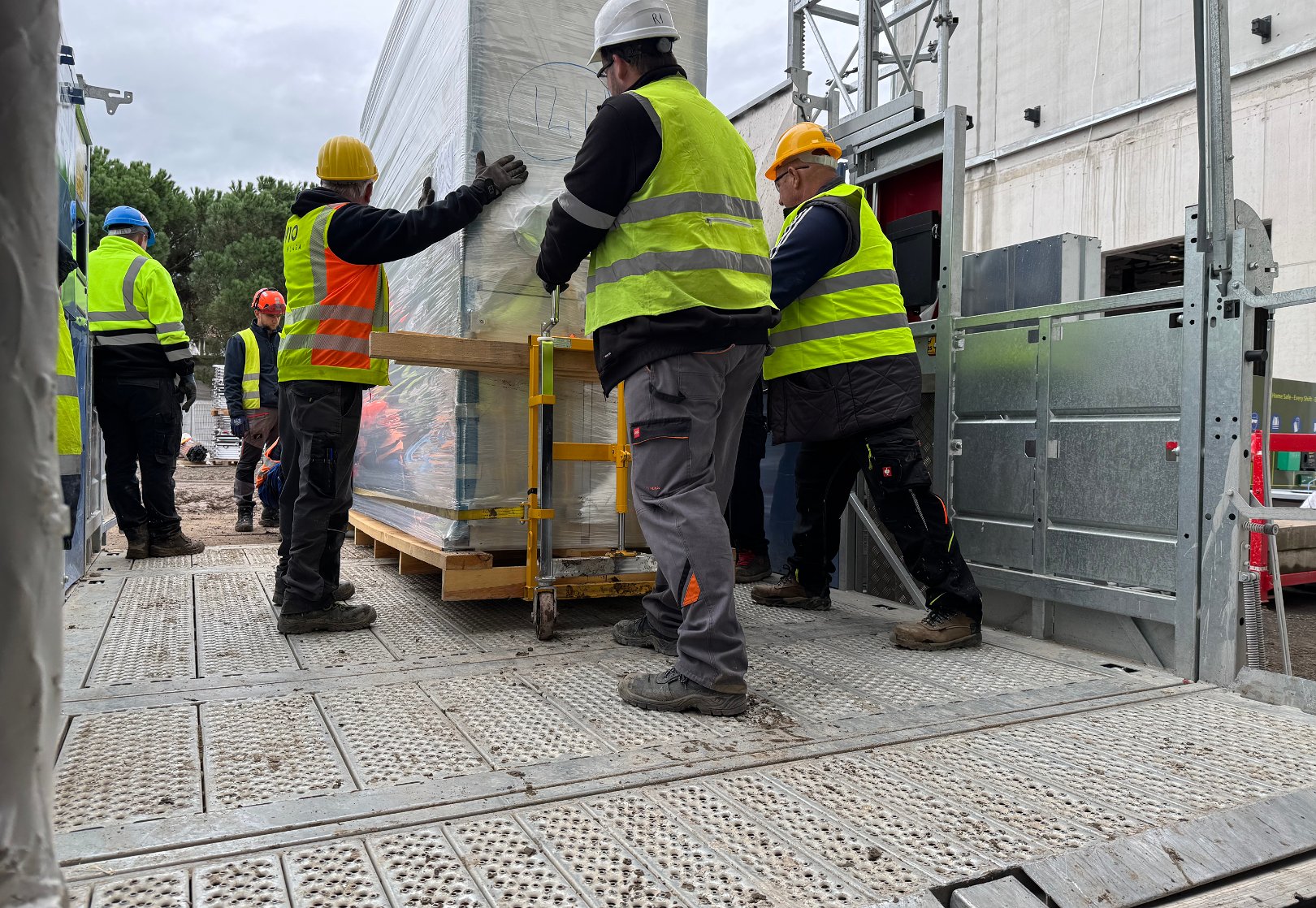
Should your equipment not just stand there, but run?
Describe the system and your schedule – we will come back with a proposal for connection, commissioning and test sequence.
100 % non-binding & free of charge · Direct line: +49 6106 239 25 88
Frequently asked questions
Our mechatronics engineers handle electrical connection and wiring work around the installed equipment: connecting standby generator sets, wiring control systems and terminal boxes, emergency-stop circuits and sensors, busbars with pre-limit and final-limit switching on crane systems, as well as temporary power supplies and site power distribution.
We handle the mechanical-electrical commissioning: connecting, wiring, testing functions, running trial operation – together with the manufacturer where required. The medium-voltage level and the grid connection are coordinated with the specialist firms responsible for them so that every interface is cleanly documented.
A load bank test applies a controlled artificial load to a standby power system before real IT load is connected – the emergency is rehearsed without risking it. We provide the load banks, support the test runs and have, among others, carried out a documented 16-tonne load bank lift for exactly such tests.
Every commissioning ends with documentation: measurement reports, functional evidence, photos and handover protocol – audit-proof for operators, general contractors and audits, in English on request.
Yes, by design: on data center sites many trades interlock. We coordinate our connection and commissioning work with the general contractor, manufacturers and specialist trades – with clear interfaces defined in writing instead of grey areas of responsibility.
Yes. Our connection and commissioning work includes measurements with calibrated test equipment – continuity, insulation, protective earth, phase rotation, functional tests – based on the relevant VDE standards and documented in a test report per system.
No – deliberately not. The medium-voltage level and the grid connection belong in the hands of the approved specialist firms and utilities. We define and coordinate this interface in writing so that handover points, tests and responsibilities are unambiguous.
Yes, operationally: providing and connecting load banks, reconfiguration between test runs, personnel on call during the test windows. Test direction remains with the project’s commissioning team – we make sure it can concentrate on the tests instead of on logistics.
Without exception: disconnect, secure against reconnection, verify absence of voltage, earth and short-circuit, cover adjacent live parts. Work starts only after proven and documented isolation – coordinated with the operator and the site processes.
Yes – commissioning phases in particular often suffer from staff shortages at the decisive moment. Our mechatronics engineers step in at short notice: for connection work, reconfiguration between test runs or as additional hands under the direction of your commissioning team.