
- Hospitals and clinics
Standby power, cooling and installation work in hospitals and clinics
Standby power systems, UPS, air conditioning and refrigeration, fire suppression and storage automation: we install, service and replace while the hospital keeps running – in planned windows, at night and at weekends, with our own crew and our own lifting equipment.
Working alongside the running hospital, in planned windows
Standby power, UPS and cooling: service, replacement, emergency
Mechanical, electrical and control work in the same crew
For existing clients also at night, at weekends and during shutdowns
- The difference
What makes a hospital different from an ordinary building site
A hospital never becomes a building site. The operation continues while the work is done – and it is the kind of operation that must not fail. That does not change the technology, but it changes everything around it: time windows, routes, noise, dust, fire protection, access.
The installation must not stand still longer than planned. While a standby power system is serviced or replaced, the building has no second line of defence. So we plan backwards from the moment of restart, have spare parts and tools ready beforehand and only start when everything is on site. Where needed, we provide a temporary replacement supply: for smaller cases with our own 110 kVA genset, larger units are hired in.
The routes are narrow, and they are patient routes. A genset, a radiator or an air conditioning unit rarely enters the building through an open facade; it goes through existing doors, lifts and service corridors. For that we have heavy-duty rollers, tracked rollers, mini cranes and lifting gear that fits through a normal doorway – and the experience to measure beforehand rather than improvise afterwards.
And we are open about what we can prove. Our documented jobs on standby power systems, cooling and fire suppression come mainly from data centres and industrial plants. The technology there is the same, and so is the availability requirement. What you will not get from us is a reference list of hospital names that does not exist.
- Services
What we take on in hospitals and clinics
Equipment that must not fail – installed, serviced and replaced by one team.
Standby power systems: service, replacement, repair
Scheduled servicing with test records, repairs to radiator, exhaust line and pipework, replacement of complete gensets and moving in new systems – up to commissioning readiness for the manufacturer.
Standby power and energyUPS and battery installations
Placing, relocating and replacing UPS units and battery racks, including the mechanical connection and the transport through cramped plant rooms.
Air conditioning and refrigeration
Placing, replacing and connecting close-control units, split systems and chillers – including the heavy routes to get there. Replacing a close-control unit in a live data centre is documented in our project diary.
CRAH replacement in live operationSteelwork, platforms and maintenance access
Mezzanines, walkways, handrails, stairs, consoles and brackets in plant rooms – made to measure for the space that exists and installed alongside live operation.
Steelwork and access platformsAutomated storage units, paternosters and conveyors
Pharmacy and materials logistics: dismantling, relocating, rebuilding and commissioning automated storage units and paternosters – floor by floor through the existing building if necessary.
Relocating automated storage unitsServicing, faults, emergencies
Recurring inspections and servicing with records, plus fault call-outs around the clock. What we do not have in stock we manufacture in our own workshop in Rodgau instead of waiting for a spare part.
Maintenance and servicing- How it runs
How we work alongside live operation
Site visit, survey and route planning
We walk the route from the vehicle to the installation position: door widths, lift dimensions and capacity, floor loading, turning radii, ceiling heights. A fixed price without a site visit is estimated, not calculated.
Window, permits and temporary supply
We plan backwards from the moment of restart: shutdown window, permits, hot work approval, dust and fire protection measures, temporary replacement supply where needed. All material is on site before the work starts.
Working alongside the operation
Protecting and taping routes, erecting dust screens, scheduling noisy work into the agreed times, leaving the area clean. Nights and weekends are not an exception for us.
Function test and handover
Test run, measured values, leak test, photo documentation and record – in German or English, to your standard. The installation does not come back “finished”, it comes back demonstrably working.
- Evidence
Documented in our own jobs
Documented jobs on the same equipment – from data centres, industry and secured areas.
Servicing a standby power system
Scheduled service with test record – and the mobile crane that had to work through the equipment shaft.
Read the jobEmergency genset replacement on a Sunday evening
What happens when the backup fails and nobody can wait until Monday.
Read the jobRadiator repair on a standby generator
In the end there was only one question: is it tight? Repair and proof on the cooling side.
Read the jobAir conditioning units installed
Cooling equipment placed, connected and commissioned – the same task as in a hospital plant or server room.
Read the jobCompany profile as a PDF
Company profile, scope of services and documents at a glance – to pass on to procurement, engineering or security management (German).
Open the PDF- Questions
Hospitals and clinics: answered directly
Do you work while the hospital is running?
Yes, that is the normal case. We plan backwards from the moment of restart, work in agreed windows including nights and weekends, and put dust, noise and fire protection measures in place beforehand. Material and spare parts are on site before anything is switched off.
Have you worked in hospitals before?
Our documented jobs on standby power, cooling and fire suppression come mainly from data centres, industrial plants and secured areas such as Frankfurt Airport. The technology and the availability requirement are the same. We work with what we can prove rather than with a list of names.
How does a genset get into a plant room in the basement?
Through the existing routes. Where no crane can reach the component, we use heavy-duty and tracked rollers, mini cranes, lifting gear and moving robots – through doors, over ramps, along service corridors. Where necessary we strip the unit down far enough to fit through the existing opening and reassemble it in place.
Do you also commission the installation?
Commissioning a standby power system is done by the company that built the genset – it knows its own control system and is liable for the performance data. We hand over mechanically complete, aligned, connected, leak-tight and documented. For servicing and repairs on existing installations, however, the functional proof is ours.
How quickly can you attend a fault?
In an emergency we are usually on site within a few hours, provided access and permits are prepared. We run around 10 to 15 such call-outs a year, primarily for clients we already work with. That is why we recommend setting us up as an approved contractor before the first emergency – it saves the hour that costs the most.
What documents can you provide?
Commercial register extract, business liability insurance with a high sum insured, clearance certificates, our own EHS standard, qualification records for the fitters and, on request, a non-disclosure agreement before the first site visit.
Do you also relocate equipment and workshops inside the building?
Yes. Dismantling, relocating, rebuilding and connecting automated storage units, paternosters, workshop and plant equipment is part of our everyday work – floor by floor through the existing building if needed.
Are you planning work in live operation?
Describe the framework: installation, site, time window, access rules. We will tell you what is feasible – and what it costs.
100 % non-binding and free of charge · Omega Mounting GmbH, Rodgau near Frankfurt
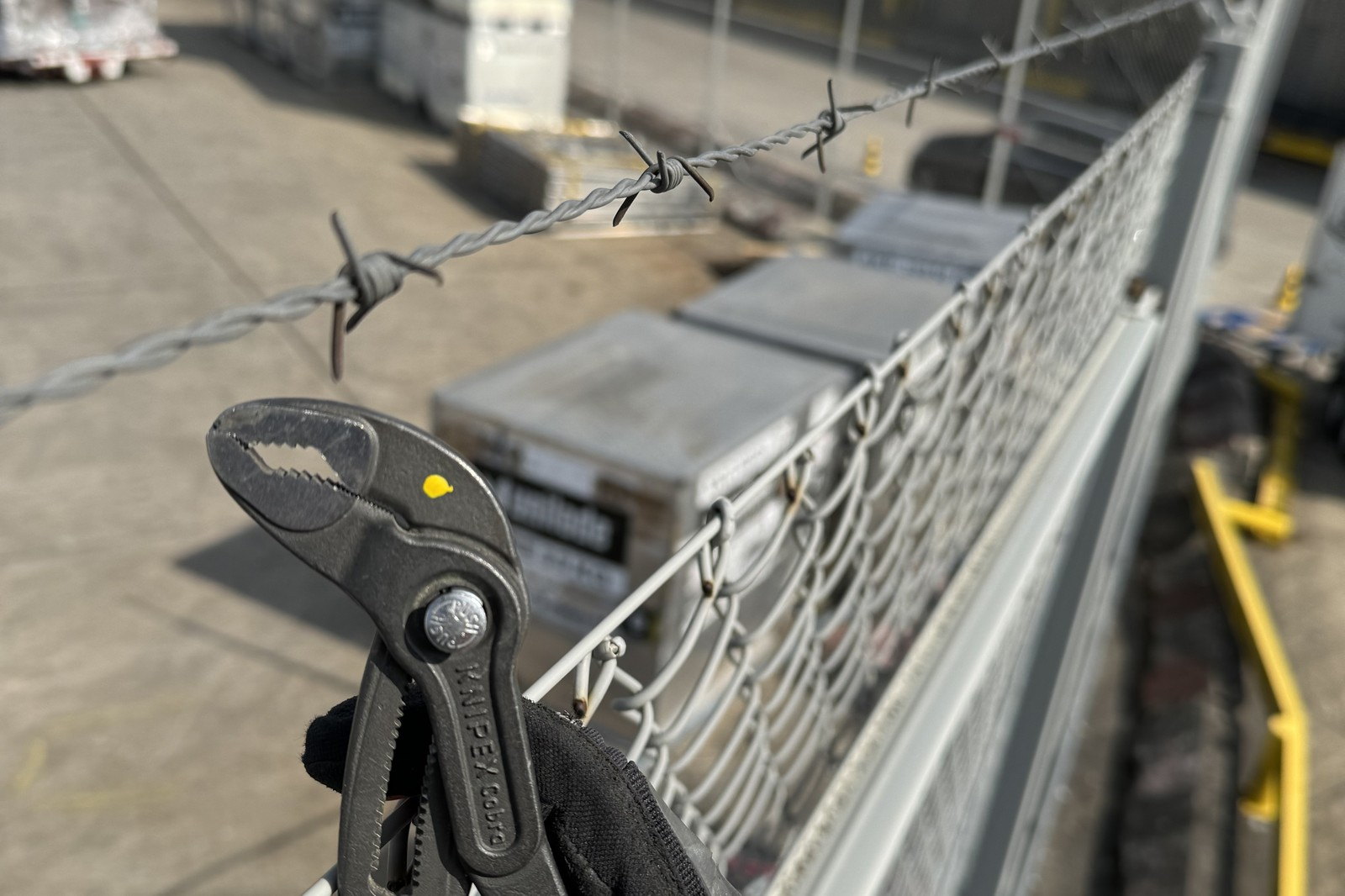
Security fence in a cargo area: retensioning the mesh, checking the turnbuckles – repairs during ongoing operations.
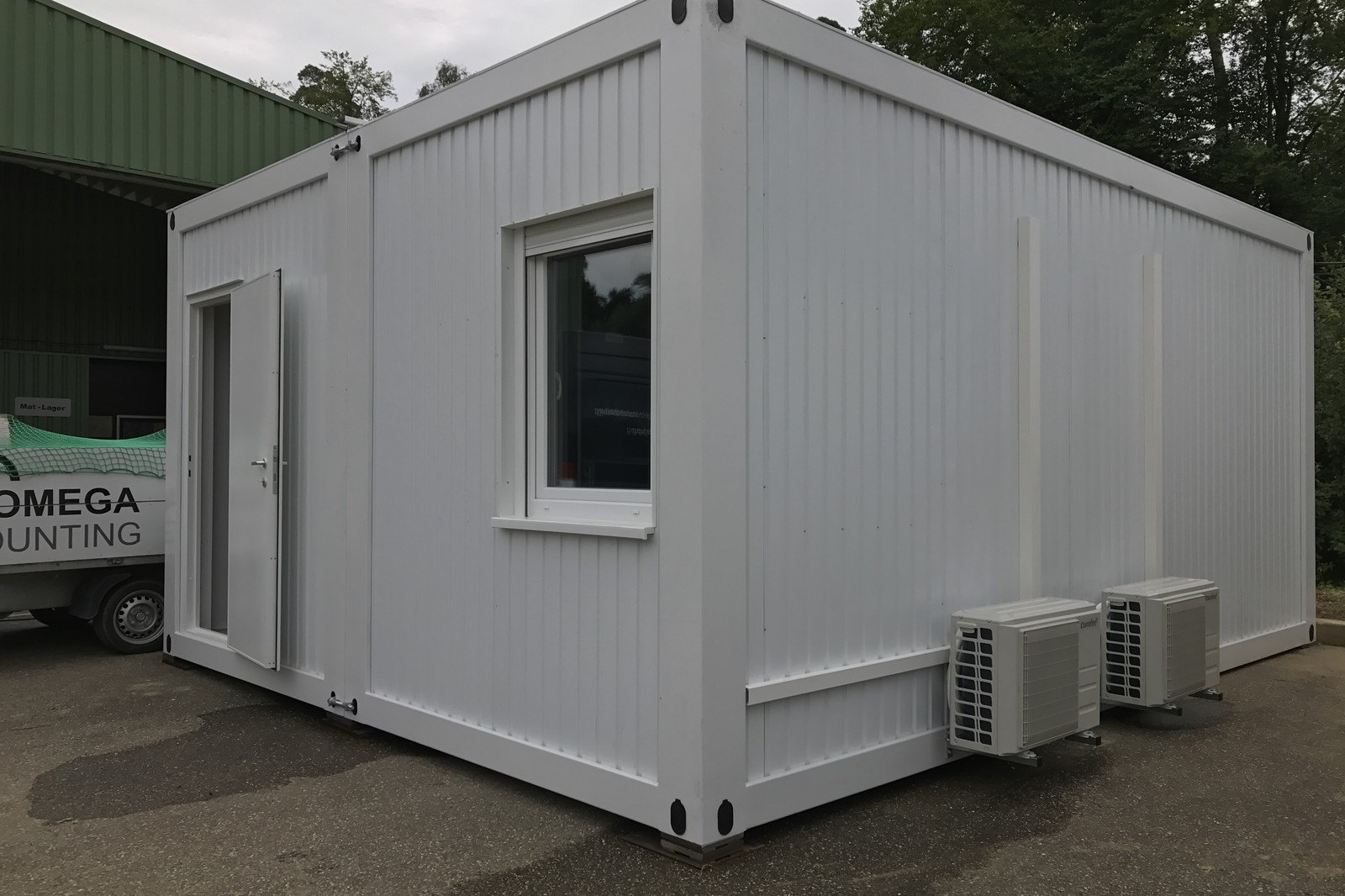
Finished room module: window, door, air conditioning – set up ready for handover.
 English
  German