
- Guide – Maintenance & Servicing
Shutdown planning: preparing the annual overhaul and restart properly
By Tobias Schott · Reading time approx. 24 minutes · Last updated: October 2026
A shutdown is won not during the standstill but before it. Anyone who bundles work packages from the maintenance plan and inspection calendar, knows the critical path and involves external contractors early lays the foundation. Anyone who also procures parts and lifting equipment beforehand, organises isolation and releases properly and plans the restart with trial run and handover gets the plant back on the agreed day – and not three days later.
You know the arithmetic: two weeks of company holidays are the only time in the year when the overhead crane can be inspected, the overhead conveyor overhauled and the standby power system serviced. Whatever is not finished in these days runs on into the next year – or throws production out of step in autumn. Shutdown planning therefore decides not about two weeks, but about the availability of the whole year. In practice, it often consists of a list in the maintenance manager's head and spare parts that “have been ordered”. Then a seal kit is missing, and the trial run takes place on the night shift.
This guide describes how to plan an annual overhaul or a company holiday standstill as a project – from work packages and critical path through external contractors, material and isolation to the restart. It is the fundamentals article above our practical guides on Maintenance during live operations, on the maintenance plan, on the contractor management and on Lockout tagout in maintenance. Written from the perspective of an installation contractor from Rodgau near Frankfurt.
Key points at a glance
- A shutdown is a planned plant standstill in which maintenance, inspection, repair and conversions take place in a bundled way.
- The work packages come from the maintenance plan, inspection calendar, findings list, fault log and project list – whatever does not need a standstill does not belong in the shutdown.
- The critical path is the chain of packages without buffer. It determines the restart, and no package stands on it that has not been prepared.
- External contractors are commissioned early enough for the scope description, induction, permits to work and parts to be clarified before the first day of standstill.
- Isolation and releases are organised for the shutdown as a whole, because several trades work on the same plant at the same time.
- The restart is a work package of its own with inspection, trial run and handover – and the review is the first step of the next planning.
What is a shutdown in maintenance?
A shutdown in maintenance is a planned, time-limited standstill of a plant, a plant area or an entire works. In it, all measures that require a switched-off, isolated and accessible plant are carried out in a bundled way: servicing, periodic inspections, repairs, conversions and retrofits.
In the process industry this is called a turnaround; in mechanical engineering, logistics and building services, maintenance speaks of an annual overhaul or company holiday standstill. The standard DIN 31051, which defines the terms of maintenance, distinguishes between servicing, inspection, repair and improvement. A shutdown typically contains all four – and therefore needs planning that goes beyond the maintenance plan.
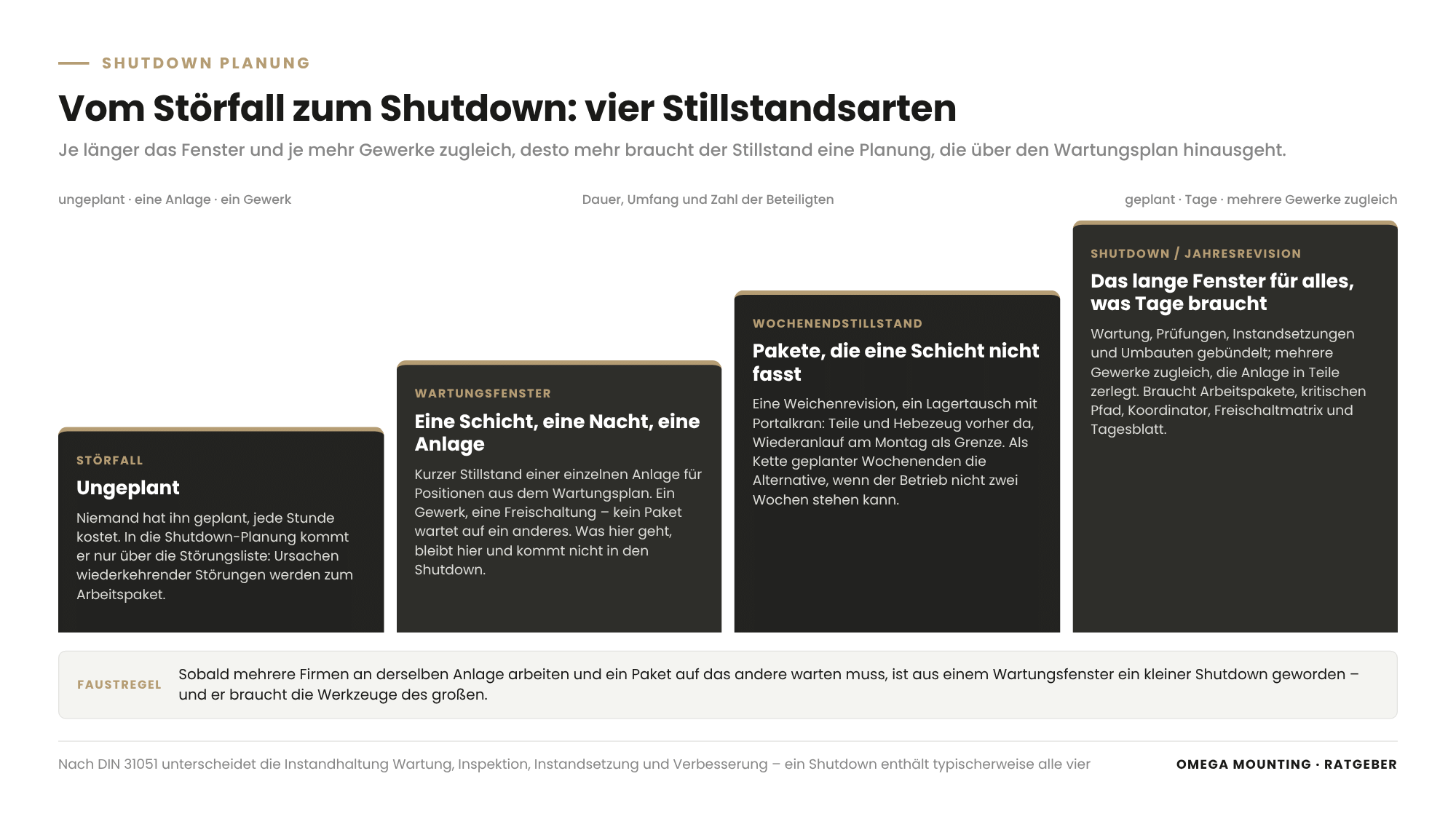
Distinction: breakdown, maintenance window, weekend standstill, shutdown
- A breakdown is unplanned; what an hour of it costs is shown in our guide on downtime costs.
- The maintenance window is a short standstill of a single plant – one shift, one night – for items from the maintenance plan (see Maintenance during live operations).
- A Weekend standstill carries packages that one shift cannot hold – a switch overhaul, a bearing replacement with a gantry crane.
- A shutdown or annual overhaul is the long window for everything that takes days, ties up several trades at once or breaks the plant down into parts.
The boundary is not duration alone but the number of parties involved. As soon as several companies work on the same plant and one package has to wait for another, a maintenance window has become a small shutdown.
When is the right time for the annual overhaul and shutdown?
The right time for a shutdown is the window in which production can best tolerate the standstill and at the same time all prerequisites can be met: company holidays, seasonal break or a planned drop in orders. The lead time is determined by the longest package in the plan, not by the date in the calendar.
In many companies in the Rhine-Main region, the summer company holidays and the days between Christmas and New Year are the set windows. Seasonal businesses – beverages, logistics before the Christmas trade, food with harvest campaigns – place the shutdown in the off-season. Outdoor facilities, doors, ramps and cooling systems also have seasons: frost protection belongs before winter, cooling capacity before summer. The checklists for this are in our guide Making plant winter-proof and summer-proof.
Not every company can stand still for two weeks. The alternative is a chain of weekend standstills in which the packages are worked through by priority. That is how the overhaul of an overhead conveyor with around a hundred switches ran in a production plant in Frankfurt.
The lead time begins with the longest package
The date is usually fixed before the packages are – the most common planning mistake. Count backwards from the standstill: which package has the longest delivery time for parts, the longest lead time for a mobile crane, the longest processing time for refabrication? This package determines when planning must be completed. Whatever is added afterwards comes with risk or goes into the next shutdown.
How do you bundle work packages from the maintenance plan and inspection calendar?
You bundle work packages by extracting from the maintenance plan, inspection calendar, findings list, fault log and project list all items that need a longer standstill, isolation, lifting equipment or several trades. You combine these items per plant into packages with a responsible person, parts, duration and evidence. Everything else deliberately stays in live operation.
A work package is the smallest unit that can be independently commissioned, isolated, executed, inspected and accepted. “Overhead crane: inspection, relubrication, rope check, brake adjustment” is a package; “service crane” is a heading.
The five sources of work packages
| Source | What goes into the shutdown from it | Typical lead time |
|---|---|---|
| maintenance plan | Items whose window is called “company holidays” – gearbox overhaul, bearing replacement, rail survey | Parts and partners by delivery time |
| Inspection calendar | Inspections that need a standstill or access at height – cranes, pressure equipment, doors, racking | Inspector, test weights, scaffolding or MEWP |
| Findings list | Findings without immediate action – worn rails, torn-off brackets, leaks | Refabrication, welding, permits to work |
| Fault log | Causes of recurring faults that were only fixed provisionally during operation | Root cause analysis before the shutdown, not during it |
| Project list | Conversions, retrofits, extensions, machinery relocations, decommissioning | Planning, manufacturer, foundation, electrics, acceptance |
How to build the maintenance plan that feeds the first source is described in our guide Creating a maintenance plan. Which inspections are due for which plant is shown in our overview of the inspection obligations for plant operators.
What does not belong in the shutdown – and how to bundle
Every package in the shutdown takes time, access and hands away from another. Hence the rule: whatever can be done in one shift or over one weekend stays there. Whatever needs root cause analysis is analysed beforehand. Whatever nobody has prepared is struck off before it extends the critical path. And bundle by plant, not by company, so that the sub-packages isolation, access, scaffolding and release are shared. Which plant deserves the most thorough planning follows from its criticality – the method is in our guide on risk-based maintenance.
How do you define the sequence and the critical path?
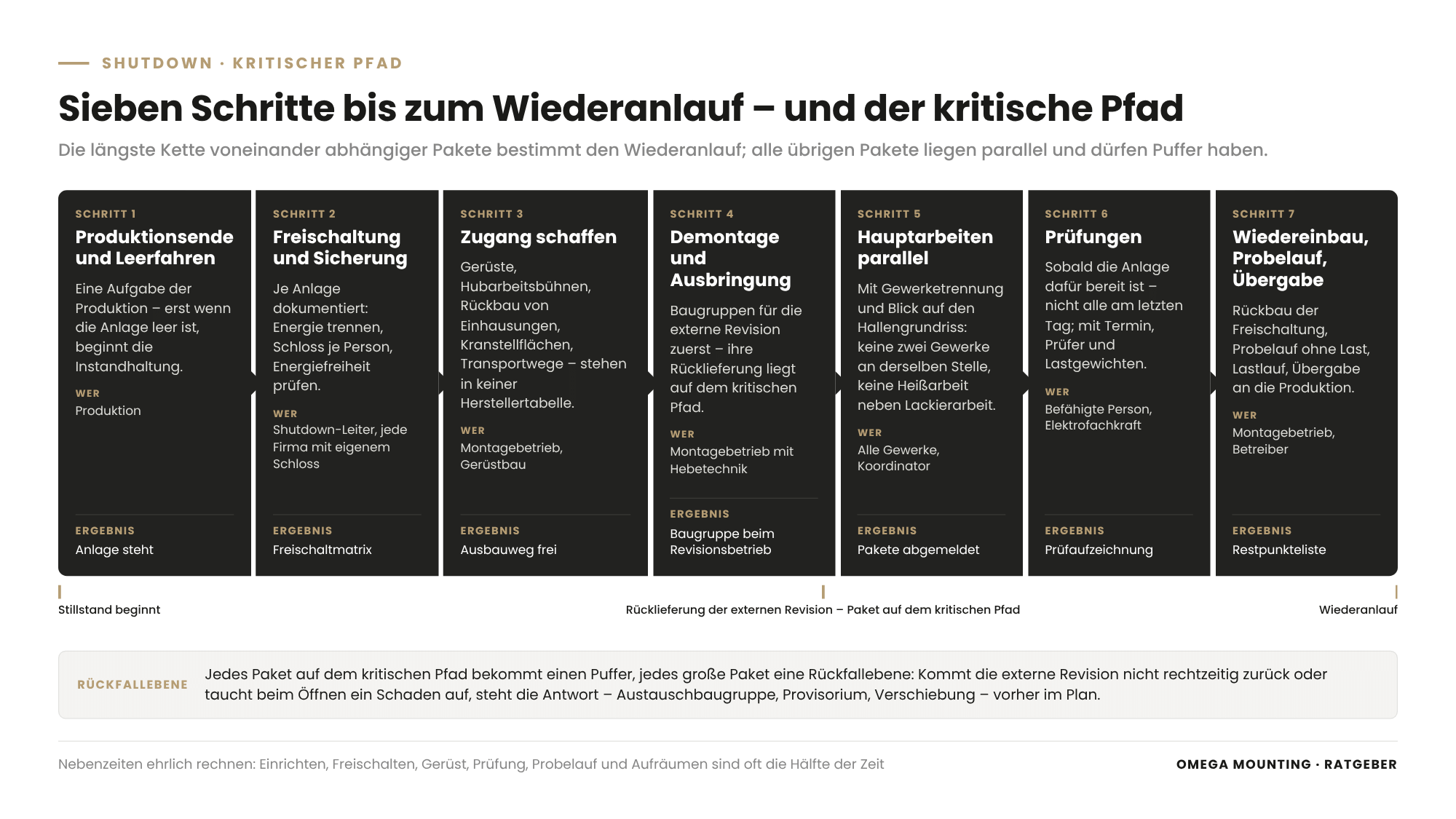
You define the sequence and the critical path by entering predecessor, successor, duration and resources for each package. From this you determine the chain of packages without buffer – that is the critical path, which determines the restart. You arrange all other packages in parallel so that they do not obstruct each other.
The critical path is a term from project planning that also applies in maintenance: the longest chain of interdependent activities, in which every delay shifts the end. In a shutdown, this is often the large plant with dismantling of enclosures, removal, external overhaul and reinstallation – for example a generator that has to go through the installation shaft.
The typical sequence of a shutdown
- End of production and running down – a task for production.
- Isolation and lockout, documented per plant.
- Creating access: Scaffolding, MEWPs, dismantling of enclosures, crane set-up areas, transport routes.
- Dismantling and removal: Assemblies that are overhauled externally first – their return delivery lies on the critical path.
- Main work in parallel, with separation of trades.
- Inspections, as soon as the plant is ready for them – not all on the last day.
- Reinstallation, removal of isolation, trial run, handover.
Buffers, fallback plan, non-productive time, collisions
Every package on the critical path gets a buffer, every large package a fallback plan. What happens if the external overhaul does not come back in time or damage appears on opening? The answer – replacement assembly, temporary fix, postponement – is in the plan beforehand. Calculate non-productive time honestly: setting up, isolating, scaffolding, inspection, trial run, clearing up are often half the time. And lay the plan over the hall floor plan once. Two trades in the same place, hot work next to painting work, a mobile crane on the only access road: these are the collisions that remain invisible in the Gantt chart.
How do you involve external contractors in the shutdown?
You involve external contractors by awarding each externally assigned package with scope description, interfaces, date and form of evidence early enough for the partner to plan parts, staff and lifting equipment. Before the first day of standstill, you define induction, permits to work, coordinator and release routes. Because during a shutdown, more outsiders work in your plant at the same time than on any other day.
The German Occupational Safety Act (ArbSchG) and the accident prevention regulation DGUV Regulation 1 require employers whose staff work together at one location to coordinate. In the case of particular hazards, they appoint a person who coordinates the work. For you this means: a shutdown with several companies needs a named coordinator with authority to issue instructions on safety matters before the first company arrives. What the company as client has to do in each phase is described in our guide on contractor management. This text does not replace legal advice.
Award: one scope description per package
Every external package needs five details: what is to be done, with findings and photos? What is provided by the client – isolation, power, lifting equipment, scaffolding, disposal? Which interfaces, which window, which evidence? That is how quotations become comparable.
Who does what: manufacturer, specialist company, installation contractor
The manufacturer takes care of firmware, calibration and safety-relevant controls. Specialist companies with special authorisation take care of the inspection of pressure equipment by an approved inspection body, electrical inspections by a qualified electrician and refrigeration or hygiene work with the required expertise. The mechanical maintenance and installation contractor takes care of dismantling, replacement of assemblies, welding, lifting technology, alignment and reinstallation.
Induction, permits to work, sign-off
Before the standstill, all external contractors are inducted into the plant – access, routes, alarm, release routes – ideally together at one appointment. Permits to work for hot work or work at height are noted per package and issued daily. Every package ends with a sign-off: tidied up, findings handed over, evidence signed.
Which spare parts, which material and which lifting equipment must be there before the shutdown?
Before the shutdown, all spare parts, consumables and custom-made parts per package must have arrived and been checked. The same applies to lifting equipment, scaffolding, MEWPs, transport frames and the release of crane set-up areas. Because a part that is missing on the third day of standstill shifts the restart, not the package.
Parts list per package, not per store
The parts list arises from the package. Which parts will definitely be needed – seals, filters, bearings? Which probably, for example following findings from the inspection? Which as a reserve, in case more comes to light on opening? Parts that are no longer available are best identified months in advance. Then there is time for refabrication from a sample or site measurements. The ways to do this are described in our guide No more spare parts?.
Lifting equipment, access, goods receipt
Every package with weight, height or distance needs its own entry: chain hoist on which beam, and does it carry the load? Mobile crane with which set-up area? Transport route with which door clearances? For the overhaul of a generator in the Rhine-Main region, passage widths, lifting accessories, chain hoists and the load-bearing capacity of the steel beam above the generator set were clarified before the first move on site. This includes storage areas for removed assemblies and the disposal of old parts and consumables.
And a part does not count as “there” when it has been ordered, but when it is unpacked, checked and on the shelf allocated to its package. The last goods receipt is a milestone of its own in the lead-up calendar.
How do you organise isolation and releases during the shutdown?
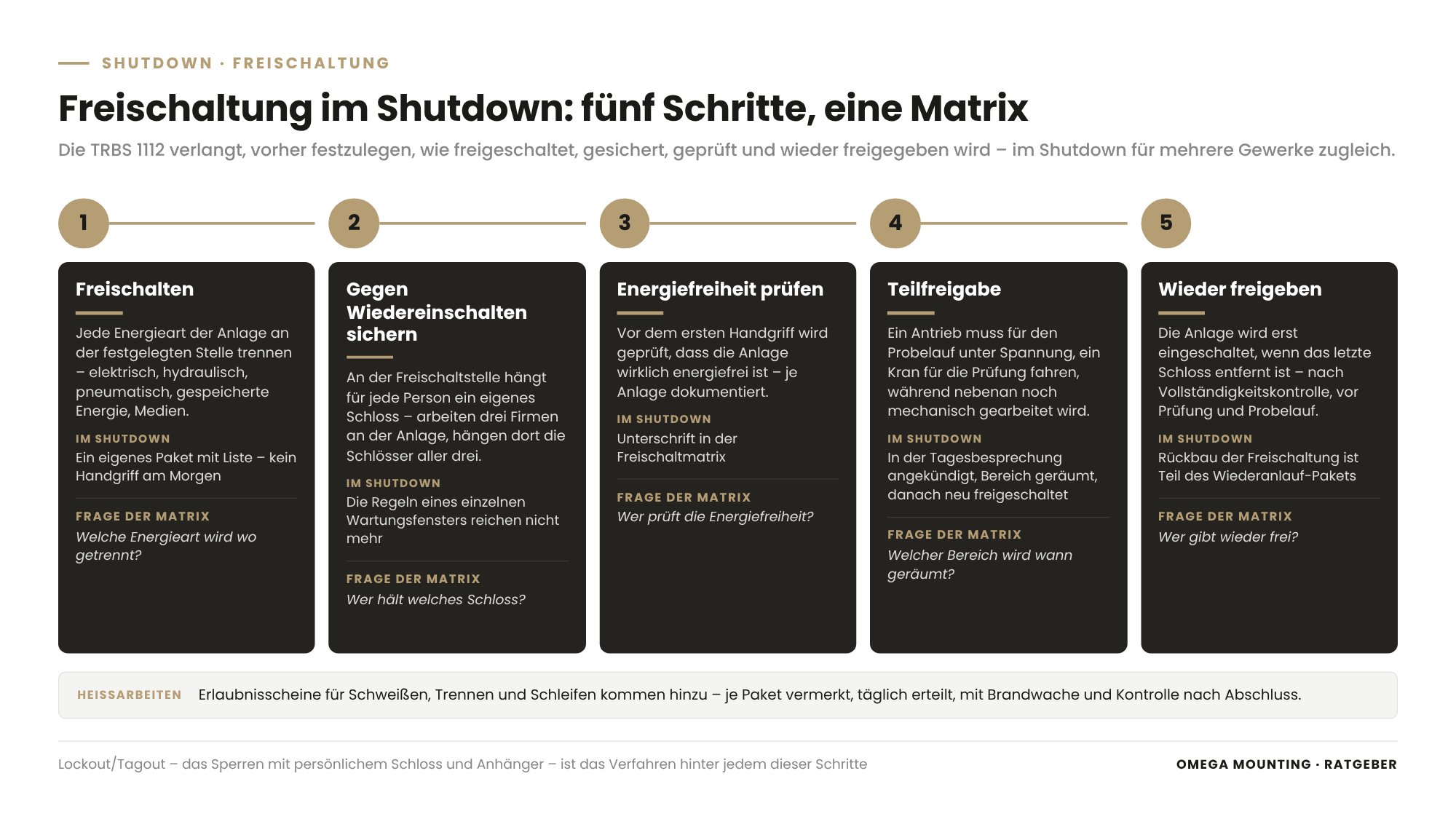
You organise isolation and releases during the shutdown via an isolation matrix per plant. It records which type of energy is disconnected, locked out and verified at which point, who holds the lock and who re-releases. Because during the standstill, several trades work on the same plant at the same time, and the isolation rules of a single maintenance window are no longer sufficient.
The German technical rule TRBS 1112 (Maintenance) requires that before maintenance work it is defined how the plant is isolated, locked out against re-energising, verified for zero energy and re-released. For you this means: during the shutdown, isolation is not a quick move in the morning but a package of its own with list, locks and signatures. How lockout/tagout – locking with a personal lock and tag – works is shown in our guide on Lockout tagout in maintenance.
Several trades, one lock per person
If three companies are working on one plant, each person has their own lock on the isolation point. The plant is only switched on when the last lock has been removed. The types of energy – electrical, hydraulic, pneumatic, stored energy, media – are listed per plant in the matrix.
Partial releases and hot work
The shutdown needs partial releases. A drive has to be energised for the trial run while mechanical work is still going on next to it. A crane has to travel for the inspection while the hall beneath it is a construction site. Every partial release is announced in the daily briefing, the area is cleared, and afterwards isolation is re-established. Permits to work for hot work – welding, cutting, grinding – are added, with fire watch and check after completion.
How do you manage the shutdown day by day?
You manage the shutdown via a short, fixed daily briefing with all package owners. Progress, deviations, findings, decisions and releases of the day are recorded on one sheet – so that a problem on Tuesday is not only noticed on Friday.
The daily sheet in five points
- Progress per package: on schedule, behind schedule, finished – and whether the critical path is affected.
- Deviations: missing parts, absent people, access – and who resolves them by when.
- Findings and add-on packages: What came to light on opening – into this shutdown or into the findings list.
- Decisions: Postpone, cancel, temporary fix, fallback plan – in writing, with names.
- Safety and releases: Partial releases, permits to work, lifting operations, closed-off areas.
Do not analyse findings during the standstill
Every unplanned package takes time away from a planned one. Safety-relevant findings are rectified immediately. Everything else is photographed and assessed – and either included in the plan as an add-on package with its own duration or written into the findings list for the next window. The decision is made by the shutdown manager, not by the fitter who made the finding. Anyone working at night or at the weekend to hold the restart never works alone on hazardous tasks. How to organise this is described in our guide on lone working in maintenance.
How does the restart with trial run and handover work?
The restart runs as a work package of its own in a fixed sequence. First the removal of scaffolding and temporary fixes, completeness check and removal of all locks. Then the inspection after repair by the competent person, trial run without load and load run. Finally the handover to production with punch list. None of this takes place on the last day between clearing up and knocking off.
The Industrial Safety Ordinance (BetrSichV) requires that work equipment is inspected before reuse after repairs that could affect safety. The German technical rule TRBS 1201 (Inspections of work equipment) describes when this inspection is due and what belongs in the inspection record. For you this means: the overhead crane whose brake has been repaired does not go back into operation when the lock is removed, but with the inspection. And that needs a date, an inspector and test weights.
Handover and first shifts
Every package ends with a handover: what was done, which parts are installed, which findings remain open – with a punch list naming the responsible persons and date. How inspection, trial run, documentation and handover interact is described in our guide commissioning and handover of a plant. And do not plan the first production shift without maintenance staff in the hall. Newly fitted bearings and newly adjusted switches show in the first hours of operation whether the work is right.
What belongs in the follow-up: lessons learned and documentation?
The follow-up includes the documentation of all packages – evidence, inspection records, parts installed, photos, open points – and the updating of the maintenance plan and findings list. Added to this is a review with all parties involved.
The review takes place in the days after the restart – it is the first appointment of the next shutdown planning. Three questions are enough: what cost us time that we could have known about? Which packages did we over- or underestimate? Which findings are waiting for the next window? How to file the evidence so that an auditor can read it without explanation is described in our guide on maintenance documentation for audits.
What mistakes do companies make in shutdown planning?
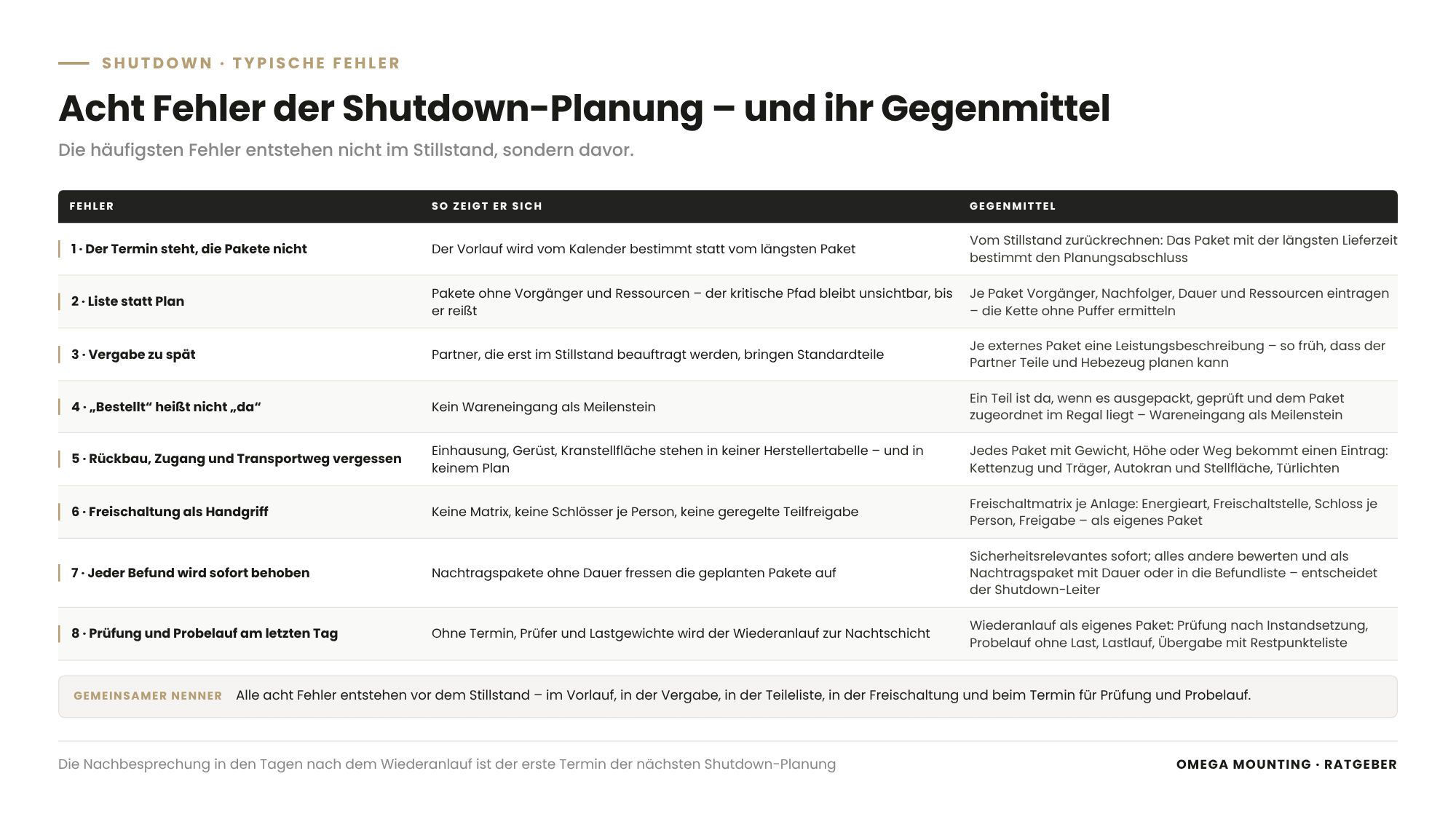
The most common mistakes in shutdown planning arise before the standstill – in the lead-up, in the award, in the parts list, in the isolation and in the date for inspection and trial run.
- The date is fixed, the packages are not: The lead time is determined by the calendar instead of by the longest package.
- List instead of plan: Packages without predecessors and resources – the critical path remains invisible until it breaks.
- Award too late: Partners who are only commissioned during the standstill bring standard parts.
- “Ordered” does not mean “there”: No goods receipt as a milestone.
- Dismantling, access and transport route forgotten: Enclosure, scaffolding, crane set-up area appear in no manufacturer's table – and in no plan.
- Isolation as a quick move: No matrix, no locks per person, no regulated partial release.
- Every finding is rectified immediately: Add-on packages without duration eat up the planned packages.
- Inspection and trial run on the last day: Without date, inspector and test weights, the restart becomes a night shift.
How we do it in the Rhine-Main region
In the Rhine-Main region, we are involved in shutdowns in three ways. As partner for the mechanical packages: dismantling, overhaul, replacement of assemblies, welding, alignment, lifting technology. As coordinator for packages that we work through with electricians, inspectors and manufacturers. And as a company that looks at the list with the customer beforehand. From Rodgau, Frankfurt, Offenbach, Hanau, Darmstadt and Aschaffenburg are short distances. For us, a site walk is the first step of every standstill planning. And if a part is missing during the standstill, the workshop in Rodgau is close enough to refabricate it. What we contribute is the installation contractor's view: which package needs a chain hoist, mobile crane or scaffolding, and where does something have to be dismantled first? What we deliver in terms of Maintenance and servicing for industrial plants is described on our service page.
How we do it in practice
Four jobs from our project diary show how work packages, lead time and coordination turn into a standstill that holds.
Overhead conveyor in Frankfurt: annual overhaul in weekend packages
With the maintenance of an overhead monorail system in Frankfurt the job concerned a roughly thirty-year-old system with around a hundred switches in two operating areas. An overhead conveyor is a conveying system whose carriers hang from a rail beneath the ceiling. During live operation, for years there had only been time for the bare essentials. Worn rollers, worn running rails and damaged brackets had accumulated. A long standstill was out of the question. The overhaul was organised as a chain of planned weekend standstills – with a window of around 36 hours between end of production on Saturday and restart on Monday.
The planning ran like a shutdown in miniature. Every switch was inspected, documented and prioritised by damage and importance for production. This produced work packages per weekend with prepared spare parts allocated to the areas. From mobile working scaffolds, rollers and switch shoes were replaced, pins and end positions adjusted, motors and limit switches checked, torn-off brackets re-welded. Worn running rails were offset by several centimetres so that the end positions moved to less worn areas. The survey was the plan, and the restart on Monday was the limit against which every package was measured. More on this in our guide on overhead conveyor maintenance in practice.
Standby power system in the Rhine-Main region: the package on the critical path
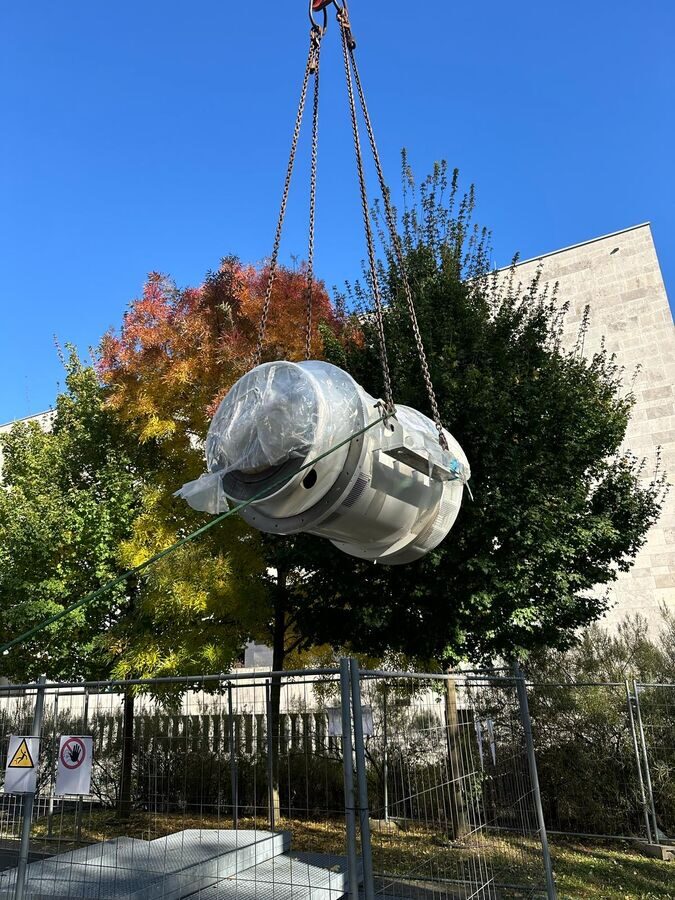
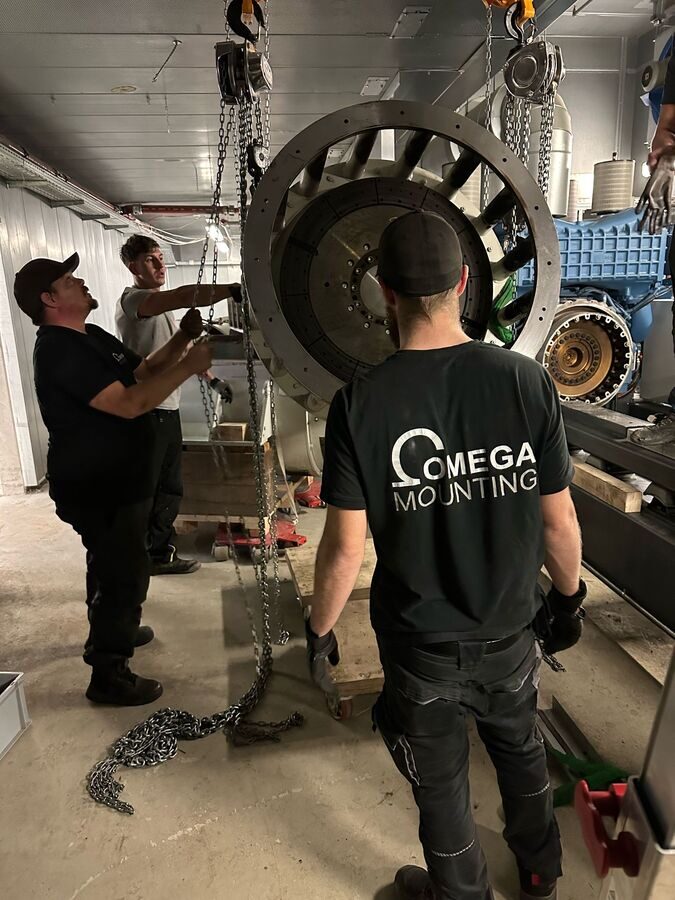
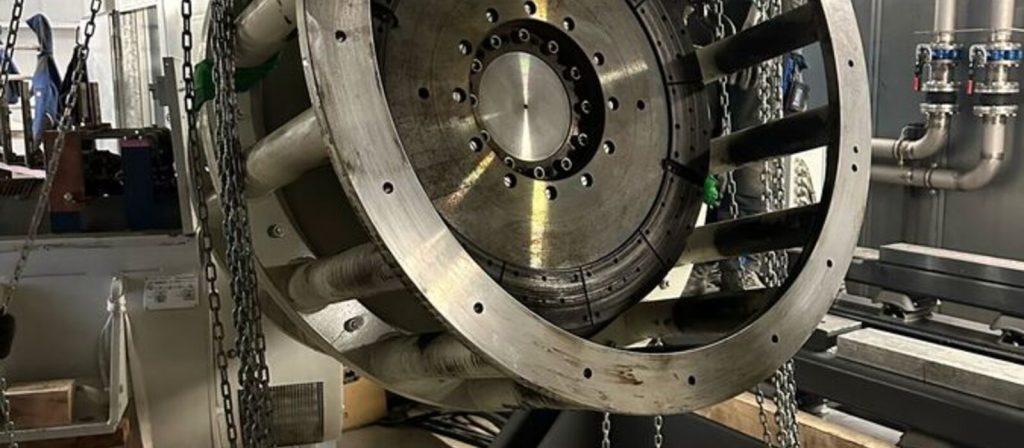
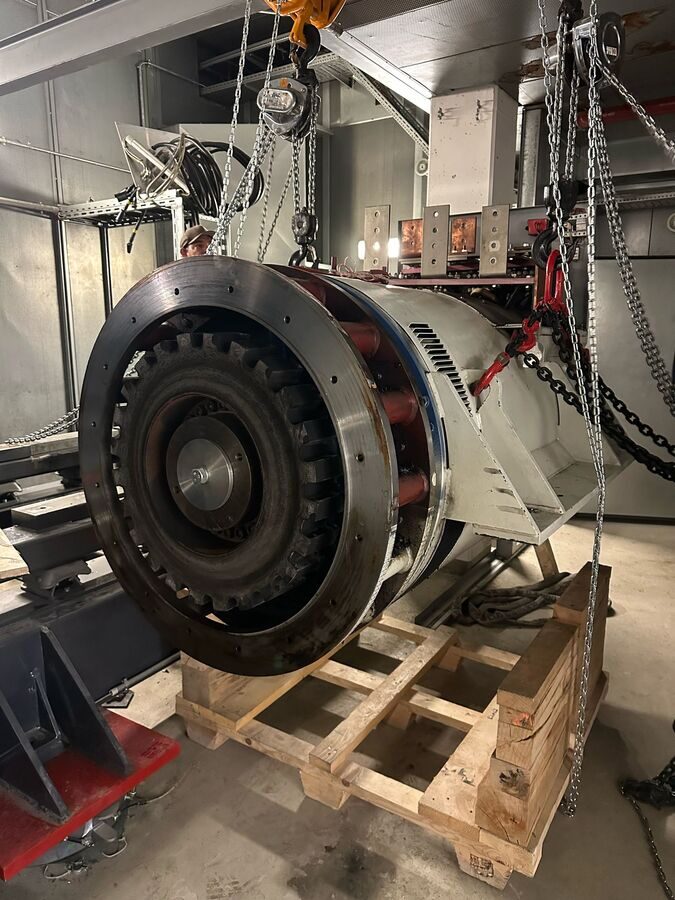
With the maintenance of the generator of a standby power system in a larger building complex in the Rhine-Main region, the package read: overhaul the generator. In practice this meant: dismantle the generator set in the plant room, lift the generator with chain hoists on a beam structure and separate it from the drive engine. Then move the components on machine skates to the installation shaft and lift them vertically out of the basement with the mobile crane. After the overhaul, bring them back, install, align. A lifting coordinator coordinated the lifting operations, three fitters carried them out. The lift plans were in place before the first move on site.
Two things from this job belong in every shutdown plan. Before the actual work, the complete enclosure of the generator had to be dismantled – a package that is often missing from schedules. And for transport, custom-made timber transport frames were built on site. Both lay on the critical path: no removal without dismantling, no restart without removal. More on this in our guide on maintenance of standby generators.
Test rig in Munich: conversion package with permit to work
At a car manufacturer in Munich we converted a hydraulically driven test rig. The hydraulic line was converted, and an oil drip tray was fitted around the concrete foundation – fixed with anchors and bolts, sealed by welding at corners and transitions, with drain cocks in case of leakage. The seams were ground down, primed and painted, and the gap to the concrete wall was sealed with an oil-resistant sealant. Welding was carried out in a confined basement room with welding fume extraction and fresh air supply.
For shutdown planning, this is a typical conversion package from the project list. It needs a stationary, depressurised test rig, a permit to work for hot work with extraction and fire watch, and drying times for primer, paint and sealant. And those are in the plan.
Logistics centre near Leipzig: mechanical, electrical and commissioning from a single source
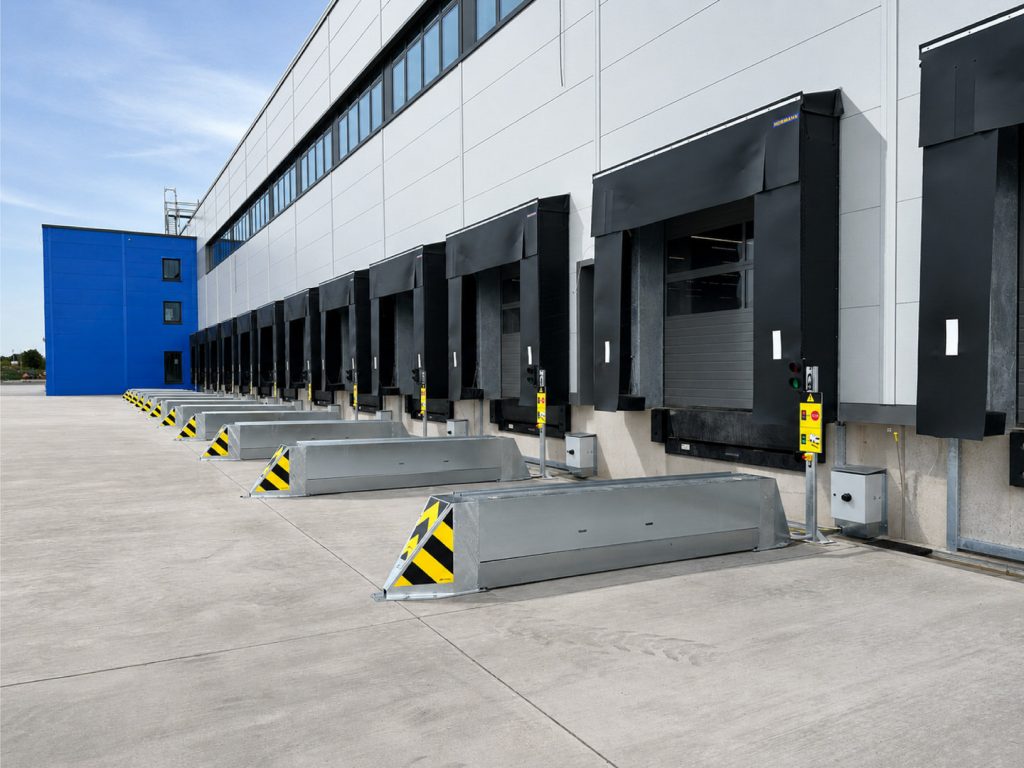
With the installation of 32 vehicle restraint systems at a logistics centre near Leipzig – systems that prevent lorries from rolling away during loading and unloading – our scope ranged from the mechanics to the electrical commissioning together with the manufacturer. In between lay hydraulic power units, traffic light systems, 32 control panels, control cabinets and cable routes. In the first project week, a team of eight mechatronics technicians, fitters and electricians was on site. After the main installation, three technicians took over final assembly and preparation for commissioning. Handover took place on schedule.
For your planning, the job shows: a package in which mechanical and electrical work come from a single source has one interface fewer – no waiting time between “mechanics finished” and “electrics start”. And a team that scales down as planned after the main installation is the normal case of a well-planned window.
Is an annual overhaul coming up for you – and is the shutdown planning still a list in your head?
Then get in touch with us. During a site walk in Frankfurt, Offenbach, Hanau or elsewhere in the Rhine-Main region, we go through your list with the eye of an installation contractor. Which packages fit into the window, which need dismantling, lifting equipment or refabrication, which stay in live operation?
What this means for your role
For buyers: Award shutdown packages on the basis of a scope description per package with client-side services, interfaces, window and form of evidence. Early enough for the partner to plan parts and lifting equipment by delivery time. Evaluate suppliers by whether they bring mechanical work, lifting technology, welding and refabrication from a single source – every interface avoided is one risk fewer.
For designers: Every decision about installation location, moving-in route, inspection opening, lifting point above the plant and maintenance area determines whether a shutdown package can manage with a chain hoist and machine skates or needs a mobile crane and a ceiling opening. Design so that the largest assembly can be removed without dismantling its neighbours.
For project managers and site managers: As project manager, you run the shutdown like a project – with work package list, critical path, lead-up calendar and daily briefing – and decide on add-on packages and fallback plans. As site manager, you induct external contractors, issue permits to work, keep the isolation matrix up to date and accept every package with evidence.
For maintenance managers: You are the author of the work package list. Draw the packages from the maintenance plan, inspection calendar, findings list and fault log. Define responsible person, parts, isolation and evidence for each package. Strike off everything that does not need a standstill, and set the date for inspection and trial run before the first day of standstill.
For operations and plant managers: The shutdown trades production time for availability – and the trade is only a good one if the window holds. Release the date once the packages are fixed, and demand a plan with critical path and fallback plans instead of a list.
For safety officers and HSE coordinators: During the shutdown, hot work, lifting operations, work at height and partial releases by several external contractors run side by side. Check that a coordinator has been named, the isolation matrix is available and permits to work are issued daily.
Shutdown planning template: template on request
The shutdown planning template is a three-part working document. First, a work package list with the columns plant, package, source, responsible person, external contractor, isolation, permit to work, parts and lifting equipment, predecessor, duration and evidence. Second, a lead-up calendar with milestones from award to restart. Third, a daily sheet for the shutdown briefing – together your shutdown checklist. It deliberately contains no sample figures or intervals – those belong to your plant. Request the template via our Contact form – keyword “Shutdown planning template”.
Why Omega Mounting?
We are based in Rodgau near Frankfurt, can be reached via our 24-hour hotline and have our own workshop for parts that suddenly turn out to be missing during the standstill. The linked jobs show how we work in standstills. On the overhead conveyor in Frankfurt, the survey of every switch became a chain of weekend packages. On the standby power system, dismantling, transport frames and lift plans were on the table before the first move. Near Leipzig, mechanical, electrical and commissioning came from a single source. For you this means: one contact for the mechanical packages of your shutdown – dismantling, overhaul, replacement, welding, lifting technology, alignment, refabrication – and for the coordination with qualified electricians, inspectors and manufacturers. If that is what you want for your annual overhaul, get in touch.
Conclusion
Shutdown planning means winning the standstill before the standstill. Draw work packages from the maintenance plan, inspection calendar, findings list and project list. Define the sequence and the critical path. Involve external contractors early with scope description, induction and coordinator. Provide parts, lifting equipment and dismantling before the first day. Run isolation as a matrix. Manage the standstill with a daily sheet and plan the restart with inspection, trial run and handover as a package of its own. If you would like to know what your list looks like from the perspective of an installation contractor, send us your work packages, the date of the standstill and the plant concerned. We will get back to you with an honest assessment of which packages fit into the window and which need lead time.
Further reading: Seasonal in-depth guides: Maintenance between Christmas and New Year: using the company holidays as the biggest maintenance window and Change Freeze: maintenance before, during and after the freeze phase.
Planning maintenance, moving in or installation in the Rhine-Main region?
Tell us briefly what it is about – we will come back to you with an honest assessment.
100% free and without obligation
You may also be interested in these guides
Maintenance & Servicing
Occupational safety
Maintenance & Servicing

About the author
Tobias Schott
Managing director of Omega Mounting GmbH, Rodgau · more than 20 years of hands-on experience in installation and maintenance
A trained mechatronics technician, at home in maintenance, servicing and industrial installation since 2004 – first at his father's side, since 2012 with Omega Mounting: from the overhead conveyor in Frankfurt to the crane system in a new-build hall. Plans and leads lifting operations as appointed person in data centers and on industrial sites in the Rhine-Main region, is an instructor and examiner for cranes, mobile elevating work platforms and telehandlers, and a safety officer. On jobs abroad he is known as the “German Troubleshooter” – the one you call when things get stuck on site. He learned what quality means not from a manual but from his father: Made in Germany as a standard for his own work, not as a label. That is why it comes first at Omega Mounting – before speed and before price. He writes these guides from that practice: what works on our sites is in them – what only exists in the standard is not.
Frequently asked questions
A maintenance window is a short, recurring standstill of a single plant for items from the maintenance plan. A shutdown or annual overhaul is a long, planned standstill of an area or works in which many packages, several trades and dependencies between plants have to be coordinated at the same time. As soon as packages wait for each other, it is a shutdown.
As far as the longest package in the plan demands: delivery time of spare parts or custom-made parts, lead time for mobile crane and crane set-up area, processing time of an external overhaul, award to external contractors with induction. Count backwards from the standstill date and set the last goods receipt as a milestone. Whatever enters the plan afterwards comes with risk or goes into the next window.
The German Occupational Safety Act (ArbSchG) and DGUV Regulation 1 require employers at the same location to coordinate and, in the case of particular hazards, to appoint a coordinator. TRBS 1112 specifies isolation, lockout against re-energising and release. The Industrial Safety Ordinance (BetrSichV) and TRBS 1201 regulate the inspection after repairs. Which duties apply in the individual case, you clarify with your safety officer – this guide does not replace legal advice.
With an isolation matrix per plant: which types of energy are disconnected where, who verifies zero energy, who holds which lock, who re-releases. Each person attaches their own lock, and the plant is only switched on after the last lock has been removed.
Removal of scaffolding and temporary fixes, completeness check, removal of all locks and the inspection after repair by a competent person. Then trial run without load, load run, handover with punch list and a walk-round by maintenance in the first hours of operation. The restart is a work package of its own with date, inspector and test weights.
Yes, the steps are the same in all industries. Windows and boundary conditions differ. In logistics, the shutdown is often a chain of weekends outside the high season. In data centers, there is no shutdown of the whole, but maintenance windows per redundant unit. In food companies, cleaning, foreign body management and approved lubricants are added.
From Rodgau, Omega Mounting takes on the mechanical packages in standstills in Frankfurt, Offenbach, Hanau, Darmstadt, Aschaffenburg and throughout the Rhine-Main region: dismantling, overhaul, replacement of assemblies, welding, lifting technology, alignment, refabrication. We coordinate the packages with qualified electricians, inspectors and manufacturers.
Via a short enquiry with three details: the list of plant and packages for the standstill, the planned date with the duration of the window, and the faults and findings of the last year. We arrange a site walk and send you a written assessment of which packages fit into the window, which need dismantling, lifting equipment or refabrication and which require lead time. Your contact is Tobias Schott – reachable via our Contact form.
 English
 German