
- Guide – Maintenance & Servicing
Maintenance during live operation: planning and using maintenance windows correctly
By Tobias Schott · Reading time approx. 24 minutes · Last updated: October 2026
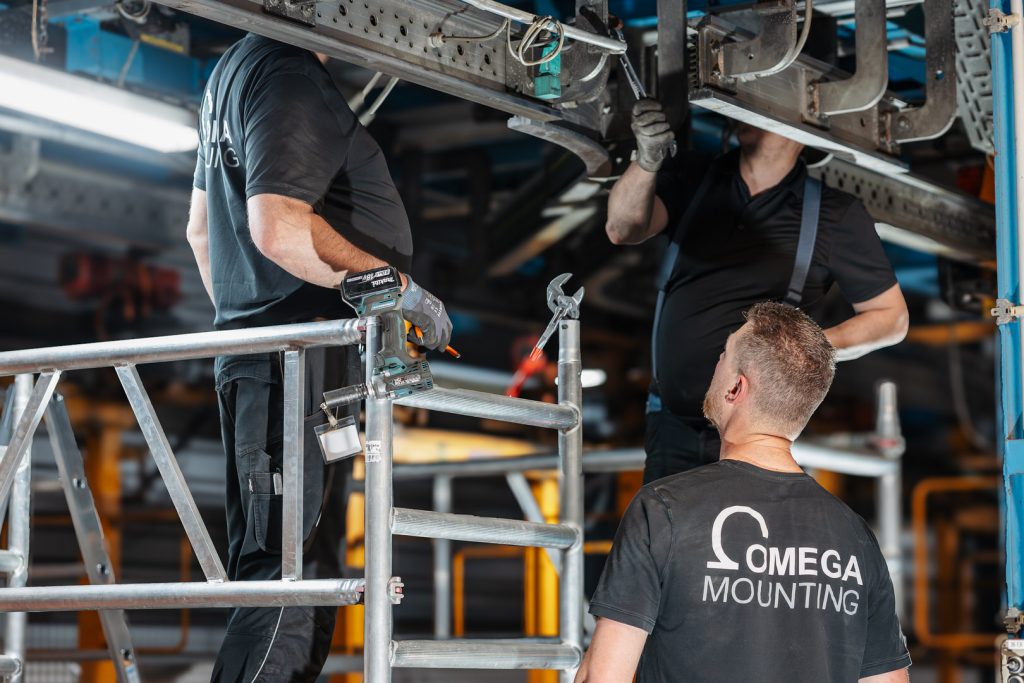
Maintenance during live operation succeeds when the actual work is done before the maintenance window. Inside the window, only what cannot be done without a stationary plant takes place.
Your plant runs in three-shift operation, production is fully scheduled, and yet the bearing has to be replaced, the switch overhauled or the emergency stop circuit extended. Every hour of downtime is missing from output, and if the line does not start on Monday morning, it is not the fitter who is held responsible – it is you. That is exactly why maintenance during live operation is first and foremost a planning task – and only secondarily an installation task. Maintenance without production loss only succeeds if you plan the maintenance window before you book it. Anyone who only clarifies window, lead time and fallback plan on Friday afternoon loses the weekend.
This guide shows you how to plan maintenance windows so that they are long enough. You will learn what has to be completed before the window and which releases and client-side services – the preliminary work provided by the operator – you need to organise. You will read how to weigh weekend windows, night windows and daytime windows against each other and what a fallback plan looks like that still holds on Sunday evening. The examples come from our projects in the Rhine-Main region, from the paint shop near Offenbach to the overhead conveyor in Frankfurt.
Key points at a glance
- Maintenance during live operation means scheduling inspection, servicing and repair so that production stops only in the planned window – not before and not after.
- The maintenance window is the scarcest resource; everything that can be done without a stationary plant (condition assessment, spare parts procurement, prefabrication, pre-assembly) belongs in the time before it.
- Client-side services such as isolation, access, crane set-up area and shutting off utilities decide success or failure more often than the installation work itself.
- Weekend windows, night windows and daytime windows each have their own strengths; the choice depends on scope, noise, supply chain and the question of who in the company is on call.
- Parallel operation next to running production is possible, but only with separation of trades in the work area, unambiguous release and a risk assessment that involves both employers.
- A fallback plan defines in advance the point at which the plant can restart even if incomplete – and who makes that decision.
- The shift handover at the end of the window is part of the maintenance: without trial run, installation report, punch list and a contact for the restart, the window has not been signed off.
What is maintenance during live operation?
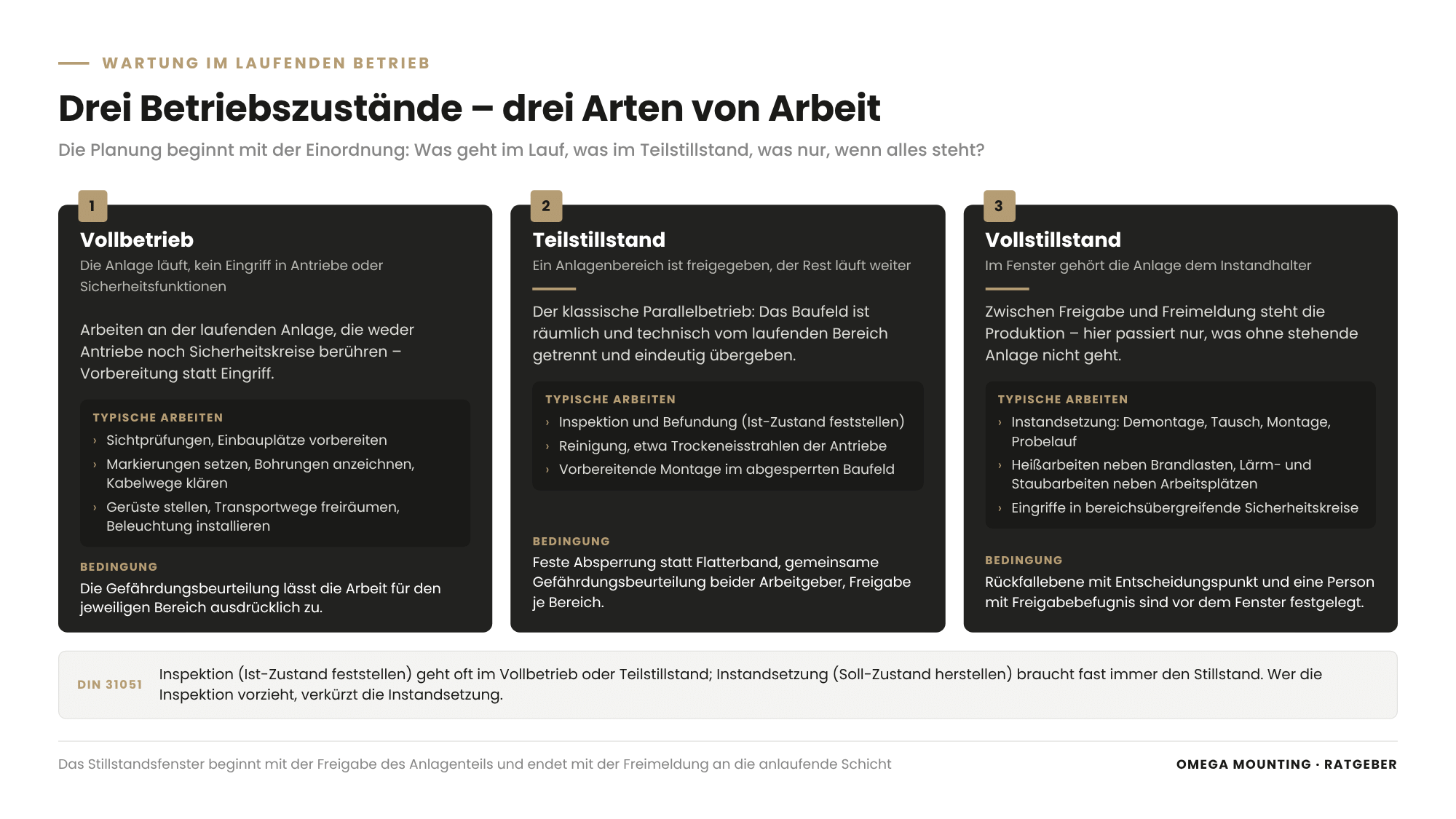
Maintenance during live operation is the maintenance of a plant whose production or conveying operation is not shut down for days for the work. The plant stands still only in planned, preferably short maintenance windows – or not at all.
The term covers three situations that need to be planned differently. First, work during a full standstill within a tight window, for example between end of production on Saturday and restart on Monday. Second, the partial standstill, in which one section of the plant is released while the rest keeps running – the classic parallel operation. Third, work during full operation, which is possible on a running plant without intervening in drives or safety functions, for example visual inspections or preparing installation locations.
DIN 31051 divides maintenance into servicing, inspection, repair and improvement. Inspection – determining the actual condition – can often be done during full operation or partial standstill. Repair – restoring the target condition – almost always needs the standstill. Anyone who brings the inspection forward shortens the repair. Whether a plant is maintained in planned windows at all, or only after failure, is decided by the maintenance strategy – this guide assumes the planned variant.
A second term is closely related: the maintenance window as a contractual term. It means the firmly agreed period in which the plant belongs to the maintenance team. A release at the start hands over the section of plant; a completion notice at the end returns it ready for operation.
Why does maintenance during live operation fail so often?
Maintenance windows usually fail not because of the installation work but because of a lack of preparation: material is not there, isolation has not been organised, the condition assessment was incomplete. Or nobody decided what happens when time runs short.
From our experience in the maintenance and servicing of industrial plant a few patterns keep recurring.
The findings come from operation, not from inspection
Many companies only know their plant while it is running. The damage pattern that only becomes visible at standstill – worn running surfaces, torn-off brackets, contact areas at the wear limit – then comes as a surprise inside the window. On a roughly 30-year-old overhead conveyor in Frankfurt, the condition assessment – the documented survey of every assembly – revealed deep wear tracks, torn-off guide rollers and misaligned rail joints at around 100 switches. Without the condition assessment brought forward, that window would not have been enough.
The window is filled with set-up time
Anyone who is still sorting tools, adapting mounting brackets or cutting cables to length inside the window is giving away downtime. The emergency stop retrofit on a sorting system at Frankfurt Airport demonstrated the principle: everything that could be pre-assembled was finished before the window. What remained for the standstill was setting, aligning, bolting and integrating.
Nobody has defined the fallback plan
When it becomes clear at 10 pm on Sunday that an assembly does not fit, someone with release authority is needed. This person says: we restore the old condition, the plant starts on Monday, the rest goes into the next window. If this person or this advance decision is missing, work continues until the early shift is standing in front of an open plant.
How much lead time does a maintenance window need?
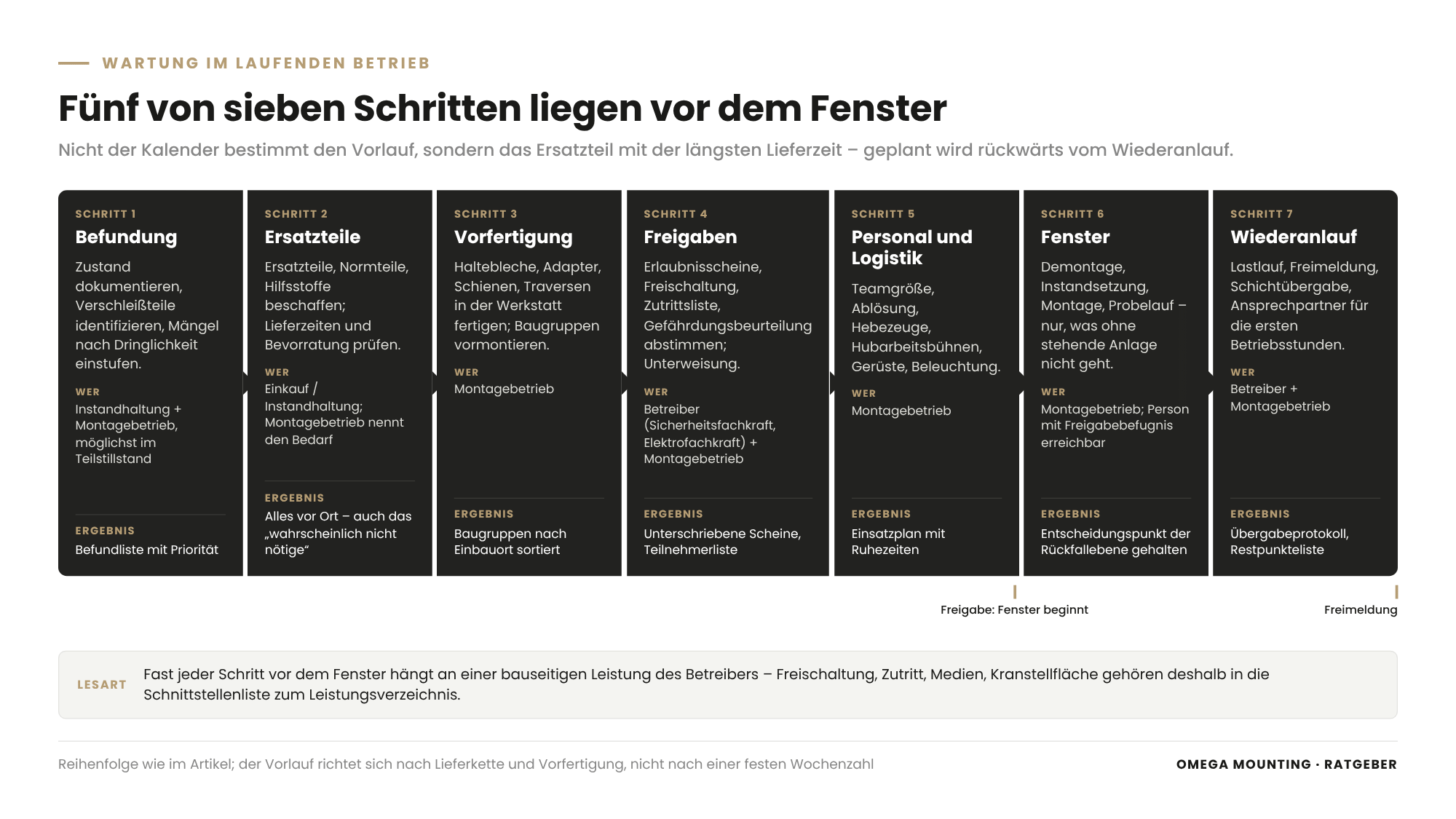
A maintenance window needs enough lead time for condition assessment, material procurement, prefabrication, releases and staff planning to be completed before the window. For spare parts with longer delivery times, the supply chain determines the lead time, not the calendar.
More helpful than a blanket number of weeks is backward planning from the window.
| Step | What happens | Who contributes |
|---|---|---|
| Condition assessment. | Document condition, identify wearing parts, classify defects by urgency. | Maintenance and installation contractor together, ideally during partial standstill. |
| Spare parts procurement. | Procure spare parts, standard parts, consumables; check delivery times and spare parts stock. | Purchasing and maintenance; installation contractor specifies the requirement. |
| Prefabrication. | Fabricate mounting brackets, adapters, rails, spreader beams in the workshop. | Installation contractor. |
| Releases. | Coordinate permits to work, isolation, access list, risk assessment. | Operator (safety officer, qualified electrician) and installation contractor. |
| Staff and logistics. | Team size, relief, lifting equipment, MEWPs, scaffolding, lighting. | Installation contractor. |
| Window. | Dismantling, repair, installation, trial run. | Installation contractor. |
| Restart. | Load run, completion notice, shift handover, contact person. | Operator and installation contractor. |
Five of the seven steps lie before the window, and almost every one depends on a client-side service provided by the operator.
Prioritise instead of wanting everything
Not every finding has to go into the same window. During the switch overhaul in Frankfurt, switches with severe damage or high importance for production were brought forward – a classification by defect class, i.e. by damage pattern and consequences for safety and availability. This prioritisation is a joint decision by maintenance management and installation contractor. It is the lever with which a window that is too tight becomes realistic again.
What has to happen before the window?
Everything that is possible without a stationary plant has to happen before the window: provide material, pre-assemble assemblies, fabricate auxiliary structures, prepare installation locations, position tools, lifting equipment and lifting accessories, and brief the team.
Prefabrication in the workshop
Much of what costs time inside the window can be done in advance in the workshop. Mounting brackets, adapter plates, reinforcements, rail sections or spreader beams – lifting attachments that pick up a load at several points at once – are made in Rodgau, not on site.
Pre-assembly and kitting
Series work benefits from pre-assembly in cycles: all units fully prepared and sorted by installation point. That sounds trivial, but it is the difference between two working days in the plant's standstill periods and a week of partial closure.
Preparing installation locations and routes
During full operation, it is often already possible to set markings, mark out drill holes, clarify cable routes, clear transport routes, erect scaffolding and install lighting. Prerequisite: the risk assessment permits this for the respective area. Especially for work at height and in confined spaces, such as on an overhead conveyor above the production floor, this saves hours inside the window.
Induction before the first move
Every external person on the company premises needs a briefing under the German Occupational Safety Act (ArbSchG) – before work starts, not inside the window. The German technical rule TRBS 1116 (Qualification, briefing, appointment) makes it clear: a new working environment counts as first-time use. Even a well-rehearsed installation team has to be briefed anew in your hall, documented with date, content and names. For you this means: reserve an appointment for this in the preparation week and ask for the list of participants. On Saturday morning there is no time left for it. Access control, escape routes, behaviour in the event of faults, contact persons: all of this belongs in this induction. Before the window begins, a short briefing at the workplace (toolbox talk) follows on lift plan, danger zones and relief.
Which client-side services and releases do you need to organise?
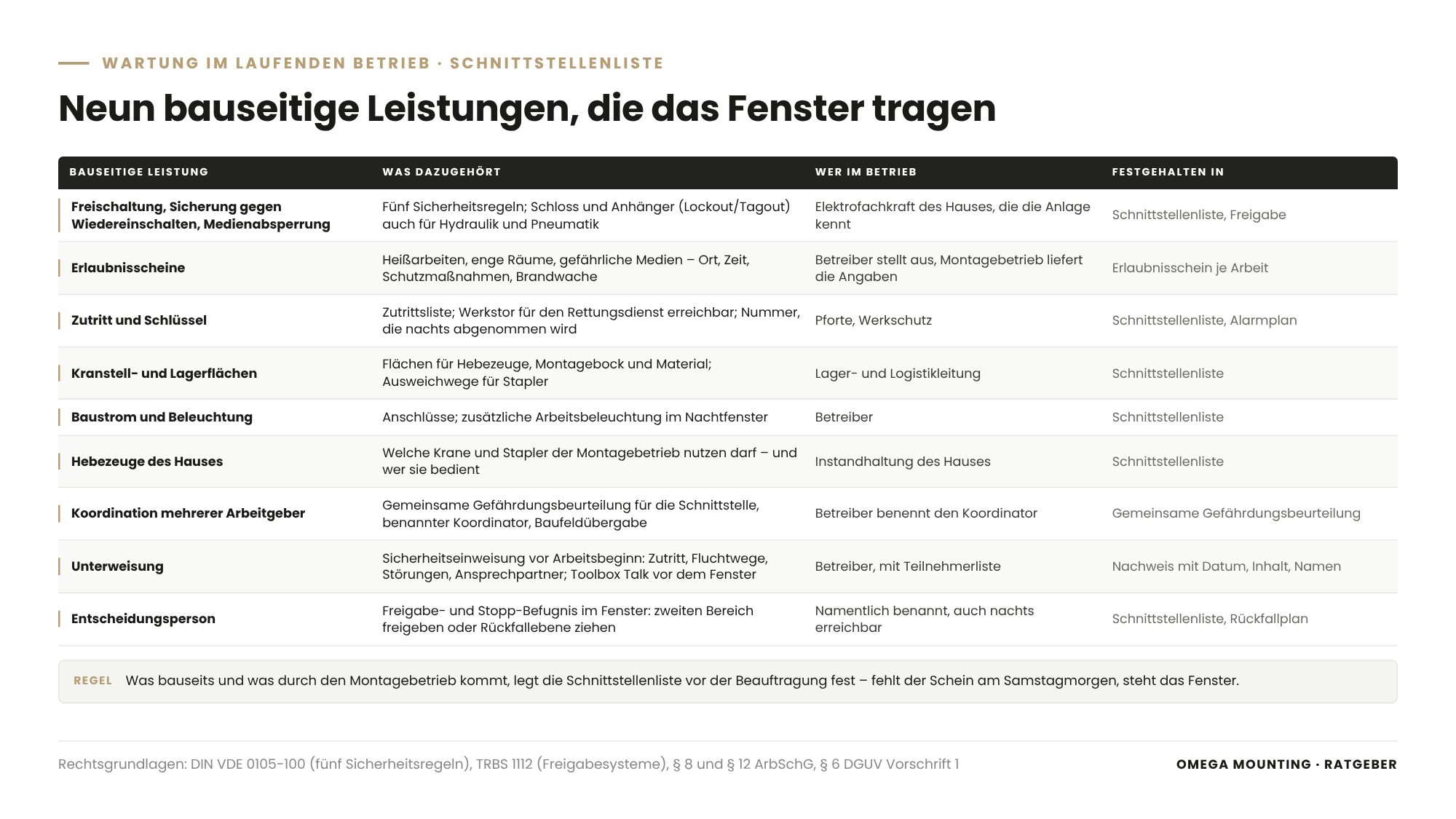
As operator, you organise isolation and lockout against re-energising, access and keys, shutting off utilities, crane set-up areas and storage areas, site power and lighting, in-house lifting equipment and the permits to work for hazardous work. You also name a person with release authority who may decide inside the window. This allocation belongs in an interface list which, before the contract is awarded, defines what is provided by the client and what by the installation contractor.
Isolation and permits to work
Electrical isolation follows the five safety rules of DIN VDE 0105-100: disconnect, secure against re-energising, verify absence of voltage, earth and short-circuit, cover adjacent live parts. Securing against re-energising with lock and tag – internationally lockout/tagout (LOTO) – applies equally to hydraulic and pneumatic energies. Whoever isolates must be a qualified electrician – if in doubt, the in-house one who knows the plant.
TRBS 1112 (Maintenance) establishes that release and isolation are not optional but mandatory. It names release systems and personalised locking systems as protective measures in maintenance and requires competent, appointed and briefed personnel. For you as operator this means: define in writing before the window who releases, who isolates and who takes the plant back. A permit to work that nobody is allowed to sign is not a permit to work.
Hot work such as welding or cutting in areas with fire load requires a hot work permit, a special form of the permit to work (German: Erlaubnisschein). This is a written release document that specifies location, time, protective measures and fire watch. The same applies to work in confined spaces or on plant with hazardous media. The operator issues these permits; the installation contractor supplies the details. If the permit is missing on Saturday morning, the window stands still.
Cooperation between several employers
As soon as your employees and our fitters are in the plant at the same time, the German Occupational Safety Act (ArbSchG) applies: both employers must cooperate on occupational safety and inform each other about hazards. DGUV Regulation 1 requires that the work is coordinated and, where necessary, that one person takes over coordination. In practice this means: a joint risk assessment for the interface, a named coordinator and a briefing before the window begins. The work area – the released working zone – is handed over at that point.
The decision-maker inside the window
The most important client-side service is a reachable person with release and stop authority. At two in the morning, nobody needs purchasing, but someone who can say: yes, the second area is released as well – or: no, we are triggering the fallback plan.
Weekend, night shift or daytime window – what suits your plant?
The weekend suits larger repairs with dismantling and restart. The night shift suits short, recurring interventions in daytime operations, the daytime window suits work that falls into the plant's existing standstill periods anyway. The deciding factors are scope, supply chain, noise, reachability and rest periods.
| Criterion | Weekend standstill | Night shift | Daytime window during operation |
|---|---|---|---|
| Typical scope. | Major repairs, series work, dismantling/installation. | Short interventions, adjustments, partial replacement. | Work in standstill periods that exist anyway. |
| Contiguous time. | Long, in one block. | Short, recurring. | Short, plannable. |
| Spare parts in an emergency. | Suppliers usually not reachable – everything must be there beforehand. | Restricted. | Suppliers reachable. |
| Operating staff. | On-call service only; person with release authority must be named. | Shift management on site. | Maintenance, qualified electrician, purchasing reachable. |
| Noise, dust, hot work. | Freely plannable. | Only if neighbouring areas are not running. | Only with physical separation. |
| Typical risks. | Restart on Monday without buffer; rest periods for the team. | Fatigue, lighting, handover to the early shift. | Disruption of parallel operation, waiting times. |
Weekend: plenty of time in one block, no safety net
The weekend provides the longest contiguous time. On the overhead conveyor in Frankfurt, that was around 36 hours between end of production on Saturday and restart on Monday, used by four technicians per weekend. The price: on Sunday, no spare parts store delivers. Everything that might be needed has to be on site on Friday – including the parts you “probably won't need”.
And at the weekend, the installation team is often alone in the plant. The BG BAU/BAuA module “Site set-up – emergencies and rescue” names the basic equipment for small workplaces. This includes a means of raising the alarm, the “First aid” notice with the emergency numbers (alarm plan), a first aid kit and at least one first aider – two from 21 employees upwards. Translated for your window: clarify beforehand who in the team is the first aider and whether the factory gate is accessible for the emergency services when the gatehouse is not staffed. And clarify which number in the plant is actually answered at two in the morning.
Night shift: short, recurring, handover-critical
Night windows suit companies that produce during the day and stand still at night. They need additional work lighting, clear relief rules and a shift handover to the early shift with report and punch list.
Daytime window: when the plant is standing still anyway
Many plants have operational standstill periods – between two sorting waves, between batches, during shift breaks. The emergency stop retrofit on the sorting system at Frankfurt Airport ran during the day in exactly such standstill periods, with two fitters for mechanical and electrical work on two working days. The advantage: operating staff and suppliers are reachable. The condition: the work must be broken down into short cycles, each of which fits into a window and leaves the plant ready for operation afterwards.
How does parallel operation next to running production work?
Parallel operation works when the work area is physically and technically separated from the running area, the separation has been defined in a joint risk assessment and a release clearly regulates which area belongs to whom.
Physical and technical separation
Physical means: barriers, marking of the danger zone, separate transport route, protection against falling parts – on mixed-use floors, the classic separation of trades. The BG BAU/BAuA module “Site set-up – site security” draws a line here that applies equally to production halls: barrier tape and beacons are only sufficient if the actual work does not take place in the immediate vicinity. Where live operation passes directly alongside the work area, fixed barriers are needed, and for dust or spark-generating work, dust walls or enclosures. For you this means: if forklifts or employees have to pass the work area, flutter tape is not a solution. Technical means: the released section of plant is isolated and locked out in such a way that it can be set in motion neither by the controller nor by hand. Work on it must not affect the running remainder. For interlinked plants such as conveyor technology or overhead conveyors, this is the actual planning task, because drives, safety circuits and controllers act across areas.
What does not work during maintenance in live operation
Hot work next to flammable products, dust- or noise-generating work next to unprotected workstations and interventions in safety circuits that span several areas belong in the full standstill. Likewise lifts over people – the prohibition on standing beneath suspended loads applies without exception. The risk assessment is the tool with which you draw this line.
Cleaning as maintenance brought forward
An underestimated case of parallel operation is cleaning. On a plant with 25 drive stations that had not been maintained for over 20 years, we blasted the drives with dry ice. Solid carbon dioxide sublimates at around −78.5 °C, i.e. it passes directly from the solid to the gaseous state. It makes deposits and oil brittle so that they flake off, without water, solvents or blasting media residues. Motors and belts remain undamaged, and the damage pattern becomes visible instead of disappearing under deposits. Ventilation is important, because the sublimating CO₂ displaces oxygen in enclosed areas.
What does a sound fallback plan look like?
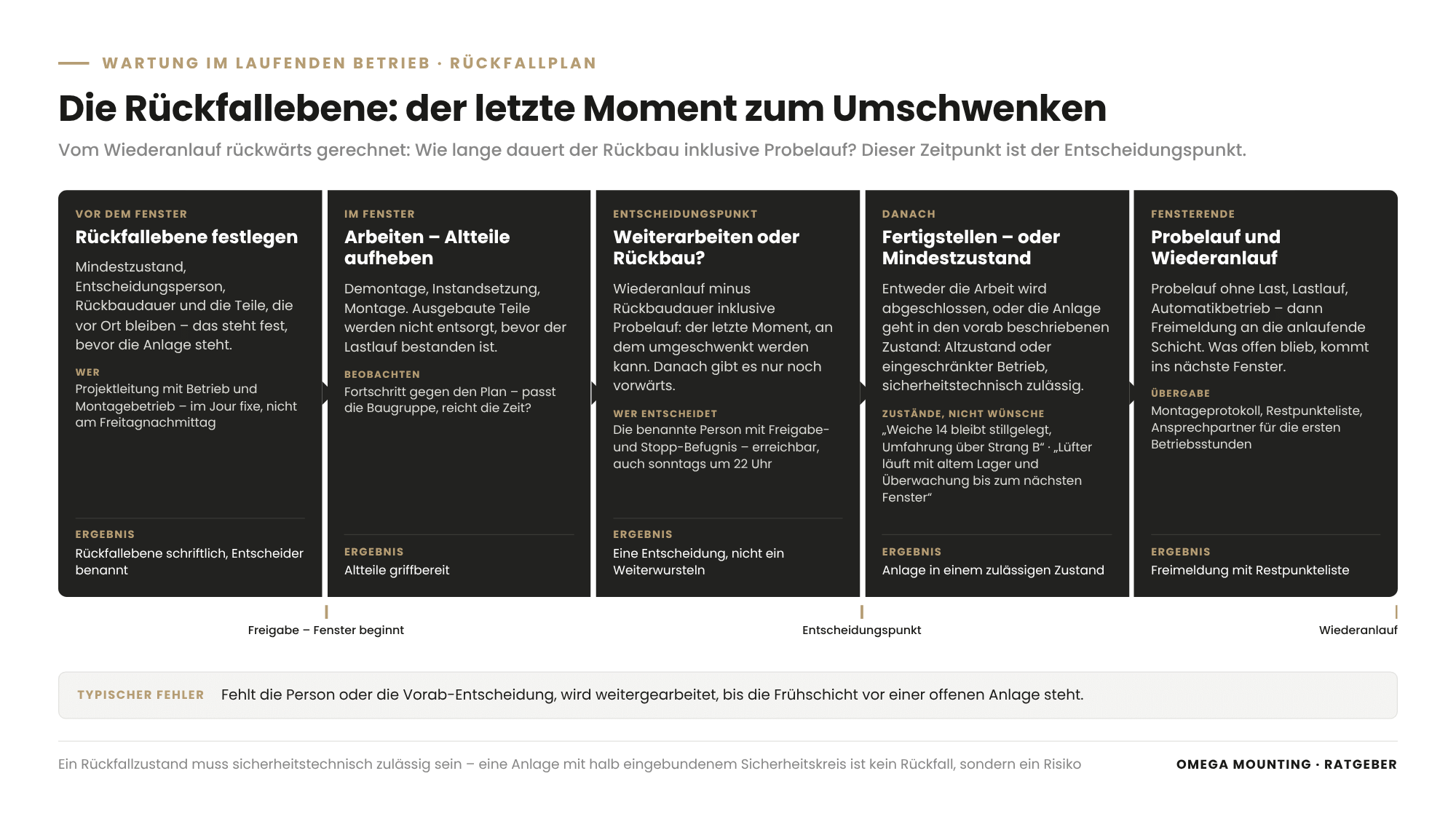
A sound fallback plan – on site usually called the fallback level – defines before the window the latest point at which the decision “continue or reinstate” must be made. It describes which condition then makes the plant at least operable again, who decides and which parts remain on site for this.
The decision point
Count backwards from the restart: how long does it take to reinstate the old condition or a restricted operating condition, including trial run? That moment is the last point at which you can change course – after that, the only way is forward.
Conditions, not wishes
A fallback plan describes specific plant conditions. Examples: “Switch 14 remains mechanically decommissioned, bypass via line B” or “Fan runs with the old bearing and monitoring until the next window”. Or: “Emergency stop circuit in the old condition, new buttons fitted but not yet integrated”. Every condition must be permissible in terms of safety – a plant with a half-integrated safety circuit must not start.
Keep old parts until the plant is running
Removed parts are not disposed of before the load run has been passed.
How does the shift handover after the window work?
The shift handover after the window consists of a trial run and a load run under real conditions and an installation report with punch list. Added to this are the completion notice to a named person on the incoming shift and the installation contractor's availability for the first hours of operation.
Trial run and load run before the handover
First a trial run without load, then a load run, then automatic operation. On the overhead conveyor in Frankfurt, after every switch overhaul the mechanical and electrical end positions were set, switch motors and limit switches checked and the power and data contact areas inspected before the switch was signed off. On the fan bearing replacement, the final step was the function check after reconnection – on Monday, production was running.
Installation report and punch list
A handover report contains: work carried out per assembly, parts replaced, measured values and settings, points for operations to monitor and the release status of the safety devices. Added to this is a punch list, i.e. the open points with priority and date. Under the Industrial Safety Ordinance (BetrSichV), work equipment must be inspected by a competent person before being put back into operation after safety-relevant repairs. The report is your evidence.
Handover to people, not to a mailbox
The shift supervisor of the incoming shift should be shown the plant by the fitter in an acceptance walk-through. What was done, what needs to be monitored, whom does he call? The handover is a time block of its own inside the window, not a leftover.
How we do it in practice
In practice, we plan every maintenance window backwards from the restart and move everything that can be done without a stationary plant into the time before it. Three examples from the Rhine-Main region show what this looks like for different types of window.
Weekend window: switch overhaul on an overhead conveyor in Frankfurt
With the switch overhaul on around 100 switches of an overhead conveyor in Frankfurt we had four technicians per weekend. The window: around 36 hours between end of production on Saturday and restart on Monday. The plant was around 30 years old; the in-house maintenance team had only been able to do the bare essentials while it was running. Before the first window, every switch was recorded with photo documentation and assessed, and spare parts were allocated to the working areas.
Inside the window, the fitters worked in parallel: while one switch was being dismantled, others prepared spare parts or set end positions. Internal running rollers sometimes required complete dismantling of the switch – at height and in confined space, with mobile working scaffolds, ladders and additional work lighting. Worn running rails were offset by several centimetres so that the end positions moved to less worn areas – an economical repair instead of complete rail replacement.
Two-day cycle: fan bearing replacement in a paint shop near Offenbach
During the fan bearing replacement in a paint shop in the Offenbach area the bearing was not freely accessible. The fan wheel, around 1.40 metres in diameter with a directly mounted motor, sat deep inside the plant between control cabinets and pipework. Our solution consisted of two days: on the preparation day during the week, we fabricated and welded a rail system from square steel tubes on site. The motor-fan unit, weighing tonnes, could be run out over this system – while the plant kept running.
On the execution day during the weekend standstill, the sequence followed: disconnect the motor, run the unit out on the rail system, lift it off the assembly stand with the gantry crane, overhaul the motor with a new bearing. Then dismantle and refit the fan wheel, push the unit back, seal, connect, function check. On Monday, production was running.
Daytime window: emergency stop retrofit on a sorting system at Frankfurt Airport
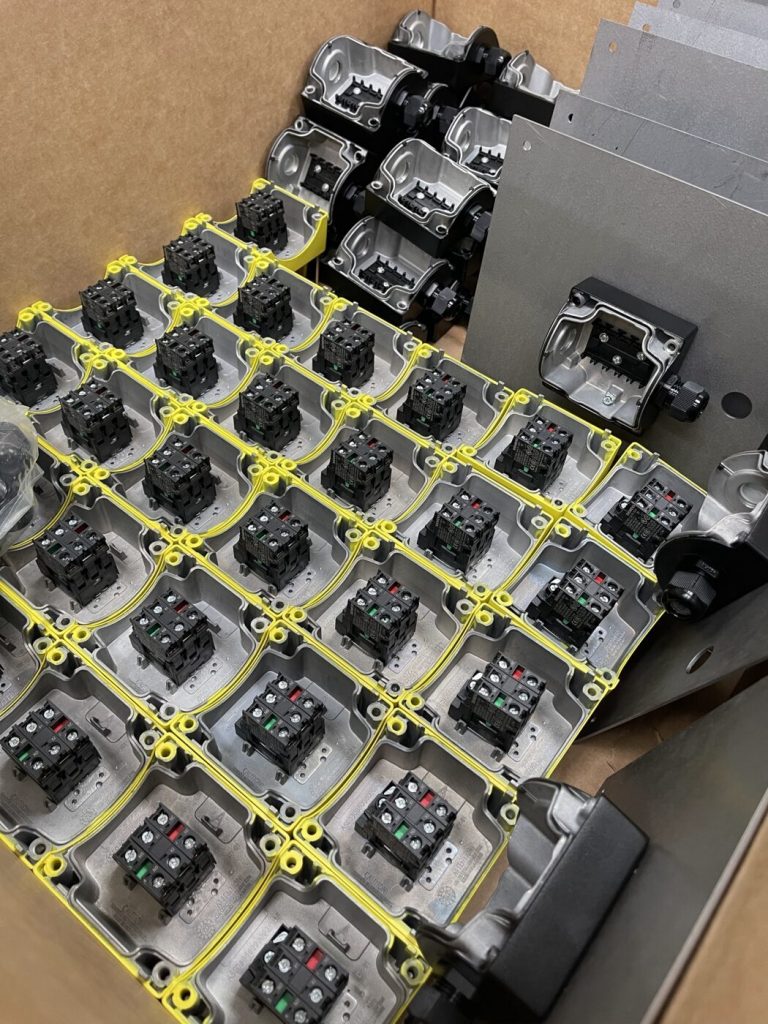
Two fitters for mechanical and electrical work, two working days. The retrofit of 32 emergency stop buttons on a sorting system at Frankfurt Airport ran during the day in the plant's standstill periods. This was made possible by consistent pre-assembly: mounting brackets matched to each installation situation, every housing with cable gland, terminals and labelling, all units sorted by installation point. Three steps remained for the window: fit the mounting brackets, mount and align the switches, integrate them electrically into the existing safety circuit – the series connection of all safety-relevant switching elements of the plant.
Worth mentioning in addition is the dry ice cleaning of 25 drive stations – after more than 20 years without maintenance, the drives were afterwards clean and ready for assessment, the best prerequisite for a short repair window.
Is a window coming up for you that looks similarly tight – in Offenbach, Hanau, Darmstadt or elsewhere in the Rhine-Main region? Then get in touch with us. A site visit during partial standstill usually clarifies within an hour what can be pulled ahead of the window and whether a weekend is realistically enough.

What this means for your role
For buyers: Tender work in maintenance windows with a scope of works that lists preparation, window and restart as separate items. That is the only way quotations become comparable. Demand references for weekend and night windows and ask about on-call service and reserve capacity for the fallback plan. An interface list with clearly allocated client-side services saves you change order management; tie acceptance to load run and installation report, not to the end of the window.
For designers: Replaceability and accessibility later decide the length of every maintenance window. Where a bearing can only be reached via a specially fabricated rail system, every replacement costs a preparation day. Provide for inspection openings, installation openings with sufficient door clearance, load-bearing removal routes and lifting points – the places where lifting equipment can safely engage – from the outset. Keep reserve areas free for assembly stand and MEWP.
For project managers and site managers: You control the backward planning and run the window on site. In the regular coordination meeting, define the restart, the decision point of the fallback plan and the person with release authority. At the start of the window, the site manager briefs, hands over the work area and coordinates preceding and following trades. In the end, what counts is the completion notice with punch list, not the time of day.
For maintenance managers: You manage the interfaces to operations: isolation, permits to work, spare parts stock, shift handover. Use partial standstills for inspection so that the big window remains free for repair. If a periodic inspection by a competent person becomes due afterwards, plan it in at the same time. A structured inspection basis such as our overhead conveyor maintenance checklist makes findings comparable.
For warehouse and logistics managers: Your conveyor technology rarely stands still because goods receipt and dispatch run to a schedule. That is why the position of the window in the course of the week decides its usefulness. Align window times with delivery and dispatch peaks, designate alternative routes for forklifts and cordon off the work area visibly. Record the shift handover to the early shift in writing.
For facility managers and operators: In the data center and in building services, redundancy (N+1 or 2N) replaces the maintenance window: maintenance is carried out while the second line carries the load. Check beforehand whether this redundancy is actually available, and submit the change request in good time. Define who isolates, who keeps the access list and who watches the monitoring. The handover report belongs in your audit records.
For operations and plant managers: You release the maintenance window and bear the consequences if the restart fails. So demand backward planning with decision point and fallback plan before you have production stopped. Bundle the work of several trades in the same window and have the punch list presented to you afterwards – with a date for the next window.
Maintenance window planning template: template on request
Our maintenance window planning template is a fillable working document. It guides you through the planning from the findings to the re-release, so that nothing essential is only noticed inside the window.
The template is divided into six blocks:
- Findings and prioritisation: what has to go into this window, what can wait.
- Material and prefabrication: parts list, delivery times, workshop work.
- Client-side services: isolation, access, utilities, crane set-up area, site power, lighting.
- Releases and occupational safety: permits to work, briefing, coordinator, joint risk assessment.
- Fallback plan: decision point, minimum state, decision-maker, old parts.
- Handover: function test, report, contact person, points to monitor.
It helps project managers, maintenance managers and buyers alike – as backward planning, a basis for coordination and an annex to the scope of works. Request the planning template via our Contact form – keyword “Maintenance window planning template”.
Why Omega Mounting?
We plan and carry out maintenance during live operation from Rodgau near Frankfurt – with short distances to Offenbach, Hanau, Darmstadt and Aschaffenburg. Mounting brackets, rails, adapters and auxiliary structures are made in our own workshop before the window. Our fitters cover mechanical and electrical work, so that a window does not hang on the interface between trades. For unplanned standstills you can reach us via the 24-hour hotline; for planned windows, the work begins with a joint site visit. With us you get a single point of contact for condition assessment, prefabrication, installation and completion notice – maintenance planning from a single source, where nobody waits for another trade on a Sunday evening.
Conclusion
Maintenance during live operation is first and foremost preparation and only secondarily installation. Anyone who completes condition assessment, spare parts, prefabrication, releases and fallback plan before the maintenance window turns downtime into pure installation time. Weekend windows, night windows and daytime windows are not competitors but tools for different tasks. And the completion notice to the incoming shift is not the end of the window but its purpose. If you have a maintenance window ahead of you that looks tight, send us the type of plant, the findings and your preferred date – we will get back to you with an honest assessment before the calendar decides.
Further reading: The guides show this on specific plant: maintaining ventilation, air conditioning and cooling systems and maintaining extraction and filter systems. And when many maintenance windows become one big one: planning the annual overhaul and shutdown. Seasonal in-depth guides: Maintenance on public holidays: on-call service, breakdowns and emergency service, Maintenance between Christmas and New Year: using the company holidays as the biggest maintenance window and Change Freeze: maintenance before, during and after the freeze phase.
Planning maintenance, moving in or installation in the Rhine-Main region?
Tell us briefly what it is about – we will come back to you with an honest assessment.
100% free and without obligation
You may also be interested in these guides
Maintenance & Servicing
Maintenance & Servicing

About the author
Tobias Schott
Managing director of Omega Mounting GmbH, Rodgau · more than 20 years of hands-on experience in installation and maintenance
A trained mechatronics technician, at home in maintenance, servicing and industrial installation since 2004 – first at his father's side, since 2012 with Omega Mounting: from the overhead conveyor in Frankfurt to the crane system in a new-build hall. Plans and leads lifting operations as appointed person in data centers and on industrial sites in the Rhine-Main region, is an instructor and examiner for cranes, mobile elevating work platforms and telehandlers, and a safety officer. On jobs abroad he is known as the “German Troubleshooter” – the one you call when things get stuck on site. He learned what quality means not from a manual but from his father: Made in Germany as a standard for his own work, not as a label. That is why it comes first at Omega Mounting – before speed and before price. He writes these guides from that practice: what works on our sites is in them – what only exists in the standard is not.
Frequently asked questions
Maintenance during live operation means that the production or conveying of a plant is not shut down for days for maintenance. The plant stands still only in short, planned maintenance windows or continues to run in partial standstill. Condition assessment, spare parts procurement and prefabrication take place before the window.
The lead time depends on the spare part with the longest delivery time and on the scope of prefabrication – not on a fixed number of weeks. Plan backwards from the restart: condition assessment, procurement, workshop work, releases and staff planning must be completed before the window. For interlinked plants with safety circuits, allow additional time for the joint risk assessment.
The weekend window provides plenty of time in one block and suits repairs with dismantling and restart; on the other hand, suppliers are not reachable, so everything must be on site beforehand. The night window suits short, recurring interventions in companies with daytime production, but requires good lighting and a clean shift handover to the early shift. The combination is often ideal: preparation in daytime or night windows, main work at the weekend.
Usual items are isolation and lockout against re-energising by your qualified electrician, access and keys, shutting off utilities, crane set-up and storage areas, site power and lighting, as well as permits to work for hot work or work in confined spaces. Added to this is a reachable person with release authority. Which services are provided by the client should be set out in the interface list to the scope of works before the contract is awarded.
Yes, if the work area is physically and technically separated from the running area and a risk assessment defines the separation and the protective measures. The German Occupational Safety Act and DGUV Regulation 1 oblige operator and installation contractor to coordinate their work and inform each other about hazards. Hot work next to fire loads, lifts over people and interventions in safety circuits that span several areas belong in the full standstill.
The fallback plan defines the last point at which a decision between continuing and reinstating must be made. It describes the minimum state in which the plant can safely restart and names the person with release authority. It also includes the old parts, which are kept until the load run has been passed. A fallback condition must be permissible in terms of safety – a plant with a half-integrated safety circuit is not a fallback but a risk.
First a trial run without load, then a load run, then automatic operation – each with a check of the safety devices. After safety-relevant repairs, the Industrial Safety Ordinance requires an inspection by a competent person before recommissioning; the handover report documents this. The completion notice to the shift supervisor should be given in person, with punch list, points to monitor and a reachable contact for the first hours of operation.
Yes, the logic of backward planning, prefabrication, releases and fallback plan is independent of industry. In food production, hygiene requirements and cleaning windows are added; in data centers, maintenance windows under redundancy, access lists and work in a live environment; in security areas such as the airport, access control and mandatory escort.
From Rodgau, Offenbach, Frankfurt, Hanau and Darmstadt can be reached in a short drive. That way, an additional team or missing tools from the workshop can still be brought in during the window – the advantage of regional proximity in weekend windows, when suppliers are not reachable.
Via a short enquiry with three details: which plant it concerns, what the findings or the fault are and which window your operation allows – weekend, night or daytime hours. We arrange a site visit, ideally during partial standstill, and send you a written assessment of what can be pulled ahead of the window, what belongs inside it and what the fallback plan looks like. Your contact is Tobias Schott – reachable via our Contact form.
 English
 German