- Project report – overhead conveyor Frankfurt
Overhead conveyor maintenance in Frankfurt
- Frankfurt
Complete overhaul of an overhead conveyor:
Around 100 switches repaired during weekend shutdowns
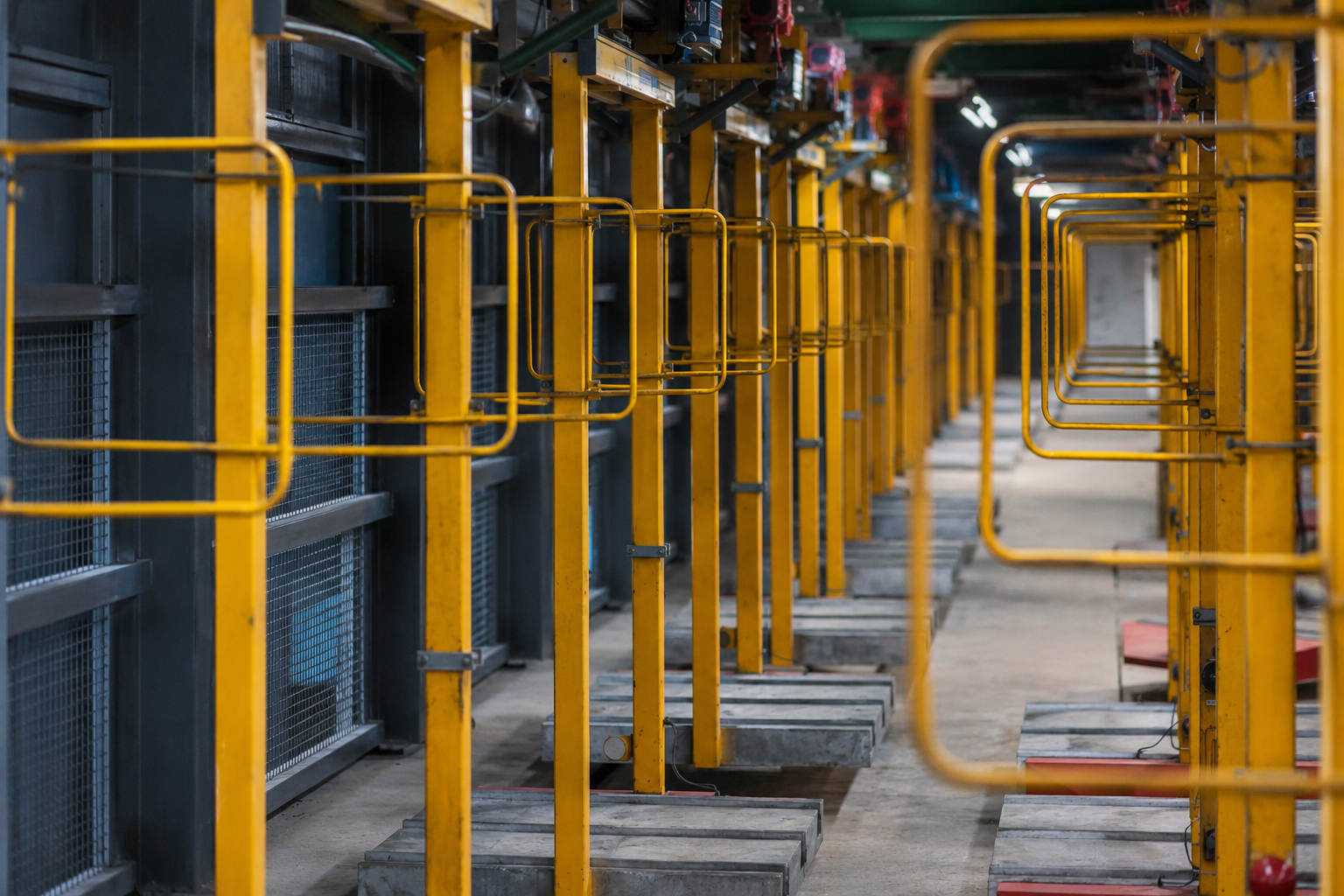
Overhead conveyors handle key transport tasks in many manufacturing plants. If such a system fails, it can have a direct impact on entire production areas. This makes regular, forward-looking maintenance all the more important – especially when a conveyor system has been in daily use for several decades.
For this project, we supported a manufacturing company in Hesse with the comprehensive maintenance of an overhead conveyor that was around 30 years old. The focus was on around 100 switches in two operating areas,which were inspected, prioritised and repaired step by step over several scheduled weekend shutdowns.
Units
100 pieces
Location
Frankfurt
Installation Team
4 Technicians per weekend
Service
Maintenance & servicing
Why was comprehensive maintenance of the overhead conveyor system necessary?
The company's in-house maintenance team had kept the plant running reliably for many years. However, during normal production operations, there was usually only time for repairs that were absolutely necessary.
Larger dismantling jobs or a complete overhaul of individual switches were hardly possible during regular production hours.
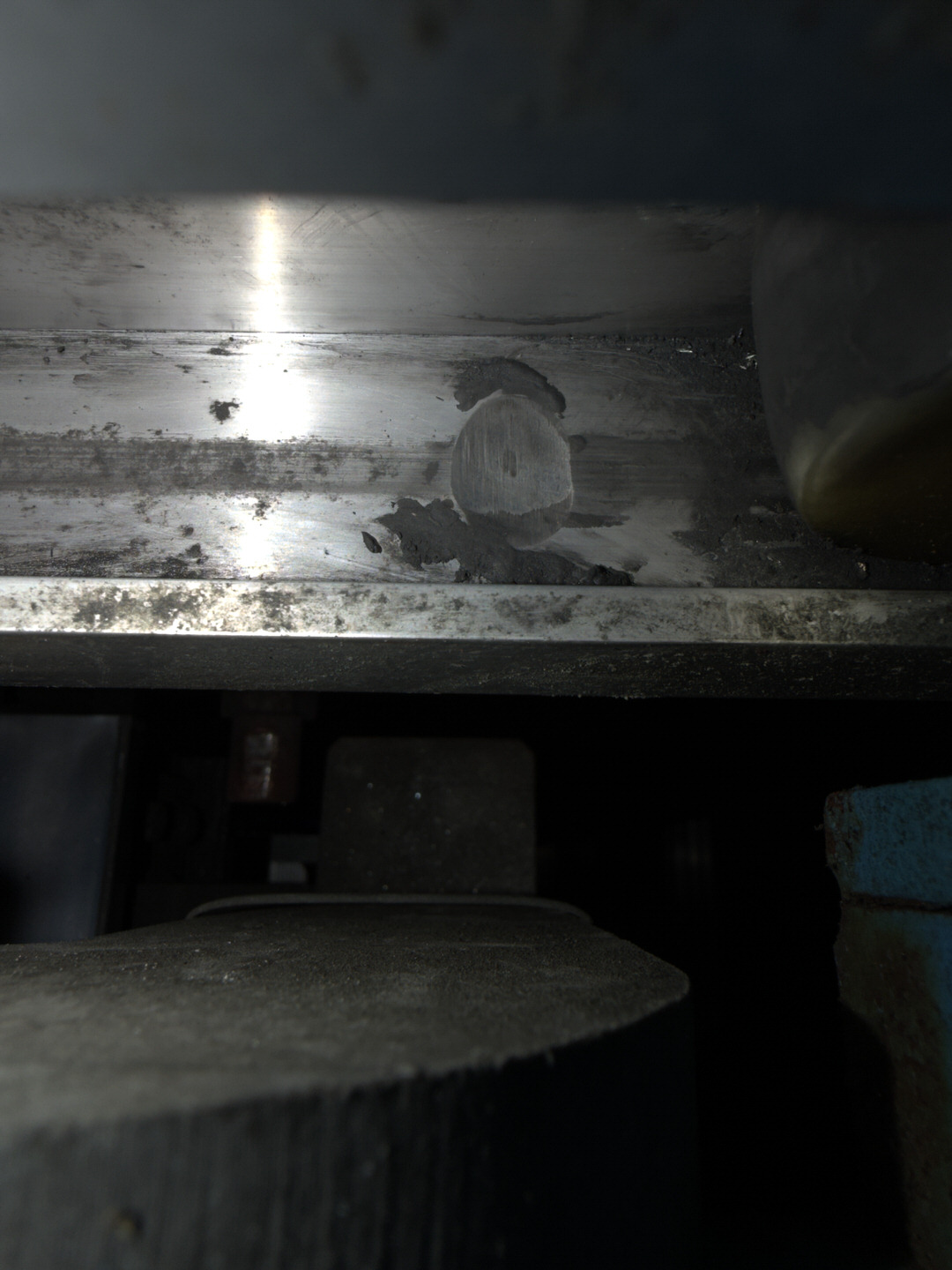
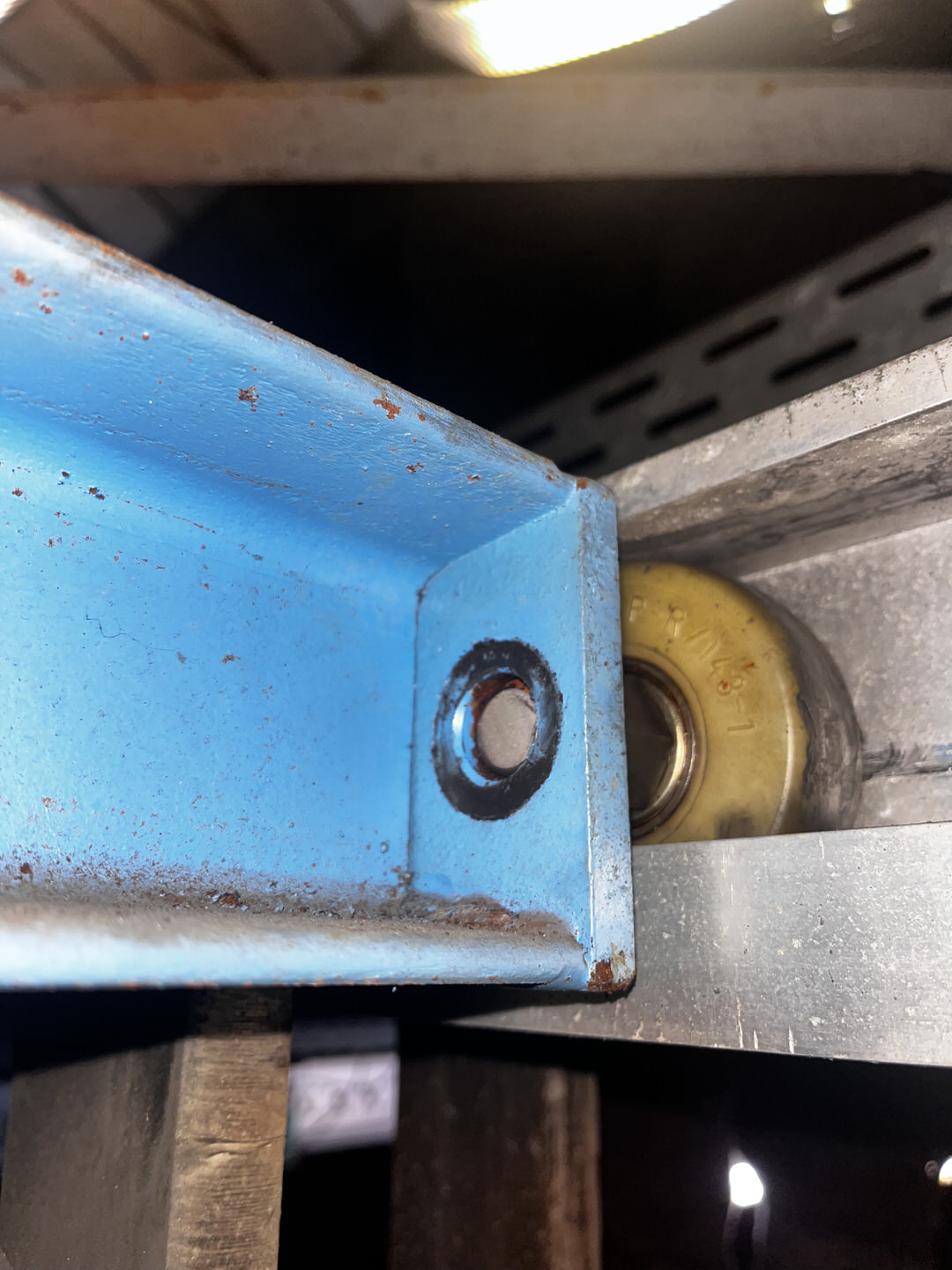
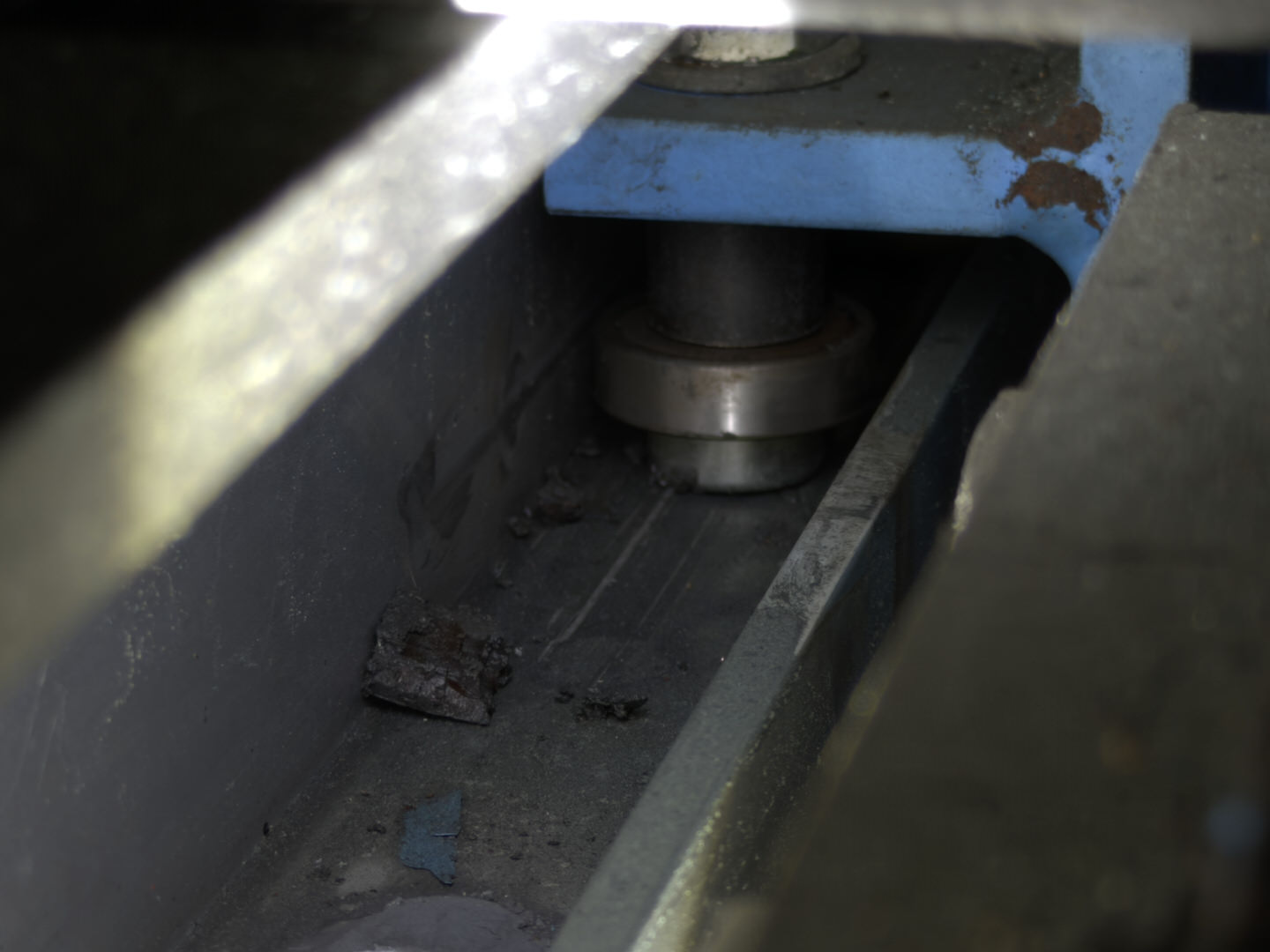
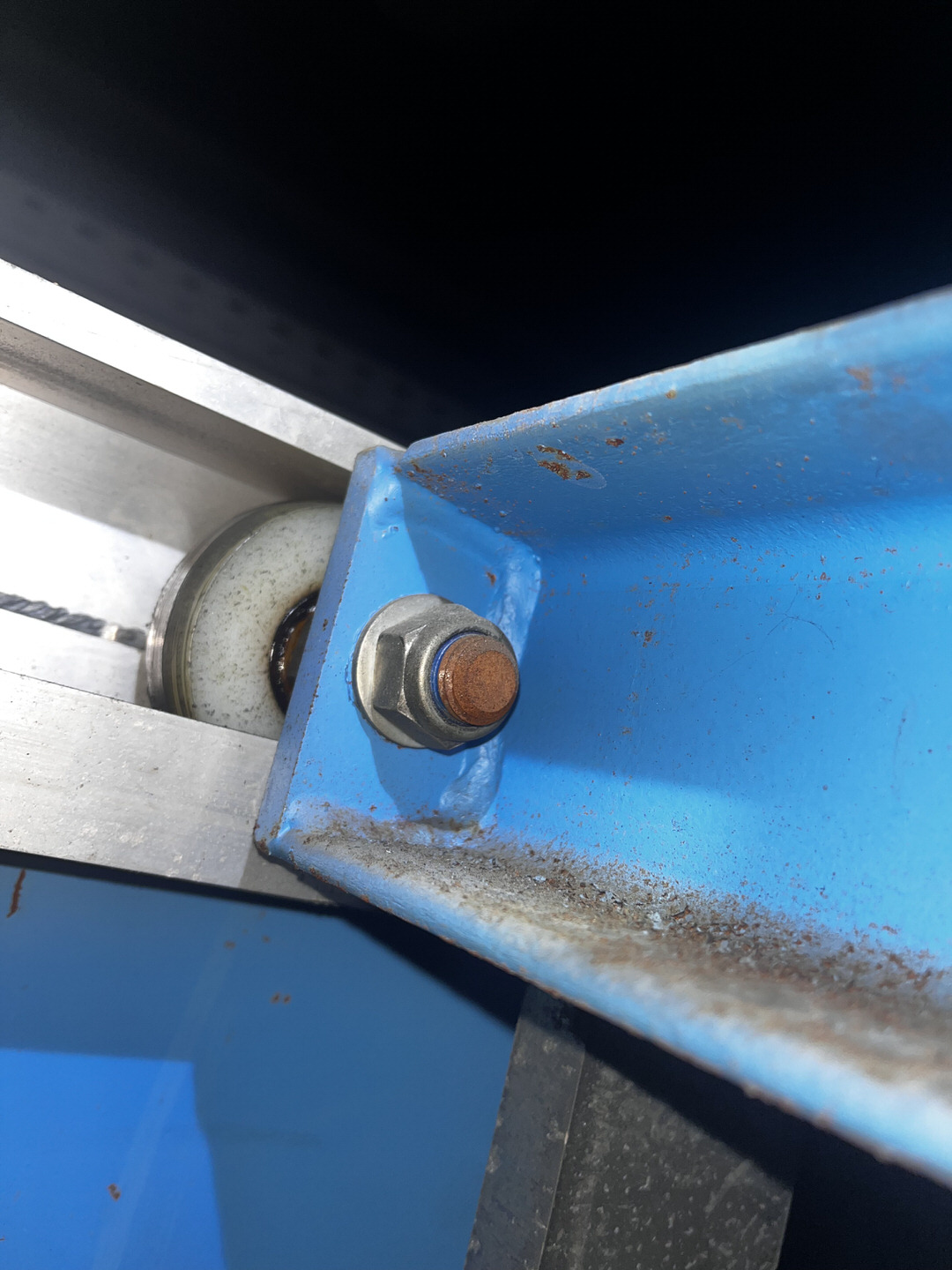
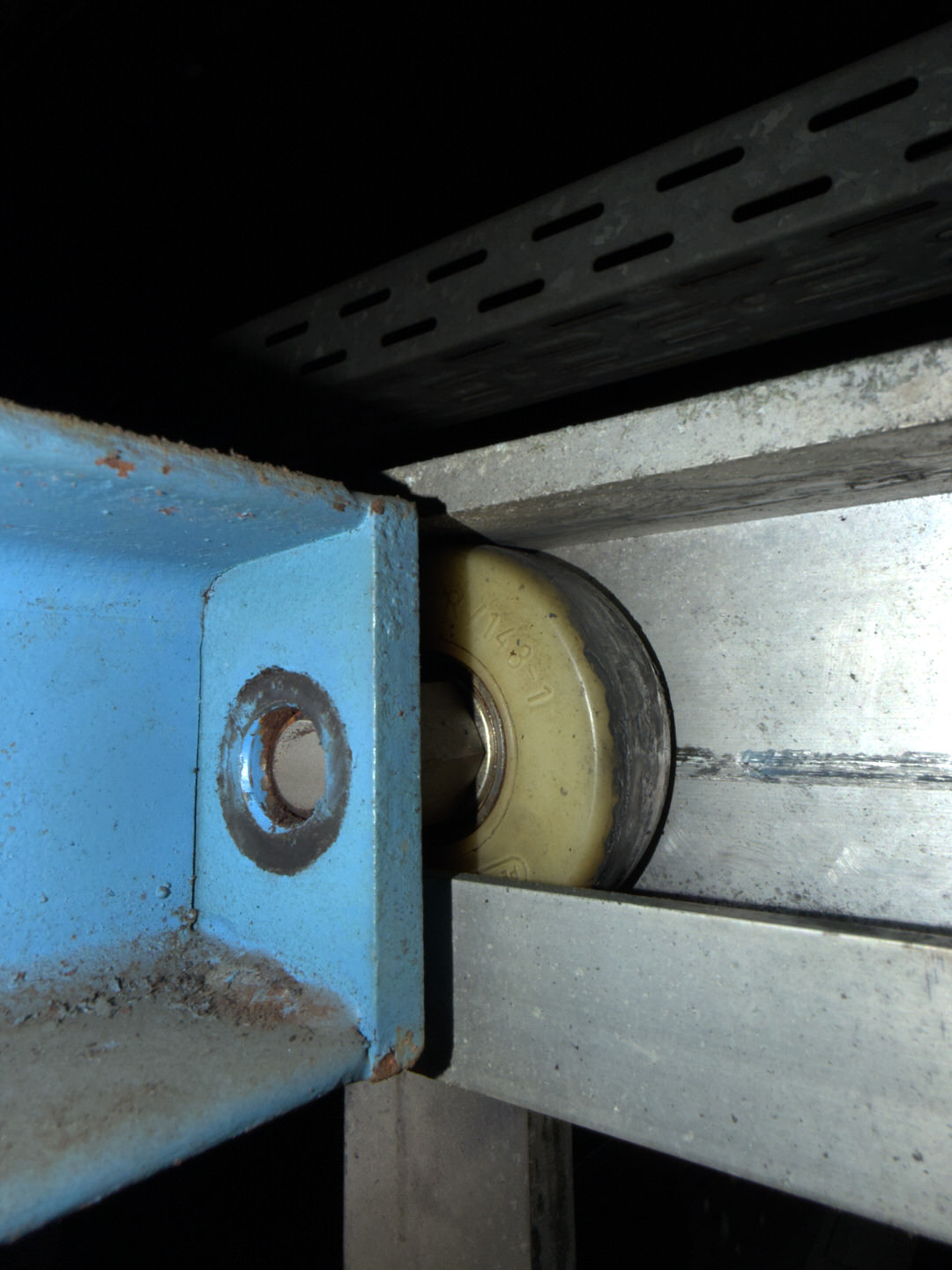
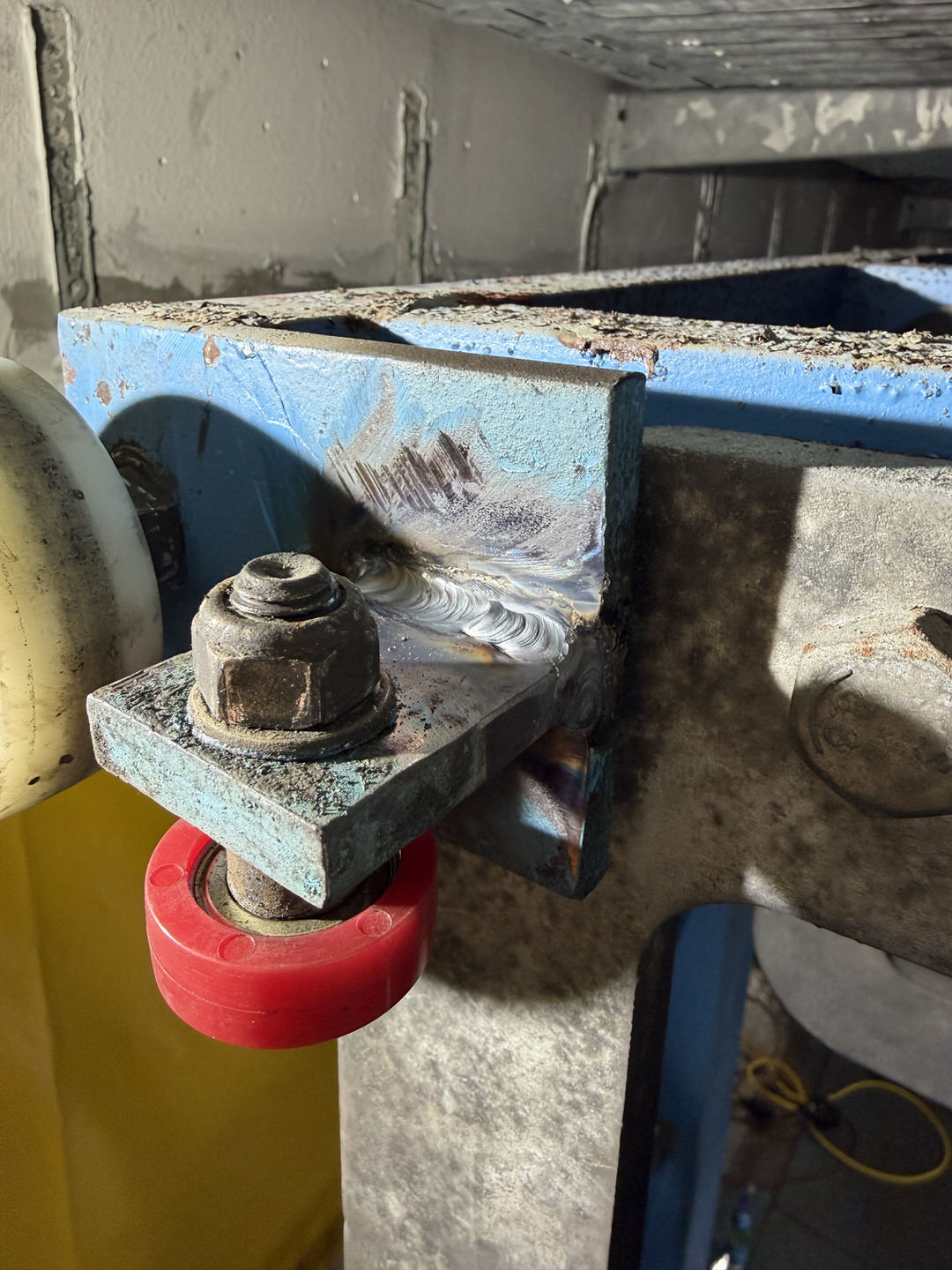
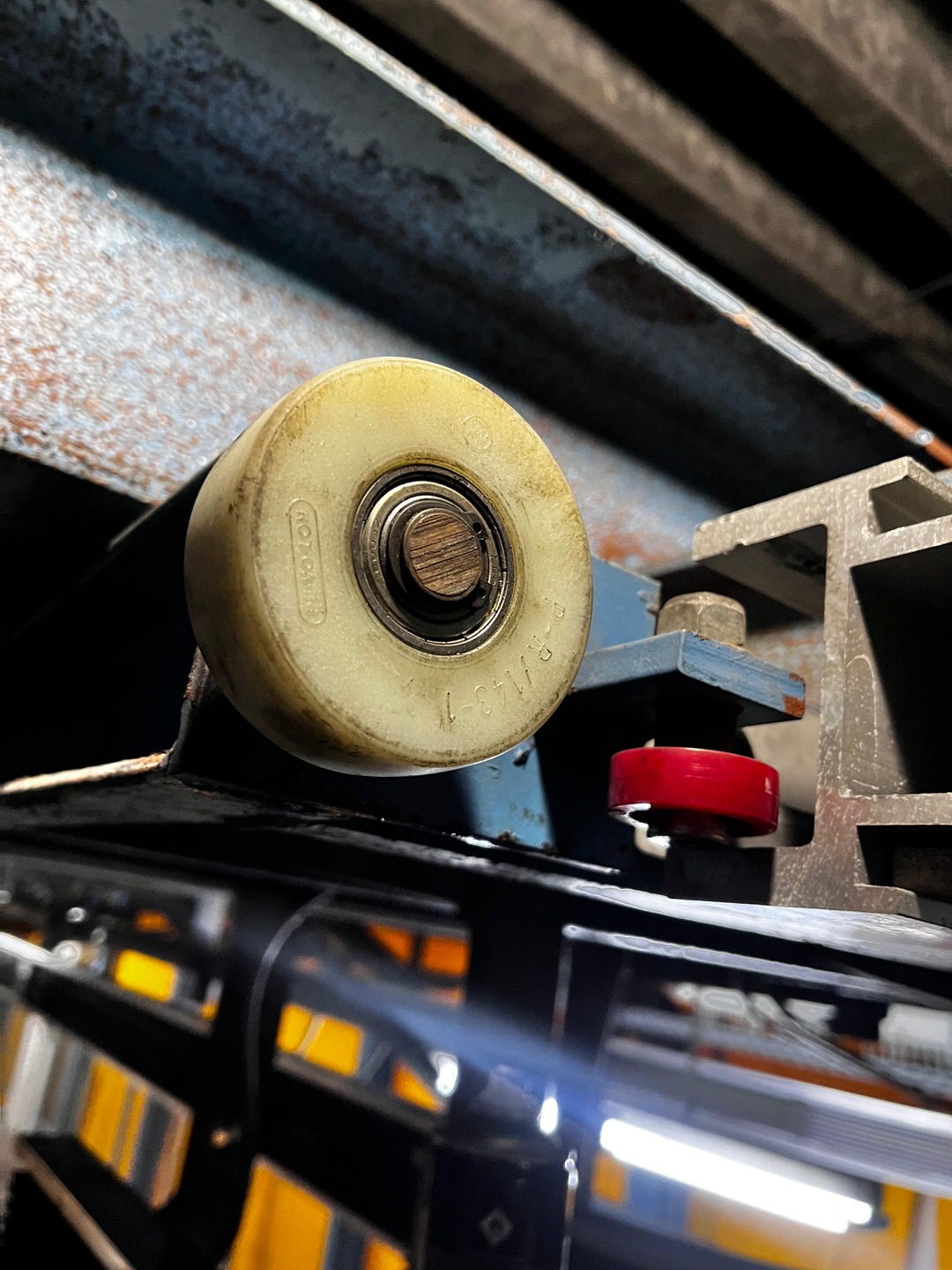
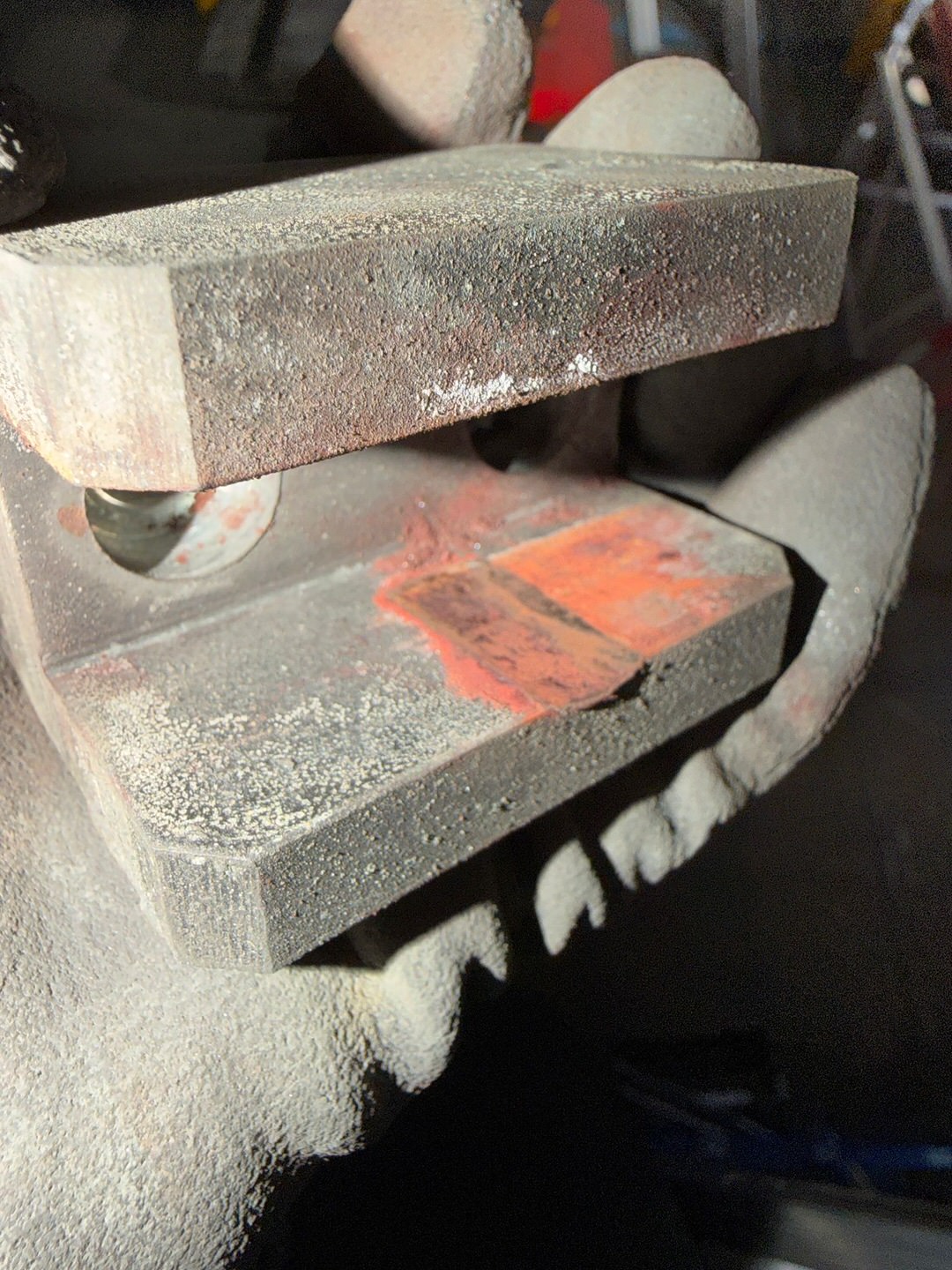
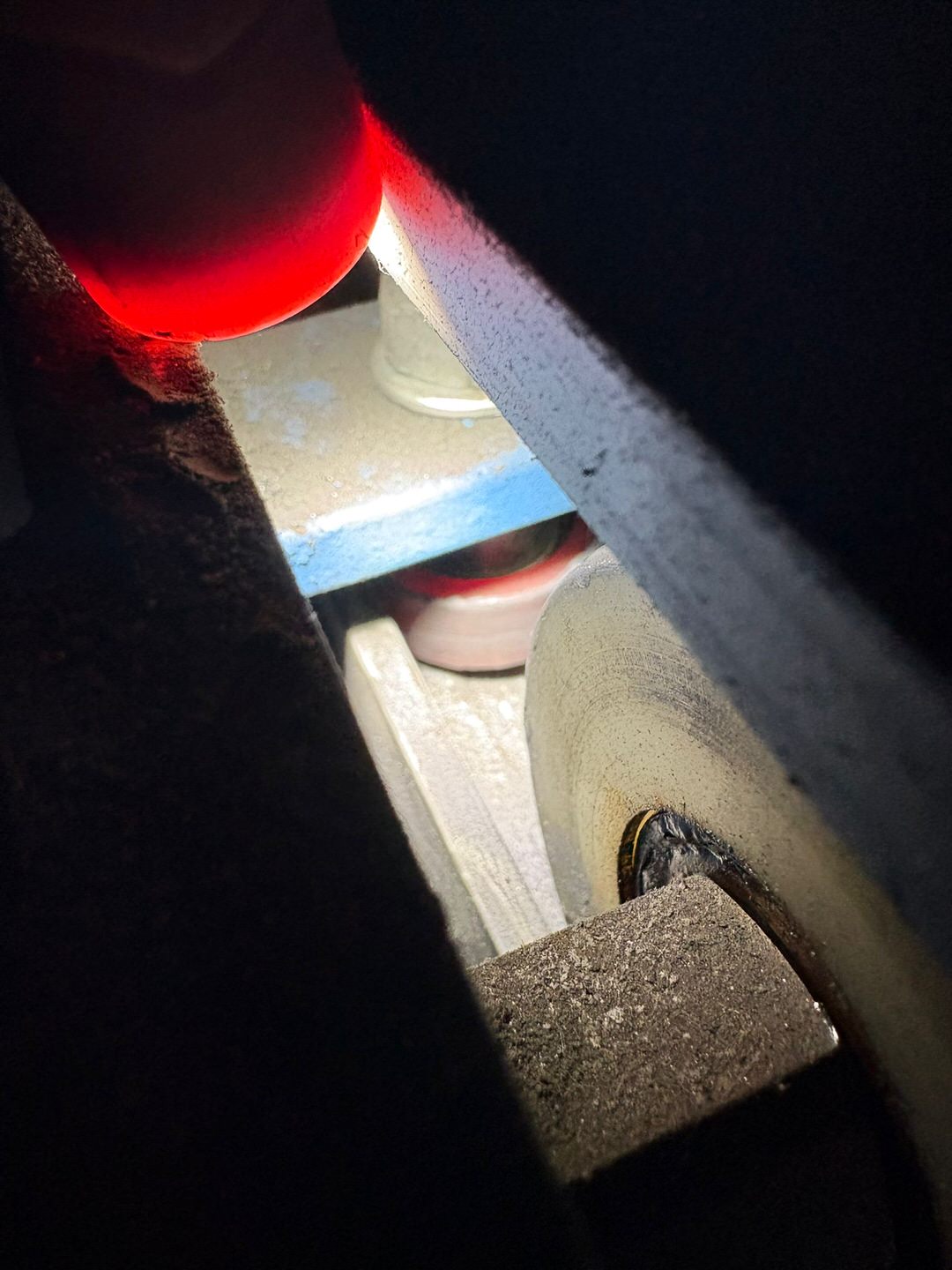
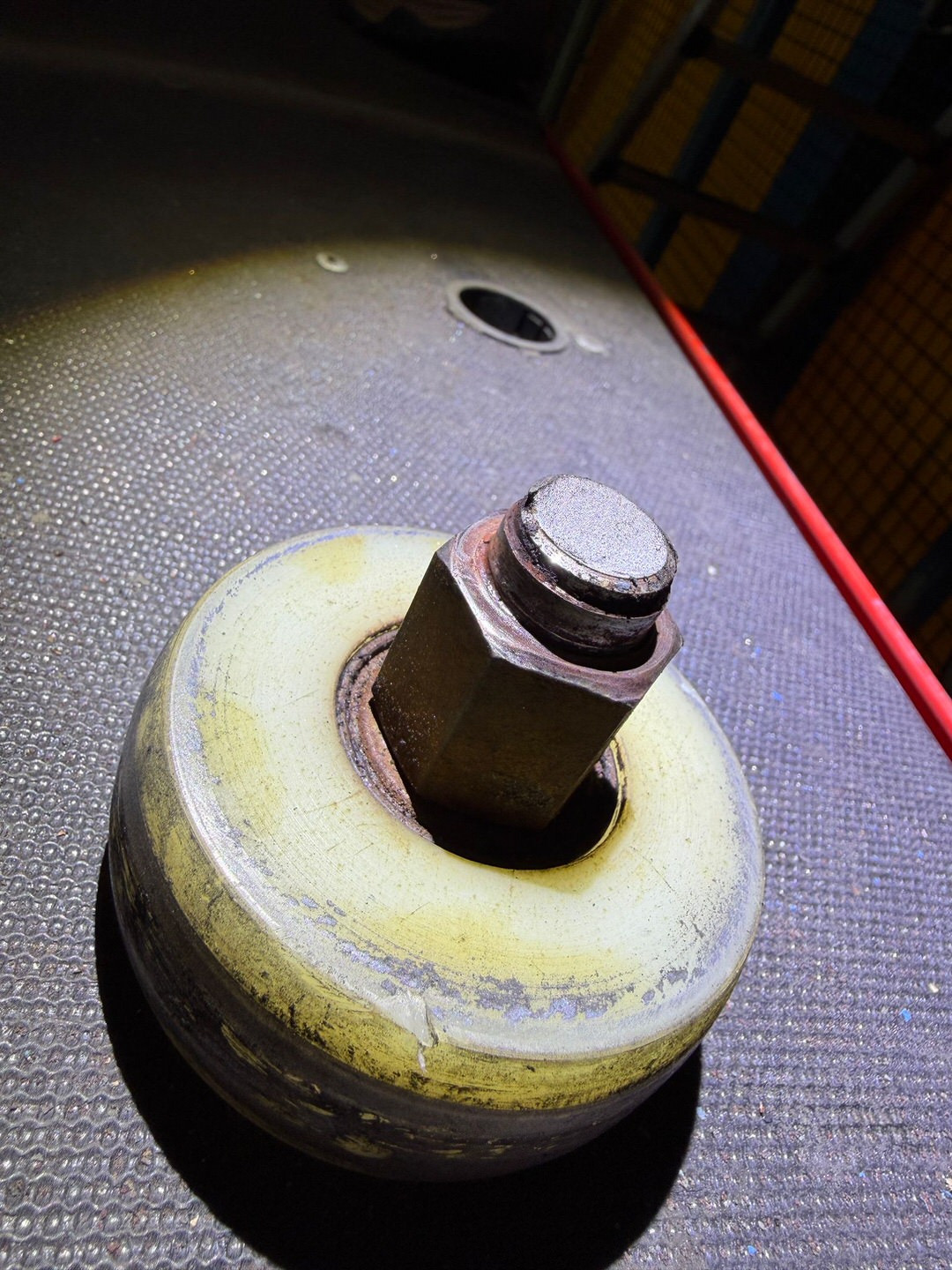
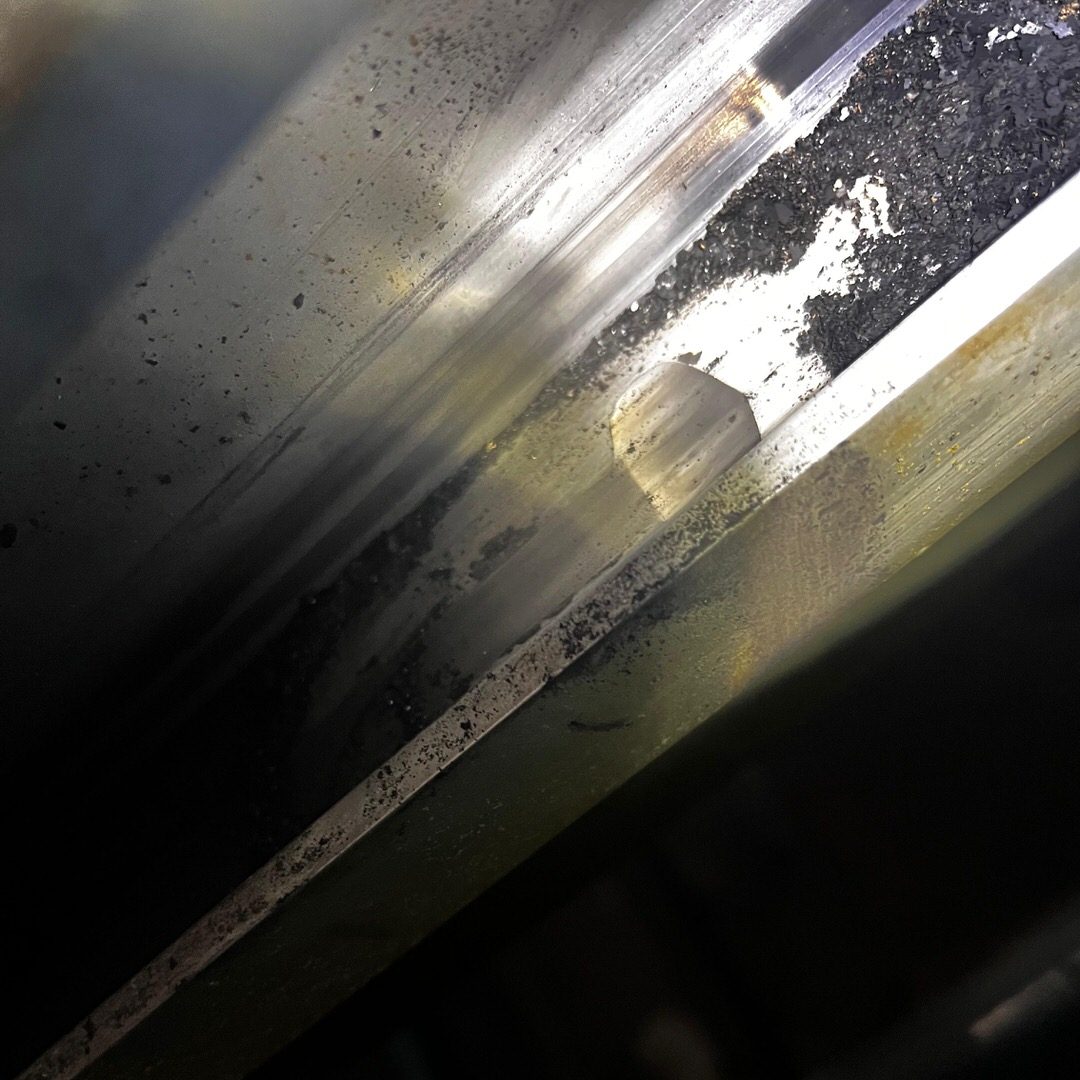
As a result, numerous signs of wear had accumulated over the years. The close-up photos revealed, among other things, severely worn running surfaces, deep grooves, damaged rollers, and mechanically stressed rail sections.
In addition, there were switches that had already been taken out of service for mechanical reasons due to damaged or torn-off components.
What damage was found on the overhead conveyor system?
The inspection revealed damage typical of a conveyor system that had been used intensively for decades.
Several rollers and guide rollers were severely worn, partially damaged, or had already broken off. On various guide rails, the rollers had visibly gouged into the running surfaces. This resulted in indentations and uneven running surfaces.
In addition, some rail joints were no longer precisely aligned. Individual components showed damaged brackets, mechanical breakages and fastening points that had already been under heavy stress.
The system's electrical contact areas were also affected by the mechanical problems. If vehicles and current collectors are no longer guided cleanly through the rails, this can lead to increased wear on collector shoes, drive rollers and data bus contacts.
- Possible consequences include:
- Damaged or torn current collectors
- Increased wear on the drive rollers of the overhead conveyor vehicles
- Rough running at rail joints
- Faulty or interrupted data transmission
- Recurring disruptions in production operations
The individual instances of damage could therefore not be considered in isolation. A worn or incorrectly adjusted switch can, over time, damage other components of the overhead conveyor.
How were around 100 overhead conveyor switches recorded and prioritised?
Before the actual repair work could begin, we conducted a thorough inspection of the existing switches.
The condition of each switch was documented and assessed based on the damage identified. On this basis, the necessary replacement parts, the scope of work, and the order of repairs were determined in consultation with the customer.
This led to the development of a concrete plan for priorities and operations. Switches with severe damage or those critical to the production process were addressed first.
The required running rollers, guide rollers, switch shoes and other spare parts were prepared before each shutdown and assigned to the individual work areas. This allowed the available downtime to be used as efficiently as possible.
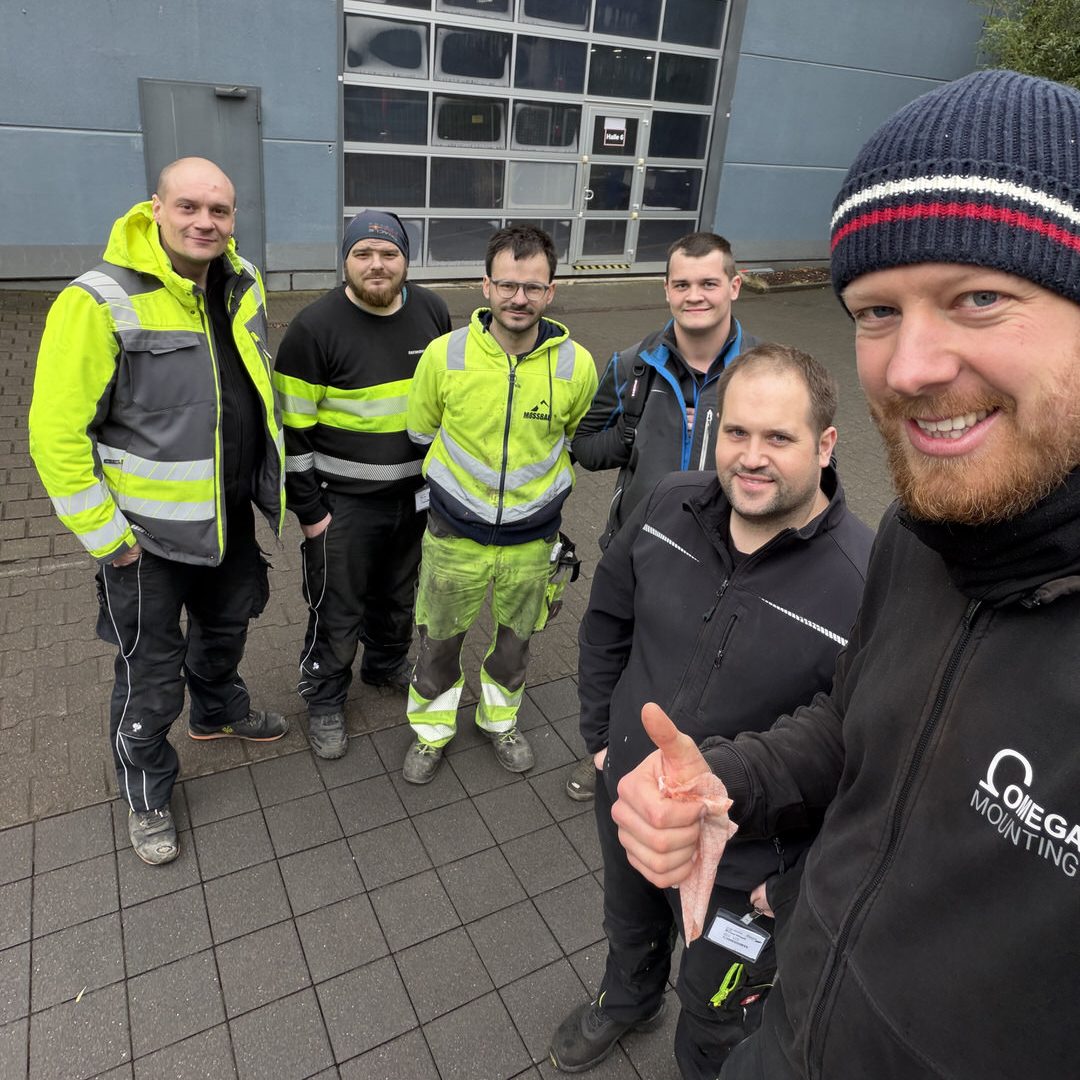
Why were there only 36 hours available for the work?
Weekend Maintenance
The electric overhead conveyor is directly integrated into the production process. Therefore, it could only be shut down outside of regular production hours.
In some cases, there was only a time window of about 36 hours between the end of production on Saturday and the planned restart on Monday.
During this time, the work areas had to be set up, the switches dismantled, spare parts fitted, adjustments made and all functions checked. Afterwards, the system had to be ready for production again on time.
Work like this, carried out under high time pressure, requires precise preparation, sufficient staff and a clear division of tasks. Omega Mounting specialises in exactly these time-critical industrial jobs during weekend, night and production shutdowns.
What work was carried out on the overhead conveyor switches?
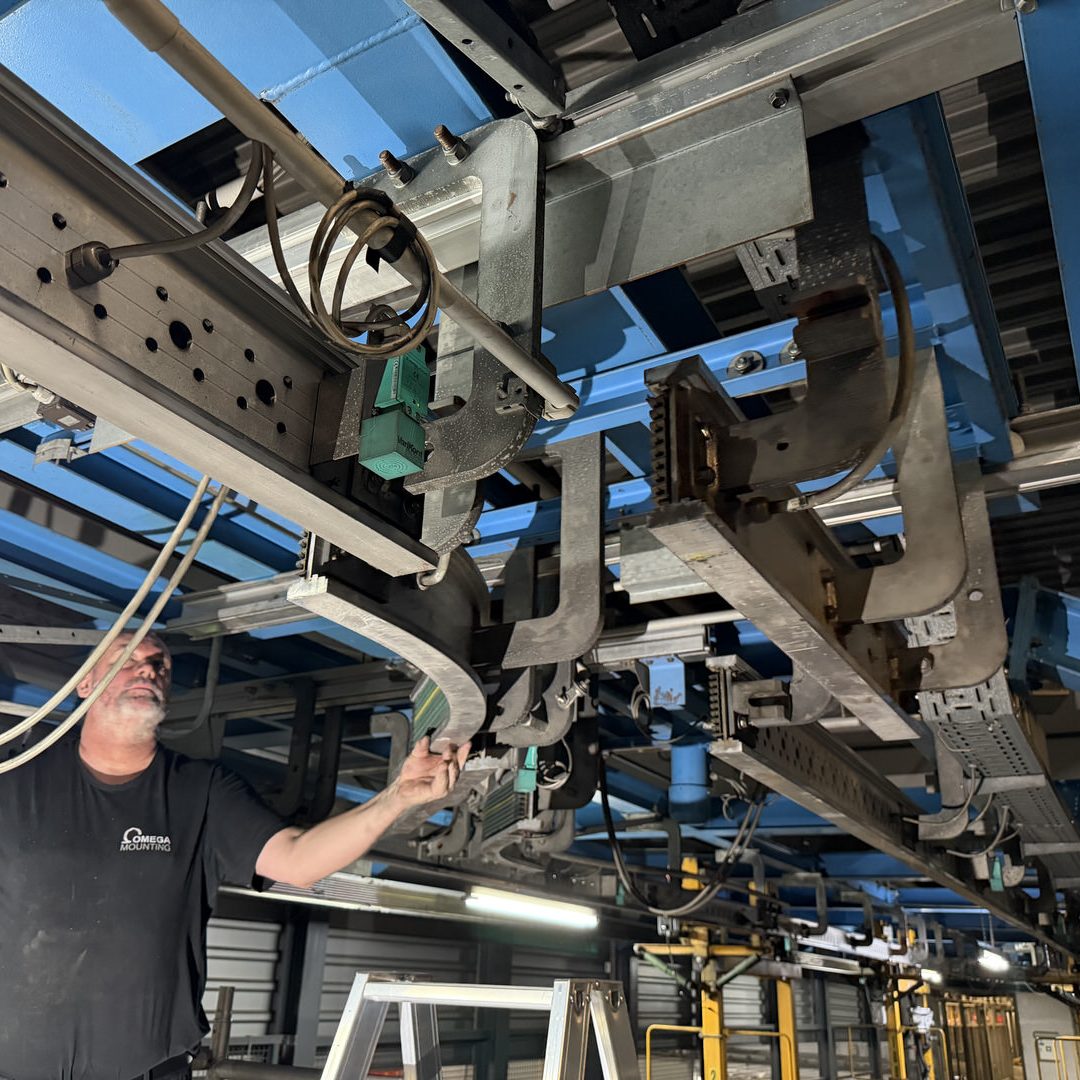
The scope of work varied depending on the condition of each switch. The most important services included replacing worn-out running rollers and guide rollers, as well as a complete mechanical overhaul of heavily used switches.
Replacing the internal rollers was particularly time-consuming. These are not easily accessible once installed. To replace them, each switch had to be partially or completely disassembled.
This is exactly where it becomes clear why such work cannot be carried out by the company's in-house maintenance department on short notice while production is underway.
- In addition, we carried out the following work:
- Replacing the side guide rollers
- Replacing the internal running rollers
- Replacing and adjusting the switch shoes
- Replacing and adjusting the switch pins
- Aligning misaligned rail joints
- Adjusting the mechanical and electrical end positions
- Inspecting the switch motors and limit switches
- Checking the power and data contact areas
- Recommissioning mechanically decommissioned switches
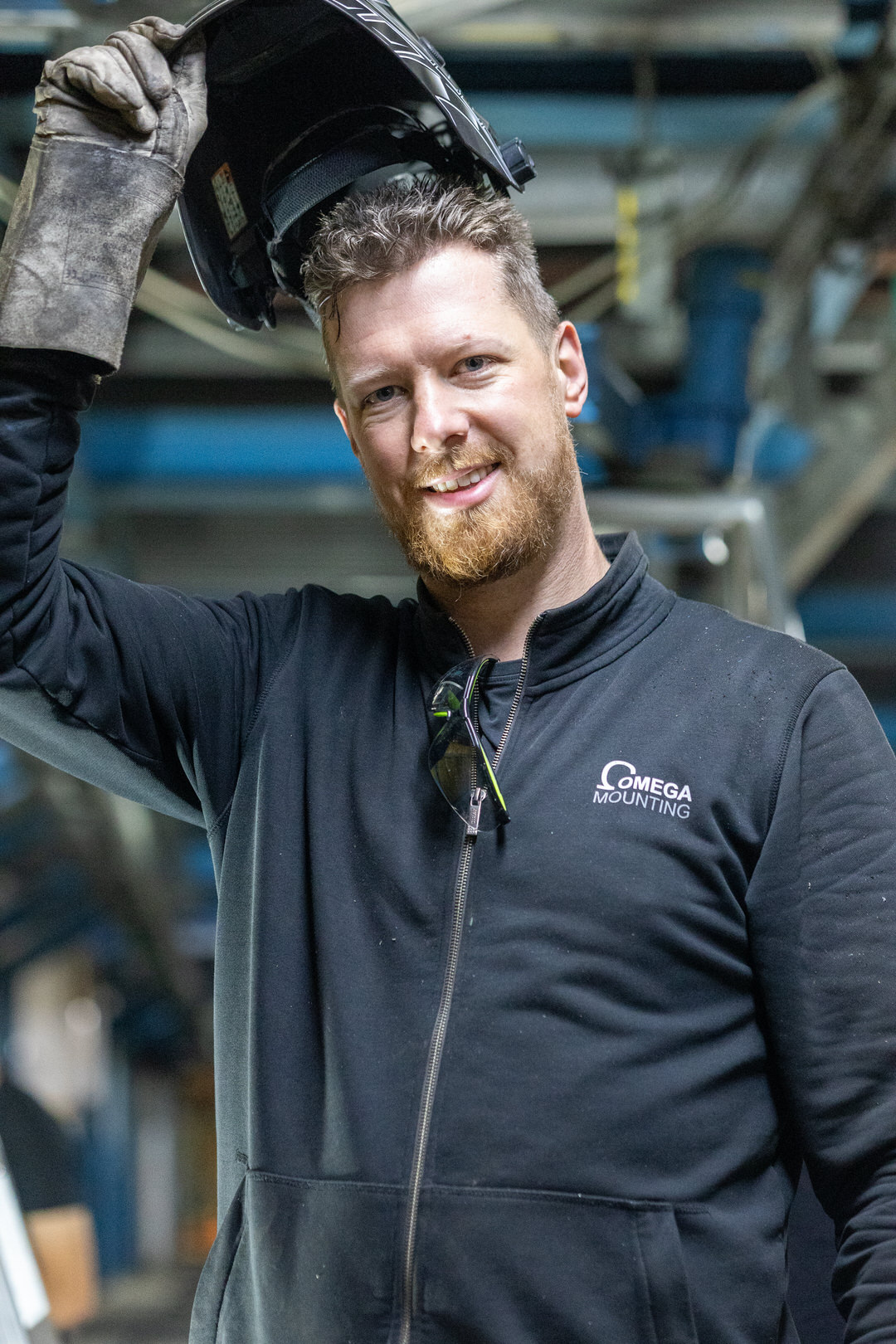
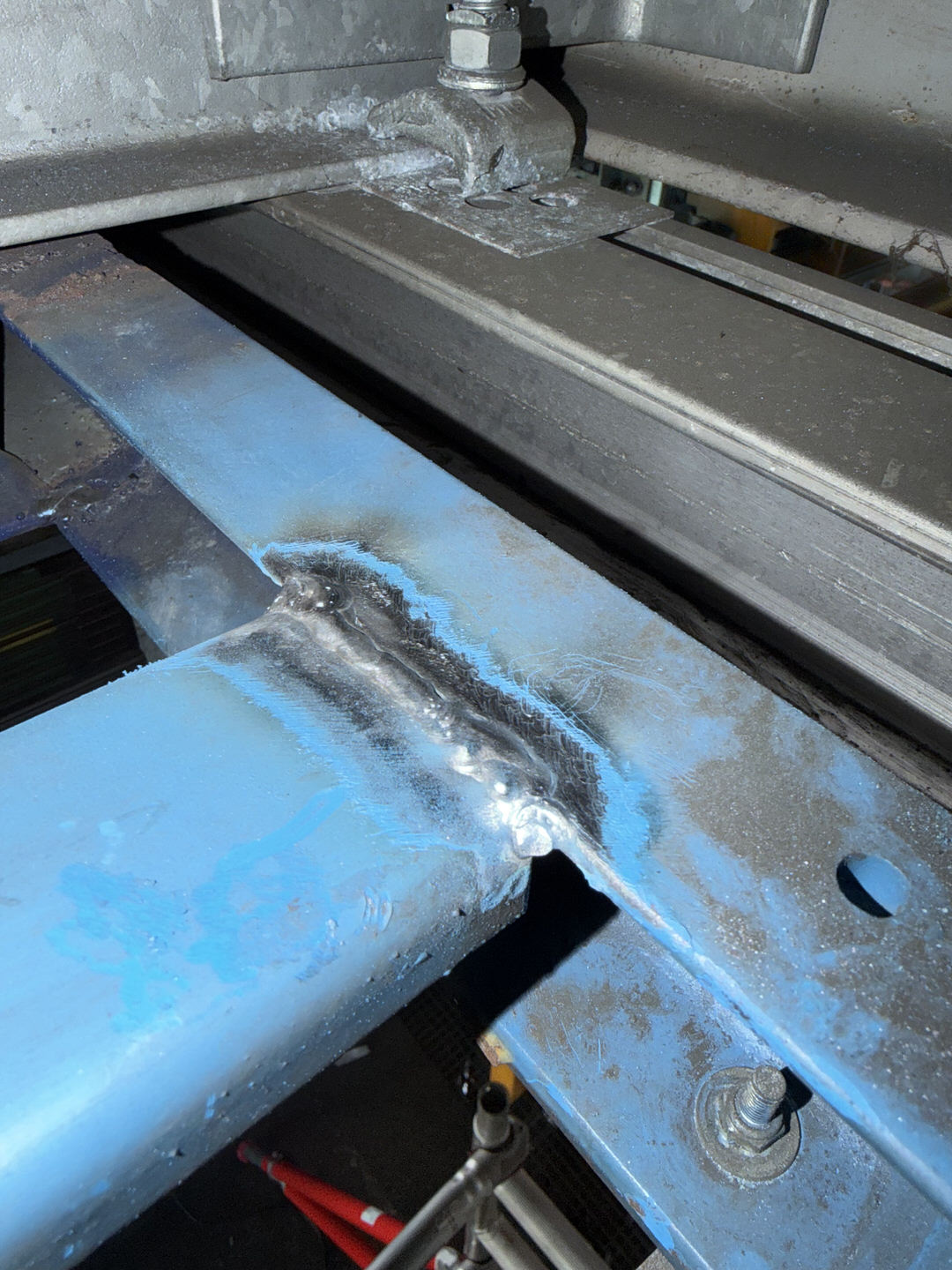
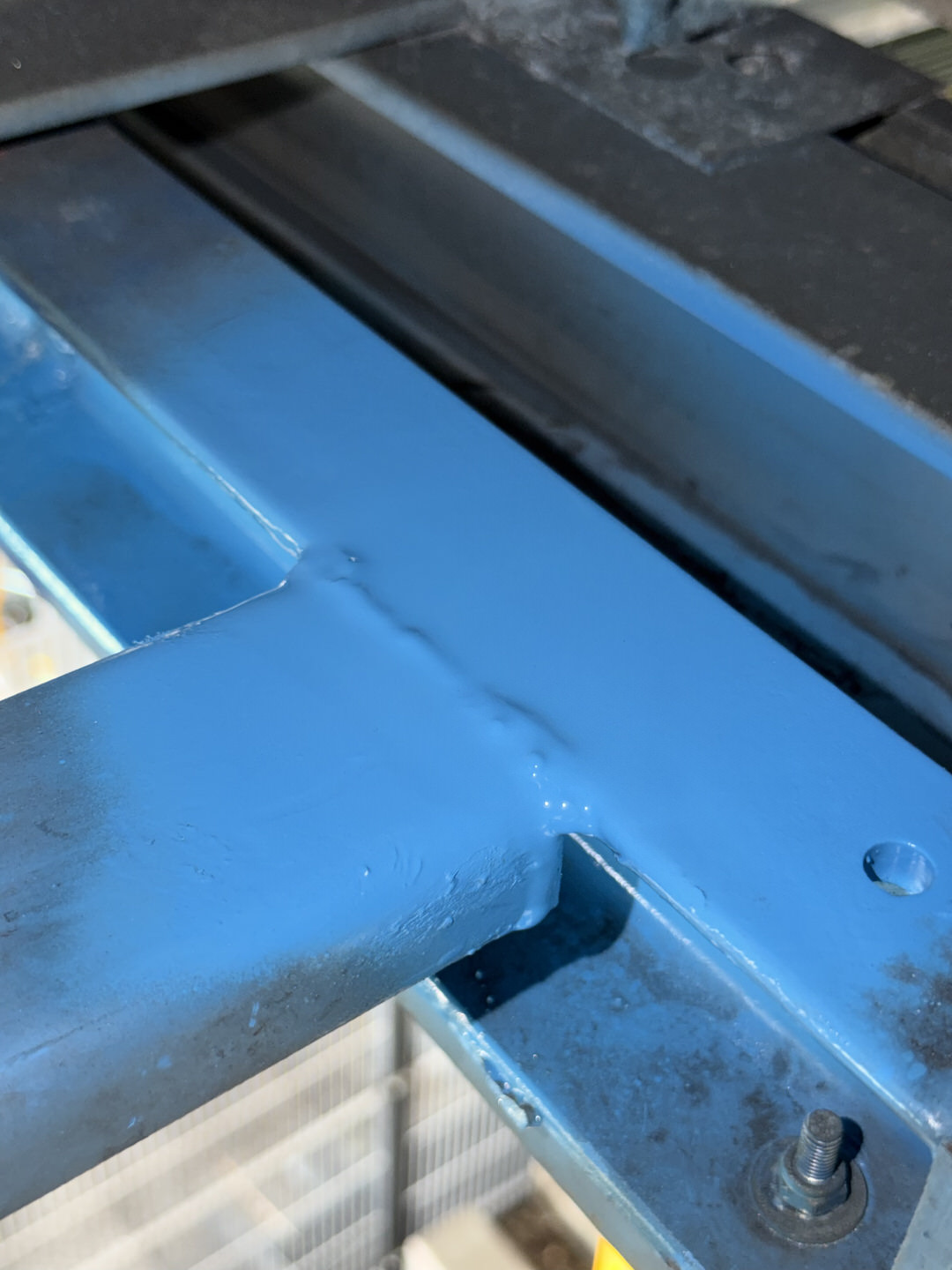
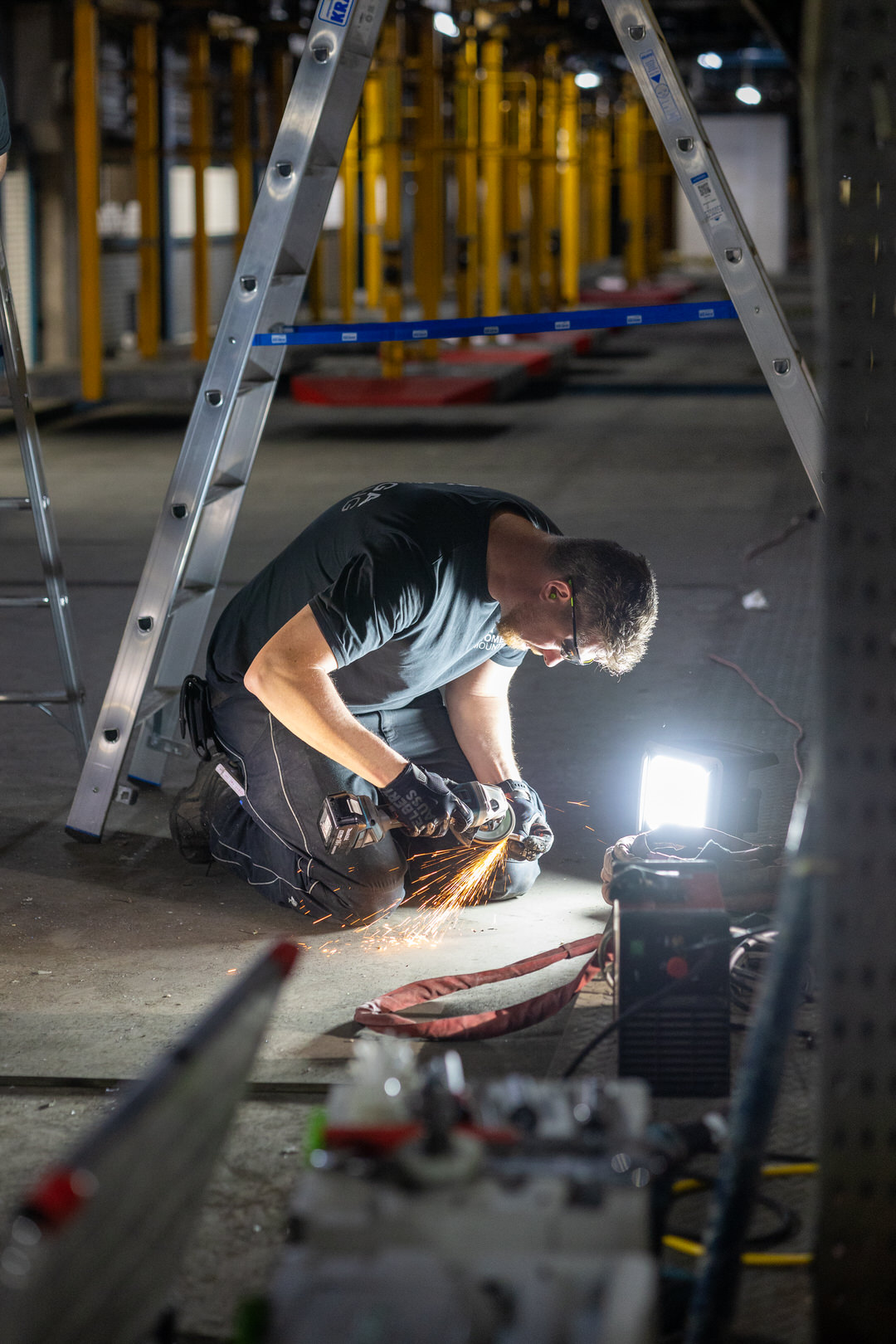
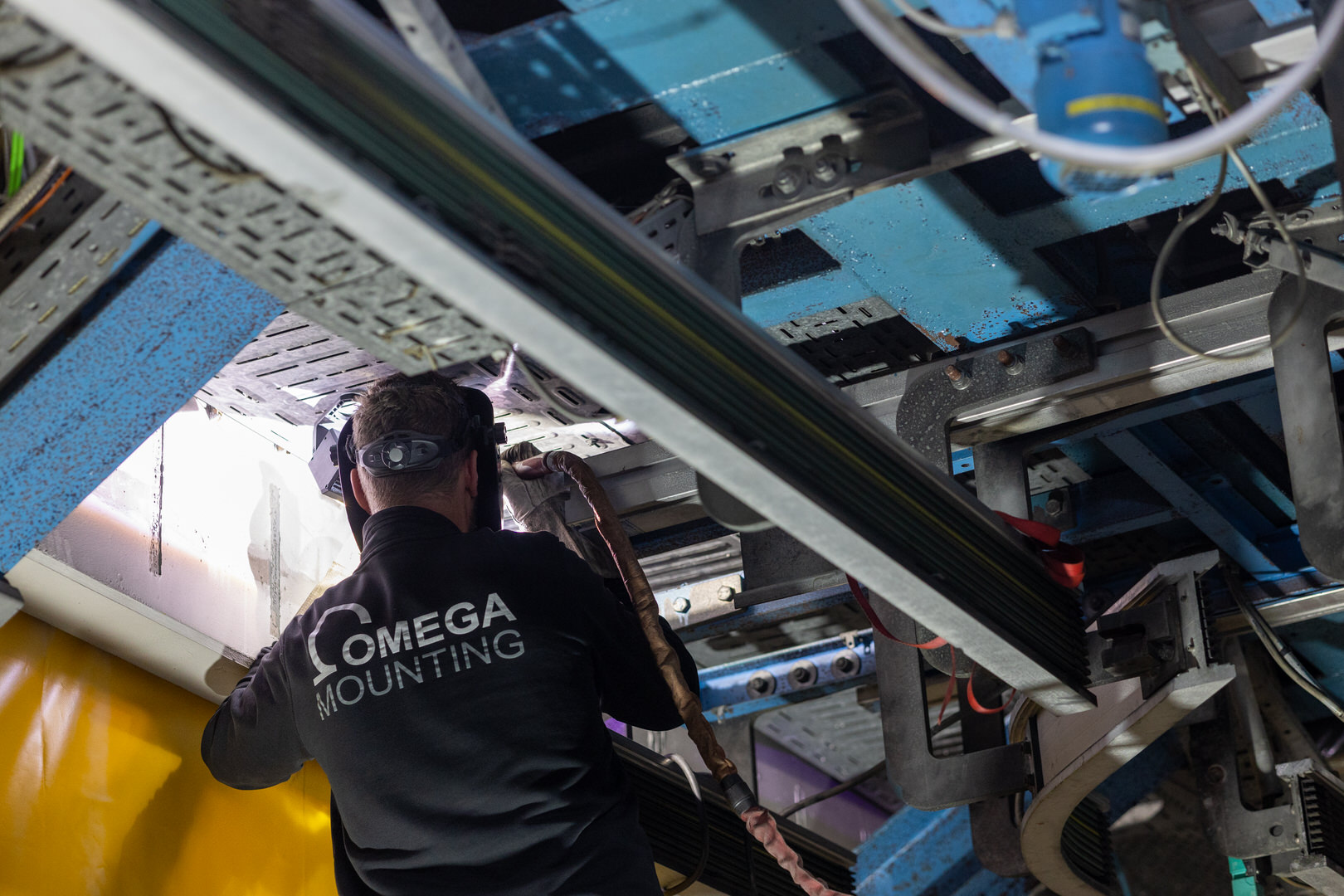
- Welding work on torn-off brackets and damaged mounts
How were worn running rails repaired?
A particular problem was the wear that had built up on the running rails over decades. The repeated movement of the rollers had formed distinct wear marks and indentations at the end positions of individual switches.
Replacing the entire rail sections would have involved considerably more work. Therefore, where technically possible, the affected running rails were shifted by several centimetres.
This made it possible to move the switch end positions to a less worn section of the existing rail. The end positions, switch shoes and transitions were then precisely readjusted.
This solution made it possible to carry out a cost-effective repair without having to replace unnecessarily large parts of the existing system.
How were decommissioned switches put back into service?
Some switches had already been taken out of service due to torn-off components. As part of the repair work, the damaged areas were exposed, prepared, and properly repaired.
Broken brackets and mounts were repositioned and welded. This was followed by the installation of the mechanical components, the adjustment of the motion sequences, and the electrical functional test.
This made it possible to fully reintegrate the switches that had previously been taken out of service into the system.
Working at height & in confined spaces
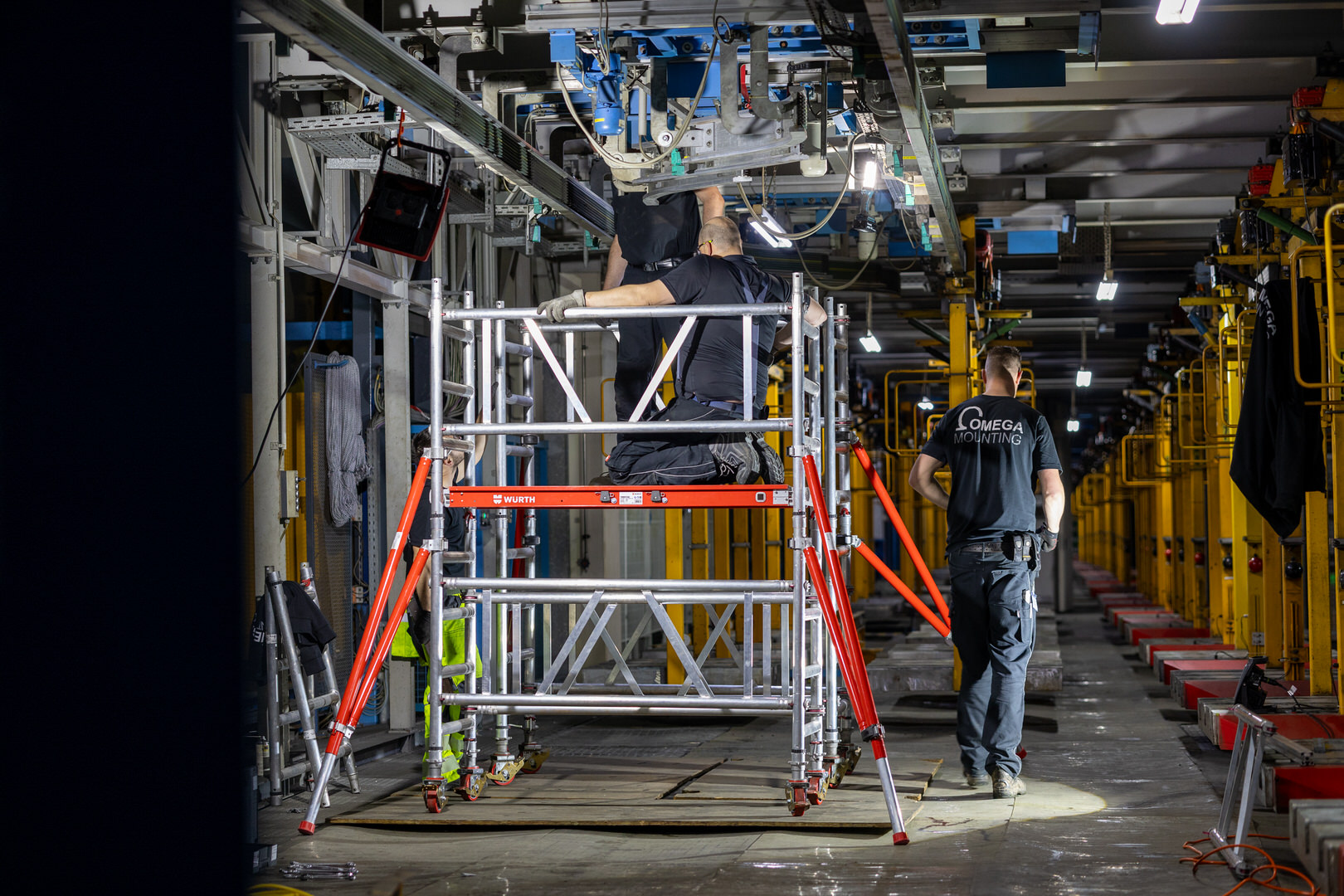
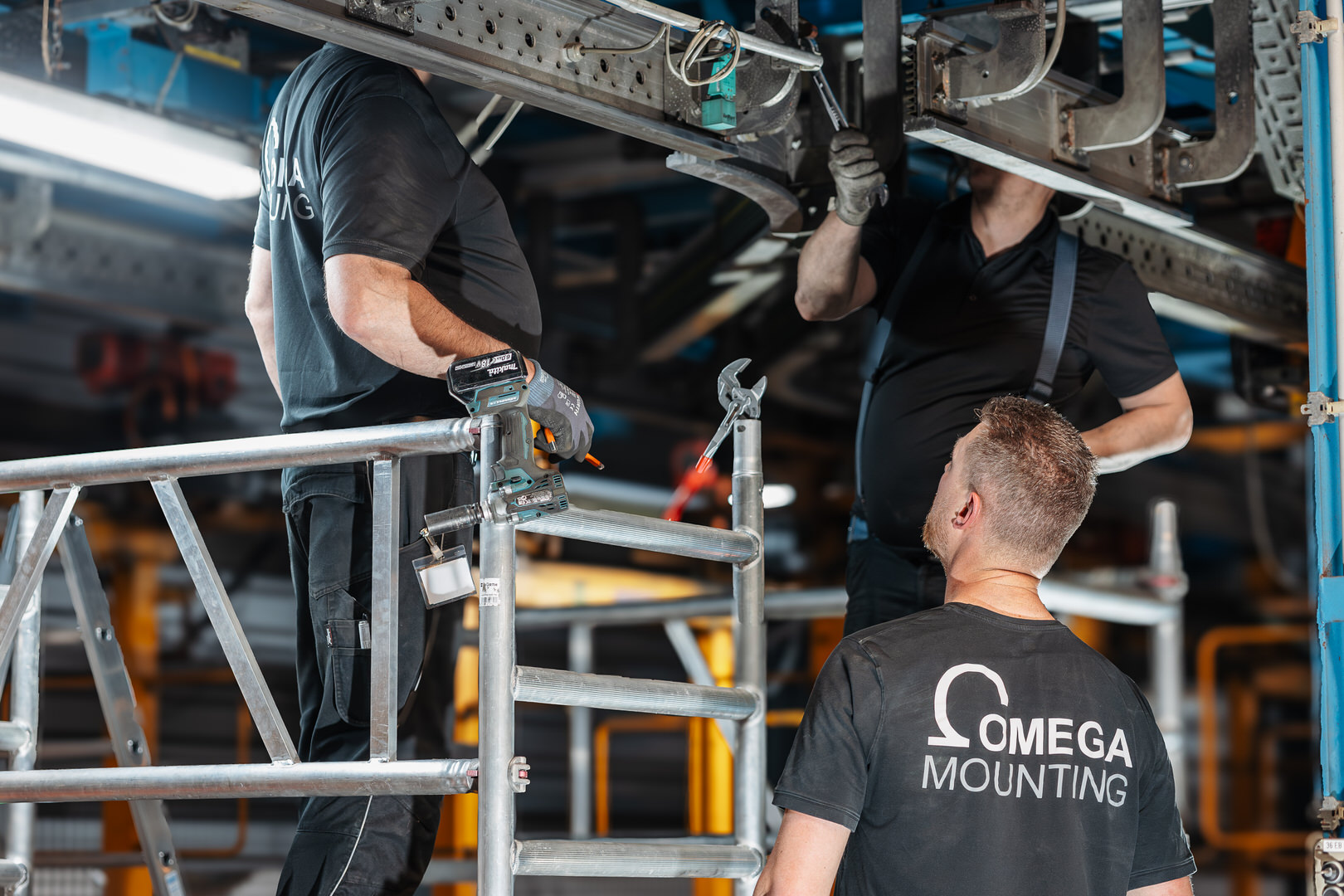
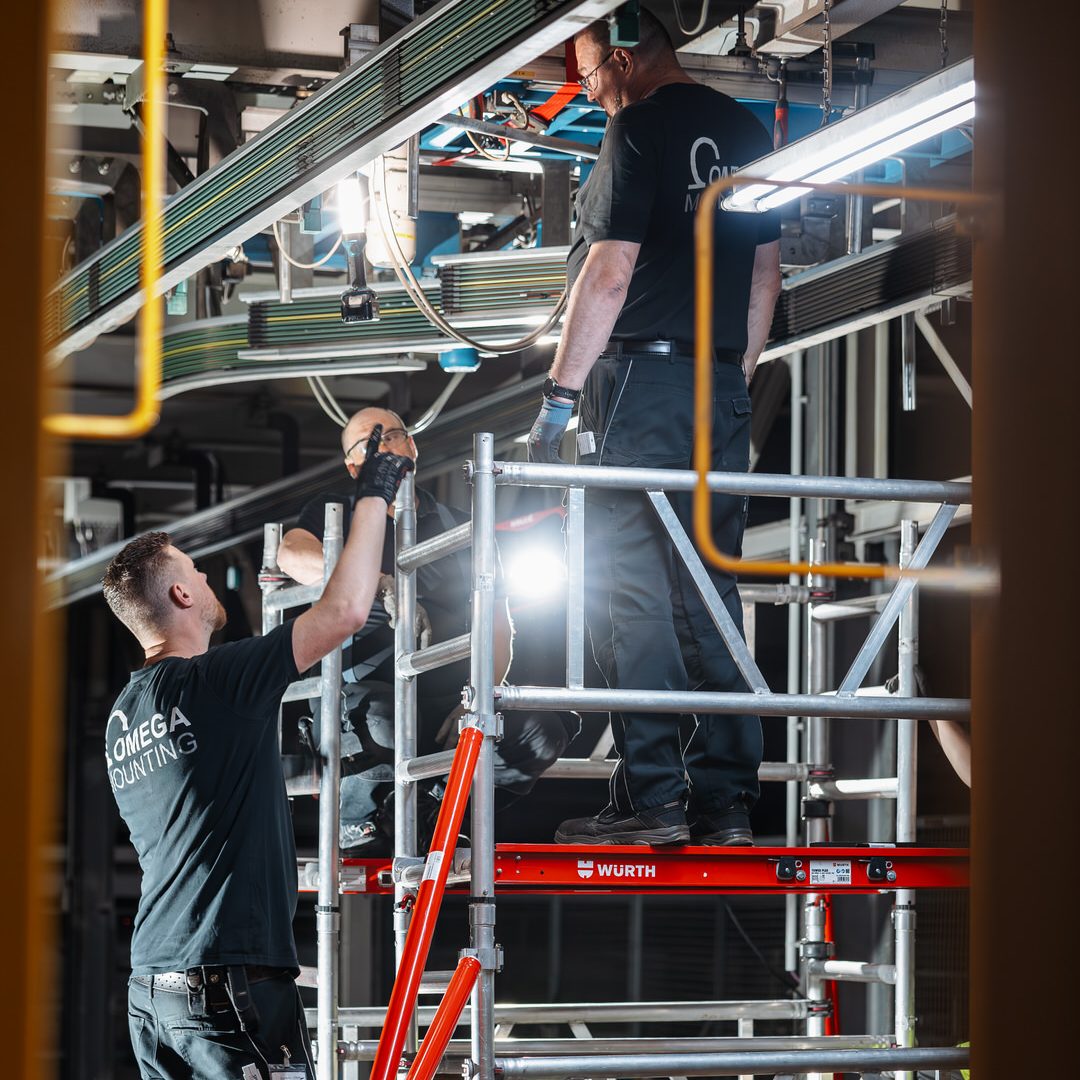
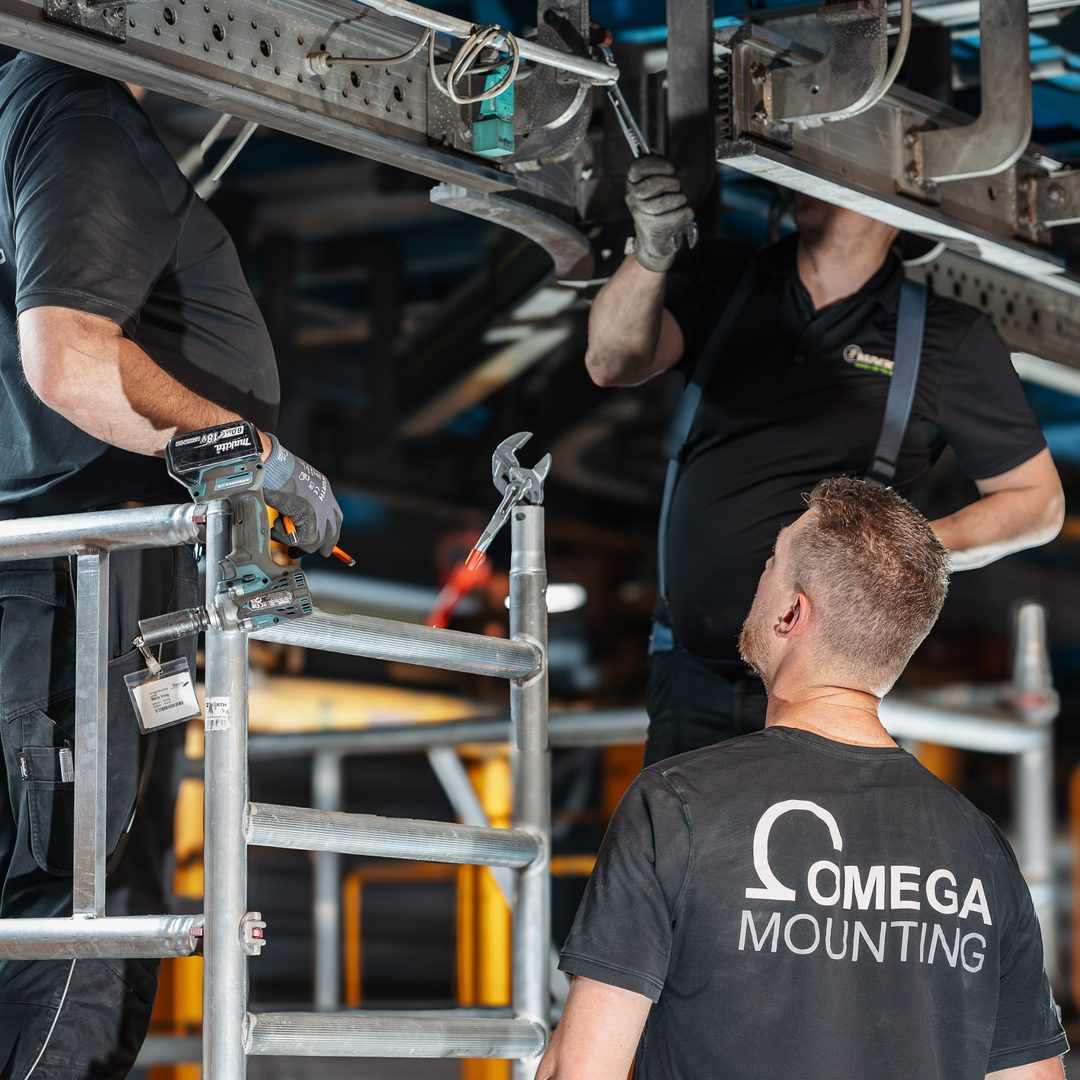
The switches of the overhead conveyor are located above the production and traffic areas. For this reason, the work required mobile scaffold towers, ladders and additional work lighting, among other things.
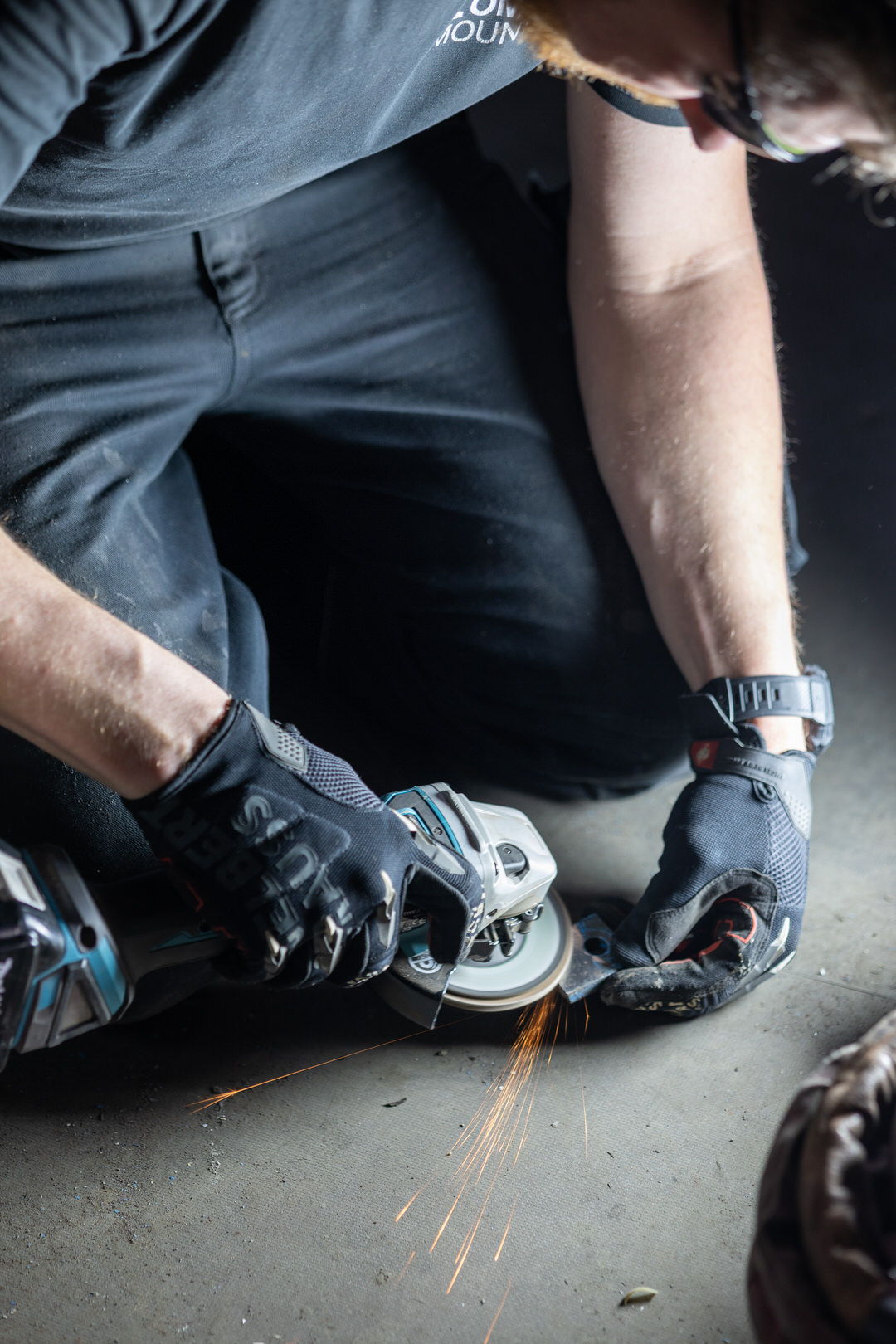
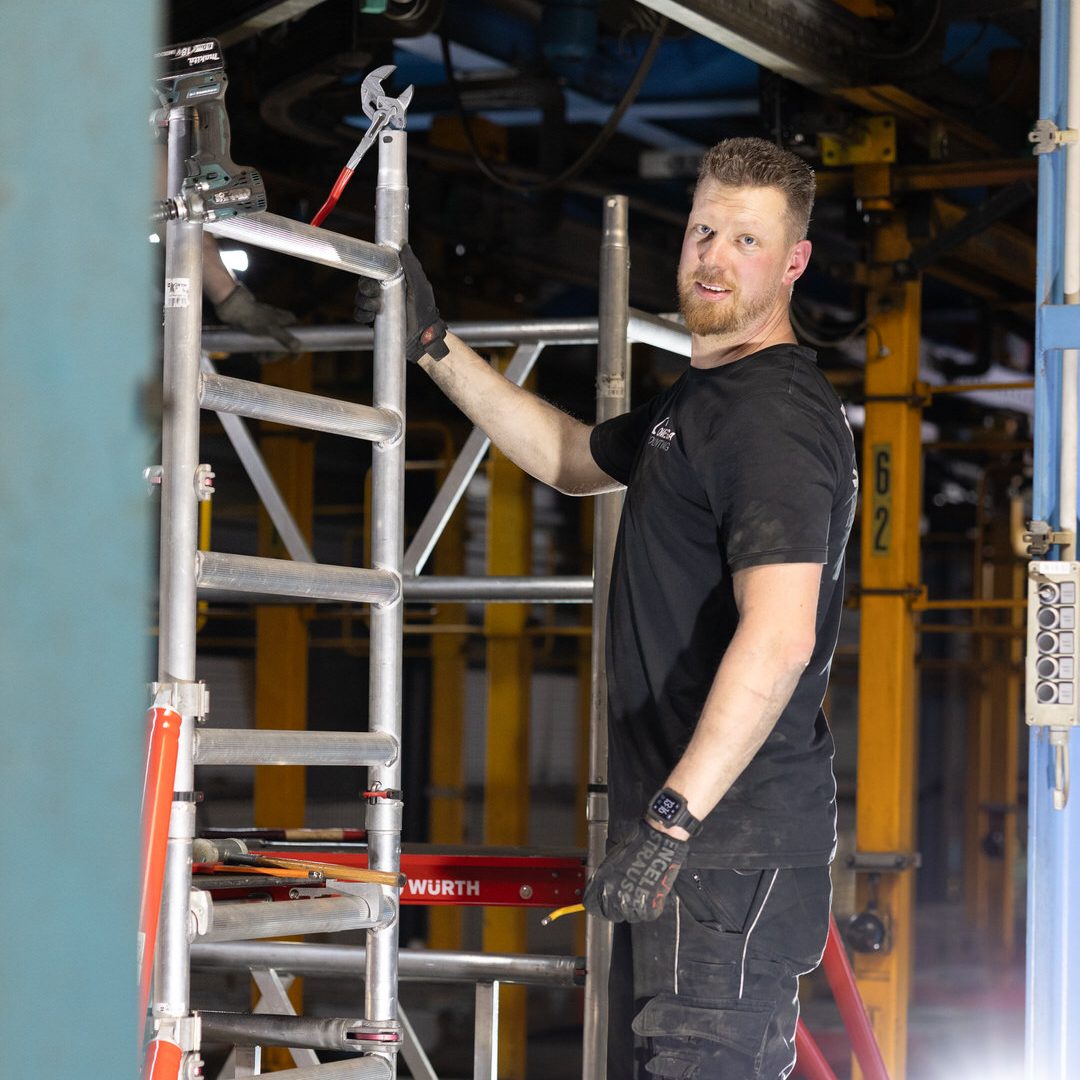
The photos show that several technicians were working on individual switches at the same time. While part of the team was dismantling and securing the components, other employees were able to prepare replacement parts, make adjustments, or coordinate the next steps in the process.
This parallel approach was crucial for being able to fully process as many switches as possible during the brief shutdown.
What are the benefits of a scheduled major overhaul?
A systematic overhaul not only eliminates acute faults, but also helps to reduce consequential damage to vehicles, drives, current collectors and data contacts.
- Among other things, a planned maintenance project offers:
- higher system availability
- fewer unplanned production stoppages
- Less wear on overhead conveyor vehicles
- more reliable power and data transmission
- extended service life of the existing system
- better planning of future maintenance work
Especially with older overhead conveyors, a complete replacement is not necessarily required. With a professional assessment, targeted repairs and clear prioritisation, many systems can continue to be operated economically.
We bundle maintenance and repair within the city of Frankfurt under Maintenance and servicing Frankfurt.
Maintenance of overhead conveyor systems during scheduled production shutdowns
Omega Mounting supports industrial companies with the maintenance, repair and mechanical overhaul of overhead conveyors and other conveyor systems.
Our services range from assessment and documentation to spare parts and operational planning, as well as mechanical repairs, welding, electrical testing, and subsequent recommissioning.
Even with short time windows, weekend work or time-critical production shutdowns, we provide experienced installation teams to carry out the planned work.
Is your overhead conveyor showing signs of wear or causing more and more faults? Get in touch. Together we will develop a maintenance and repair concept that suits your system and your production schedule.
Related guides for this project
Maintenance & Servicing

About the author
Tobias Schott
Managing director of Omega Mounting GmbH, Rodgau · more than 20 years of hands-on experience in installation and maintenance
A trained mechatronics technician, at home in maintenance, servicing and industrial installation since 2004 – first alongside his father, and since 2012 with Omega Mounting: from the overhead conveyor in Frankfurt to the crane system in a new-build hall. As appointed person for lifting operations, he plans and leads lifting operations in data centers and on industrial sites in the Rhine-Main region, is an instructor and examiner for cranes, aerial work platforms and telehandlers, and a safety officer. On assignments abroad he is known as the "German Troubleshooter" – the one you call when things get stuck on site. He did not learn what quality means from a manual, but from his father: Made in Germany as a standard for his own work, not as a label. That is why quality comes first at Omega Mounting – before speed and before price. The project diary shows the jobs his team has planned and carried out – without customer names, but with everything that can be learned from them.
 English
 German