
- Project report – Generator maintenance on a standby power system
Generator maintenance on a standby power system – removal and moving in by mobile crane in the Rhine-Main region
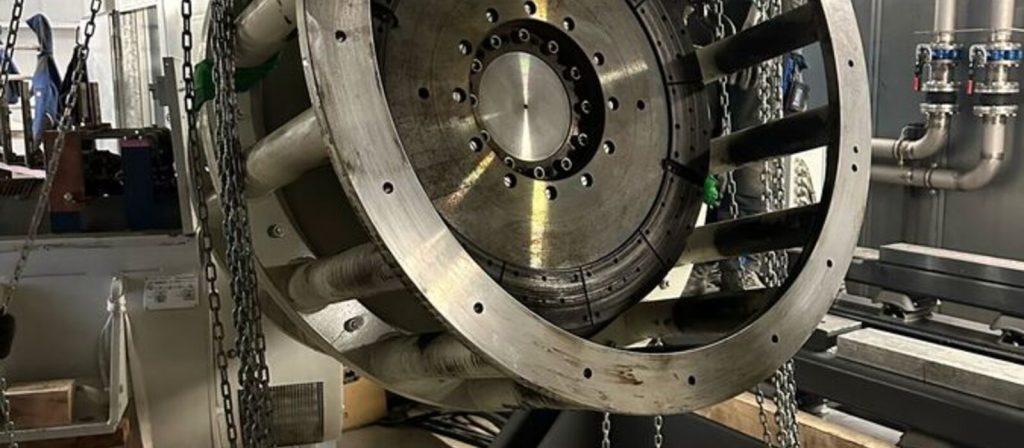
Standby generator set dismantled, generator lifted out through the moving-in shaft, overhauled parts reinstalled – all from a single source
A standby power system has to work precisely when everything else fails. To keep it that way, operators carry out regular maintenance and overhauls – and that is exactly where we come in when things get mechanically demanding.
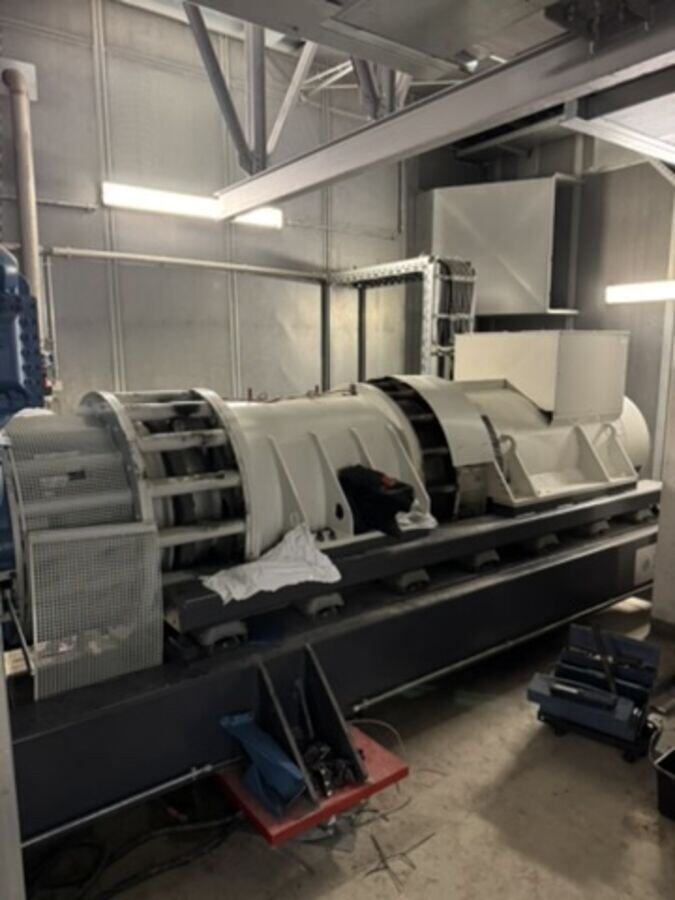
On this project in a larger building complex in the Rhine-Main region, we were involved in dismantling a standby generator set and servicing its generator. The challenge: for the overhaul, the generator had to be completely separated from the engine and taken out of the plant room inside the building – the only way out led through the moving-in shaft, vertically upwards, on the hook of a mobile crane.
After the overhaul, the reconditioned components came back the same way: lift in, move in, install, align – until the generator set was complete again.
Project profile
Service
- Dismantling the standby generator set in the plant room
- Separating the generator from the drive engine
- Removal and transport of the components to the moving-in shaft
- Lifting out of the building by mobile crane
- Moving the overhauled parts back in
- Reassembly and installation of the complete generator set
- Team
- 1 Lifting AP (coordination of the lifting operations)
- 3 fitters
- Location: Standby power system of a larger building complex in the Rhine-Main region
Why is the generator of a standby power system removed?
The short answer: because a thorough overhaul is not possible on the generator set itself. For maintenance of the generator, components have to be made accessible that cannot be reached in the installed condition.
To do this, the generator is completely separated from the drive engine and removed from the system. Only then can the components be professionally overhauled – before everything is reassembled in reverse order.
Standby power systems are almost always located in plant rooms deep inside the building – designed for operation, not for removal. That is exactly what makes maintenance like this a task for installation professionals.
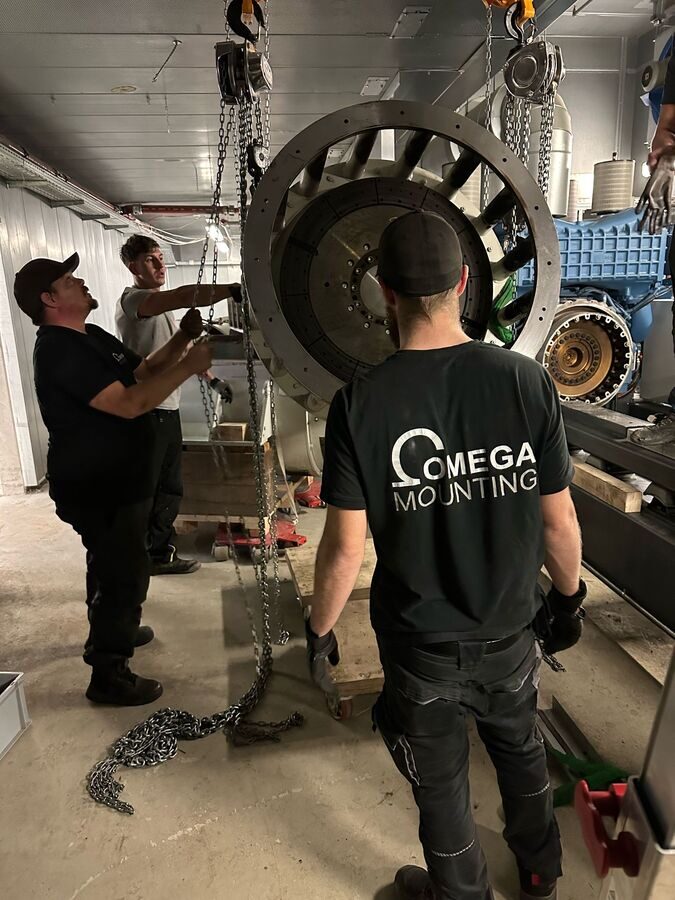
The work of the Lifting AP begins long before the first lift
Anyone who thinks of the Lifting AP only as supervising the lifting work on the day of the operation vastly underestimates the role. Long before our team arrives for the execution, calculations, estimates and checks are made:
- How wide are the passages along the transport route?
- How much space remains when lifting out the generator?
- Which lifting accessories are required?
- How must the lifting equipment – chain hoists and the like – be dimensioned?
- And can the suspension points, such as the steel beam above the generator set, actually carry the planned loads?
Lift plans are prepared for all of this before the first hands-on step on site. Only when every question has been answered does the actual installation work begin – and it then runs exactly as planned.
The underestimated factor: schedule and dismantling
An exact schedule is decisive for planning a project like this – and this is precisely where one point is regularly underestimated: before you can even get to the actual components, a considerable amount often has to be dismantled first. On this project, for example, the complete enclosure of the generator. Hardly anyone thinks of this in advance – in a professional's schedule, it is there from the start.
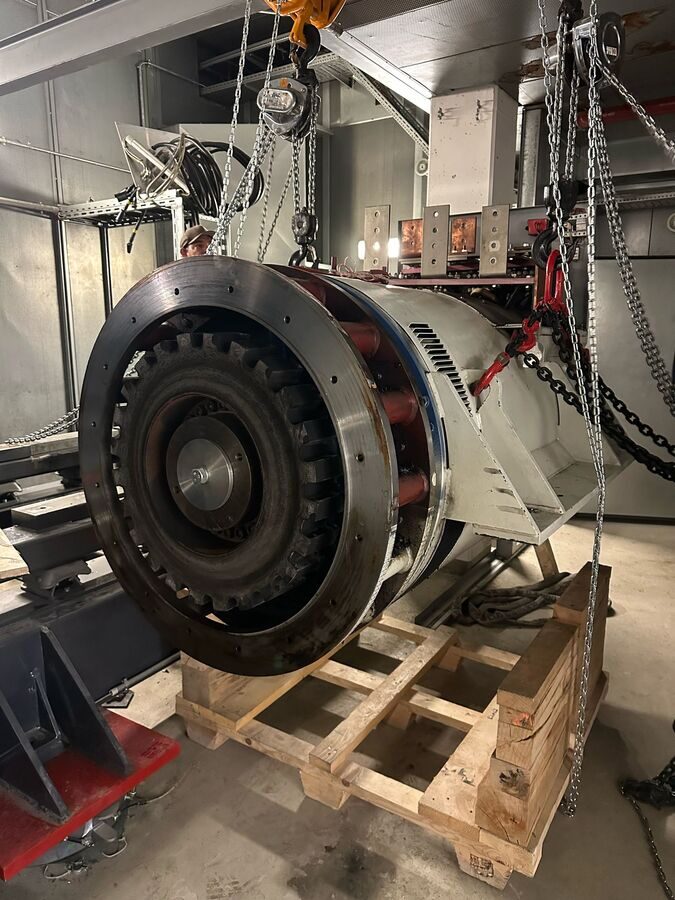
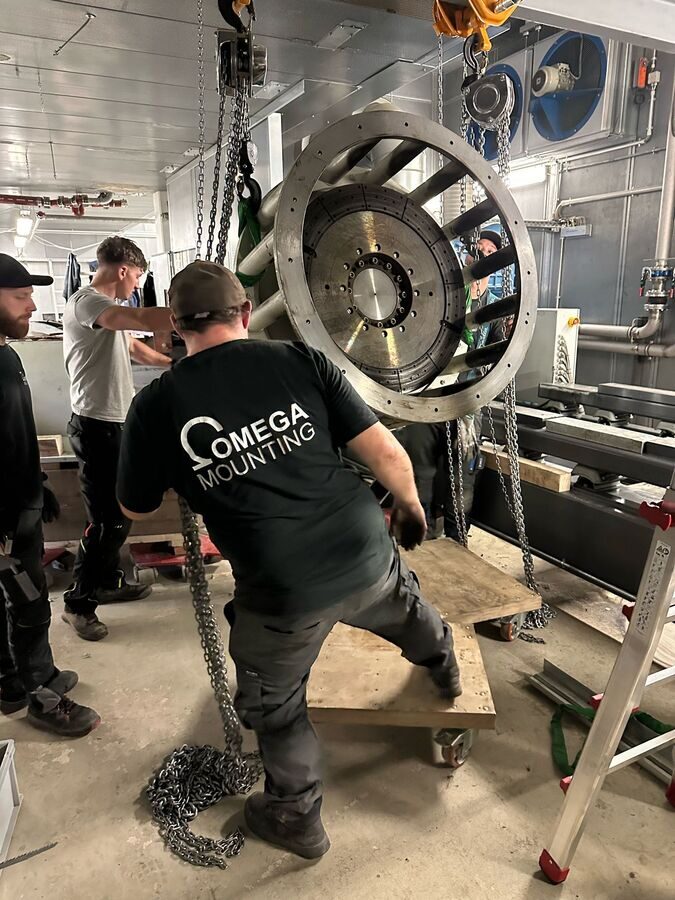
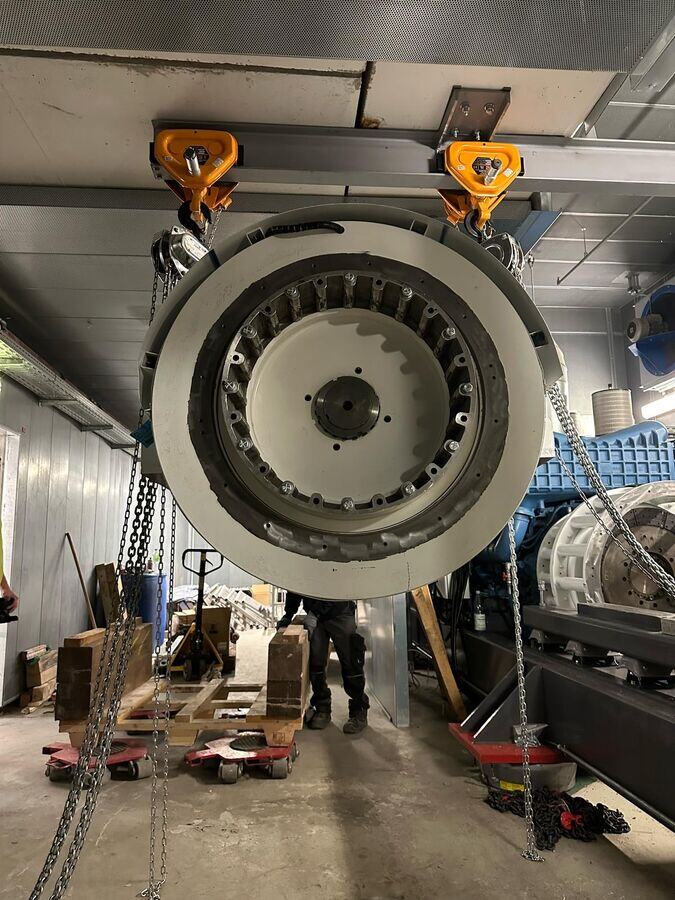
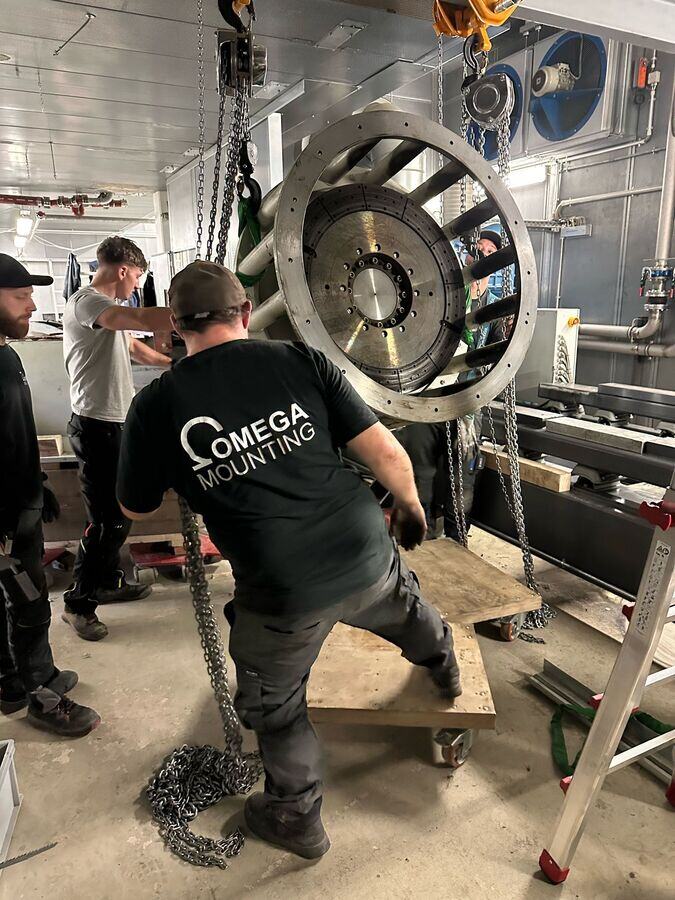
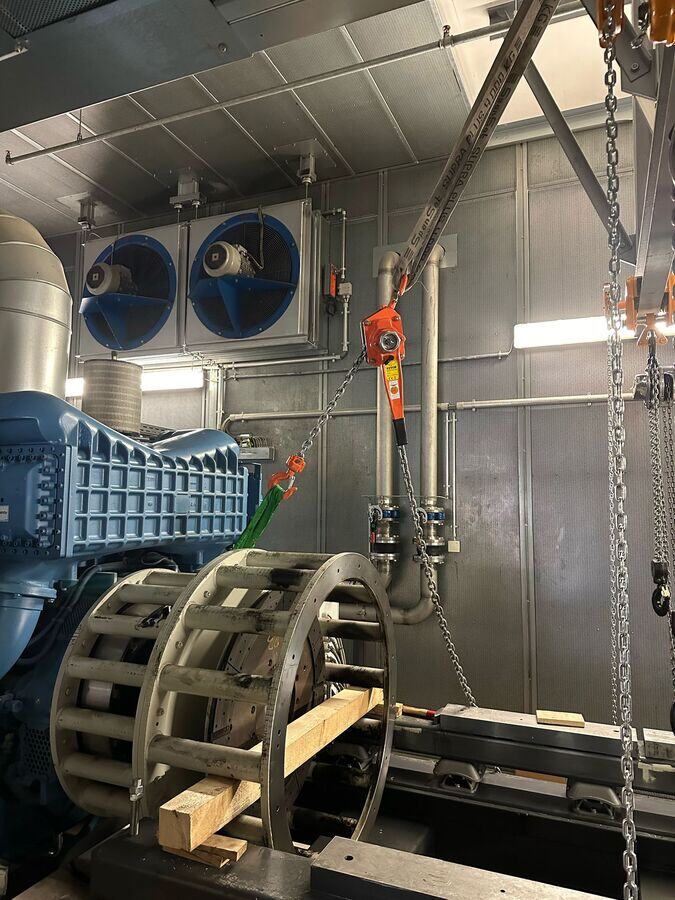
In addition: for the safe transport of the components, transport frames made of timber or steel sometimes have to be built. Our team does this directly on site, too – the photos clearly show the custom-made timber frames on which the assemblies were moved through the building. It is exactly this on-site problem solving that distinguishes a well-practised installation team from pure muscle power.
How do you separate a generator from the generator set?
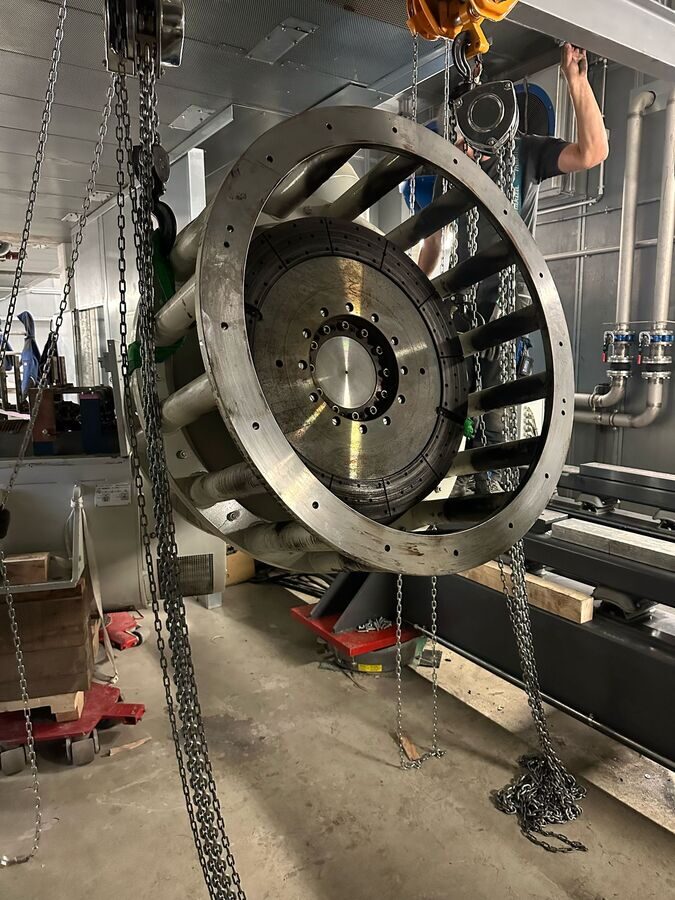
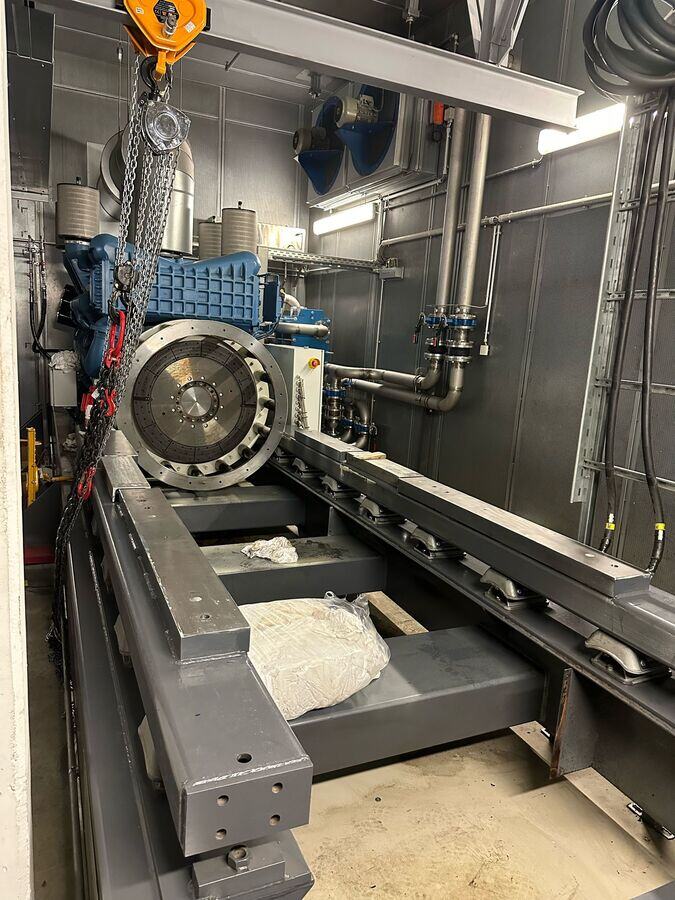
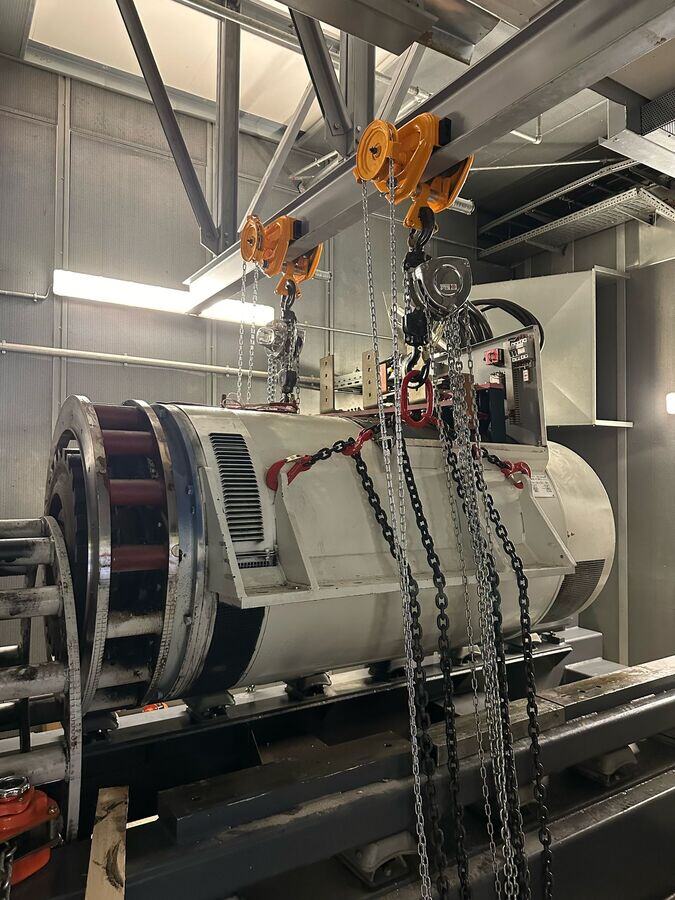
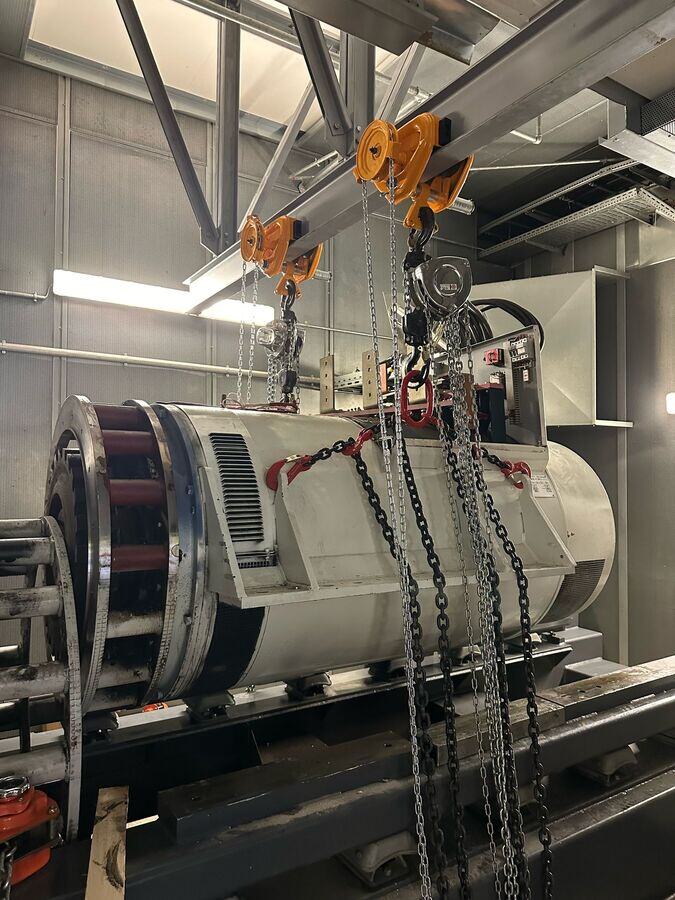
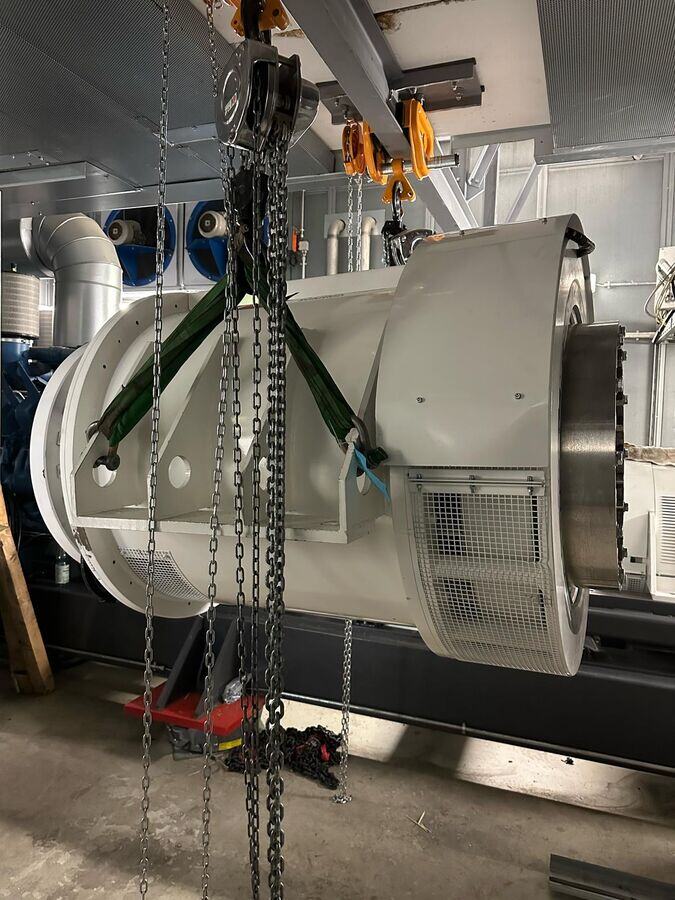
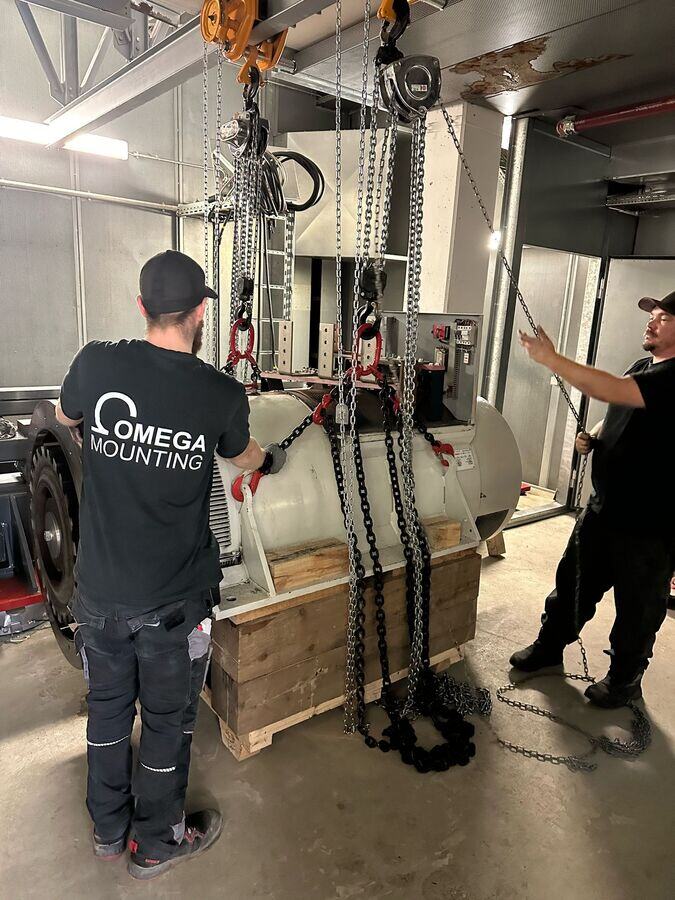
Millimetre by millimetre and under control. In the plant room, we worked with chain hoists on a beam structure above the generator set: the generator was slung, lifted and separated from the engine step by step.
The sequence is clearly visible in the photos: the generator hangs from several chain hoists, is traversed above the base frame and set down under control. The coupling assembly was also removed and prepared for transport.
Space was tight throughout: between the generator set, walls and plant equipment, it sometimes came down to a few centimetres despite the heavy components. Every movement was therefore thought through in advance and carried out slowly, guided and on command.
Then it was on machine skates through the corridors of the building – to the moving-in shaft.
The way out: vertically through the moving-in shaft
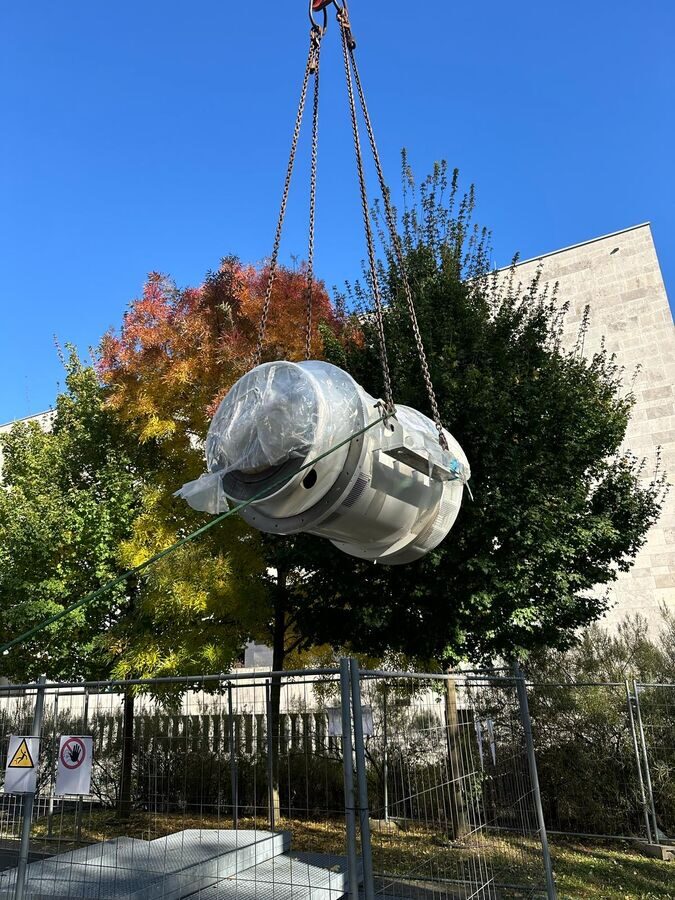
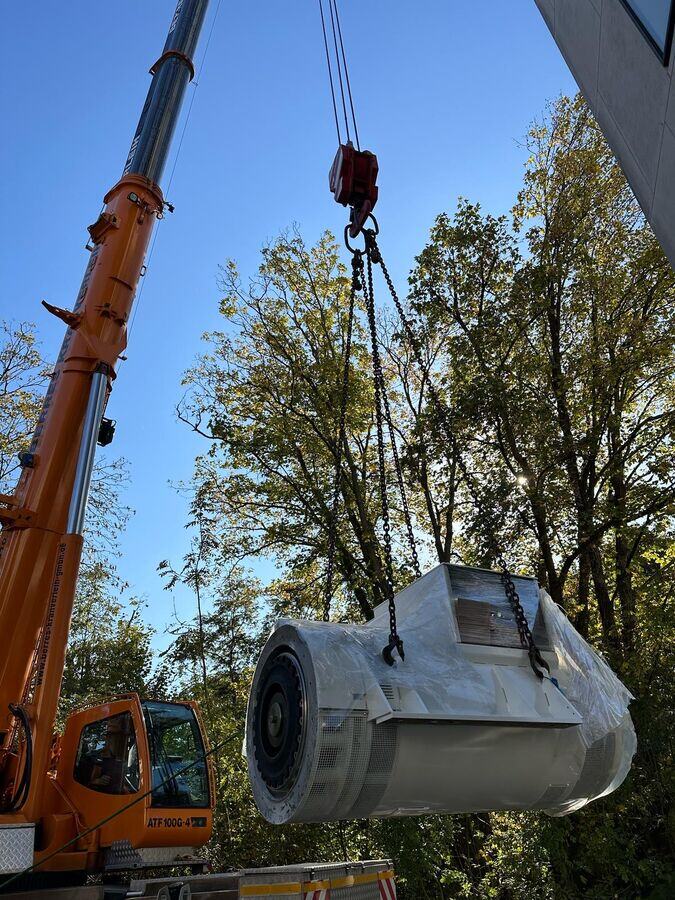
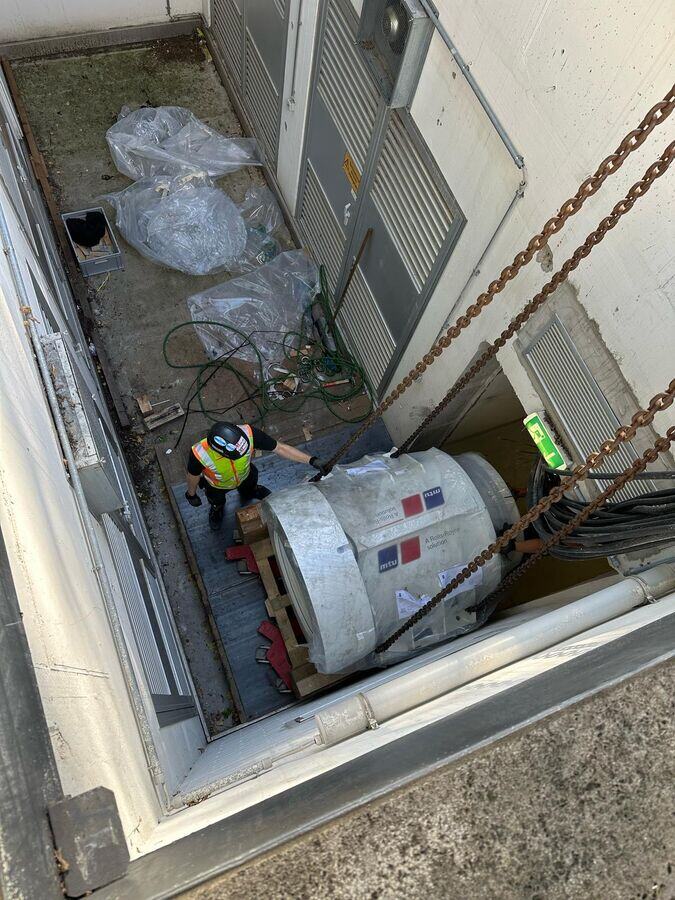
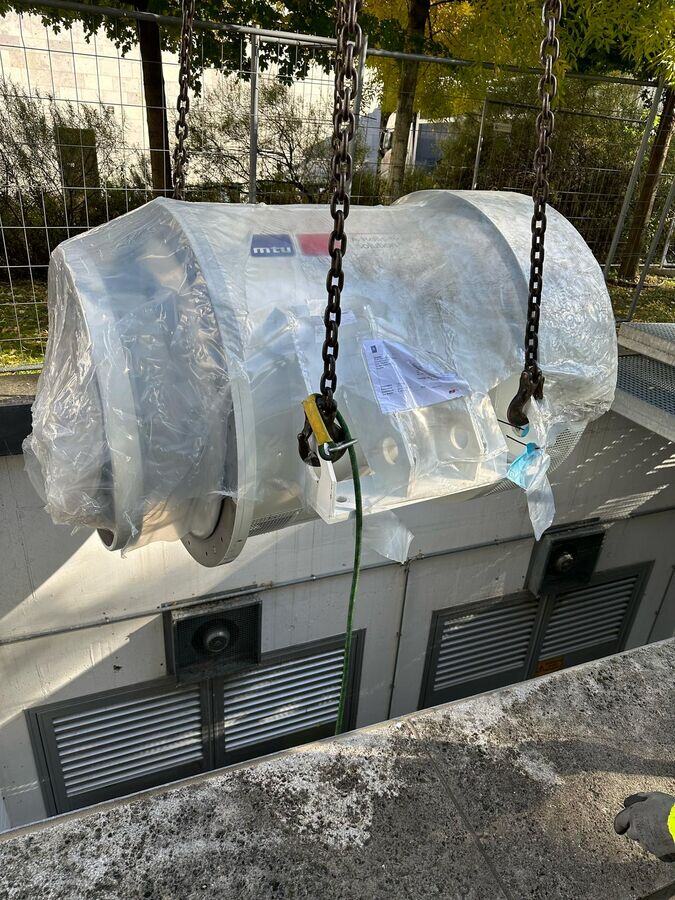
The only way out of the building led upwards. We positioned the mobile crane above the moving-in shaft, which lifted the heavy components vertically out of the basement.
The pictures show this moment from both perspectives: from below, where our team guided and slung the load in the shaft – and from above, where the crane lifted the packaged generator over the treetops onto the laydown area.
Lifts like this demand exact coordination: the crane operator cannot see the load at times, and every movement is made on commands from our Lifting AP. Safety and communication decide the success of the project here.
Moving back in and reassembly
After the overhaul, the reconditioned components came back – carefully packaged, delivered and moved back into the building through the shaft on the crane hook.
In the plant room, our fitters then reassembled the generator set: position the generator, connect it to the engine, fit the coupling, align and secure everything. In the end, the complete standby generator set was back in place – ready for an emergency.
Why Omega Mounting for work on standby power systems?
As an installation company from Rodgau, we combine exactly the skills such projects require:
- Dismantling and installation of heavy generator sets in existing buildings
- Lifting operations with chain hoists, beam structures and mobile crane
- Transport of heavy components through narrow building routes
- Moving in and out through shafts and installation openings
- Coordination of all trades through a dedicated lifting contact
- Clean, documented procedures – even in sensitive buildings
Conclusion
Separate the generator, bring it through the building, lift it vertically through the shaft, bring the overhauled parts back and reinstall everything – this project shows the full range of our work: mechanics, lifting technology and logistics, seamlessly interlocking.
For the operator, this meant: one point of contact for the complete mechanical part of the generator maintenance – from the first hands-on step to the fully reassembled generator set.
Planning maintenance or an overhaul of your standby power system?
Whether standby power system, generator set replacement or machine relocation: we take on dismantling, lifting operations, transport and reinstallation – even when the only way is through the moving-in shaft. From Rodgau, we are quickly on site in Frankfurt, Offenbach, Hanau, Darmstadt and the entire Rhine-Main region.
Before the first maintenance is due, the system first has to get into the building. How that works is shown in our overview Moving in standby generators at the data center.
What we regularly maintain on standby power systems – engine, cooling system, AdBlue and SCR system, fuel system with day tank, exhaust system, load test – is set out as a service offering on the page maintenance of standby power systems.
Talk to us – request a call-back appointment for your project now.
Photo gallery of the job
Are you planning a project of this kind?
Tell us briefly what it is about – we will come back to you with an honest assessment.
100% free and without obligation
Related guides for this project

About the author
Tobias Schott
Managing director of Omega Mounting GmbH, Rodgau · more than 20 years of hands-on experience in installation and maintenance
A trained mechatronics technician, at home in maintenance, servicing and industrial installation since 2004 – first alongside his father, and since 2012 with Omega Mounting: from the overhead conveyor in Frankfurt to the crane system in a new-build hall. As appointed person for lifting operations, he plans and leads lifting operations in data centers and on industrial sites in the Rhine-Main region, is an instructor and examiner for cranes, aerial work platforms and telehandlers, and a safety officer. On assignments abroad he is known as the "German Troubleshooter" – the one you call when things get stuck on site. He did not learn what quality means from a manual, but from his father: Made in Germany as a standard for his own work, not as a label. That is why quality comes first at Omega Mounting – before speed and before price. The project diary shows the jobs his team has planned and carried out – without customer names, but with everything that can be learned from them.
Frequently asked questions
Many components of a generator are not accessible in the installed condition. For a thorough overhaul, the generator is therefore separated from the drive engine and completely removed. After the overhaul, it is moved back in, installed and aligned.
Through the building's moving-in shaft. The components are dismantled in the plant room using chain hoists, transported to the shaft on machine skates and lifted vertically upwards there by a mobile crane. Moving back in takes place along the same route in reverse order.
The work begins long before the day of the operation: checking passages and space conditions, selecting lifting accessories, dimensioning lifting equipment such as chain hoists, assessing the load-bearing capacity of the suspension points and preparing lift plans. On site, the Lifting AP then coordinates all lifting operations – from slinging and communication with the crane operator to coordination with the operator.
Because before the actual removal, a considerable amount often has to be dismantled first – such as the enclosure of the generator – and this effort is regularly underestimated. A realistic schedule takes dismantling, disassembly, transport, lifts and reinstallation into account from the start and thus gives the operator planning certainty.
Yes – the work takes place in the plant room and at the moving-in shaft and is planned so that the rest of the building's operations are not affected. Transport routes and crane set-up areas are agreed with the operator in advance and secured.
Yes. We take on the complete mechanical part: dismantling, moving out, moving the overhauled components back in, reassembly and alignment – all from a single source, with a fixed point of contact.
Our headquarters are in Rodgau near Frankfurt. Jobs in Frankfurt, Offenbach, Hanau, Darmstadt and the entire Rhine-Main region are part of our core business – we take on supra-regional projects throughout Germany.
 English
 German