
- Maintenance & servicing
Maintenance of overhead conveyors
Monorail, power & free or classic EOC: we have been maintaining, inspecting and repairing electric overhead conveyors for over 15 years – in automotive plants, in food production and at airports.
- What it is about
An overhead conveyor rarely fails suddenly
It announces itself – over weeks, sometimes over months. It squeals in the curve. It reports erratic communication errors that cannot be reproduced. A carrier stops and runs again after acknowledging. Such systems keep running until they no longer do – and the failure almost always picks its own moment.
The problem from a maintenance point of view: everything that wears on an overhead conveyor hangs overhead. Every inspection needs an access platform or mobile scaffold, every task takes longer than on the ground – and the maintenance window is not a recommendation but a hard limit.
That is exactly where we come in: as reinforcement in the window, for the work at height, for welding and milling work based on findings – and as an expert second opinion when a problem has persisted for years and nobody asks why any more.
- Warnsignale
How you can tell it is time
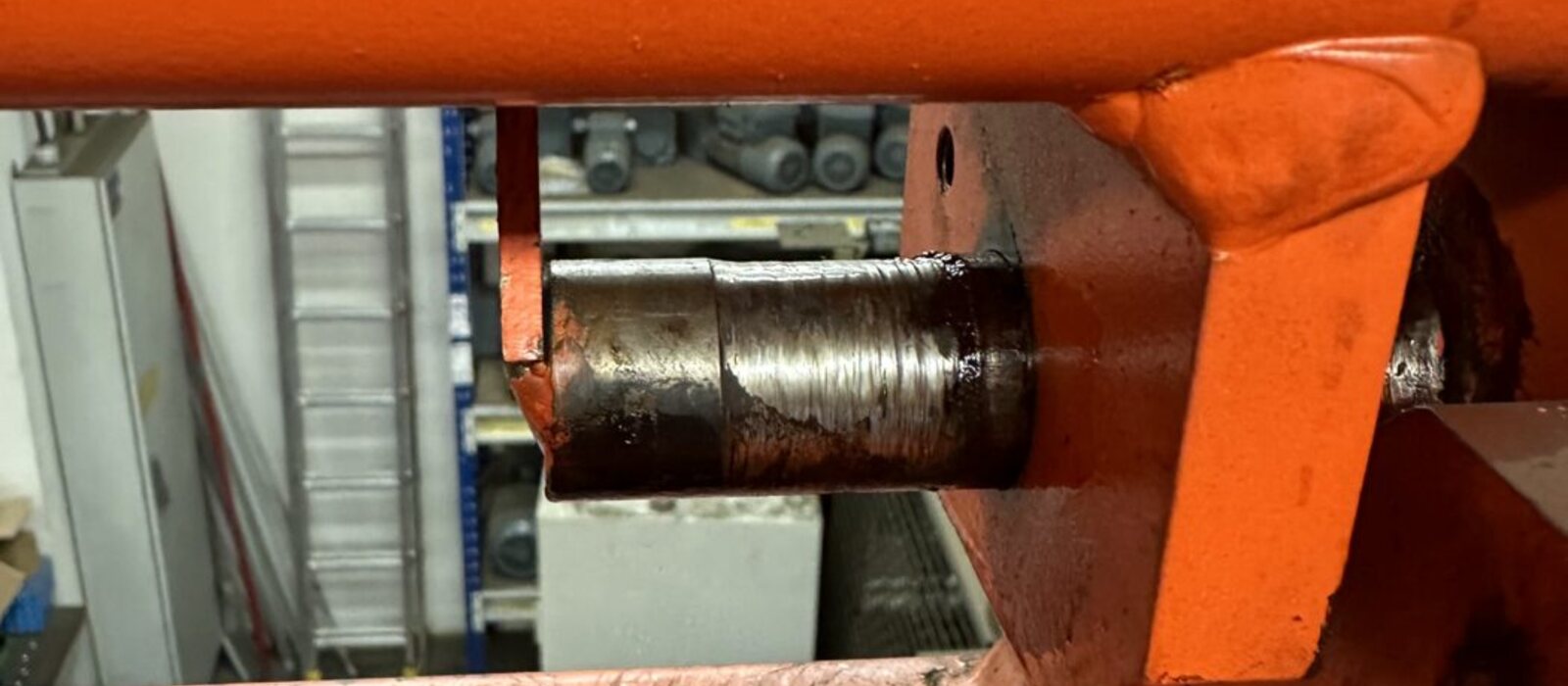
The system squeals
The lubricating film in the hanger pins no longer holds, metal is working against metal. At this point the replacement can still be planned.
Erratic errors on the data bus
Reported as an electronics problem, but almost always mechanical: a dirty conductor rail on which the carbon brushes lose contact.
Switch does not operate cleanly
Check end positions, interlock and play in the switch drive – often an adjustment is enough before it turns into a derailment.
Fault messages always at the same spot
The system is pointing right at it. The switch, sensor or rail joint at this position is the first place to look.
Jerking at the transition, derailments
Offset at the rail joints, worn running surfaces or deformed suspensions. A case for a geometry check instead of readjusting.
Black dust under the track
Carbon abrasion. It tells you where the conductor rail is working – and when it is next due for cleaning.
A component only moves with force
That is always a finding, never a working method. We trace the cause instead of making the crowbar the method.
Drive blocked, position errors in the PLC
We compare the fault memory with the mechanical findings – clean first, then measure, then replace.
- Services
What we take on at your system
From visual inspection to repair based on findings – with our own fabrication for everything that can no longer be bought.
Inspection and main service
Systematic inspection of all five assemblies instead of spot checks of the known trouble spots – with measured values and documented findings.
Cleaning and inspecting the conductor rail
Section-by-section cleaning, assessing contact tracks and carbon brushes, measuring voltage drop along the route. Removes the cause of most data bus errors.
Pin and bush refurbishment
Measuring hangers, replacing pins and bronze bushes – in series over several weekends, without stopping production.
Repair welding on rail and structure
Cracked curve segments and cracks in lifter structures: grinding out, multi-pass TIG welding, grinding down until the running surfaces are back to size.
Heber-Revision
Chains, sprockets, alignment, gearboxes, limit switches and safety catches. We trace the symptom instead of overriding it with force.
Switches, end positions and sensors
Switch adjustment, switching points of the sensors, clamps and geometry check of the rails – compared with the fault memory of the controller.
Safety inspection and documentation
Inspection to DGUV requirements with report, photo documentation and a list of findings that also records what was not fixed this time.
In-house fabrication based on findings
Reinforcement plates, fitting pieces, face-milled flanges: what can no longer be bought we fabricate in Rodgau – in advance, not in the window.
- Wear points
The five assemblies that wear independently
Whoever only inspects where something last broke systematically overlooks the rest. That is why we go through all five.
Rail, curves and switches
The highest forces act in the curves – and that is where the weld seams are. We check for crack initiation at the weld transitions, running surfaces, rail joints and suspensions.
Conductor rail and current collectors
The lifeline: power and control data run over the same tracks. Carbon abrasion plus hall air produces an insulating layer – and in the worst case contact burn.
Trolleys, hangers and pins
The overlooked wear. A pin connection pivots instead of rotating – a load-bearing lubricating film can never build up. "Maintenance-free" is an expensive misconception here.
Lifters and drives
Continuous runners under load, in automotive production with hundreds of thousands of load cycles a year. Chains, sprockets, alignment, limit switches, counterweight.
Controls, sensors and data bus
Misadjusted sensors, worn clamps, dirty sensors. Our order: clean first, then measure, then replace.
We have written this up in detail with warning signs, intervals and inspection points in our guide – including a downloadable overhead conveyor maintenance checklist.
- From the job diary
Jobs on overhead conveyors
Overhead conveyor squealing? 80 overhead conveyor carriers in a food plant
Read the job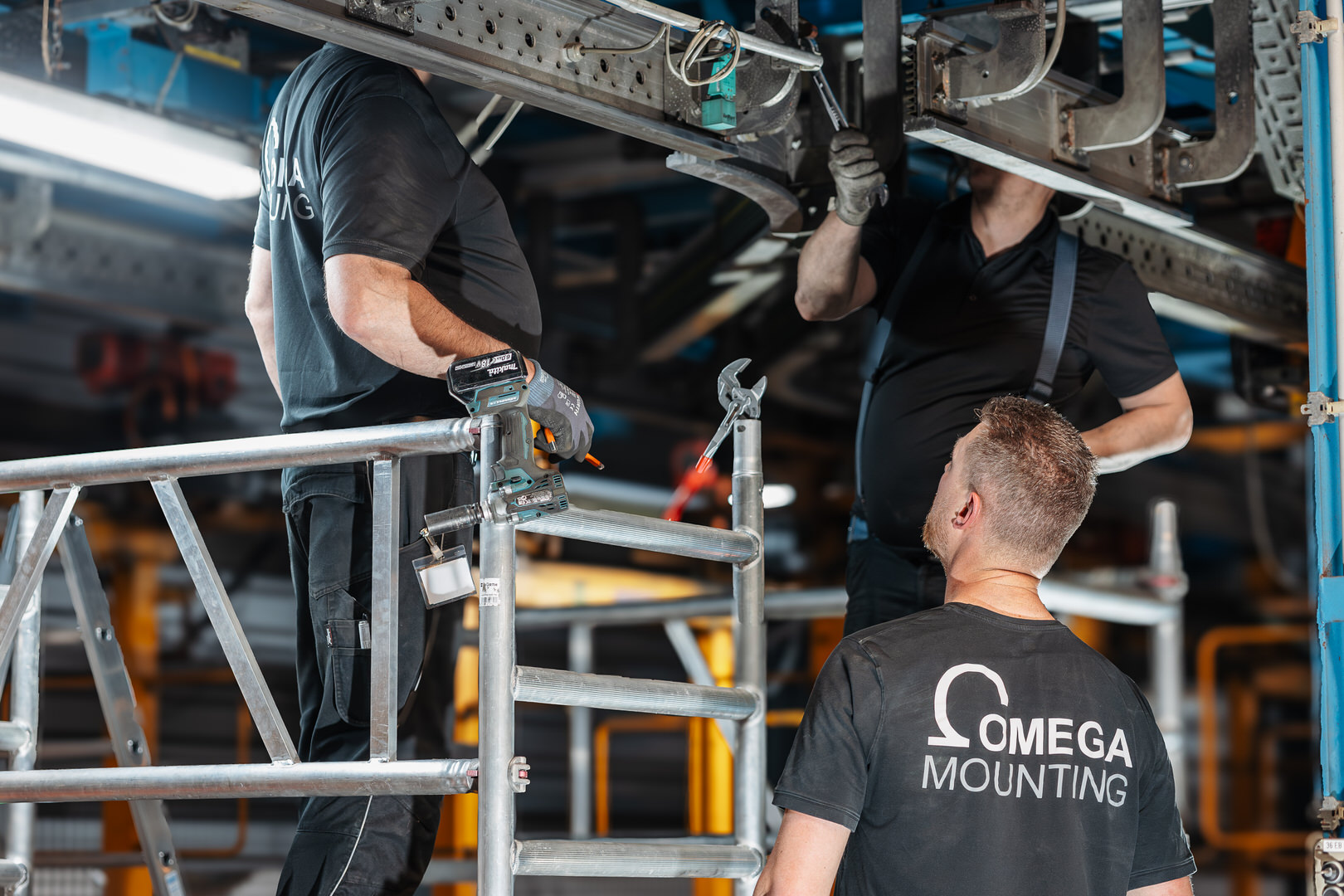
Overhead conveyor overhaul in Frankfurt: around 100 switches overhauled at weekends – without production downtime
Read the job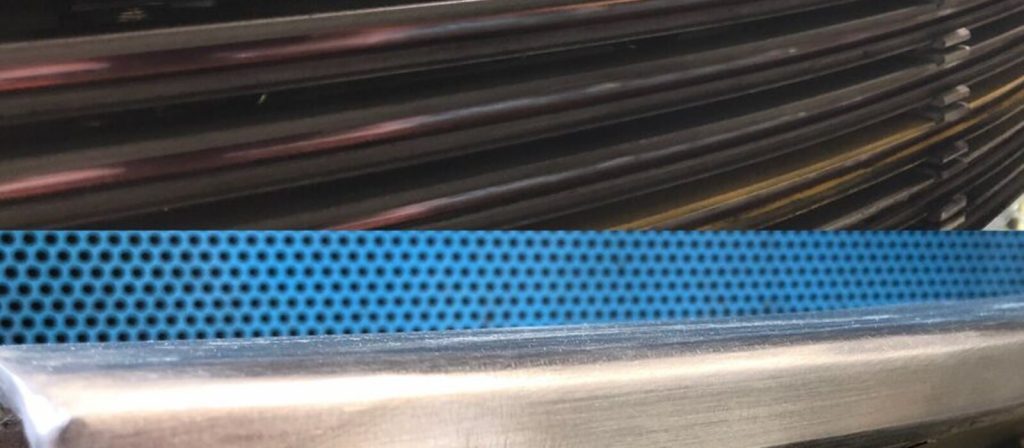
Repairing an overhead conveyor rail: TIG repair weld on a cracked curve
Read the job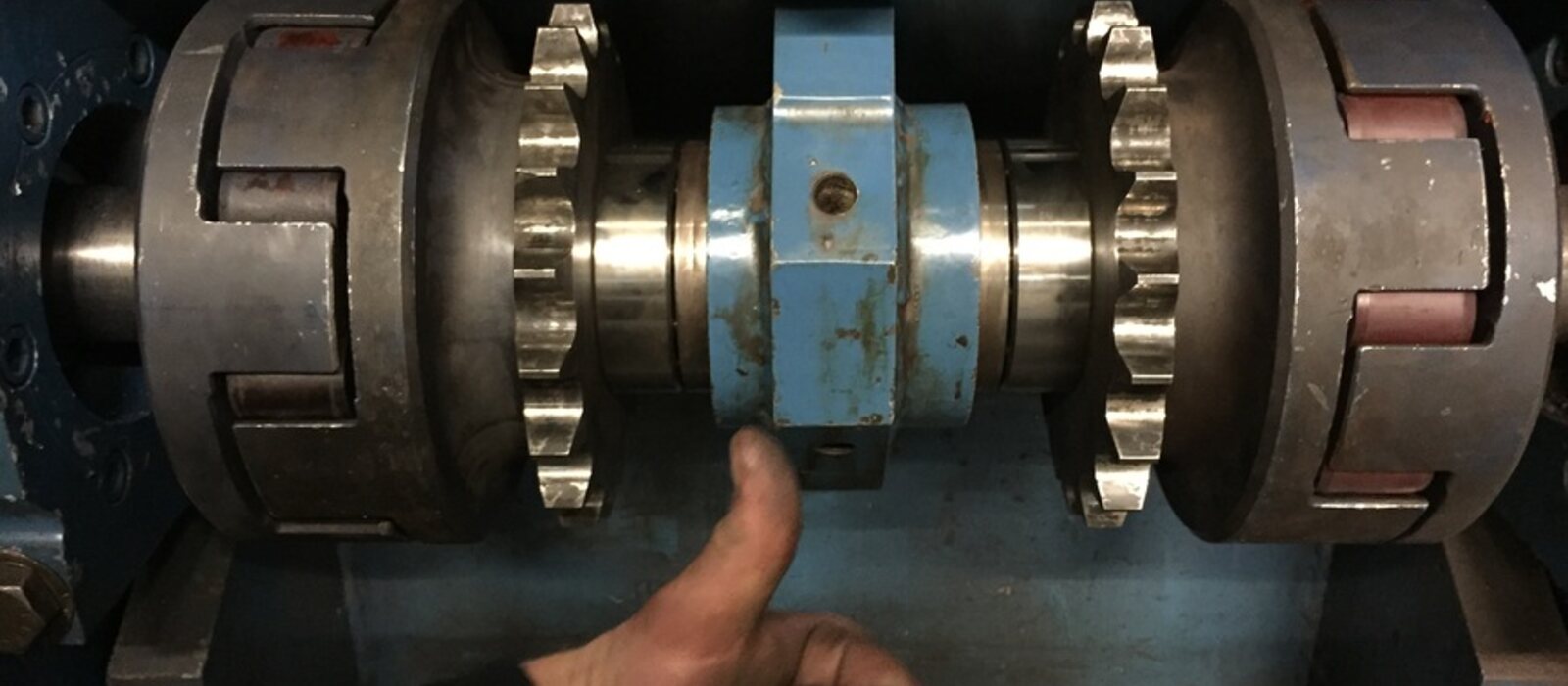
Overhead conveyor lifter maintenance at an automotive supplier: deflection block overhaul instead of replacement
Read the job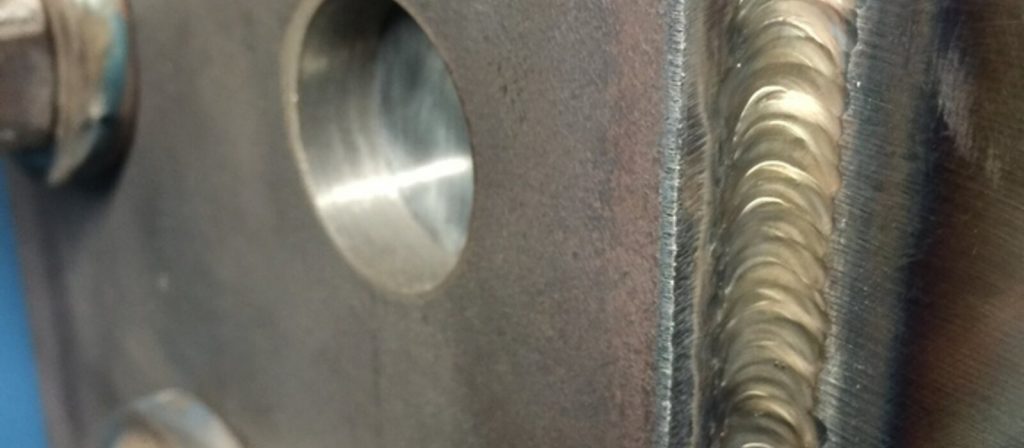
Repairing an overhead conveyor lifter: cracks in the lifter structure fixed with reinforcement plates
Read the job- Process
How a maintenance window runs with us
A maintenance window at the weekend is not a period of time but a countdown. What gets done in it is decided in the week before.
Before the window
Reviewing the findings of the last service, evaluating the fault memory, procuring wear parts, pre-measuring critical components. Everything that has to be fabricated goes into the workshop lead time – a maintenance window is too short to make parts in it.
In the window
Clean first, then inspect and measure, then repair. This order saves half the searching. Where possible, two teams work in parallel – one on the conductor rail, one on the lifter.
After the window
Test runs with several carriers, not just one: only under realistic loading does it show whether transfers, switches and buffers are working cleanly. Then the documentation – including what was not fixed this time.
Where people work under raised loads, we secure twice: the counterweight hangs on two chain hoists and is additionally supported with timber baulks. By calculation, one safeguard is enough. For people underneath, it is not.
- Frequently asked questions
Overhead conveyor maintenance: straight answers
How often does an electric overhead conveyor need to be maintained?
As a guide: a visual inspection every six months, an annual main service with measurement, cleaning and repair based on findings. With high cycle rates, contaminated hall air or older systems, shorter intervals make sense – especially for cleaning the conductor rail.
What does it mean when the system squeals?
That the lubricating film in a sliding point no longer holds. Usually worn pins and bronze bushes in the hangers are behind it. The noise is an early signal – at this point the replacement can still be planned.
Can you do maintenance without stopping production?
Partly. Cleaning and inspection work can be scheduled section by section in production breaks, hanger refurbishments in series over several weekends. Work on lifters, switches and load-bearing components, however, needs a real shutdown window.
Do you also work at weekends and on public holidays?
Yes, with overhead conveyor systems that is the rule rather than the exception. Most systems are tied to the production cycle – downtime happens at the weekend, in the holiday shift or not at all.
Our system is old, there are no more spare parts. Is there anything that can still be done?
Usually yes. Cracked rail segments are removed, ground out, TIG-welded in several passes and ground back to size. For reinforcement plates and fitting pieces we have our own workshop with metalworking, welding and a milling machine.
Which system types do you look after?
Electric overhead conveyors, monorail systems and power & free systems – in paint shops, filling lines, food production, automotive manufacturing and at airports.
When is your next maintenance window?
Tell us what your system is doing – we will take a look at it and tell you honestly what needs doing now and what can wait. Feel free to send photos or fault logs straight away.
100% free of charge and without obligation · Omega Mounting GmbH, Rodgau near Frankfurt
 English
 German