

- Technology explained – technology and procedures
Ultrasonic leak detection: hearing compressed air leaks and bearings
By Tobias Schott · 5-minute read · Updated November 2026
A compressed air leak usually hisses more quietly than the hall around it – but it whistles in the ultrasonic range, and a detector makes exactly that whistle audible and locatable.
You come across ultrasonic leak detection as a leak survey by the compressor service provider, as an item in an energy audit, or as red tags hanging on couplings and hoses after a walk-round. The same instrument also listens to bearings, valves and condensate drains.
This article explains how the method works, what it finds and where its limits are. How to maintain the compressor station and the compressed air network as a whole is covered in the guide Maintaining the compressor station and compressed air network.
What is ultrasonic leak detection?
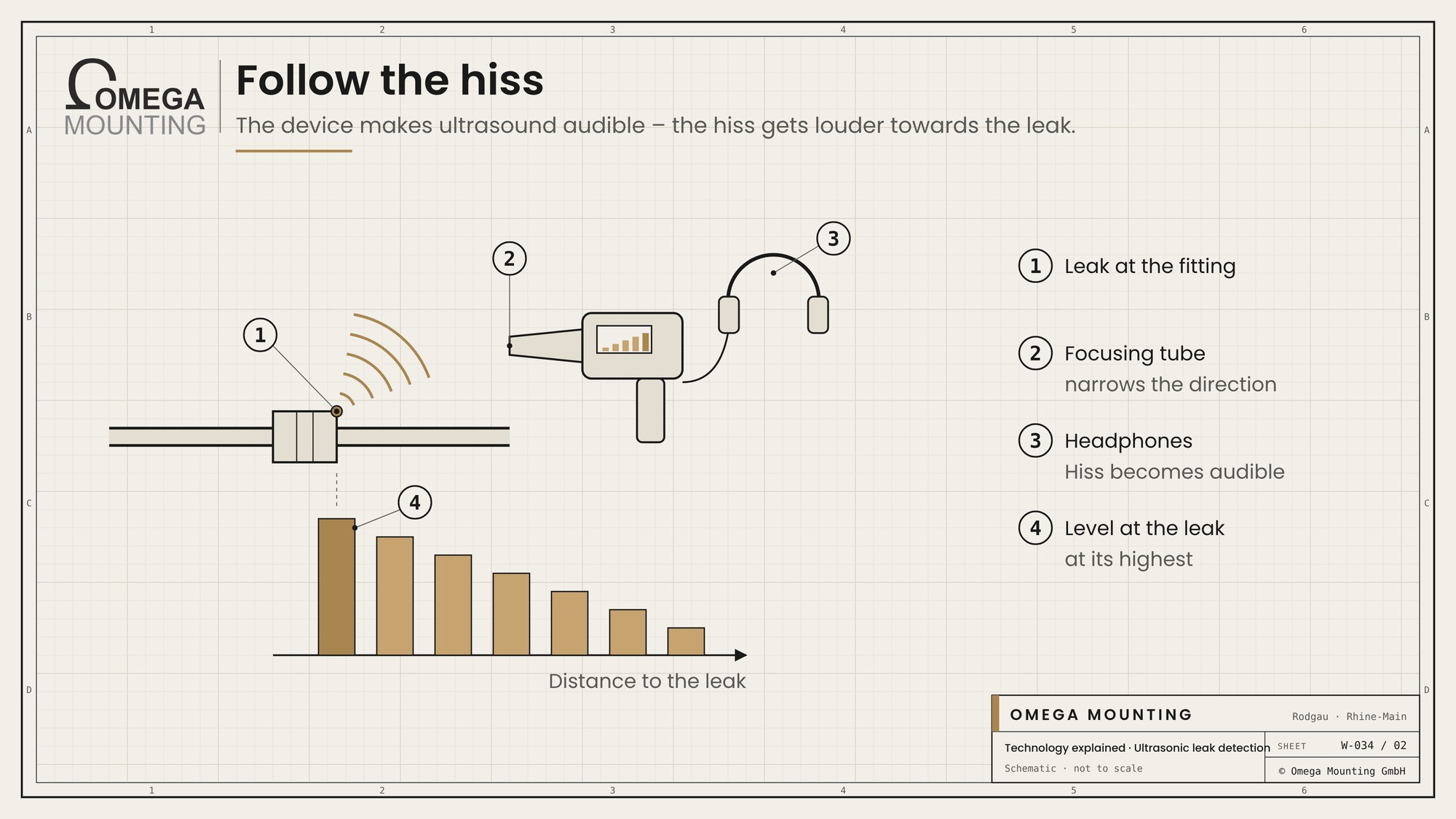
Ultrasonic leak detection means locating leaks in pressure and vacuum systems from the ultrasound produced by gas escaping or entering. When air flows through a narrow gap, the flow becomes turbulent. This produces a broadband noise that extends far beyond the human hearing limit of around 20 kilohertz.
The detector picks up this ultrasound with a microphone, typically around 40 kilohertz, and converts it into an audible tone in the headphones. Because ultrasound has a short wavelength, it travels in a highly directional way. That is why a leak can be located to within a few centimetres even during noisy operation. In German the method is called “Ultraschall-Leckageortung”; the instrument is an ultrasonic detector.
Key facts
- Purpose: Find leaks in compressed air, gas and vacuum systems, and assess bearings, valves and drains by ear.
- Measuring principle: Ultrasound from turbulent flow or friction is picked up and made audible.
- Equipment: Handheld unit with directional microphone for airborne sound, contact probe for structure-borne sound, headphones and level display.
- Typical test points: Couplings, hoses, fittings, air service units, cylinders, valves, condensate drains, rolling bearings.
- Prerequisite: The system is under pressure or vacuum and the machines are running.
- Standard: ISO 29821 for ultrasound in condition monitoring, ISO 11011 for assessing compressed air systems.
- Common misconception: A leak you cannot hear costs nothing – yet small leaks run day and night and add up.
Why small leaks matter
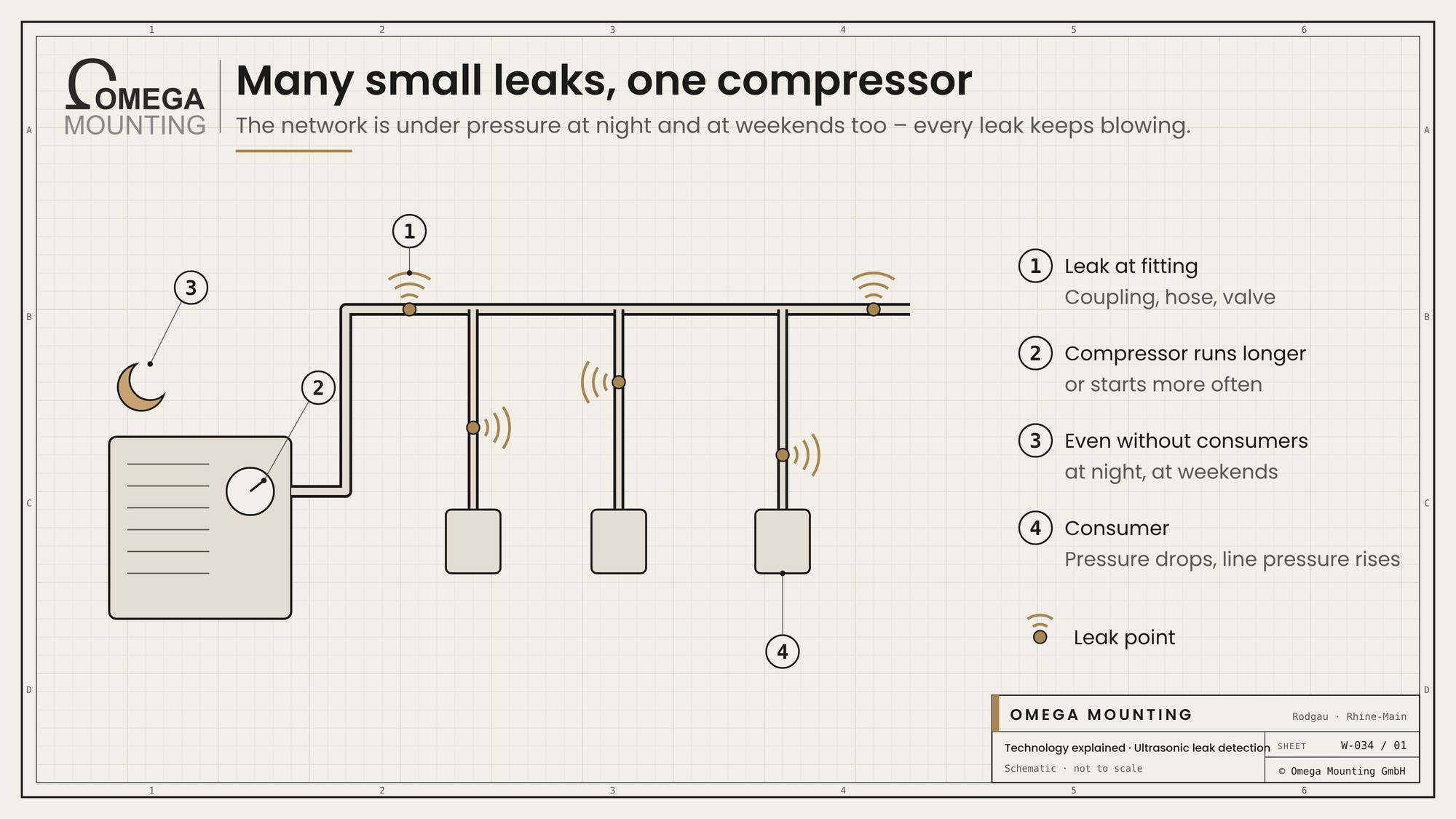
A compressed air leak costs energy for as long as the network is under pressure – including breaks, nights and weekends, when nobody needs compressed air.
Compressed air is an expensive form of energy to produce: the compressor turns most of its drive energy into heat, and only part of it arrives at the machine as usable compressed air. Every leak makes the compressor run longer or start more often. If the pressure at the consumers drops, the network pressure is often raised – and at higher pressure every leak loses even more air. On top of that, pneumatic actuators switch more slowly or unreliably when the pressure is too low.
Individual leaks are hardly audible during operation. Only the sum of many small leaks makes the difference – and that is exactly what the ultrasonic detector finds.
What the ultrasonic detector finds – and what it means
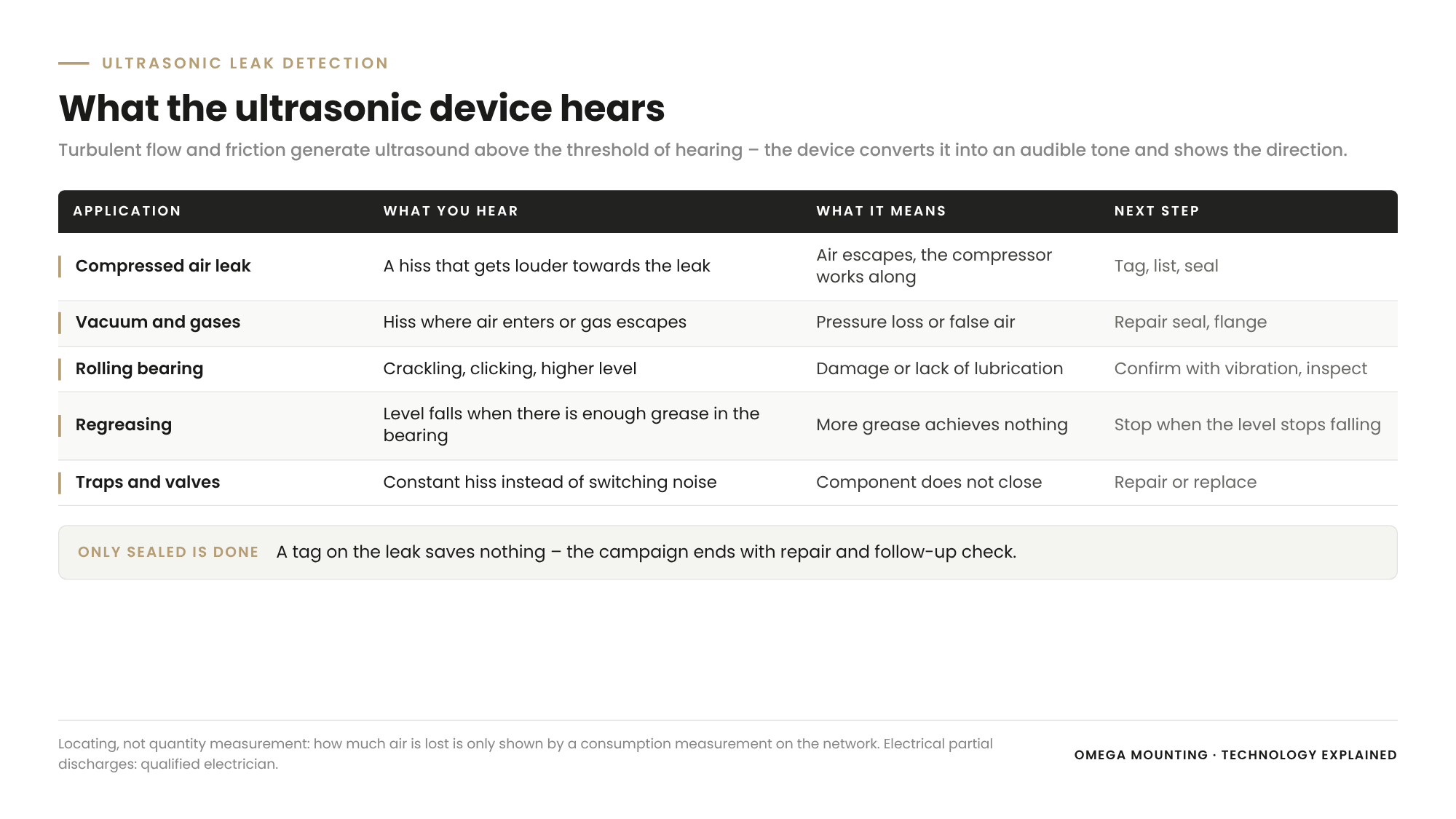
The instrument mainly finds three things: escaping gas, friction in bearings, and leakage through components that should be closed.
| Application | What you hear | What it means | Next step |
|---|---|---|---|
| Compressed air leak | Steady hiss that gets louder towards the leak | Compressed air escapes unused and the compressor works to replace it | Tag it, add it to the leak list, seal it or replace the part |
| Vacuum and technical gases | Hiss at the point where air enters or gas escapes | The system loses pressure or draws in false air | Repair the seal, fitting or flange |
| Rolling bearing in operation | Steady, quiet hiss in normal condition | Crackling, clicking or a clearly higher level indicate damage or lack of lubrication | Confirm with vibration and temperature, inspect the bearing |
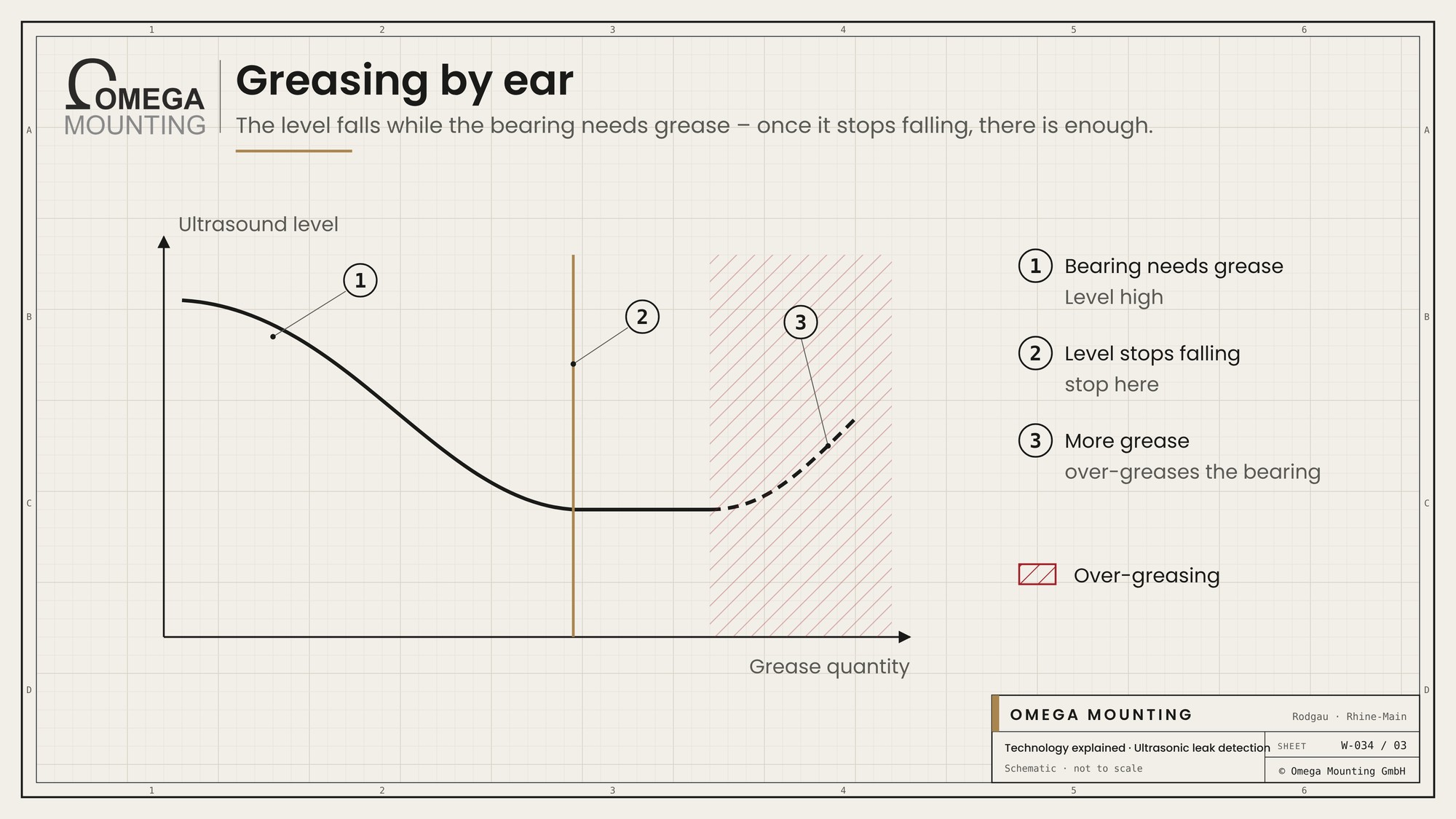
| Regreasing | The level drops as soon as there is enough grease in the bearing | More grease achieves nothing and can over-grease the bearing | Add grease only until the level stops falling |
| Condensate drains and valves | Continuous hiss instead of short switching sounds | The component does not close and blows through | Repair or replace the drain or valve |
On electrical installations the devices also pick up partial discharges and leakage currents. That belongs in the hands of a qualified electrician, not in a mechanical inspection round – on machines and systems our own electricians take care of it.
Where the method reaches its limits
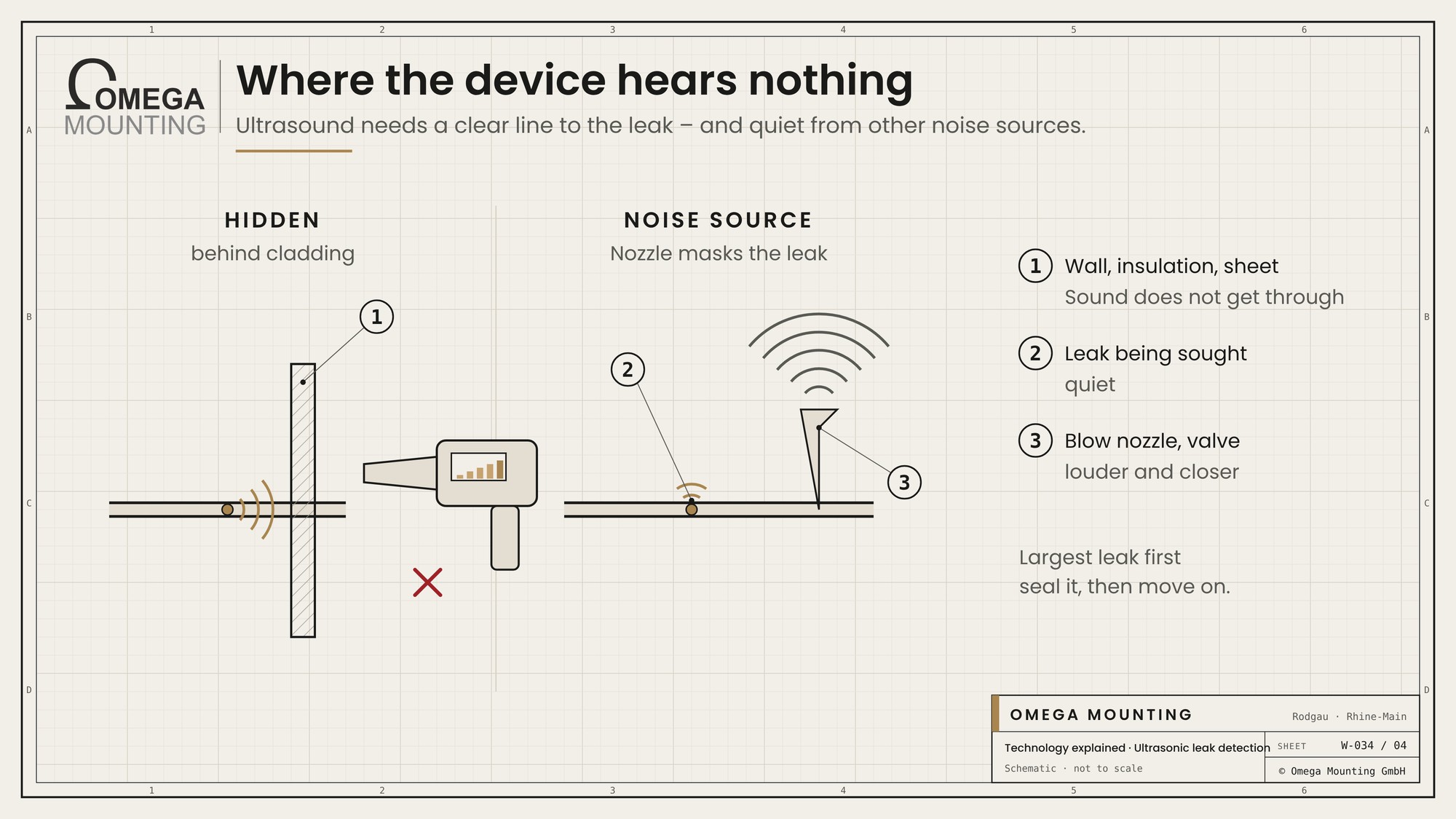
Ultrasound is a locating method, not an instrument for measuring quantities – and it needs a clear line of sight to the leak.
- Hidden points: Ultrasound hardly gets through walls, cladding or insulation. Only access or other test methods help here.
- Sources of interference: Other leaks, blow-off nozzles or pneumatic valves nearby mask the sound you are looking for. Seal the loudest leak first, then keep searching.
- Size of the leak: The level depends on pressure, gap shape and distance. How much air is lost can only be roughly estimated from it. Reliable quantities come from measuring the network’s consumption.
- No substitute for materials testing: Ultrasonic testing of welds or wall thickness is a different method. It works with sound coupled into the material and belongs with qualified testing personnel to DIN EN ISO 9712.
What we pay attention to
A leak survey is only finished when the leaks are sealed – that is why we carry out the repairs after locating them.
- We work through the leak list: location, component, action, done. A tag without a repair saves nothing.
- We replace couplings, hoses and fittings with matching parts instead of wrapping them in tape.
- We schedule repairs that need a depressurised section in shutdown windows and lock the section out against being switched back on.
- We test again after the repair. A sealed leak sometimes shifts the pressure to the next weak point.
- We grease bearings to the manufacturer’s instructions, not “by feel”. Too much grease harms a bearing as much as too little.
- Measurements on electrical installations are carried out exclusively by qualified electricians at our company.
Where we use it
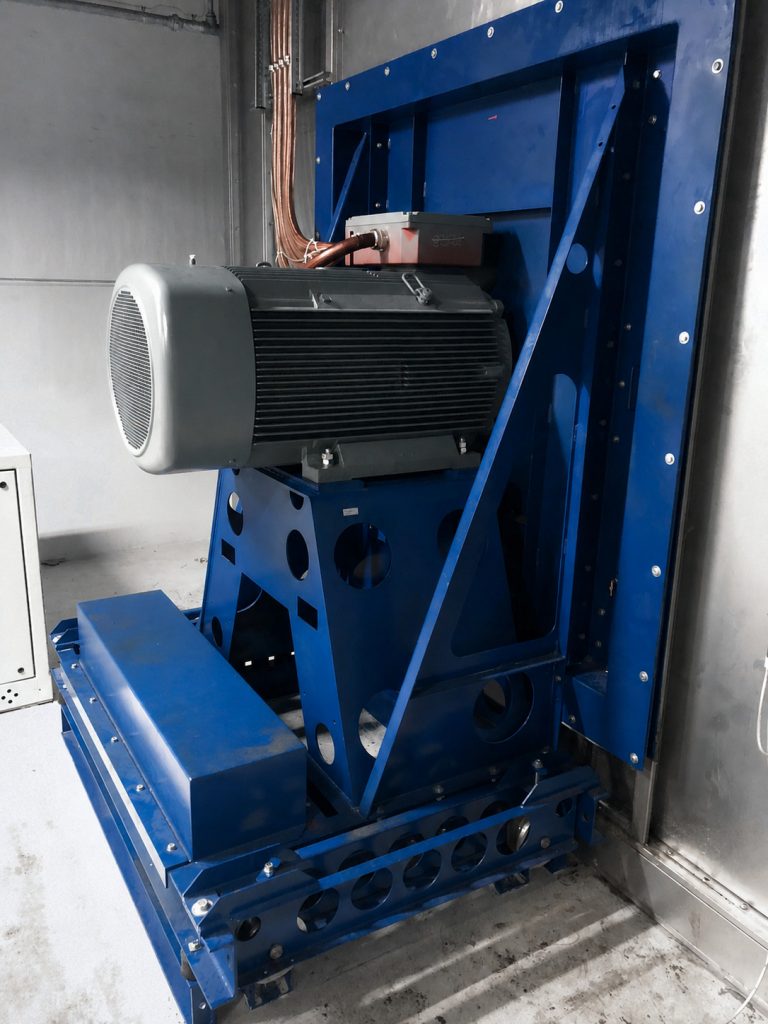
Leaking lines, valves that blow through and bearings that have become noisy turn up on almost every maintenance job in a live plant. Bearings are the components whose condition shows early in the sound. Take the fan bearing replacement in a paint shop near Offenbach – the fans ran practically non-stop, and their bearings are among the most heavily stressed wear parts of the plant. We removed motor and impeller, replaced the bearings and overhauled the unit. We fix leaks in compressed air and hydraulic lines as part of our Maintenance and servicing.
More technology explained
Technology explained
the method that confirms bearing damage you have heard.
Technology explained
warm valves and bearings as a second look.
Guide
the guide to why leak-tight compressed air networks save energy.
Do you have questions about how this works on your site?
Questions about how this works in your plant – for example, who seals the leaks from the last survey? We work through your leak list, repair lines, valves and bearings and test again. Request a callback – we will get back to you.
Free, no-obligation callback
About the author
Tobias Schott
Managing director of Omega Mounting GmbH, Rodgau · more than 20 years of hands-on experience in installation and maintenance
A trained mechatronics technician, working in maintenance, servicing and industrial installation since 2004 – first alongside his father, and with Omega Mounting since 2012: from overhead conveyors in Frankfurt to the crane system in a new-build hall. He plans and leads lifting operations as an appointed person (AP) in data centers and on industrial sites in the Rhine-Main region, trains and examines operators of cranes, mobile elevating work platforms and telehandlers, and is a qualified occupational safety specialist. On jobs abroad he is known as the “German Troubleshooter” – the person you call when a site gets stuck. He learned what quality means from his father, not from a manual: Made in Germany as a standard for his own work, not a label. That is why quality comes first at Omega Mounting – ahead of speed and price. The Technology explained articles cover the equipment and techniques his team uses every day: what counts on site is in them – what only appears in the brochure is not.