
- Project report – UVV
UVV defect on the loading dock: weld seams re-welded, door released again
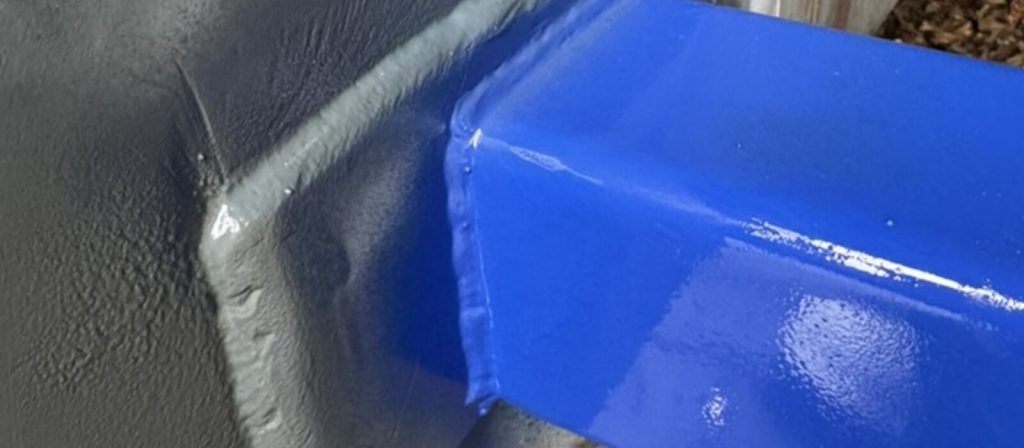
How 2 fitters ground out the defective seams of two docks on a snowy winter day, re-welded them with deep penetration and sealed them against corrosion
It is every logistics manager's nightmare: the annual UVV inspection (accident prevention regulations) comes round – and the loading dock fails. That is exactly what happened at a logistics service provider: the inspector classified the dock's weld seams as defective and refused the inspection stamp. The consequence was drastic: without a valid UVV inspection the dock may not be used – the entire door including the loading dock was locked out. Every locked-out door costs a logistics operation hard cash.
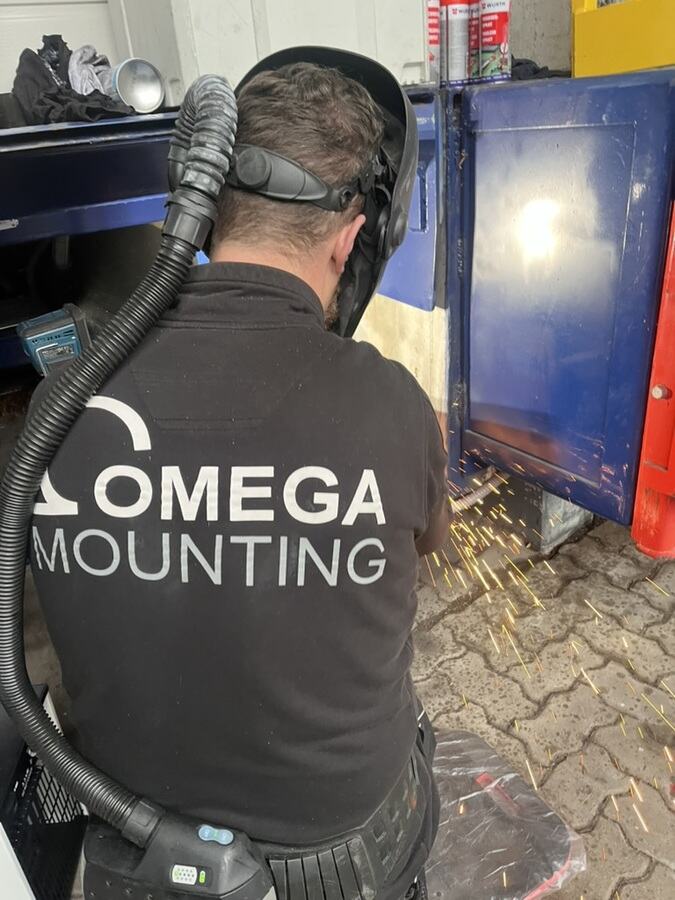
So they called us. Our job: to properly re-weld the seams so that the dock gets its stamp back at the next inspection. Two fitters, one working day, two docks – in snowfall and sub-zero temperatures, with an industrial heater procured specifically for the job. Because when welding in winter, the rule is: no heat, no good seam.
Project profile
- Scope: Repair of the weld seams on two loading docks classified as defective under the accident prevention regulations (UVV) – on-site assessment, grinding out the old seams with an angle grinder, re-welding with deep penetration (MAG), followed by corrosion protection with primer and paint
- Team: 2 fitters from Omega Mounting
- Project duration: 1 working day (in snowfall – with an industrial heater for people, steel and equipment)
- Location: Logistics service provider (customer anonymous)
What is the UVV inspection of loading docks?
Loading docks and dock levellers are power-operated work equipment. As such, they must be inspected regularly – usually once a year – on the basis of the Betriebssicherheitsverordnung (BetrSichV, the German Industrial Safety Ordinance) and the relevant DGUV rules; in everyday operations everyone simply says "UVV inspection". The inspection may only be carried out by a competent person (qualified person) who can assess the design, loading and typical damage patterns of such equipment.
Far more than the function is inspected: the load-bearing structure and its weld seams, the hydraulics including hose lines for leaks, the safety devices (fall protection, marking, warning markings), the bearing surfaces and hinges – and the general state of repair. The result is documented; equipment that passes receives its inspection badge ("stamp") and is released for another year.
If the inspection is failed, there is no stamp – and without a stamp no release: the dock may no longer be used. This is not a formality but has very practical reasons: anyone who continues to operate work equipment with a known defect risks trouble with the employers' liability insurance association and the insurer in the event of an accident – and above all the health of their employees, who drive their forklifts over precisely this dock every day. In practice, therefore, the entire door is locked out, as it was here. For a logistics operation that means less loading capacity, detours, queues in the yard. And that is why, with UVV defects, one thing counts above all – a fast, professional repair that will stand up at the inspector's follow-up appointment. That is exactly what we were called in for.
How do you repair defective weld seams professionally?
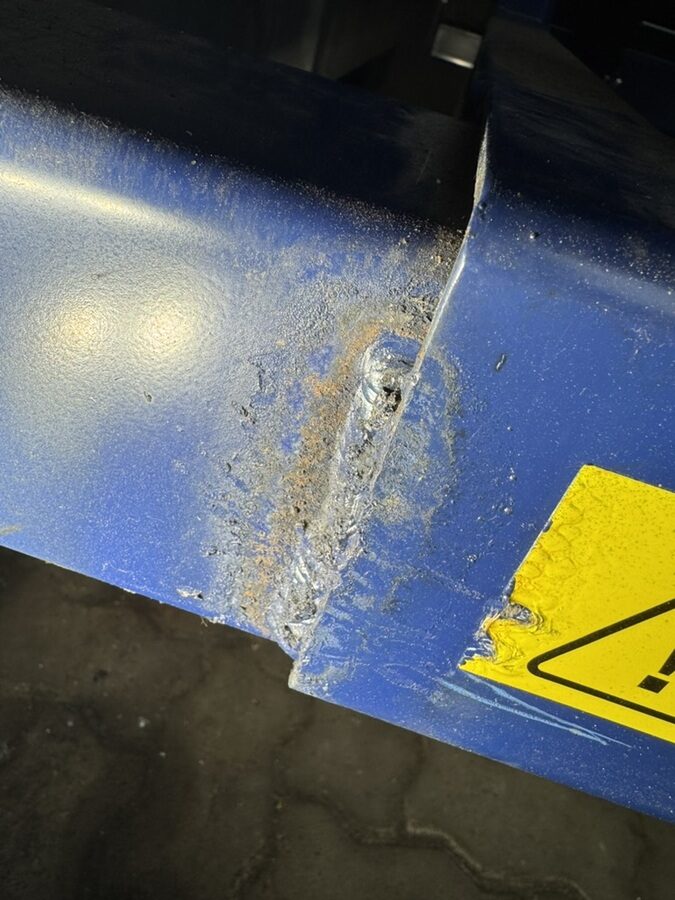
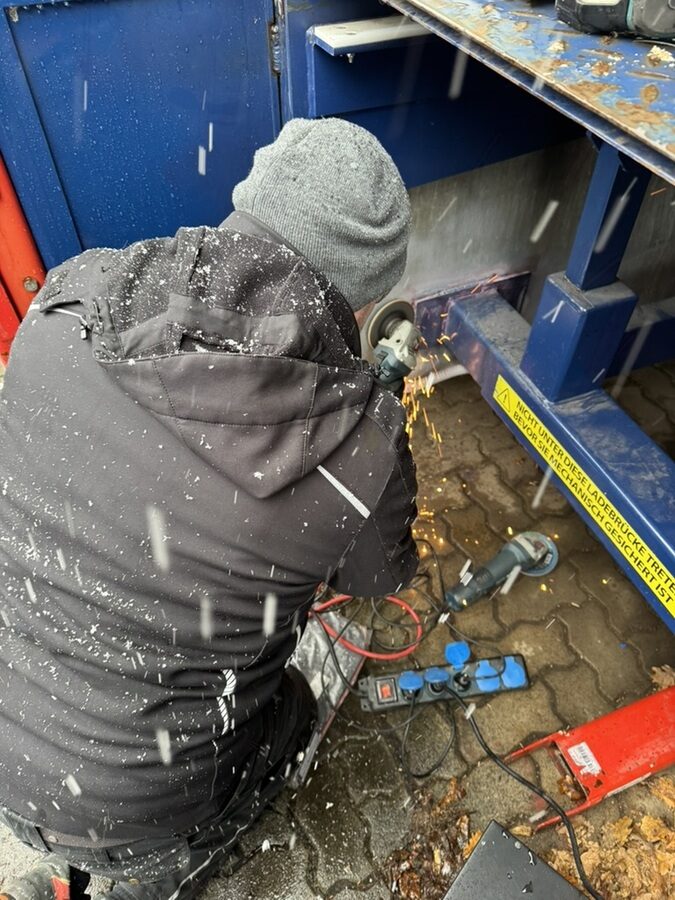
Not by simply "welding over the top" – but out with the old, in with the new. After the on-site assessment, we first ground out all the seams that had been flagged completely with an angle grinder: laying a new seam on top of a bad old one would only mask the weak point. Only when the parent metal is clean and bright is a joint created that holds.
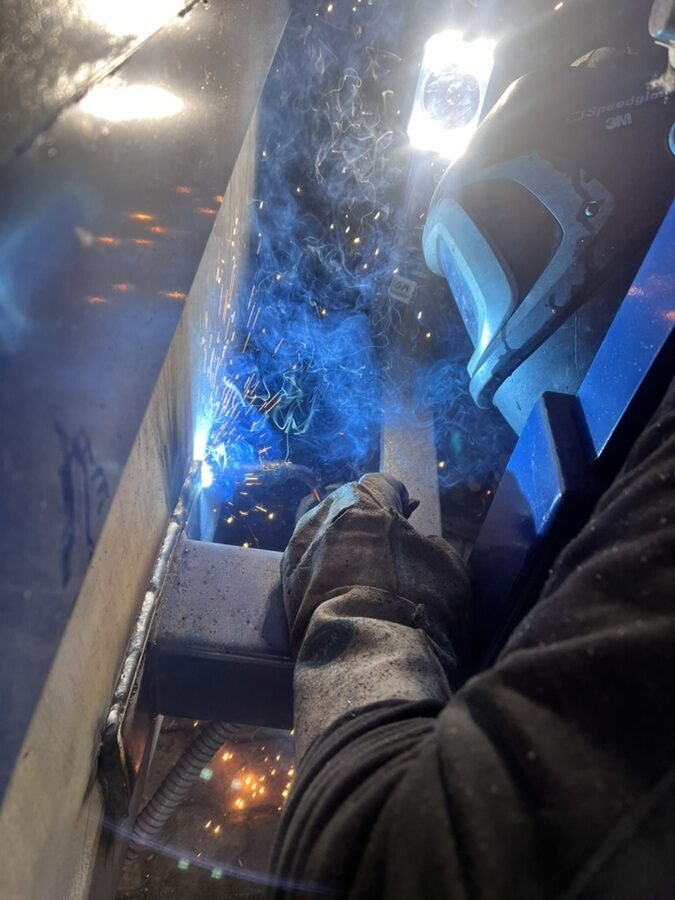
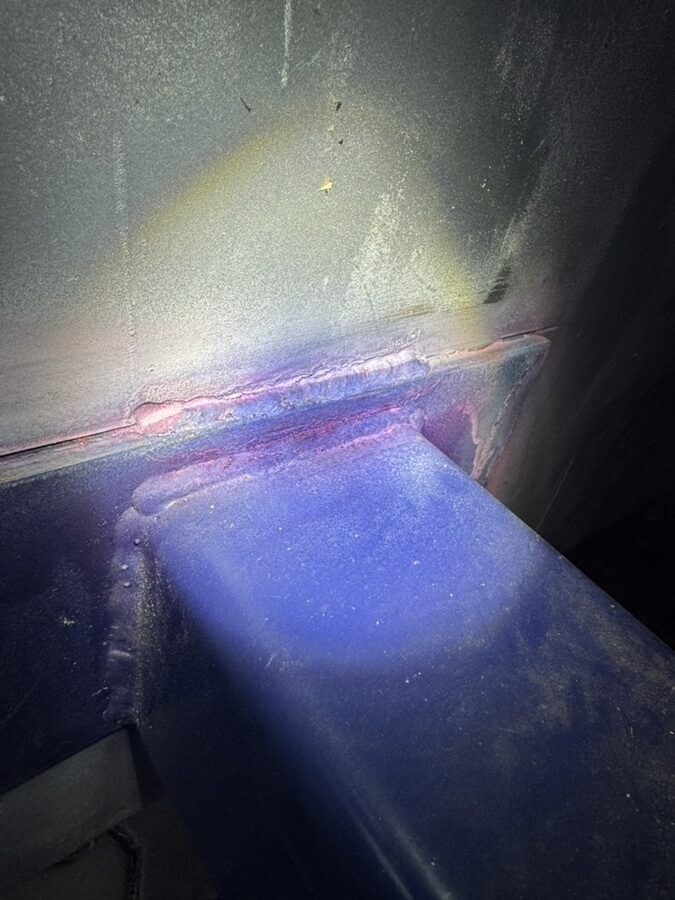
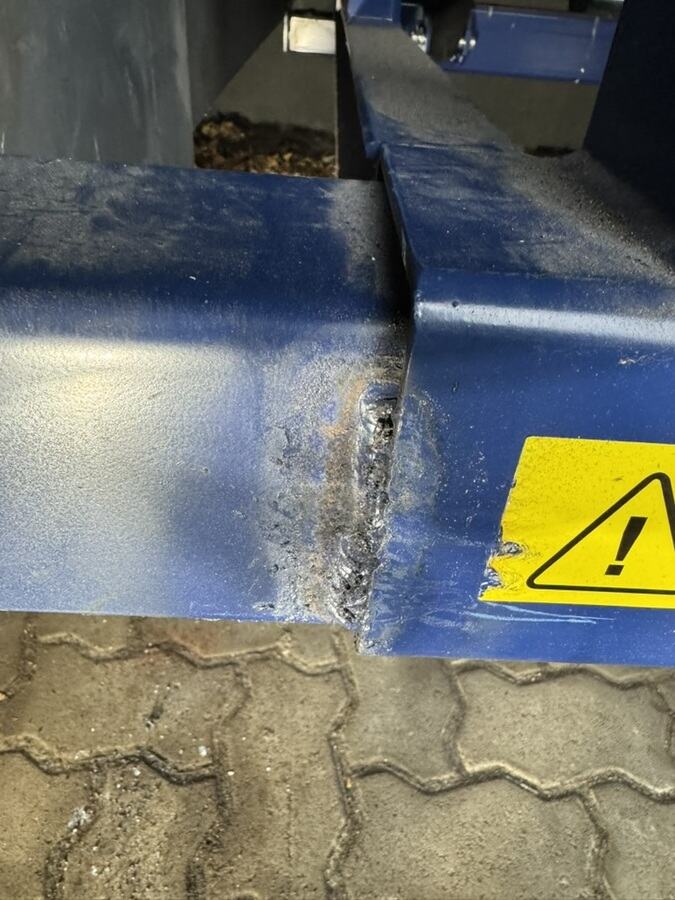
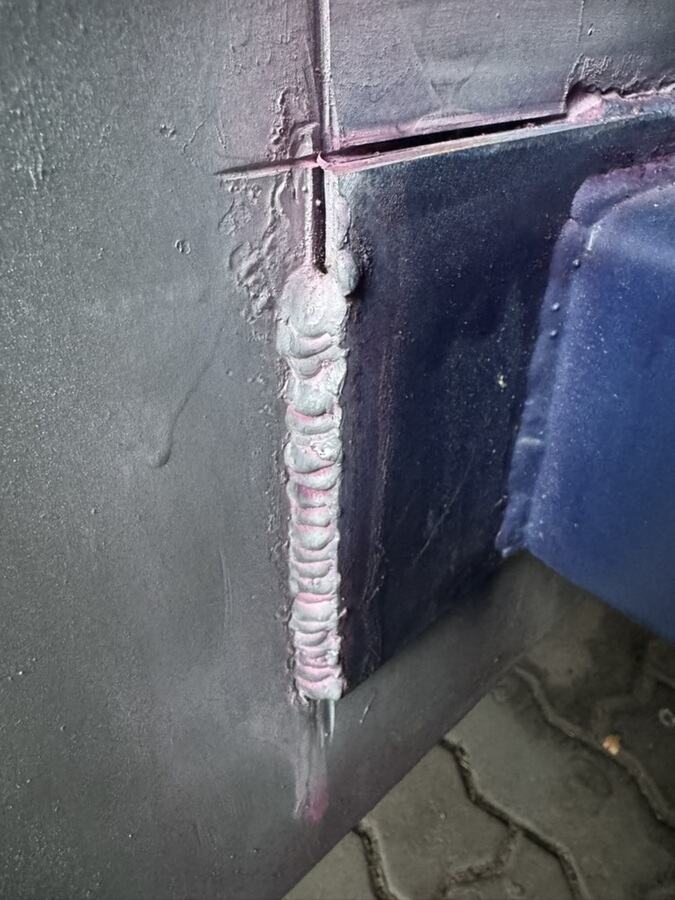
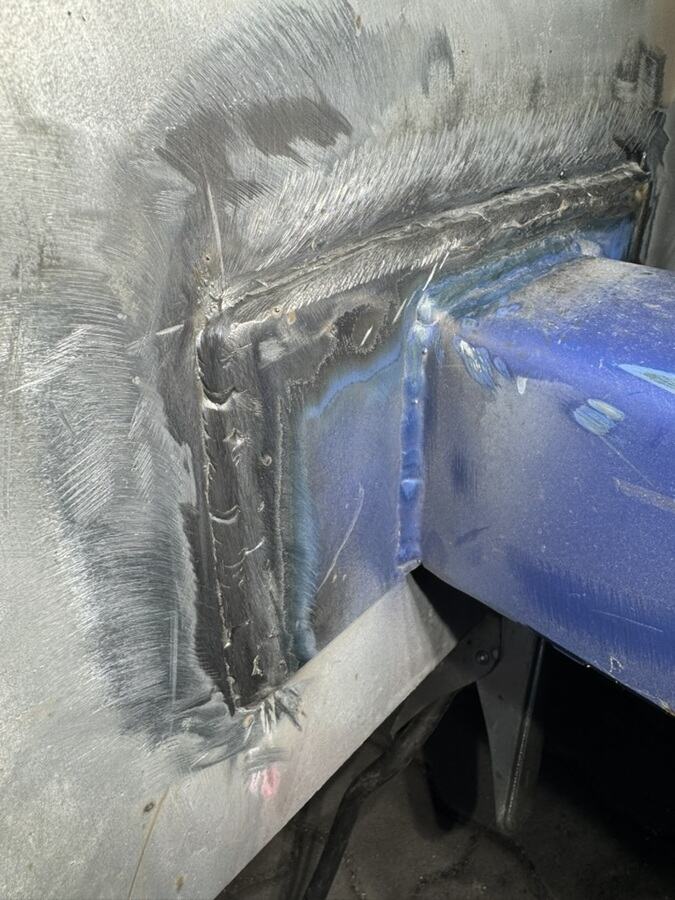
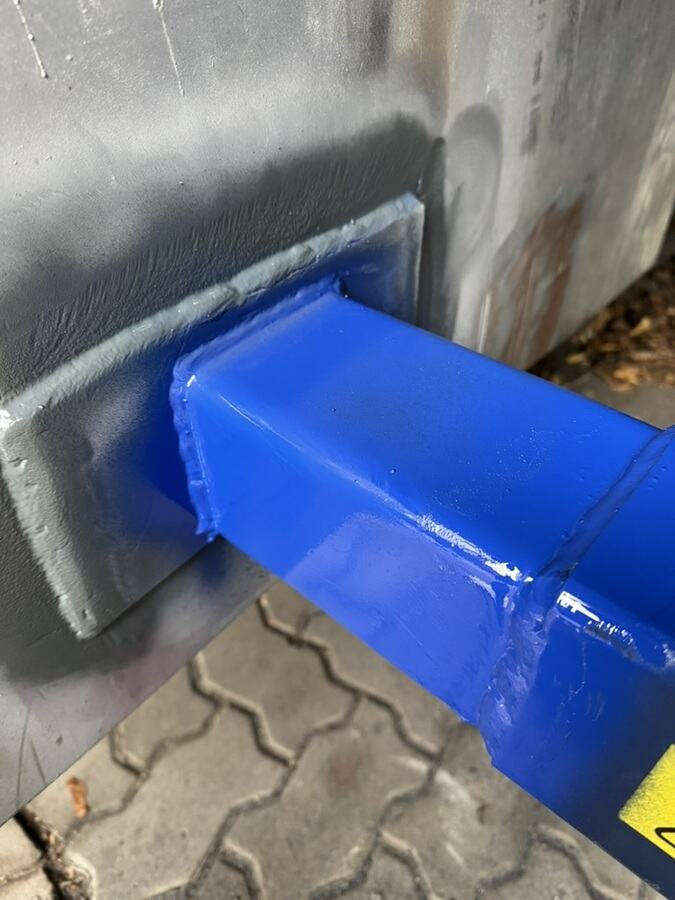
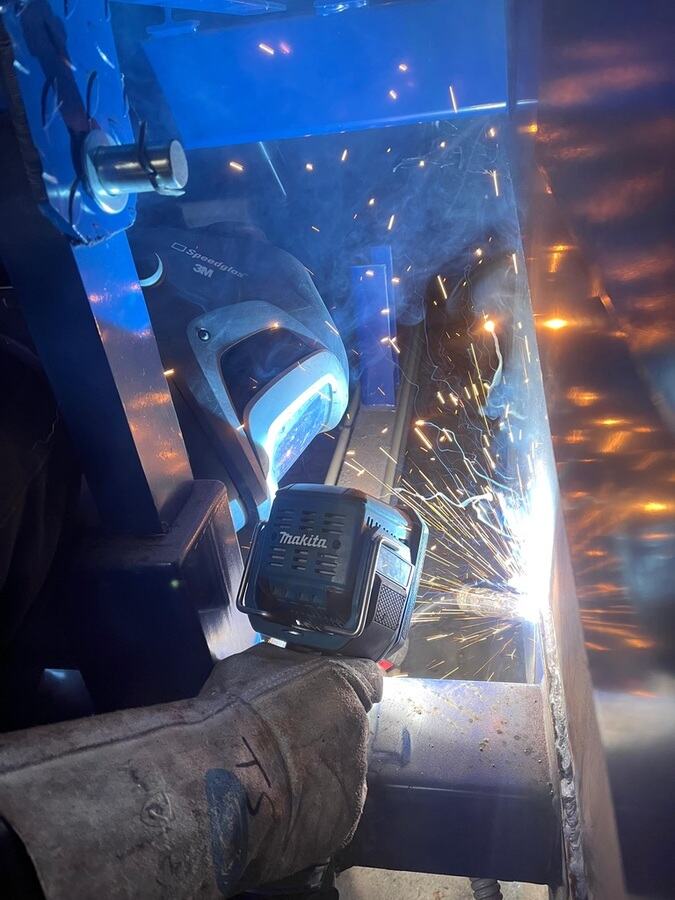
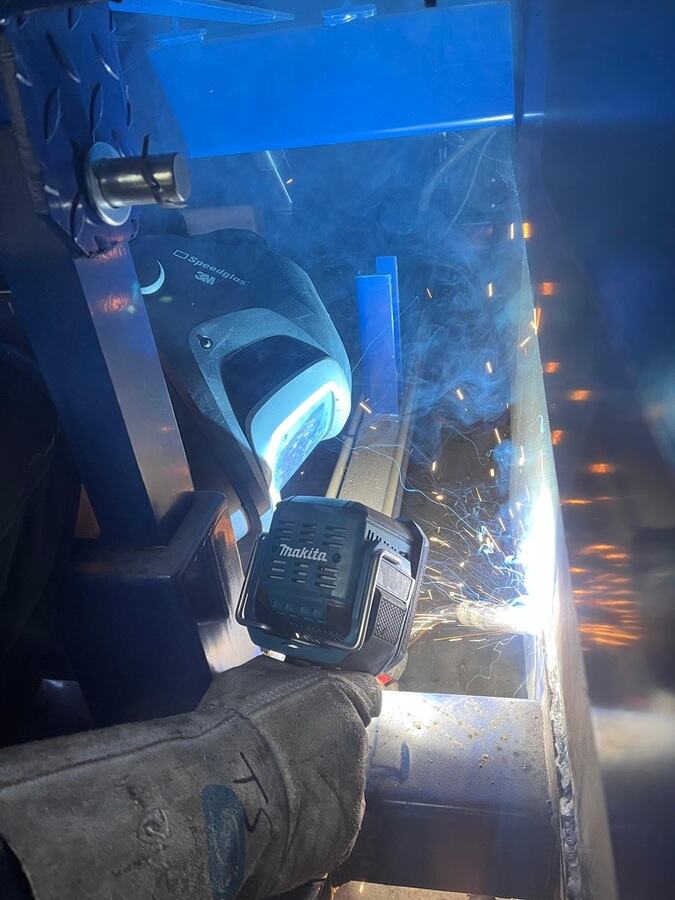
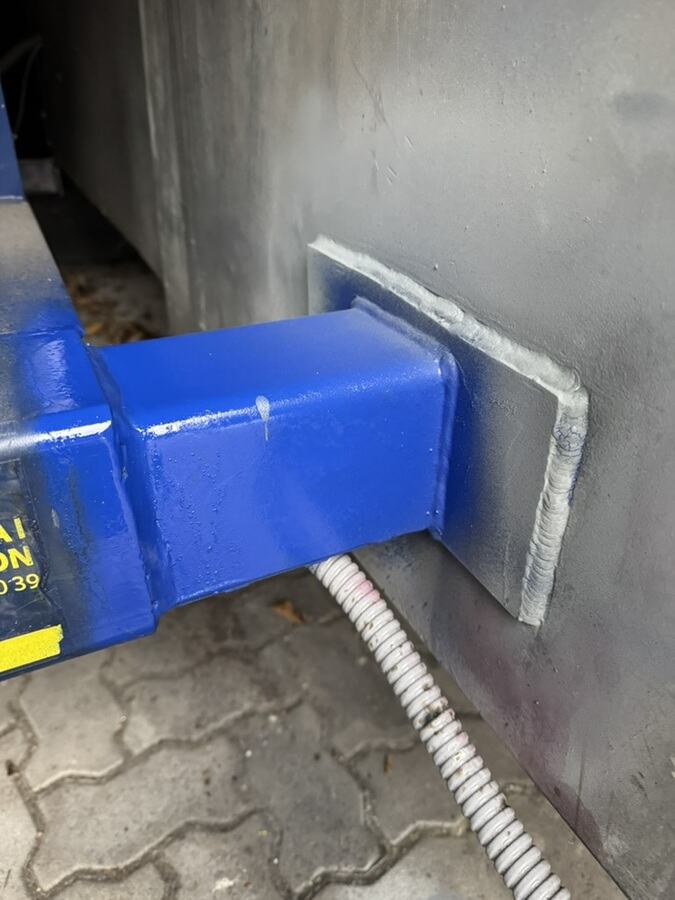
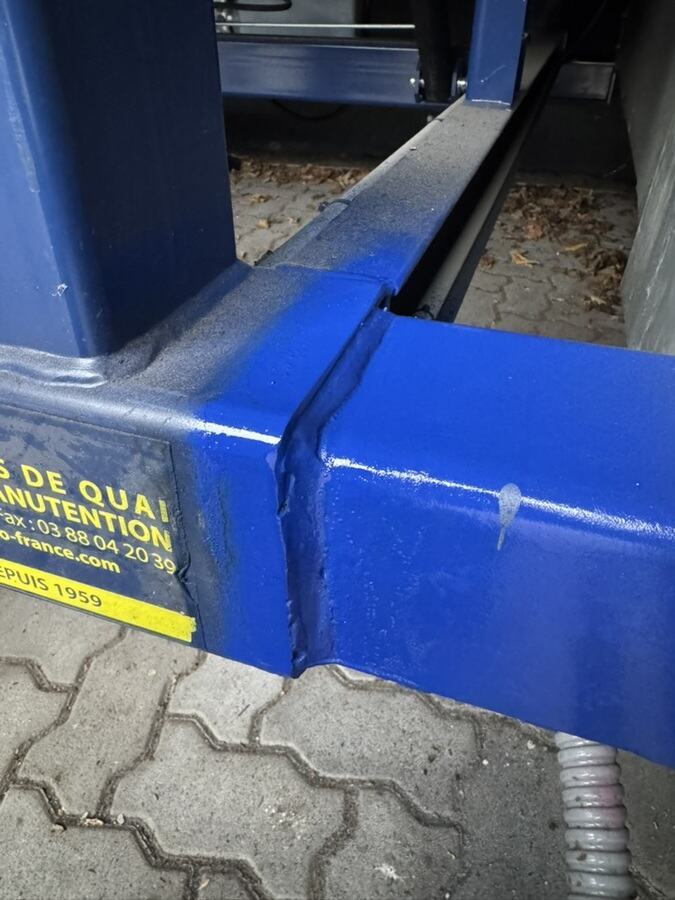
Then came the re-welding – proper seams with deep penetration everywhere, so that the joint permanently withstands the constant load cycles of a loading dock. The process is easy to follow in the photos: the cracked old seams, the areas ground bright, the fresh seams – and finally the corrosion protection. Because a bare seam on the weather side of a door rusts quickly: all repaired areas were primed and painted so that the repair still holds in five years' time.
Why do weld seams on loading docks crack in the first place?
Because hardly any component works harder than a dock. With every lorry handled, a loaded forklift rolls over the structure – forwards, backwards, braking, often thousands of times a year. Add to that the impacts when lorries dock and the constant up and down of the folding movement. For the weld seams this means no steady continuous load, but permanent load cycles. And load cycles are the classic trigger for fatigue cracks.
It becomes critical when the seams have weaknesses from the outset: too little penetration, pores or lack of fusion in the seam, sharp notches at the weld toe. Such spots act like a predetermined breaking point – the notch effect concentrates the stresses exactly there, and with every load cycle the crack grows a little further. From the outside you often see only a fine line in the paint; underneath, the joint has long since separated. These are exactly the damage patterns the UVV inspector finds – and exactly why cosmetics are not enough here.
What does "welding with deep penetration" actually mean?
Penetration describes how deeply the weld pool enters the parent metal and fuses with it. A seam with deep penetration is practically grown into the component – it transfers forces through the full cross-section. A seam that merely sits on top ("cold seam") looks finished but only holds at the surface: under load cycles it separates again at precisely this interface.
For deep penetration several things have to be right: clean seam preparation (which is why we grind out the old seams completely until the parent metal is bright), the right current and torch guidance, the suitable process – here MAG (metal active gas), which combines a high deposition rate with reliable penetration on structural steel – and a sufficiently warm parent metal. Where the loading demands it, we weld in several passes: first the root, which fuses deeply, then the cap passes, which fill the cross-section. Finally, every seam is visually checked for a clean, notch-free toe – because today's weld toe is tomorrow's crack if it is not right.
Why is heat so important when welding in winter?
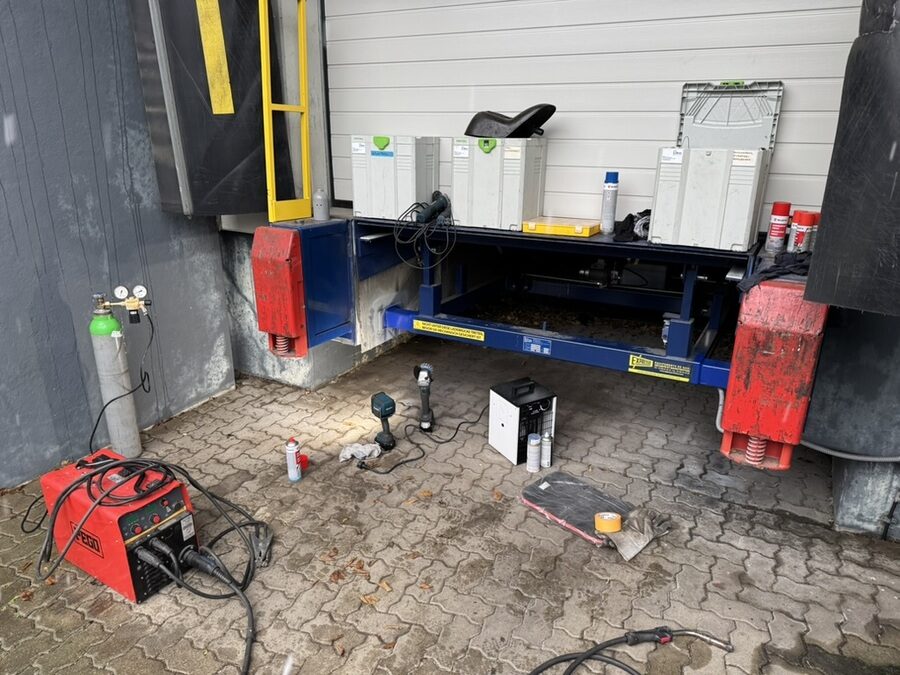
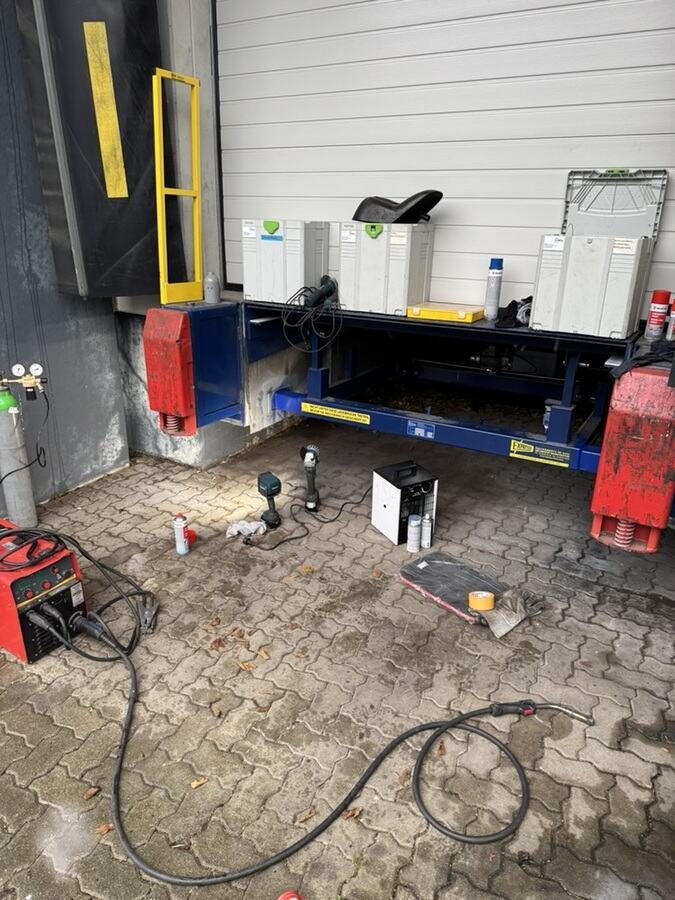
Because cold is the enemy of every weld seam – and of every welder. It was snowing on this working day, and the work was correspondingly cold. We therefore procured an industrial heater specifically – for two reasons:
First, the steel and the equipment: if the parent metal is too cold, the weld pool cools too quickly – penetration suffers, the seam becomes brittle and prone to cracking. Preheating ensures the seam welds through cleanly and cools in a controlled manner. The welding set and consumables do not like sub-zero temperatures either.
Second, the people: a frozen welder with numb fingers cannot guide the torch steadily. Anyone expected to do precision work outdoors in snowfall needs warm-up breaks. Heat is essential – for the employee just as much as for the weld seams. That is exactly why the heater stood right next to the dock on this job.
Why Omega Mounting?
- Rectifying UVV defects fast: Door locked out? We come, grind out, re-weld – so the inspector can stamp it at the follow-up appointment.
- Loading dock technology experience: Installing, replacing, repairing docks – from manual ramps to hydraulic systems, we know every design.
- Weld quality instead of cosmetics: Old seams out, new ones with deep penetration in, corrosion protection on top – repairs that survive the next inspection.
- Ready in any weather: Snowfall is no reason to postpone – with an industrial heater, seam quality and working conditions are right even in winter.
- Two docks, one day: Small crew, well prepared, quickly gone again – operations continue.
- Rooted in the region: From Rodgau we are quickly on site throughout the Rhine-Main region – and we work throughout Germany.
Conclusion
Two loading docks with defective weld seams, one locked-out door, one snowy winter day: after one job with two fitters, all the old seams had been ground out, re-welded with deep penetration and painted against corrosion – ready for the inspection stamp and the next lorry. If your loading dock equipment has failed its UVV inspection or the date is approaching, get in touch with us – the sooner the repair, the shorter your door stands idle.
Request a callback for your project now – Omega Mounting GmbH, Rodgau. As an installation company from the Offenbach district, we are quickly on site in Frankfurt, Offenbach, Hanau and the entire Rhine-Main region – and work throughout Germany.
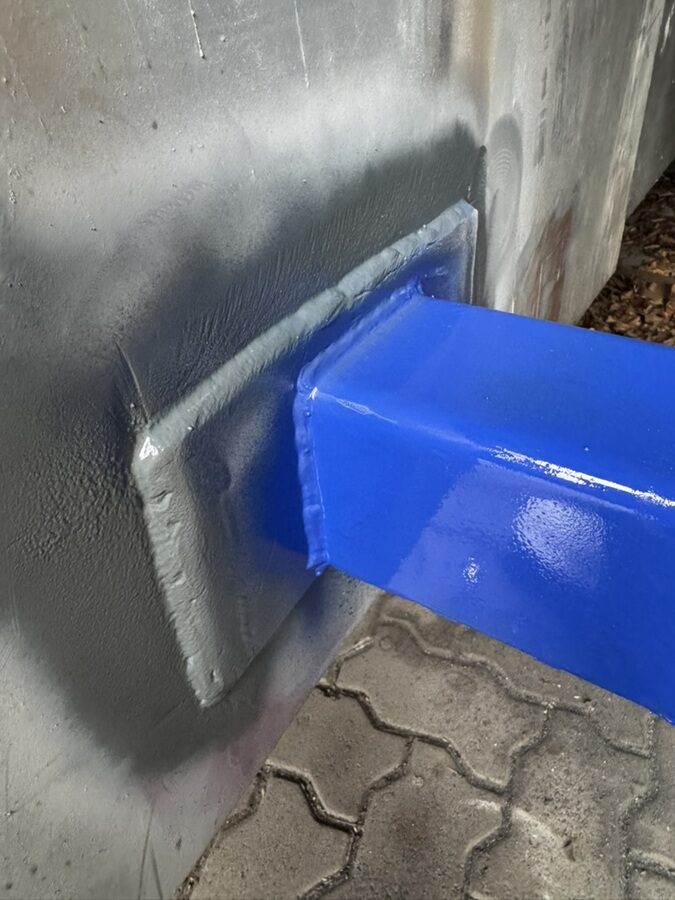
Photo gallery of the job
Are you planning a project of this kind?
Tell us briefly what it is about – we will come back to you with an honest assessment.
100% free and without obligation
Related guides for this project
Maintenance & Servicing
Occupational safety

About the author
Tobias Schott
Managing director of Omega Mounting GmbH, Rodgau · more than 20 years of hands-on experience in installation and maintenance
A trained mechatronics technician, at home in maintenance, servicing and industrial installation since 2004 – first alongside his father, and since 2012 with Omega Mounting: from the overhead conveyor in Frankfurt to the crane system in a new-build hall. As appointed person for lifting operations, he plans and leads lifting operations in data centers and on industrial sites in the Rhine-Main region, is an instructor and examiner for cranes, aerial work platforms and telehandlers, and a safety officer. On assignments abroad he is known as the "German Troubleshooter" – the one you call when things get stuck on site. He did not learn what quality means from a manual, but from his father: Made in Germany as a standard for his own work, not as a label. That is why quality comes first at Omega Mounting – before speed and before price. The project diary shows the jobs his team has planned and carried out – without customer names, but with everything that can be learned from them.
Frequently asked questions
It receives no inspection stamp and may no longer be used – in practice, the entire loading door is locked out as a result. Only after professional rectification of the defects and re-inspection is the dock released again.
The flagged seams are ground out completely with an angle grinder until the parent metal is bright – then they are re-welded with deep penetration and the area is primed and painted. Simply welding over the old seam would only conceal the defect.
Because a loading dock takes alternating loads and impacts with every lorry handled. Only a seam that fuses deeply into the parent metal transfers these forces permanently – superficial seams crack open again under load cycles.
Yes – with the right preparation: on this job an industrial heater ensured that the steel, the welding equipment and the fitters stayed warm. Cold parent metal leads to poor penetration and brittle seams, which is why heat in winter is essential for seam quality.
A competent person (qualified person) – usually once a year, on the basis of the Industrial Safety Ordinance (BetrSichV) and the DGUV rules. The load-bearing structure and weld seams, hydraulics, safety devices and marking are inspected; the result is documented and confirmed with an inspection badge.
Because of the permanent load cycles: forklift crossings, docking impacts and the folding movement stress the seams thousands of times a year. Seams with little penetration, pores or sharp notches at the toe then act as predetermined breaking points – fatigue cracks grow there with every load cycle.
On this project: two docks in one working day with two fitters – including assessment, grinding out, re-welding and corrosion protection. After that, nothing stands in the way of the re-inspection.
Yes – from our base in Rodgau we are quickly on site throughout the Rhine-Main region, from Frankfurt and Offenbach to Hanau and Darmstadt – and throughout Germany on request. We install, replace and repair loading docks of all designs.
 English
 German