

- Technology explained – technology and procedures
Bearing damage: what the damage pattern reveals about the cause
By Tobias Schott · 5-minute read · Updated November 2026
A failed bearing is a piece of evidence – its damage pattern reveals whether it failed due to lubrication, dirt, installation, current or load, and only those who find the cause prevent the next failure.
You encounter bearing damage when a motor gets noisy, a fan vibrates, a pump runs hot or a conveyor roller seizes. The bearing is replaced, and the old one often ends up in the scrap unseen. Yet its raceways, balls and rings record what happened.
This article explains the typical damage patterns and what they say about the cause. How to recognise wear on the machine early is covered in the guide Spotting wear on machines.
What is bearing damage?
Bearing damage is any change to the raceways, rolling elements, cage or rings of a bearing that impairs its function or announces the end of its life. Most rolling bearings never reach their calculated service life. They fail earlier – due to lubrication, dirt, installation or operating conditions.
The types of damage are classified in ISO 15243 according to how they arise. This classification helps to infer the cause from the pattern. In German bearing damage is called Lagerschaden.
Key facts
- Purpose of the analysis: Find the cause of a failure so that the new bearing lasts longer.
- Damage groups: Fatigue, wear, corrosion, electrical erosion, plastic deformation, fracture and cracks.
- Where to look: Raceways of inner and outer ring, rolling elements, cage, seating surfaces, grease.
- First signs in operation: Noise, vibration, heat, grease leakage, play.
- Tools: Magnifier, photo, calliper, vibration measurement, oil analysis.
- Standard: ISO 15243 for the classification of damage types.
- Common misconception: The bearing was simply old – usually it failed too early, and there is a reason for that.
The six damage groups
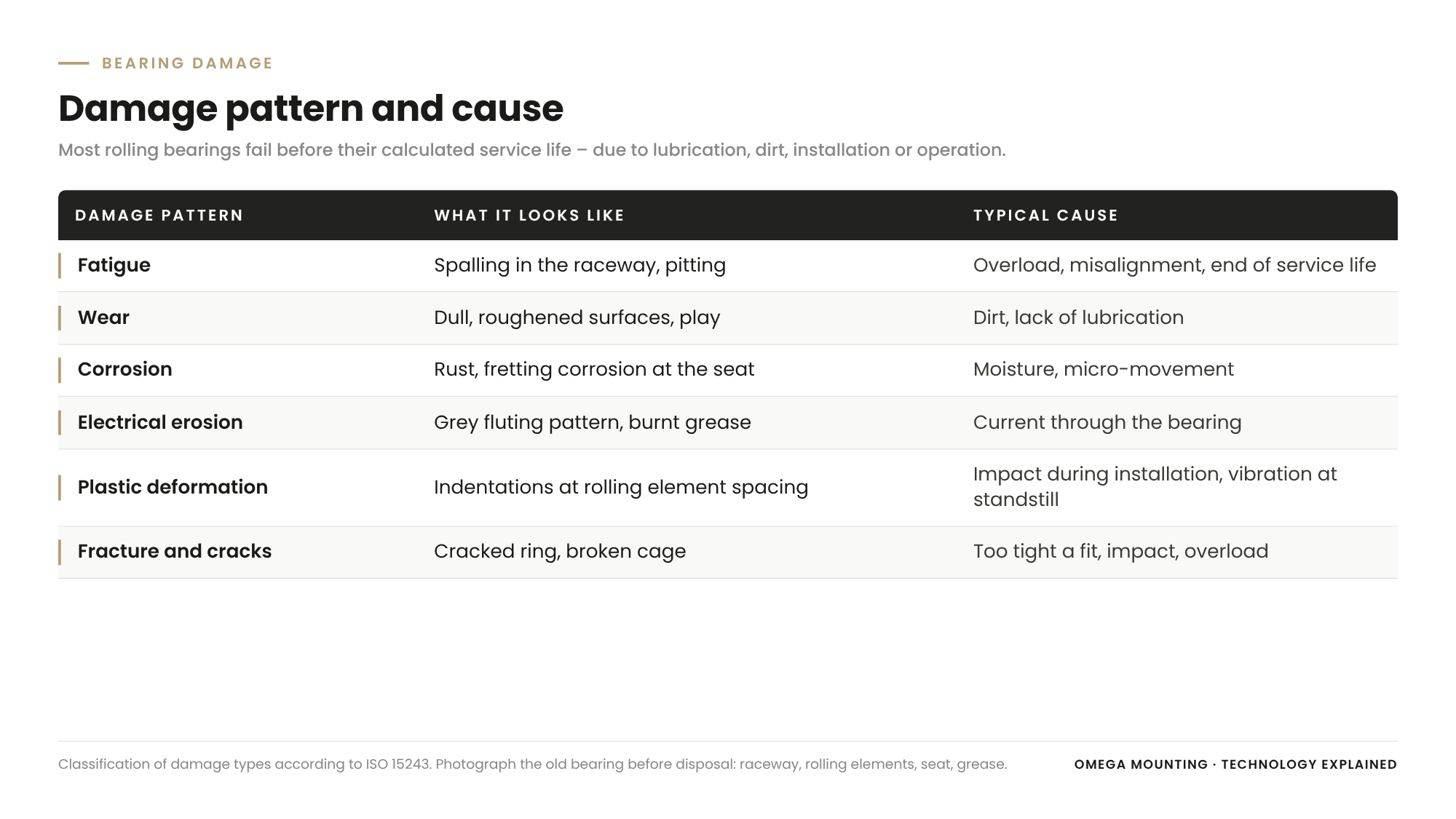
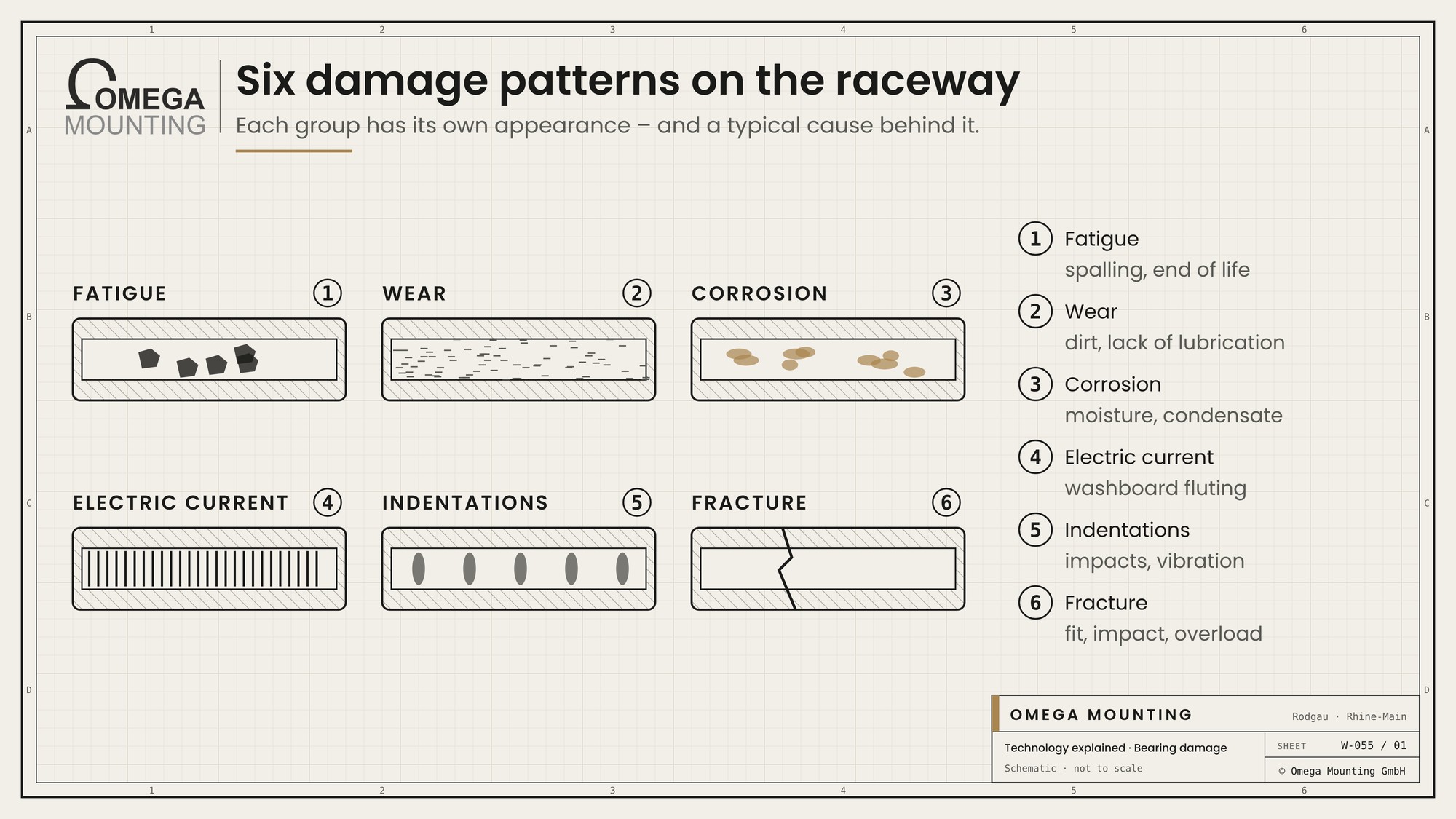
Each damage group has a typical appearance and a typical cause.
| Damage pattern | What it looks like | Typical cause | Remedy |
|---|---|---|---|
| Fatigue. | Spalling and flaking in the raceway, pitting. | End of service life, overload, misalignment, internal clearance too small. | Check load and alignment, size the bearing appropriately. |
| Wear. | Dull, roughened raceways, play, worn surfaces. | Dirt, lack of lubrication, wrong grease. | Check seal, lubricant and interval. |
| Corrosion. | Rust in the raceway or as fretting corrosion on seating surfaces. | Moisture, condensate, micro-movement in the seat. | Seal, check seat and fit. |
| Electrical erosion. | Grey washboard-like fluting, burnt grease. | Current through the bearing, often on frequency converters. | Insulated bearings, grounding – clarify with the manufacturer. |
| Plastic deformation. | Indentations at rolling element spacing. | Impacts during installation, vibration at standstill. | Install correctly, secure transport and standstill. |
| Fracture and cracks. | Cracked rings, broken cage. | Too tight a fit, impact, overload, lack of lubrication. | Check fit, installation and load. |
Running track, colour, grease: reading the details
Besides the actual damage, running track, discolouration and grease reveal a lot about the cause.
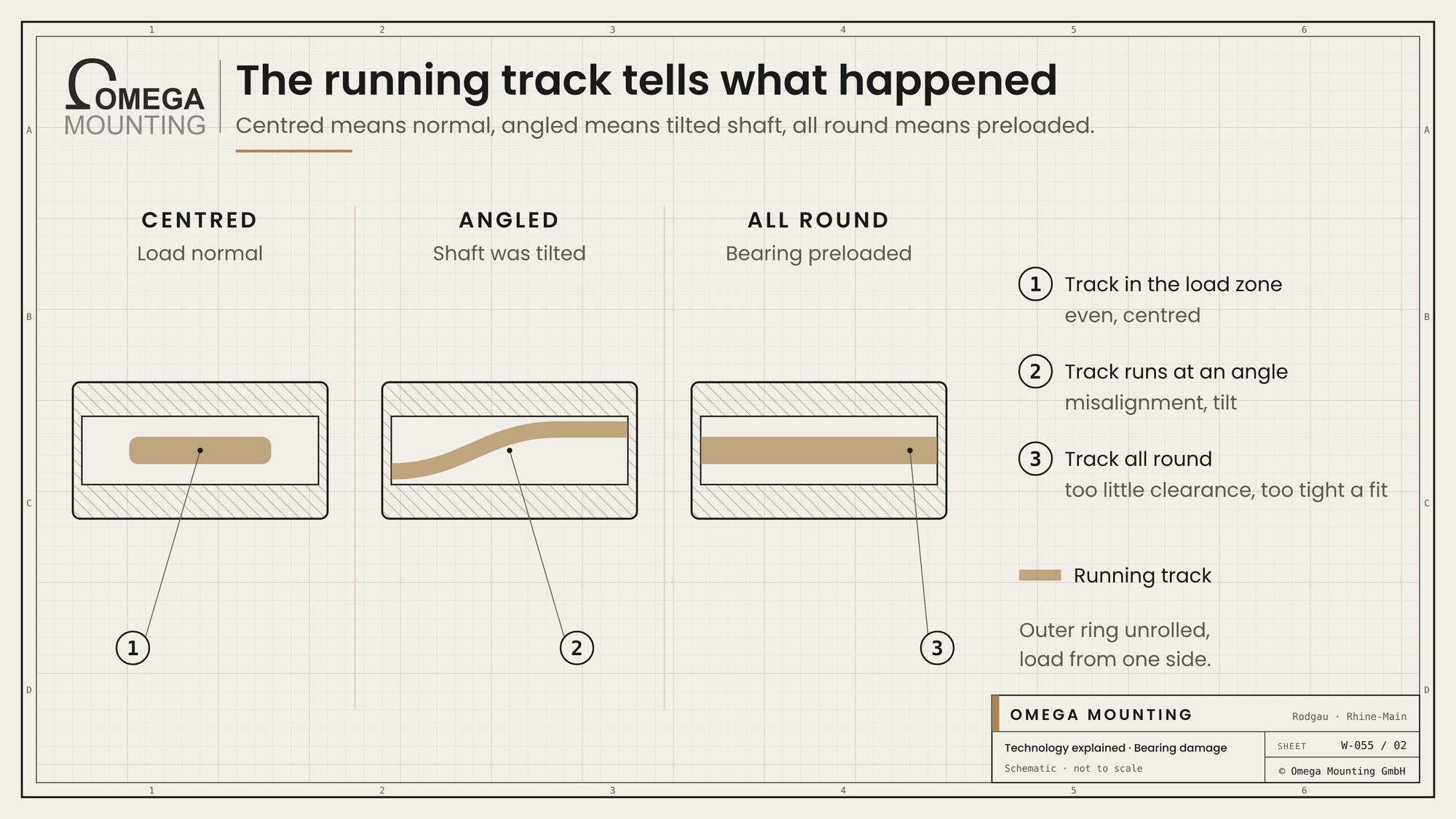
Running track. On every raceway the rolling elements leave a track. If it is centred and even, the load was normal. If it runs at an angle across the ring, the shaft was tilted. If it is visible all round on the outer ring although the load only came from one side, the bearing was preloaded.
Discolouration. Brown or blue temper colours show that the bearing was very hot – due to lack of lubrication, overload or too little internal clearance.
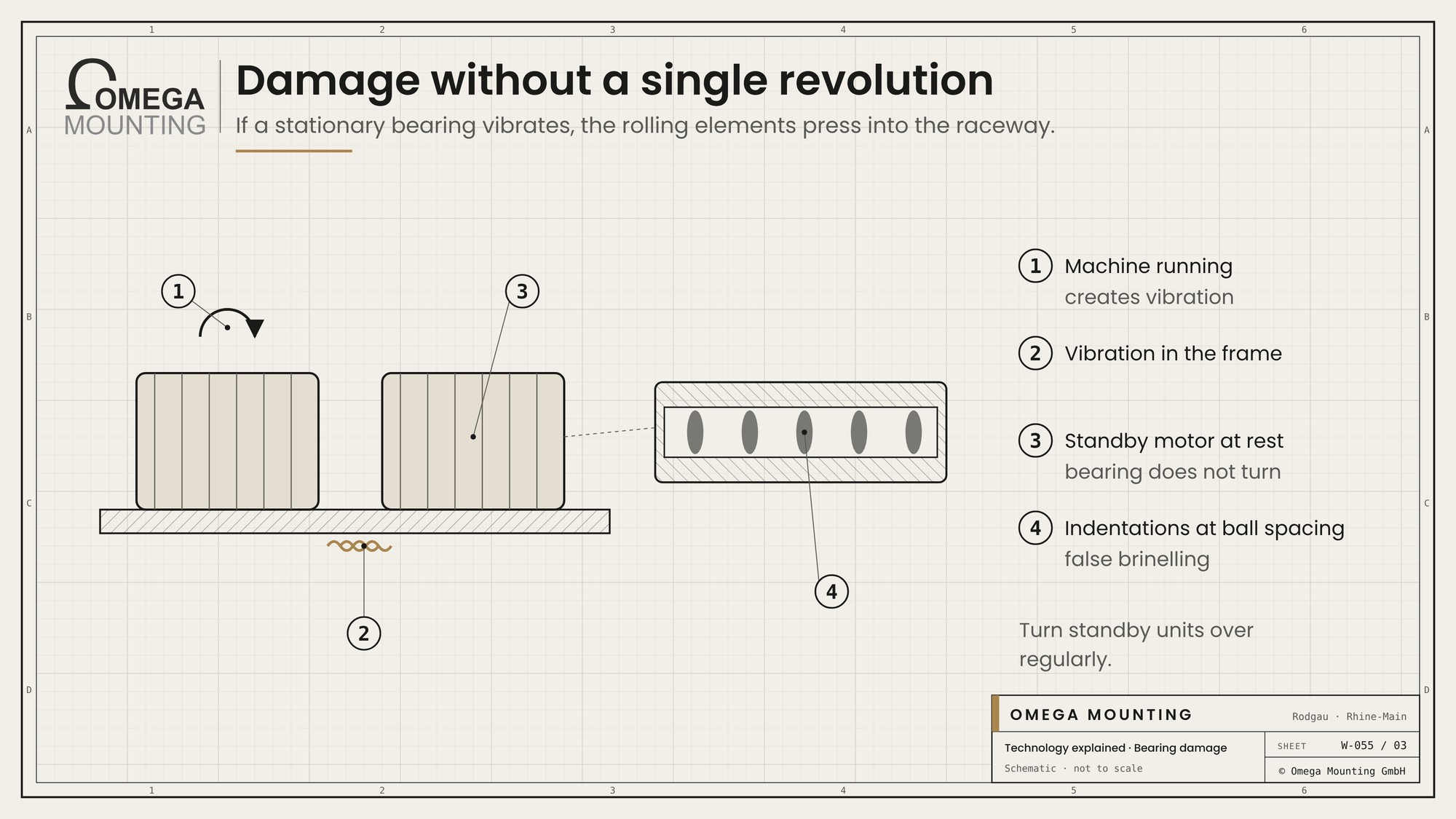
False brinelling. A bearing that vibrates at standstill, for example in a standby motor next to a running machine or during transport, gets indentations at rolling element spacing even though it has never turned. That is why standby units are turned over regularly.
Grease. Hard, crusted grease was too old or too hot. Dark grease with a metallic sheen carries wear debris. Black grease that smells burnt points to electric current or extreme heat.
The most common causes behind the patterns
Behind most premature bearing failures there are a few recurring causes.
- Lubrication: too little, too much, too old or the wrong grease. It is the most common cause of all.
- Contamination: Dust, swarf or water that gets into the bearing past a worn seal.
- Installation: Blows with a hammer, tilted mounting, wrong fit, forgotten wave spring.
- Alignment: Misalignment between motor and machine, distorted bearing units, warped foundations.
- Operation: Overload, belts too tight, imbalance, vibration at standstill, electric current.
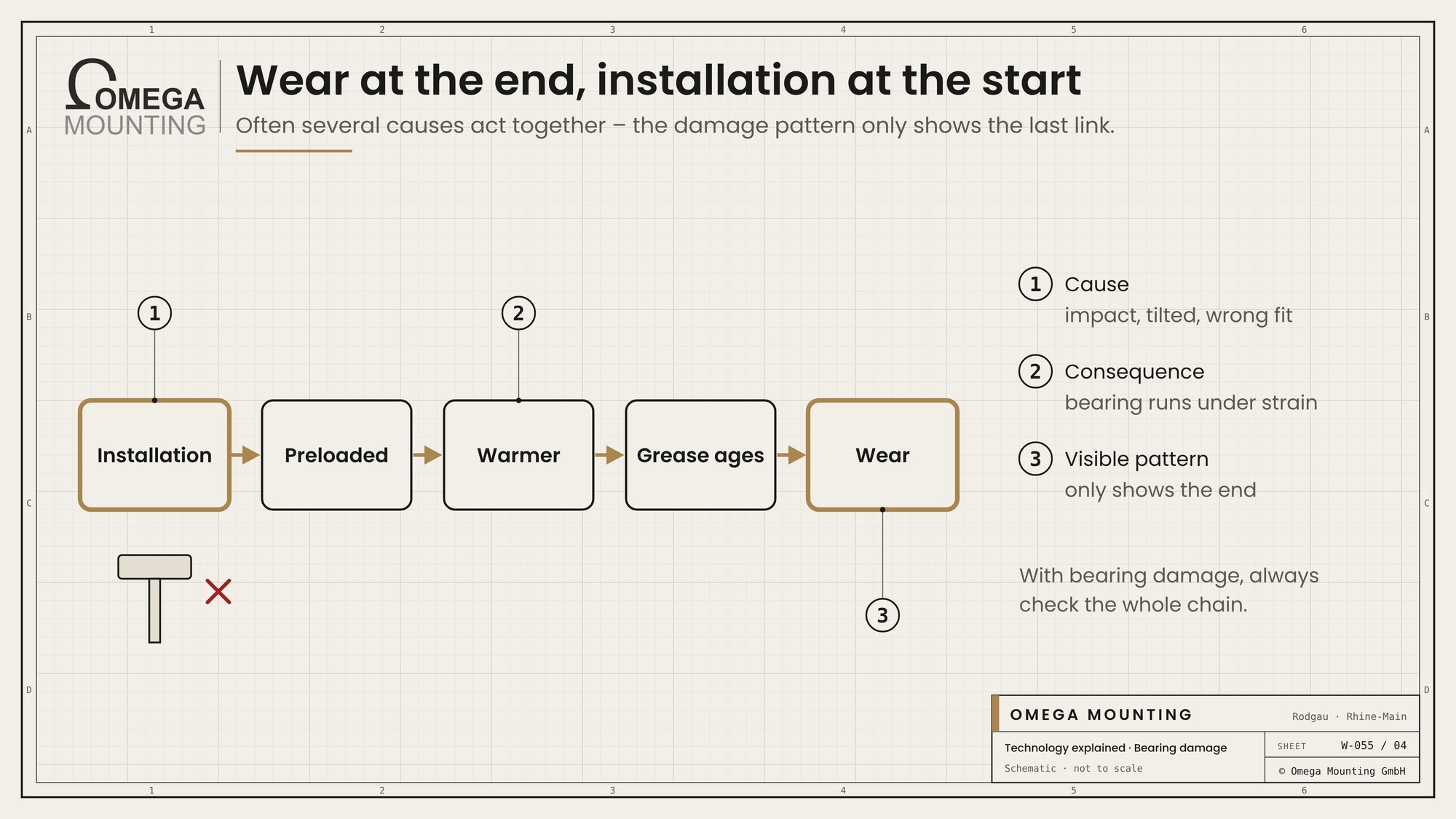
Often several causes act together. A slightly preloaded bearing runs warmer, the grease ages faster, and in the end there is a wear pattern that started with the installation.
From damage pattern to remedy
A damage pattern is only useful if a measure follows from it. This is how we proceed once a bearing has been removed:
- Secure: The old bearing is not cleaned but kept as removed. Grease and dirt are part of the findings.
- Photograph: Running track, rings, cage and grease are photographed before the bearing is dismantled further.
- Check the surroundings: Shaft, housing, alignment and lubrication are checked – that is usually where the cause lies.
- Remove the cause: Only when the cause has been removed does the new bearing go in.
- Record: Findings and measures go into the maintenance log so the same damage does not repeat.
For expensive or repeated damage, an investigation by the bearing manufacturer or a laboratory is worthwhile. Installation provides the properly preserved bearing and a description of the installation situation.
What we pay attention to
We do not just replace the bearing but look at the old one – otherwise we will be replacing it again soon.
- We photograph raceways, rolling elements, seating surfaces and grease before the old bearing is disposed of.
- We check shaft and housing at the bearing seats for fretting corrosion, wear marks and roundness.
- After the replacement we measure vibration and temperature as a baseline for the next comparison.
- We remedy the cause too: alignment, seal, lubrication, belt tension or installation method.
- We mount bearings without blows through the rolling elements and protect standby units against false brinelling.
- In the case of electric current, our qualified electricians look for the cause together with the manufacturer instead of just installing a new bearing.
Where we use it
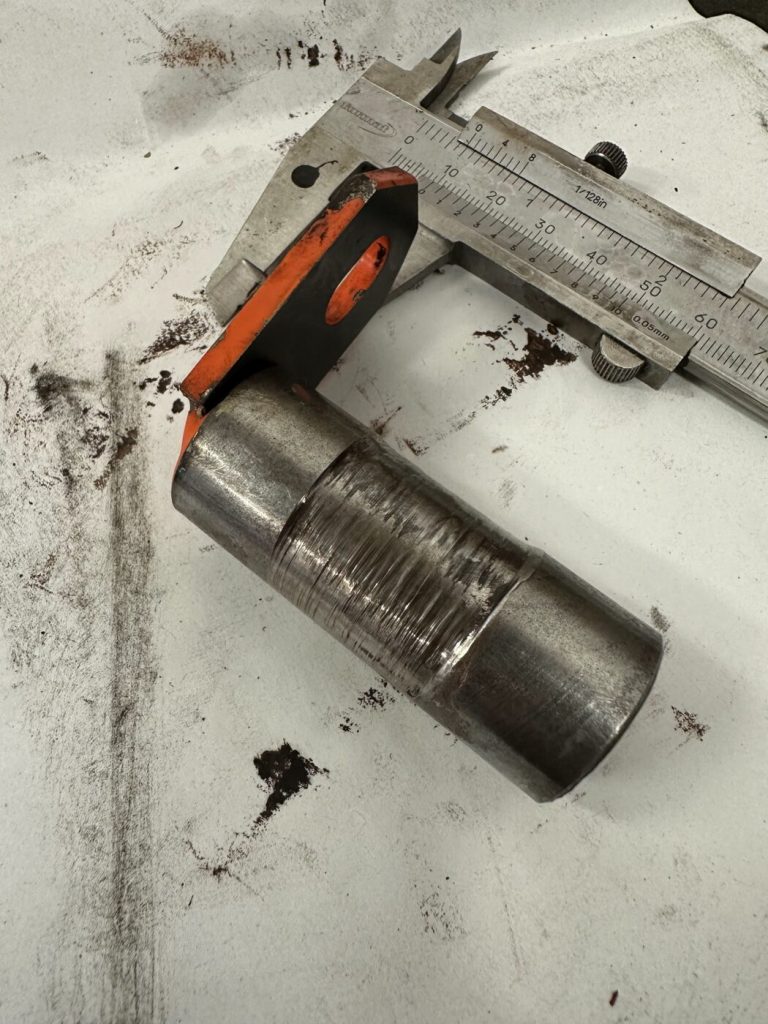
We see bearing damage in almost every bearing replacement – and the cause is rarely just age. With the worn monorail pins in a food plant a single pulled pin showed that the supposedly maintenance-free bearing point ran practically without lubrication; pin and bushing were worn in. After that two to three fitters replaced pins and bushings on 80 vehicles. During the fan bearing replacement in a paint shop near Offenbach the aim was to replace a worn bearing before vibrations damaged the motor and fan impeller. Both are part of our Maintenance and servicing.
More technology explained
Technology explained
why a wrong bearing arrangement leads to fatigue.
Technology explained
how bearing damage shows itself before failure.
Guide
the guide to bearing replacement and alignment.
Do you have questions about how this works on your site?
Do you have questions about how this works on your site – for example, why a bearing in your system keeps failing? We replace it, look at the old bearing and remedy the cause. Request a callback – we will get back to you.
Free, no-obligation callback
About the author
Tobias Schott
Managing director of Omega Mounting GmbH, Rodgau · more than 20 years of hands-on experience in installation and maintenance
A trained mechatronics technician, working in maintenance, servicing and industrial installation since 2004 – first alongside his father, and with Omega Mounting since 2012: from overhead conveyors in Frankfurt to the crane system in a new-build hall. He plans and leads lifting operations as an appointed person (AP) in data centers and on industrial sites in the Rhine-Main region, trains and examines operators of cranes, mobile elevating work platforms and telehandlers, and is a qualified occupational safety specialist. On jobs abroad he is known as the “German Troubleshooter” – the person you call when a site gets stuck. He learned what quality means from his father, not from a manual: Made in Germany as a standard for his own work, not a label. That is why quality comes first at Omega Mounting – ahead of speed and price. The Technology explained articles cover the equipment and techniques his team uses every day: what counts on site is in them – what only appears in the brochure is not.