
- Guide – Industrial installation
Extending a sorting system: add new lines, let the safety circuit grow, install in the shutdown window
By Tobias Schott · 20-minute read · As of November 2026
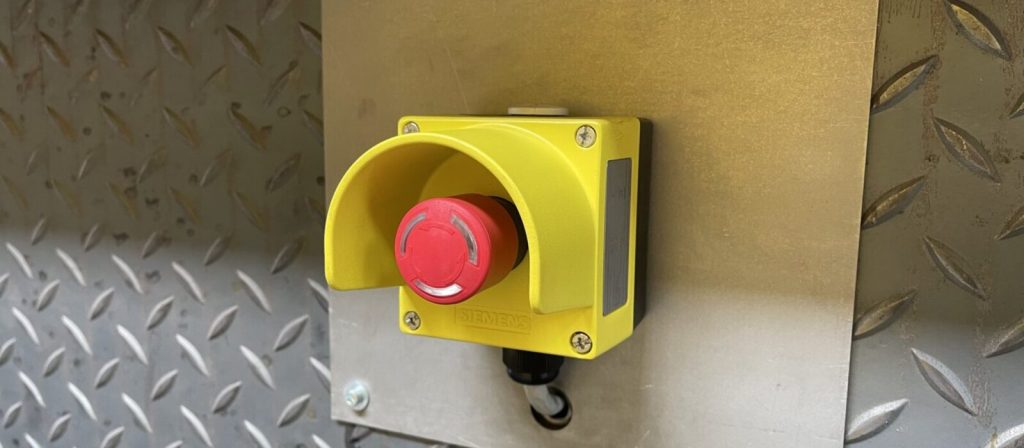
Extending a sorting system means more than adding new conveyor lines. Every extension changes walkways and hazard points – and the safety circuit has to grow with it: new emergency stop buttons, new sensors, cleanly integrated into the existing circuit. With good pre-assembly, this can be done in short shutdown windows without stopping operations for long.
Sorting systems are the heart of every parcel and distribution centre – whether at an airport, at a motorway junction or on the edge of a city. They hardly ever stand still, and when parcel volumes grow, they grow too: new infeeds, longer conveyor lines, additional outfeeds. Every extension is an intervention in a plant that is not really allowed to stop.
If you search for extending a sorting system, you find manufacturers and integrators who plan systems. How the installation of an extension works in a running centre is rarely described there. What has to be ready beforehand? How are new emergency stop points integrated into the existing circuit? Who checks that the safety functions are right? This guide answers these questions from the point of view of an installation contractor that delivers mechanical and electrical work from a single source.
It is written for site and operations managers in parcel, express and distribution centres, for technical and project managers, system integrators, buyers and occupational safety specialists.
Key points at a glance
- Extending a sorting system is a six-step process: plan, pre-assemble, install mechanically, integrate electrically, test, restart.
- The safety circuit grows with it. New sections need new emergency stop points and sensors in the existing circuit.
- Emergency stops must be within reach. Wherever people work or intervene, a stop must be within reach.
- Pre-assembly saves downtime. Brackets, housings, cable glands and labelling are done beforehand.
- Mechanical and electrical work from a single source saves coordination and waiting time in the shutdown window.
- Testing is mandatory. Only when every point has been tested and the safety functions assessed does the plant go into regular operation.
- The roles are clear. Integrator and operator assess and validate; the installation contractor installs and integrates.
What does extending a sorting system actually involve?
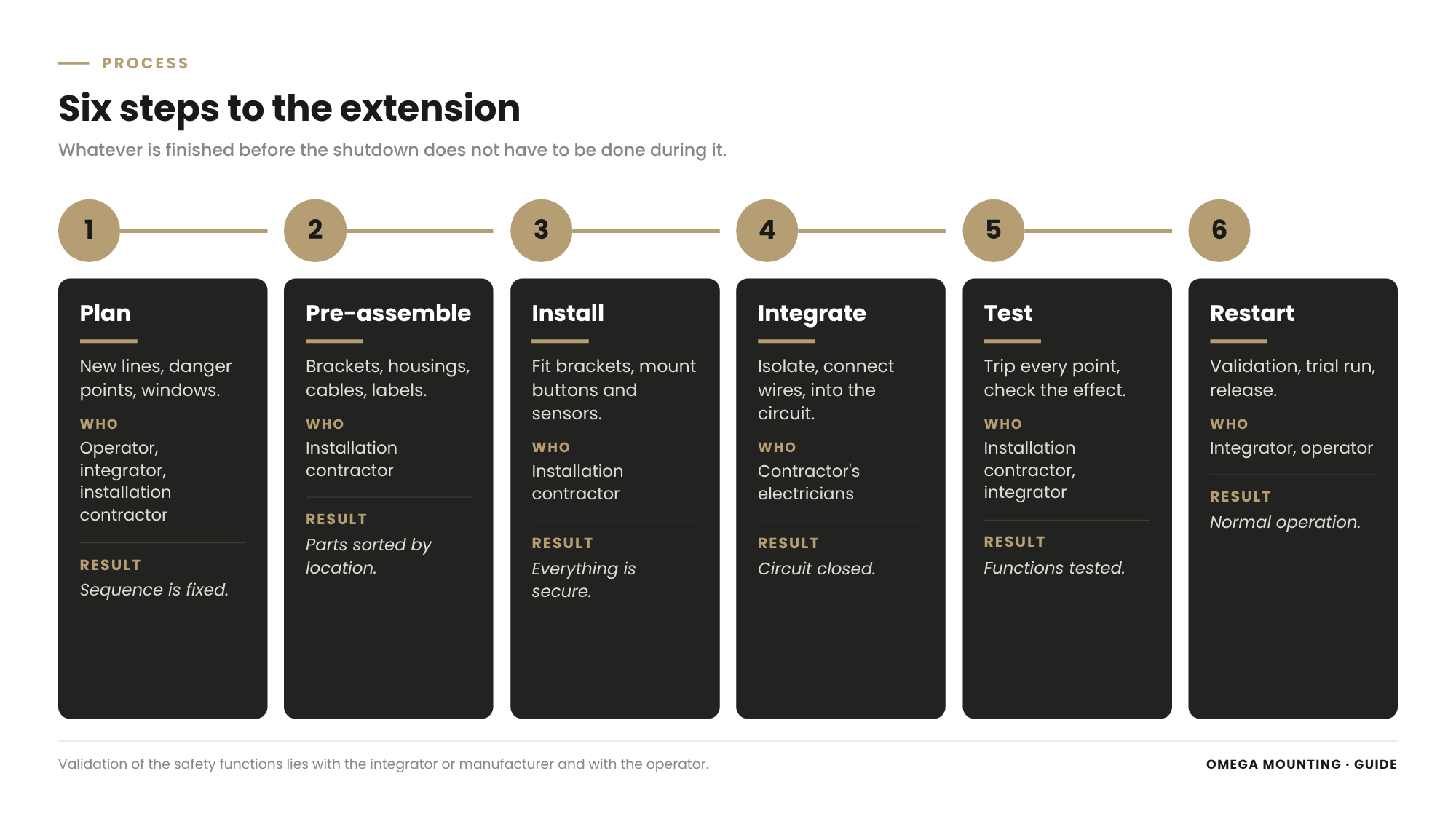
A sorting system consists of conveyor lines, infeeds, the actual sorter and outfeeds where the parcels arrive. On top come the controls and safety technology: emergency stop buttons, guard doors, pull-wires, light curtains and sensors.
When extending a sorting system, new lines or outfeeds are added and connected to the existing plant. First comes planning: what is being added, where is it connected, which new hazard points arise? Then everything that can be prepared without a shutdown is pre-assembled. In the shutdown window, mechanical installation and electrical integration take place. After that every point is tested, and the plant goes back into operation – after assessment and release.
Extend, convert or modernise?
Sometimes new lines are added, sometimes existing technology is brought up to date. Often both. For installation, it is similar: in every case mechanical parts are changed and the safety technology adapted.
What makes a sorting system different
Sorting systems are long, branched and run to the rhythm of logistics. Downtime costs not only time but also parcels that are left lying. That is why work is done in short windows – often during the day between peaks or in weekend shifts.
The safety circuit: why it has to grow with the plant
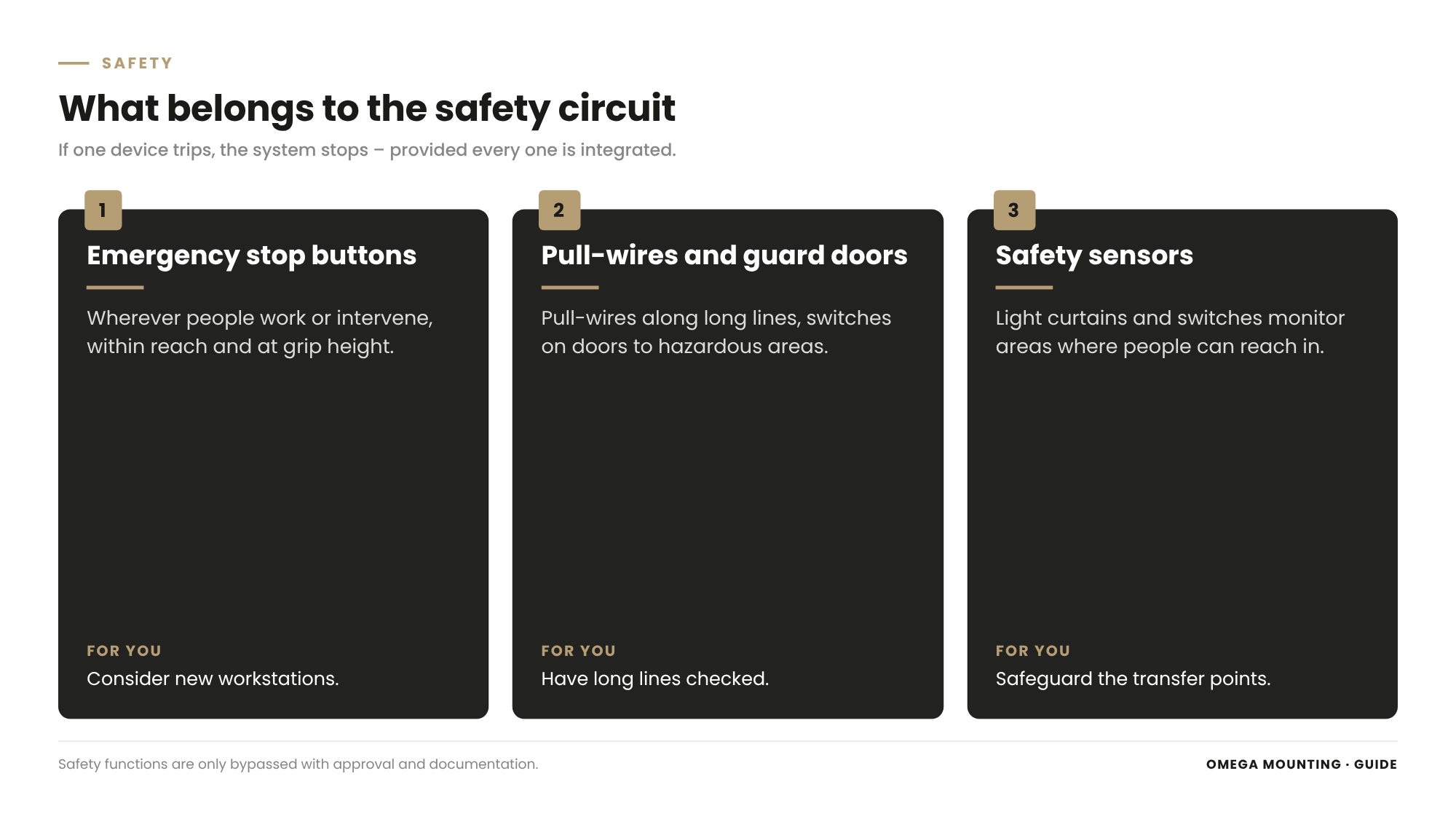
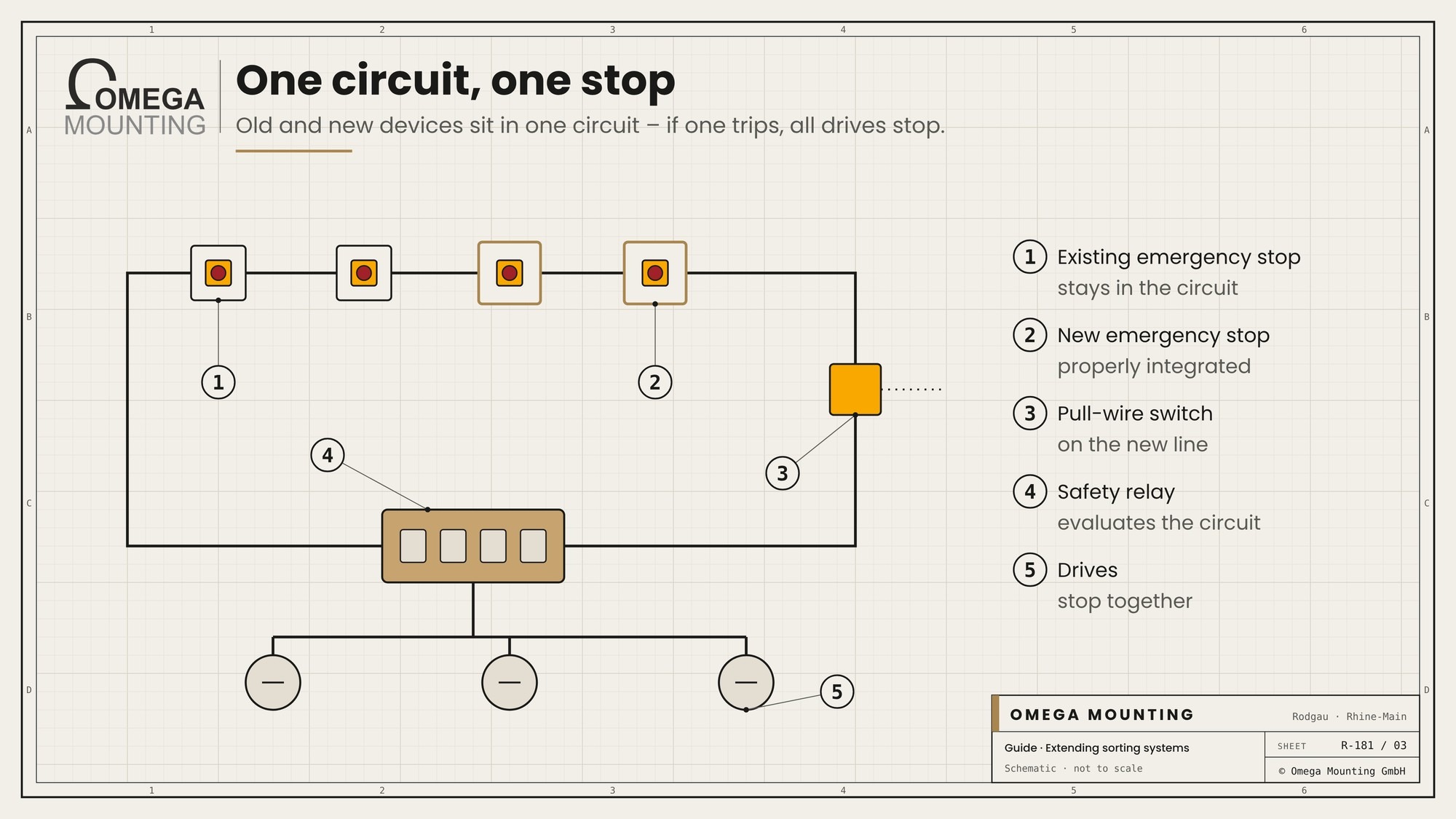
The safety circuit is the connection of all safety-related switching elements of a plant. If an element is triggered anywhere – an emergency stop pressed, a guard door opened – the plant stops in a controlled way.
What belongs to the circuit
Emergency stop buttons, pull-wires along long lines, guard door switches, light curtains and safety sensors. Together they make sure that people at the plant are protected.
Why an extension needs new points
An extension changes walkways, work areas and hazard points. New sections need their own emergency stop points and sensors. They are integrated into the existing circuit so that the extended plant works as one continuous safety system.
No gaps
A gap in the circuit – a section without a reachable emergency stop – is a risk. That is why safety technology is not tacked on at the end but planned in from the start. How existing machines are retrofitted with safety devices is described in the guide Retrofitting safety devices.
Planning with operator and integrator
Extending a sorting system is teamwork. Planning defines who does what and when.
Drawings and documents
The basis is the drawings from the integrator or manufacturer: layout of the new lines, position of the emergency stop points and sensors, circuit diagrams, cable routes. We read them before the job and clarify open points.
Assessing the change
Whether an extension is a substantial modification of the plant and which obligations follow from it is assessed by the operator, manufacturer or integrator. More on this in the guide Substantial modification of a machine.
maintenance window
When may the plant stop, for how long, and when must it run again? These questions determine the sequence of work. We plan so that a self-contained part is finished in every window.
Checking material
Before pre-assembly starts, we check the delivered material against the list: buttons, sensors, brackets, cables, cable glands. Anything missing is reordered while there is still time.
Risk assessment
For the installation we draw up a risk assessment: work on a plant in partial operation, electrical work, work at height, traffic in the centre. Isolation, cordoning off and sequence follow from it.
Planning emergency stop points: reach and grip height
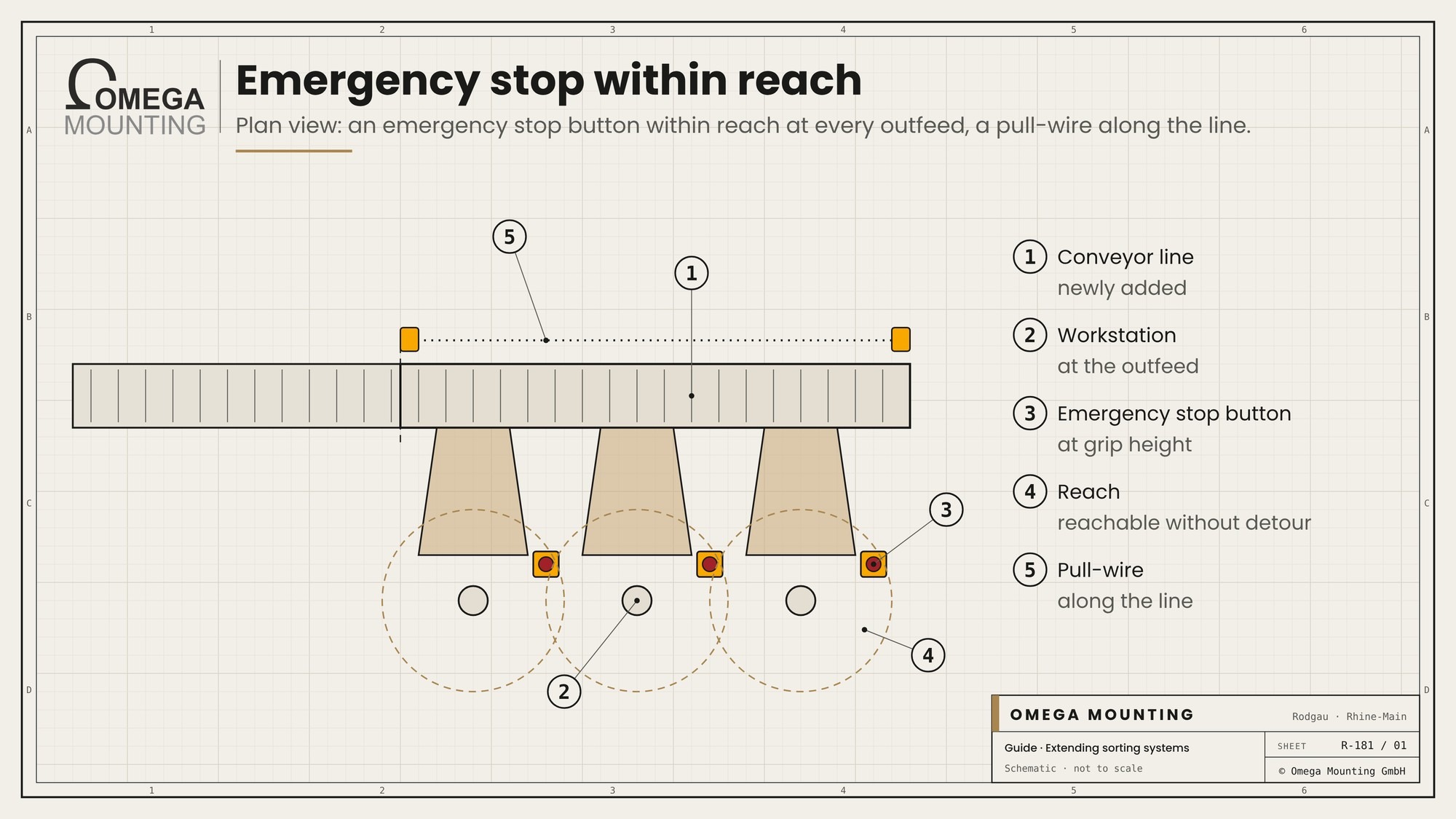
An emergency stop is only useful if it can be reached in an emergency.
Within reach
Wherever people work or intervene – infeed, outfeed, clearing faults – an emergency stop must be quickly reachable. On long lines, pull-wires supplement the buttons.
At grip height
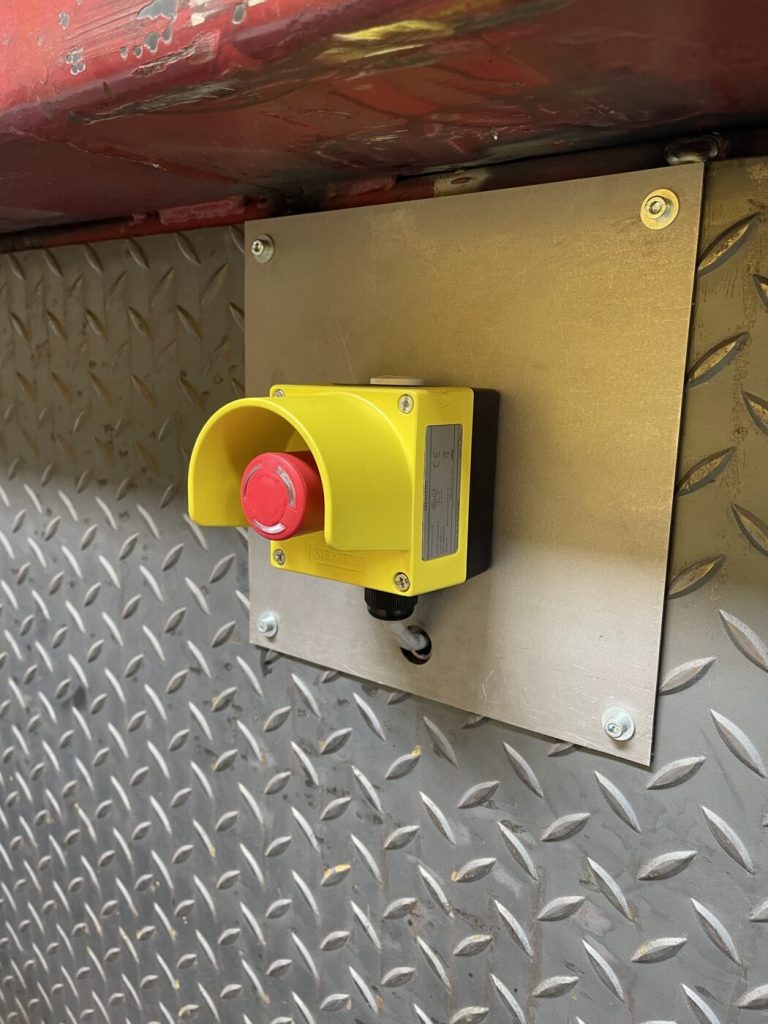
Emergency stop buttons sit at grip height, clearly visible, not hidden by parcels, containers or attachments. The red mushroom button on a yellow background must be instantly recognisable.
Not in the way
Buttons and brackets must not project into walkways or be hit by forklifts or roll cages. The position is checked against the drawing on site.
Labelling
Every emergency stop point gets a clear designation that can be found in the drawing and in the controls. That way you know immediately where it was pressed when it trips.
An emergency stop is not an operating switch
An emergency stop is for emergencies, not for stopping in everyday operation. If staff regularly use it to clear jams, another control point is usually missing – such as a normal stop button. This should be discussed when planning the extension so that the new safety technology is used correctly.
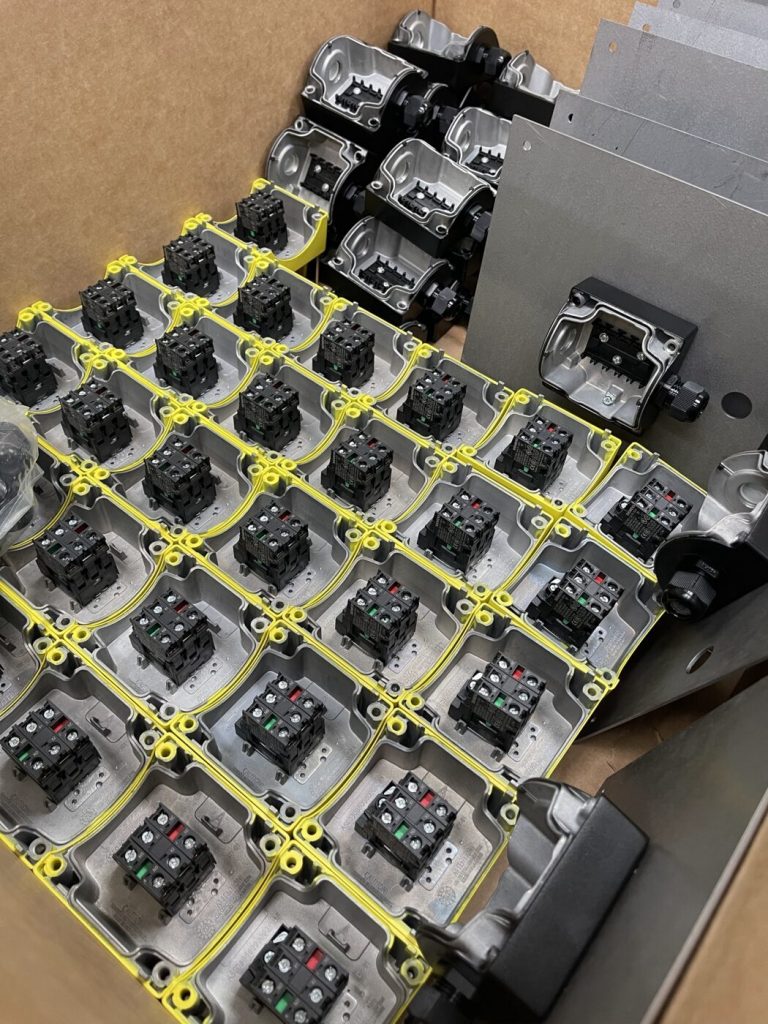
Pre-assembly: series work before the shutdown
Whatever is finished before the shutdown no longer has to be done during it. Pre-assembly is therefore the most important lever for short windows.
Preparing brackets
For every emergency stop button and every sensor, a bracket is prepared – to suit the installation situation on frames, columns or conveyor lines. Stainless steel or galvanised mounting plates stand up to the rough everyday life of a sorting system.
Preparing housings
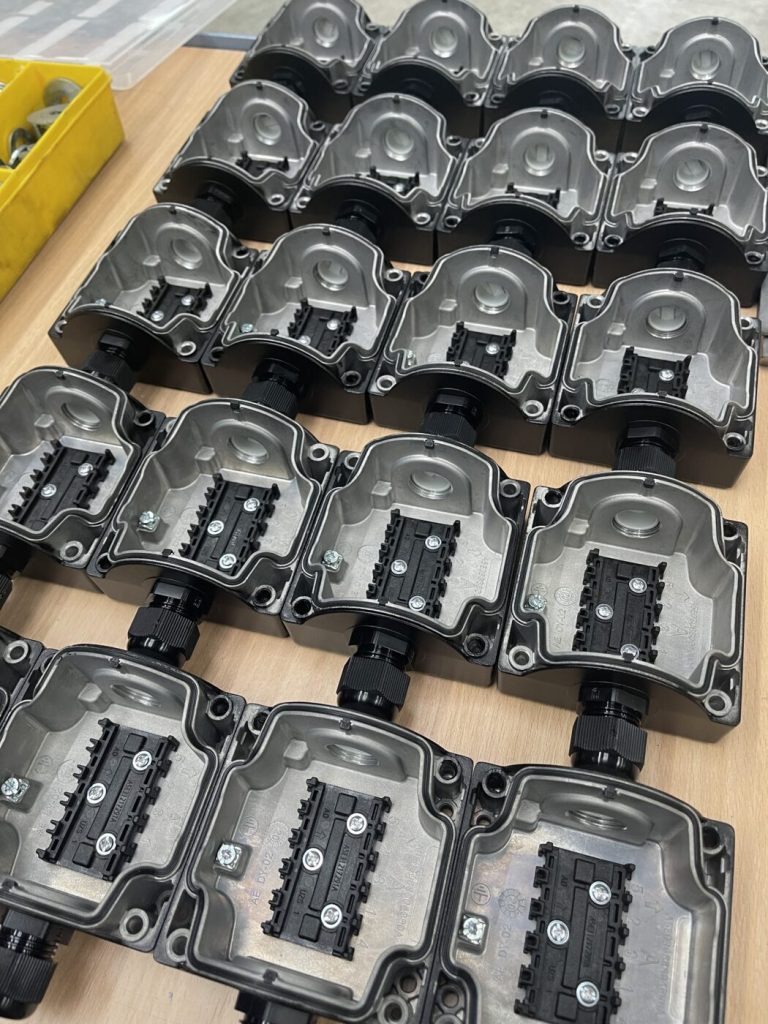
Every housing gets a cable gland, terminals and labelling. This is series work – done at the bench in a fraction of the time it would take at the plant.
Sorting by installation point
All prepared units are sorted and marked by installation point. During the shutdown, every fitter picks up the part that belongs at his position.
Space for pre-assembly
Pre-assembly needs a workplace: tables, power, light and space for sorting. We clarify beforehand with the operator where we may set up – close to the plant, but outside the traffic routes.
Pre-assembling cables
Where the drawings allow, cables are cut to length and labelled in advance. That saves time in the window and avoids mix-ups.
Mechanical installation: robust for everyday use
Installation takes place in the shutdown window. Now pre-assembly pays off.
Fitting brackets
The brackets are mounted on frames and columns, aligned and bolted tight. Holes drilled in the existing plant are deburred and protected against corrosion.
Installing buttons and sensors
Emergency stop buttons and sensors go onto their brackets. Sensors are aligned to their target position so that they reliably detect what they are supposed to detect.
Robust enough
In a sorting system, things get knocked, pulled and driven into. Brackets and buttons have to withstand that. Anything loose will come off in continuous operation. That is why we use secured bolted connections and check every bracket by hand after installation: if something wobbles, it is retightened or reinforced before the window ends.
Adding new lines
If new conveyor lines are added, supports are set, lines aligned and connected. How conveyor technology is maintained as a whole is described in the guide Conveyor technology maintenance.
Connecting the new line to the existing plant
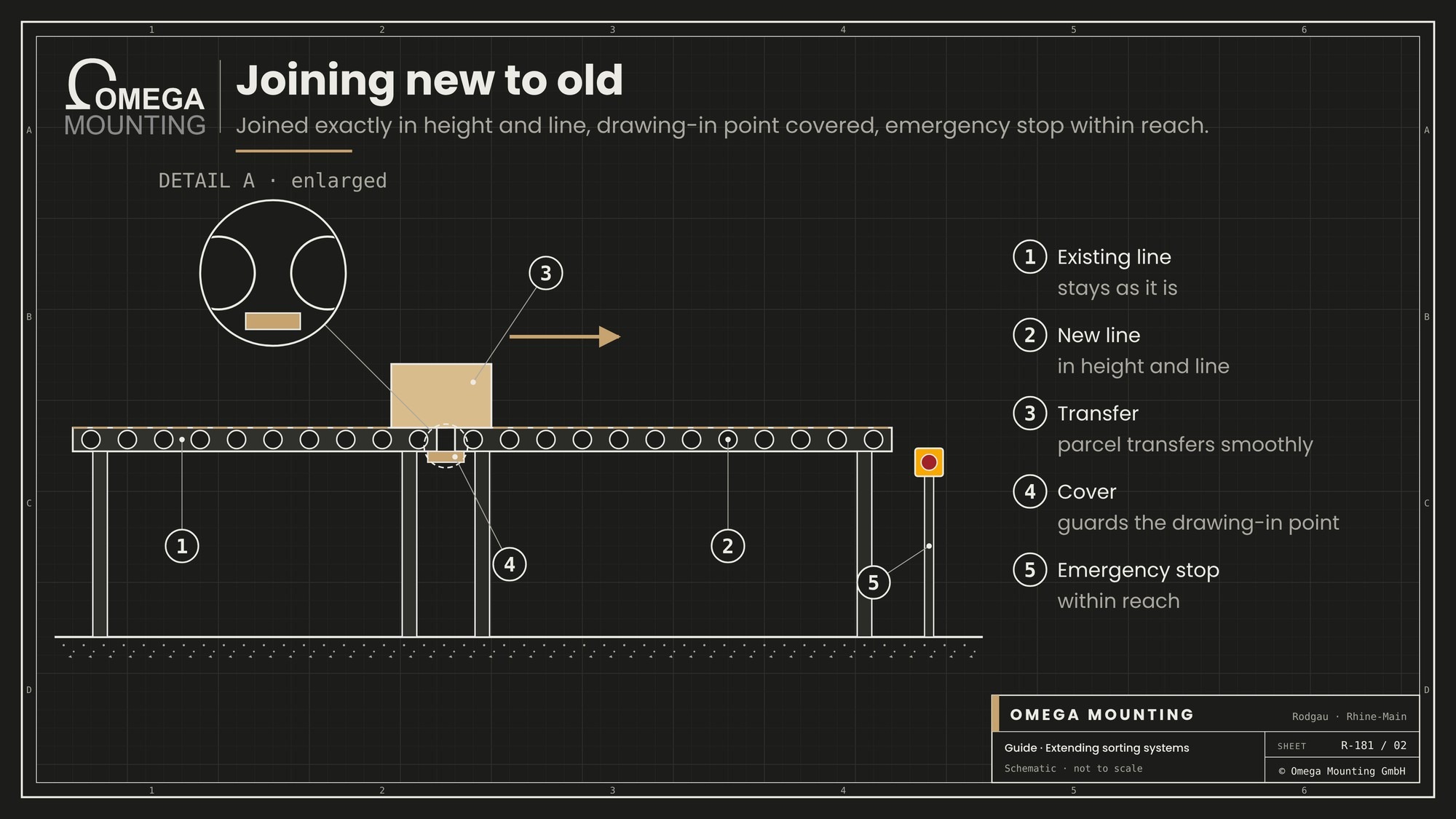
The transition between new and old is the trickiest point of an extension.
Height and alignment
The new line must connect exactly to the old one in height and alignment. An offset makes parcels get stuck or tip over.
Transfer of parcels
At the transfer point, the parcel must move smoothly from one line to the next. Gaps, speed and roller spacing are set so that nothing jams.
Safety at the transition
New drawing-in and crushing points arise at the transition. They are secured with guards, and an emergency stop is within reach.
Connecting section by section
Where possible, the new line is first built and tested separately and only connected to the existing plant in the last window. That keeps the intervention in the running plant short.
Electrical integration: every point into the circuit
New buttons and sensors are integrated into the existing safety circuit. Our own electricians do this – following the integrator's drawings.
Isolating
Before work is done on the safety circuit, the affected area is isolated and secured against being switched back on. How this works in everyday practice is described in the guide Lockout tagout in maintenance.
Terminating the cores
In the housing, the cores are terminated, the strain relief fitted and the connection checked. Every core goes to the terminal specified in the drawing.
Integrating into the circuit
The new elements are integrated into the safety circuit at the intended points. The logic in the controls – what happens on which signal – is set by the integrator.
Documenting
Changes are marked up in the drawings or reported to the integrator. A plant whose drawings are wrong is hard to understand at the next fault.
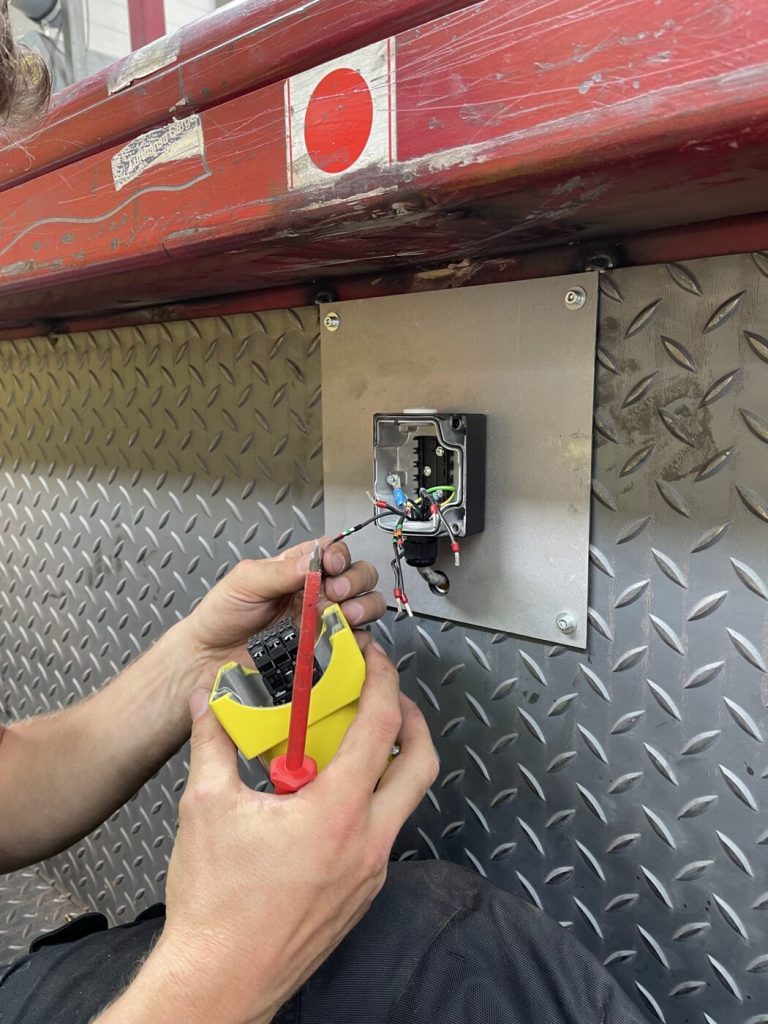
Testing and restarting
Before the extended plant goes into regular operation, it is tested.
Every point individually
Every new emergency stop button is pressed: does the plant stop? Is the right point displayed? Can it only be restarted after unlocking and acknowledging? Every sensor is triggered and its effect checked.
Together with the integrator
We test the safety functions together with the integrator or manufacturer. Validation of the safety functions and release lie with them and with the operator.
Trial operation
Only then does the plant run with parcels. First slowly and with few parcels, then at normal rate. False alarms from sensors, parcels stuck at transitions or unintended stops show up now – and are fixed immediately. We stay nearby until it is clear that transitions and sensors work in operation.
Handover
The handover includes the marked-up drawings, the list of tested points and a short report.
Sensors on conveyor lines: what they monitor
Besides emergency stop buttons, an extension almost always adds sensors. They are the eyes of the plant.
Light barriers and switches for parcel flow
Light barriers detect whether a parcel has arrived at a point, whether a jam is forming or whether a line is clear. They control the flow but are usually not safety sensors in the strict sense.
Safety sensors
Safety sensors monitor areas where people can reach in – such as light curtains at transfer points or switches on maintenance flaps. They belong to the safety circuit and are integrated and tested like emergency stop buttons.
Aligning correctly
A sensor that looks slightly off target triggers false alarms or misses something. That is why sensors and their reflectors are carefully aligned and fixed so that they withstand vibration in operation.
Protection against impact
Parcels slide, containers bump. Sensors are therefore mounted in protected positions, often in brackets with edge protection, and so that they can be cleaned.
Pull-wires and guards on long lines
A button is not enough everywhere. Long lines and open transitions need further guards.
Pull-wires
Pull-wires run along long conveyor lines. Pulling one stops the plant – from any point on the line. They are tensioned, attached to switches and checked regularly.
Guard fences and covers
Drawing-in points at rollers, belts and transitions are secured with fences or covers. An extension often creates new points that previously had no protection.
Guard doors with switches
Access points to hazardous areas get doors with safety switches. If the door is opened, the section stops.
After the extension: maintaining the safety technology
An extended plant has more safety technology – and it needs looking after.
Regular testing
Emergency stop buttons, pull-wires and safety switches are regularly tested for function. How often is set by the operator in the risk assessment. The new points belong in this plan.
Adapting the maintenance plan
New lines bring new drives, belts and rollers. They are added to the maintenance plan. How sorting systems are maintained is described in the guide Sorting system maintenance; how to build a maintenance plan is set out in the guide Creating a maintenance plan.
Spare parts
A set of spare buttons, sensors and brackets in stock makes a fault quick to fix. Because the parts are being procured for the extension anyway, it is worth ordering a few extra at the same time.
Working at height on conveyor systems
Many conveyor lines run overhead, on platforms or above traffic routes. Emergency stop buttons sit at grip height, but sensors and cable routes are often high up.
The right equipment
Depending on height and space, we work from platforms, mobile scaffolds or mobile elevating work platforms. Ladders are only suitable for short, light work. How mobile elevating work platforms are used safely is described in the guide MEWPs in installation work.
Cordoning off below the platform
Anyone working above can drop something. The area below is cordoned off and tools are secured.
Overhead cable routes
New cables are laid in existing cable routes or run in new trays. They are fixed so that they do not sag or chafe on moving parts.
Timeline of an extension: from order to regular operation
An extension can be roughly divided into four phases.
Preparation
Read drawings, check material, clarify access, pre-assemble. This phase runs while the plant is still fully working.
Installation in windows
In every shutdown window, a self-contained part is installed and integrated. At the end of every window the plant runs again – with the finished part or without it, but never half-finished.
Testing and validation
When all parts are installed, the safety functions are tested together with the integrator and validated by them.
Regular operation
After trial operation and release, the extended plant runs in regular operation. We hand over drawings and test list.
Safety during installation
Work on a plant that partly keeps running requires clear rules.
The basic rules
- Isolate and secure areas before anyone works on them.
- Clearly separate running sections.
- No bypassing of safety functions without release and documentation.
- Work at height only with a platform or mobile elevating work platform.
- Do not put tools and material down on conveyor lines.
- Before restarting: everyone out of the danger zone, announcement by radio.
Legal framework
Changes to machines and plants are subject to the German Occupational Safety Act (ArbSchG), the Industrial Safety Ordinance (BetrSichV) and the requirements for machine safety. This guide is not legal advice – which obligations apply to your extension you should clarify with your occupational safety specialist, the integrator and the manufacturer.
Typical extensions in parcel centres
Every sorting system grows differently. But some extensions come up again and again.
New outfeeds
More destinations, more chutes, more roll cage positions: when a centre serves more routes, the sorter needs more outfeeds. People work at every outfeed – so every one needs a reachable emergency stop.
Additional infeeds
More parcels need more ways into the sorter. New infeeds bring conveyor lines, transitions and workstations where parcels are placed.
Longer lines
When the building grows, the lines grow. Long lines need pull-wires and additional sensors for parcel flow.
New safety standards
Sometimes the extension is mainly a modernisation: the plant is brought up to a new safety standard, emergency stop points are added and sensors renewed. That was also the core of the work in our practical example.
When old and new technology meet
Existing plants are often many years old. The new technology still has to fit.
Different generations
Old and new buttons, sensors and terminals can differ. The integrator defines how they work together. We install according to their specifications and report if something on site does not match the drawing.
Drawings that are wrong
In older plants, the drawings do not always match reality. We check on site before connecting and clarify deviations with the integrator instead of guessing.
Fixing to old frames
Old frames are sometimes rusty or bent. Brackets are placed so that they sit firmly; where necessary, the fixing point is repaired first.
Mechanical and electrical work from a single source: what it saves
In many projects, mechanics and electricians come from different companies. In short shutdown windows, that costs time.
No waiting time
Once the bracket is in place, the same fitter can connect it straight away. Nobody waits for the next trade.
One point of contact
Questions about bracket, cable route and terminal are answered by one team. That shortens coordination with operator and integrator.
Clean handover
Whoever installs mechanically and integrates electrically can also prepare and document the testing. The integrator gets a plant that only needs validating.
Working in a running centre
Parcel and distribution centres are almost always running. Installation has to fit in.
Access and security areas
At airports and in large centres, access rules apply: passes, escorts, security checks. We clarify them before the first day so that no window is lost waiting.
Traffic in the centre
Forklifts, tow tractors and roll cages are on the move. Material is stored so that it obstructs nobody, and installation areas are cordoned off.
Short routes, clear contacts
One fixed contact at the operator and one at our company keep coordination short. How to organise work during ongoing operations is described in the guide converting racking during live operations.
Who does what when extending a sorting system?
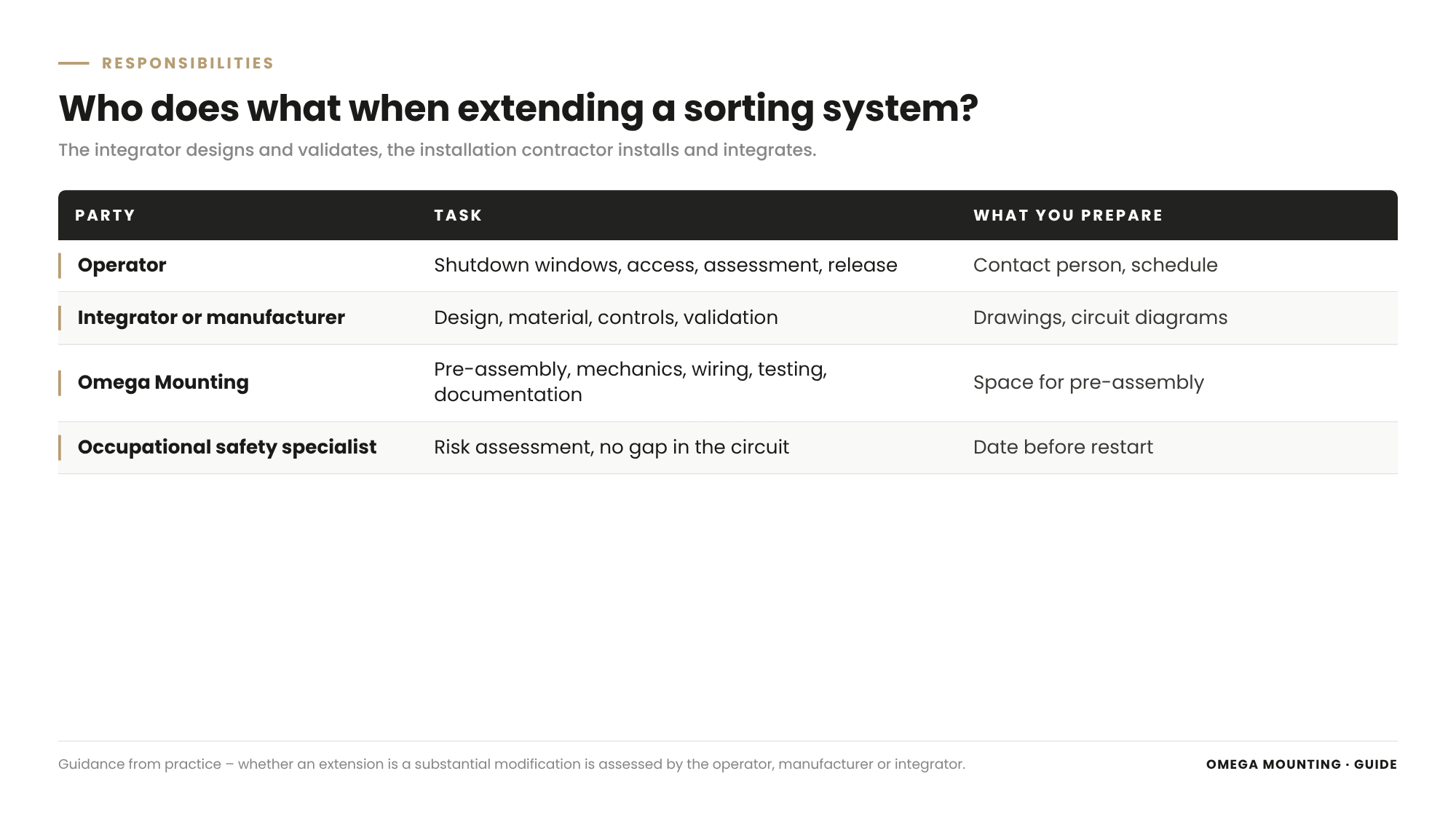
Several parties work together on an extension.
Operator
The operator sets shutdown windows, arranges access, assesses the change with manufacturer and integrator and releases the plant.
Integrator or manufacturer
The integrator or manufacturer plans the extension, supplies drawings and material, sets up the controls and validates the safety functions.
Omega Mounting
We pre-assemble, install mechanically, integrate with our electricians, test together with the integrator and hand over with documentation.
Occupational safety specialist
The specialist supports the risk assessment for installation and operation and makes sure no gap remains in the safety circuit.
Extending a sorting system: what it means for your planning
A good extension starts with four questions.
Where do new hazard points arise?
Have new work areas and transitions assessed early. They determine the new emergency stop points and sensors.
What can be ready beforehand?
Plan time and space for pre-assembly. Every hour of pre-assembly saves more than an hour during the shutdown.
How many windows are there?
Divide the extension into sections that each fit into one window.
Who validates?
Decide who tests and releases the safety functions – and when.
Typical mistakes when extending a sorting system
Most problems arise not when bolting things together but in planning and handover.
- Safety forgotten: new line, but no new emergency stop within reach.
- Too little preparation: housings are wired during the shutdown instead of at the bench.
- Button hidden: emergency stop behind containers or attachments.
- Transition not aligned: parcels get stuck.
- Drawings not marked up: the next fault turns into a search.
- Restarted without validation: safety functions not fully tested.
The mistake behind the mistakes
Almost all these mistakes happen when the extension is seen purely as conveyor technology and safety as an add-on. If you plan both together from the start, you have a plant that runs faster and more safely.
Extending a sorting system in the Rhine-Main region: how we do it
From Rodgau we quickly reach Frankfurt, the airport, Offenbach, Hanau, Darmstadt, Raunheim and Mainz. The region is one of Europe's major logistics hubs – with parcel centres, freight handling and distribution warehouses that are constantly growing.
Before the job, we read the drawings, clarify access and shutdown windows and prepare pre-assembly. In the window, we install mechanically, integrate electrically and test with the integrator. How else we work in logistics is on our page on Logistics.
Our fitters master both mechanical and electrical work. For you, that means one team and no waiting time between two trades.
Project examples
A job from our project diary shows how a sorting system was brought up to a new safety standard during operation.
Sorting system extended at Frankfurt Airport
At Frankfurt Airport, an existing parcel sorting system was extended and brought up to date. Numerous new emergency stop buttons and sensors had to be integrated into the existing safety circuit. Two of our fitters carried out the complete retrofit in two days, each time during the day in the plant's shutdown periods. First we prepared a mounting plate for each button to suit the installation situation and fitted every housing with cable gland, terminals and labelling – sorted by installation point. Then brackets and buttons were mounted on frames and supports, secure and easy to reach at grip height. Finally we integrated every button and sensor electrically into the safety circuit so that the extended plant works as one continuous safety system.
Is an extension coming up for you?
Send us drawings of the extension, the list of new safety elements and your shutdown windows – we will tell you how we will schedule the installation. Get in touch now.
What this means for your role
Site or operations managers: Set shutdown windows early and provide access and contacts.
Technical managers: Check whether new work areas and transitions are covered in the safety planning.
Intralogistics project managers: Bring integrator, operator and installation contractor together early. Pre-assembly belongs in the schedule.
Integrators: An installation partner who handles mechanical work and wiring takes the load off your commissioning engineers.
Buyers: Compare quotes not only by hours. Ask whether pre-assembly, electrical work, testing and documentation are included.
Plant extension installation plan: template on request
For your next extension, we have put together the plant extension installation plan. On one page it asks about the extension, safety, shutdown windows, material and acceptance. You fill it in, and we plan the installation without follow-up questions. Request the template via our contact form – keyword “Plant extension installation plan”.
Why Omega Mounting?
With over twenty years of experience in installing and maintaining conveyor and sorting systems, we know that an extension only succeeds in short windows if everything is prepared beforehand and mechanical and electrical work go hand in hand. That is why we pre-assemble, sort by installation point and come with fitters who can do both. We test the safety functions together with the integrator. For you, that means short shutdowns and a plant whose safety circuit has grown with it. Talk to us about your extension – get in touch.
Conclusion
Extending a sorting system means letting conveyor technology and safety grow together. New lines need new emergency stop points and sensors that sit within reach and at grip height and are cleanly integrated into the existing circuit. Pre-assembly makes short shutdown windows possible; testing and validation make the plant safe.
Parcel centre, airport or distribution warehouse: if you plan the extension like this, you get a larger plant with no gap in safety. If an extension is coming up for you, get in touch with us.
Planning a move-in, installation or maintenance in the Rhine-Main region?
Tell us briefly what you need – we'll come back with an honest assessment.
Free, no-obligation callback
You may also be interested in these guides
Maintenance & Servicing
About the author
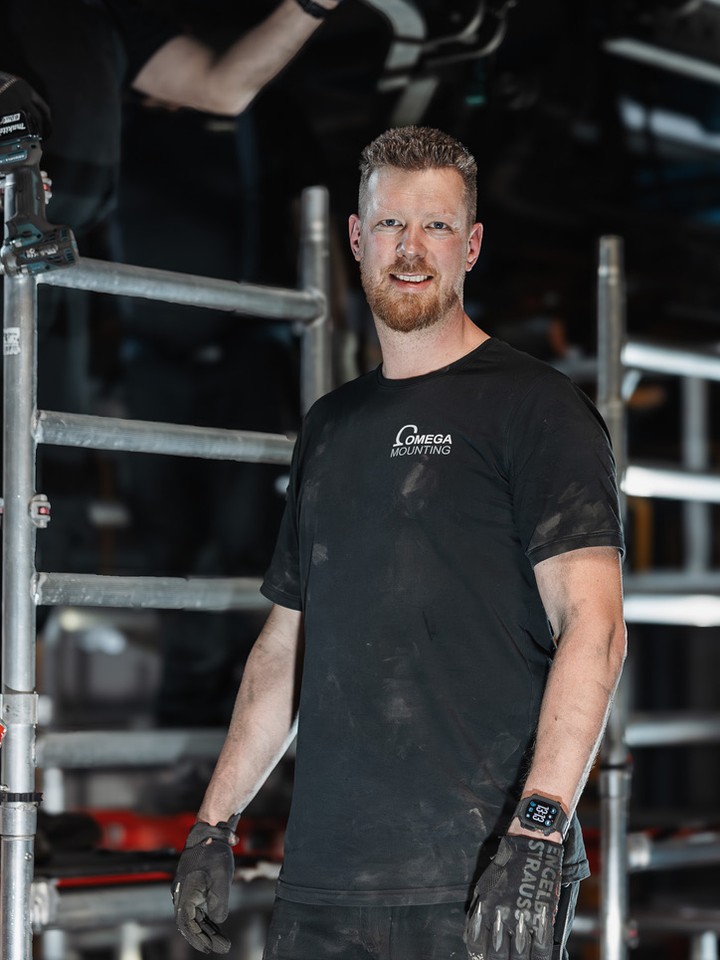
Tobias Schott
Managing director of Omega Mounting GmbH, Rodgau · more than 20 years of hands-on experience in installation and maintenance
A trained mechatronics technician, working in maintenance, servicing and industrial installation since 2004 – first alongside his father, and with Omega Mounting since 2012: from overhead conveyors in Frankfurt to the crane system in a new-build hall. He plans and leads lifting operations as an appointed person (AP) in data centers and on industrial sites in the Rhine-Main region, trains and examines operators of cranes, mobile elevating work platforms and telehandlers, and is a qualified occupational safety specialist. On jobs abroad he is known as the “German Troubleshooter” – the person you call when a site gets stuck. He learned what quality means from his father, not from a manual: Made in Germany as a standard for his own work, not a label. That is why quality comes first at Omega Mounting – ahead of speed and price. He writes these guides from that practice: what works on our sites is in them – what exists only on paper is not.
Frequently asked questions
Because every extension changes walkways, work areas and hazard points. Wherever people work or intervene, an emergency stop must be within reach.
The connection of all safety-related switching elements of a plant – emergency stop, pull-wires, guard doors, sensors. If one element trips, the plant stops in a controlled way.
Partly. Much is pre-assembled, and work is done in shutdown windows. New lines can often be built separately and only connected at the end.
Our own electricians – following the integrator's drawings. The control logic is set by the integrator.
We test every point together with the integrator or manufacturer. Validation and release lie with them and with the operator.
That depends on the scope. In our practical example, two fitters completed the retrofit in two days during the shutdown periods.
That depends on the individual case and is assessed by the operator, manufacturer or integrator.
Yes. From Rodgau we are quickly on site at the logistics locations in the Rhine-Main region, including Frankfurt, the airport, Raunheim, Offenbach and Mainz.
Send us the drawings of the extension, the list of new safety elements, your shutdown windows and the access rules. We will come back with our questions and an assessment. Go to the contact page.
 English
 German