
- Guide – Maintenance and servicing
On-site plant support: maintenance technicians on shift at the plant instead of on call
By Tobias Schott · 20-minute read · As of November 2026
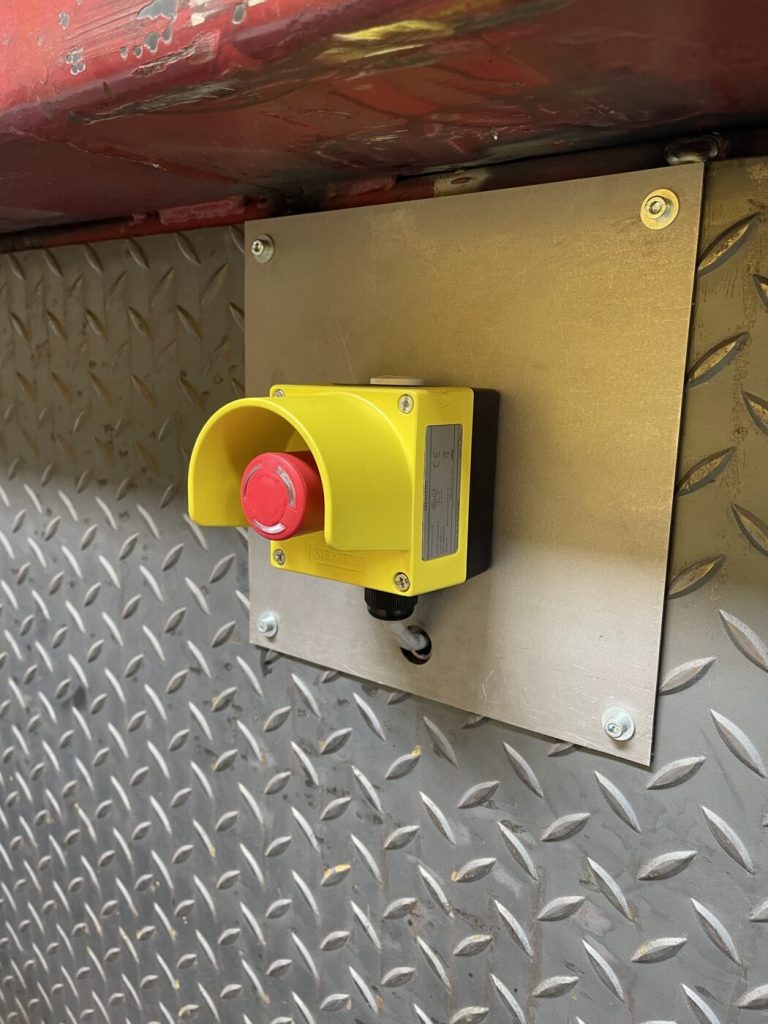
On-site plant support means: a maintenance technician is at the plant during the operating windows, clears faults while it runs, uses the breaks for what cannot be done during operation and tells maintenance management what is coming next. The difference from a service call is not the repair. It is that someone is there before something breaks.
Some plants must not stop. A parcel sorting system in its operating window, a conveyor that feeds production, a filling line in cycle. Every minute of downtime causes a backlog. A technician who first has to be called out often arrives too late.
For such plants there is another form of maintenance: on-site plant support. A mechatronics technician is at the plant on shift. He knows it, listens to it and steps in as soon as something stands out. Anyone searching for “maintenance technician on site”, “plant support on shift” or “troubleshooting during operation” usually faces exactly this question: is a maintenance contract enough, or does the plant need someone who is there?
This guide shows how on-site plant support works, when it pays off and what belongs in the agreement. It is written for maintenance managers, operations and shift managers, logistics managers, buyers, project managers and occupational safety specialists. How a standby service is arranged is described in the guide Standby service in maintenance.
Key points at a glance
- On-site plant support means: a maintenance technician is at the plant during the operating windows.
- Be there before it runs. Whoever only arrives with the first parcel has already missed the first fault.
- Decide while it runs. Fix it now, bridge it and move it to the break, or shut down.
- Breaks are the maintenance window. What stands out during operation is dealt with between the operating windows.
- Spot it early. Bearings, belt edges, rollers and sensors give warning – whoever is there every day notices.
- Write it down. A findings list turns a suspicion into an item in the maintenance plan.
- Mechanics and electrics from a single source. One person diagnoses both.
- Together with your own team. The support adds to the operator's maintenance; it does not replace it.
What is on-site plant support?
On-site plant support is a maintenance service in which an external maintenance technician is at the plant during operation. He can be reached in the operating window, uses the breaks for work on the plant and reports regularly on what he notices.
How it differs from a service call
With a service call, a technician comes, repairs and leaves. With plant support, he stays. He needs no induction, knows the routes and knows which assembly sounds different today than yesterday.
How it differs from a maintenance contract
A maintenance contract covers recurring work at fixed intervals: inspection, maintenance, response times. Plant support catches what happens between the appointments. The two can be combined. What belongs in a maintenance contract is shown in the guide maintenance contract for machinery.
How it differs from a standby service
A standby service waits for the call. Plant support is already there. It shortens the way from the fault to a pair of hands to a few steps.
Which plants is on-site plant support worthwhile for?
It is not size that decides, but what an hour of downtime costs and how tight the cycle is.
Tight operating windows
Plants that run in fixed windows and must not stop during them benefit most. Parcel sorting, baggage handling, order picking and supply conveyors are among them. The backlog cannot be made up, because the lorries leave anyway.
Many similar wear points
Sorting systems and conveyor lines consist of hundreds of modules. Each has a drive, bearings, belts, a sensor and a conveyor belt. Individually inconspicuous, together thousands of points that age at the same time. One failure is enough to shut down an outfeed.
No redundancy
Where there is no second line, every fault interrupts operations. A small plant that feeds production can be more urgent than a large one with an alternative route.
Long delivery times
Where spare parts take a long time, early detection pays off particularly well. A part ordered early arrives in time.
The rhythm: operating windows and break windows

On-site plant support follows the rhythm of the plant, not the rhythm of the service provider.
Be there before start-up
The technician is at the plant before it starts. He checks the critical points, makes sure everything is clear and is ready when the first goods arrive.
Watch and step in during the operating window
While the plant runs, he watches, listens and steps in. A fault is not reported and scheduled. It is fixed.
The break window is the maintenance window
Between two operating windows lies the real working time on the plant: adjusting, replacing, cleaning, lubricating. This is when what stood out during operation is dealt with.
Shift change with handover
When the shift changes, the technician changes too. What he has seen is passed on to the next shift verbally and in writing.
Troubleshooting during operation: three decisions
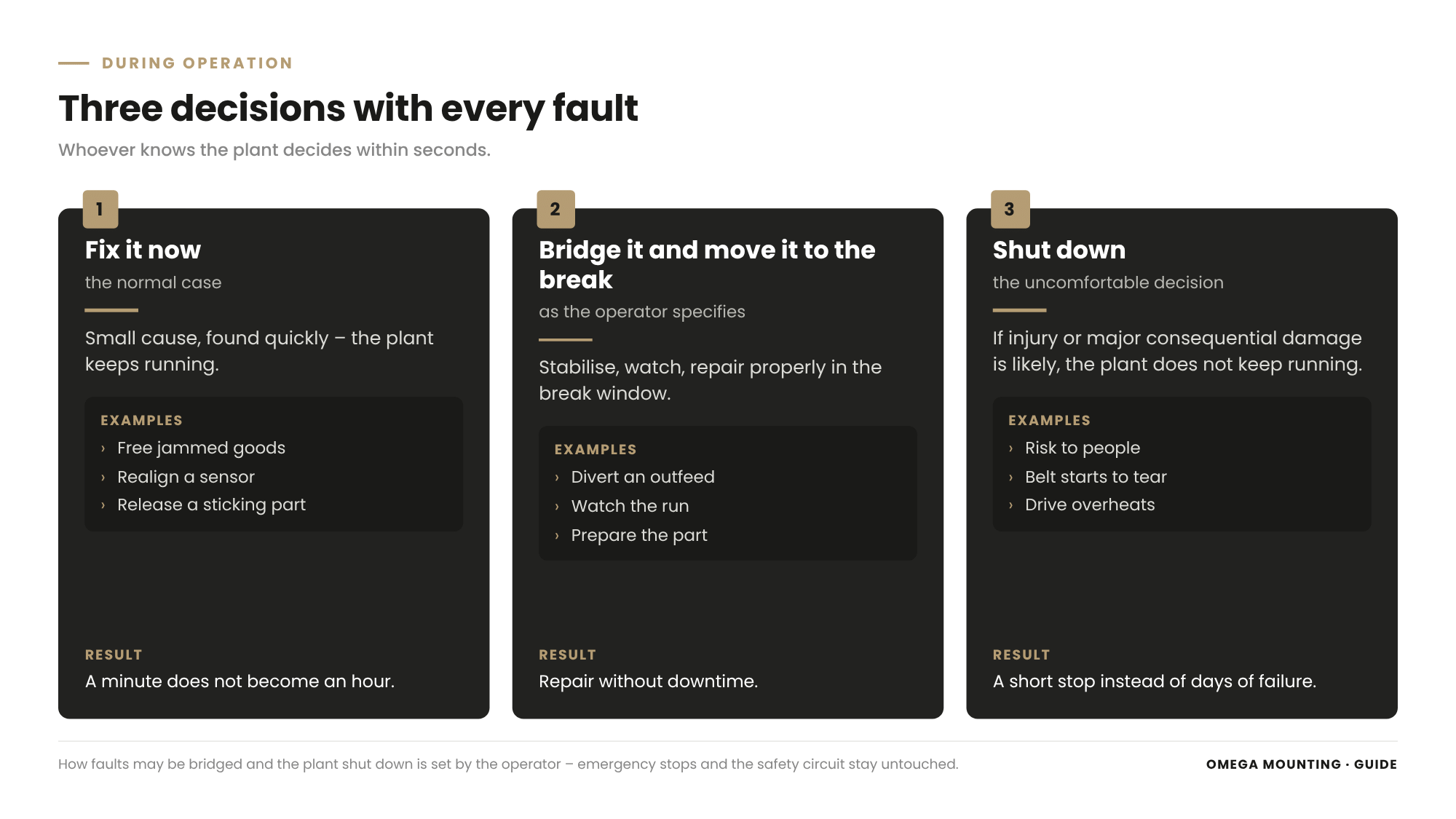
With every fault during operation, someone has to decide within seconds which of three routes is the right one.
Fix it now
A jammed parcel, a shifted sensor, a sticking part. That is the normal case. This is where it is decided whether a minute of interruption turns into an hour of downtime.
Bridge it and move it to the break
Some things can be stabilised but not repaired while running. Then the point is secured, watched and dealt with in the break window. How bridging may be done is set by the operator.
Shut down
The most uncomfortable decision. There are findings where the plant must not keep running, because otherwise injury or major consequential damage is likely. Only someone who knows the plant and can take responsibility for it makes this decision – in agreement with the shift manager.
Systematic, not hectic
Even under pressure: narrow it down first, then step in. How faults on conveyor systems are traced systematically is described in the guide Conveyor system down: rectifying the fault.
Spot it early: what you only see if you are there every day
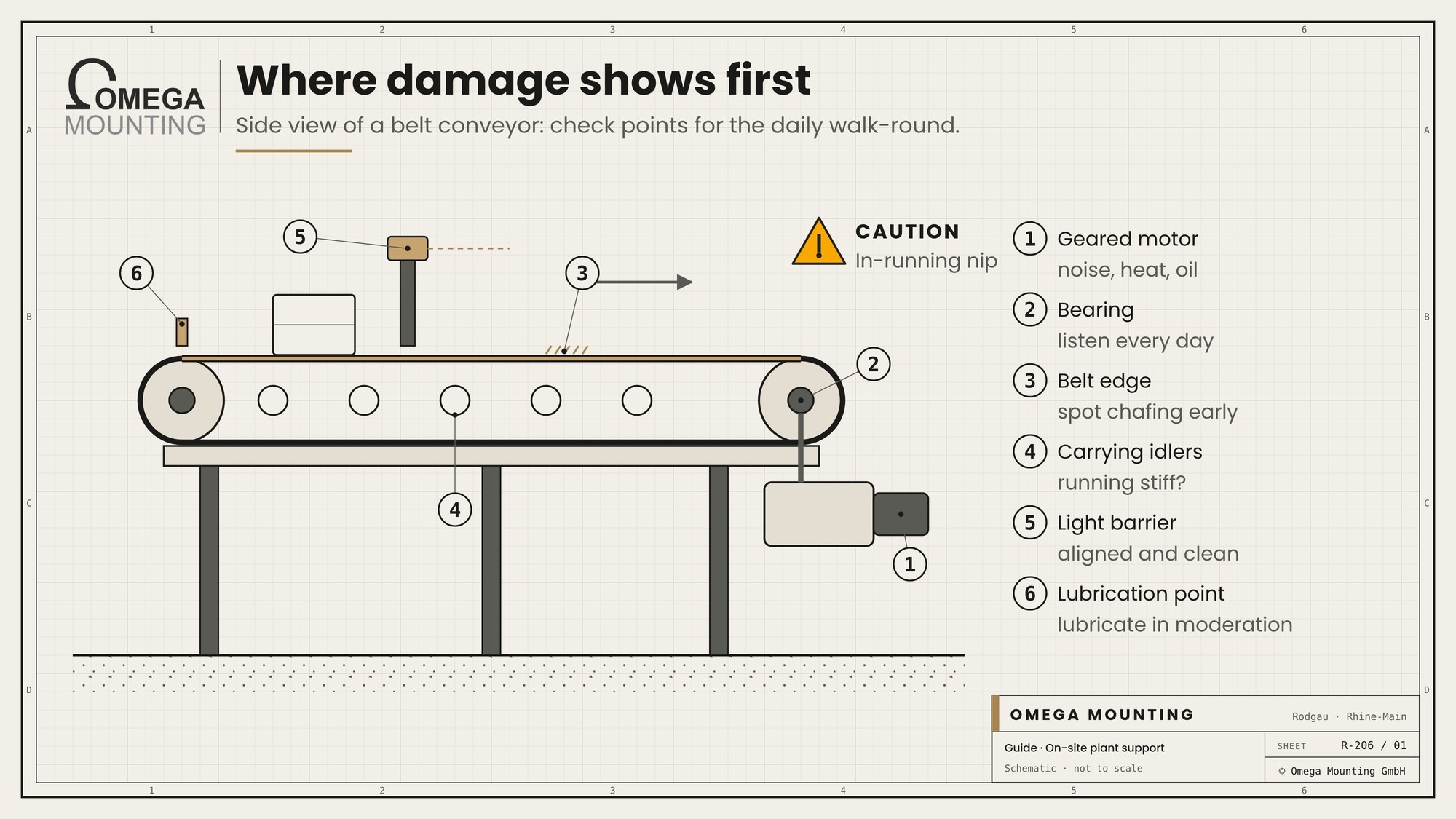
The most valuable thing about on-site plant support is not the quick repair. It is that someone hears the plant every day.
Noises in the bearing
A bearing gives warning long before it seizes. Whoever hears the plant every day notices the change. Whoever comes every few weeks only hears the current state.
Damage to the belt
Belt damage starts at the edge: a chafing point, fraying. From there it grows with every revolution. In the end there is a tear in the middle of the belt. Weeks lie in between. In those weeks it is decided whether it becomes a planned replacement or a belt tear during operation.
Rollers, belts and drives
Rollers that run stiffly steer inaccurately. The goods end up at the wrong destination before anything is broken. Belts stretch, geared motors give warning through noise, heat and oil loss.
Lubrication – and too much of it
Bearings and guides need grease in the right place and in the right amount. Too much grease collects dust and label residue. The lubricant turns into a grinding paste.
Dirt and sensors
Dust, film remnants and labels settle in guides and on sensors. Light barriers drift out of alignment. A false alarm nobody takes seriously is the start of a fault nobody can explain.
What gets done in the break window

The break window is short. So that it is enough, it is prepared.
Adjusting and replacing
Tensioning belts, aligning sensors, replacing rollers and bearings, patching or changing a conveyor belt. What stood out during operation is on the list for the break.
Cleaning
Dust, film remnants and labels are removed from guides, rollers and sensors. A clean plant has fewer faults.
Lubricating in moderation
Lubrication follows the plan, at the right points and in the right amount. Afterwards it is checked where the grease has run. How a lubrication plan is structured is described in the guide lubrication schedule in maintenance.
Prepare instead of searching
Parts, tools and isolation are prepared before the window starts. Whoever only starts searching in the break will not get the work done.
Test run before start-up
After every job, the section concerned runs briefly as a test. Only then does the plant go into the next operating window.
Identification and plant knowledge: why knowing the site matters
Large plants consist of hundreds of modules. Every belt, every bend, every sorting field carries its own identification.
The alarm comes as a number
During operation, a fault usually comes as an alarm with an identification. Whoever knows immediately where that module is gets there in seconds. Whoever first fetches the plan loses minutes. With a plant that must not stop, that is the difference between a fault and a backlog.
The quirks of the plant
Every plant has points that fail first: a diverter, a transfer, a corner where dirt collects. After a few months the technician knows them not from the manual but from experience. Then he can fix them permanently instead of repairing them again and again.
The first weeks: how plant support starts
Plant support does not start with the first fault, but with a proper familiarisation.
Walking the plant
It starts with a walk-round with the operator's maintenance team: layout, identification, access points, emergency stop points, control cabinets, maintenance points.
Reviewing documents
Maintenance plans, fault history, spare parts lists and circuit diagrams show where the plant has its weak points.
Collecting weak points
The walk-round, the history and the first shifts produce a first list: what fails often, what is worn, what is missing. It is the basis for the first report.
Providing tools and parts
Tools, measuring equipment and the most important spare parts are set up on site. Then the technician can work without searching.
Findings list and report to maintenance management
Observing alone is not enough. What the technician sees must reach those who plan and decide.
What goes in the report
What should be improved. Which maintenance we suggest. Where we see hazards. Which assemblies will soon need attention. Where a repair is due before it becomes urgent.
With date and assembly
Every finding gets a date, an assembly and the plant identification. That turns a vague suspicion into an item in the maintenance plan.
The operator decides
The technician provides the finding, an assessment and a suggestion. What is implemented is decided by the operator's maintenance management.
Mechanical and electrical work from a single source
On sorting and conveyor systems, mechanical and electrical work cannot be cleanly separated.
One fault, two causes
Goods end up at the wrong destination. Is a roller running stiffly, or is the sensor reporting too early? A station does not start. Is it jammed mechanically, or is the release missing? Whoever can only handle one side needs two people and two call-outs.
Mechatronics technicians at the plant
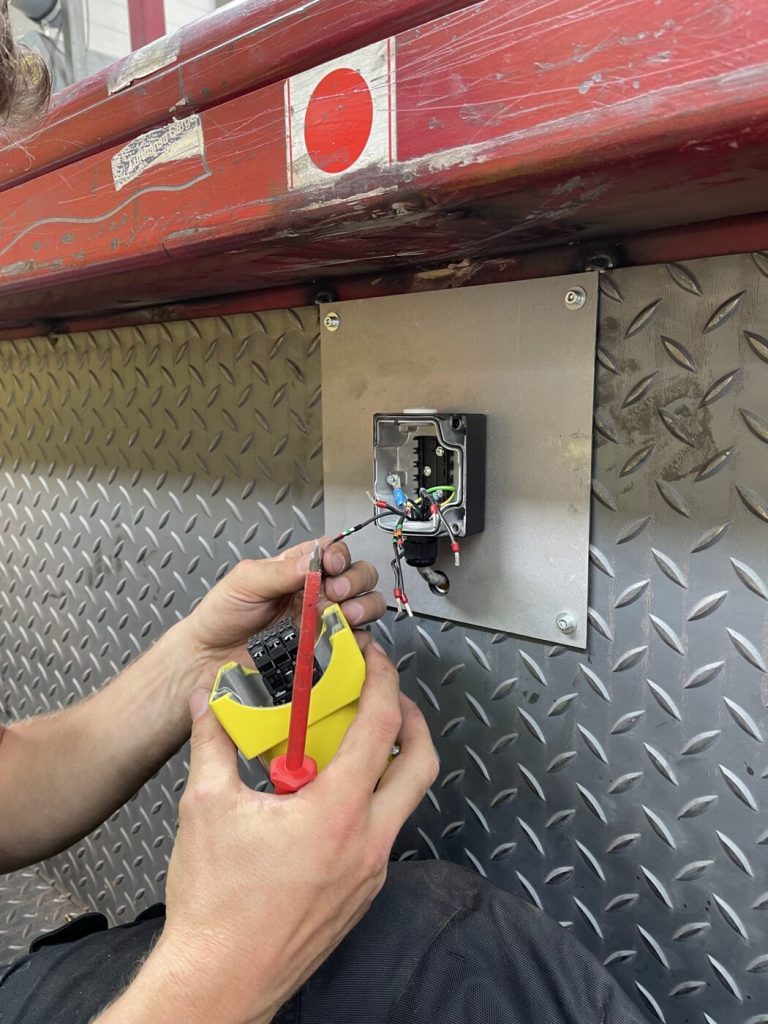
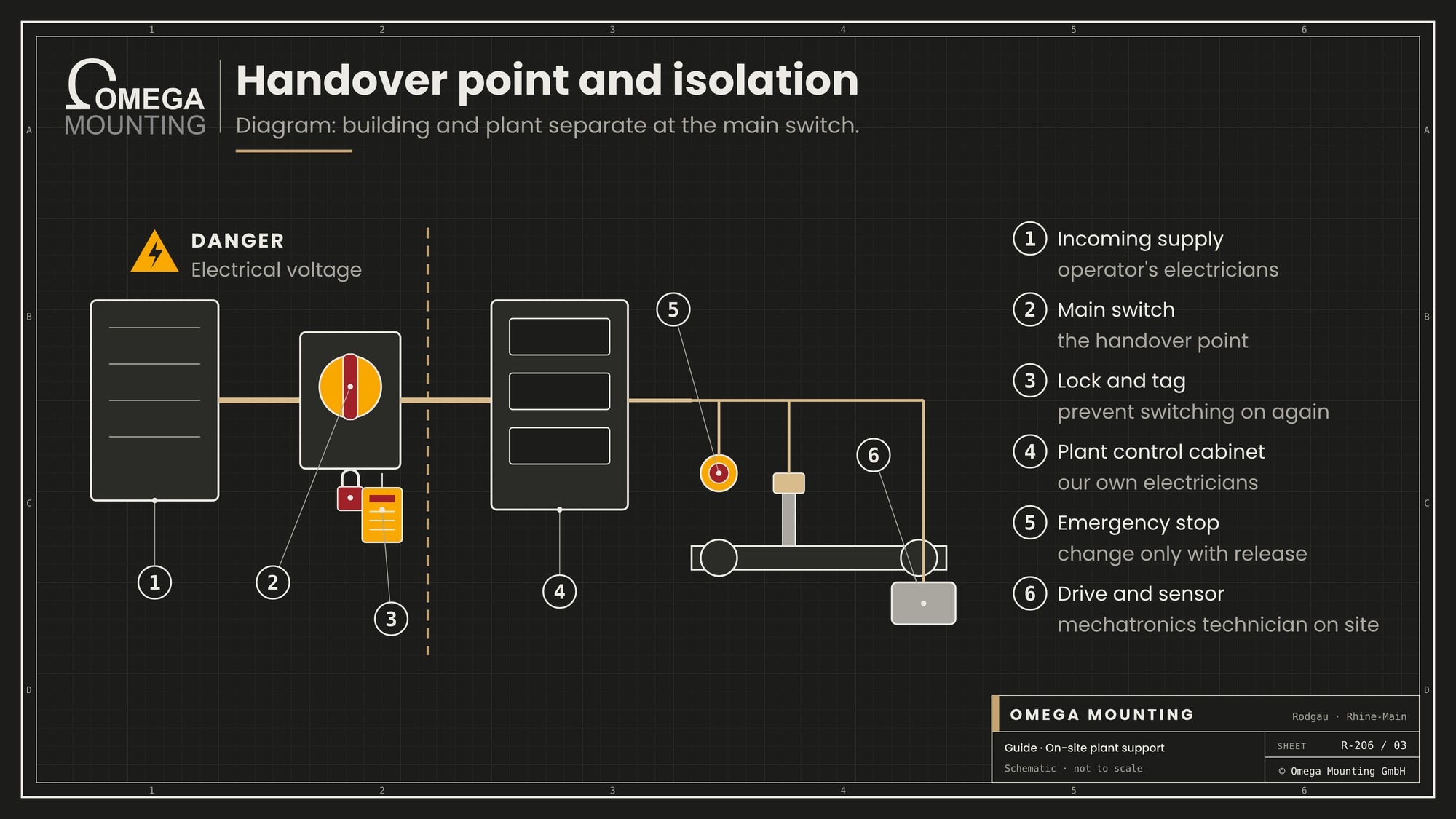
Our people are mechatronics technicians. They diagnose and fix mechanical and electrical faults on drives, sensors and peripherals. Disconnecting and connecting on the plant side is done by our own electricians – up to the main switch of the plant.
Where the handover point is
The incoming supply and the building electrics remain with the operator's electricians or building services. Changes to the safety circuit, for example to emergency stop circuits, are made only with the operator's release and are tested afterwards.
Working with the operator's own maintenance team
On-site plant support does not work alongside the operator's team, but with it.
Who brings what
The internal team knows the history, processes and contacts. The technician brings mechatronic depth and extra hands. Together they are faster than either side alone.
No debates about responsibility during operation
During an operating window, no discussion about who is responsible helps. Roles are clarified beforehand – and during operation everyone helps where they can.
Shared handover
Findings, open points and spare parts needs are kept in one shared list. That way each shift knows what the other has seen.
Shift handover: passing on knowledge
With support over two shifts, the handover is as important as the work itself.
What is handed over
Faults during operation, what was bridged, what was done in the break window, what remains open and what the next shift should watch out for.
Short and in writing
One sentence per point is enough. What matters is that it is written down. A finding that exists only in a colleague's head gets lost at shift change.
Spare parts and workshop: short routes
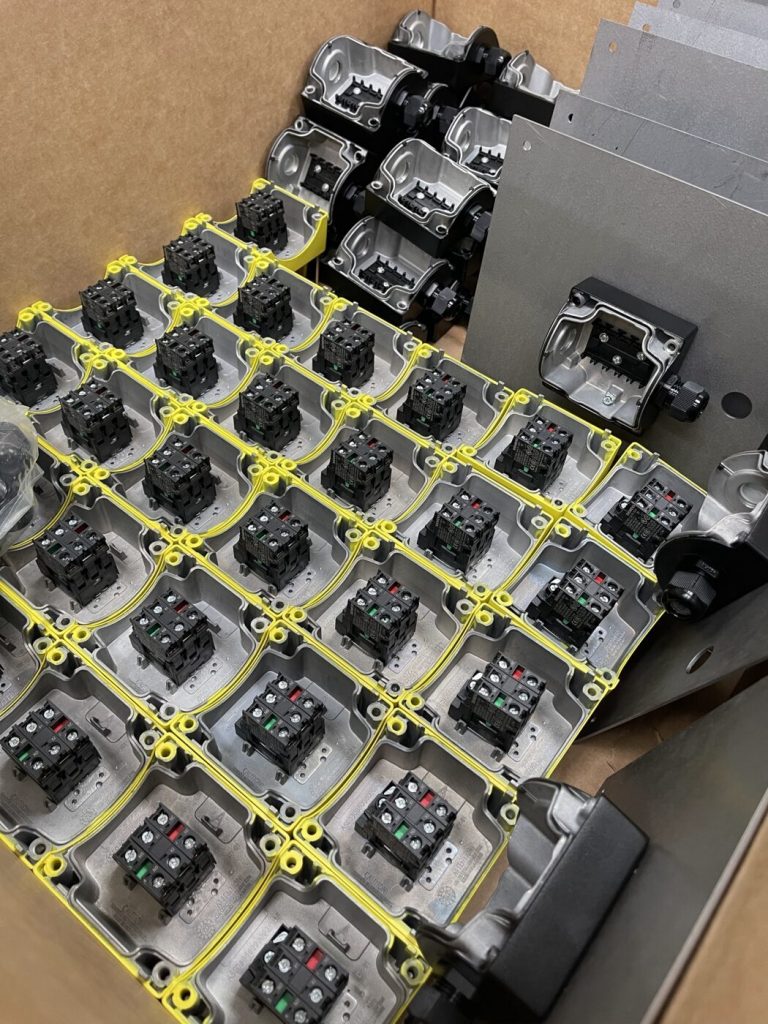
Whoever is on site sees damage first. That shortens the way to the spare part.
Deciding directly
The technician decides who from the team is needed, which part must be ordered and what can be prefabricated. It is not discussed at length; it gets done.
Prefabricating in the workshop
Brackets, plates and special parts are made in our workshop in Rodgau. They lie ready next to the plant in the next break window.
Stock on site
A small stock of the parts that fail most often saves trips. What should be kept there is described in the guide spare parts store in maintenance.
Safety in on-site plant support
Working on running plants has its own hazards. They are dealt with beforehand.
Isolating and securing
Work on the plant is done only when the section concerned is isolated and secured against being switched on again. Isolation and securing follow the operator's procedure. Drums, rollers and chains have in-running nips: guards stay fitted, and moving parts are only worked on when stopped.
Not alone in danger
Anyone working alone on a plant needs a rule for emergencies: who checks on him and how he calls for help. Nobody does dangerous work alone. What applies is shown in the guide lone working in maintenance.
Induction and access
The operator gives the technician an induction to the plant and the site. In security areas, such as airports, background checks and area training are part of it.
Access and organisation on site
Short routes do not happen by themselves. They are organised.
Separate access route
Passes, keys and access points are arranged. The technician does not have to wait for an escort.
A fixed place
A small place for tools, measuring equipment and parts near the plant saves trips every day.
Fixed contacts
Both sides have fixed contacts – for everyday matters and for escalation.
How individual jobs turn into plant support
Hardly any operator awards on-site plant support to someone they do not know. It usually grows out of individual jobs.
Every job leaves knowledge behind
A conveyor bend is rebuilt, emergency stop buttons are retrofitted, impact protection is added, a shaft is repaired. Each of these jobs leaves behind a plant that runs again – and knowledge about it.
At some point the sums change
When someone needs less induction with every job, gets to the right module faster and spots by himself what is due next door, it is cheaper to have him stay.
Start with one job
For operators this means: do not start with a support contract. Start with a job where you can see how the work is done.
Staffing: from single shifts to all operating windows
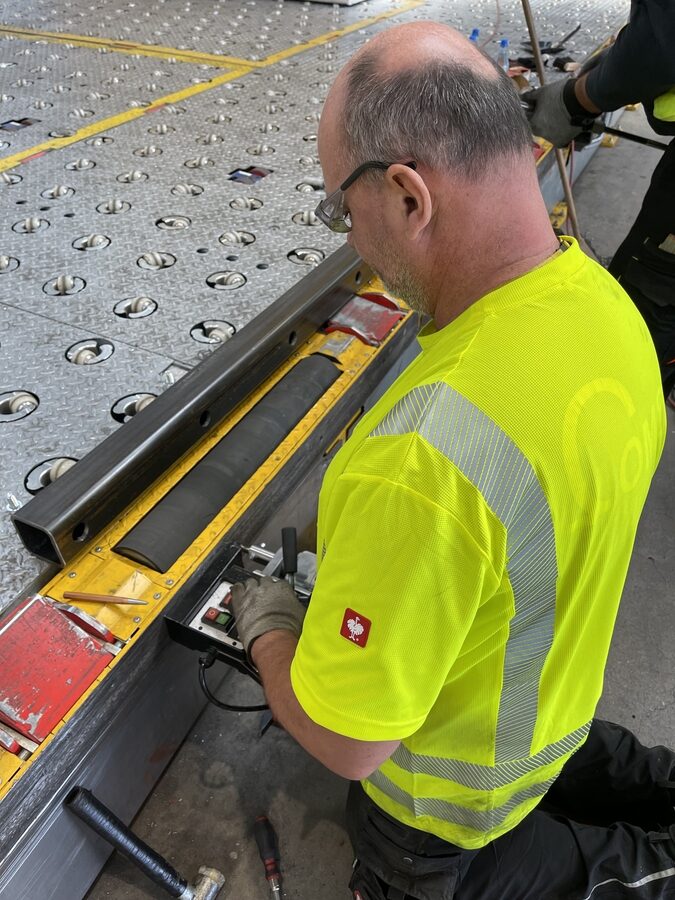
How much support a plant needs depends on its rhythm.
Single shifts
Some operators staff only the most critical operating window, for example the peak period. Their own team covers the rest.
All operating windows
Others staff every operating window with a mechatronics technician. Then there is a fixed handover between the shifts.
Reinforcement when needed
For larger jobs in the break window or for a fault that needs more hands, reinforcement comes from Rodgau.
Cover
Holidays and sickness are arranged beforehand. The cover knows the plant because it has been there before.
How you measure whether the support is working
Plant support must be able to show results. That does not take complicated key figures, but honest questions.
Fewer faults in the operating window
Are faults during operation becoming rarer and shorter? That is the most direct sign.
More planned replacement
Is more being replaced in the break window before it fails? Every planned replacement is downtime avoided.
Findings that are acted on
Do the findings lead to measures in the maintenance plan? If the list only grows and nothing happens, a conversation with maintenance management is needed.
Less backlog
In the end, what counts is whether the goods reach their destination on time. The shift management sees that every day.
Plant support, maintenance contract, standby: what for?
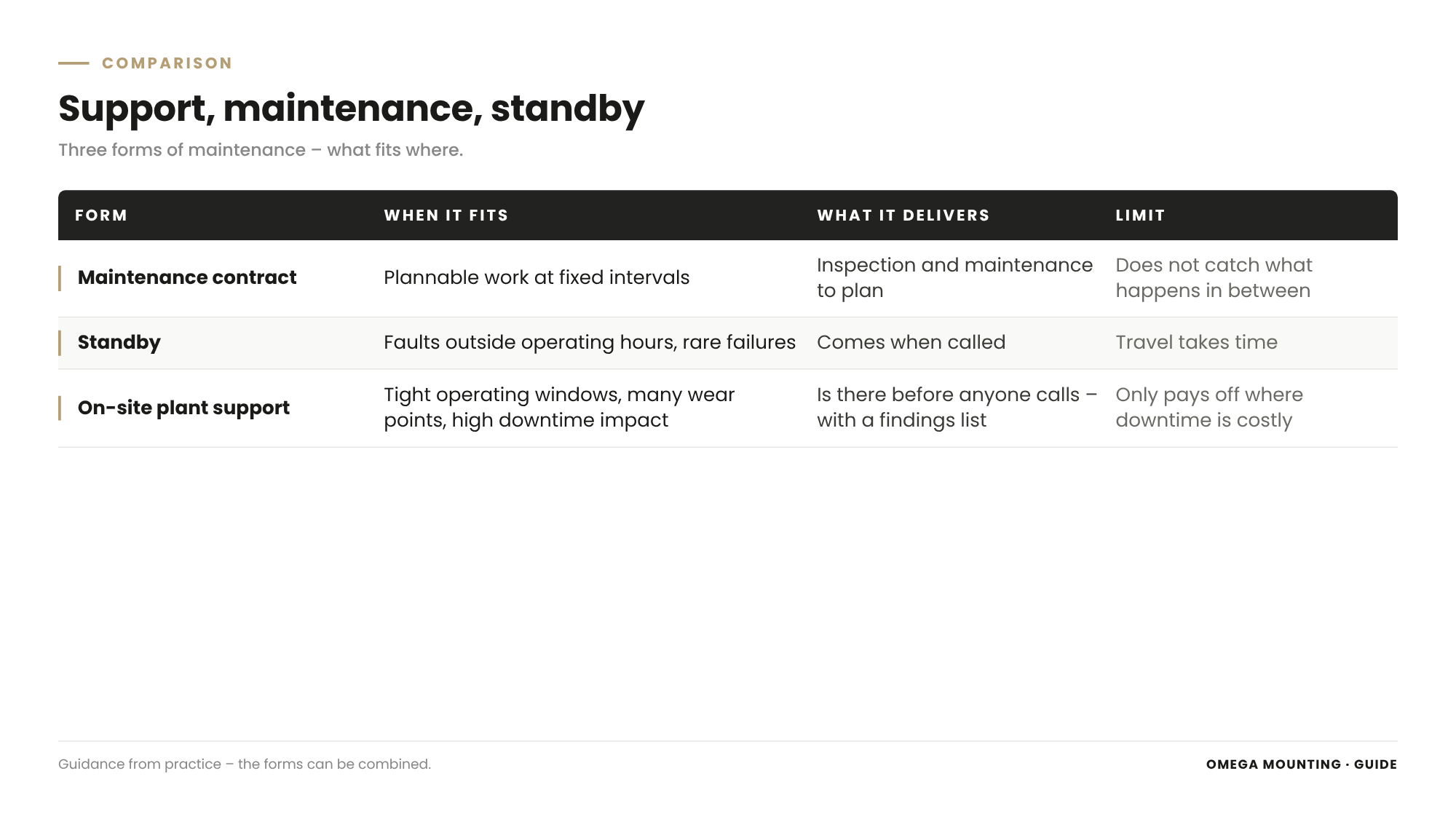
The three forms are not mutually exclusive. They complement each other.
Maintenance contract
For plannable work at fixed intervals. It keeps the plant in order according to plan.
Standby
For faults outside operating hours or on plants with rare faults. It comes when called.
On-site plant support
For plants with tight operating windows, many wear points and serious consequences of downtime. It is there before anyone calls.
Typical mistakes in plant support
Technician arrives at start-up: the first fault has already happened.
Breaks not used: what stands out during operation is left until it fails.
No report: findings stay in people's heads and get lost.
Responsibilities unclear: during operation people discuss instead of fixing.
Verbal handover only: the next shift does not know what was bridged.
Too much lubrication: grease collects dirt and does more harm than good.
Safety circuit changed without release: a bridge stays in place that nobody remembers.
Started with the contract: without shared experience, trust is missing.
The mistake behind the mistakes
Almost all mistakes happen when plant support is understood as mere presence. Support without feedback is just presence.
Who does what in on-site plant support?
In on-site plant support, everyone involved has their task.
Operator and maintenance management
They set operating windows, tasks and limits, arrange access and induction, decide on findings and budget.
Shift management
It is the first point of contact during operation and is involved in deciding when a plant must be shut down.
Internal maintenance
It contributes history and processes, works with the technician and takes on planned work.
Manufacturer and integrator
They are responsible for control software, parameters and warranty.
Omega Mounting
We provide the mechatronics technician on site, clear faults, carry out work in the breaks, prefabricate in the workshop and report to maintenance management.
On-site plant support: what it means for your planning
Four questions help to set up plant support well.
What does an hour of downtime cost?
Assess what a failure in the operating window triggers for you. That shows whether plant support pays off.
Which windows should be staffed?
Decide whether single shifts or all operating windows should be staffed.
Who receives the report?
Decide who receives the findings list and how often.
Where are the limits?
Clarify what the technician may decide himself and where the handover points are.
What belongs in the agreement for on-site plant support
A good agreement names each of these points explicitly.
Service
Presence in the agreed operating windows, clearing faults during operation, work in the break window, findings list, regular report.
The frame
Staffing per shift, cover for holidays and sickness, access, induction, contacts, escalation.
Limits
Handover points to the operator's electrics, releases for work on the safety circuit, responsibilities of manufacturer and integrator.
Legal framework
Maintenance work on plants is subject to, among other things, the German Ordinance on Industrial Safety and Health with its rules for safe maintenance, the operator's risk assessment and the German Occupational Safety and Health Act, which requires coordination when employees of several employers work together. How plant support is contracted is also a question of employment law. This guide is not legal advice – clarify the form of contract with your purchasing and legal departments.
On-site plant support in the Rhine-Main region: how we do it
From Rodgau we quickly reach Frankfurt, the airport, Offenbach, Hanau, Darmstadt and Aschaffenburg. With plant support, distance is a real criterion: a technician who has to drive an hour is no longer support in an emergency. Anyone looking for on-site plant support in Rhine-Main gets mechatronics technicians with plant knowledge and a workshop nearby.
We support sorting and conveyor systems and other plants that must not stop. How we work in maintenance in general is shown on the page on Maintenance and servicing.
For you, that means someone who knows your plant and is close by.
Project examples
Three jobs on the same plant show how plant support develops and works.
Sorting system at Frankfurt Airport in two-shift operation
For around a year we have been supporting a parcel sorting system at Frankfurt Airport: six days a week, in two operating windows, with one mechatronics technician per shift and reinforcement from Rodgau when needed. He is there before start-up, clears faults during operation, uses the break between the windows for work on the plant and regularly reports findings and suggestions to maintenance management. Together with the operator's maintenance team.
Emergency stop buttons on the same plant
Before the support began, we retrofitted emergency stop buttons and sensors on this sorting system and integrated them into the safety circuit – in the shutdown window, with pre-assembly in the workshop. The job is described in the report Emergency stop buttons on the sorting system at Frankfurt Airport.
Impact protection at the loading dock
For the same operator we built and bolted impact protection made of square tube in front of a loading dock – during operation, without rebuilding the system. The job is described in the report Impact protection at the loading dock at Frankfurt Airport.
Should your plant be supported?
Tell us about your plant, your operating windows and what a fault triggers for you – we will tell you what plant support could look like. Get in touch now.
What this means for your role
Maintenance managers: Use the findings list as the basis for next year's maintenance plan and budget.
Shift managers: Your contact is on site. A fault is shown, not described.
Buyers: Do not compare plant support with the hourly rate of a single call-out, but with travel, set-up time, waiting time and downtime.
Project managers: Include plant support in the planning of conversions – the technician knows the weak points.
Logistics managers: Decide which operating windows are critical and must be staffed.
Occupational safety specialists: Check isolation procedures, rules for lone working and coordination between the employers.
Plant support findings sheet: template on request
For your plant, we have put together the plant support findings sheet. For each shift it asks about faults during operation, work in the break window, findings with assembly and urgency, spare parts needs, hazards and the handover to the next shift. Request the template via our contact form – keyword “Plant support findings sheet”.
Why Omega Mounting?
With over twenty years of experience in installation and maintenance, we know: the difference between a good and a very good maintenance technician is not how fast he repairs, but how early he notices something. That is why our mechatronics technicians are there before start-up, work with your team rather than alongside it and write down what they see. Mechanical and electrical work comes from one source, and the workshop in Rodgau prefabricates. For you, that means less downtime and maintenance that plans instead of reacting. Talk to us about your plant – we will get back to you promptly.
Conclusion
On-site plant support means being at the plant during the operating windows, clearing faults while it runs, using the breaks for maintenance and telling maintenance management what is coming. It pays off where a plant must not stop.
It replaces neither the maintenance contract nor your own team. It catches what happens in between. If you are considering on-site plant support, get in touch with us.
Planning a move-in, installation or maintenance in the Rhine-Main region?
Tell us briefly what you need – we'll come back with an honest assessment.
Free, no-obligation callback
You may also be interested in these guides
Maintenance & Servicing
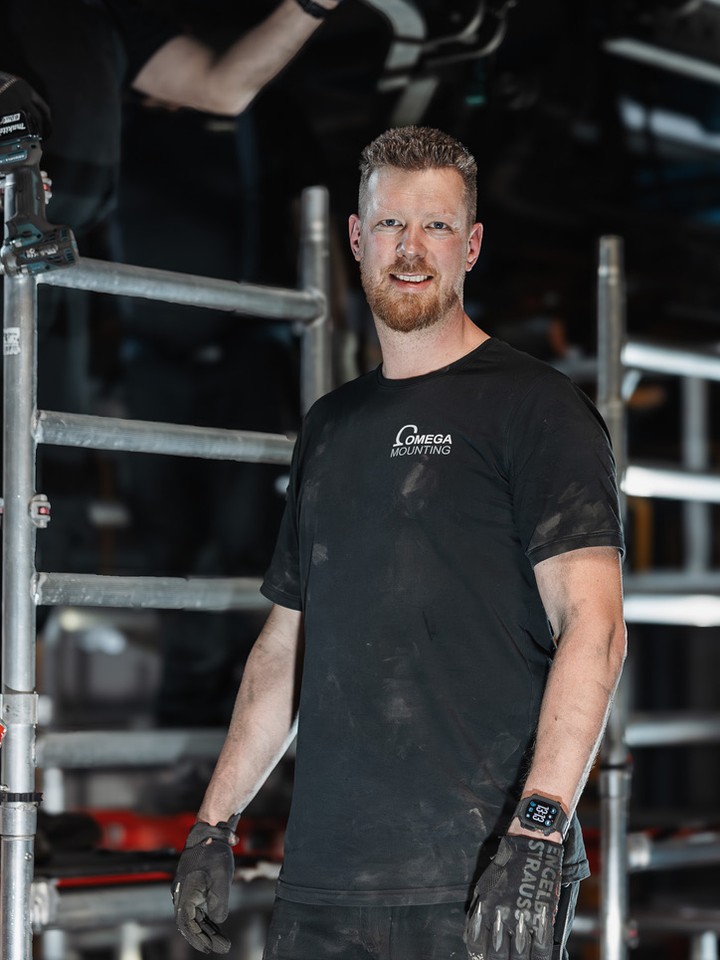
About the author
Tobias Schott
Managing director of Omega Mounting GmbH, Rodgau · more than 20 years of hands-on experience in installation and maintenance
A trained mechatronics technician, working in maintenance, servicing and industrial installation since 2004 – first alongside his father, and with Omega Mounting since 2012: from overhead conveyors in Frankfurt to the crane system in a new-build hall. He plans and leads lifting operations as an appointed person (AP) in data centers and on industrial sites in the Rhine-Main region, trains and examines operators of cranes, mobile elevating work platforms and telehandlers, and is a qualified occupational safety specialist. On jobs abroad he is known as the “German Troubleshooter” – the person you call when a site gets stuck. He learned what quality means from his father, not from a manual: Made in Germany as a standard for his own work, not a label. That is why quality comes first at Omega Mounting – ahead of speed and price. He writes these guides from that practice: what works on our sites is in them – what exists only on paper is not.
Frequently asked questions
An external maintenance technician is at the plant during operating hours, clears faults while it runs, carries out work in the breaks and reports findings to the operator's maintenance management.
A maintenance contract covers planned work at fixed intervals. Plant support is on site during operation and catches what happens between the appointments. The two can be combined.
For plants with tight operating windows, many similar wear points, no redundancy or long delivery times for spare parts – such as sorting and conveyor systems.
Everything that gives warning: bearing noises, cracks at belt edges, stiff rollers, increasing dirt, sensors drifting out of alignment. These findings do not appear in any fault log.
Yes, on the plant side up to the main switch – our people are mechatronics technicians, and disconnecting and connecting is done by our own electricians. Incoming supply and building electrics remain with the operator; work on the safety circuit only with release.
Yes, that is the rule. The internal team knows the history and processes; the technician brings mechatronic depth and extra hands.
No. Plant support usually grows out of individual jobs on the same plant. Both sides see how the other works, and the installation contractor builds up plant knowledge.
The focus is on the Rhine-Main region, because distance counts in plant support. For larger projects, talk to us – then we will tell you honestly whether we are the right partner.
Tell us about your plant, your operating windows and what a fault triggers for you. We will look at the plant and come back to you with a proposal. Go to the contact page.
 English
 German