
- Technology explained – technology and procedures
The preloaded bolted connection: why steelwork is preloaded
By Tobias Schott · 6-minute read · Updated November 2026
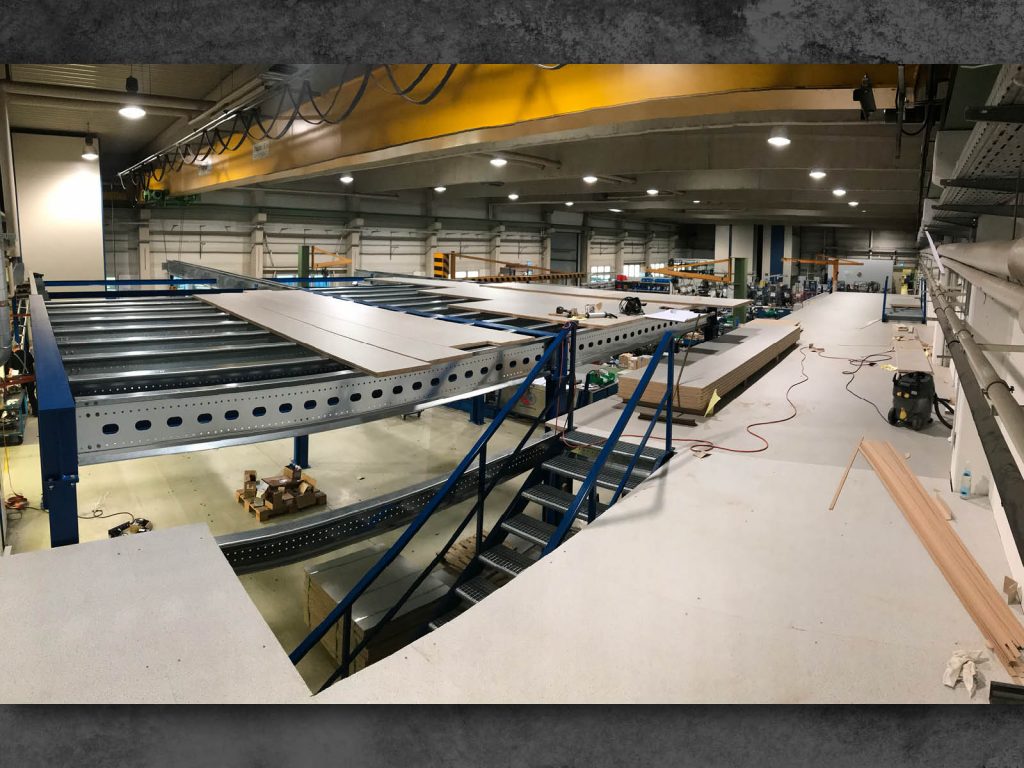
A preloaded bolted connection joins steel members with high-strength bolts that are tightened to a specified force – so the plates carry the load through friction or sit so tightly that nothing works loose, even under vibration and alternating loads.
In steelwork, members are bolted, not just welded. Columns, beams, bracing and crane runways arrive on site in parts and are connected there. Many of these connections are preloaded, known in German as HV connections – HV stands for “hochfest vorgespannt”, high-strength preloaded. They are found wherever loads alternate or components vibrate: on crane runways, platforms, machine frames and hall structures. Anyone installing such connections needs more than a spanner: the right material, the right method and clean documentation.
Here we explain the two working principles, the HV bolting assembly, the preloading methods and the typical faults.
What is a preloaded bolted connection?
A preloaded bolted connection is a joint in steel and plant construction using high-strength bolting assemblies that are tightened to a specified preload as designed. In German it is called “HV-Schraubverbindung”.
The assemblies are specified in their own series of standards (EN 14399), and installation on site is governed by the standard for the execution of steel structures (EN 1090-2). The structural engineer decides which connection is needed where. On site, what is in the drawings and installation instructions is implemented.
For installation companies, the preloaded connection is a topic where care becomes visible. Whether a bolt is just hand-tight or properly preloaded cannot be seen from outside. Only marking, checking and records make the difference traceable. That is why clients and inspectors increasingly demand complete proof for steel structures: which connection, which method, which tool, who tightened, who checked. Recording this from the start saves a lot of questions at acceptance.
Key facts
- Material: high-strength bolts, usually property class 10.9, less often 8.8.
- Assembly: Bolt, nut, two washers, matched to each other.
- Working principles: Bearing-type connection or slip-resistant connection.
- Preloading: Torque method, combined method with turn angle, direct tension indicators.
- Marking: Stamping on bolt head and nut.
- Field of use: Steelwork, crane runways, platforms, equipment subject to vibration.
- Evidence: Record of method, tool and tightened connections.
Bearing-type or slip-resistant joint?
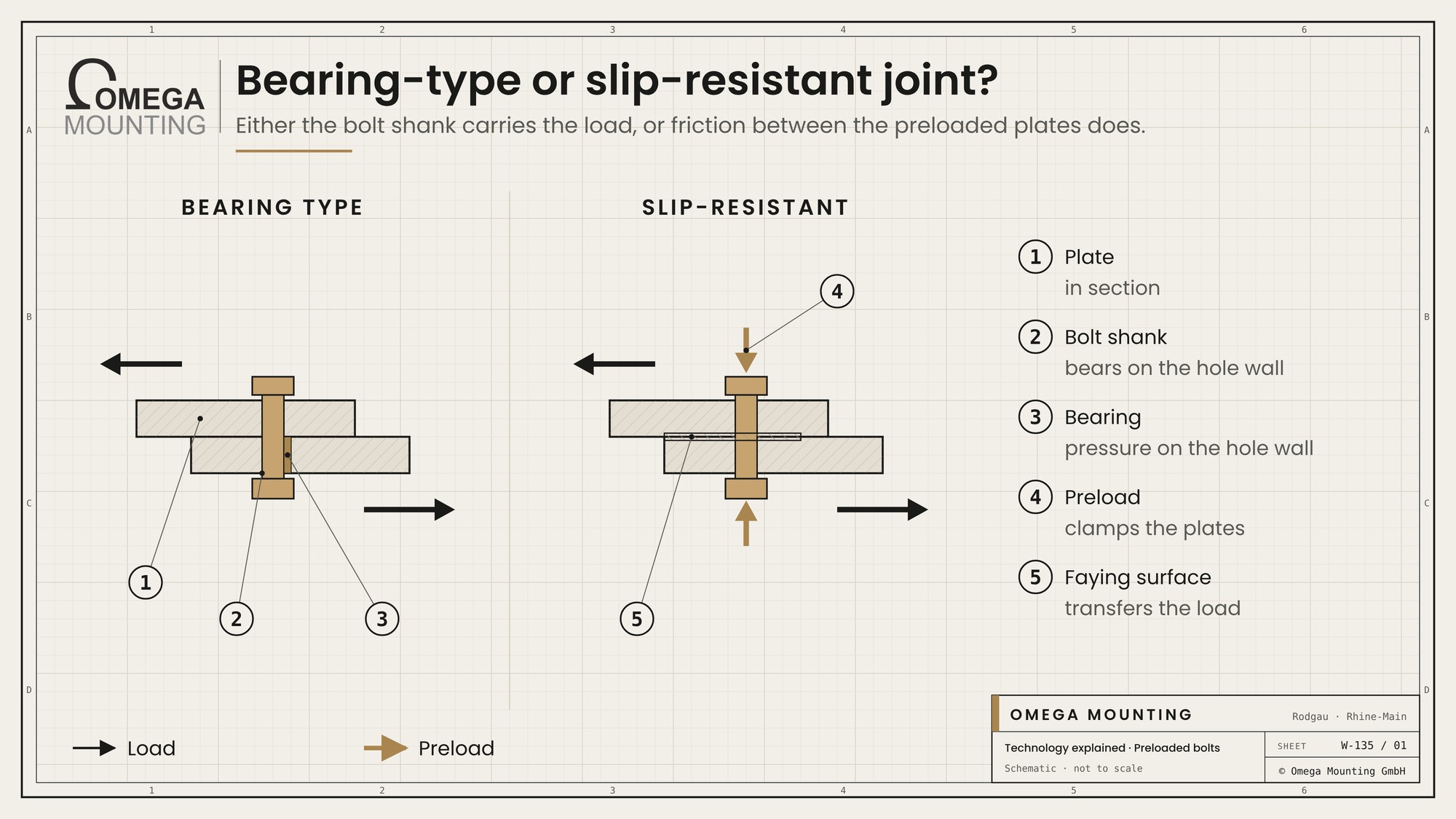
Preloaded bolts work in two ways.
- Bearing-type connection: The plates shift minimally until the bolt shank bears against the hole wall. The shank then carries the load in shear. Here the preload mainly ensures that nothing works loose.
- Slip-resistant connection: The preload clamps the plates together so tightly that the load is transferred by friction. The shank does not touch the hole wall. The connection does not slip even under alternating loads.
| Characteristic | Bearing-type connection | Slip-resistant connection |
|---|---|---|
| Load transfer | Via the shank. | Via friction between the plates. |
| Preload | Against loosening. | Carries the load. |
| Contact surfaces | No special requirements. | Prepared, without paint or only with a suitable coating. |
| Slip | Small slip possible. | No slip. |
| Typical for | Static loads. | Crane runways, vibration, alternating loads. |
The difference matters for installation: in slip-resistant connections the surface of the plates determines the load capacity. Paint, oil or rust on the contact surface can reduce it considerably.
The HV bolting assembly
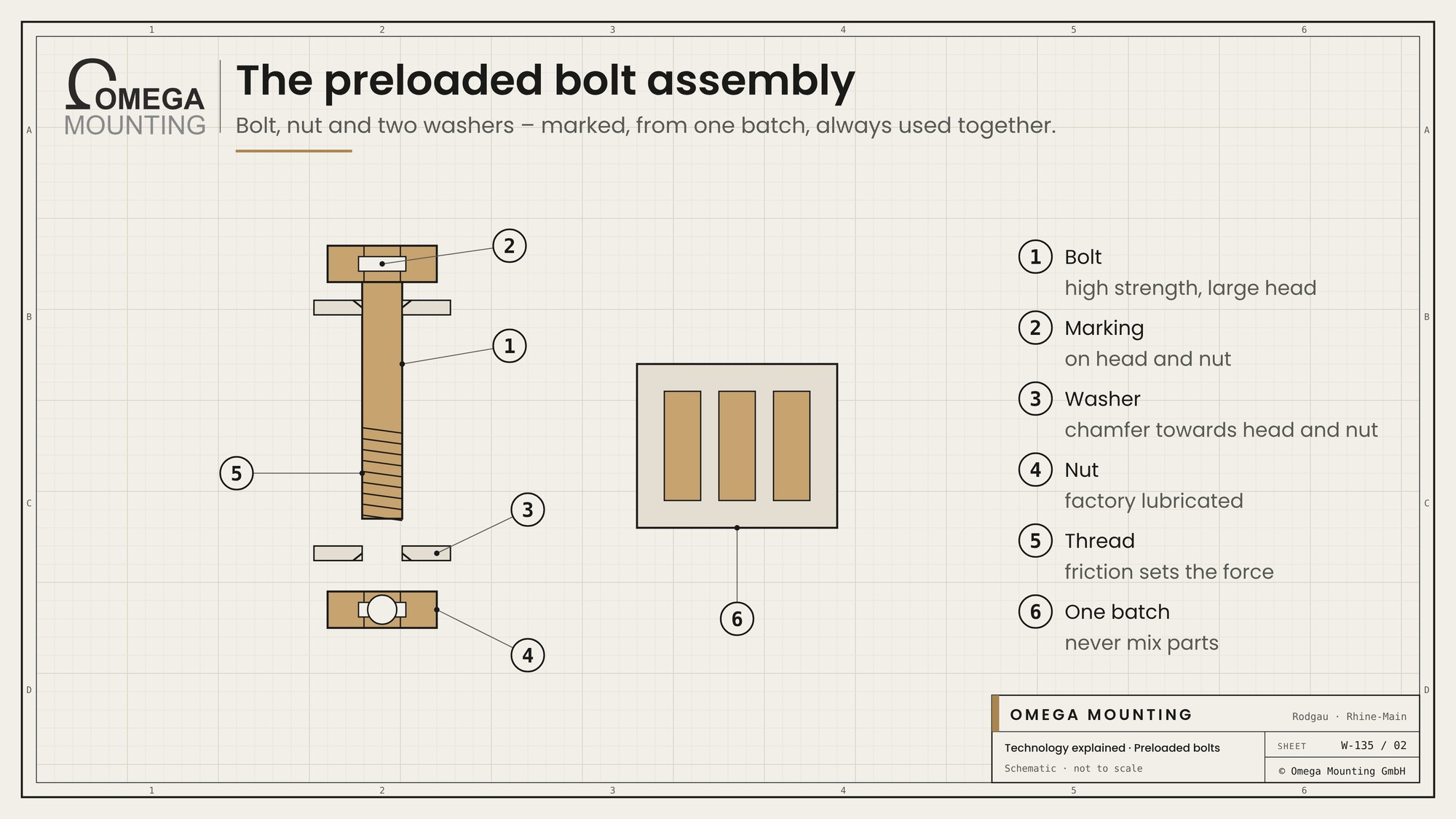
An HV bolting assembly consists of four parts that belong together.
- Bolt: large hexagon head, marked with property class and manufacturer's mark.
- Nut: matched to the bolt, also marked.
- Washers: one each under head and nut, chamfered on the inside.
- Lubrication: The nut is lubricated at the factory so that tightening is predictable.
The parts of an assembly come from one batch and are not mixed. The reason is friction in the thread: it determines how much preload results from a given torque. Mixed parts have different friction, and the preload is no longer right. Preloaded HV bolts are generally not reused.
How the bolts are preloaded
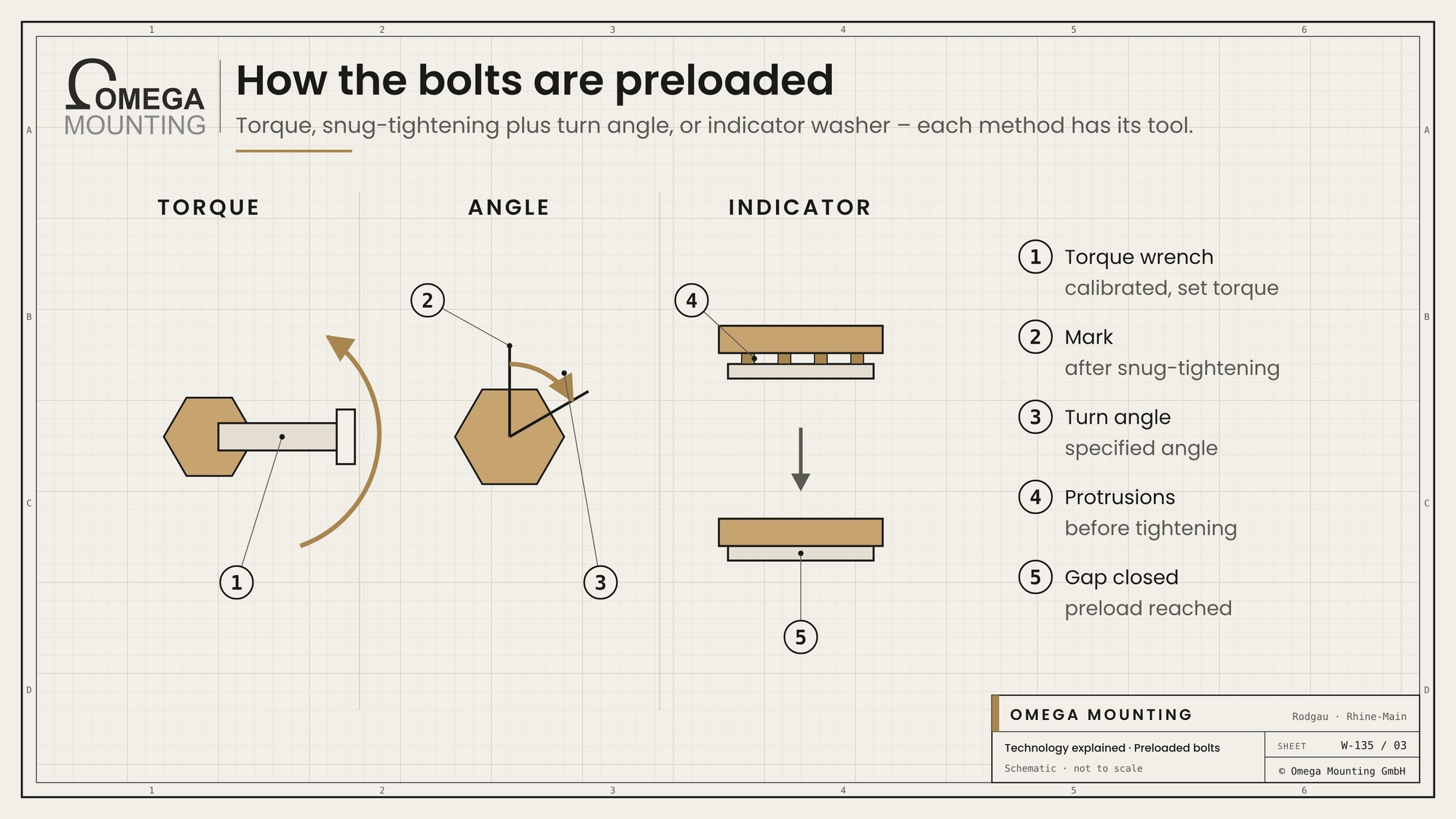
There are several methods for preloading. They all have the same goal: a specified preload in every bolt.
- Torque method: The bolt is tightened to a specified torque with a calibrated torque wrench.
- Combined method: First snug-tightening with torque, then turning further by a specified angle. The angle is marked and checked.
- Direct tension indicators: A washer with protrusions is flattened during tightening. Once the gap is closed, the force has been reached.
Tightening proceeds from the inside outwards so that the plates bed down fully. On large splices this is done in several passes. Every tightened bolt is marked so that none is missed.
The tools matter too. Torque wrenches and power tools must be calibrated, and their setting is checked on a test bolt before work starts. For large bolts, hydraulic wrenches are used, whose pressure is converted into a torque. The conversion table belongs to the tool and is calibrated with it.
Typical faults in preloaded joints
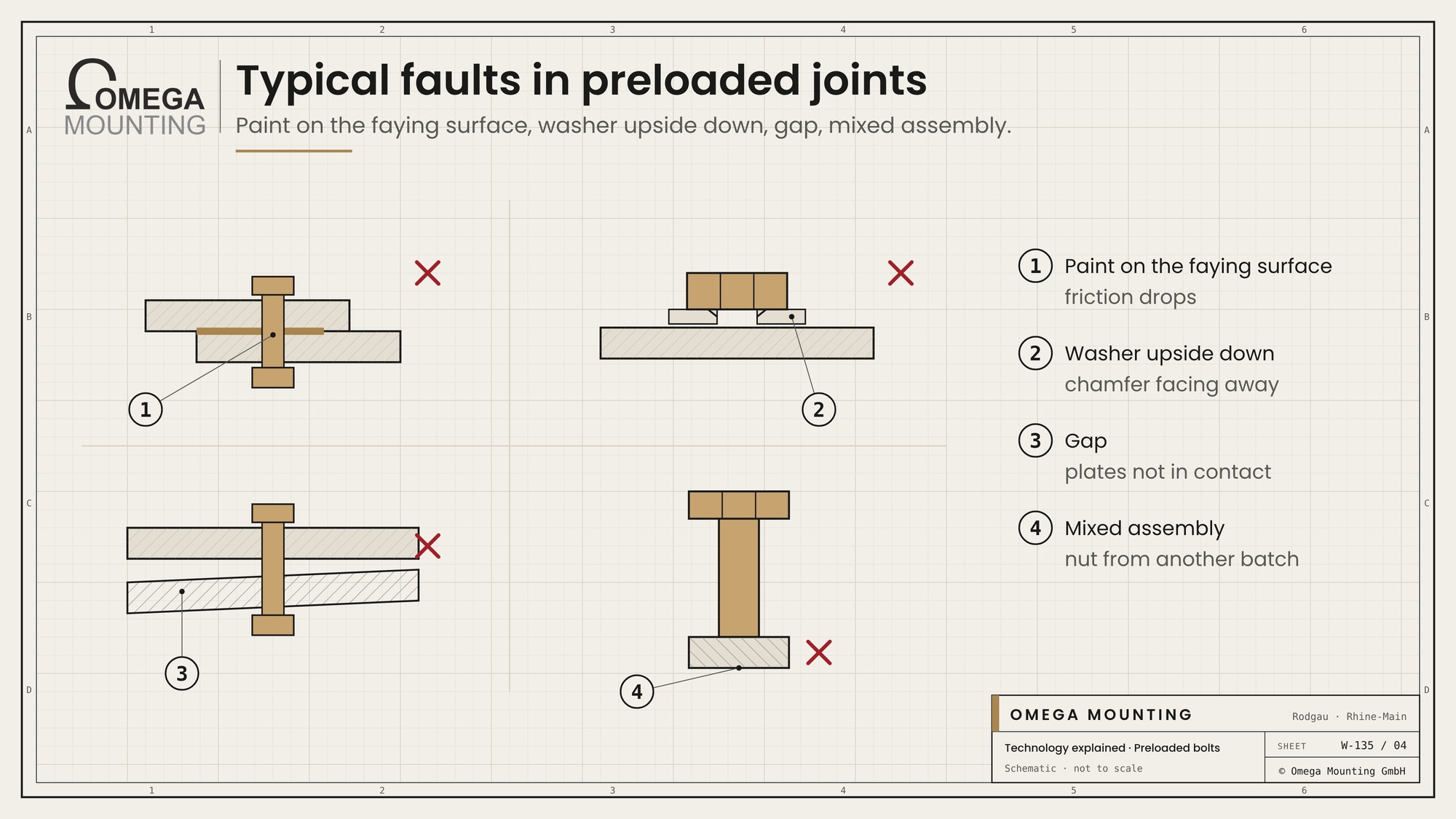
Most faults do not arise during tightening but before it – in storage, preparation and assembly.
- Paint on the faying surface: In slip-resistant connections it reduces friction.
- Washer upside down: The chamfer belongs towards the head or nut; otherwise the washer sits on the radius.
- Gap between the plates: The plates are not in contact, and the preload goes into bending them.
- Mixed assemblies: Nut from another batch, friction unknown.
- Not documented: Without a record there is no proof that the bolts were preloaded.
Checking and proving
After preloading, it is checked whether every bolt has its force. How depends on the method.
- Torque method: Samples are rechecked with the calibrated wrench in the tightening direction. If the nut turns before the test torque is reached, the bolt was not tightened correctly.
- Combined method: The marks show whether the additional turn angle was reached.
- Direct tension indicators: The gap at the protrusions is checked with a feeler gauge.
If a fault is found, not only that one bolt is checked but the whole connection and often other splices from the same shift. Preloaded bolts are not loosened and retightened but replaced if necessary.
Everything goes into the record: which connections, which method, which tool with which calibration, who tightened and who checked. For steel structures subject to acceptance, this record is part of the documentation. Without proof, a connection counts as unchecked even if it was tightened correctly.
Coatings also play a role. Thick paint layers under the head and nut can settle over time and the preload drops. That is why designers specify which surfaces may be coated.
What we pay attention to
For bolted connections in steelwork, we work to the drawings, not by feel.
- Before installation we check which connection the drawings require.
- We keep assemblies separated by batch and do not mix them.
- We use calibrated torque wrenches and mark every tightened bolt.
- We keep the contact surfaces of slip-resistant connections free of paint and oil.
- We document method, tool and result for acceptance.
Where we use it
For a hall at Kassel Airport we installed a steel platform , bolting sections and beams bay by bay. In Aschaffenburg we installed a 16-tonne double-girder overhead crane under the hall roof. In both jobs, safety depends on connections tightened exactly as the drawings require. More on this on our page on Industrial installation.
More technology explained
Do you have questions about how this works on your site?
Do you have questions about how steelwork connections are tightened and documented on your site? We install to the drawings and provide the proof. Request a callback.
Free, no-obligation callback

About the author
Tobias Schott
Managing director of Omega Mounting GmbH, Rodgau · more than 20 years of hands-on experience in installation and maintenance
A trained mechatronics technician, working in maintenance, servicing and industrial installation since 2004 – first alongside his father, and with Omega Mounting since 2012: from overhead conveyors in Frankfurt to the crane system in a new-build hall. He plans and leads lifting operations as an appointed person (AP) in data centers and on industrial sites in the Rhine-Main region, trains and examines operators of cranes, mobile elevating work platforms and telehandlers, and is a qualified occupational safety specialist. On jobs abroad he is known as the “German Troubleshooter” – the person you call when a site gets stuck. He learned what quality means from his father, not from a manual: Made in Germany as a standard for his own work, not a label. That is why quality comes first at Omega Mounting – ahead of speed and price. The Technology explained articles cover the equipment and techniques his team uses every day: what counts on site is in them – what only appears in the brochure is not.
 English
 German