- Project report – GRP tanks Fulda
Installing GRP tanks for the hybrid burner conversion in Fulda
- Fulda
Installing GRP tanks for the hybrid burner conversion in Fulda
Project report: transport, lifting and anchoring of GRP tanks for a hybrid burner system in Fulda
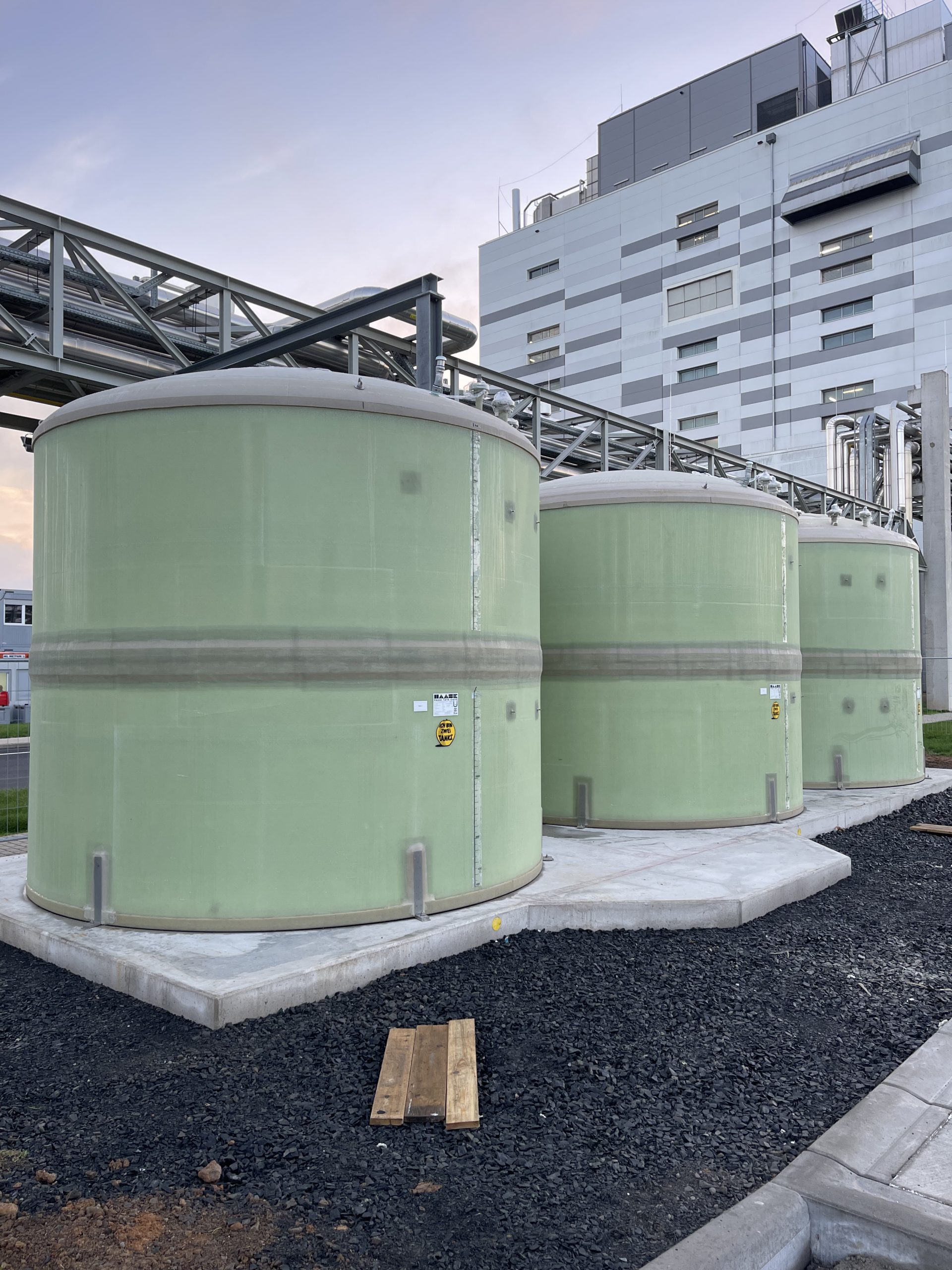
The energy crisis and rising gas prices have prompted many industrial companies to rethink their burner systems. A customer of Omega Mounting at its Fulda site also decided to convert its burner systems to Weishaupt hybrid systems in order to become less dependent on gas. In addition to replacing the burners, this required new tanks and silos to be installed to supply the burners with the necessary fuel.
Our installation team handled the complete moving in and connection of these tanks – from the tight logistics on the plant premises to the final anchoring in the concrete foundation. This project report shows what really matters technically when installing GRP tanks and answers the questions that decision-makers from industry and plant engineering ask themselves on such a project.
Reason
Switch to hybrid burners
Components
GRP tanks/silos for fuel supply
Delivery
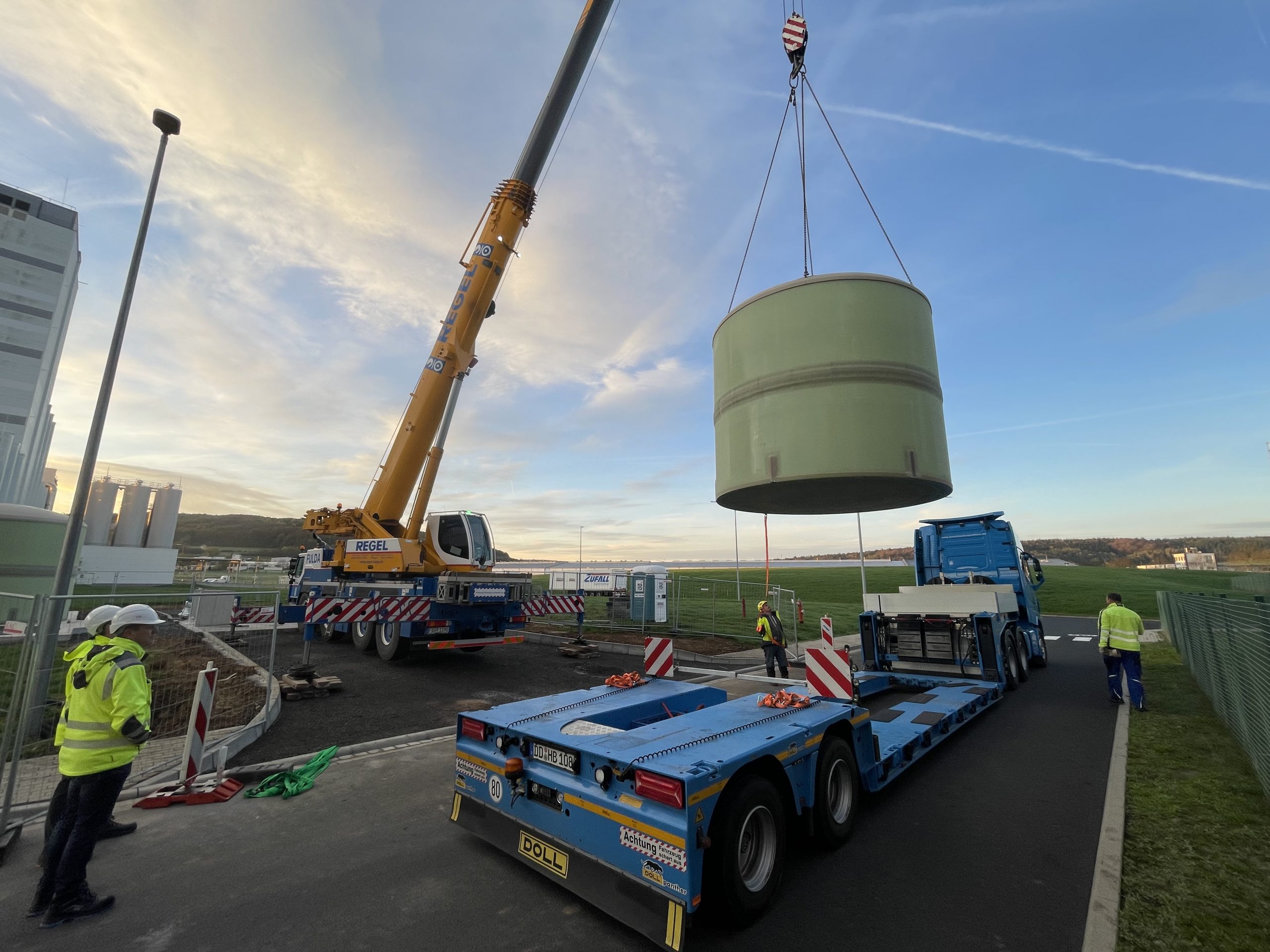
Trucks & low loaders
Unloading
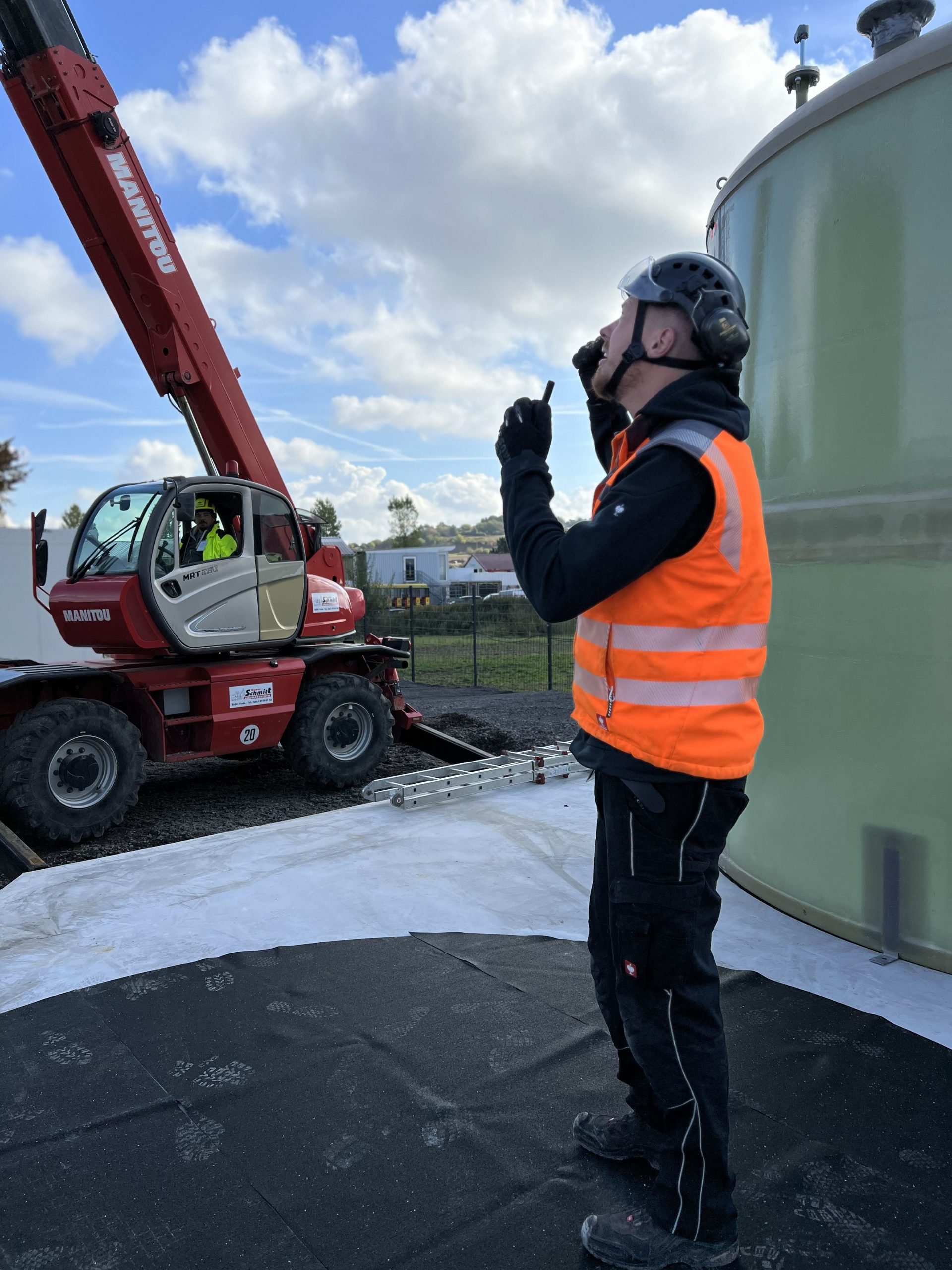
Telehandler directly at the installation site
Lifting equipment
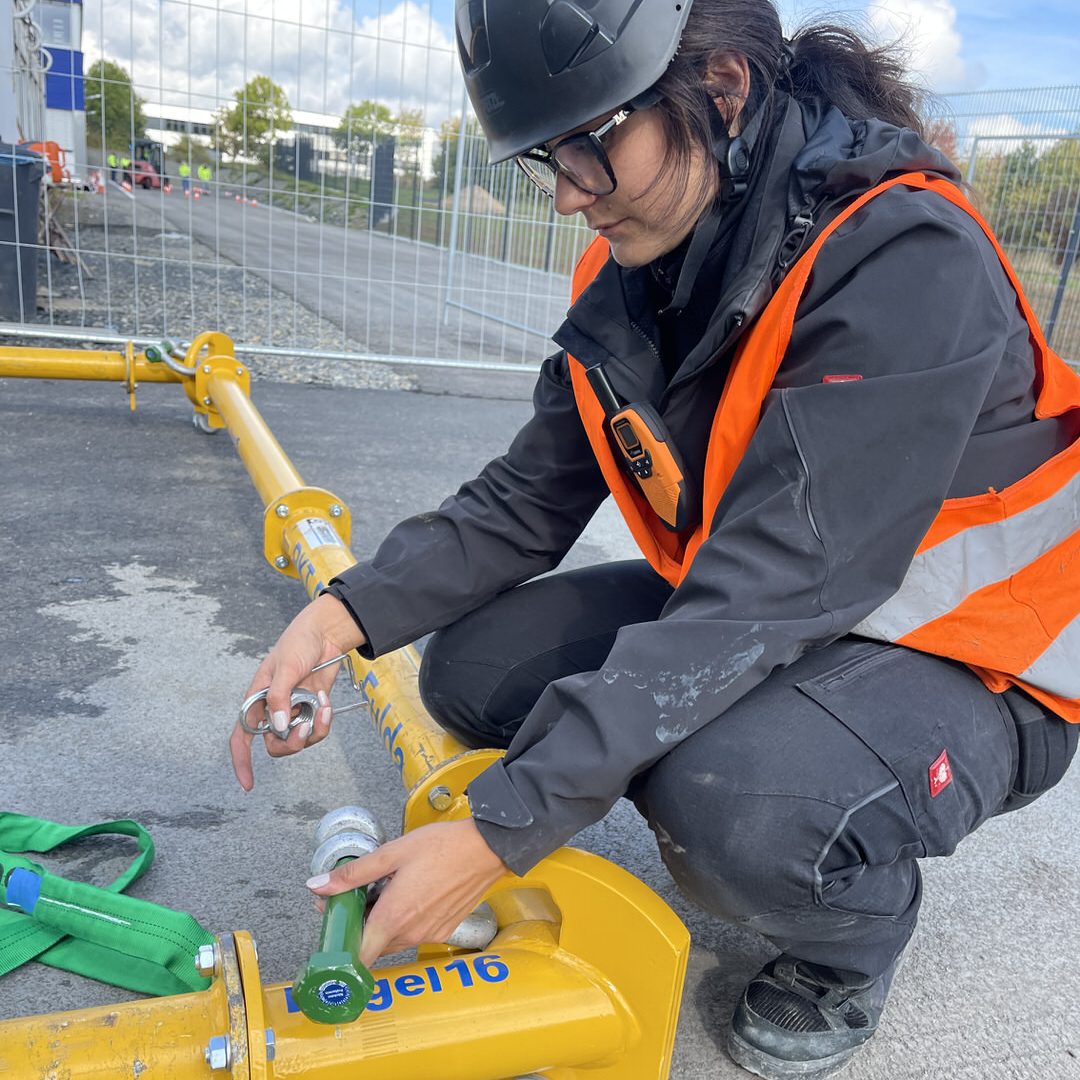
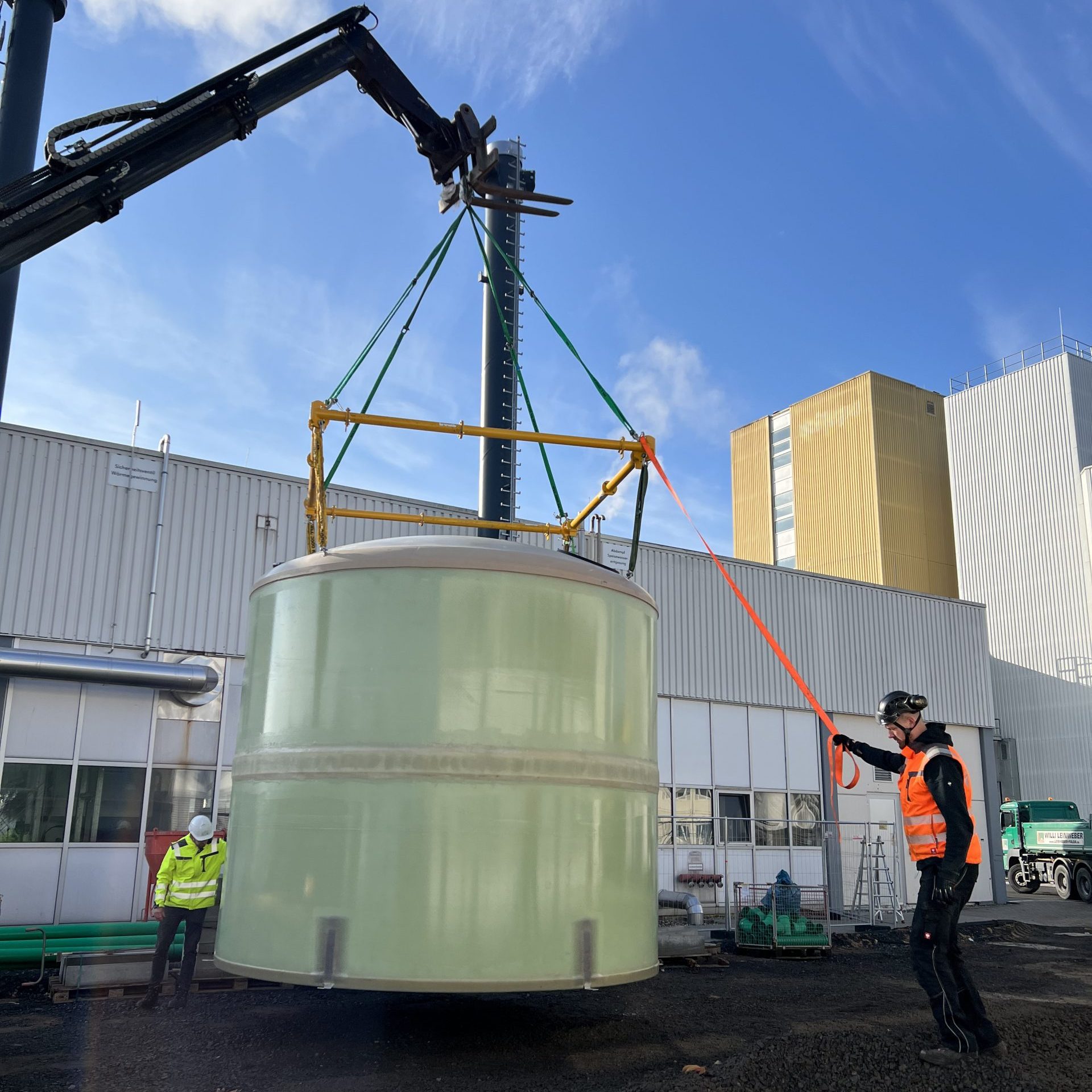
Purpose-made spreader beam
Anchoring
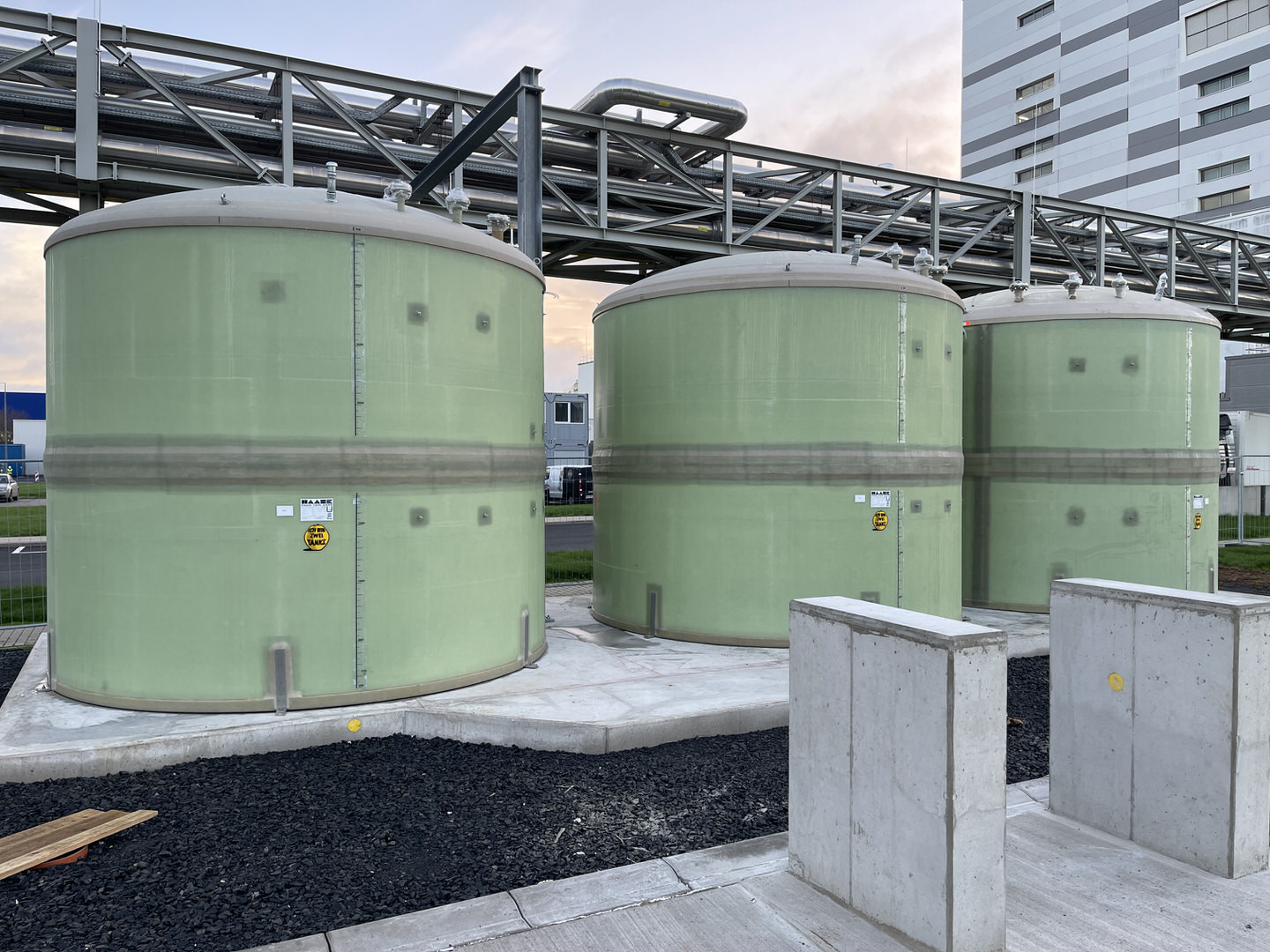
Heavy-duty anchors in the concrete foundation
Why are industrial companies currently switching to hybrid burners?
Independence from gas through hybrid technology
By switching to a hybrid system, the customer can in future switch flexibly between different energy sources and is therefore significantly less vulnerable to gas price fluctuations and supply shortages.
However, this requires the right infrastructure: large-volume tanks that stand securely, are firmly anchored and correctly connected.
Delivery to confined company premises
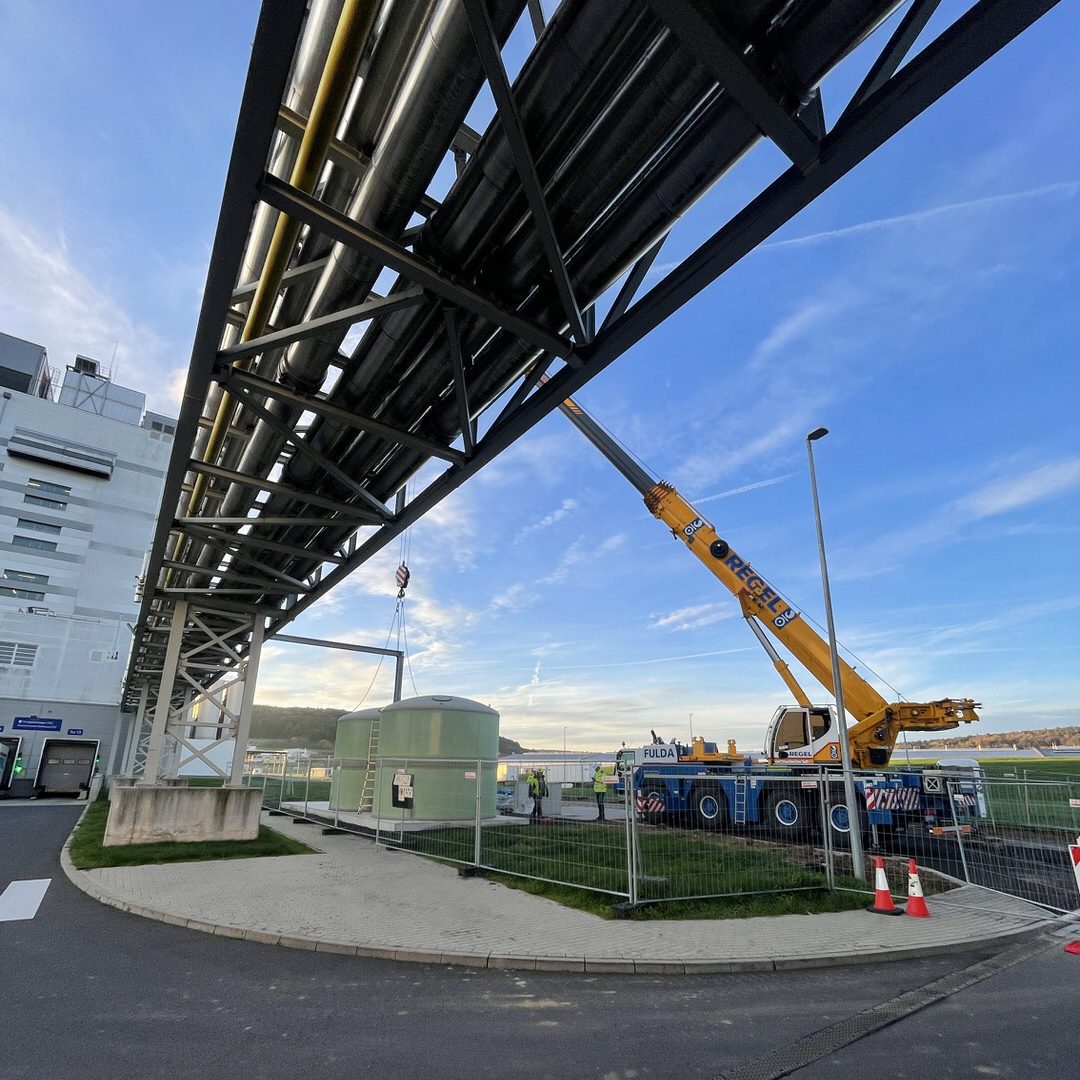
The tanks were delivered by truck and low loader. As the company premises in Fulda offered little space, precise manoeuvring was required: our fitters guided the vehicles across the site so that the tanks could be unloaded directly at the installation site with the telehandler – without detours and without additional space requirements.
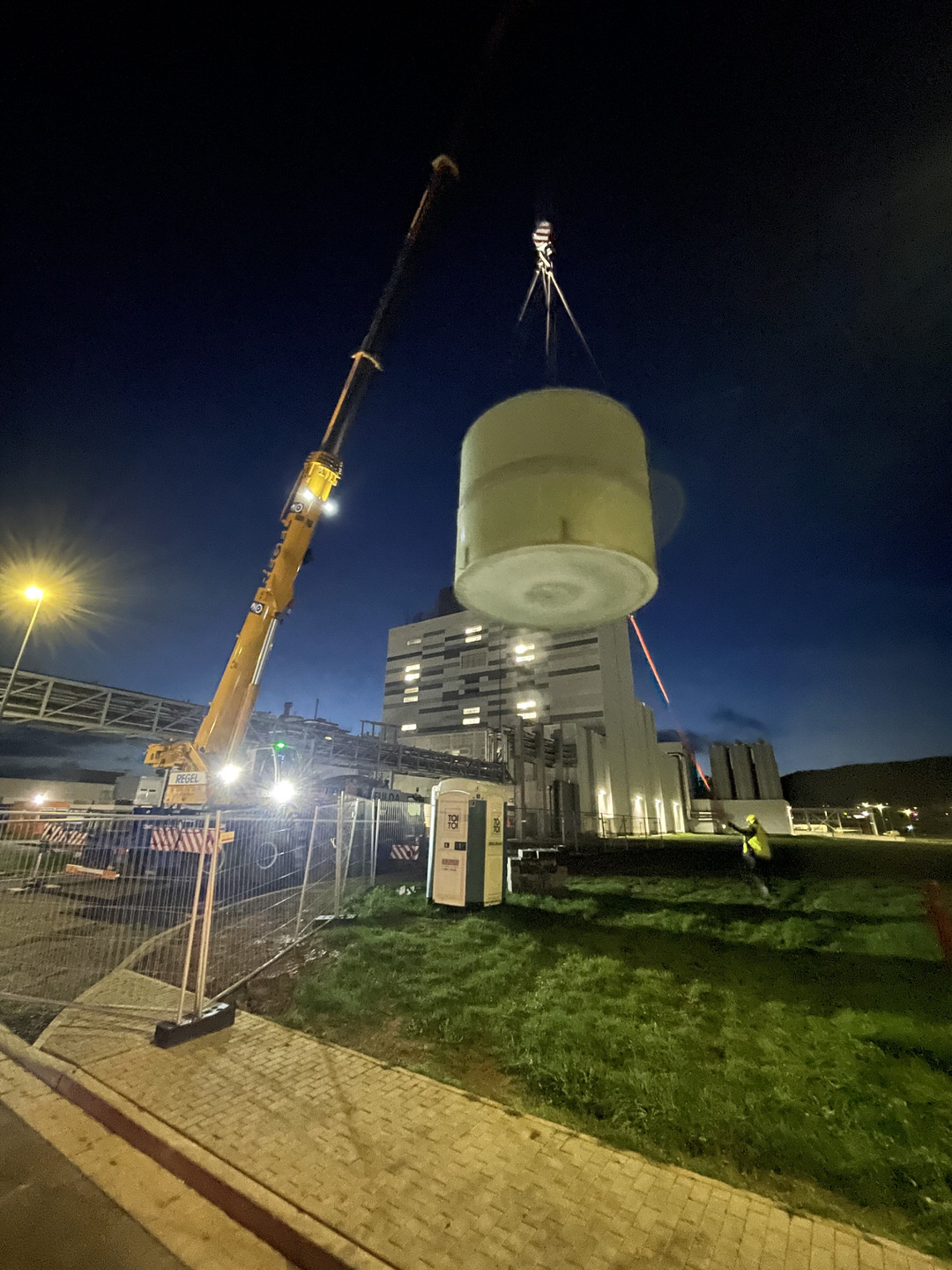
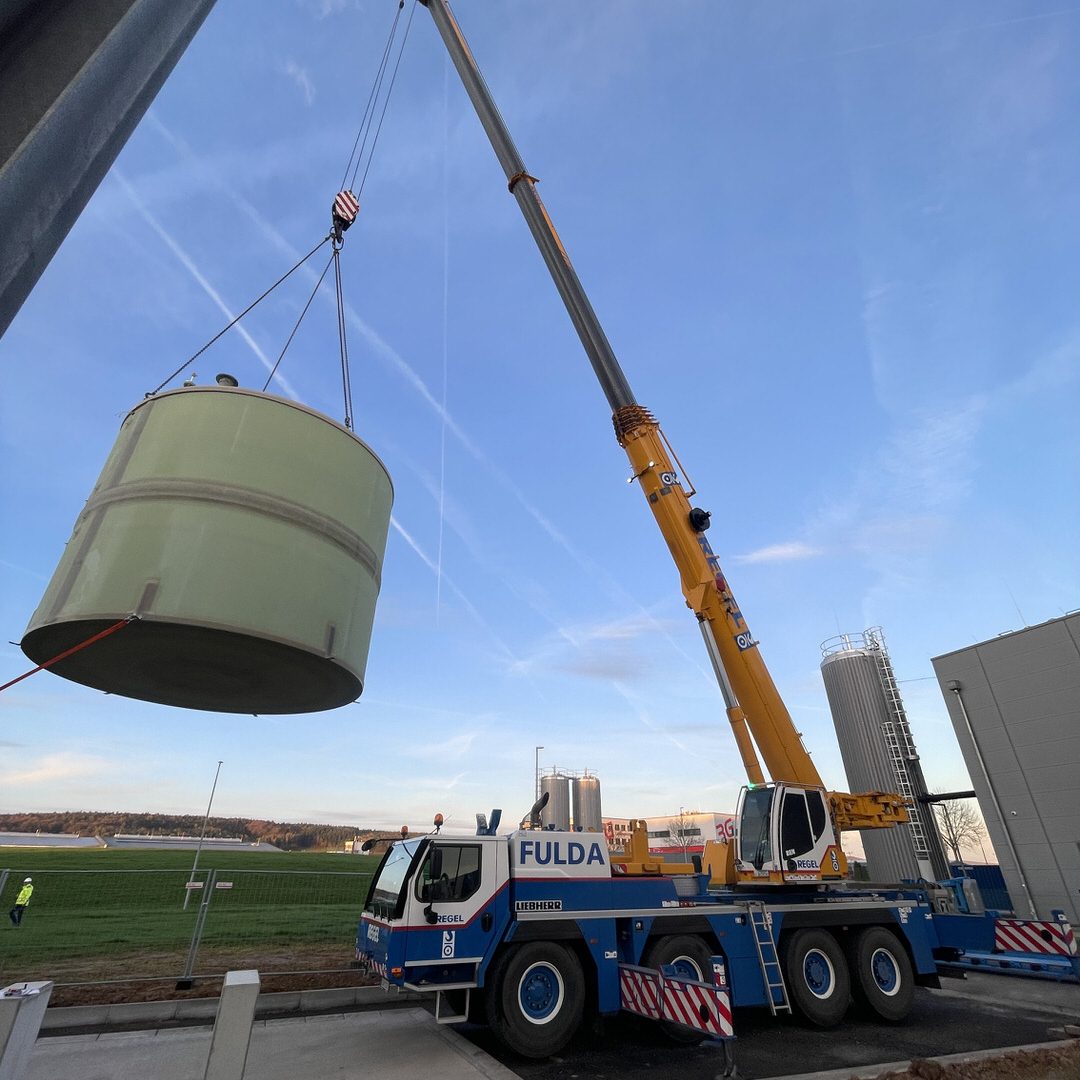
Crane lift for GRP tanks
Why a lift plan is essential
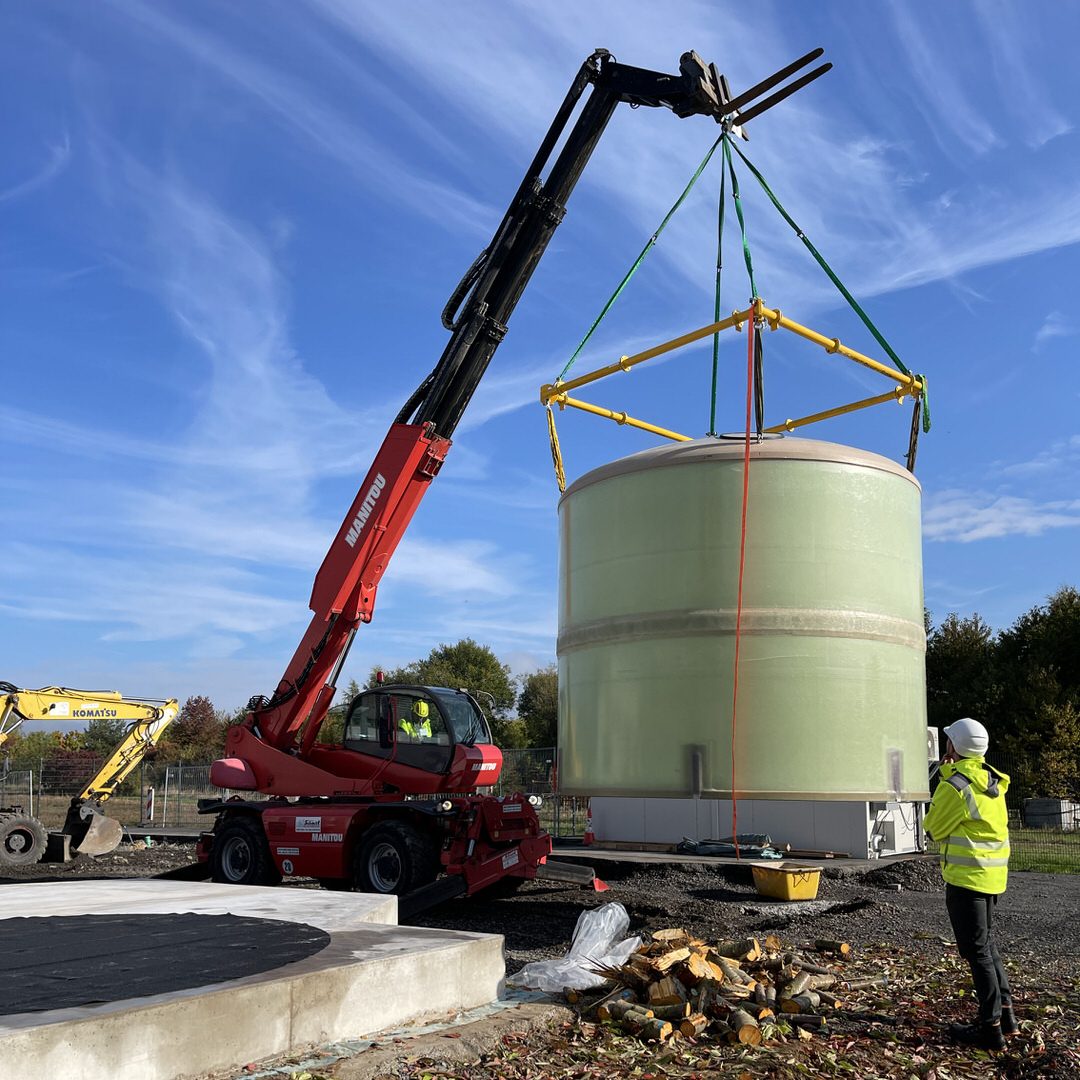
Since the tanks are made of glass-fibre-reinforced plastic (GRP), special care is required when lifting. A purpose-made spreader beam ensured that no angled pull occurred during lifting – as this could tear the bonded lifting eyes out of the tank.
- To prevent exactly that, every tank lift with us includes:
- a detailed lift planthat is prepared in advance
- coordination of the lifting points and lifting equipment with the manufacturer
- the use of a guide ropethat keeps the tank from swinging uncontrollably during the lift, preventing damage to the tank and surrounding buildings
Safety at the crane
The role of the banksman
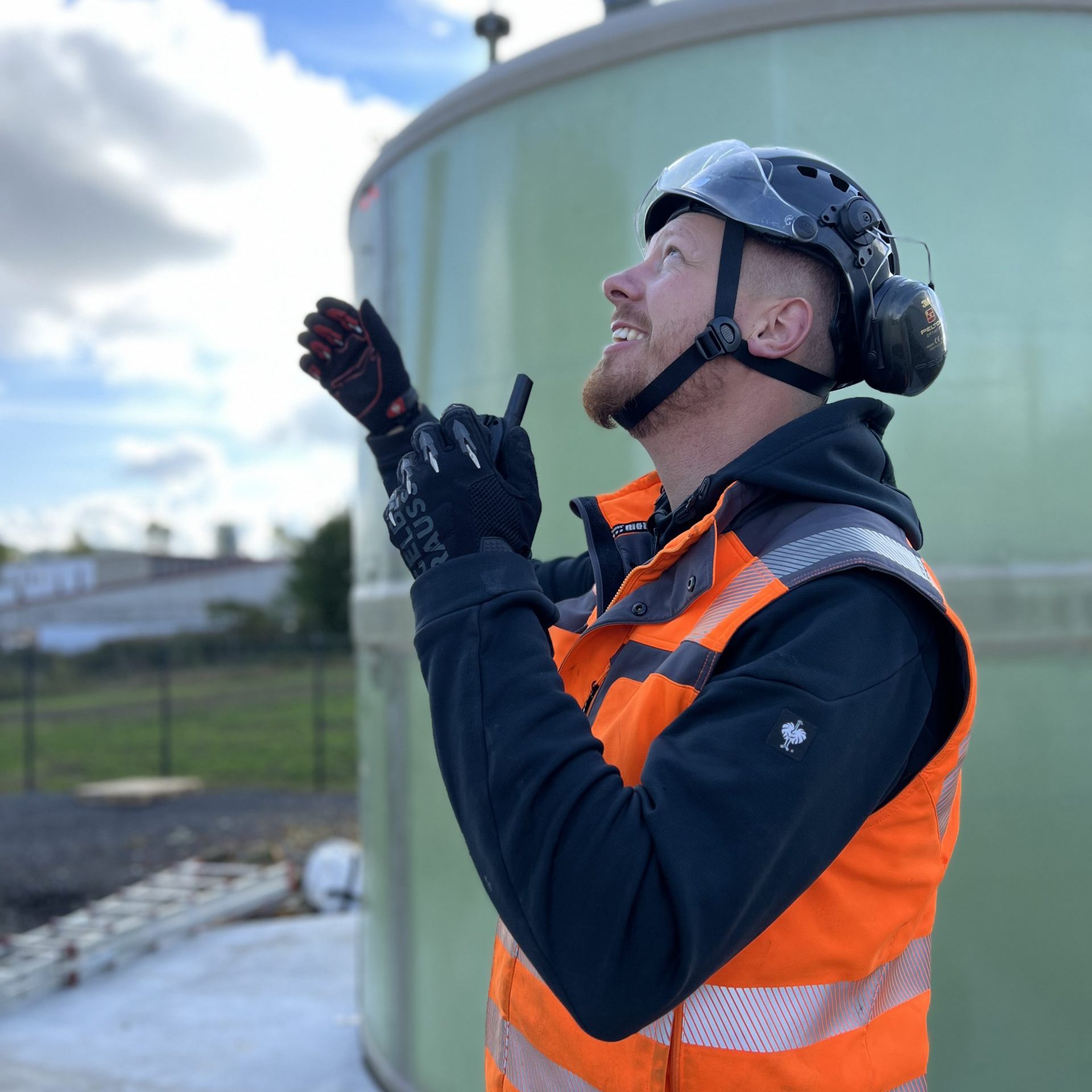
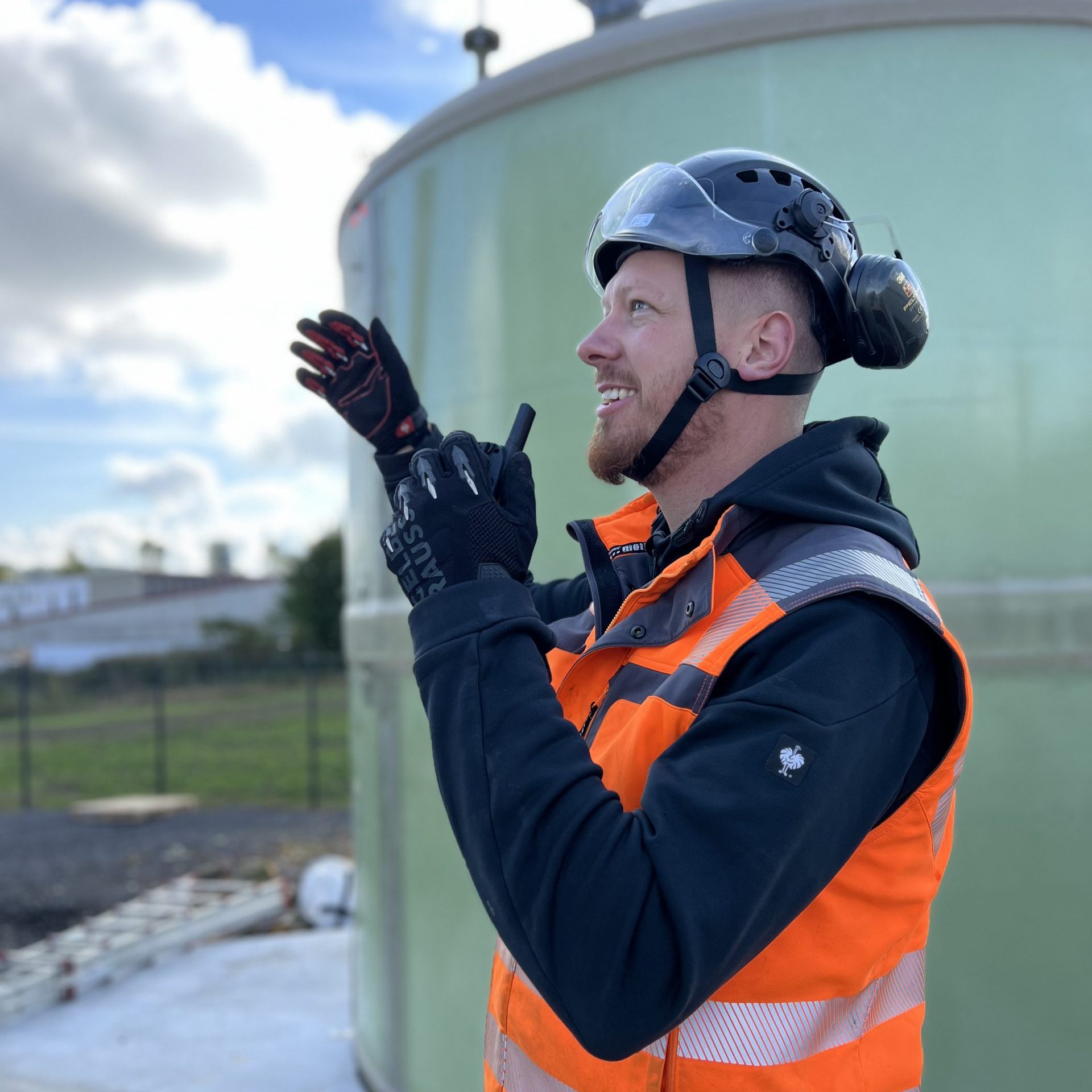
With components this large and heavy, the crane operator's view alone is not enough to safely judge every movement. That is why a second person is on site for every lift to act as banksman and guide the crane operator.
Using radio and hand signals, he stays in constant contact with the crane operator and gives precise instructions on height and direction – a decisive safety factor in every tank lift.
Foundation & substrate: the basis for a stable footing
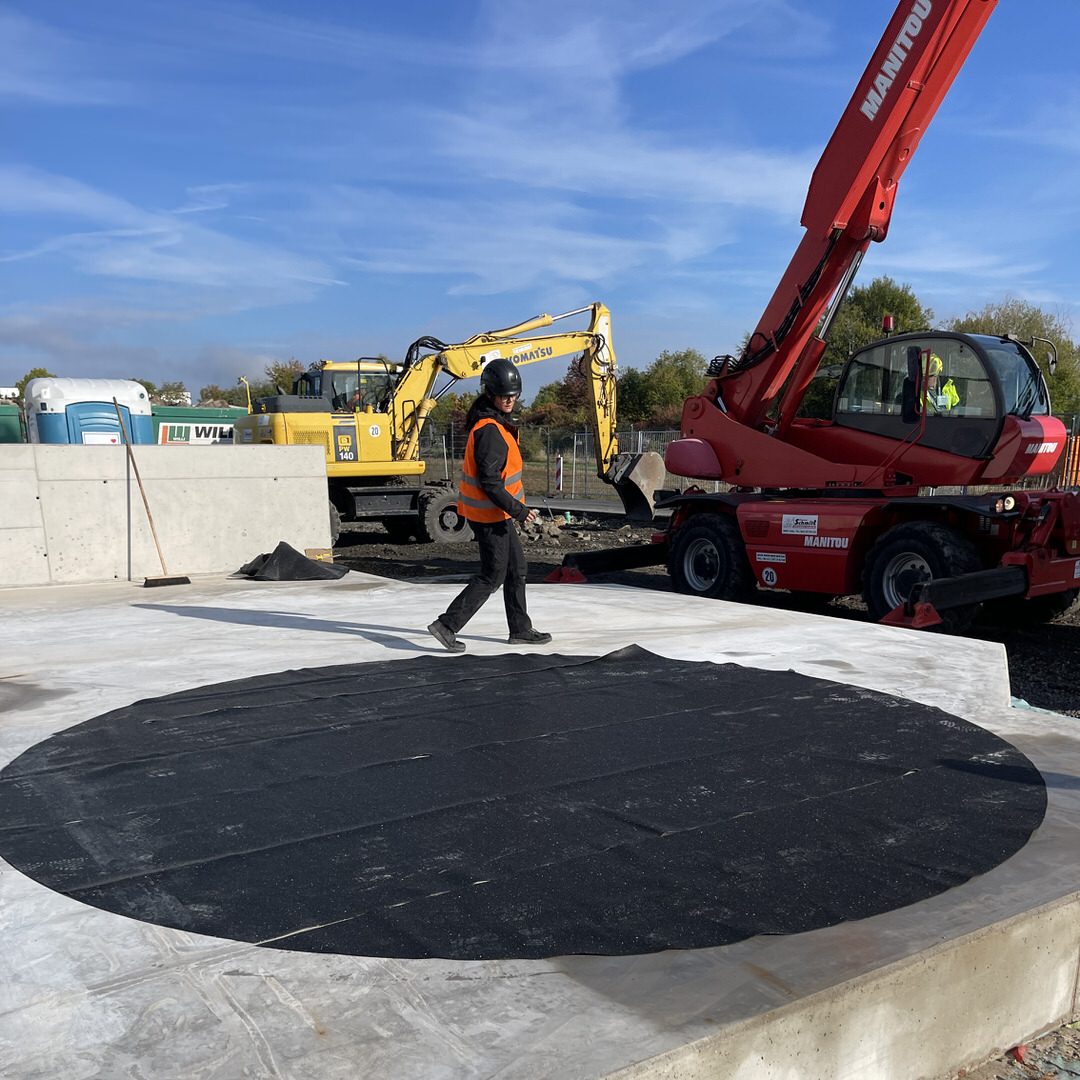
To ensure that the GRP tanks stand securely and level over the long term, the substrate is crucial. In Fulda, the tanks were placed on concrete foundations that had been cleaned beforehand. Our fitters also laid a protective mat between the tank and the base slab.
It evens out minor unevenness in the concrete and protects the tank from localised point loads from below.
Conclusion: tank installation in Fulda
Experience that counts
From the tight delivery conditions and the precise crane lift to the final anchoring in the foundation: installing GRP tanks for hybrid heating systems requires planning, experience and well-coordinated teams.
With a well-thought-out lift plan, trained staff and the right lifting accessories, our installation team installed the tanks for the customer in Fulda safely and on schedule – another step towards greater energy independence.
Are you also planning to switch to a hybrid system or do you need support with installing tanks or silos?
Get in touch – we will bring your equipment safely to its destination.
Related guides for this project

About the author
Tobias Schott
Managing director of Omega Mounting GmbH, Rodgau · more than 20 years of hands-on experience in installation and maintenance
A trained mechatronics technician, at home in maintenance, servicing and industrial installation since 2004 – first alongside his father, and since 2012 with Omega Mounting: from the overhead conveyor in Frankfurt to the crane system in a new-build hall. As appointed person for lifting operations, he plans and leads lifting operations in data centers and on industrial sites in the Rhine-Main region, is an instructor and examiner for cranes, aerial work platforms and telehandlers, and a safety officer. On assignments abroad he is known as the "German Troubleshooter" – the one you call when things get stuck on site. He did not learn what quality means from a manual, but from his father: Made in Germany as a standard for his own work, not as a label. That is why quality comes first at Omega Mounting – before speed and before price. The project diary shows the jobs his team has planned and carried out – without customer names, but with everything that can be learned from them.
 English
 German