
- Project report – test rig conversion with oil pan
Test rig conversion in an automotive test facility: hydraulics adapted and oil pan fully welded
How 2 fitters converted the hydraulic lines of a vehicle test rig in three days and welded a leak-tight oil pan around the concrete foundation
A test rig in automotive development is a powerhouse: servo-hydraulic cylinders move structures weighing tonnes, simulating road, vibration and load – often around the clock. Where so much hydraulics is at work, a simple rule applies: oil must never escape uncontrolled.
That is exactly what this job was about. For a southern German automotive group, our team from Rodgau converted a hydraulically driven test rig: the existing hydraulic lines were adapted – and around the concrete foundation we installed and welded a continuous oil pan that catches every drop in the event of a leak.
The special feature: welding was carried out in a confined basement room – made possible by a special welding fume extraction system with fresh air supply. The photos in this article show the system, the welding work and the result.
Project profile
- Scope: Conversion of the hydraulic lines on a vehicle test rig; installation and leak-tight welding of a continuous oil pan on the concrete foundation incl. drain cocks, grinding, priming, painting and sealing
- Team: 2 fitters
- Project duration: 3 days
- Location: Test facility of a southern German automotive group (customer and location remain unnamed)
- Welding process: TIG – for clean, leak-tight seams
What is a hydraulic test rig?
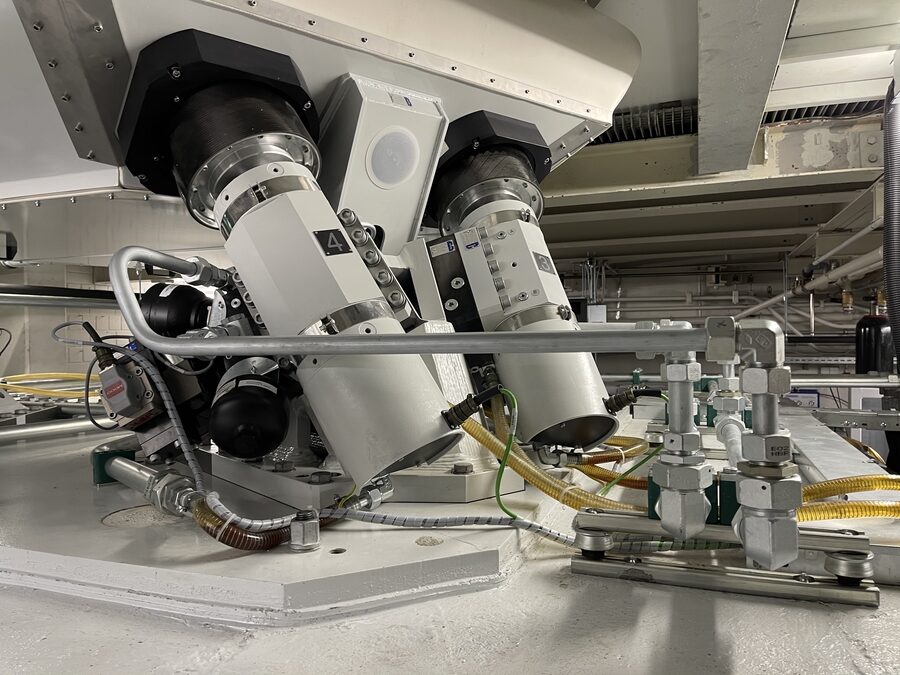
A hydraulic test rig is a system for testing vehicles or components under realistic loads. Servo-hydraulic cylinders apply forces and movements in a targeted way – from fine vibration to powerful impact. This allows road profiles, load changes and endurance loads to be reproduced in the laboratory long before a vehicle reaches the road.
For this to work, a test rig stands on a massive concrete foundation that absorbs the dynamic forces. The hydraulic cylinders work at high pressure – accordingly, hydraulic lines, valves and accumulators run through the entire system. The technology is clearly visible from below in the photos: several cylinders that move the test rig table from different directions, plus the associated piping.
And this is exactly where the subject of oil comes into play: where hydraulics work under pressure, the operator must ensure that escaping oil is safely contained in the event of a leak – to protect floor, building and environment.
Why an oil pan around the foundation?
The direct answer: so that not a single drop of hydraulic oil reaches the floor in the event of a leak. A continuous oil pan on the foundation catches escaping oil and makes it possible to dispose of it in a controlled manner – that is environmental protection in practice and at the same time protects the operation from expensive consequential damage and downtime.
Our solution went beyond a simple drip tray. Several drain cocks with hoses were fitted to the pan: if a leak occurs, the collected oil can be drained directly into a suitable container and properly disposed of or recycled – without pumps, without mess, without improvisation.
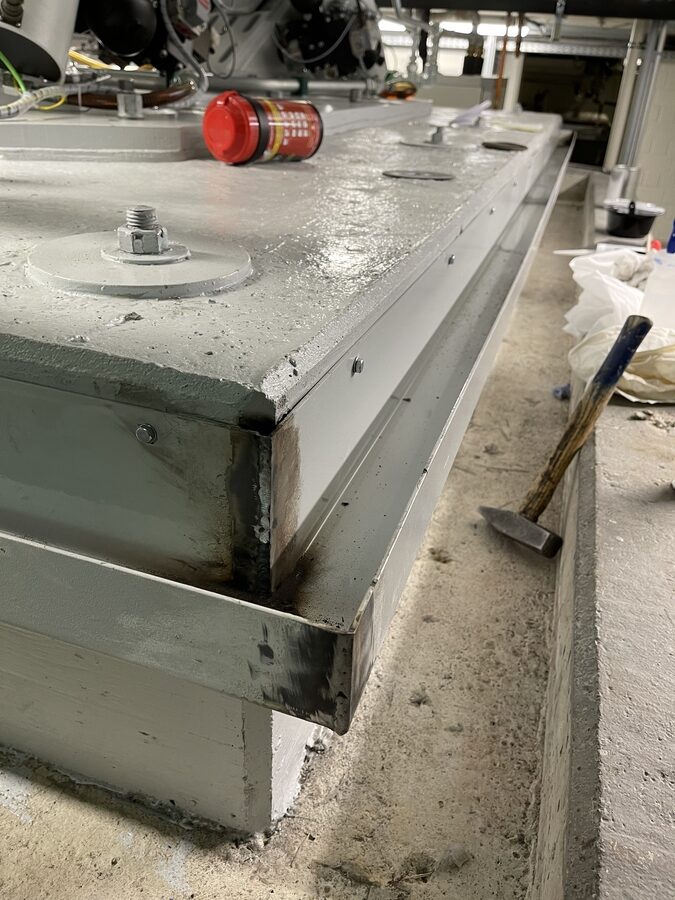
The clever part lies in the detail: an oil pan is only as good as its leak-tightness. That is why every corner and every transition was welded – and even the gap between the concrete wall and the pan was sealed with an oil-resistant sealant. So nothing can seep through there either and drip onto the floor.
How does a test rig conversion like this proceed?
In sequence – from the hydraulic conversion to the painted pan:
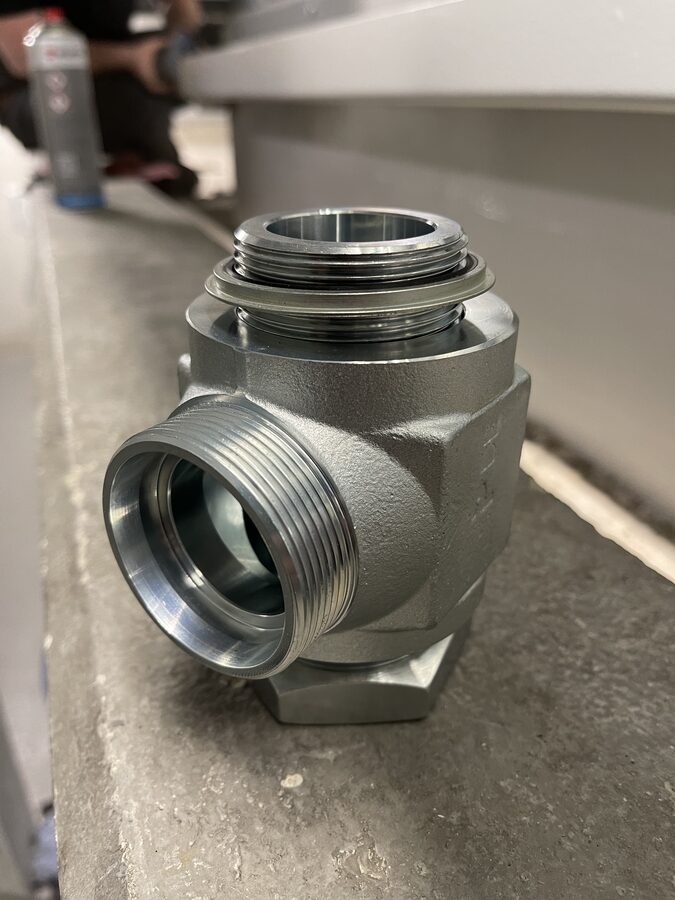
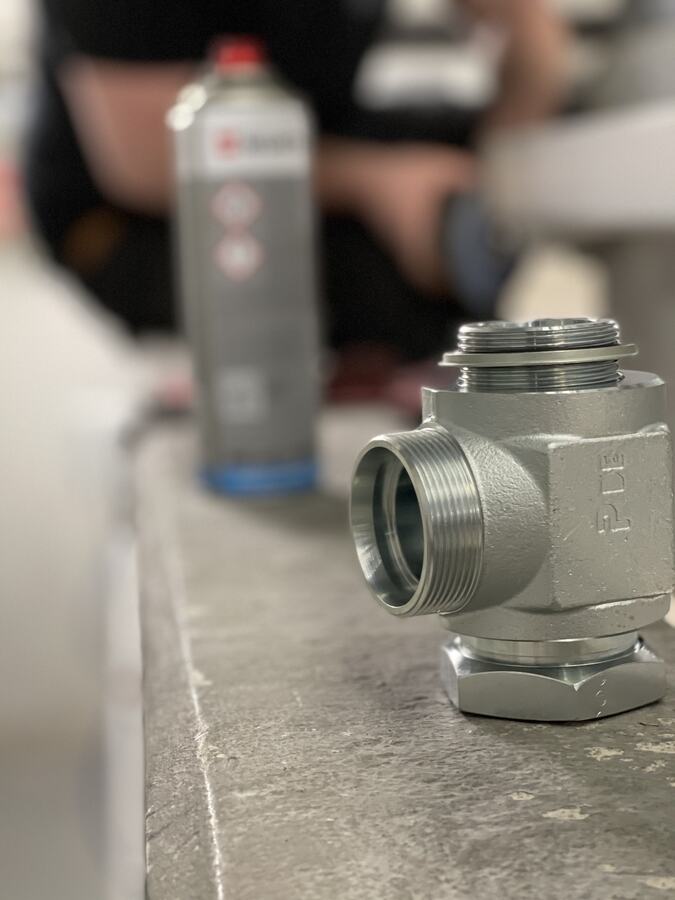
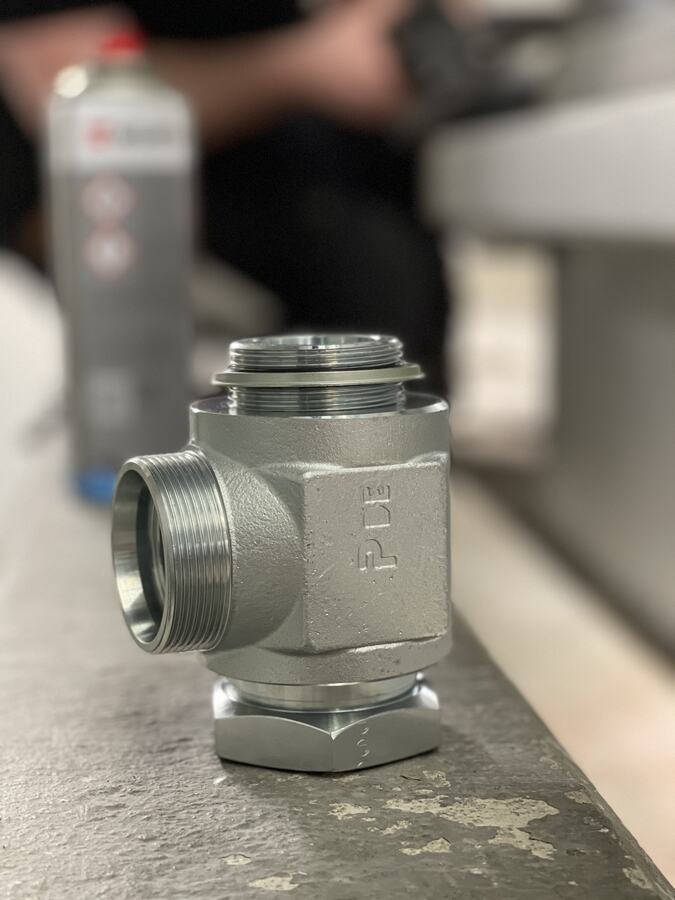
- Converting the hydraulic lines: The existing piping was adapted to the new configuration of the test rig. The close-ups show the heavy-duty elbow fittings with which hydraulic lines are connected pressure-tight.
- Installing the oil pan: The pan segments were set around the concrete foundation and fixed with anchors and bolts.
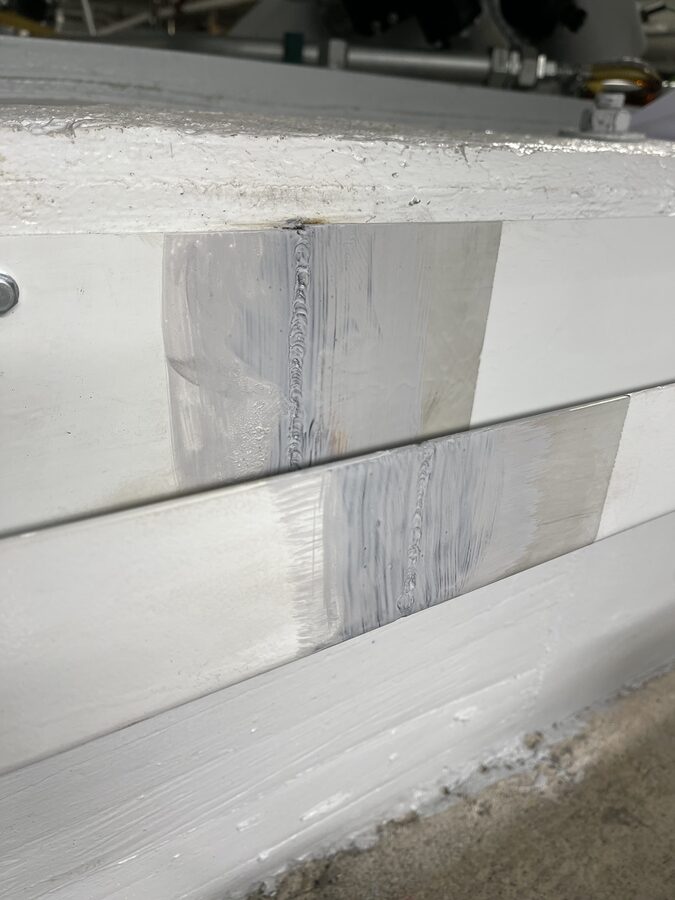
- Welding corners and transitions: All joints, corners and transitions were then welded completely leak-tight – this is where the pan's actual leak-tightness is created.
- Fitting drain cocks and hoses: Several drain points make the pan easy to maintain – collected oil runs directly into the appropriate container.
- Grinding, priming, painting: All welded transitions were ground down, primed and painted – corrosion protection and a clean look in one.
- Sealing: Finally, the gap between the concrete wall and the oil pan was sealed with an oil-resistant sealant.
Welding in a confined basement room: extraction and fresh air instead of compromises
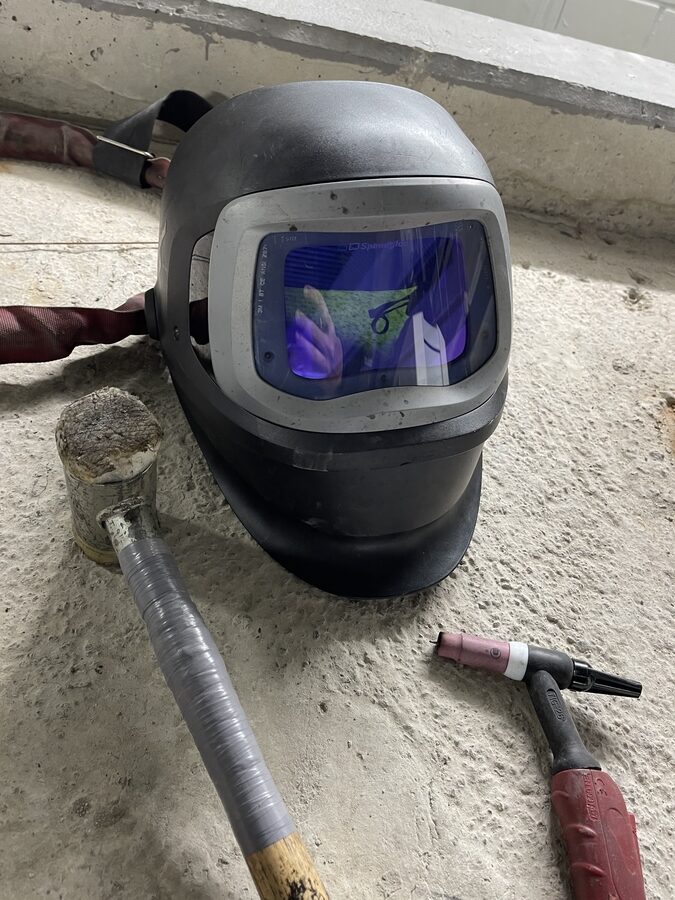
Anyone who has ever welded in a basement knows the problem: welding fumes need somewhere to go – and the welder needs air. On this job, a special welding fume extraction system with fresh air supply was therefore used. The system extracts the fumes directly and at the same time supplies fresh air – so our fitters were able to work without an additional filter system on the welding helmet.
Welding was done with TIG – the process of choice when clean, controlled and absolutely leak-tight seams matter. The photos show the welding helmet and the TIG torch right next to the pan, as well as the freshly laid seams at the pan corners and the already ground and primed transitions.
On jobs like this, occupational safety is not optional but a prerequisite: anyone welding in confined spaces must have fumes, fresh air and fire protection under control – otherwise they do not belong there.
Working cleanly where precision is at home
A test facility is no ordinary industrial floor: high-precision, expensive systems stand close together here, and measurement operations tolerate neither dirt nor damage. Our fitters worked accordingly – working area secured, system protected, site left clean every day.
The result: a converted test rig with adapted hydraulics and a completely leak-tight, painted oil pan with controlled drain points. This permanently ensures clean and, above all, safe work on the system – exactly what the customer wanted.
Why Omega Mounting?
- Welding expertise where leak-tightness counts: TIG seams that hold and are leak-tight – from the port crane to the oil pan in the test facility.
- Hydraulics experience: Lines, fittings, conversions – we regularly work on hydraulic systems, from dock levellers to test rigs.
- Occupational safety up to date: Welding fume extraction with fresh air supply, PPE, fire protection – we bring the equipment that confined spaces demand.
- Automotive routine: Whether paint shop, work platform or test rig – the procedures and standards of the automotive industry are familiar to us.
- Everything from a single source: Installation, welding, grinding, priming, painting, sealing – one team, one result.
- Rooted in the region: From Rodgau we are quickly in Offenbach, Frankfurt, Hanau, Darmstadt and the entire Rhine-Main region – and work throughout Germany.
Conclusion: small area, big effect
Two fitters, three days, a clear brief: hydraulics converted, oil pan installed, welded leak-tight, made drainable, painted and sealed. No spectacular crane lift, no major project – but exactly the kind of work where care makes the difference. Because you only notice an oil pan when it is missing.
If you need drip pans, welding work or hydraulic conversions on your systems – talk to us.
Request a callback for your project now – Omega Mounting GmbH, Rodgau. Your partner for industrial installation, welding technology and maintenance in the Rhine-Main region: Offenbach, Frankfurt, Hanau, Dietzenbach – and throughout Germany.
Photo gallery of the job

Are you planning a test rig conversion?
Tell us briefly what it is about – we will come back to you with an honest assessment.
100% free and without obligation
Related guides for this project
Occupational safety
Occupational safety

About the author
Tobias Schott
Managing director of Omega Mounting GmbH, Rodgau · more than 20 years of hands-on experience in installation and maintenance
A trained mechatronics technician, at home in maintenance, servicing and industrial installation since 2004 – first alongside his father, and since 2012 with Omega Mounting: from the overhead conveyor in Frankfurt to the crane system in a new-build hall. As appointed person for lifting operations, he plans and leads lifting operations in data centers and on industrial sites in the Rhine-Main region, is an instructor and examiner for cranes, aerial work platforms and telehandlers, and a safety officer. On assignments abroad he is known as the "German Troubleshooter" – the one you call when things get stuck on site. He did not learn what quality means from a manual, but from his father: Made in Germany as a standard for his own work, not as a label. That is why quality comes first at Omega Mounting – before speed and before price. The project diary shows the jobs his team has planned and carried out – without customer names, but with everything that can be learned from them.
Frequently asked questions
Because hydraulic oil must not reach the ground or the sewer in the event of a leak. A leak-tight drip pan safely contains escaping oil and protects environment, building and operation. For permanently installed systems with larger oil quantities, such containment is state of the art.
By welding all joints, corners and transitions leak-tight – simply bolting is not enough. We weld the seams with TIG, grind them, prime and paint the pan and also seal the connection to the concrete wall with an oil-resistant sealant.
They make the pan easy to maintain: collected oil can be drained directly into a suitable container and properly disposed of or recycled – without pumps and without anyone having to climb into the pan. Several drain points ensure that every part of the pan can be emptied.
Yes – with the right equipment. On this project, a special welding fume extraction system with fresh air supply was used, which extracts the welding fumes directly and supplies the workplace with fresh air. This makes safe work possible even where no window and no ventilated hall is available.
Yes. We adapt hydraulic lines, relocate and renew piping and fit the associated fittings pressure-tight – for example when converting test rigs, loading equipment or machines. We coordinate commissioning with the operator or the system's specialist contractor.
Yes – with us the trade comes entirely from a single source: welding, grinding, priming, painting and sealing. This means no interface problems between several companies, and the system is really finished after our job.
Yes. We are based in Rodgau near Offenbach, and most jobs take us to Frankfurt, Hanau, Darmstadt and the rest of the Rhine-Main region – but for industrial customers we regularly travel throughout Germany, as this project in southern Germany shows.
 English
 German