
- Technology explained – key term
Maintenance to DIN 31051: why servicing is not repair
By Tobias Schott · Reading time approx. 7 minutes · As of: November 2026
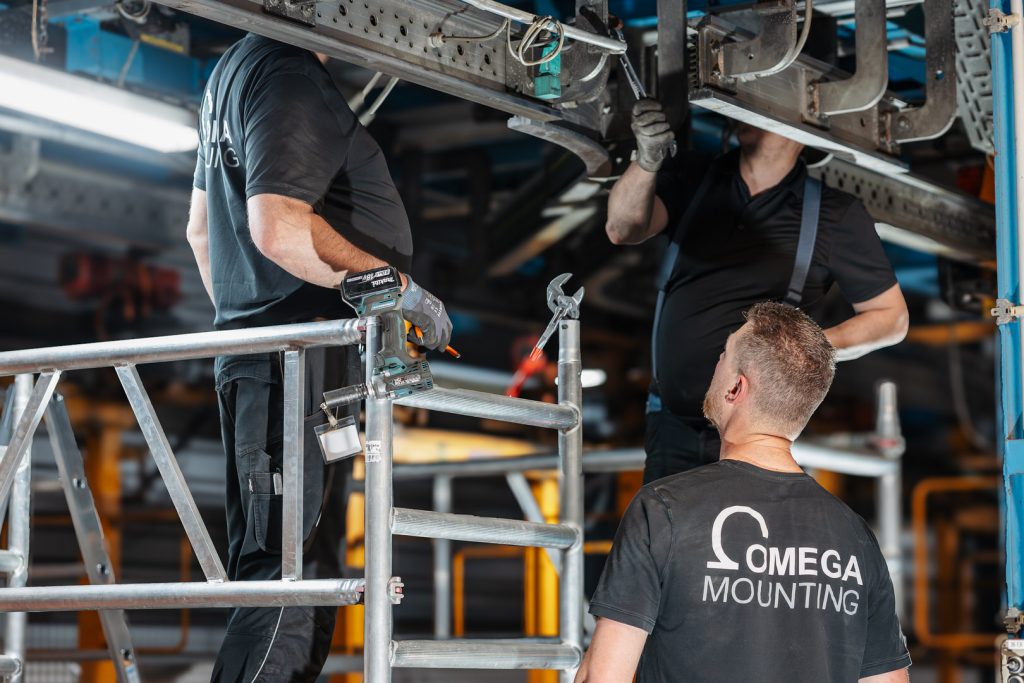
Maintenance is the umbrella term for everything that keeps a system functional or restores it to function – and it consists of four basic measures that are constantly confused in everyday work.
You encounter maintenance to DIN 31051 in the maintenance contract, the specification of works, the maintenance plan and in every meeting before a shutdown. What people say is almost always “servicing” – regardless of whether someone is topping up grease, examining a switch or replacing a bearing. As long as everyone means the same thing, that is not a problem. It becomes a problem when a quotation promises “servicing” and the client expects a repair.
This article explains what the standard means by maintenance, what separates the four basic measures and why the wear reserve is the key to everything. It also gives a short overview of the four maintenance strategies that are often mentioned in the same breath. Which strategy suits your system is covered in the guide to maintenance strategy.
What is maintenance to DIN 31051?
According to DIN 31051, maintenance is the combination of all technical, administrative and organisational measures that keep a unit functional during its life cycle or restore it to this state. The standard divides these measures into four basic measures: servicing, inspection, repair and improvement. A “unit” can be anything – a pin, a switch, an entire conveyor system.
The important word is “umbrella term”. Servicing is part of maintenance, not its synonym. The technical terms are harmonised at European level: the European counterpart is the terminology standard EN 13306. In German everyday language, “Wartung” (servicing) is often used where “Instandhaltung” (maintenance) is meant – and that is exactly where part of the confusion begins.
Key facts
- Definition: All measures that keep a system functional during its use or restore it to function, divided into servicing, inspection, repair and improvement.
- Also known as: In companies often “servicing”, “service” or “upkeep” – technically imprecise, because each only means a part.
- Terminology: Maintenance; the basic measures are servicing (Wartung), inspection (Inspektion), repair (Instandsetzung) and improvement (Verbesserung).
- Where you find it: Maintenance contract, specification of works, maintenance plan, shutdown planning, operating instructions and system documentation.
- Standard: The German standard for the fundamentals of maintenance; its terms are harmonised with the European terminology standard.
- Often confused with: With servicing alone, with the recurring statutory inspection under occupational safety law and with the conversion of a machine.
Servicing, inspection, repair, improvement: what really is what
The four basic measures differ in their goal: servicing slows down wear, inspection determines the condition, repair restores the function, improvement makes the system more reliable, safer or easier to maintain. No measure replaces another. Anyone who only lubricates does not know the state of the component. Anyone who only inspects has findings, but not yet a working system.
| Action | Objective | Typical activity | Example from our work |
|---|---|---|---|
| Maintenance | Delay the depletion of the wear reserve. | Lubricate, clean, readjust, top up operating fluids, replace small parts. | Lubricate and check moving pin joints on the carriers of an electrified monorail – even where they are considered maintenance-free. |
| Inspection | Determine and assess the actual condition, find the cause of the wear. | Visual check, measure, pull a sample part, document findings. | Condition survey of around 100 switches of an electrified monorail, each switch recorded and assessed. |
| Repair | Return a faulty unit to a functional state. | Replace parts, weld, align, adjust, check function. | Load and guide rollers replaced, end positions adjusted, torn-off brackets welded; a fan bearing replaced in a paint shop. |
| Improvement | Increase reliability, maintainability or safety without changing the original function. | Eliminate a weak point, retrofit protection or access. | Retrofit impact protection in front of a system or add a maintenance platform so that components can be reached safely. |

In practice inspection almost always comes first. Only the findings tell you whether servicing is enough or repair is needed. Older editions of the standard incidentally only knew three basic measures; improvement was added later. That is why older contracts often only contain the three-way split.
What is the wear reserve?

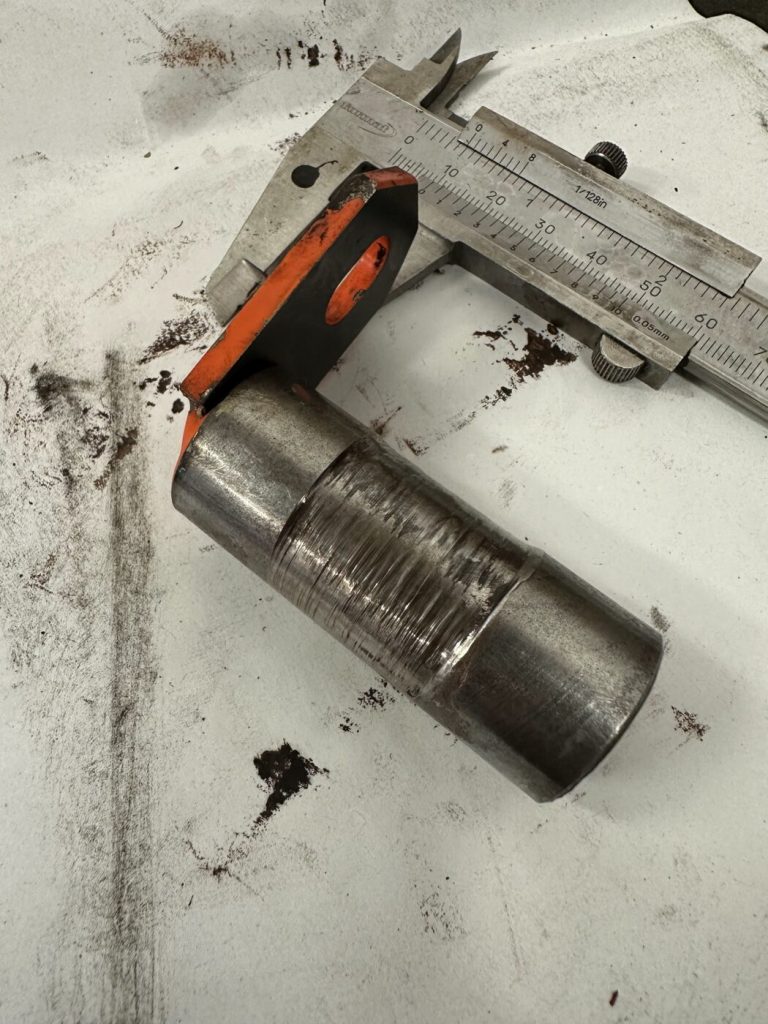
The wear reserve is the reserve of possible function that a component receives through manufacture, repair or improvement and that is depleted through use. An image makes this tangible: a new pin has its full diameter. Every swivel movement under load removes a little material, imperceptibly at first, then faster as soon as lubrication is missing.
The wear limit is the defined minimum value of this reserve. Once it is reached, the function is no longer reliably ensured, and the component must be repaired or replaced. Where the limit lies is specified by the manufacturer or the standard. For lifting accessories this point is called the discard criterion.
With the wear reserve, all four basic measures can be explained in one sentence each:
- Maintenance slows down the depletion of the reserve.
- Inspection shows how much reserve is left.
- Repair replenishes the reserve.
- Improvement enlarges the reserve or permanently slows its depletion.
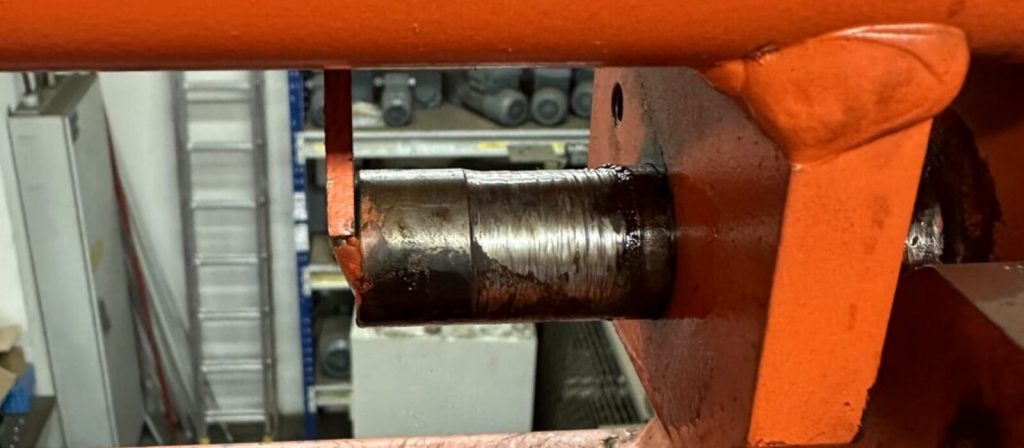
A pin pulled from an electrified monorail shows how quickly a reserve can be used up: the lubrication was practically gone, pin and bushing were worn in. The reserve was used up long before anyone looked.
Measures and strategies: what is the difference?
The four basic measures say what is done on a system; the maintenance strategy says when and for what reason it is done. The two are often mixed up because both lists contain four terms. A strategy merely combines the measures differently: sometimes the failure triggers the repair, sometimes the calendar triggers the servicing, sometimes a measured value triggers the inspection.
| Strategy | What triggers it | How it works | When it fits |
|---|---|---|---|
| Reactive (corrective) | The failure. | Repair only once a fault has occurred – also called “run-to-failure”. | For units whose failure has few consequences and which can be replaced quickly. |
| Preventive | A fixed interval by time, operating hours or load cycles. | Servicing and replacement according to plan, regardless of the actual condition. | For known wear parts and where the manufacturer or an inspection obligation specifies an interval. |
| Condition-based | The findings of an inspection or measurement. | Repair only when the condition requires it – the wear reserve is used, but not overdrawn. | For components whose wear can be measured or seen, such as chain elongation, bearing temperature or play. |
| Predictive | The trend of measured data over time. | The trend is used to estimate when the wear limit will be reached, and the intervention is scheduled in a shutdown window. | For critical systems with high failure consequences and measurable parameters, such as vibration or temperature. |

In European terminology the groups are called corrective and preventive maintenance; condition-based and predictive maintenance are forms of preventive maintenance. No company runs just one strategy. Which system runs on which strategy is decided by the consequences of failure – this is classified by risk-based maintenance . What sensors for predictive maintenance really bring in a medium-sized company is described in the guide Predictive maintenance in SMEs.
Why “servicing” means almost everything in everyday use
In everyday German, “Wartung” (servicing) stands for any work on a system – that is the most common reason for misunderstandings between operator and service provider. We come across five confusions again and again:
- Servicing instead of overhaul: A job is called “generator servicing”. In fact the generator has to be separated from the engine and removed, because parts are not accessible when installed. That is an overhaul, i.e. inspection and repair in one.
- Fixing instead of repair: “Fixing” is the everyday word. Technically it is called repair, and what is meant is the return to function – not necessarily the as-new condition.
- Maintenance-free: This means the manufacturer does not provide for servicing. It does not mean that no inspection is necessary.
- Maintenance: In an English contract the word covers maintenance as a whole. If it is translated into German as “Wartung” (servicing), repair is easily left out.
- Statutory inspection instead of inspection: The recurring inspection by a competent person is a duty under occupational safety law. Inspection in the maintenance sense is a maintenance measure. In terms of content they overlap, legally they do not.

For quotation, maintenance contract and specification of works this means: list the basic measures individually. Specify whether repair is included, billed by time and material or needs a separate quotation. How to weigh up a contract against individual orders is covered in the guide Maintenance contract or individual order. This is not legal advice but a note on clean terminology.
Maintenance has one limit: anyone who changes the function of a machine is no longer improving it but converting it. Whether this results in a substantial modification of a machine is a separate question with its own obligations.
What we pay attention to
In every quotation we state which of the four basic measures we take on – so that you know what you get.
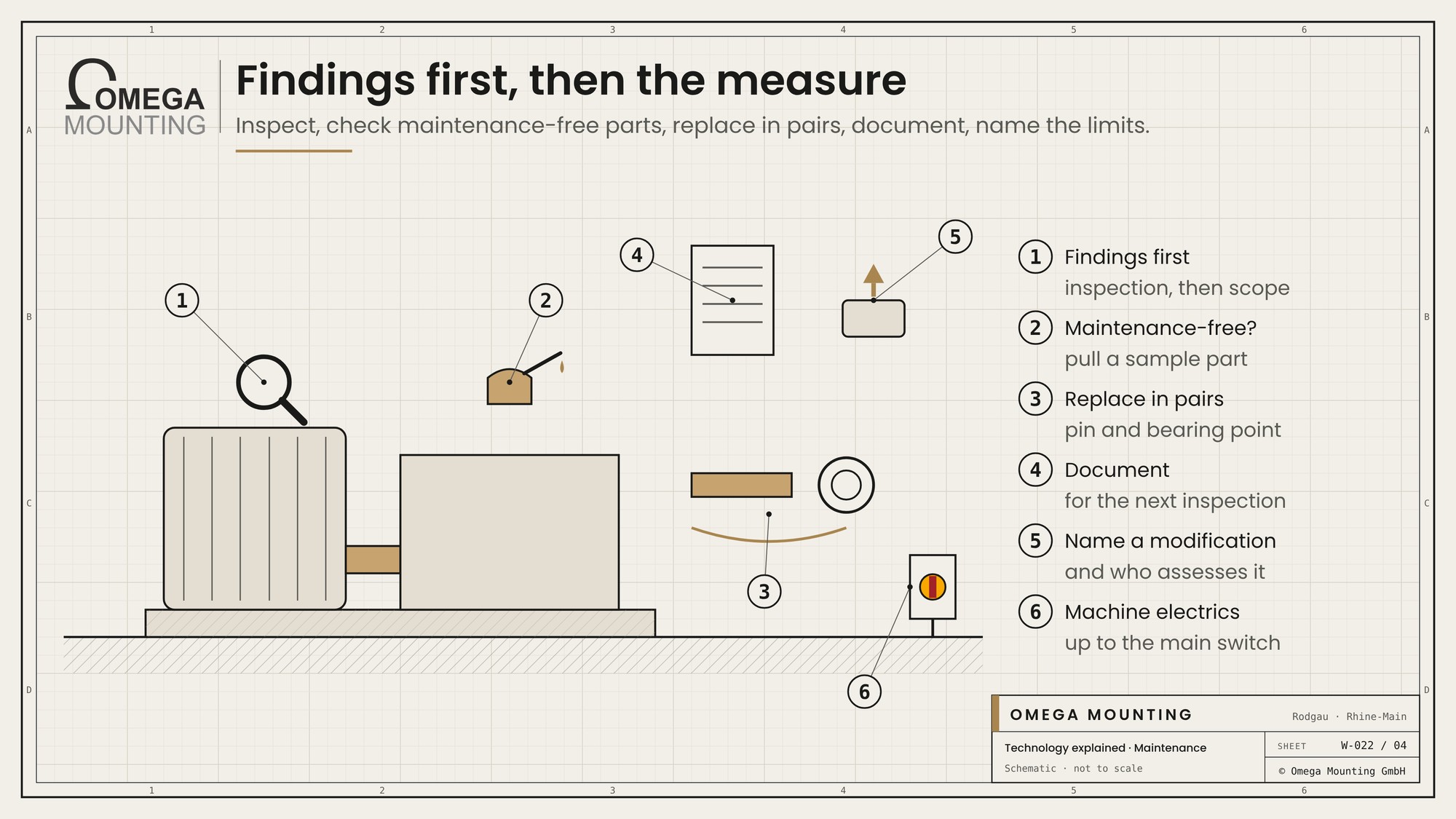
- We separate findings and measures: first inspection and documentation, then we agree scope and sequence with you.
- We do not accept “maintenance-free” without checking. If in doubt, we pull a sample part before we assess an entire fleet.
- We replace together what wears together: pin and bearing point should be replaced as a pair.
- We document every repair so that the next inspection can build on it.
- We say so when a request is no longer an improvement but a conversion – and who then assesses it.
- Our own qualified electricians take care of the system electrics up to the main switch; we hand over control software and statutory inspections to the specialists responsible for them.
Where we use it
In the Rhine-Main region, maintenance for us is almost always work in a shutdown window. On the maintenance of a roughly 30-year-old overhead conveyor in Frankfurt the starting point was a condition survey of all around 100 switches. After that four technicians per weekend repaired rollers, switch shoes and end positions, sometimes in around 36 hours between end of production and restart. With the worn monorail pins in a food plant a single pulled pin showed that the supposedly maintenance-free joint was running dry. Two to three fitters replaced pins and bushings on 80 vehicles, ten to 15 per weekend. Both jobs are part of our Maintenance and servicing.
More technology explained
Technology explained
the system on which all four basic measures can be shown.
Technology explained
the wear limit, applied to lifting accessories and protective equipment.
Guide
the guide for when you decide which measure belongs to which system and when.
Need fitters who know this process?
Are you planning a project in which servicing, inspection and repair are tendered separately, and need fitters who know the difference? We assess, repair and document so that your next inspection can build on it. Request a callback – we will get back to you.
Free, no-obligation callback

About the author
Tobias Schott
Managing director of Omega Mounting GmbH, Rodgau · more than 20 years of hands-on experience in installation and maintenance
A trained mechatronics technician, working in maintenance, servicing and industrial installation since 2004 – first alongside his father, and with Omega Mounting since 2012: from overhead conveyors in Frankfurt to the crane system in a new-build hall. He plans and leads lifting operations as an appointed person (AP) in data centers and on industrial sites in the Rhine-Main region, trains and examines operators of cranes, mobile elevating work platforms and telehandlers, and is a qualified occupational safety specialist. On jobs abroad he is known as the “German Troubleshooter” – the person you call when a site gets stuck. He learned what quality means from his father, not from a manual: Made in Germany as a standard for his own work, not a label. That is why quality comes first at Omega Mounting – ahead of speed and price. The Technology explained articles cover the equipment and techniques his team uses every day: what counts on site is in them – what only appears in the brochure is not.
 English
 German