
- Technology explained – technology and procedures
The Standby Power System: Everything That Makes Up Data Center Backup Power
By Tobias Schott · Reading time approx. 8 minutes · Last updated: October 2026
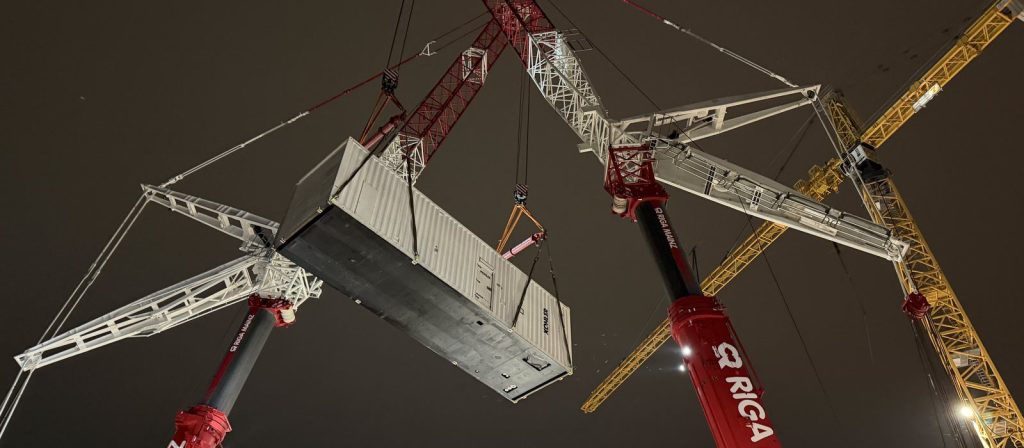
A standby power system takes over the electricity supply of a data center when the public grid fails – and it consists of far more than the diesel engine and alternator that give it the name standby generator. You will meet the standby power system in every data center tender, usually under the German abbreviation NEA (Netzersatzanlage). In the generator room it stands as a block of engine and alternator; outside, it is a container behind the building. Add tanks in the pit, exhaust pipes on the roof and radiators on the façade – and all of it together is the system.
Anyone who knows the parts understands the schedules, the floor space and the maintenance windows a data center sets aside for them. Here we explain what a standby power system is, what belongs to it, how the start sequence runs and what is mechanically maintained on it.
What is a standby power system?
A standby power system is a stationary power generation plant that takes over the supply of the connected loads when the public grid fails – at its core a diesel engine driving an alternator, together with controls, cooling, exhaust system and fuel supply. In English it is called an emergency generator set or genset, in tenders also a standby generator. In German, Notstromaggregat, Notstromgenerator and Netzersatzanlage are used side by side; the technical term for the complete system is Netzersatzanlage.
It must be distinguished from the UPS, the uninterruptible power supply. The UPS is a battery system that keeps the load supplied without a gap until the standby power system has started and taken over. One bridges, the other carries. We work on the standby power system as the mechanical installation and maintenance partner; the electrical side belongs to the qualified electrician, the controls to the manufacturer.
Profile
- Design: Diesel engine and alternator on a common base frame, plus radiator, exhaust system, fuel supply, ventilation and control cabinet.
- Typical output: In data centers typically in the megawatt range; the largest units we have moved in were in the 2 to 3 megawatt class.
- Drive: Turbocharged diesel engine, exhaust after-treatment via an SCR system (catalytic converter with AdBlue, reduces nitrogen oxide emissions) and silencer.
- Installation: As a containerised unit outdoors or as an indoor unit in the generator room – on the ground floor, in the basement or on upper floors.
- Field of use: Data centers, hospitals, utilities, airports, industrial plants with critical processes.
- Requirements: Load-bearing foundation, supply and exhaust air, exhaust route to the outside, tank installation with containment bund, installation route for assembly and later overhaul.
- Responsibilities: Mechanical installation and maintenance by the installation partner, commissioning and controls by the manufacturer, electrical connection by the qualified electrician.
What belongs to a standby power system?
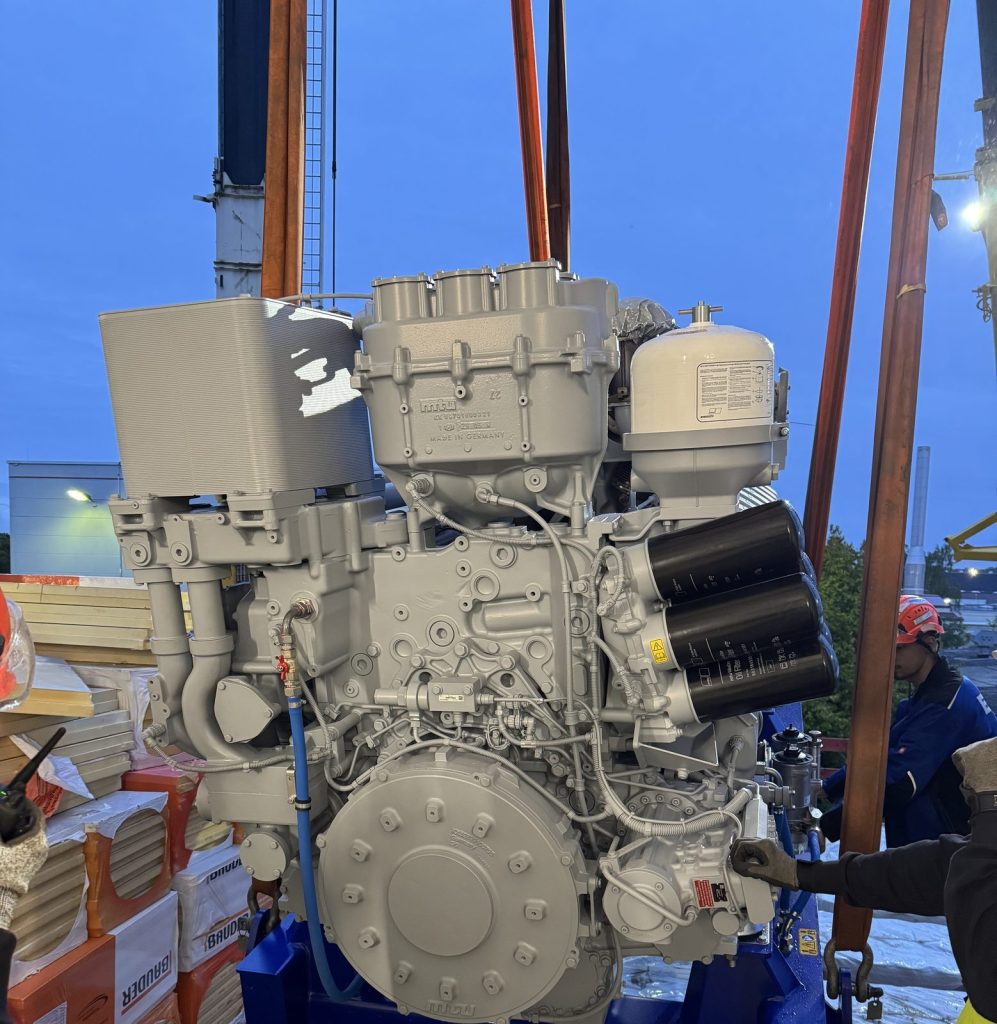
A standby power system consists of seven assemblies that only deliver power together: engine, alternator, controls, cooling, exhaust system, fuel supply and ventilation. With the indoor unit, the assemblies enter the building one by one and are only connected in the generator room – radiator with its pipework to the engine, SCR system, manifold and exhaust run, lines, AdBlue tanks and switch cabinets.
| Part | Task | Typical fault source |
|---|---|---|
| Diesel engine | Drives the alternator; runs only in an emergency and during test runs. | Leaking hoses, perished V-belts, stale fuel in the day tank. |
| Alternator | Converts the rotation into electricity; connected to the engine via a coupling. | Bearing damage, misalignment between engine and alternator, contamination. |
| Base frame and vibration dampers | Carry engine and alternator, keep vibrations away from the building. | Settled or cracked dampers, loosened anchoring. |
| Radiator | Cooler that releases the engine heat to the ambient air via fans. | Leaks in the cooling fins, clogged fins, fan bearings. |
| Exhaust system | Manifold, SCR system and silencer carry the exhaust gas outside, cleaned and quiet. | Leaking flanges, loose expansion joints, condensate in the run. |
| Fuel supply | Bulk tank in the pit, day tank at the genset, pumps and lines. | Water in the diesel, leaking connections, level sensors. |
| Ventilation and controls | Supply and exhaust air louvres, control cabinet with starter battery and mains monitoring. | Sticking louvres, weak battery – checked by the qualified electrician. |
Two things stand apart: the bulk tank and the load bank. The bulk tank holds the reserve for days; the day tank at the genset is refilled from it. The load bank is not part of the system but its test equipment: it simulates the electrical load of the servers so the alternator can be tested at full load without putting the data center at risk.
How does the start sequence run on mains failure?
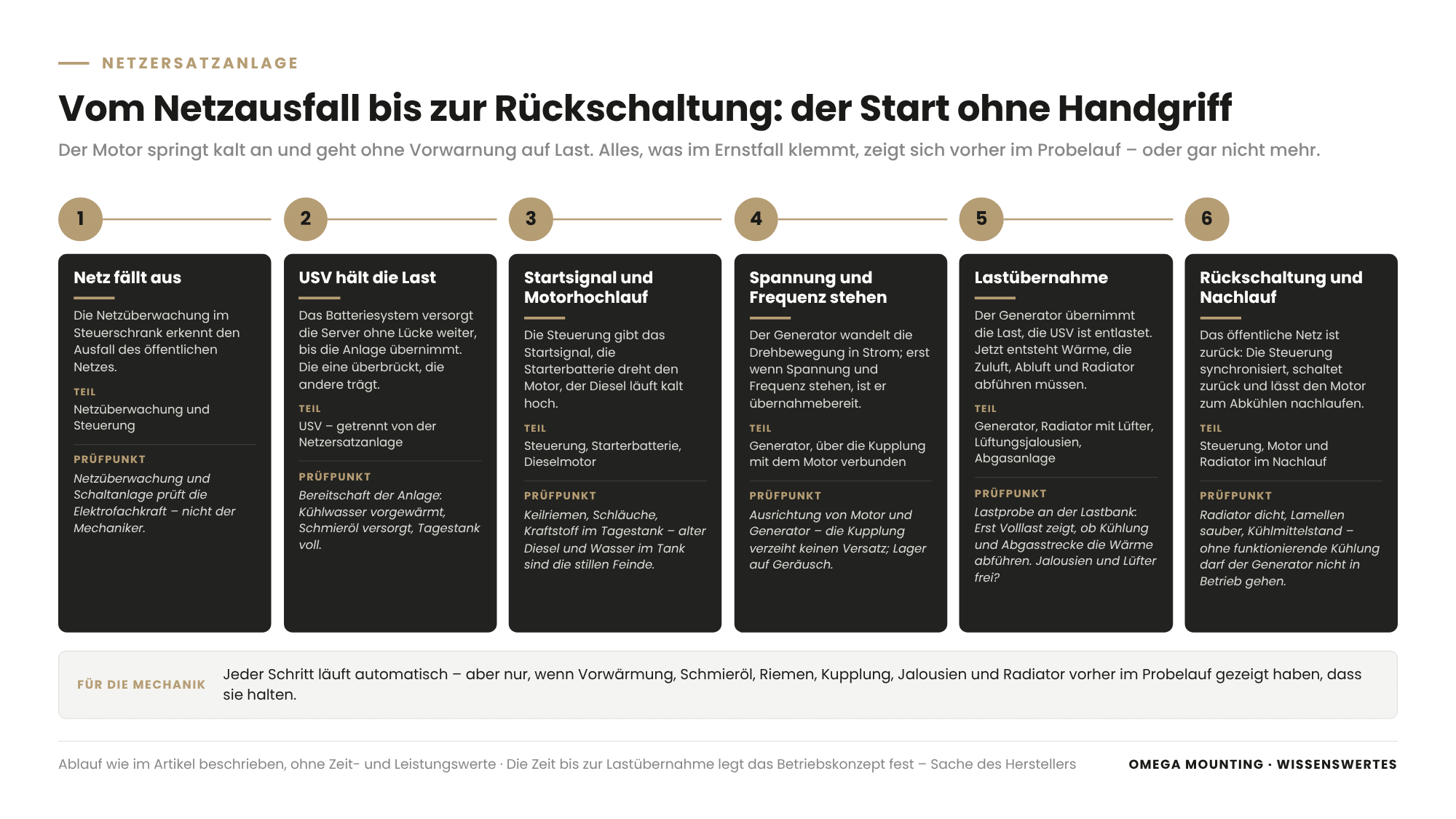
The start runs without anyone lifting a finger: the mains monitoring detects the failure, the controls give the start signal, the engine runs up, and as soon as voltage and frequency are stable, the alternator takes over the load. Until then the UPS keeps the servers running. When the public grid returns, the controls synchronise, switch back to mains and let the engine run on to cool down.
For the mechanics this means: the engine starts cold and goes onto load without warming up. That is why coolant pre-heating, lubricating oil supply and a full day tank keep the system ready. Anything that sticks in an emergency – an exhaust air louvre, a fan, a valve – shows up beforehand in the test run or not at all.
How much time may elapse between failure and load transfer is defined by the operating concept – that is a matter for the controls and therefore for the manufacturer.
Container or plant room: where does the standby power system stand?
A standby power system stands either as a containerised unit outdoors or as an indoor unit in the generator room – and this decision determines the moving in, the installation and every later overhaul.
| Characteristic | container solution | indoor solution |
|---|---|---|
| As delivered | Complete in its enclosure, piped and wired at the factory. | Individual assemblies, installed on site. |
| Moving in | One lift, often as a tandem lift with two mobile cranes; our heaviest containerised unit weighed 54 tonnes. | Assemblies one by one through a façade opening or installation shaft; the heaviest single alternator weighed a good 20 tonnes. |
| Space required | Outdoor hardstanding with access, distance from neighbours because of noise. | Generator room with supply air, exhaust air, exhaust route and maintenance aisles. |
| Cooling and exhaust | Radiator and silencer in or on the container. | Radiator on the façade or on the roof, exhaust run through the building. |
| Overhaul | Open the container, replace components from outside. | Way back out through the installation shaft, enclosure to be dismantled first. |
In data centers, floor space often decides: in the city there is no room in front of the building, so the generators move to the first or second floor. Which crane brings such a load to a height of around 16 metres is explained in our article Mobile crane, crawler crane, all-terrain crane.
What is mechanically maintained on a standby power system?
Mechanical maintenance covers the engine, cooling system, exhaust system, fuel system and bearings – always with the aim that the next start succeeds without a fault. This includes:
- Test run and load bank test. The system is started regularly, ideally under load on the load bank. Only full load shows whether the cooling and the exhaust run carry the heat away.
- Cooling system. Check the radiator for leaks and dirty fins, fan bearings, hoses, coolant level. Without a working cooling system the alternator must not go into operation.
- Belts and bearings. V-belts, belt tension, coupling between engine and alternator, vibration dampers and anchoring to the base frame.
- Exhaust system. Flanges, expansion joints and silencer for leak-tightness; keep an eye on the SCR system and AdBlue supply.
- Fuel system. Day tank, lines, pumps, filters; water in the tank is the silent enemy of every diesel installation.
- Overhaul. According to the manufacturer's specification, the alternator is eventually removed and overhauled: disconnect the coupling, dismantle the enclosure, transport frame, crane at the installation shaft.
Starter battery, mains monitoring and switchgear are checked by the qualified electrician, software versions and parameters by the manufacturer. Standby power systems are work equipment within the meaning of the BetrSichV (German Industrial Safety Ordinance), and water protection law applies to the tank installation – which inspections follow from this for you is something to clarify with your inspector; we do not provide legal advice. How to plan maintenance and test runs is covered in our guide to the maintenance of standby generators.
What we pay attention to
With standby power systems, the minor matters decide the schedule. This is what we check before the first lift:
- The way back out. Every assembly that goes in has to come back out for overhaul. We plan the installation shaft and the enclosure so that the way back stays clear.
- Space around the radiator. Between the cooler, the ventilation louvre and the silencer there is often only a hand's breadth. Whoever has to braze or replace something there later needs that hand's breadth.
- Alignment of engine and alternator. The coupling forgives no misalignment. After every disconnection we realign and tighten the anchoring to specification.
- No spare machine. A standby power system is a one-off with a lead time. Every lift is planned as if there were no second unit – with a lift plan, a briefing and one person who calls the moves.
- Work electrically. In a data center, combustion engines are off limits; whatever drives inside runs on electricity. We plan electric lifting and moving equipment and the site power for it.
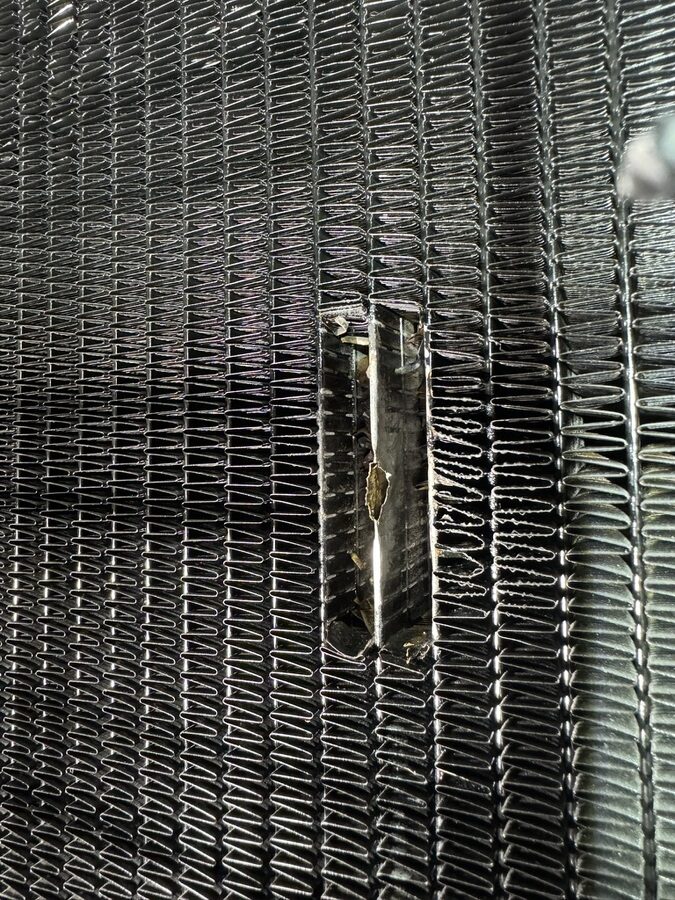
- Tightness before beauty. A repair to the radiator has to pass the pressure test; the permanent replacement follows in the next maintenance window.
Where we use it
Standby power systems are one of our focal points in data center construction in the Rhine-Main region. How generators come into the building as containers or as individual assemblies – from the tandem lift with two mobile cranes to the fully assembled indoor unit – is shown in our report on more than 60 generators moved in within three years. That maintenance does not only begin after years is shown by the radiator repair in Offenbach: a few days before go-live, a leak appeared in the radiator, which two of our fitters brazed on site and signed off with a pressure test – the same day the generator was ready again. In Raunheim, acting as the appointed person for lifting operations, we lowered five diesel tanks of 100 cubic metres each into their pit for the standby power system of a data center. What we offer around backup power is set out on our page energy and standby power.
More technology explained
Technology explained
the machines that get a standby power system up to the second floor in the first place.
Technology explained
this is how the transformers come into the building next to the standby power system.
Guide
the guide on how to plan test runs, maintenance windows and overhauls.
Do you have questions about how this works on your site?
Do you have questions about how the installation or maintenance of a standby power system will run on your site – from the installation route to the maintenance window? We are the mechanical partner alongside the manufacturer and the qualified electrician. The quickest way is a callback appointment – briefly describe the system, the building and the date.
100% free and without obligation

About the author
Tobias Schott
Managing director of Omega Mounting GmbH, Rodgau · more than 20 years of hands-on experience in installation and maintenance
A trained mechatronics technician and at home in maintenance, servicing and industrial installation since 2004 – first at his father's side, since 2012 with Omega Mounting: from the overhead conveyor in Frankfurt to the crane system in a new-build hall. As appointed person for lifting operations he plans and leads lifting operations in data centers and on industrial sites in the Rhine-Main region, is an instructor and examiner for cranes, MEWPs and telehandlers as well as a safety officer. On jobs abroad he is known as the "German Troubleshooter" – the one you call when things get stuck on site. He learnt what quality means not from a manual but from his father: Made in Germany as a standard for his own work, not as a label. That is why it comes first at Omega Mounting – before speed and before price. The Technology explained articles explain the machines and the technology his team works with every day: what counts on our sites is in there – what only appears in the brochure is not.
 English
 German