
- Guide – Health & Safety
Lone working on construction sites: why we never send just one fitter
By Tobias Schott · Reading time approx. 21 minutes · As of: November 2026

On our sites, nobody works alone. As soon as there is lifting, welding, installation or work at height, a team comes. At first glance that costs more – at second glance it is the cheapest insurance a job can have.
Lone working on construction sites happens faster than you think. A colleague fetches material from the van, the other contractor is on its lunch break, the hall is loud. Suddenly a fitter is up a ladder or under a load, and nobody can see him. If something happens at that moment, everything depends on how quickly someone notices that something is wrong.
People looking into lone working on construction sites usually want one of two questions answered. May a fitter work alone? And why does the quote list two people when one could do the job? This guide answers both. It explains what lone working is, why we rule it out for installation and repair work, and what that means for how you award the job.
It is written for buyers, project and site managers, planners, maintenance managers and safety specialists – in short, for anyone who awards work to installation contractors and wants to know who is there in an emergency.
Key points at a glance
- Lone working means one person working out of sight and earshot of others. Another company at the far end of the hall does not count as accompaniment.
- Our rule: Anyone who works on site for us never works alone. We only travel alone to appointments without work – site visits, surveys, coordination meetings.
- Four reasons: rescue and first aid, assembly needs two, the four-eyes principle and reliability for you as the client.
- Rescue is a matter of minutes: if you hang in your harness after a fall or get injured, you need help at once – not when someone happens to come past.
- Many installation tasks cannot be done safely alone: guiding loads and signalling, holding and bolting components, fire watch during hot work.
- A lone worker alarm does not replace a colleague. It raises the alarm, but it does not help.
- For your quote this means: a team of two works faster, more safely and without stopping when something unforeseen happens.
What is lone working on construction sites?
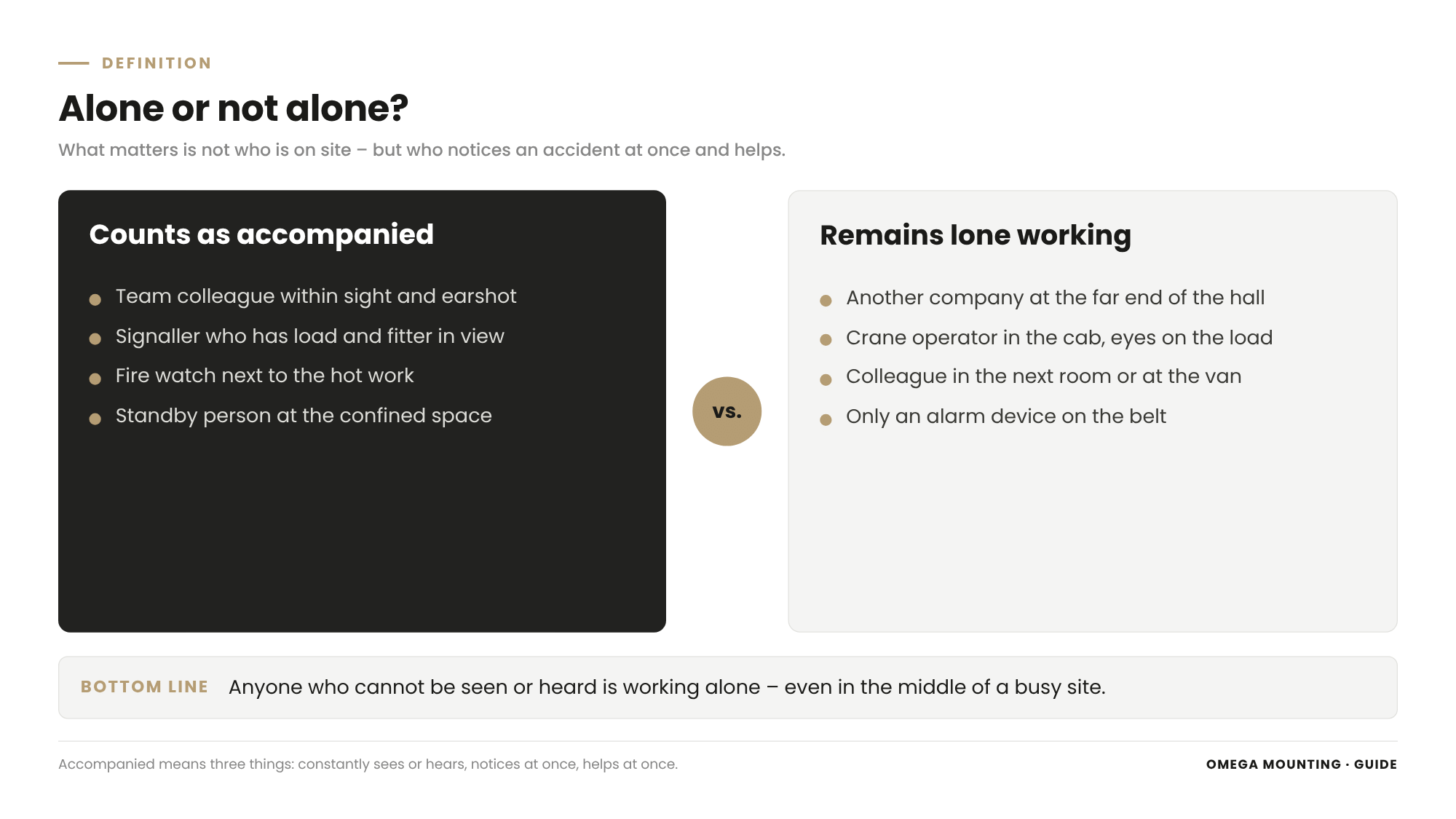
Lone working on construction sites means one person carrying out work without being seen or heard by anyone. What matters is not whether other people are on the premises. What matters is whether someone notices an accident at once and can help at once.
On a construction site this is harder to judge than in an office. Machine noise, hearing protection, partitioned areas and constantly changing trades mean someone can be alone although work is going on all around. The electrician in the next room does not hear the fall. The crane operator sits in his cab watching the load, not the fitter behind the column.
Accompaniment is more than being present
In occupational safety terms, accompaniment meets three conditions. The companion sees or hears the working person continuously. He recognises a hazard or an accident at once. And he can help at once – give first aid, make the emergency call, stop the machine. A worker from another company who happens to be nearby does not reliably meet these conditions. He has his own work, his own programme and does not know what your fitter is doing.
How this differs from lone working in maintenance
Our guide to lone working in maintenance covers night shifts, weekend windows and on-call duty in running operations, including lone worker alarm systems and permanently staffed alarm receiving points. This guide looks at the construction site: installation, move-in and repair, often with several contractors, often with lifting equipment, often at height. And it explains why we draw a clear line there.
Our rule: anyone working is never alone
At Omega Mounting, a fitter never works alone when work is being done. That applies to a large move-in as much as to a short repair visit. It applies by day, at night and at weekends. And it applies even when the client says one person would be plenty.
We did not copy this rule from a rulebook. It comes from experience on many sites. Installation work is physical, often heavy and rarely fully predictable. A bolt is seized, a load swings, a part does not fit. Those are exactly the moments when accidents happen – and exactly the moments when a second person is needed.
The exception: appointments without work
We only travel alone when no work is done. That includes the site visit before the quote, surveying an installation route and coordination with the site management or operator. At such appointments nobody climbs a ladder, lifts a load or isolates anything. If a visit shows that hands-on work is needed after all, we agree a date with a team. There is no “I'll just do it quickly”.
What “team” means for us
For us, a team means at least two fitters who can see and hear each other. For lifting operations with signalling, guiding and slinging, for tight shafts or for work at several points at once, we plan more people. Team size follows the most hazardous task of the job, not the simplest.
One specialist within the team on site
Sometimes we provide a single specialist for a specific role, such as the appointed person for lifting operations. That person does not work alone either. They are part of the team at the lift, with the crane operator, slingers and the client's fitters within sight and earshot. When diesel tanks were lifted into a data center in Raunheim, that is exactly how it worked: we planned and ran the lift as part of the team on site. What matters is not which company the colleague comes from, but that they are watching the same work and can help at once.
Why we never send just one fitter: four reasons
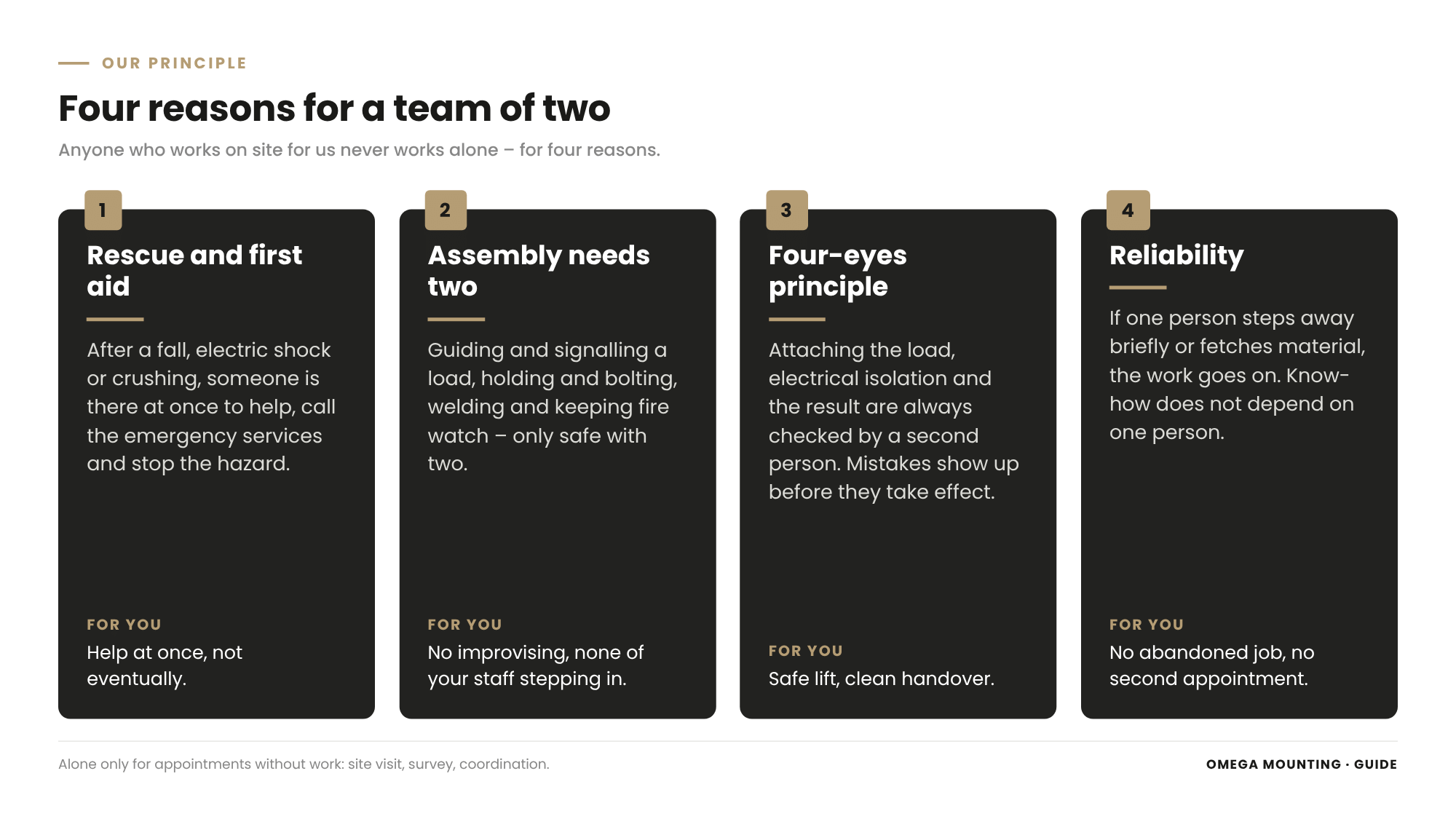
Four reasons stand behind our rule. Each one alone would be enough. Together they make the question “alone or in pairs?” redundant for us.
Rescue and first aid
The first reason is the most important. If a fitter falls, cuts himself, gets an electric shock or is trapped, he needs help at once. The second person gives first aid, makes the emergency call, guides the ambulance crew in and stops the hazard. A colleague standing next to you cuts the time until help arrives from “at some point” to “now”.
Assembly needs two
The second reason is purely practical. Many installation tasks cannot be done safely alone. One guides the load, the other signals to the crane operator. One holds the component in position, the other fits the bolts. One welds, the other keeps fire watch. If you have to do such work alone, you improvise – and improvisation is the most common route to an accident on site.
Four-eyes principle
The third reason is quality and safety at the same time. Two fitters check each other. Is the hook safety latch closed? Is the shackle pin secured? Is the padlock on the right isolator? Is the tightening torque correct? Mistakes one person misses, the other spots. That applies to slinging, to isolation and to the final sign-off.
Reliability for you
The fourth reason concerns you as the client. A team of two does not abandon a job when one person has to go to the van, fetch material or gets injured. Knowledge of your plant does not depend on a single person. And if something unexpected happens, one can keep working while the other talks to you or gets parts.
Rescue: why the first minutes count
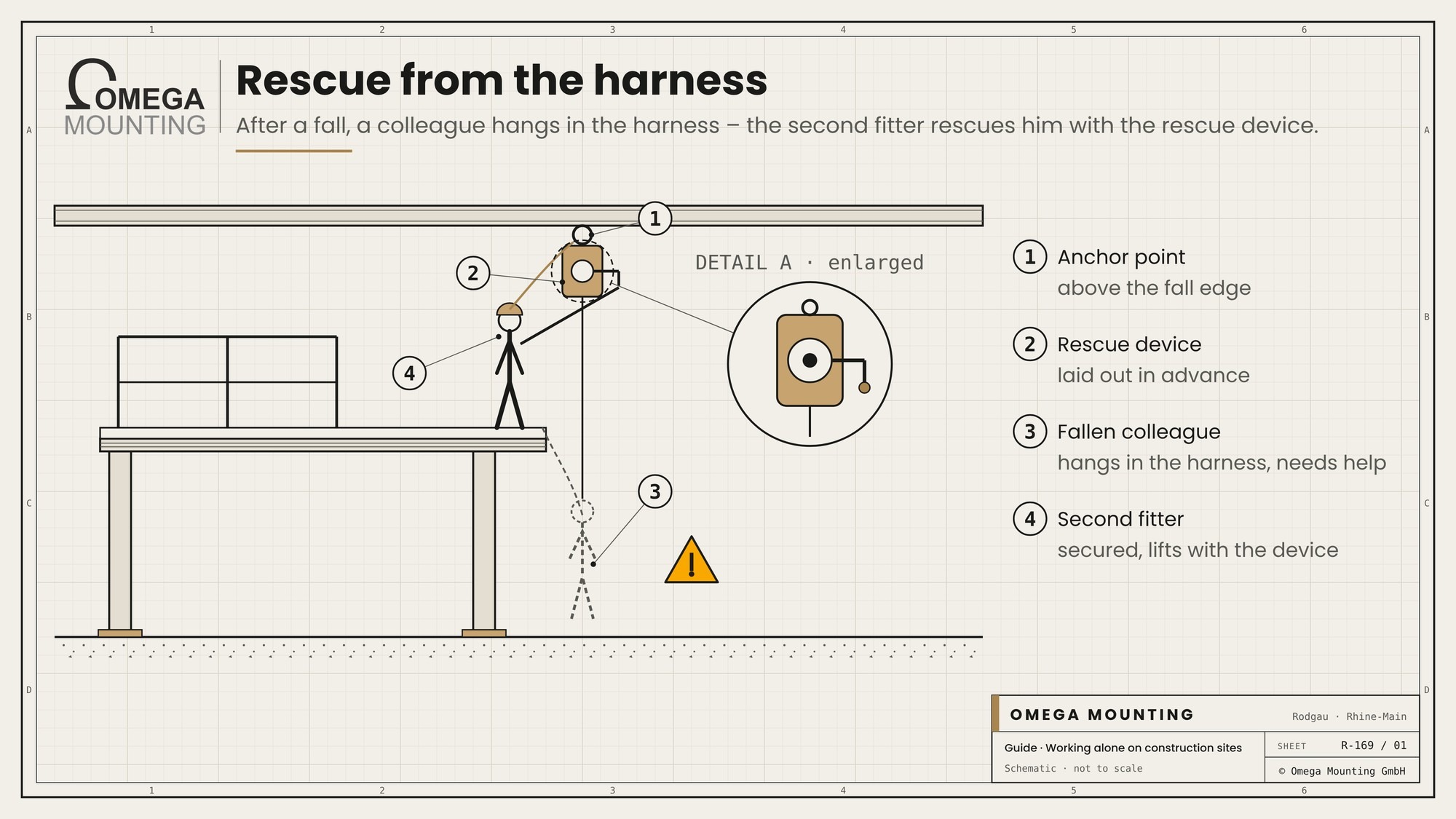
In an emergency, the time to first aid decides. After a fall into a full-body harness, a heavily bleeding wound or a cardiac arrest, every minute counts. On a large site, the ambulance often takes a long time to reach the right spot. Someone who is already there has to bridge that time.
Suspended in a harness
Fall protection PPE arrests a fall. Afterwards the fitter hangs in the harness and usually cannot free himself. Prolonged suspension puts heavy strain on the circulation and can become life-threatening. That is why every job with a full-body harness needs a rescue plan – with a rescue device and a second person who can operate it. More on this in our guide on personal fall protection for installation work.
Electric shock, crushing, cuts
Even without a fall there are accidents after which a fitter cannot help himself. An electric shock paralyses. A trapped hand cannot be freed alone. A deep cut weakens quickly. In all these cases the second person makes the difference between an accident and a disaster.
First aiders in the team
Every one of our teams includes at least one trained first aider. First aid kit is within reach, for work at height directly at the workplace. Before work starts, everyone in the team should know where the nearest defibrillator is, how to make an emergency call on your premises and who meets the ambulance at the gate. These questions belong in the induction, not in the emergency.
Emergency call, guiding in, stopping the plant
Besides first aid, the second person has three tasks. They make the emergency call giving the exact location. They make sure the ambulance is met at the gate and inform the client's contact person. And they stop the hazard – set the load down, switch the machine off, cordon off the area. If you have an accident alone, nobody can do any of this.
Installation tasks that cannot be done alone
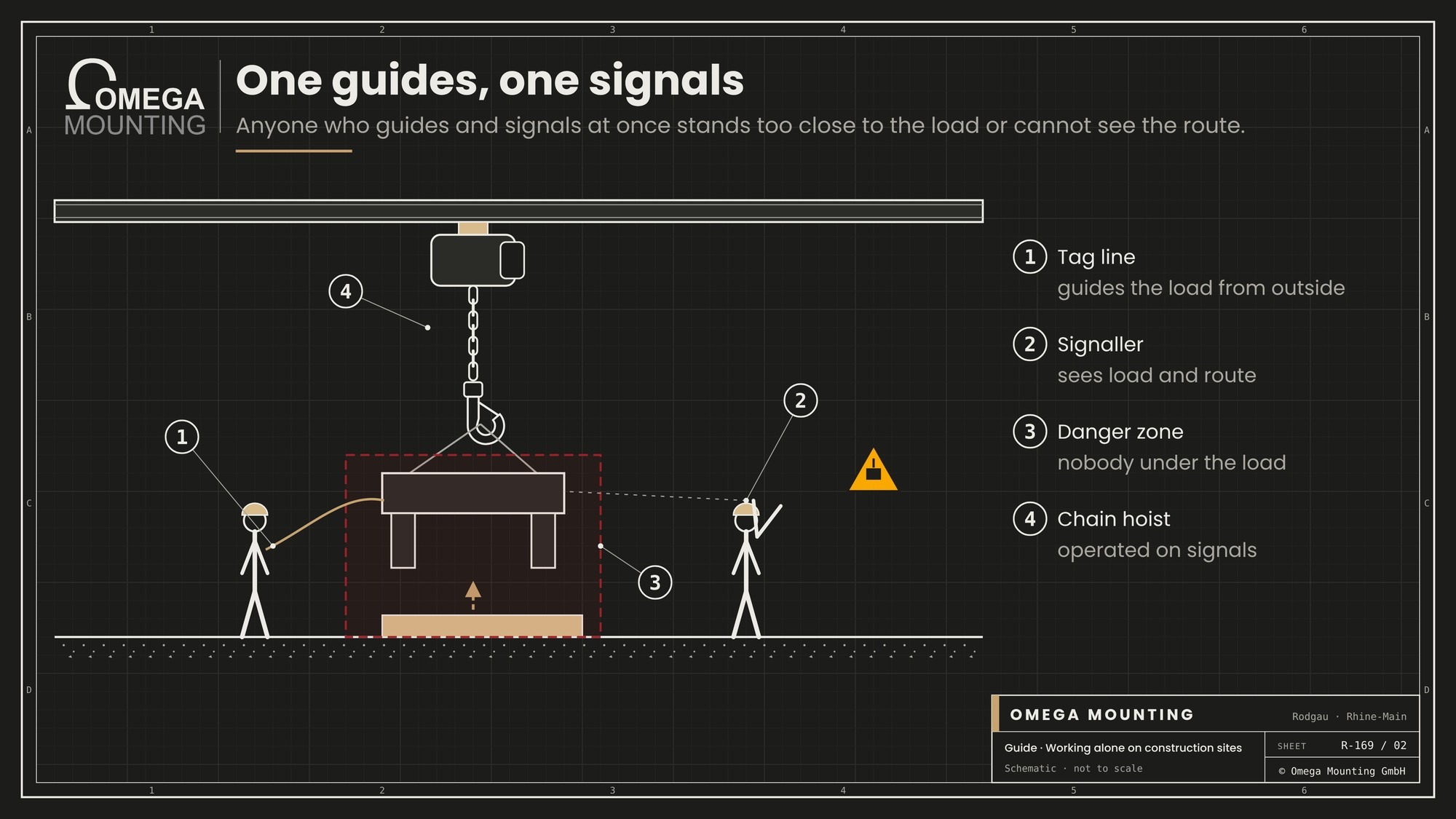
Some tasks should never even raise the question of lone working. By their nature they need at least two people. Assigning them to one person anyway asks for something impossible – or something dangerous.
Guiding loads and signalling
When lifting with a crane, chain hoist or lifting device, one person guides the load with a tag line or by hand while another signals. The signaller stands where he can see the load, the route and the crane operator. Anyone trying to guide and signal at the same time inevitably stands too close to the load or cannot see the route. Responsibilities and lines of instruction during the lift are covered in our guide on appointed person for lifting operations.
Holding, aligning, bolting
Holding a component in position and bolting it at the same time only works for small parts. Brackets, beams, safety fences or machine parts need one person to hold and one to fix. The alternative would be temporary props that often do not hold. Or a fitter on a ladder holding with one hand and working with the other.
Ladders and mobile elevating work platforms
Even seemingly simple work at height needs a second person. They secure the foot of the ladder, pass up tools and keep an eye on traffic below. On a mobile elevating work platform, they operate the emergency lowering device on the chassis if needed. Without a second person, a fitter is trapped in the platform if the upper controls fail.
Confined spaces and vessels
For work in vessels, shafts and confined spaces, the relevant rules already require a standby person outside. They keep contact, observe and start the rescue. This work is therefore never lone working – for anyone.
Hot work: fire watch is a task in its own right
Welding, cutting, grinding and soldering on site produce sparks and hot parts. A fire can start long after the work has ended, in gaps, insulation or cable ducts. That is why hot work needs a fire watch. During the work it watches the surroundings with the extinguisher to hand, and afterwards it checks the spot again thoroughly.
The welder does not see the fire
The welder looks through the filter glass at the seam. What happens behind him, below him or on the other side of the wall, he does not see. The fire watch is therefore a separate person, not a side task for the welder. How repair welding in plants works is described in our guide on repair welding on industrial plant.
Permit and follow-up check
Many operators require a hot work permit. It sets out who welds, who keeps fire watch and when the follow-up check takes place. A team of two meets this without detours. A fitter on his own would either have to wait for a fire watch from the client or do without – both are bad.
Four eyes see more: isolation, slinging, sign-off
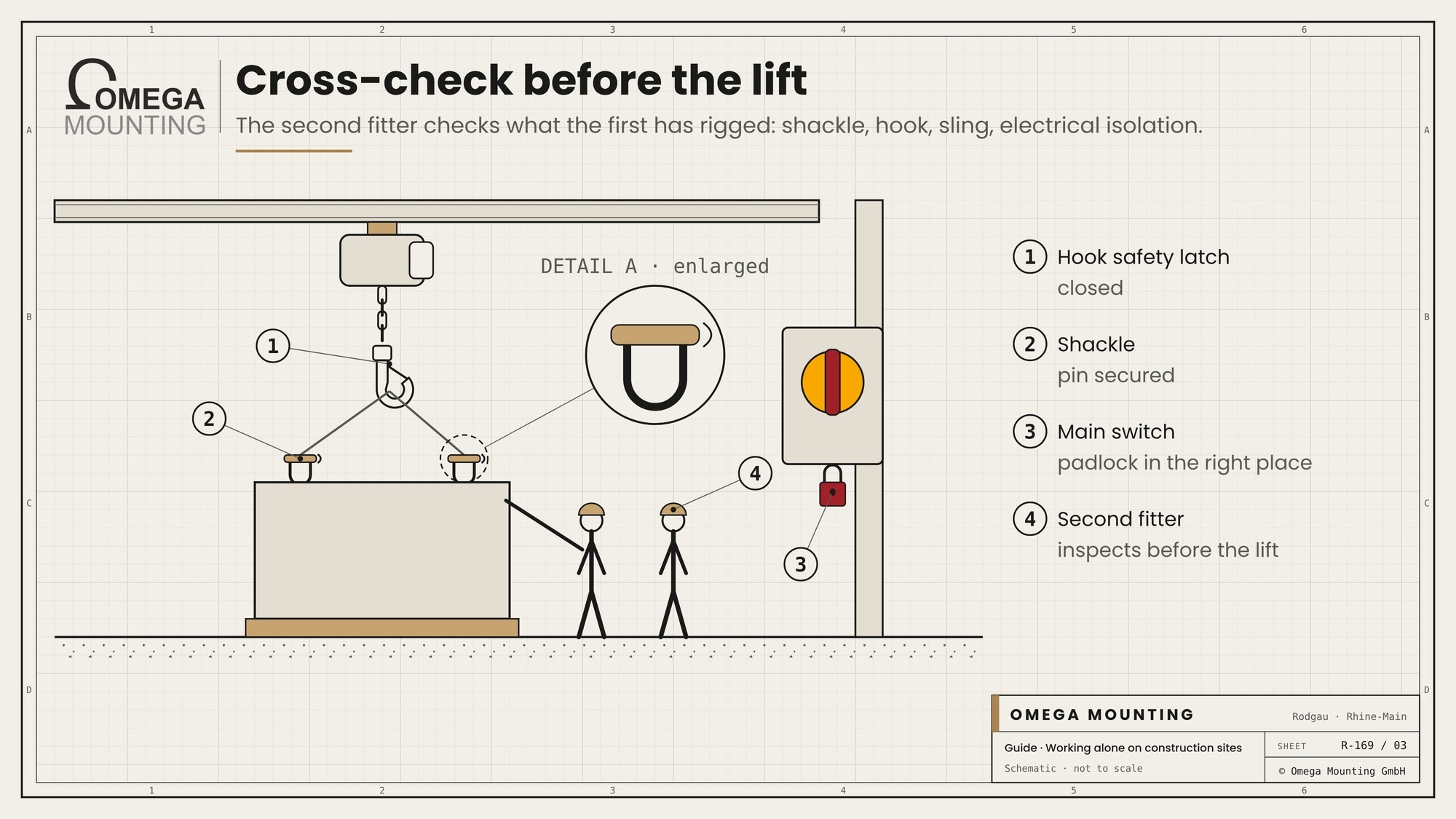
The four-eyes principle is not mistrust of a colleague. It is the simplest way to find mistakes before they take effect. On site there are three points where it matters most.
Isolating and securing
Before anyone works on a plant, it is isolated according to your procedure and secured against switching back on – by our qualified electrician or yours. Then two people check together: Is the right plant off? Is every padlock on the right isolation point? Are all energy sources disconnected, including compressed air and hydraulics? How lockout works in detail is explained in our guide on Lockout tagout in maintenance.
Slinging before the lift
Before every lift, the second fitter looks at what the first has slung. Are the lifting accessories undamaged and suitable for the load? Is the shackle pin secured, the hook safety latch closed? Is the load hanging level? This cross-check takes hardly a minute and prevents most slinging errors.
Sign-off at the end
Finally, two pairs of eyes check the result. Are all bolts tightened, all guards refitted, all tools removed? Only then is the plant handed back to you. A spanner forgotten in a machine catches the second fitter's eye, often not the first's.
What does the law say – and what does it mean for you?
The German Occupational Safety Act (ArbSchG) obliges every employer to assess the hazards to its employees and set suitable protective measures. Lone working is a separate item in that assessment. The accident prevention regulation “Principles of Prevention” of the statutory accident insurance (DGUV Regulation 1) requires additional technical or organisational personal protection measures for hazardous work carried out by one person alone. Which work counts as hazardous follows from the risk assessment.
Lone worker alarm: an alarm, but no help
A common technical measure is the lone worker alarm system. It triggers an alarm when the wearer presses a button, stops moving or lies still for a long time. The DGUV rule on such systems describes when they make sense and what the alarm receiving point must provide. Such a device is better than nothing. But it gives no first aid, holds no ladder and lifts nobody out of a harness. For installation work with lifting equipment, height or hot work, it is therefore no substitute for a colleague.
Who assesses what
The installation contractor is responsible for the risk assessment for its fitters. Coordinating hazards between several companies on one site is the job of the client, the operator and, where appointed, a coordinator. This guide gives a practical overview, not legal advice. For your specific site, your occupational safety specialist and your employers' liability insurance association (Berufsgenossenschaft) will advise you.
Who handles what when installation contractors work on your site?
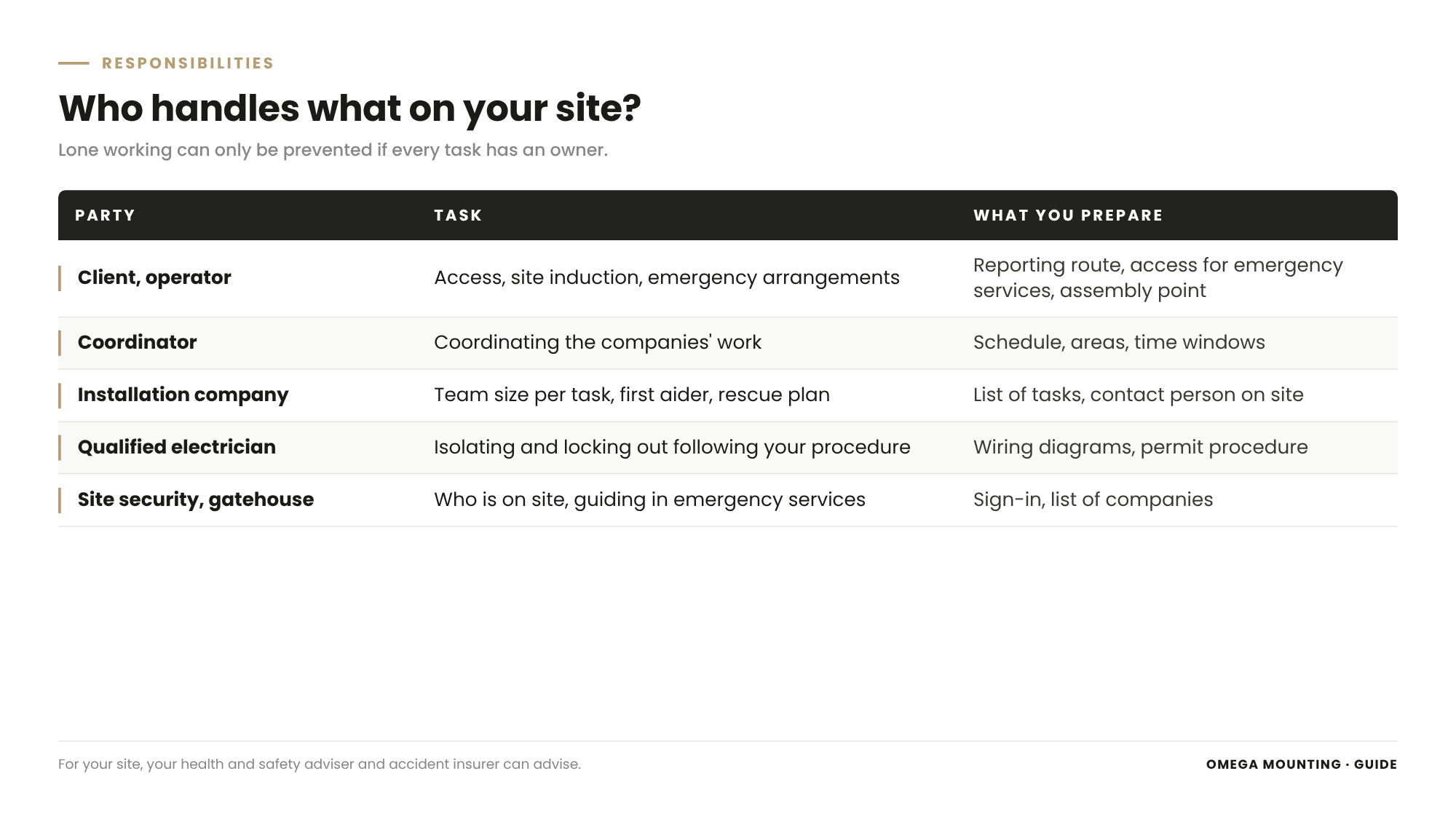
Lone working can only be prevented if everyone involved knows who has which task. On a site with several contractors, that cannot be taken for granted.
The client
As the client or operator, you decide who works where and when, and you provide access, induction and emergency arrangements on your premises. That includes an emergency reporting route, access for the ambulance and an assembly point. How to coordinate external contractors on your premises is described in our guide on contractor management.
The installation company
The installation contractor plans the team size by task, briefs its people and provides first aiders, a rescue plan and first aid kit. In every one of our teams there is a first aider, and a job never quietly continues with one person when a team member drops out.
Qualified electrician, site security, coordinator
Isolation and re-energising are done by the qualified electrician according to your procedure. Site security or the gatehouse knows who is on the premises and meets the ambulance in an emergency. On larger sites, a coordinator aligns the contractors' work so that nobody ends up alone in an area unnoticed.
Lone working on construction sites: what it means for your quote
In the quote, you see the rule as two names instead of one. At first glance that looks more expensive. In practice, the numbers usually work out differently.
Two are faster than one
Many tasks are not only safer in pairs but much faster. Holding and bolting, guiding and signalling, welding and fire watch – what one person would have to do one after the other, two do at the same time. Add shorter walking distances, because one fetches material while the other keeps working.
No abandoned job, no second visit
A fitter on his own has to stop when he needs help. Then comes a second visit, a second shutdown window, a second journey. A team works straight through. For you that means less downtime, less coordination and a reliable finish.
A quote with one fitter is a warning sign
If you compare quotes and one offers a single fitter for work with lifting equipment, at height or hot work, ask. Who gives first aid? Who keeps fire watch? Who guides the load? The contractor has often quietly assumed that your own people will help. Then you carry the risk – and the working time of your staff.
What you can specify in the tender
You do not have to rely on the contractor's habits. State in the scope of works or the order that work with lifting equipment, at height, hot work and work on isolated plant is only carried out by a team. Ask the contractor to state the team size per task and to enclose a rescue plan for work at height. Then you compare quotes on the same basis – and nobody wins a contract by cutting corners on safety.
Typical mistakes with lone working on construction sites
Most mistakes come not from carelessness but from habit and time pressure. These are the ones we meet most often:
- “My colleague is nearby.” Being nearby is not accompaniment if he sees nothing and hears nothing.
- “It only takes five minutes.” Accidents do not ask how long a job takes.
- “Your people can help.” The client's staff are neither planned nor briefed for this.
- “The lone worker alarm is enough.” It raises the alarm, but it does not help.
- “The second one is just fetching material.” That is exactly when the first one is alone on the ladder.
- No rescue plan for work at height. A harness without a rescue plan saves nobody.
- No arrangement for absence. If someone falls ill, work simply carries on alone without anyone deciding it.
The mistake behind the mistakes
Behind all these points lies the same cause: lone working is not planned, it just happens. Nobody consciously decides to leave a fitter alone. It arises from small gaps in the process. That is why only a clear rule helps – one that is fixed before the job and not negotiated in the moment.
Lone working on construction sites in the Rhine-Main region: how we do it
From Rodgau, our fitters quickly reach Frankfurt, Offenbach, Darmstadt, Hanau, Aschaffenburg and Wiesbaden. That makes it easy to send a team even for short jobs. For us, a second fitter is not a special case but the standard.
Before every job, we clarify the tasks with you and set the team size from them. For lifting operations, work at height, hot work and work on isolated plant, we plan so that every fitter always has a colleague within sight and earshot. For work at height, we agree the rescue plan with rescue device with you in advance. We also agree the emergency reporting route, ambulance access and assembly point with you in advance.
If a colleague drops out in the morning, we decide with you whether a replacement comes or the date is moved. Nobody carries on alone. For you, that sometimes means a phone call in the morning. In return, it never means the call nobody wants to get. An overview of our services is on our page on Industrial installation.
Project examples
Four jobs from our project diary show what teamwork on site looks like. They are not special cases – this is how we always work.
Cable drum in the port: two guide, one works on top
At the port of Aschaffenburg, we protected a heavy cable drum against sunlight for transport. The drum hung on the chain sling of a lifting device belonging to the port operator. Two fitters guided and tensioned the protective sheet, a third worked on top of the drum and aligned the layers. A colleague signalled, in eye contact with the driver, announcing every movement. Doing this work on a suspended load alone would have been unthinkable.
Overhead travelling crane near Aschaffenburg: one day, one team of two
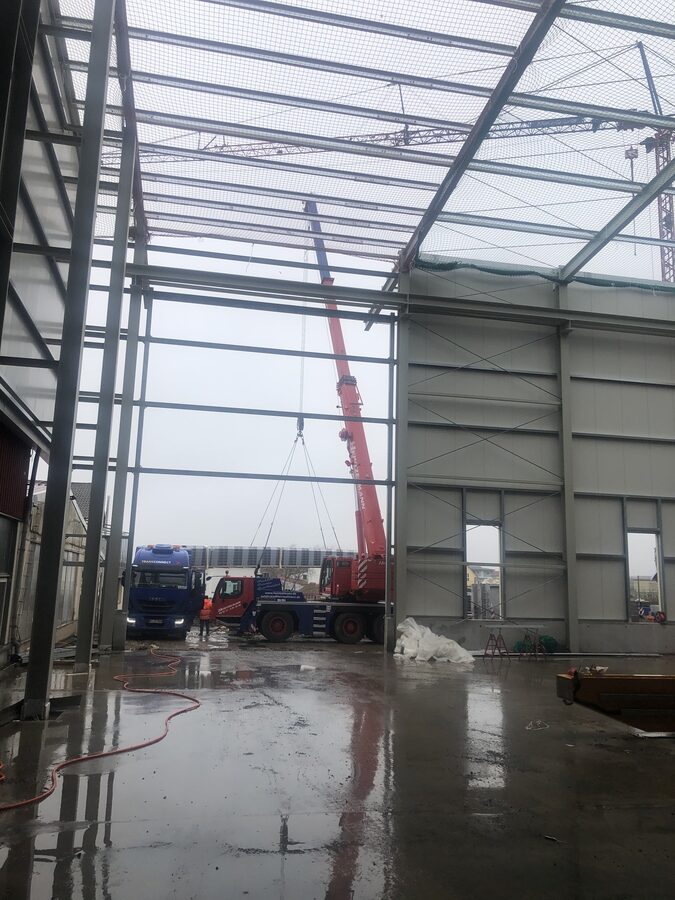
In a new hall near Aschaffenburg, we installed a double-girder overhead travelling crane. The crane came in by mobile crane through the still-open wall bays and was set down on the runway. Then followed conductor rails, limit switches, controls and main isolator. Two fitters did this in one working day, whatever the weather, through to handover at the main isolator to the plant electrician.
Loading dock: welding with fire watch
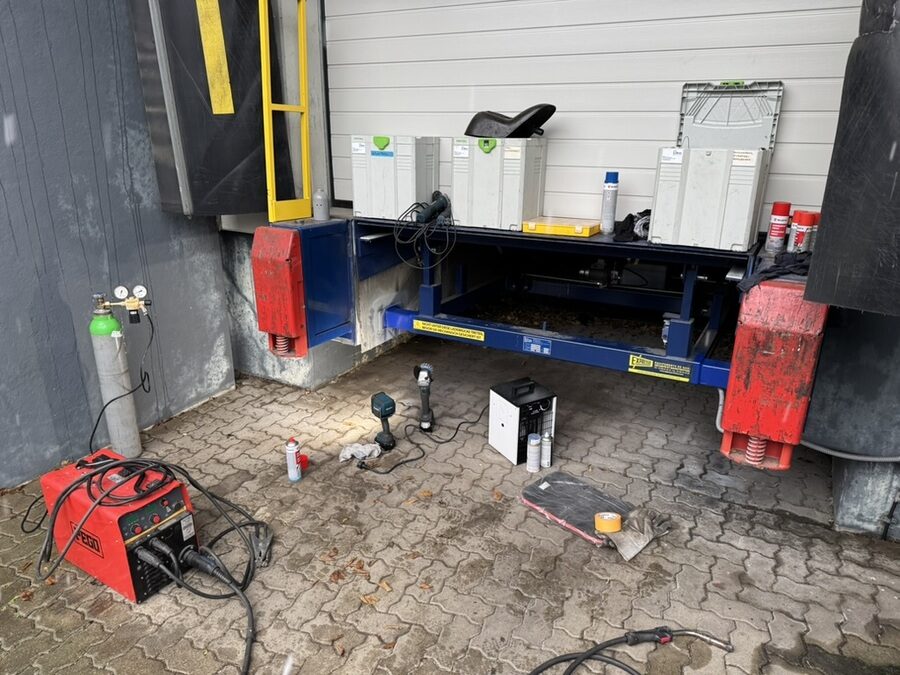
On two loading docks, welds on the brackets had cracked and one door was out of use. Two fitters ground out the old welds, rewelded and painted against corrosion – in snowfall, with an industrial heater brought in specially. Welding at the dock is hot work: in a pair, there is always someone who is not looking through the filter glass.
Generator in a data center in Offenbach: brazing in a narrow gap
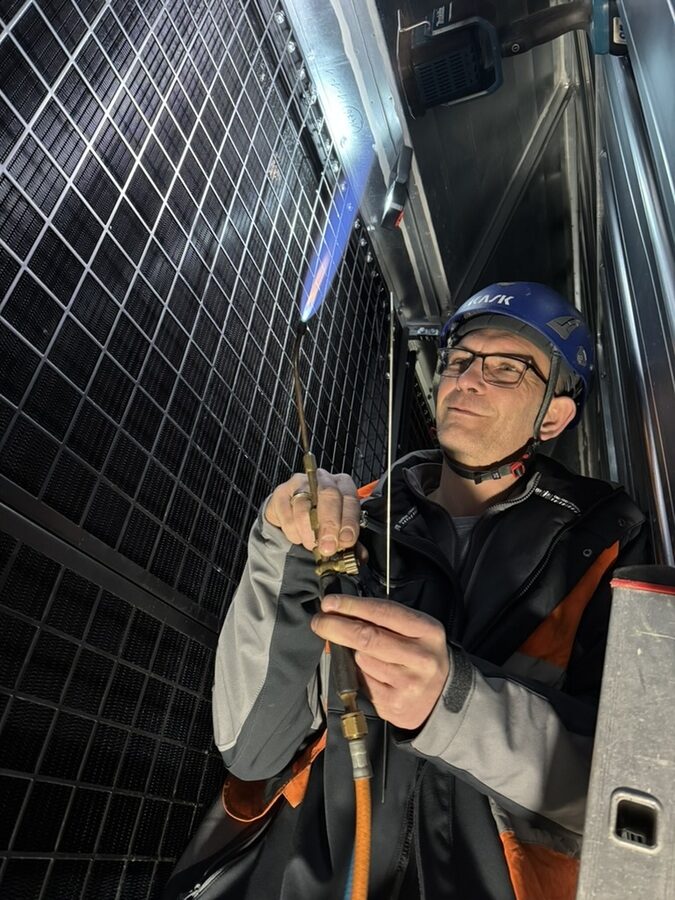
On the radiator of a standby generator in a data center in Offenbach, we brazed a leak. Between radiator and ventilation grille there was hardly any room. The hot work was notified and secured, and both fitters worked in full protective equipment. The photos show it clearly: teamwork in a narrow gap, with one working and the other securing and passing parts.
Planning a job and want to know how we put the team together?
Send us a short note on the work ahead – we will tell you how many fitters we plan and why. Get in touch now.
What this means for your role
Buyers: Compare quotes not only by hourly rate but by team size per task. If a quote has a single fitter, ask who gives first aid and who guides the load. A cheap single fitter can become expensive if your own people have to step in.
Planners: Plan work areas so that teams can see each other. Allow for escape routes, ambulance access and anchor points for rescue devices as early as the detailed design.
Project and site managers: Ask for the team size before the job and have the emergency arrangements shown to you. During the job, make sure nobody is left alone unnoticed in a partitioned area – especially during breaks and changes of trade.
Maintenance managers: Specify in framework agreements that work with lifting equipment, at height and hot work is only carried out by a team. Clarify what happens if only one person is available during a breakdown.
Safety specialists and HSE: Check contractors' risk assessments for the lone working point. Require a rescue plan for work at height and a rule for when a team member drops out.
Team-of-two job check: template on request
For your next contract award, we have put together the team-of-two job check. On one page it asks which tasks are due, how large the team should be per task, who the first aider is, what the emergency reporting route looks like and what happens if a team member drops out. You fill it in before awarding the job and attach it to the quote. Request the template via our contact form – keyword “Team-of-two job check”.
Why Omega Mounting?
With over twenty years of experience in installation, move-in and maintenance, we know how quickly a small job turns into a dangerous situation. That is why we apply one rule without exception: anyone working is never alone. Our fitters work in teams, keep fire watch during welding and check each other. For you, that means a reliable job without stops, without improvisation and without your own people having to step in. Talk to us about your next job – get in touch.
Conclusion
Lone working on construction sites is rarely a conscious decision. It arises from gaps in the process, from time pressure and from the phrase “one person can manage that”. The consequences are borne by the fitter who has an accident alone and by the client on whose premises it happens.
So our rule is simple: on our sites, nobody works alone. Rescue and first aid, assembly in pairs, the four-eyes principle and reliability for you all speak for it. We only travel alone to appointments without work. If you are planning a job and want a team that keeps an eye on each other, get in touch with us.
Planning a move-in, installation or maintenance in the Rhine-Main region?
Tell us briefly what you need – we'll come back with an honest assessment.
Free, no-obligation callback
You may also be interested in these guides

About the author
Tobias Schott
Managing director of Omega Mounting GmbH, Rodgau · more than 20 years of hands-on experience in installation and maintenance
A trained mechatronics technician, working in maintenance, servicing and industrial installation since 2004 – first alongside his father, and with Omega Mounting since 2012: from overhead conveyors in Frankfurt to the crane system in a new-build hall. He plans and leads lifting operations as an appointed person (AP) in data centers and on industrial sites in the Rhine-Main region, trains and examines operators of cranes, mobile elevating work platforms and telehandlers, and is a qualified occupational safety specialist. On jobs abroad he is known as the “German Troubleshooter” – the person you call when a site gets stuck. He learned what quality means from his father, not from a manual: Made in Germany as a standard for his own work, not a label. That is why quality comes first at Omega Mounting – ahead of speed and price. He writes these guides from that practice: what works on our sites is in them – what exists only on paper is not.
Frequently asked questions
Lone working is not banned in principle. For hazardous work carried out by one person alone, however, the statutory accident insurance rules require additional protective measures. Some work, such as in vessels and confined spaces, must never be done alone. On our sites nobody works alone – regardless of what would be permitted in an individual case.
When nobody sees or hears them who would notice an accident at once and could help at once. Other companies in the same hall do not automatically count as accompaniment, because they are busy with their own work.
Because rescue, first aid and the emergency call only work if someone is there. Because many tasks are safer and faster in pairs. Because two fitters check each other. And because a team does not have to abandon a job when something unexpected happens.
We only travel alone when no work is done: the site visit before the quote, surveys and coordination meetings. If we provide a single specialist, for example to supervise a lift, they work as part of the team on site and never alone.
A lone worker alarm reports an accident, but it does not help. It gives no first aid, holds no ladder and rescues nobody from a harness. For installation work with lifting equipment, height or hot work, it is therefore no substitute for a colleague.
Then we agree with you whether a replacement comes or the date is moved. Nobody carries on alone.
At first glance yes, in practice often not. Two fitters do many steps at the same time, do not have to stop and need no second visit. And your own staff do not have to step in.
Yes. From Rodgau we quickly reach the whole Rhine-Main region. Even short jobs in Frankfurt, Offenbach, Darmstadt, Hanau or Aschaffenburg are always done with a team.
Tell us briefly which work is due, where and when. We will come back with an assessment of how many fitters we plan and why. Go to the contact form.
 English
 German