
- Technology explained – Term
Mechanical completion: what must be finished before commissioning
By Tobias Schott · 6-minute read · Updated November 2026
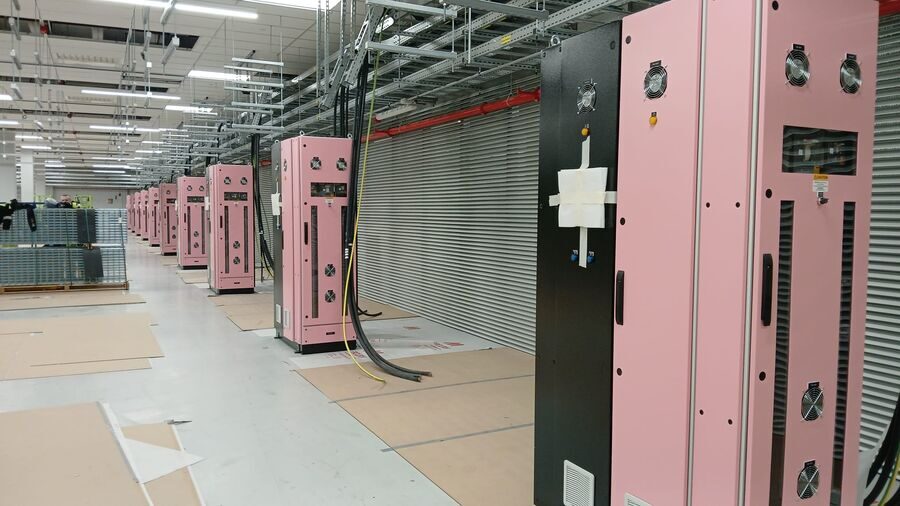
Mechanical completion means an installation is fully installed, aligned, connected and checked so that commissioning can begin – it is the handover point from the installation team to the commissioning team.
In large projects the term appears in every schedule, often as “Mechanical Completion” or MC for short. It sounds self-evident, but it is not. When is an installation mechanically complete? Who confirms it? And what happens to the small items still missing? Anyone who does not settle this beforehand ends up arguing about deadlines that were actually met.
Here we explain where mechanical completion sits in a project, what it includes, how walkdowns and punch items work and why it is not acceptance.
What is mechanical completion?
Mechanical completion is the documented state of an installation or part of an installation in which all mechanical installation work has been completed to the drawings and checked, and the installation can be released for pre-commissioning.
It is usually confirmed for individual systems, not for the whole project at once. A pump group can be mechanically complete while installation is still going on in the hall next door. That way the commissioning team can start early and the project gains time.
For this to work, the installation is divided into systems beforehand: cooling water, compressed air, conveyors, emergency power. Each system has its own boundary on the drawings, often marked in colour. Mechanical completion then applies to exactly what lies within that boundary. Without clear boundaries nobody knows in the end whether a valve at the interface belongs to one system or the other.
The term comes from large-scale plant construction, such as power stations, refineries and chemicals. It is now also common in data centers, logistics and mechanical engineering – wherever many trades build an installation together. For an installation company, mechanical completion is the moment its work is measured. Everything properly prepared and documented by then makes this step short. Everything missing comes back as a punch item.
Key facts
- Term: mechanical completion, in German “mechanische Fertigstellung”.
- Scope: a system, part of an installation or a whole installation.
- Evidence: signed checklist or MC certificate.
- Who is involved: Installation team, site management, commissioning team, often the operator.
- Tools: Walkdown with punch list.
- Afterwards: Pre-commissioning, commissioning, handover.
- Distinction: confirms the installation status, not the function and not the contract.
Where mechanical completion sits in a project
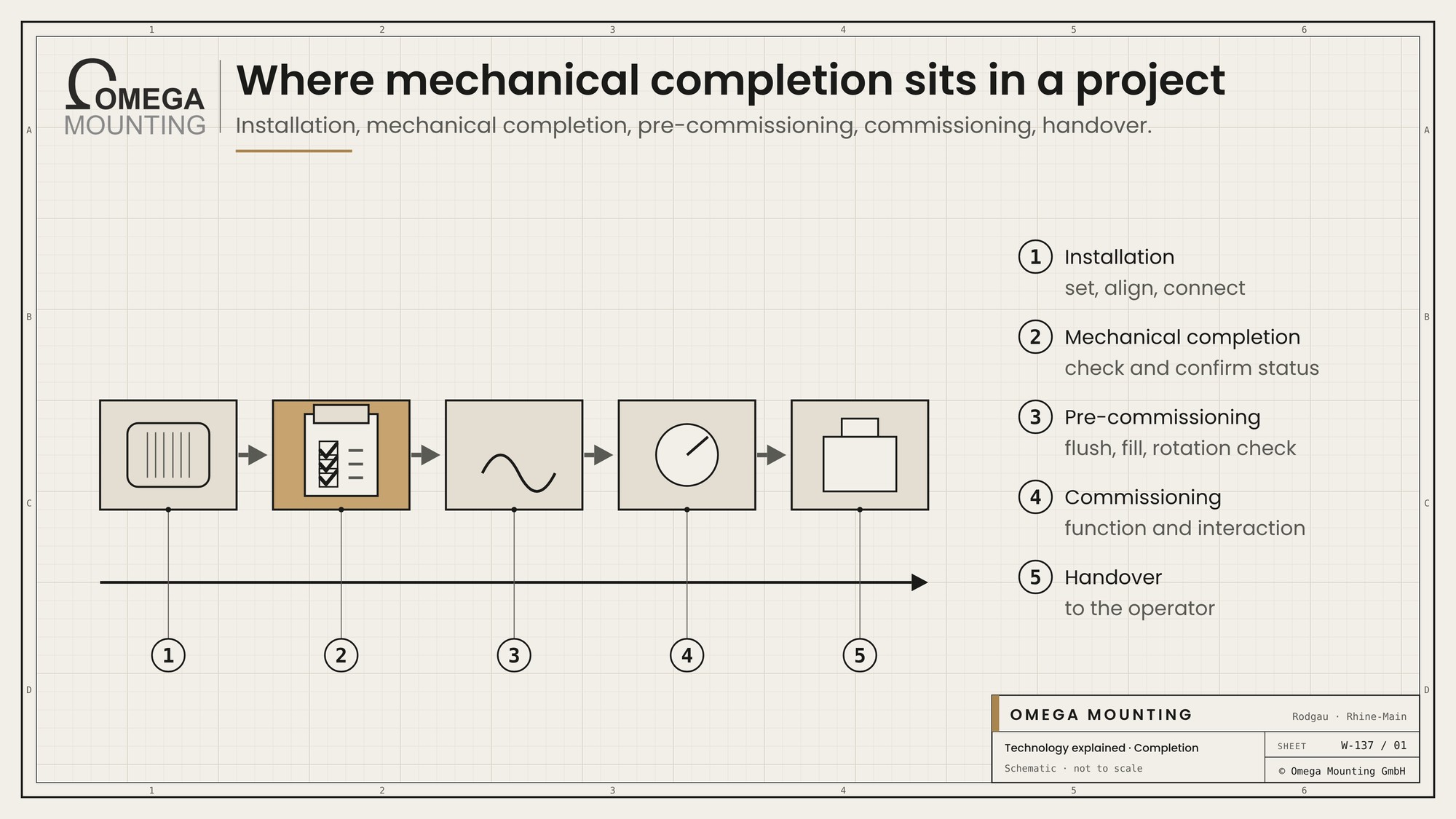
Mechanical completion is the step between installation and commissioning.
- Installation: Set, align, connect.
- Mechanical completion: Check and confirm the installation status.
- Pre-commissioning: Flush, fill, check direction of rotation, test protective devices, without product.
- Commissioning: Check the function of the systems and how they work together.
- Handover: The installation passes to the operator.
Each stage has its own checks and its own responsible people. Skip one and it catches up with the project later, usually in the middle of commissioning. Mechanical completion is the first point at which the installation team formally hands over its work.
What mechanical completion includes
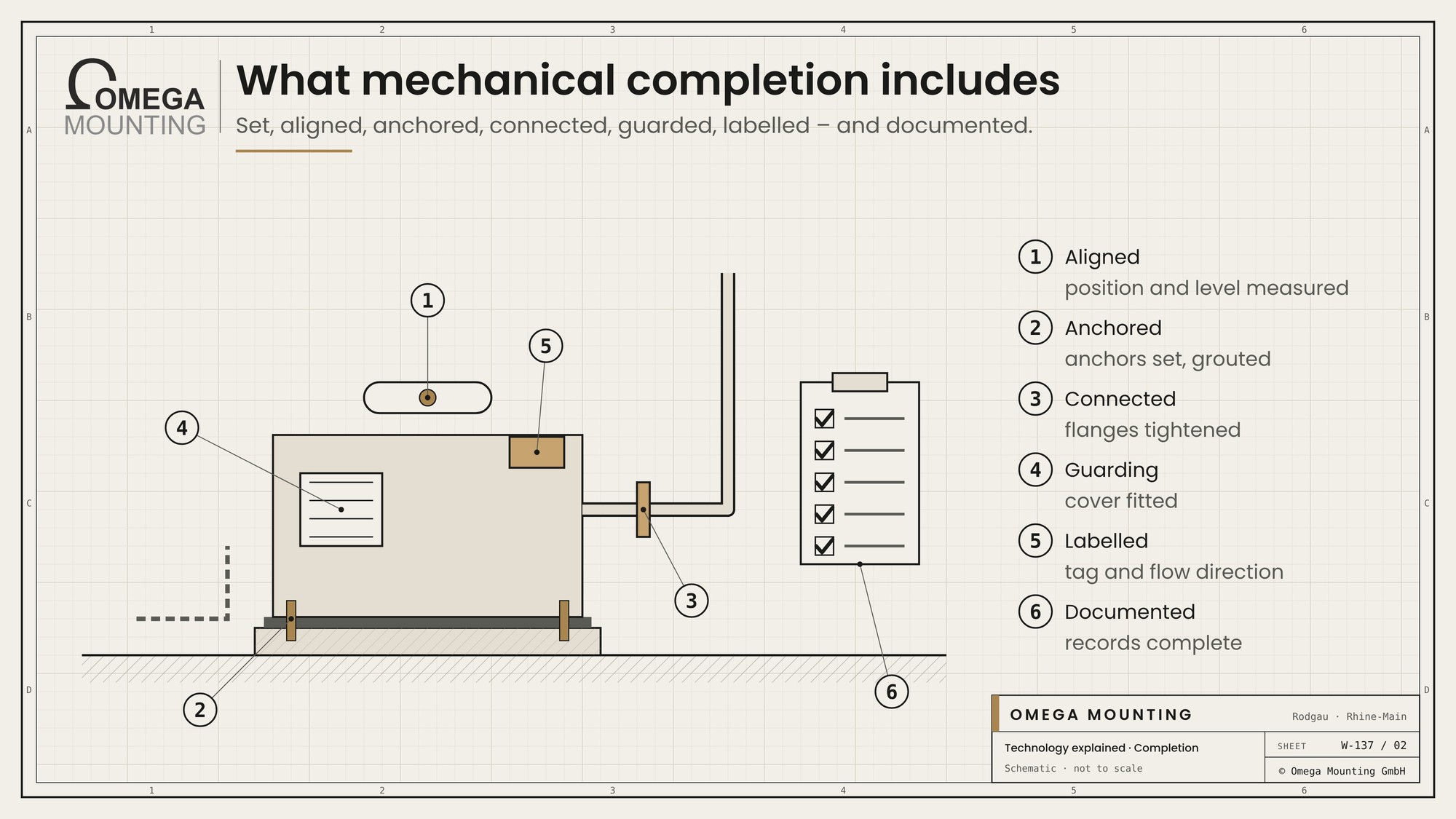
Exactly what it includes is set out in the project checklist. These points are typical:
- Set and aligned: Position and level as per drawings, alignment measured.
- Anchored and grouted: Anchors set, grout cured.
- Bolted: Connections tightened and marked.
- Piped: Lines connected, pressure tests passed.
- Transport locks removed: Locks, wedges and brackets off.
- Guarding fitted: Covers, guardrails, guard grilles.
- Labelled: Equipment tags, flow direction, rating plates visible.
- Documented: Measurement records, test certificates, installation confirmations.
Electrical work such as connection and testing belongs to a separate completion by the electrical trade. The two are often confirmed together, but by different specialists.
Walkdown and punch items
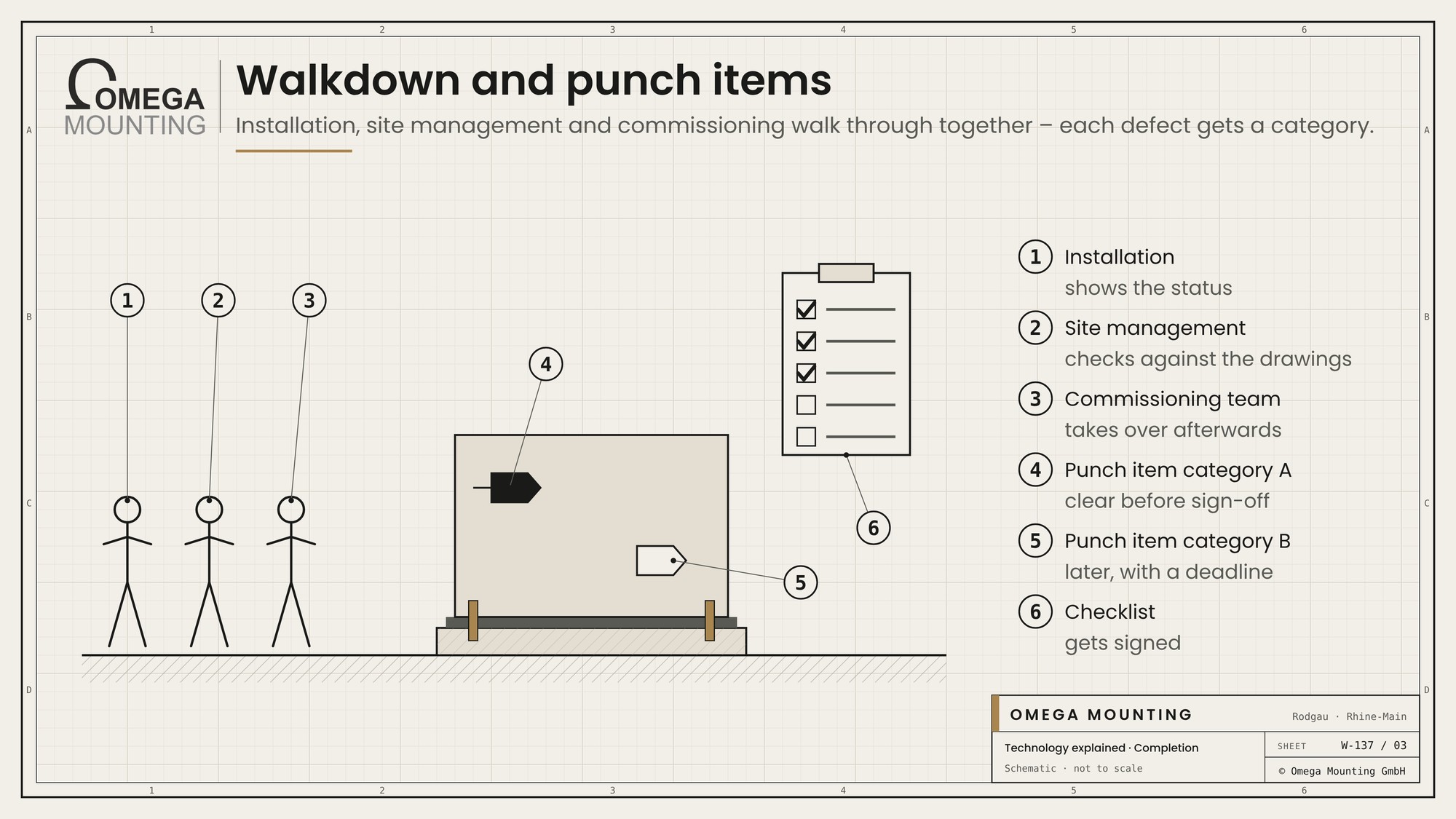
Mechanical completion is established during a joint walkdown, in German “Begehung”. The installation team, site management and commissioning team walk through the installation and compare its status with the drawings and checklist.
Anything missing or wrong goes on the punch list, divided into categories:
| Class | Meaning | Example | Consequence |
|---|---|---|---|
| A. | Prevents commissioning or endangers people. | Missing anchoring, open guardrail, line not tested. | Must be cleared before sign-off. |
| B. | Does not hinder commissioning. | Missing labels, paint damage, cover plate. | May be cleared later, with a deadline. |
The categorisation is the real point of dispute. What the installation team sees as a B item may be an A item for commissioning. That is why it is decided jointly and recorded in writing.
Once all A items are cleared, the parties sign the checklist or an MC certificate. From that moment the system belongs to the commissioning team. Anyone who still wants to work on it afterwards needs their approval, often via a permit to work. This protects both sides: the commissioning team knows nobody will change anything unannounced, and the installation team has documented its status.
Mechanical completion is not acceptance
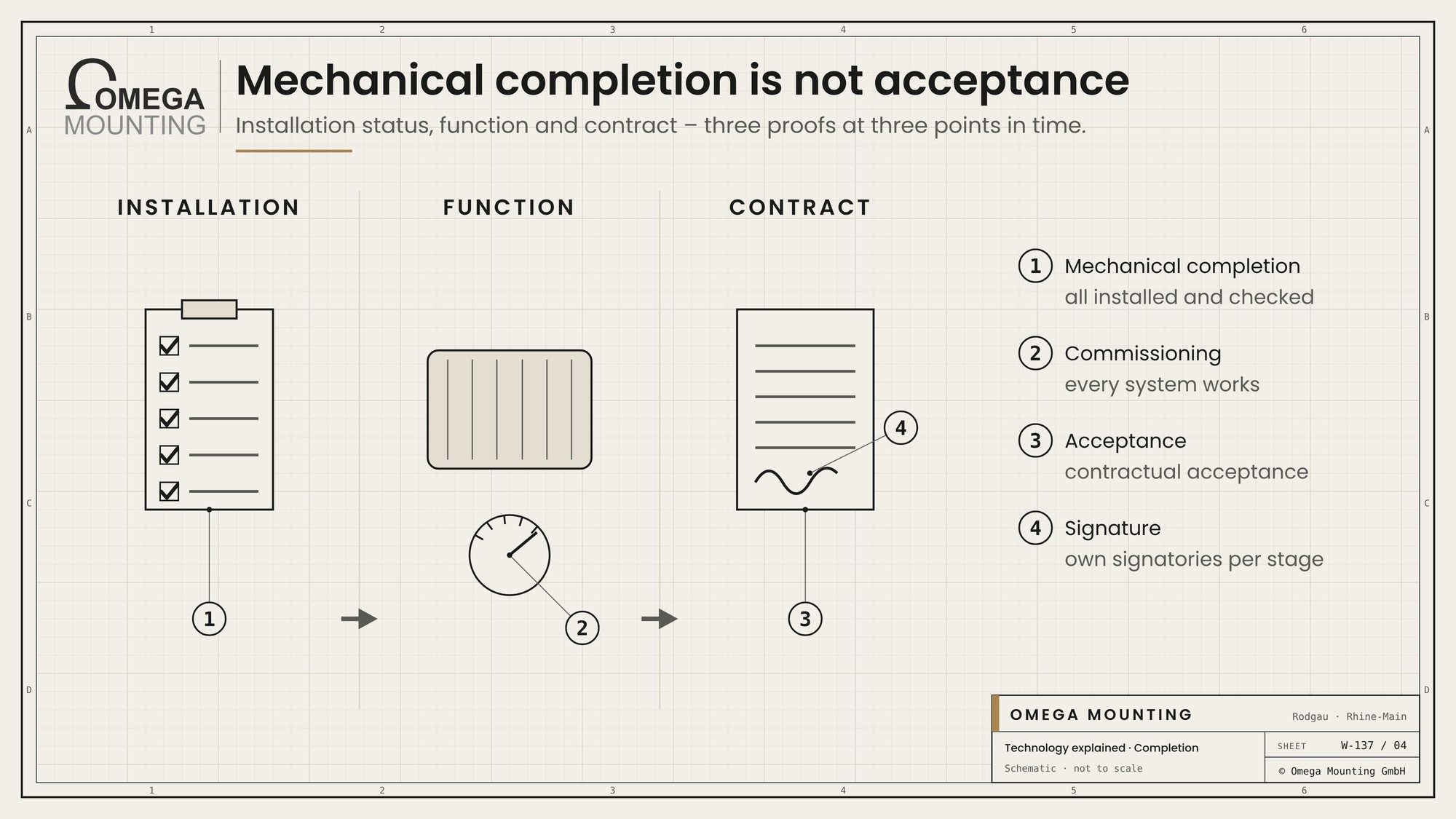
Mechanical completion confirms the installation status. It says nothing about whether the installation works, and it is not contractual acceptance.
- Mechanical completion: Is everything installed and checked?
- Commissioning: Does every system work, and do the systems work together?
- Pick-up: Does the client accept the work as being in accordance with the contract?
How these steps are governed contractually is set out in the respective contract. The distinction here is meant technically; this is not legal advice.
Typical pitfalls
Most disputes around mechanical completion have recurring causes.
- Unclear system boundaries: Nobody knows whether a valve at the interface belongs to this system or the next.
- Missing documentation: The work is done, but measurement records and test certificates are missing. No paper, no sign-off.
- Forgotten transport locks: Locks and wedges stay in place and block at the first turn.
- Work after sign-off: A trade still changes something without approval from commissioning.
- B items without a deadline: Small items are left lying and reappear at acceptance.
- Different checklists: Installation and commissioning work with different versions.
Almost all of these can be avoided if the checklist is fixed before installation starts and the installation team collects its records as it goes. A short joint walk-round a few days before the actual walkdown shows where gaps remain.
For clients it pays to describe mechanical completion as a separate service in the tender and contract: who checks, who signs, what belongs to the documentation. That turns the buzzword into a clear milestone.
What we pay attention to
We work towards this point so that an installation becomes mechanically complete.
- At the start we clarify which checklist applies and who signs.
- We document alignment, tightening torques and checks during installation.
- We remove transport locks and protective films deliberately and record it.
- We walk through the installation ourselves before the official walkdown.
- We clear A items immediately and schedule B items with a deadline.
Where we use it
During the installation of 160 PDCs in a data center in the Rhine-Main region we aligned every cabinet exactly below its cable outlet so that the electrical trade could connect straight away – without a single rework item. During the Installation of a hydropower plant in an existing building we welded the brackets and set them in concrete the next day – there too, mechanical completion was the milestone of our work. More on this on our page on Industrial installation.
More technology explained
Guide
our guide from construction to operation.
Need fitters who know this process?
Are you planning a project in which mechanical completion is tied to a deadline, and do you need fitters who work towards it? Request a callback.
Free, no-obligation callback

About the author
Tobias Schott
Managing director of Omega Mounting GmbH, Rodgau · more than 20 years of hands-on experience in installation and maintenance
A trained mechatronics technician, working in maintenance, servicing and industrial installation since 2004 – first alongside his father, and with Omega Mounting since 2012: from overhead conveyors in Frankfurt to the crane system in a new-build hall. He plans and leads lifting operations as an appointed person (AP) in data centers and on industrial sites in the Rhine-Main region, trains and examines operators of cranes, mobile elevating work platforms and telehandlers, and is a qualified occupational safety specialist. On jobs abroad he is known as the “German Troubleshooter” – the person you call when a site gets stuck. He learned what quality means from his father, not from a manual: Made in Germany as a standard for his own work, not a label. That is why quality comes first at Omega Mounting – ahead of speed and price. The Technology explained articles cover the equipment and techniques his team uses every day: what counts on site is in them – what only appears in the brochure is not.
 English
 German