
- Technology explained – machines and equipment
MEWP: Scissor, Telescopic, Articulating – Which Type Fits Where
By Tobias Schott · Reading time approx. 8 minutes · Last updated: October 2026
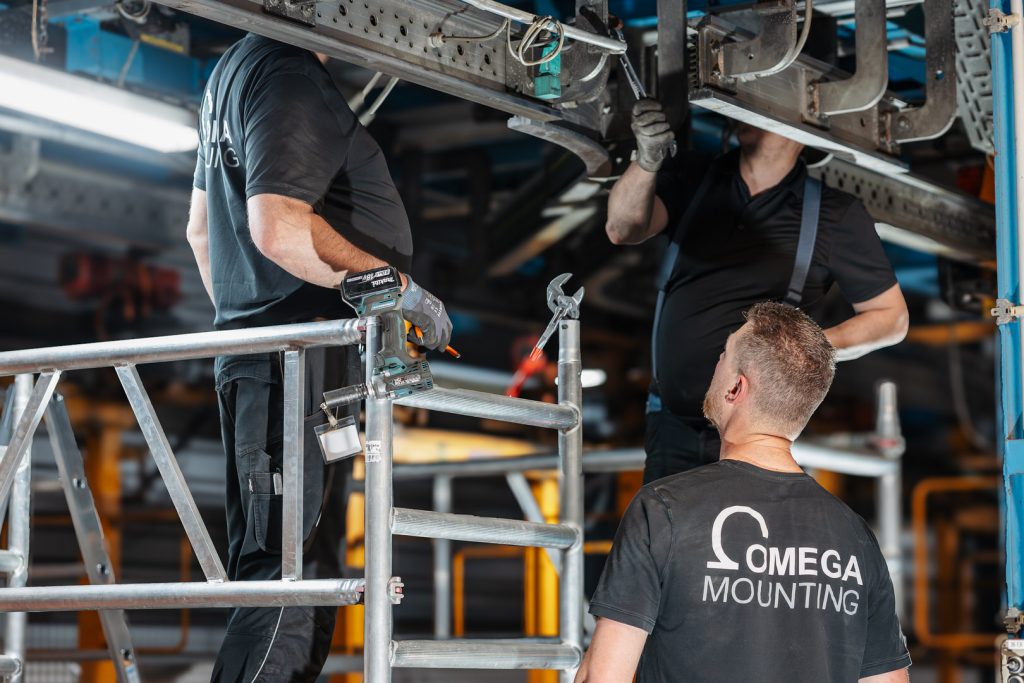
A mobile elevating work platform (MEWP) does not lift the load but the workplace; which type fits is decided by the floor, obstacles and whether you need to go straight up or over something.
The mobile elevating work platform stands on almost every assembly site where work is carried out overhead: under the hall roof on the crane runway, on the running rail of an overhead conveyor, on pipe racks or on the façade. In tenders it is called an "aerial work platform", on site a "cherry picker", and the hire catalogue says "scissor 12 m" or "articulating boom 20 m". Anyone who does not work with them every day sees a number and a machine – and still has to decide which type belongs in their hall.
This article explains the types, the key figures behind them and the limits of each platform; the selection for a project is covered in the guide we link to below.
What is a mobile elevating work platform?
A mobile elevating work platform is a mobile piece of work equipment that lifts people with tools and material on a guarded platform to an elevated workplace and holds them there. It is abbreviated to MEWP. Unlike a crane, it does not lift a load on a hook but the workplace itself – with guardrail, toe board and control panel in the basket. And unlike scaffolding, it is not erected but driven – which makes it the standard equipment for assembly and maintenance in existing buildings.
Profile
- Type: Scissor lift, telescopic boom, articulating boom, vertical mast lift, trailer-mounted platform, truck-mounted platform.
- Typical working height: around 6 metres for small indoor platforms to over 40 metres for large telescopic and truck-mounted platforms; standard machines on assembly sites are typically between 10 and 25 metres.
- Typical basket load: Boom platforms typically carry two people with tools; scissor lifts considerably more depending on size – a few hundred kilograms to just under a tonne.
- Drive: Electric with battery for interiors, diesel for outdoor terrain, hybrid for both; drive via wheels, rarely via tracks.
- Field of use: Hall, outdoor areas, façade with the truck-mounted platform, confined rooms with the vertical mast lift.
- Requirements: load-bearing, level floor, clear travel paths, space for the outriggers, clearance above the basket; periodic inspection at least annually by a competent person in accordance with the Industrial Safety Ordinance (BetrSichV), visual and functional check before every use.
- Operator qualification: Training and written appointment of the operator; the benchmark is DGUV Principle 308-008.
Which types of mobile elevating work platform are there?
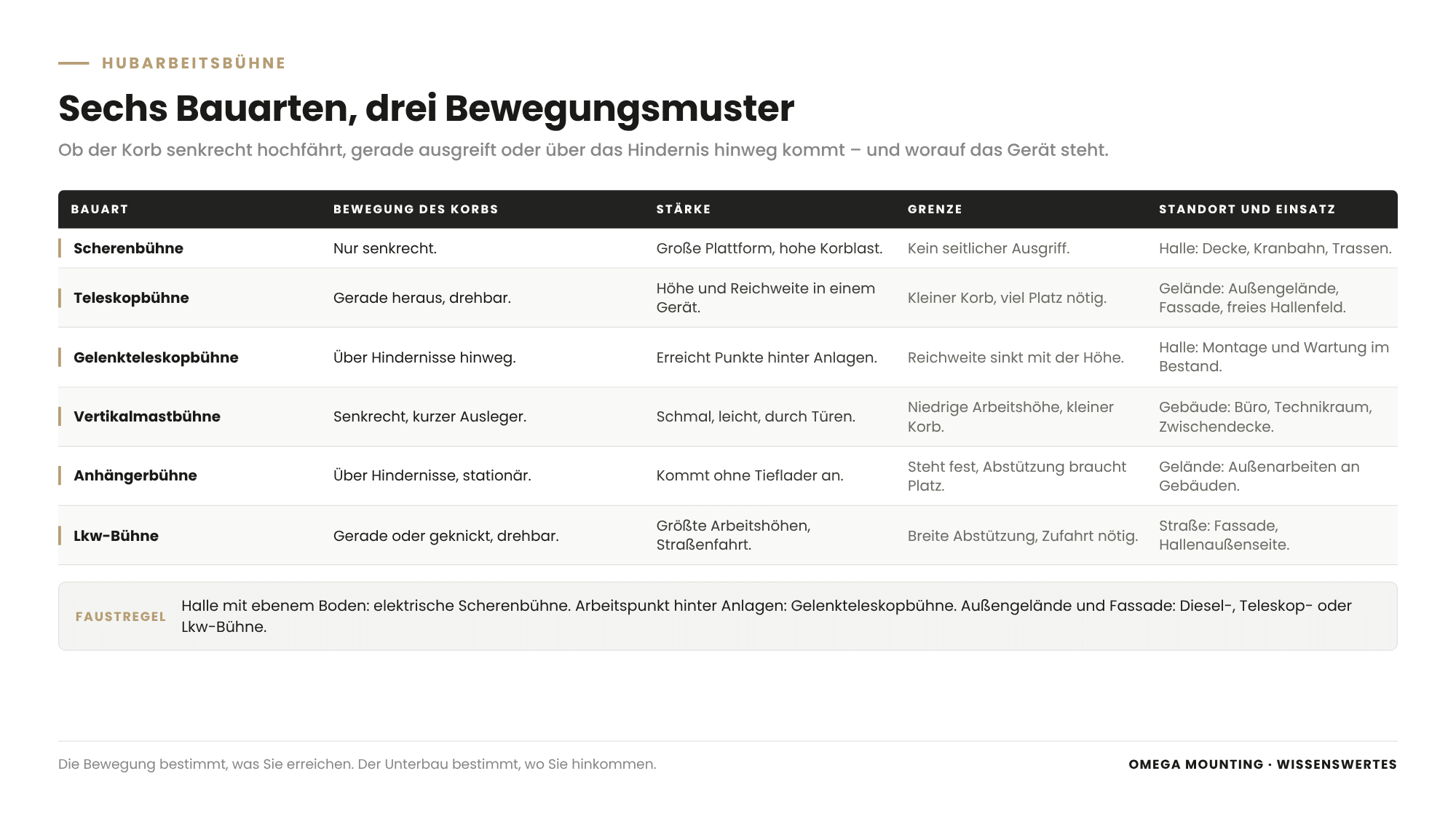
Six types cover almost every assembly site, and they differ in two things: whether the basket goes straight up or reaches out sideways, and what the machine stands on. The movement determines what you can reach. The undercarriage determines where you can get to.
- Scissor lift: Platform on a scissor stack, moves vertically only. In return, a large platform and high basket load; electric in the hall, as a diesel scissor outdoors.
- Telescopic boom: Straight boom that extends telescopically, slewing superstructure. Great height and outreach, small basket.
- Articulating boom: Articulated arm plus telescope, reaches over pipework, machines and conveyor lines. The basket arm, called the jib on site, allows fine positioning.
- Vertical mast lift: Narrow mast with a small basket, often with a short jib. Fits through standard doors and into lifts, typically reaches 6 to 12 metres working height.
- Trailer-mounted platform: Articulating boom on a trailer, supported on four outriggers, usually without its own drive.
- Truck-mounted platform: Boom on a lorry chassis, arrives by road and sets up on wide outriggers. The greatest working heights.
| Type | Movement | Strength | Limit | Typical use |
|---|---|---|---|---|
| Scissor lift | Vertical only. | Large platform, high basket load. | No sideways outreach. | Hall, ceiling, crane runway, pipe racks. |
| Telescopic boom | Straight out, slewing. | Height and outreach in one machine. | Small basket, lots of space needed. | Outdoor areas, façade, open hall bay. |
| Articulating boom | Over obstacles. | Reaches points behind plant. | Outreach decreases with height. | Installation and maintenance in existing buildings. |
| Vertical mast lift | Vertical, short jib. | Narrow, light, through doors. | Low working height, small basket. | Office, plant room, suspended ceiling. |
| Trailer-mounted platform | Over obstacles, stationary. | Arrives without a low-loader. | Stands in one place, outriggers need space. | Exterior work on buildings. |
| Truck-mounted platform | Straight or articulated, slewing. | Greatest working heights, road travel. | Wide outriggers, access needed. | Façade, exterior of the hall. |
Working height, platform height, outreach, basket load: what the key figures say
Four key figures describe every mobile elevating work platform: the working height is the height a person in the basket can reach with their hand, the platform height is the height of the basket floor, the horizontal outreach is the sideways reach and the basket load is the permissible total weight in the basket.
Between working height and platform height there is nominally around two metres of reach height. The hire catalogue states the working height because it is the larger number. So anyone whose work point is at twelve metres does not need a "12 m platform" but one with around 14 metres working height – the most common reason why a delivered platform is too short.
On boom platforms, outreach and height are linked. The working diagram shows an envelope: fully up leaves little sideways reach; far forward, the height drops. Many machines have two zones – full basket load inside, reduced basket load at the edge of the envelope.
The basket load is a sum of people, tools and material – two fitters with an impact wrench and a box of bolts quickly reach the limit of a small boom platform.
Which platform goes where – and where are the limits?
In a hall with a level floor, the electric scissor lift is the first choice; over obstacles, the articulating boom; outdoors, the diesel platform or the truck-mounted platform – and each comes up against three limits: floor, wind and inclination.
| Situation | Suitable type | What matters |
|---|---|---|
| Hall, level floor, work point vertically above the travel path. | Electric scissor lift. | Wheel loads, clear travel path, ceiling height. |
| Work point behind machines, conveyor lines or pipe racks. | Articulating boom. | Envelope reaches the point, space to slew. |
| Outdoor area, unpaved or uneven. | Diesel scissor with rough-terrain chassis, telescopic or truck-mounted platform. | Outriggers, ground pressure, wind limit. |
| Data center with raised floor, office, suspended ceiling. | Vertical mast lift or small electric scissor. | Point loads on the raised floor, door width, lift. |
| Façade or work above 30 metres. | Large telescopic or truck-mounted platform. | Access, outrigger area, barriers. |
Floor. A platform brings its weight into the floor via four wheels or four outriggers. On industrial screed this is uncritical; on raised floors, gratings and suspended ceilings it is not – there we ask about the permissible point load and lay load spreading plates underneath. A diesel chassis also does not belong in the hall because of exhaust fumes and weight.
Wind. Platforms for outdoor use are designed to the European platform standard for wind of 12.5 metres per second, roughly force 6. Pure indoor platforms are designed for zero wind. An open hall gate with a draught takes the indoor platform outside its approval.
Inclination. Every platform has a tilt sensor that blocks the lift from a few degrees of inclination. Outrigger-supported platforms level themselves via the outriggers; wheeled platforms need a level floor – a gradient in the yard entrance is enough, and the scissor will no longer go up.
What counts in the basket: operator, harness attachment, crushing hazard
In the basket, three things decide safety: a trained and appointed operator, on boom platforms attachment at the designated anchor point, and looking upwards against the crushing hazard. Not legal advice, but practice: the operator licence is standard on every site.
In boom platforms, attachment with a restraint system is state of the art, described in DGUV Information 208-019. The reason is the catapult effect: if the boom hits an obstacle or drives into a bump in the floor, the basket whips, and without restraint the person flies over the guardrail. In scissor lifts this effect is considerably smaller, which is why attachment there is not required as a matter of principle.
The crushing hazard arises between the basket guardrail and a beam, pipe or crane runway. Anyone who looks down while going up only notices the beam when it is at their back – so look up and drive slowly on the last metre.
What we pay attention to
Before a platform rolls onto our site, we check six points – whether we bring it with us or the operator provides it:
- Work point instead of catalogue figure. We measure the height and sideways distance of the work point from the nearest possible standing position; only from this does the type follow.
- Floor and route. We clarify what the floor carries and whether the route from the unloading point is clear – gate, ramp, thresholds, raised floor.
- Indoors or outdoors. Electric into the hall, diesel outside; with an open hall gate, the wind limit of the indoor platform applies.
- Basket load as a sum. We add up two fitters, tools and material and then decide between boom platform and scissor.
- Operator and appointment. Only those who hold the licence and are appointed for the machine drive it; we document the check before the first lift.
- Clearance above the basket. We walk the working area beforehand and mark beams, pipes and crane runways where a crushing hazard lurks.
Where we use it
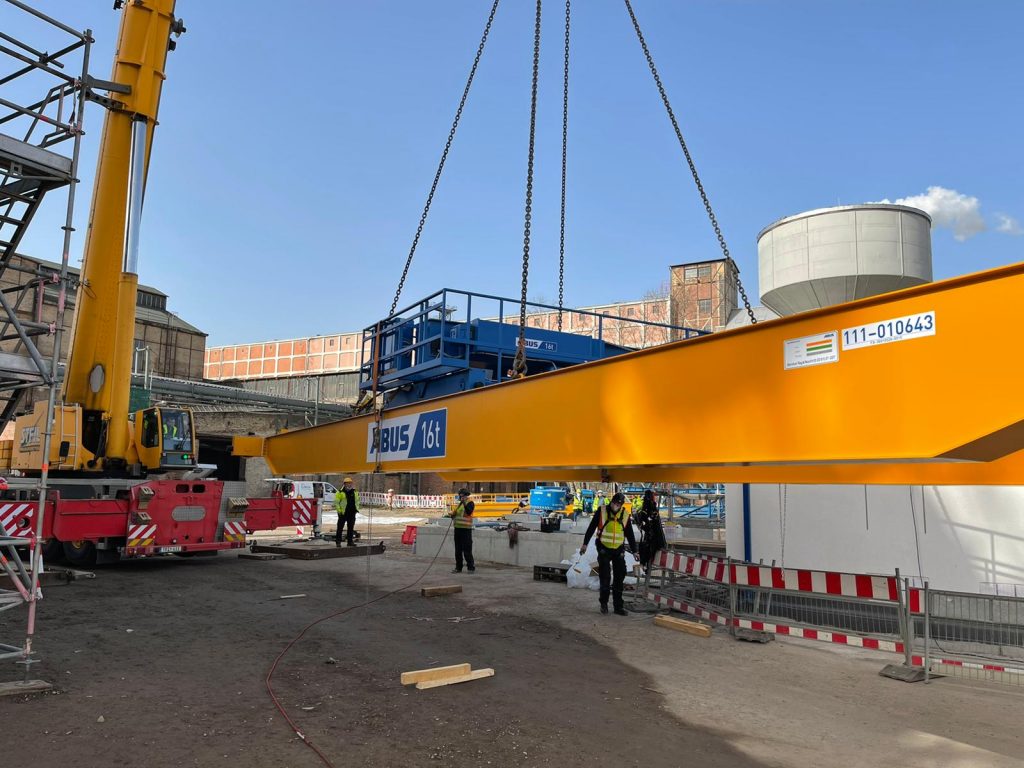
Mobile elevating work platforms accompany us on crane runways, conveyor systems and pipe racks, everywhere in the Rhine-Main region where we work overhead. During the switch overhaul on an overhead conveyor around 30 years old – the work point was on the running rail above production. There, four technicians also worked with mobile scaffold towers and ladders during weekend shutdowns – the means of access must suit the work point. The installation of a 16-tonne crane at a height of over 30 metres shows the heights at which assembly in existing buildings takes place: there, only the large telescopic and truck-mounted platforms are sufficient, and we plan their standing position together with the crane position and the assembly sequence. You will find our services around platforms and access under Steel structures and work platforms.
More technology explained
Technology explained
the crane runway is the most common work point the platform takes us to.
Technology explained
the other compact machine for tight existing buildings, only for loads instead of people.
Guide
the guide with selection for the project, operator organisation, wind limits and rescue from the basket.
Do you need this machine together with a team on site?
Do you need this machine together with a team on site – for a crane runway, conveyor system or pipe rack in your hall? Send us the height of the work point, floor conditions and preferred date, and we will tell you which type fits and who drives it. Request a callback
100% free and without obligation

About the author
Tobias Schott
Managing director of Omega Mounting GmbH, Rodgau · more than 20 years of hands-on experience in installation and maintenance
A trained mechatronics technician and at home in maintenance, servicing and industrial installation since 2004 – first at his father's side, since 2012 with Omega Mounting: from the overhead conveyor in Frankfurt to the crane system in a new-build hall. As appointed person for lifting operations he plans and leads lifting operations in data centers and on industrial sites in the Rhine-Main region, is an instructor and examiner for cranes, MEWPs and telehandlers as well as a safety officer. On jobs abroad he is known as the "German Troubleshooter" – the one you call when things get stuck on site. He learnt what quality means not from a manual but from his father: Made in Germany as a standard for his own work, not as a label. That is why it comes first at Omega Mounting – before speed and before price. The Technology explained articles explain the machines and the technology his team works with every day: what counts on our sites is in there – what only appears in the brochure is not.
 English
 German