
- Guide – Occupational safety
Subcontractor Installation Evidence: What You May Require
By Tobias Schott · Reading time approx. 24 minutes · Last updated: October 2026
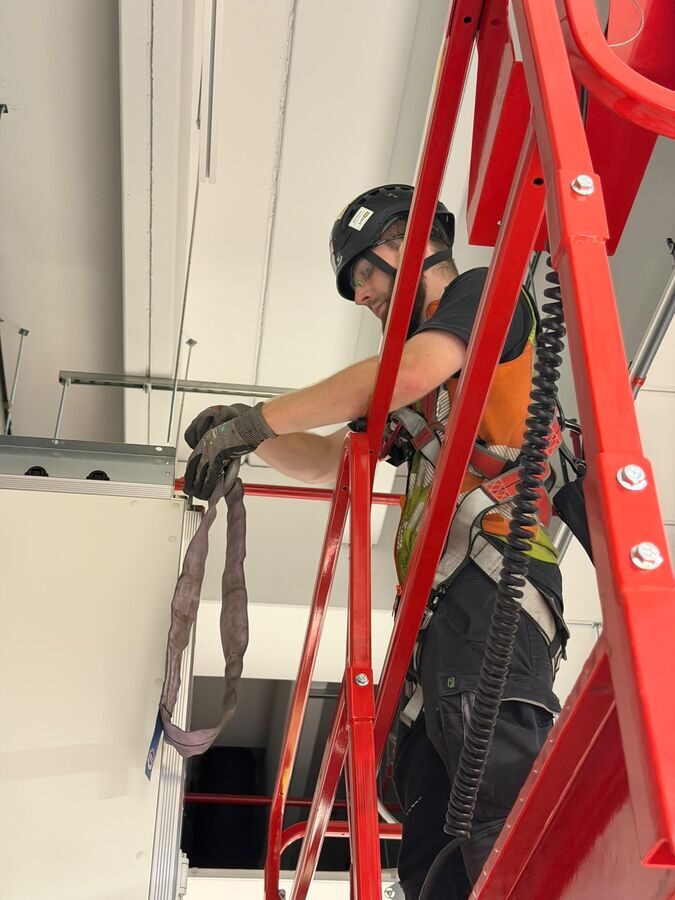
From a subcontractor for lifting and installation work you may require all evidence that demonstrates its technical competence, its occupational safety organisation and the safety of its work equipment. And you should: as the client, you share responsibility for what happens on your premises.
You are awarding lifting and installation work to a subcontractor. In doing so, you bring outside people with a crane, lifting accessories and a MEWP into your hall, your data center or onto your factory premises. The question of which evidence you may require from an installation subcontractor is therefore no formality. It decides whether, in the event of damage, you can demonstrate that you carefully selected a suitable contractor.
The problem in practice: many prequalifications are collections of standard certificates that are filed away without anyone checking whether they fit the project. The public liability insurance is there, but does it cover damage to the equipment being moved? The crane operator training is there, but for the fitter who actually turns up? The risk assessment is signed, but does it refer to your hall or to any hall? And does the scope of works state which evidence of suitability is to be submitted with the tender and which before work starts on site?
This guide explains which evidence of suitability is customary and sensible for lifting and installation work, what it is based on, how to check it against the project and what additionally applies in security areas. We write from the perspective of the installation contractor that regularly submits this evidence. Omega Mounting from Rodgau near Frankfurt works in data centers, at the airport, in food plants and in nuclear facilities – everywhere prequalification is part of the contract.
Key points at a glance
- As the client, you may require from an installation subcontractor all evidence of suitability needed to assess its suitability. The duty of careful selection follows from the ArbSchG (German Occupational Safety Act) and the accident prevention regulations.
- The evidence can be arranged in six groups: company, insurance, personnel, occupational safety organisation, work equipment and references – they are suitability criteria that are checked before the award criteria.
- Qualification evidence for crane operators, slingers, MEWP operators, welders and qualified electricians applies to persons, not to companies – require it for the team that actually comes.
- A risk assessment is only evidence if it refers to your specific project and not to a template.
- Inspection records for cranes, lifting accessories, MEWPs and electrical equipment demonstrate that the work equipment has been periodically inspected in accordance with the BetrSichV (Industrial Safety Ordinance).
- In security areas – airports, nuclear facilities, guarded factory premises – person-specific background checks with several weeks of lead time are added.
- A prequalification does not replace the induction on site or the coordination of several employers on the construction site – it is the precondition for them.
What is a subcontractor prequalification?
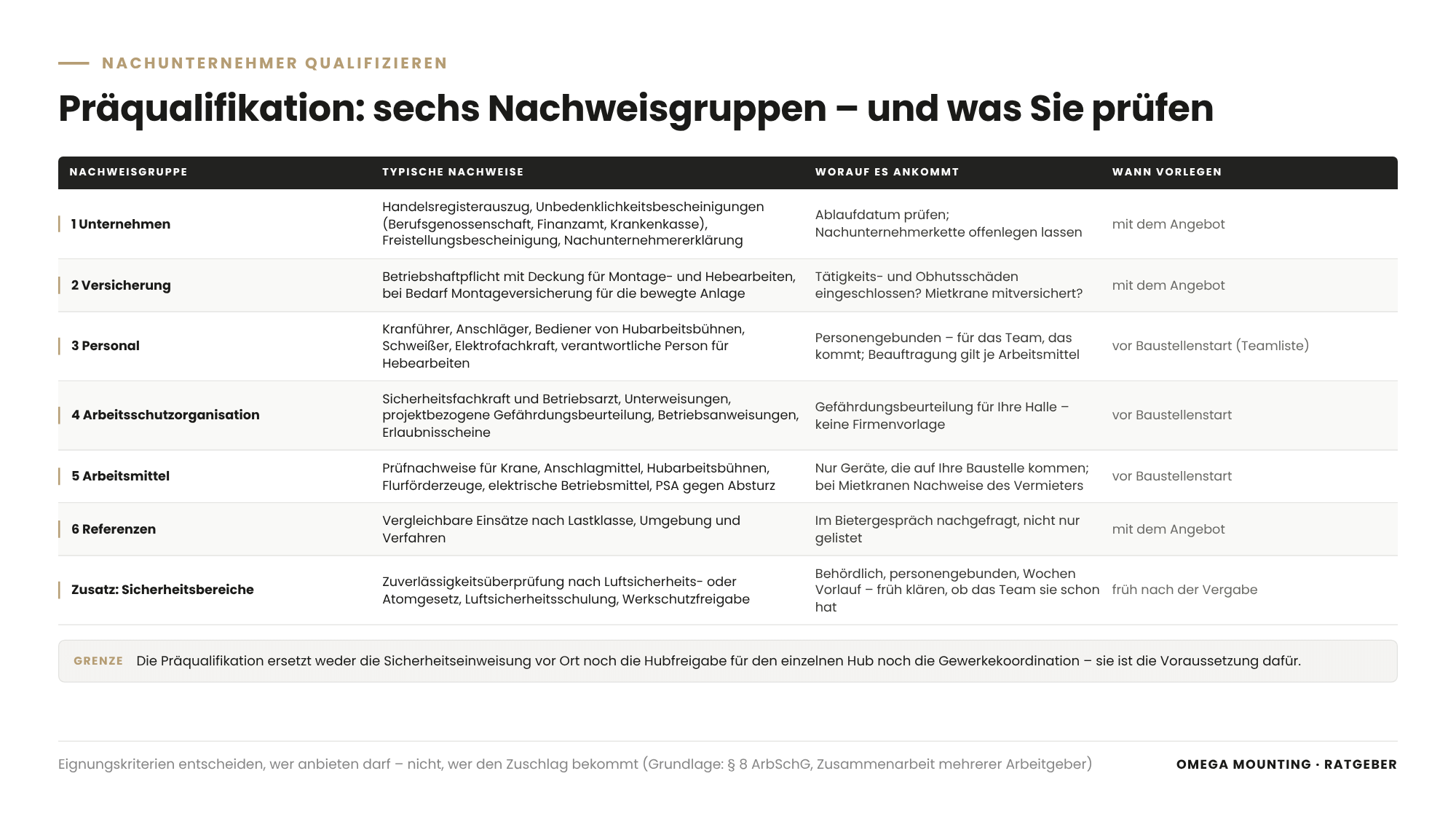
A subcontractor prequalification is the preliminary check of whether a contractor meets the suitability requirements before it may submit a tender or enter a construction site. Technical competence, capacity, reliability and occupational safety organisation are checked – independently of or in relation to a specific contract.
The term comes from public procurement law, where prequalified companies deposit their evidence of suitability once instead of submitting it anew in every procedure. In industry, the same idea has become established as supplier approval or subcontractor approval – the way to qualify a subcontractor before it receives its first order. A contractor is fundamentally checked once, often supplemented by a supplier audit on site. For each project, the project-specific evidence is added. After the job, the supplier evaluation feeds into the next award. In procurement terms, these are suitability criteria: they decide who may tender, not who wins the contract.
Why you as the client must check
The duty to check does not arise from a single paragraph but from the interplay of several regulations. Under Section 8 of the ArbSchG (German Occupational Safety Act), employers whose employees work together at one workplace must cooperate on occupational safety and inform each other about hazards. DGUV Regulation 1 (Principles of Prevention) obliges the company that awards contracts to other companies to inform them about the particular hazards in its operation. Where necessary, it must appoint a person for coordination. Anyone who selects a subcontractor without checking its suitability can hardly fulfil these duties.
Added to this is the liability risk: under the German Minimum Wage Act, a company that commissions another with work or services is liable like a guarantor for the latter's payment of the minimum wage. This is another reason why certificates of good standing and a subcontractor declaration are customary – the contractor's self-declaration on minimum wage, social security contributions and the use of further subcontractors.
What a prequalification does not do
A prequalification does not replace the induction on site, the lift release for the individual lift or the coordination of trades on the construction site. It ensures that the contractor is fundamentally suitable. Whether the specific work is carried out safely is decided on site. And it does not replace the contract. Acceptance, warranty, change order management and the duty to notify concerns are governed by the VOB/B (German construction contract procedures) or a contract for work under the German Civil Code – for instance when the subcontractor considers a specification unsafe.
However, the use of a subcontractor almost always triggers one obligation. As soon as several employers work on one construction site, the BaustellV (Construction Site Ordinance) requires a health and safety coordinator (SiGeKo) and a file for later work – and a subcontractor is a second employer. From more than 30 working days with more than 20 employees, or more than 500 person-days, prior notification to the authority is added, at least 14 days before the site is set up. For particularly hazardous work such as lifting over neighbouring equipment, a health and safety plan (SiGe plan) is also required. This is how the BAuA practice brochure on site set-up summarises it. For you, this means: anyone who awards installation work to a subcontractor has already triggered the SiGeKo question. Clarify early who takes on the role, and hand the SiGe plan and site rules to the subcontractor with the invitation to tender.
Which evidence about the company and its insurance may you require?
Regarding the company and its insurance, you may require a commercial register extract, business registration, certificates of good standing from the tax office, health insurance fund and employers' liability insurance association, and evidence of public liability insurance with adequate cover for installation and lifting work.
Company evidence
- Commercial register extract or business registration: demonstrates that the company exists and who represents it.
- Certificate of good standing from the employers' liability insurance association (Berufsgenossenschaft): demonstrates that the company is registered with the competent employers' liability insurance association and pays its contributions. For installation contractors, this is usually the association to which the trade is assigned.
- Certificates of good standing from the tax office and the health insurance funds: demonstrate the proper payment of taxes and social security contributions.
- Exemption certificate under the German Income Tax Act: relevant if the installation is classified as a construction service. Without this certificate, you as the recipient of the service would then have to withhold tax.
- Subcontractor declaration: self-declaration on payment of the minimum wage, non-employment of illegal workers and disclosure of further subcontractors – customary, simple, sensible.
- References: comparable jobs by load class, environment and method – asked about in the tender meeting, not just listed.
- Certifications: An occupational health and safety management system to ISO 45001 or a safety certificate for contractors is a plus, not a must.
Insurance evidence
Public liability insurance is the most important insurance evidence for lifting and installation work. Check not only whether it exists, but what it covers:
- Is the sum insured adequate for the environment – a hall with neighbouring equipment, a data center in operation, an airport?
- Is damage to the work item (Tätigkeitsschäden) included, i.e. damage to the item being worked on? In a moving-in operation, that is the equipment being moved itself. Precisely this item is often limited or excluded in standard policies.
- Is damage to property in custody (Obhutsschäden) included, i.e. damage to items the subcontractor has in its custody, such as equipment in interim storage?
- Does the insurance apply to the use of cranes and lifting gear, including hired equipment?
- For moving in high-value equipment, is additional erection all-risks insurance advisable, covering the equipment itself during transport, lifting and installation? And who takes it out – client or subcontractor?
If the subcontractor in turn uses crane hire companies or further subcontractors, it should also be able to present their insurance evidence.
Which qualification evidence for personnel may you require?
From the personnel of an installation subcontractor you may require the qualification evidence that the regulations provide for the respective activity. This concerns crane operators, slingers, operators of MEWPs and industrial trucks, welders, qualified electricians and persons using fall arrest PPE.
The most important principle: this evidence is person-specific. A company cannot be "crane operator qualified" – only the fitter who holds the radio remote control on installation day. Therefore require the evidence for the named team and have changes in the line-up reported to you.
The German technical rule TRBS 1116 (Qualification, Briefing, Appointment) gives you two test questions for this. First: the appointment always applies only to the specifically named work equipment. A certificate for industrial trucks says nothing about the spider crane. Second: in the case of external or foreign training certificates, the fitter's employer must, in case of doubt, verify theoretical and practical competence before appointing. The responsibility remains with the employer. For you, this means: ask the subcontractor not only for the certificate but for the equipment-specific appointment. With an international team, also ask how it has verified the certificates.
| Activity | Customary evidence | Regulations (selection) |
|---|---|---|
| Crane operators (mobile crane, mini crane, overhead crane, spider crane). | Training certificate and written appointment by the employer. | DGUV Regulation 52 (Cranes). |
| Slinger. | Briefing and qualification in slinging loads. | DGUV Rule 100-500. |
| MEWP operators. | Training certificate and written appointment. | DGUV Principle 308-008. |
| Industrial truck operators. | Operator licence and written appointment. | DGUV Regulation 68. |
| Welders. | Valid welder qualification for the process and material. | DIN EN ISO 9606-1. |
| Qualified electrician. | Evidence of professional qualification and appointment. | DGUV Regulation 3. |
| Users of fall arrest PPE. | Briefing with practical exercises. | DGUV Rule 112-198. |
| Appointed person for lifting operations. | Written delegation of duties and evidence of qualification. | Delegation of duties – see next section. |
The appointed person for lifting operations
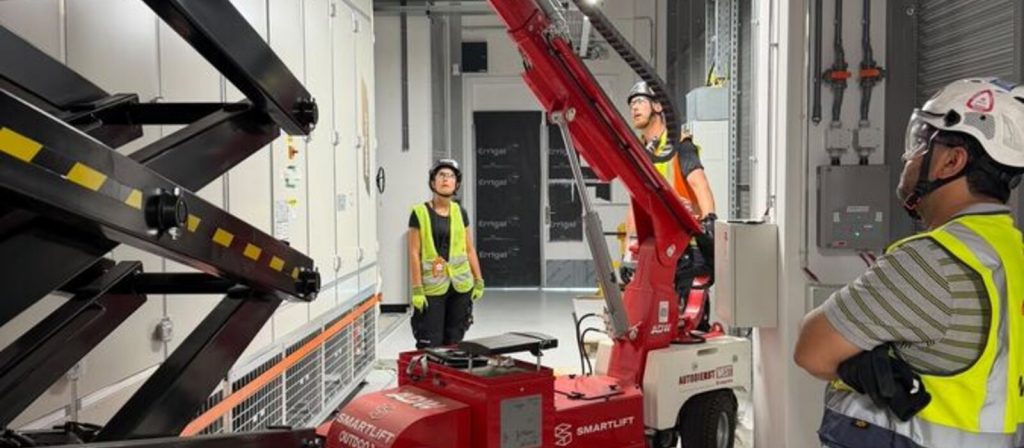
For lifting work with a crane or lifting gear, you should require the subcontractor to name an appointed person. In projects shaped by British or international practice, this person is often called the lifting supervisor or appointed person (as in BS 7121). This person plans the lifting work in a lift plan with load weight, centre of gravity, lifting accessories, radius and crane set-up area. They give the lift release for each lift, designate slingers and banksmen and have the authority to stop work. The legal basis for their appointment is the delegation of duties under the ArbSchG (German Occupational Safety Act). During the replacement of a CRAH unit in a data center in Frankfurt a supervisor worked with three lift-&-shift riggers. A CRAH unit is an air handling unit that cools and circulates the air in the data hall. The team had prepared the lift plans and risk assessment itself. Precisely this combination of named responsibility and own planning is the evidence you should require.
Multiple qualifications as an advantage
Fitters who master both mechanics and electrics – in our case mechatronics technicians – shorten the interface list and reduce the number of companies on your site. So check whether the subcontractor can present the qualifications for all partial services offered. Or does it tacitly need another company for the electrical connection?
Subcontractor installation evidence on occupational safety organisation: what makes sense?
Regarding the occupational safety organisation of an installation subcontractor, five pieces of evidence make sense. These are evidence of occupational safety and occupational medical support, briefing records and a project-specific risk assessment. Added to these are operating instructions for the work equipment used and a permit-to-work procedure for hazardous work.
Safety officer and occupational physician
Under the German Occupational Safety Act on company physicians and safety officers (ASiG), every employer must appoint an occupational safety specialist and an occupational physician – internally or externally. Have the appointment shown to you. A safety specialist who knows the company's risk assessments is also your contact for queries.
Briefings
Employees must be briefed before starting work and regularly thereafter, at least annually. This is a statutory duty of every employer. The evidence is a documented briefing with topic, date and signature. For lifting work, slinging loads, handling MEWPs and fall arrest PPE are among the core topics. The same technical rule that governs appointment makes it clear: a new construction site or working environment counts as a first-time use. The briefing must therefore be renewed for each site, not just annually. This is to be distinguished from the operator's induction on site and the daily toolbox talk at the workplace. Neither replaces the briefing by the employer.
The project-specific risk assessment
The risk assessment is the central occupational safety document and is required by law for every employer. For you as the client, it is only evidence if it refers to your project: your hall, your equipment, your transport route, your neighbouring trades. A template with general hazards – tripping, noise, falls – says nothing about whether the subcontractor has understood your site.
Check:
- Are the specific lifts described with weight, centre of gravity and lifting accessories?
- Are the hazards from your ongoing operations captured – traffic routes, neighbouring equipment, utilities?
- Are measures named that fit the environment – floor protection with protective fleece or hardboard, cordoning off the load area, dust extraction, fire watch for hot work?
- Is it specified who implements and monitors the measures?
In international projects, the same document is called RAMS – Risk Assessment and Method Statement. In content, it corresponds to a risk assessment plus work instruction. The German technical rule TRBS 1111 (Risk Assessment) expressly recognises a lift plan or a RAMS as a form of documentation. However, it requires the document to be available before the work equipment is first used, and rules out a simplified assessment for cranes and changing site conditions. For you, this means: a subcontractor who "submits the risk assessment later" does not yet have one. And a company-wide standard template is not permissible for lifting work on your site.
Operating instructions and permits to work
Operating instructions must be available for work equipment and hazardous substances. For hazardous work, a permit-to-work procedure is customary – for hot work such as welding and abrasive cutting, work in confined spaces or on electrical installations. This is a written release that specifies time, place, measures, isolation and responsible persons. Ask whether the subcontractor knows such a procedure and can fit into yours. During the workshop fit-out in a nuclear facility the welding work on a press brake was agreed and secured in advance – just as a permit-to-work procedure provides.
Which inspection records for work equipment belong to it?
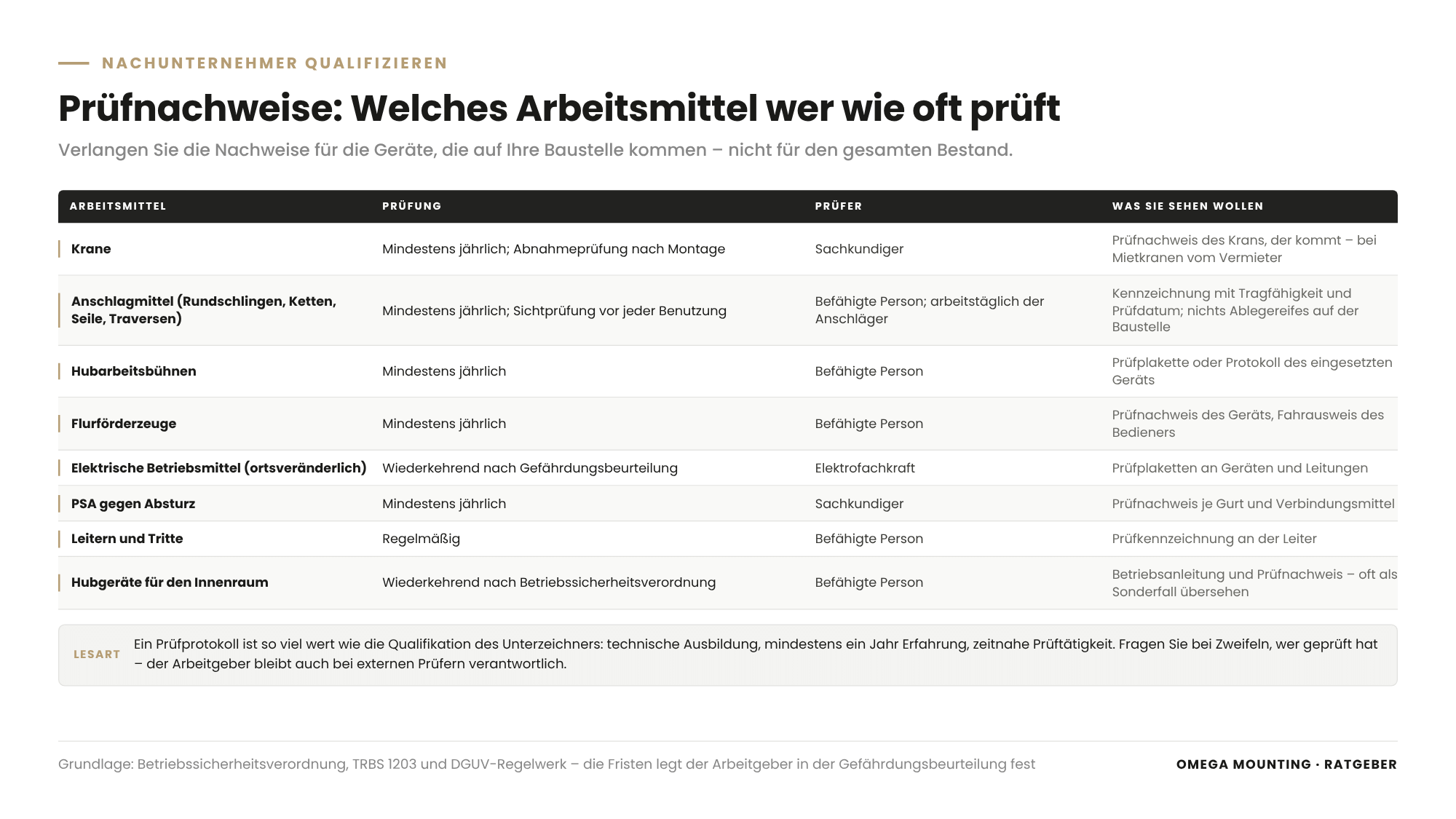
The inspection records for work equipment include the records of periodic inspections under the BetrSichV (Industrial Safety Ordinance) for cranes, lifting gear, lifting accessories, MEWPs, industrial trucks, ladders, electrical equipment and fall arrest PPE.
The ordinance requires work equipment that is subject to damaging influences to be periodically inspected by a competent person – i.e. a person with the necessary expertise and experience. What "competent" means is defined by the German technical rule TRBS 1203 (Competent Persons for Inspections): technical training, at least one year of relevant professional experience and recent inspection activity. The employer must set out the requirements in writing. It remains responsible even if it commissions an external inspector. For you, this means: an inspection report is worth as much as the qualification of the signatory. If in doubt, ask who inspected. The intervals are set by the employer in the risk assessment; the accident insurance institutions provide guide values.
| Work equipment | Interval | Inspector |
|---|---|---|
| Cranes. | At least annually; acceptance inspection after erection. | Qualified person. |
| Lifting accessories (round slings, chains, wire ropes, spreader beams). | At least annually; visual check before each use. | Competent person; visual check by the slinger. |
| MEWPs. | At least annually. | Competent person. |
| Industrial trucks. | At least annually. | Competent person. |
| Electrical equipment (portable). | Periodically according to the risk assessment. | Qualified electrician. |
| Fall arrest PPE. | At least annually. | Qualified person. |
| Ladders and steps. | Regularly. | Competent person. |
What you specifically want to see
- Inspection labels or inspection reports for the work equipment that comes to your site – not for the entire inventory.
- For lifting accessories: marking with working load limit and inspection date. Lifting accessories that meet the discard criteria – i.e. those with damage that rules out further use – must not come onto the site.
- For hired cranes: the hire company's inspection records.
- For lifting gear used indoors: operating manual and inspection record, because these are often overlooked as a special case.
What additionally applies in security areas?
In security areas, person-specific background checks are added to technical suitability – under the German Aviation Security Act at airports and under the German Atomic Energy Act in nuclear facilities – plus security training, tool and material checks and escort requirements.
These checks are carried out by an authority, not by the client. For you as a buyer, two things matter: the check applies to the person, not the company – and it takes time. For the workshop fit-out in a nuclear facility, each of our fitters had to complete a declaration form in advance. The official check ran for several weeks before the premises could be entered. At airports, aviation security training is added. For the retrofitting of emergency stop buttons on a sorting system at Frankfurt Airport, background check and training were already in place for our fitters.
For the prequalification, this means: ask early whether the subcontractor has personnel with valid checks or whether these first have to be applied for. Allow for the lead time. A contractor that regularly works in airport and security areas has already been through this lead time.
On factory premises with their own security service, something similar applies on a smaller scale: registration, induction, access control with site pass, access list, tool lists. During the installation of a container facility for the plant security service on a site in the Taunus access was only possible after a security check. The team of three fitters had to be named and approved in advance.
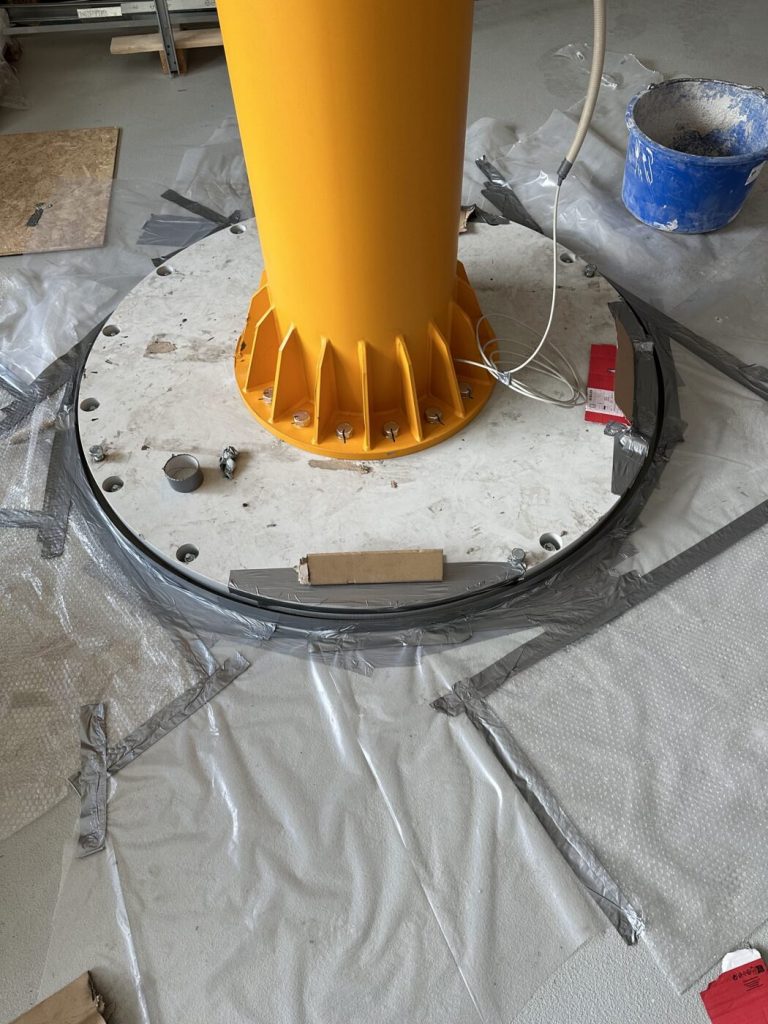
How do you check subcontractor installation evidence against the project?
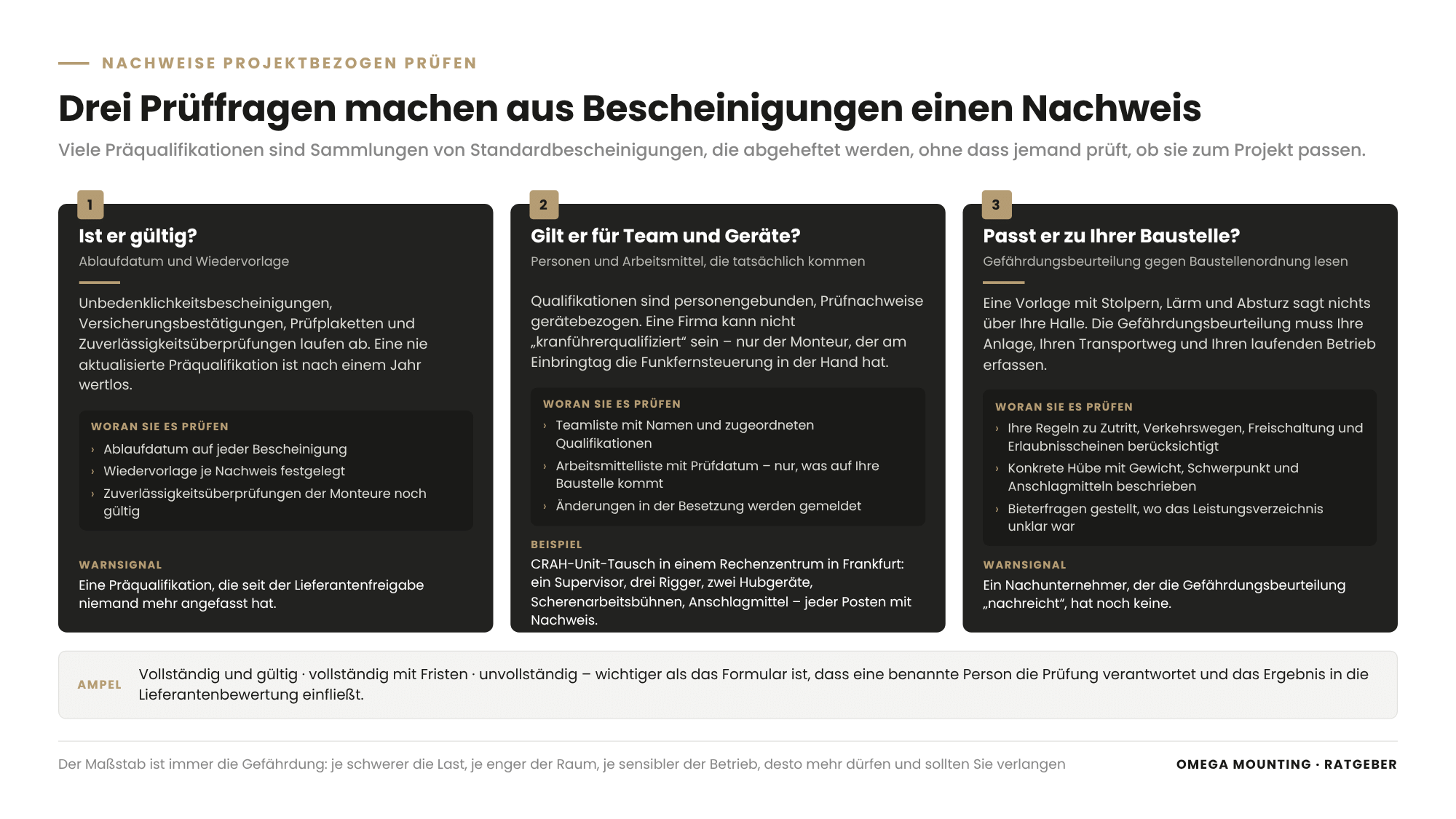
You check subcontractor evidence for installation work against the project by asking three questions of every piece of evidence. Is it valid? Does it refer to the persons and work equipment that actually come? Does it fit the conditions of your site?
Validity
Certificates of good standing, insurance confirmations, inspection labels and background checks have an expiry date. A prequalification that is never updated is worthless after a year – set follow-up dates.
Reference to team and work equipment
Require a team list with names and assigned qualifications, as well as a list of work equipment with inspection dates. For the CRAH unit replacement in Frankfurt, these were one supervisor, three riggers, two lifting devices used in synchronisation, scissor lifts, hydraulic machine skates and lifting accessories. Every item had its evidence.
Fit with the site
Read the risk assessment against your own site rules: are your rules on access, traffic routes, isolation and permits to work taken into account? This is where it shows whether the subcontractor has made a site visit. And whether it asked tender queries where the scope of works was unclear.
The traffic light as a decision aid
A simple rating – complete and valid, complete with deadlines, incomplete – is enough to document approvals traceably. More important than the form is that a named person is responsible for the check and that the result feeds into the supplier evaluation.
What may you not require – and what is disproportionate?
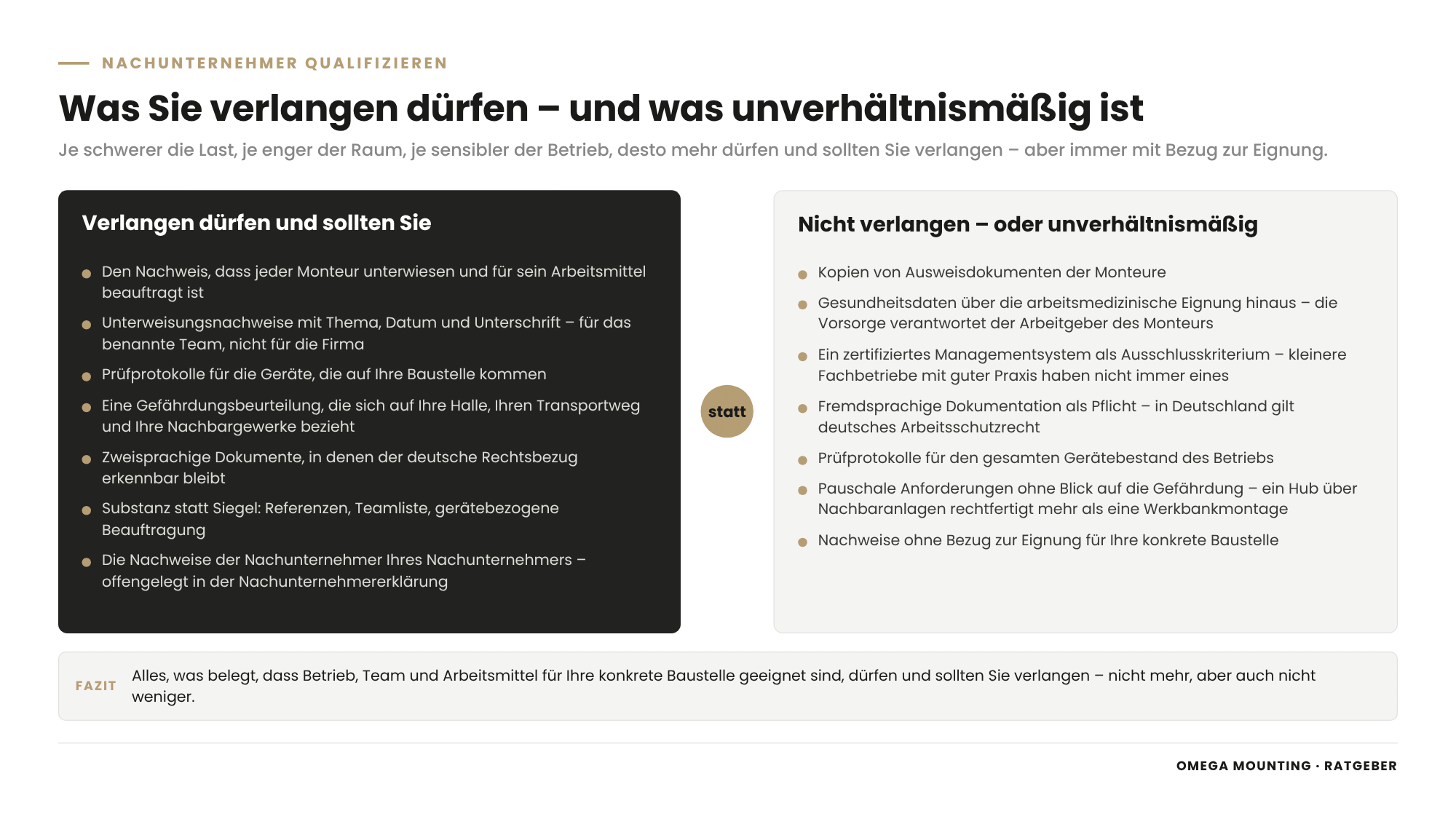
You may not require evidence that has no bearing on suitability or that interferes with employees' rights – such as health data beyond occupational medical fitness. Disproportionate are requirements that bring no safety gain for the specific service.
Some examples from practice:
- Personal data: You may know that a fitter is briefed and qualified. You do not need copies of ID documents or health data for this; responsibility for occupational medical care lies with the fitter's employer.
- Certifications as an exclusion criterion: A management system is an indication of organisation, but smaller specialist contractors with excellent practice do not always have one. Check the substance.
- Foreign-language documentation as a requirement: In international projects, English is customary on site. Legally, German occupational safety law applies in Germany; documents may be bilingual, but the reference to German law should remain recognisable.
- Blanket evidence for the entire company: You need evidence for what comes to your site. Inspection reports for the entire equipment inventory do not help you and cost both sides time.
The yardstick is always the hazard: the heavier the load, the tighter the space, the more sensitive the operation, the more you may and should require.
How we do it in practice
Three jobs from our project diary show which evidence makes the difference in which environment.
CRAH unit replacement in a Frankfurt data center: supervisor, riggers and own planning
During the replacement of a defective CRAH unit in a data center in Frankfurt am Main strictly regulated work permits applied while the facility remained in full operation. A supervisor and three lift-&-shift riggers brought the new unit up to the second floor in two working days using two lifting devices in synchronisation. They removed the defective unit and transported it away on hydraulic machine skates. The team had prepared the risk assessment and lift plans itself. The floor was protected with fleece, work at height was carried out with fall arrest PPE from scissor lifts. Access was through secured gates with access control. For prequalification, this is the ideal case: every piece of evidence – qualification, planning, work equipment, PPE – was assigned to a person or a device.
Workshop fit-out in a nuclear facility: weeks of lead time for the check
With the installation of two pillar jib cranes, workbenches, power distribution boards and a press brake in a nuclear facility technical suitability was only half the requirement. Each of the two mechatronics technicians had to undergo the background check under atomic energy law – person-specific, with a declaration form and several weeks of official checking before first access. On site, floor protection over all walkways, dust extraction directly at the drills and the pre-agreed hot work for the TIG-welded press brake were added. Two jobs of one week each – plannable only because the lead time had been priced in.
Emergency stop buttons at Frankfurt Airport: access as part of suitability
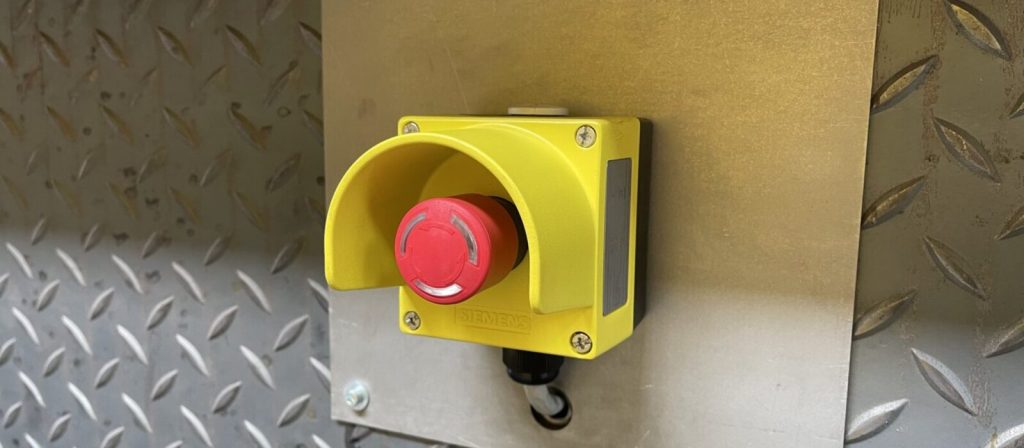
During the retrofitting of 32 emergency stop buttons on a parcel sorting system at Frankfurt Airport two fitters worked on two days during the system's downtime – one for mechanics, one for electrics. The buttons were pre-assembled, mechanically fitted and integrated into the existing safety circuit. The entire circuit was then tested. This was possible because background check and aviation security training were in place for both fitters. Without this evidence, the best technical qualification would not have helped – access would have been refused. Are you looking for an installation partner that does not have to gather this evidence first? Then get in touch with us – we will send you the prequalification documents for your project and clarify in a conversation what additionally applies in your environment.
What this means for your role
For buyers: Arrange your prequalification in the six groups. For each piece of evidence of suitability, define whether it is checked once in the supplier approval or per project with the tender. Write into the scope of works which evidence is part of the tender and which follows before work starts on site: team list with qualifications, inspection records for the work equipment, project-specific risk assessment. Regulate acceptance, warranty and disclosure of the subcontractor chain in the contract, and include the result of every job in the supplier evaluation.
For designers: Your planning determines which qualifications are needed on site. Where you provide for lifting over neighbouring equipment, hot work or work on electrical installations, evidence requirements arise. Name these points with the planning parameters – load weights, installation route, crane set-up area, floor load – in your documents so that procurement can require the appropriate evidence. Also check whether your planning forces methods for which only a few contractors have qualified personnel.
For project managers and site managers: You are the interface between prequalification and site. During the induction, check whether the team that arrives matches the named team and whether the risk assessment takes your site rules into account. The site manager organises induction, access control, handover of the work area and the coordination of several employers. They give or confirm the lift release and record deviations in the regular progress meeting – the prequalification does not take this off your hands.
For maintenance managers: You usually bring in subcontractors for work on running or only briefly stopped equipment – where isolation, permits to work and your operating instructions apply. Require the subcontractor's risk assessment to refer expressly to your equipment and your release procedure. Check whether an inspection by a competent person is due after the repair. Define in advance who isolates, who secures against reconnection and who puts the equipment back into operation after the test run.
For safety officers and HSE coordinators: You read the subcontractor's risk assessment against your own and against the SiGe plan, if one exists. Where the hazards overlap – traffic routes, lifting over neighbouring equipment, hot work – you define the coordination, designate the load area as a no-go zone and clarify the authority to stop work. A short conversation with the subcontractor's safety specialist before work starts on site saves many queries.
Prequalification checklist to request
The working document for this guide is a prequalification checklist for subcontractors in lifting and installation work. It arranges all the evidence from this article in the six groups company, insurance, personnel, occupational safety organisation, work equipment and references. For each piece of evidence there is a field for validity and project reference, a traffic light rating and an additional block for security areas with lead times. It contains no prices or price comparisons. It helps buyers set up supplier approval and project managers check before work starts on site. Request the prequalification checklist via our Contact form – keyword "Prequalification checklist".
Why Omega Mounting?
Omega Mounting is based in Rodgau near Frankfurt and regularly submits the evidence described here. This applies in data centers in Frankfurt and Offenbach, at Frankfurt Airport, in production plants in Hanau, Darmstadt and Aschaffenburg and in security areas where the background check is part of the contract. Our mechatronics technicians and lift-&-shift riggers bring qualifications for mechanics, electrics and lifting work. We prepare lift plans and risk assessments ourselves, specific to each project. In our own workshop in Rodgau, we manufacture brackets and special parts when something has to be adapted on site. Via the 24-hour hotline you can reach us outside office hours too. The linked jobs show how we work in environments with high access and security requirements; you will find further projects in our References. For you, this means: the evidence is complete, valid and related to your project before the first fitter enters your premises – with short distances in the Rhine-Main region. If you need this for your next project, get in touch with us.
Conclusion
Which evidence you may require from an installation subcontractor is answered by the hazard. Everything that demonstrates that contractor, team and work equipment are suitable for your specific site, you may and should require. What matters is the project reference – qualifications for the team that comes, inspection records for the equipment that is used, a risk assessment for your hall. In security areas, the lead time for background checks is added, which can take weeks. A good prequalification is not a hurdle for good contractors but their advantage over those who do not pass it. Send us your list of required evidence or the key data of your project – equipment, environment, time window – and we will get back to you with an honest assessment of which evidence really counts for your project.
Further reading: How to coordinate, brief and release external fitters during ongoing operations is covered in the guide on contractor management.
Planning maintenance, moving in or installation in the Rhine-Main region?
Tell us briefly what it is about – we will come back to you with an honest assessment.
100% free and without obligation
You may also be interested in these guides
Occupational safety

About the author
Tobias Schott
Managing director of Omega Mounting GmbH, Rodgau · more than 20 years of hands-on experience in installation and maintenance
A trained mechatronics technician, at home in maintenance, servicing and industrial installation since 2004 – first at his father's side, since 2012 with Omega Mounting: from the overhead conveyor in Frankfurt to the crane system in a new-build hall. Plans and leads lifting operations as appointed person in data centers and on industrial sites in the Rhine-Main region, is an instructor and examiner for cranes, mobile elevating work platforms and telehandlers, and a safety officer. On jobs abroad he is known as the “German Troubleshooter” – the one you call when things get stuck on site. He learned what quality means not from a manual but from his father: Made in Germany as a standard for his own work, not as a label. That is why it comes first at Omega Mounting – before speed and before price. He writes these guides from that practice: what works on our sites is in them – what only exists in the standard is not.
Frequently asked questions
As a minimum, you should require: certificates of good standing from the employers' liability insurance association, tax office and health insurance fund, the tax exemption certificate and the subcontractor declaration, plus public liability insurance with cover for damage to the work item. Added to these are qualification evidence for crane operators and slingers, a project-specific risk assessment and the inspection records for the work equipment used. For electrical work, evidence of the qualified electrician is added; for welding work, the valid welder qualification.
The prequalification checks before the contract whether the contractor is fundamentally suitable – evidence of suitability, qualifications, organisation. The induction takes place on site and conveys the specific site rules and the hazards on the spot. Both are necessary: prequalification without induction leaves site risks open, induction without prequalification lets unsuitable contractors onto the premises.
Yes, otherwise it is not evidence. The risk assessment must capture the actual working conditions – that is what the law requires – i.e. your hall, your equipment, your transport route and your ongoing operations. A general template only demonstrates that the contractor knows what a risk assessment is, not that it has understood your site.
Background checks under the German Aviation Security Act and the German Atomic Energy Act are carried out by authorities and are person-specific. In our experience in a nuclear facility, the check took several weeks before the premises could be entered. Allow for this lead time after the award, or choose a subcontractor whose team has already been checked.
The duty of several employers to cooperate under the ArbSchG (German Occupational Safety Act) and to provide information when awarding contracts under the accident prevention regulation "Principles of Prevention" presupposes that you know the suitability of your subcontractor. Added to this is the client's liability for the minimum wage under the German Minimum Wage Act. So you require the evidence not out of distrust but in order to fulfil your own duties – this is the practical classification, not legal advice.
A certificate demonstrates that a management system exists and has been audited – that is a good indication of organisation. But it does not replace the project-specific risk assessment, the qualification evidence for the specific team and the inspection records for the work equipment used. Use it as a plus, not as a substitute.
The appointed person for lifting operations prepares the lift plan, gives the lift release for each lift and has the authority to stop work; they are appointed by written delegation of duties from the employer. For lifting work with a crane or lifting gear in sensitive environments, you should require the subcontractor to name such a person – they are your technical contact for everything that is lifted.
Yes, and you should. If your installation contractor uses a crane hire company or further contractors, the same requirements for insurance, qualification and inspected work equipment apply to them. Have the subcontractor chain disclosed in the subcontractor declaration and the evidence passed on. The simplest way is a consent requirement in the contract for the use of further subcontractors, as the VOB/B also provides.
Send us via the Contact form three details: the type of work (moving in, installation, repair), the environment – data center, factory premises, security area – and the planned time window. We will get back to you, arrange a site visit if necessary and compile the evidence for your project – team list with qualifications, inspection records, risk assessment. Or you receive a written assessment of your list of required evidence. Your contact is Tobias Schott.
 English
 German