
- Technology explained – technology and procedures
Corrosion protection for steel: prime, coat or galvanise?
By Tobias Schott · 5-minute read · Updated November 2026
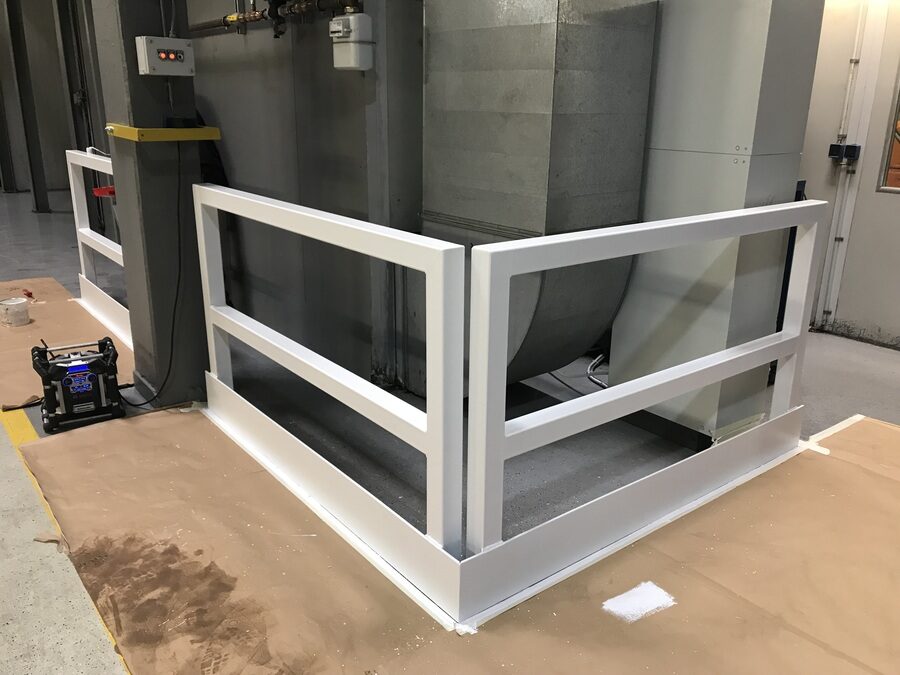
Corrosion protection for steel means keeping water and oxygen away from the surface – with a coating of primer and topcoat, with a zinc coating or with both; what matters is a properly prepared substrate and touching up every area damaged during welding and installation.
A steel component lasts for decades – if it is protected. Unprotected, steel starts to rust after a short time, faster outdoors and in damp halls than in a dry office. Rust eats away the cross-section, lifts coatings and turns a load-bearing part into a safety problem.
Here we explain why steel rusts, how a coating is built up, when galvanising is the better choice and what matters at welds and after installation.
What is corrosion protection?
Corrosion protection covers all measures that prevent metal from being destroyed by reaction with its environment. For steel this mainly means: preventing rust.
There are two basic principles. With passive protection, a layer separates the steel from the environment – a coating, for example. With active protection, another metal sacrifices itself: zinc corrodes instead of the steel and so protects it even at small damage.
Which protection is needed depends on the environment. The standard DIN EN ISO 12944 classifies it into corrosivity categories from C1 to C5 – from a heated interior to an industrial or coastal atmosphere.
Key facts
- Aim: Keep water, oxygen and salts away from the steel.
- Methods: Coating, hot-dip galvanising or both (duplex).
- Most important step: preparing the substrate – derusting, degreasing, roughening.
- Coating: Primer, intermediate coat, topcoat.
- Weak points: Edges, welds, holes, gaps.
- Care: inspect regularly, touch up damage early.
Why steel rusts
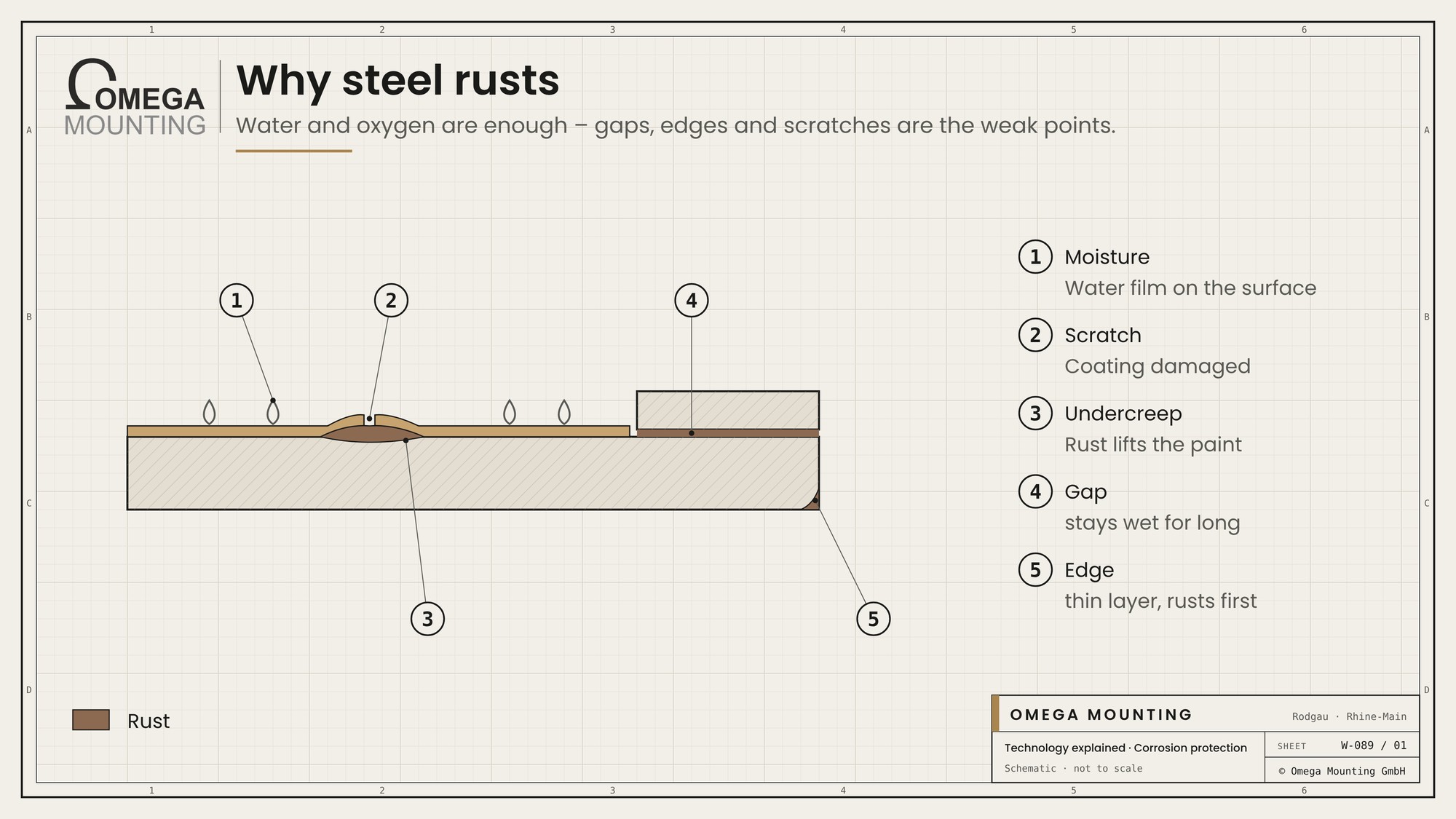
For rust, steel needs only water and oxygen. Even a film of moisture on the surface is enough.
- Salts and dirt hold moisture and accelerate rust – road salt at loading docks is a typical example.
- Gaps and overlaps stay wet for a long time and rust from the inside.
- Edges get a thinner coat when painting and rust first.
- Damaged coating: Through a scratch, rust creeps under the paint and lifts it over a large area – known as undercreep.
Layers of a coating system

A coating is only as good as the substrate underneath.
- Preparing the substrate: Remove rust, mill scale, grease and old, loose paint – by blasting or grinding. The surface becomes slightly rough so that the primer adheres.
- Primer: It is the actual corrosion protection. It adheres to the steel and often contains zinc or other protective pigments.
- Intermediate coat: It builds up film thickness and keeps water out.
- Topcoat: It protects against UV light, abrasion and chemicals – and gives the colour, such as safety yellow for impact protection.
Dry conditions during application are important: the coating does not adhere to a damp or too cold surface.
Three methods compared
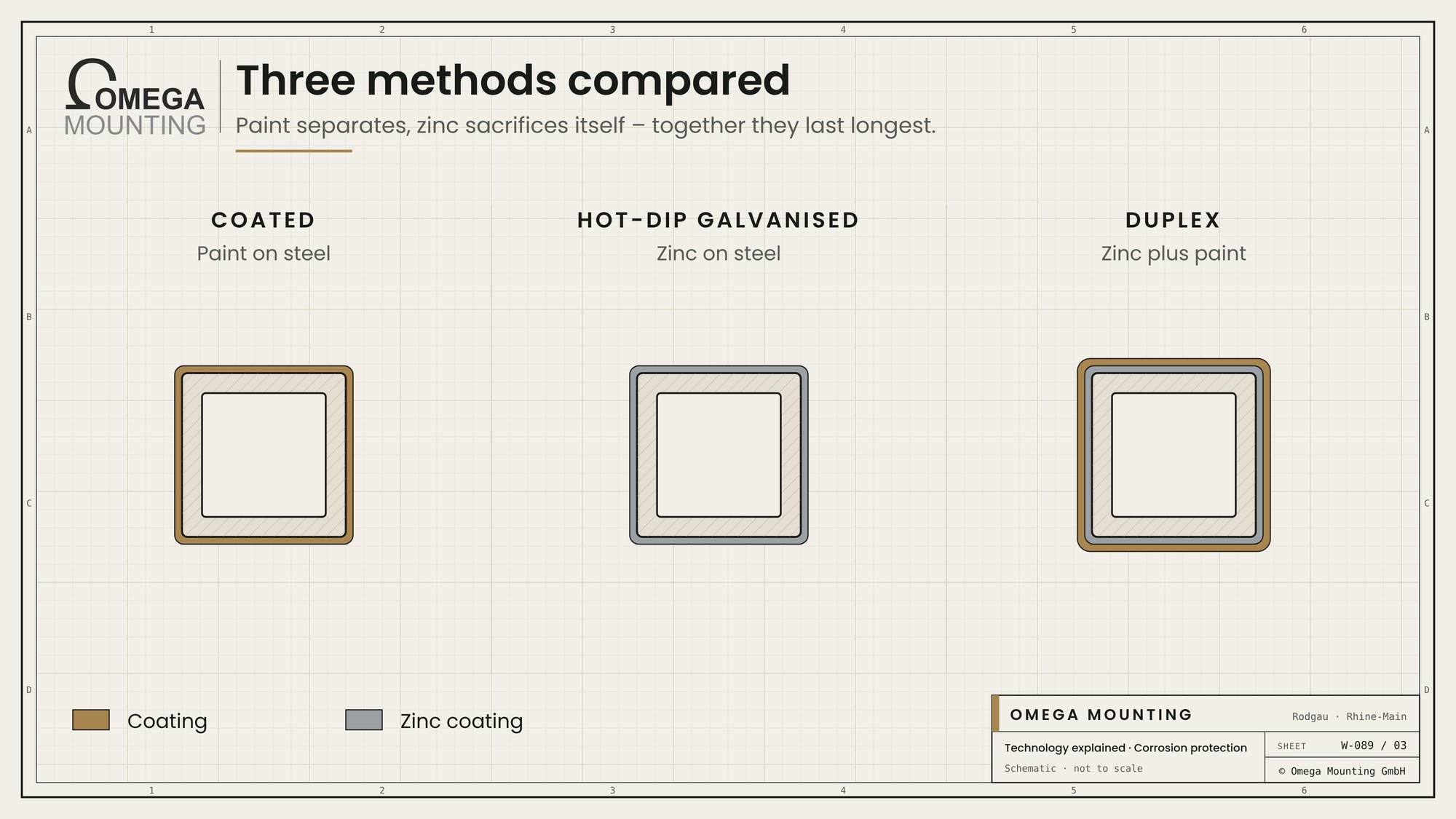
| Route | How it protects | What it suits |
|---|---|---|
| Coating | A layer separates steel and environment. | Interiors, coloured components, touch-up on site. |
| Hot-dip galvanising | Zinc coating protects even at small damage. | Outdoors, steelwork, guardrails, gratings. |
| Duplex | Zinc plus coating. | High exposure, long service life, colour required. |
Hot-dip galvanising is done in the zinc bath at the galvaniser – so the component must be fully welded beforehand and fit into the bath. A coating, by contrast, can also be applied on site.
Welds and installation
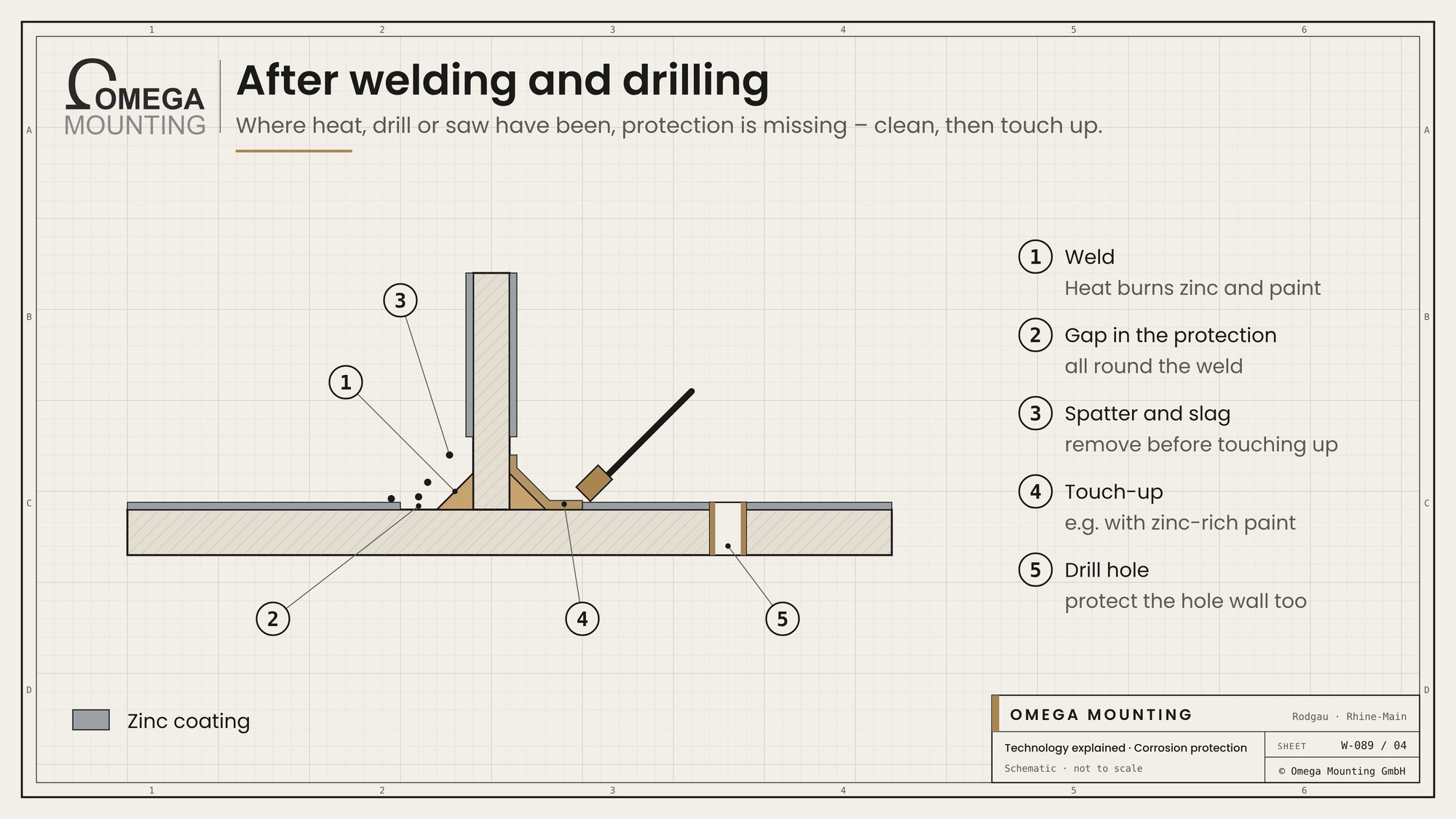
Every operation after corrosion protection leaves a gap.
- Welding: The heat burns zinc and paint around the weld. Slag and spatter are removed, the area is ground bright and protected again.
- Galvanised parts: Small areas are touched up with zinc-rich paint.
- Holes and cuts: Freshly drilled holes and cut edges also need protection.
- Anchor points: Where components stand on the floor, water collects – coat especially carefully here.
- Transport: Touch up scratches from straps and chains after installation.
How repair welding on installations is planned is described in our guide on repair welding.
Inspecting and maintaining
Corrosion protection is not a one-off. Even the best coating gets scratches, knocks and abrasion in operation – on impact protection, for example, with every glancing blow.
- Look regularly: During walk-throughs and inspections, watch for rust spots, blisters and flaking paint.
- Touch up early: Small damage is quickly ground and repainted. Once rust has crept under the coating, large areas have to be refurbished.
- Know the critical areas: Check bases, edges, welds and gaps first.
- Document: Knowing which coating was applied makes the right touch-up easier later.
Typical mistakes
- Painted over rust: Paint over loose rust does not hold – the rust carries on underneath.
- Grease and dust not removed: The primer does not adhere and flakes off.
- Coated in the wet: Condensation under the paint leads to blisters.
- Edges forgotten: Without a stripe coat at the edges, the film there is too thin.
Coating on site
In the factory coating takes place under controlled conditions; on site it does not. For touch-up work to last, we pay attention to:
- Weather: Temperature, humidity and dew point decide whether coating may take place. No paint adheres to damp steel.
- Ground: Rust, mill scale and loose paint are removed until a sound substrate is reached.
- Same system: Touch-ups are made with the coating system that was also used in the factory.
- Film thickness: Each coat needs its thickness. It is measured with a coating thickness gauge.
- Drying: The drying time between coats is observed, even when the schedule is pressing.
Welds and bolted joints made only on site are particularly critical. They are cleaned after installation and recoated with the matching system. Documenting the touch-up makes later inspection of the corrosion protection easier.
What we pay attention to
- We plan corrosion protection right from the design stage.
- We prepare the substrate before paint is applied.
- We mask the surroundings when coating on site.
- We touch up welds, holes and transport damage.
- We coat in dry weather or create dry conditions.
Where we use it
For a manufacturing company near Offenbach we built custom-made impact protection in Rodgau, installed it on site and anchored it with heavy-duty anchors. Afterwards our metalworkers masked the structure, primed it and painted it safety yellow. Because the coating was applied on site, all welds, anchor points and installation adjustments lie under a continuous coating – with no transport damage to the finished surface. More on planning in our guide on custom-made impact protection.
More technology explained
Technology explained
which protection suits where.
Technology explained
what is used for welding.
Technology explained
welding in cold and wet conditions.
Do you have questions about how this works on your site?
Do you have steel components that are rusting, or are you planning a structure that should last? We fabricate, install and protect them – on site too. Request a callback.
Our service for this: Maintenance and servicing →
Free, no-obligation callback

About the author
Tobias Schott
Managing director of Omega Mounting GmbH, Rodgau · more than 20 years of hands-on experience in installation and maintenance
A trained mechatronics technician, working in maintenance, servicing and industrial installation since 2004 – first alongside his father, and with Omega Mounting since 2012: from overhead conveyors in Frankfurt to the crane system in a new-build hall. He plans and leads lifting operations as an appointed person (AP) in data centers and on industrial sites in the Rhine-Main region, trains and examines operators of cranes, mobile elevating work platforms and telehandlers, and is a qualified occupational safety specialist. On jobs abroad he is known as the “German Troubleshooter” – the person you call when a site gets stuck. He learned what quality means from his father, not from a manual: Made in Germany as a standard for his own work, not a label. That is why quality comes first at Omega Mounting – ahead of speed and price. The Technology explained articles cover the equipment and techniques his team uses every day: what counts on site is in them – what only appears in the brochure is not.
 English
 German