
- Guide – Maintenance
Servicing a vehicle restraint system: checking mechanics, hydraulics, sensors and signals, testing them together and documenting everything
By Tobias Schott · Reading time approx. 23 minutes · Updated: November 2026
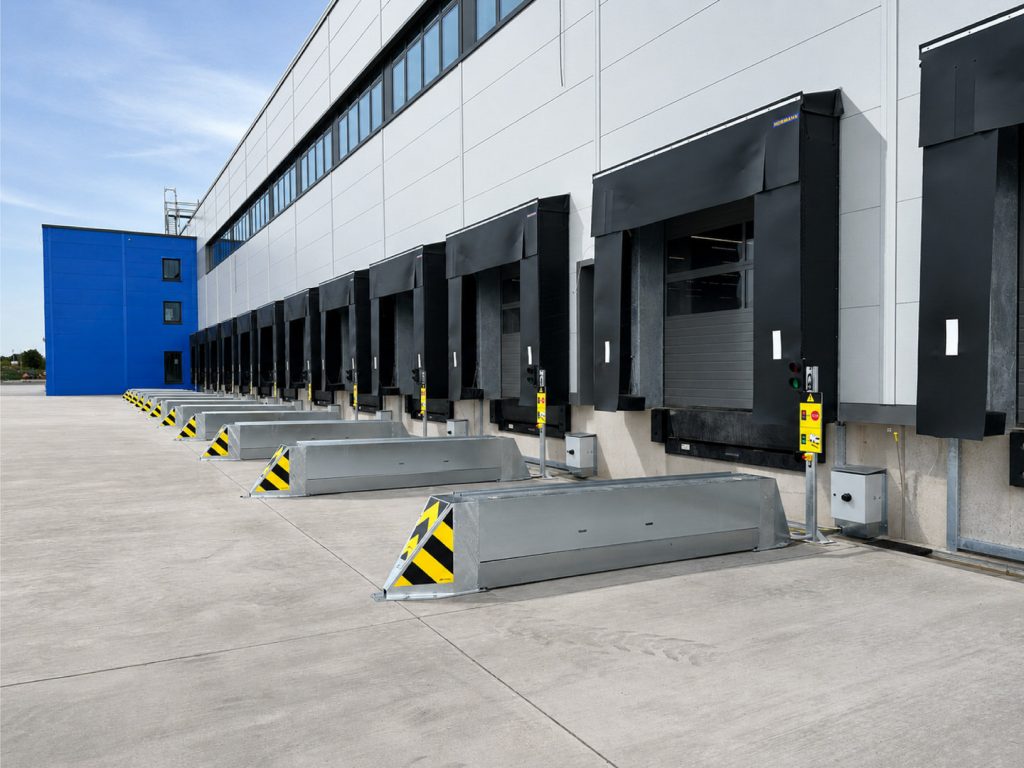
Servicing a vehicle restraint system means looking after the blocking arm, guide and lubrication points, checking the hydraulics for leaks, testing sensors, signal lights and warning tone and running the whole system together with door and dock leveller – operated inside, observed outside. At the end, every loading bay has a record with a clear finding.
A vehicle restraint system holds the lorry at the dock while loading takes place. It prevents a trailer from rolling away while a forklift is on the dock leveller. That makes it a safety device – and one that works outdoors: in rain, frost, road salt and dirt, often many times a day.
That is exactly why it needs care. A blocking arm that jams in a dirty guide, a sensor that has been knocked out of position, a signal light that stays dark: each of these small faults can lead to the driver pulling away while loading is still under way – or to the loading bay standing idle. Having your vehicle restraint system serviced keeps both under control: safety and availability. If you search for vehicle restraint system maintenance, servicing a wheel restraint or truck restraint maintenance, you usually mean exactly that: servicing that looks at mechanics and electrics together.
This guide shows how to service a vehicle restraint system – from the mechanics through hydraulics and electrics to the combined function test and documentation. It is written for site and logistics managers, technical and maintenance managers in logistics centres and plants, facility managers, occupational safety specialists and buyers.
Key points at a glance
- Servicing a vehicle restraint system means: look after the mechanics, check the hydraulics, test electrics, sensors and signals, run the system as a whole and document.
- A safety device. The system protects people at the dock. It must hold reliably and report correctly every day.
- Swap bodies and wheel chocks too. Swap body restraints and radio wheel chocks belong in the same service order.
- Servicing in pairs. One person operates inside, one checks outside – only then does it show whether signal and movement match.
- Guide and lubrication points. Dirt and missing grease are the most common causes of faults.
- Sensors and release chain. Door closed, dock leveller in position, restraint active – only then may release be given.
- A record per system. Every inspection point with a finding, every defect with a rating: immediate, plannable or monitor.
- With the manufacturer, not against them. We service to the manufacturer's specifications; software, safety function and warranty remain with the manufacturer.
What does servicing a vehicle restraint system actually involve?
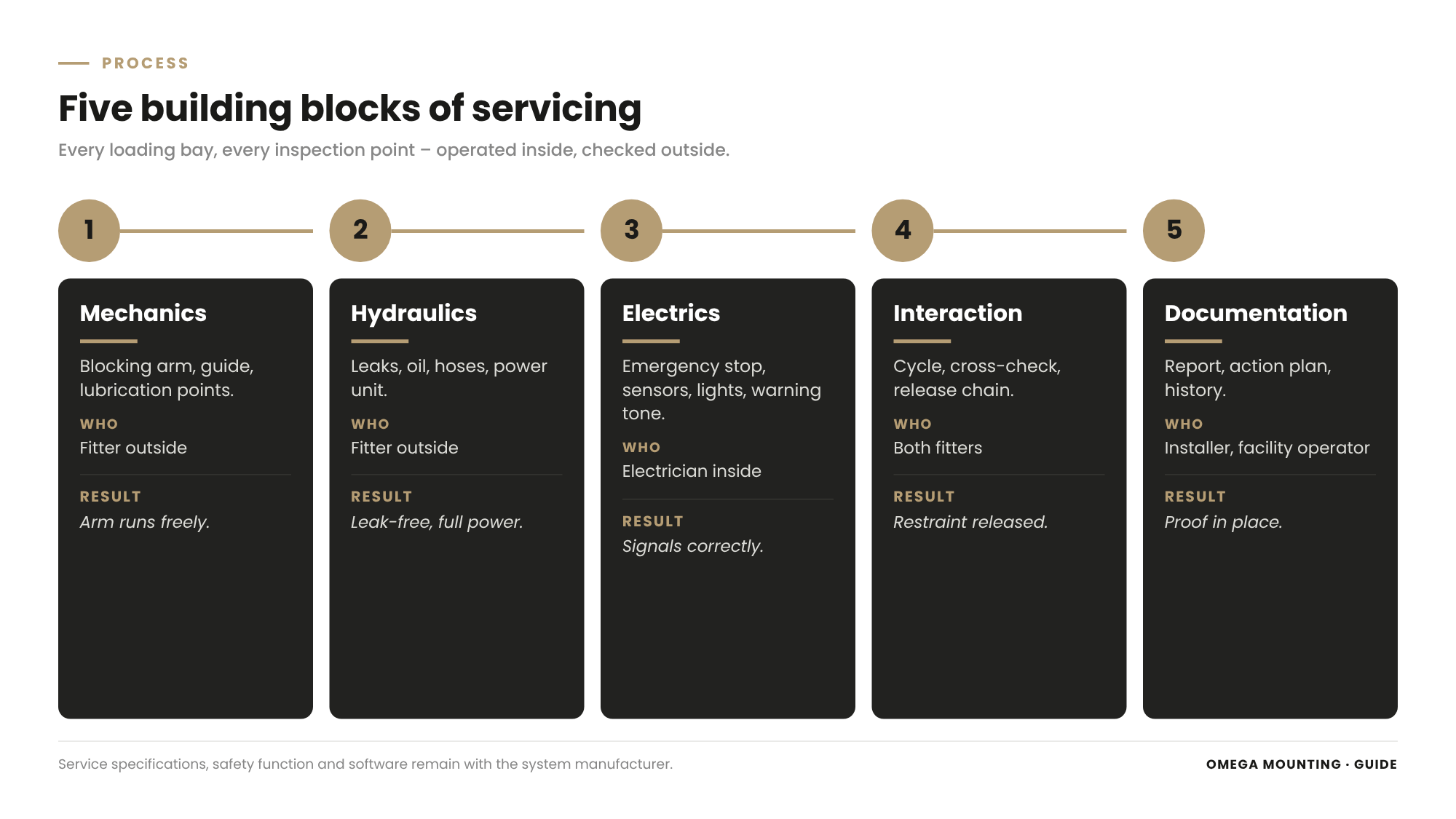
A vehicle restraint system – also called a truck restraint or wheel restraint – secures the lorry at the loading bay. A blocking arm settles in front of the rear wheel, signal lights show driver and forklift driver the status, and the controls only release door and dock leveller once the lorry is secured.
Anyone who wants to service a vehicle restraint system works through five building blocks. Mechanics: blocking arm, guide, lubrication points, bolted connections. Hydraulics: cylinders, lines, oil, power unit. Electrics and signals: emergency stop, controls, sensors, signal lights, warning tone, coupling with door and dock. Function test of the whole system. Documentation with findings and actions. And where swap bodies are loaded, the swap body restraint is included in the same round.
Servicing, inspection, testing
Servicing means looking after: cleaning, lubricating, retightening, topping up. Inspection means establishing condition: wear, leaks, damage. Testing means confirming that the safety function works. Good servicing does all three in one round.
Why regularly?
A vehicle restraint system wears quietly. The blocking arm runs a little more stiffly, a sensor gradually gets dirty, a hose ages. Regular servicing finds these things before they turn into faults – and before anyone at the dock is harmed. How docks are maintained as a whole is shown in the guide Loading dock maintenance.
Manual, automatic or wheel chock: what is serviced

Vehicle restraint systems come in different designs – for lorries with trailers as well as for swap bodies. Servicing follows the same structure but sets different priorities.
Manual vehicle restraint with operating lever
In the manual version, the blocking arm is brought in front of the wheel with an operating lever. The lever is often telescopic and has a lever lock. When servicing, what counts is smooth movement, locking and completeness of the lever and whether the lever lock engages and releases securely.
Automatic, sensor-controlled vehicle restraint
The automatic version detects the wheel via sensors and moves the blocking arm hydraulically. Here, smooth synchronised movement, end positions, positioning at axle height and reliable wheel detection with different wheel diameters are added.
Wheel chock with sensor or radio
With the sensor wheel chock, the driver places the chock in front of the wheel himself. The chock reports to the signalling system by cable or radio whether it is positioned correctly; only then does the inside light switch to green and the outside light to red. It too is a vehicle restraint. Chock, holder, cable or radio link, the power supply of the radio chock, the control cabinet with signal lamp and acoustic alarm and the signal evaluation are serviced.
Swap body restraint
Swap bodies stand on their own support legs in front of the door. A swap body restraint slides electro-hydraulically under the swap body, locks and presses it against the dock. That way it can neither tip nor slide away, and it is not pulled away too early. Many systems have a contact strip with a warning tone on the ground for the approach and report to the door control by radio.
One scope for all designs
A good maintenance schedule applies to all designs and marks the design-specific inspection points. That way every fitter knows what to do on which system.
The inspection points at a loading bay
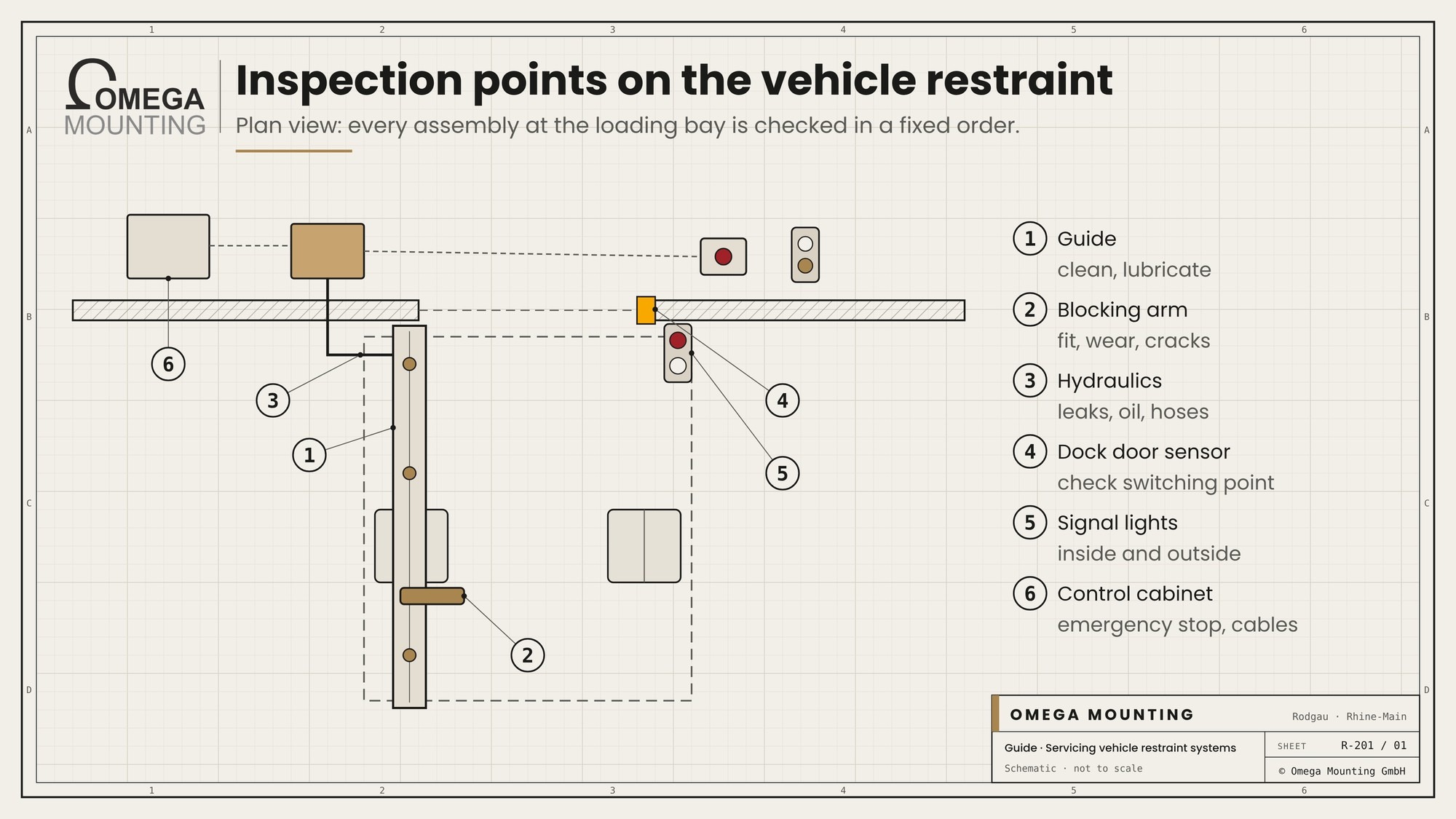
The same assemblies sit at every loading bay. They are checked in a fixed order.
Outside in front of the door
Outside are the base frame, guide and blocking arm. The outside signal light and often a warning tone are also mounted there. This is where weather, dirt and the forces of the lorries act.
At the door
At the door there are sensors that report whether the door is closed and whether the dock leveller is in position. They are part of the release chain.
Inside on the wall
Inside are the control panel, the inside signal light, often the hydraulic power unit in a cabinet, and the connection to the door and dock control.
In the control cabinet
The signals come together in the control cabinet. Here terminals, cables and plug connections are checked for damage and moisture – by our own electricians.
Preparing and securing the loading bay
Before servicing, the loading bay is secured. The loading area remains a manoeuvring area for lorries even during servicing.
Coordinating
The operator decides which doors are free when. Servicing is done door by door so that operations continue.
Cordoning off
The area in front of the door is cordoned off and marked. No lorry may reverse up to the dock while work is being done on the system.
Isolating
For work on mechanics and hydraulics, the system is isolated and secured against being switched back on. How that is done is shown in the guide lockout tagout in maintenance. For the function test, it is switched back on in a controlled way.
Having documents to hand
System documentation, installation and operating instructions and the manufacturer's servicing specifications are available. They determine lubrication points, lubricants and test values.
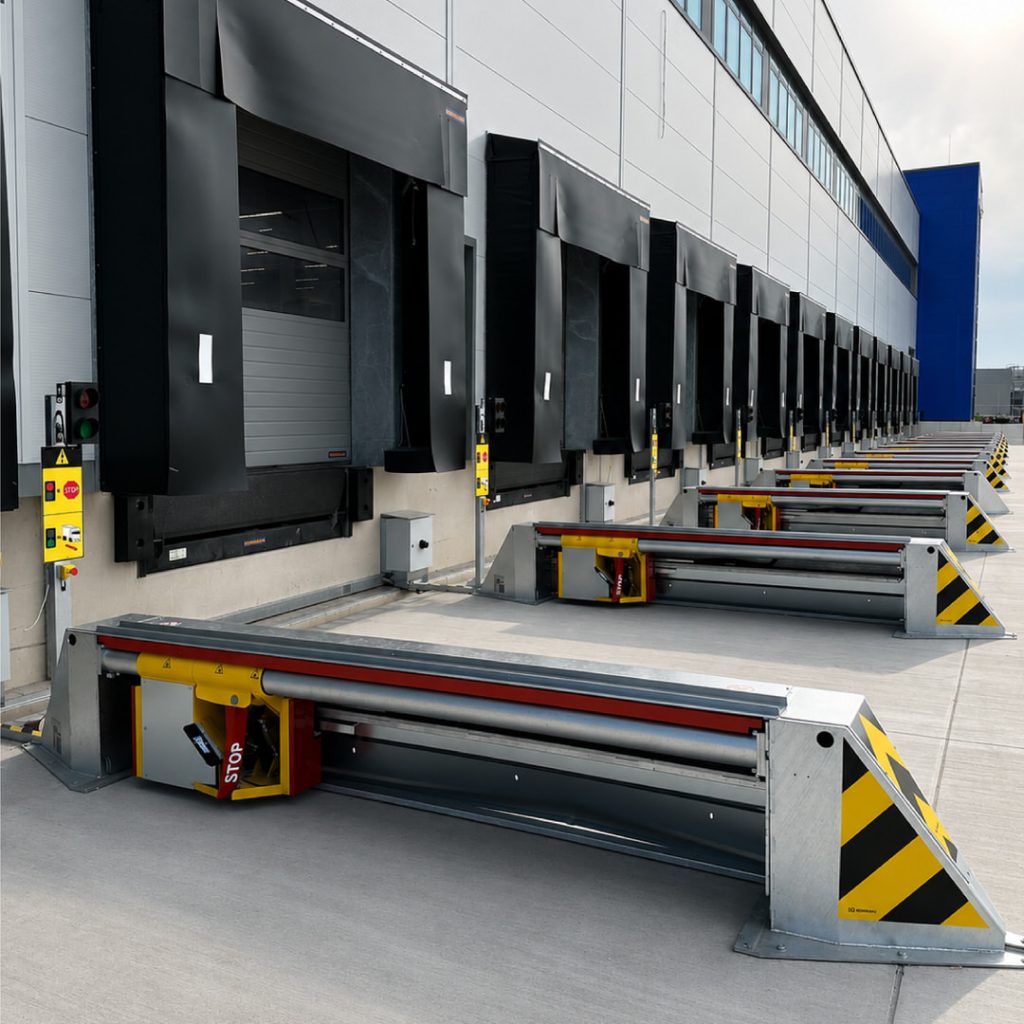
Mechanics: blocking arm, guide and lubrication points
The mechanics carry the load – literally. When a lorry pushes against the blocking arm, it has to hold.
Blocking arm
The blocking arm is checked for secure fit, wear, deformation and cracks. The contact surface at the wheel is checked for wear. A deformed arm no longer holds safely and is replaced.
Guide
The guide is cleaned along its entire length and checked for dirt, dents and free movement. Then it is lubricated according to the manufacturer's specifications.
Lubrication points
All lubrication points are greased according to the manufacturer's specifications – with the prescribed lubricant. How a lubrication plan is structured is shown in the guide lubrication schedule in maintenance.
Bolted connections
Bolted connections on base frame, floor fixing, guide and pivot points are checked and retightened. Lorries push, shake and drive in – over time that loosens every connection.
Corrosion protection
Galvanising and coating are checked for damage. Where protection is missing, rust begins. The finding is documented so that it can be monitored or repaired.
Cleaning and greasing the guide
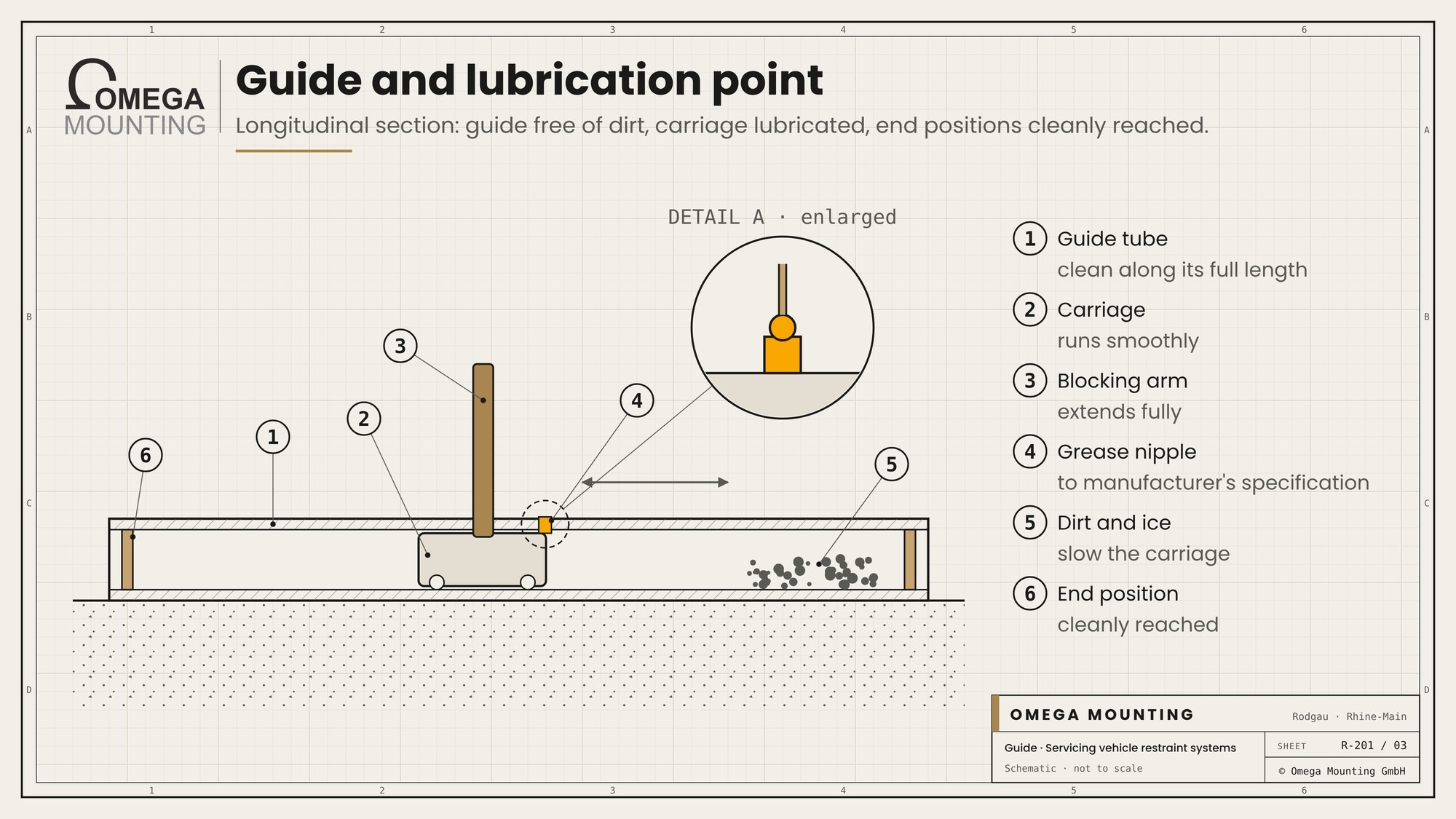
The guide is the part that suffers most and causes faults most often.
What builds up
Sand, grit, leaves, scraps of film, road salt and, in winter, ice collect in the guide. Even a little dirt can slow the carriage so that the blocking arm does not extend fully.
Cleaning
The guide is cleared out and cleaned along its entire length. Where water stands, it is checked whether the drain is clear.
Greasing
After cleaning, guide and carriage are greased at all lubrication points. Too much grease is just as bad as too little: excess grease binds dirt.
Checking free movement
Finally, the blocking arm is moved over its full travel by hand or with the controls. It must run without jerking and arrive cleanly in both end positions.
Servicing the swap body restraint
Where swap bodies are loaded, the swap body restraint is just as much a safety device as the vehicle restraint. Having the swap body restraint serviced means checking it using the same structure – with its own inspection points.
Support and locking
Support and locking parts are checked for secure fit, deformation, wear and cracks. The contact surfaces on the swap body must not be worn out.
Sliding movement and floor guide
The movement under the swap body and back must run evenly and without catching. Guides and running surfaces in the floor are cleaned and lubricated according to the manufacturer's specifications.
Pressing against the dock
It is checked whether the restraint really presses the swap body against the dock and holds it there. A gap between swap body and dock leveller is a fall point for the forklift.
Contact strip, warning tone and radio
The contact strip for the approach is checked for damage and triggering, the warning tone for audibility, and the radio link to the door control for reliable reporting.
Combination with the vehicle restraint
At doors where sometimes a lorry and sometimes a swap body stands, both systems work together. Some vehicle restraints automatically move to the side for a swap body so that the support legs do not hit them. This sideways movement and the detection of whether a lorry or a swap body is present are checked during servicing.
Servicing the radio wheel chock
The wheel chock looks simple but has electronics on board.
Chock and holder
The chock is checked for wear, cracks and detached rubber parts. The holder on the wall must sit firmly so that the chock does not get left lying on the roadway.
Radio and power
The radio link is tested at the point where the chock is actually placed – not at the control cabinet. The chock's power supply is checked according to the manufacturer's specifications and replaced in good time.
Signal and alarm
If the chock is placed correctly, the inside light must switch to green and the outside light to red. If it is removed, light and alarm must react immediately.
Hydraulics and drive
On automatic systems, hydraulics move the blocking arm. They must be leak-free and powerful.
Leaks
Cylinders, fittings, hoses and pipes are checked for leaks. A damp patch under the power unit is a finding, not a cosmetic flaw. Escaping oil also contaminates the ground at the dock and is washed into the soil when it rains – another reason why every leak is noted and fixed promptly.
Oil
Oil level and oil condition are checked. Where necessary, oil is topped up according to the manufacturer's specifications. Dark or milky oil indicates wear or water in the system.
Hoses
Hoses are checked for chafing, cracks, ageing and correct routing. Old hoses are replaced in good time before they burst.
Power unit
The power unit is checked for running noise, tightness and temperature. The hydraulic cabinet inside is checked for tightness, dirt and moisture.
Electrics, sensors and signals
Electrics, sensors and signals decide whether the system reports correctly. This is where our electricians and mechatronics technicians work.
Emergency stop and controls
The emergency stop devices are tested at all control points. On the controls, all operating and switching functions, switching points and end position switches are tested.
Optical sensors
The sensors for dock leveller and closed door are cleaned, their alignment checked and the switching point verified. A dirty or misaligned sensor is one of the most common causes of false reports.
Wheel detection
On automatic systems, it is checked whether the wheel detection reliably picks up different wheel diameters – from trailers to swap body vehicles.
Signal lights and warning tone
Signal lamps inside and outside are checked, including lamps and lenses. The warning tone must be clearly audible in the loading area.
Coupling with door and dock leveller
The signal transmission to the door control and the dock leveller is checked: do all releases and feedback signals arrive? Do coupling and interlock switch correctly?
Cables and signs
Control cabinet, cable routes, plug connections and cables are checked for damage, chafing and moisture. Warning and information signs must be present and legible.
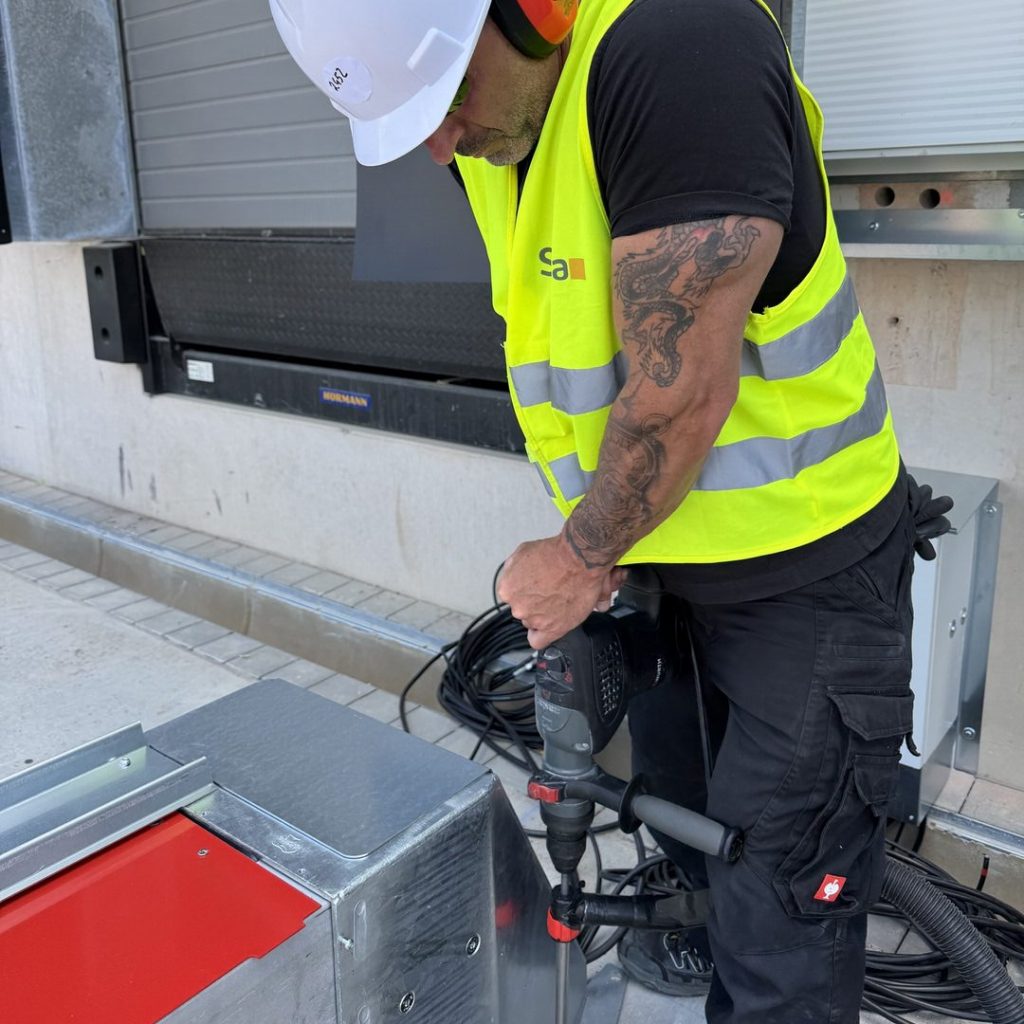
Why servicing needs two fitters
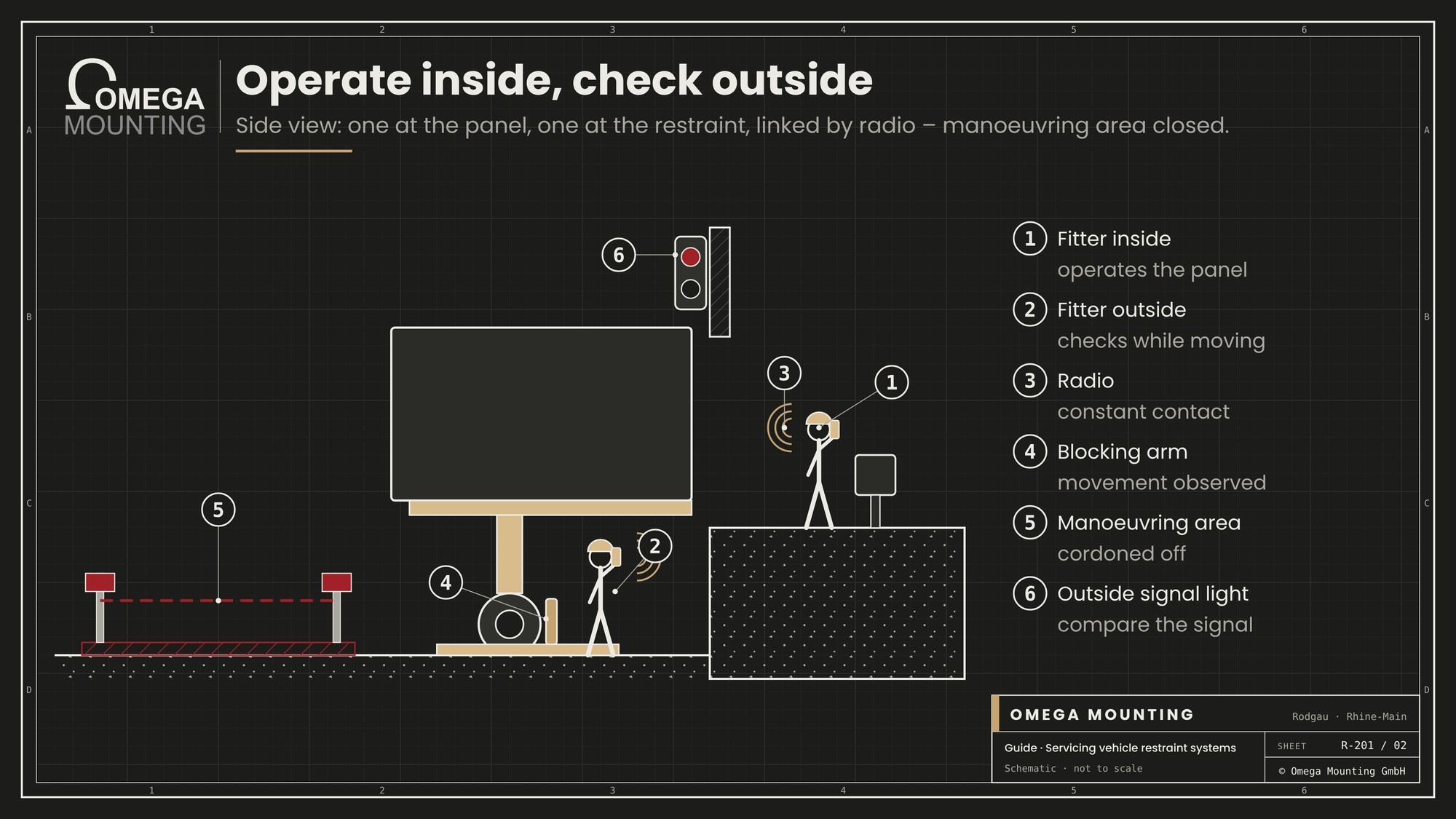
A vehicle restraint system cannot be serviced sensibly by one person. There are two reasons for this.
Operate inside, check outside
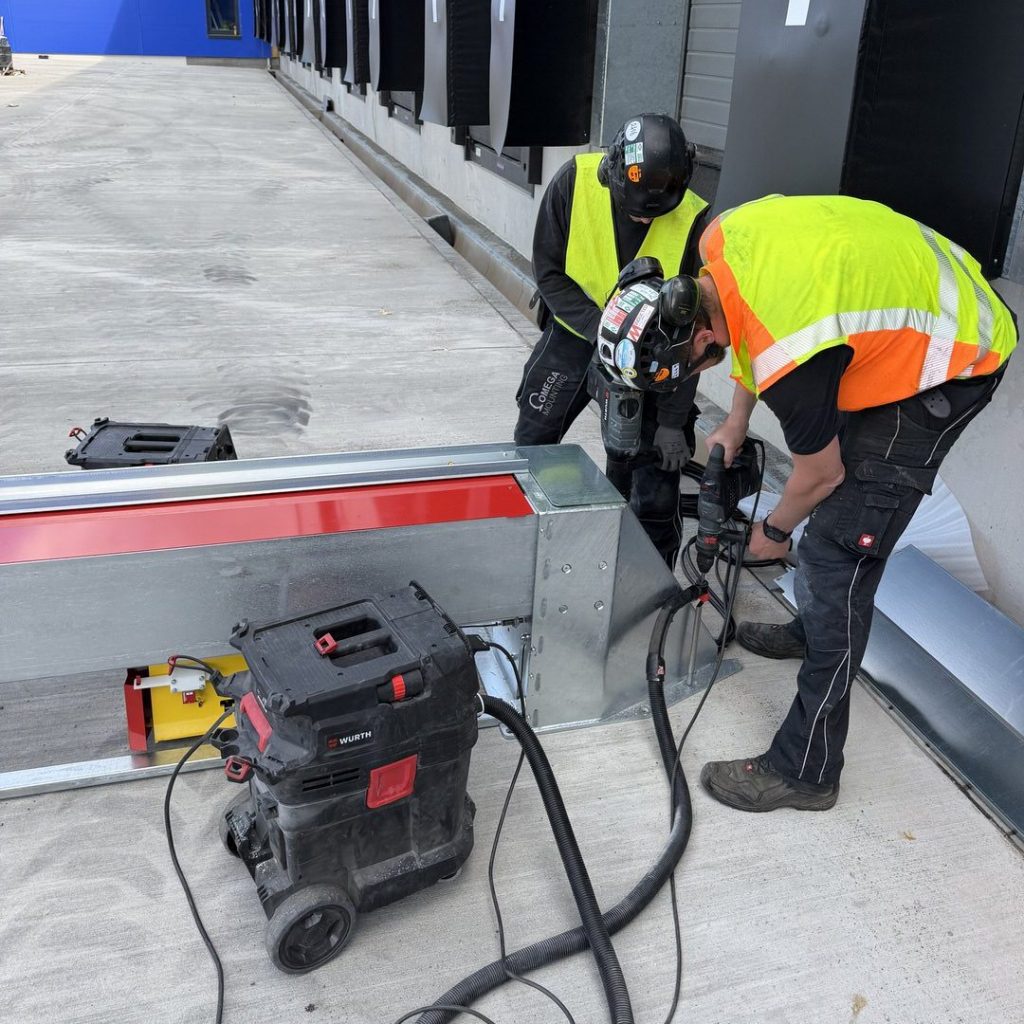
The system is operated from inside and checked from outside. One fitter operates the panel and watches controls, signals and releases. The second stands outside, checks mechanics and hydraulics under movement and lubricates. Only then can it be established whether a signal actually reaches the right component.
Safety in the loading area
The loading area remains a manoeuvring area for lorries. A fitter on his own would have to operate the system, secure the area and watch the movement – that is neither safe nor meaningful. What applies to lone working is shown in the guide lone working in maintenance.
Shorter downtime
With two people it is quicker. Each door is out of service for less time, and loading needs less replanning. With many loading bays this adds up: a well-practised team of two works through the doors in a fixed order while operations continue at the other doors. The site plans the time windows once and can rely on them in every round.
Function test of the whole system
Every service ends with the most important test: does the system work as a whole?
Complete cycle
The system is run through once completely: restrain and release, operated inside, observed outside.
Cross-checking
Control signal, movement of the blocking arm, interlock, signal light and warning tone are cross-checked. If the light shows green although the arm is not in place, that is an immediate defect.
Release chain
The whole chain is tested: door closed, dock leveller in position, restraint active. Only when all conditions are met may release be given. If one condition is missing, release must not happen.
Release for operation
Only when all points are right is the system released for operation. If an immediate defect remains, the loading bay stays closed or is secured with a wheel chock until it is fixed.
Documentation: record and action plan
Servicing without a record is worthless to the operator. They must be able to prove that their safety devices are in order.
Inspection record per system
Each system gets its own inspection record for each service round, with the finding for each inspection point, the inspector and the date. A loading bay maintenance record means: nothing that was checked individually is lumped together.
Action plan
Each record comes with an action plan: defects found with a rating, recommended action and, as far as can be seen, the spare parts needed. The rating is simple: immediate, plannable or monitor.
Summary report
With many doors, there is also a report covering all systems with a summarised defect list. That way the site manager can see at a glance where the problems are.
Maintenance history
A maintenance history is kept for each system. It shows where defects recur and where a component wears earlier than expected. How to recognise wear early is shown in the guide Recognising wear on machines.
Servicing and manufacturer: hand in hand
Vehicle restraint systems are developed and built by specialist manufacturers. They remain the experts for their system.
What stays with the manufacturer
Design, safety function, control software, warranty and original spare parts belong to the manufacturer. Only the manufacturer makes changes to the safety function or software. Where the manufacturer has contractually taken on servicing itself, it stays with them.
What we take on
We service to the manufacturer's specifications, with its lubricants and test values, and report findings so that it can use them. If a component has to be replaced, we procure the original part or coordinate with the manufacturer.
Why that fits together
Many sites have more systems than a manufacturer's service can look after at short notice. A nearby installation contractor who knows the systems supplements the manufacturer's service – it does not replace it.
Between services: everyday checks
Not every fault waits for the next service date. Staff at the dock can observe a lot themselves.
Visual check at the start of a shift
A quick look at the start of the shift is often enough: are both signal lights on? Is there dirt or ice in the guide? Is there an oil stain? Anyone having a truck restraint checked like this finds many faults before they cause disruption.
Reporting anything unusual
If the blocking arm runs more slowly than usual, the warning tone does not beep or the system reports faults, this is reported and the loading bay is closed if in doubt. The lorry is then secured with a wheel chock until the fault has been fixed.
No interventions without expertise
Staff clean at most roughly and report. Sensors are not adjusted, safety switches not bypassed. Anyone servicing a wheel restraint at a loading dock needs expertise and the manufacturer's documents.
Sensors, blocking arm and hydraulics: what inspectors pay particular attention to
Three assemblies decide safety. Experienced fitters look particularly closely at them.
Checking the loading door sensor
The sensor at the loading door reports whether the door is closed. If it reports incorrectly, the release chain can switch wrongly. That is why every sensor is tested with the door closed and open – not just visually.
Checking the blocking arm
The blocking arm is not just looked at but moved and observed under light load. Play in the bearings, cracks in welds or a bent contact surface only show up this way.
Vehicle restraint hydraulics
The hydraulics of a vehicle restraint work with small amounts of oil but high pressure. Even a small leak can mean that the arm no longer stays securely in its end position. That is why the end position is checked again after any work on the hydraulics.
How often should servicing take place?
There is no fixed number that suits everyone. Service intervals result from several factors.
Manufacturer's specification
The manufacturer states service and inspection intervals in the operating manual. They are the minimum.
Use
At doors with many lorries a day, the system wears faster than at rarely used doors. Servicing is more frequent there.
Environment
Dust, road salt and frost put a strain on the system. An extra look before and after winter is worthwhile. What else needs considering in winter is shown in the guide winter maintenance of plant.
Inspection duty
Which inspections are legally required at which intervals is set by the operator in the risk assessment. How this is organised is shown in the guide inspection obligations for operators.
Typical defects and their causes
The same defects keep turning up during servicing.
- Blocking arm does not extend fully: dirt or ice in the guide.
- False report “door open”: sensor dirty or misaligned.
- Signal light dark: lamp failed or lens damaged.
- Oil stain under the power unit: leaking fitting or aged hose.
- Loose floor fixing: forces from lorries over time.
- Rust on base frame and guide: damaged corrosion protection.
- Operating lever stiff: missing grease, bent parts.
The defect behind the defects
Almost all these defects develop slowly. Anyone who services and documents regularly sees them coming – and fixes them before the loading bay fails.
Spare parts and wear parts
Some parts wear in a predictable way. It is worth keeping them in stock.
Typical wear parts
Lamps, lenses, hoses, seals, sensors and parts of the blocking arm are among them. Exactly which ones is stated in the manufacturer's documentation.
Stock on site
With many doors, a small store with the most common parts is worthwhile. That way a fault does not turn into a closure lasting days. Which parts belong in it is shown by the maintenance history: whatever keeps appearing as a defect in the records belongs on the shelf. During servicing, we agree the list with the maintenance manager and add to it if a new wear pattern appears. That way the store matches actual demand and does not tie up capital in parts that are never needed.
Original parts
For safety-related parts: original part or a part approved by the manufacturer. That secures function and warranty.
Servicing the vehicle restraint system together with door and dock leveller
The vehicle restraint system is part of the loading bay. It works together with door, dock leveller and dock shelter.
One appointment, one loading bay
It is most efficient to service all components of a loading bay in one round. The door is only out of service once.
Checking interfaces
Faults arise precisely at the interfaces: the door reports closed although it is not fully down, or the dock leveller reports in position although it is still moving. These faults show up during combined servicing.
Impact protection
Bumpers and impact protection at the dock also belong to the loading bay. How impact protection is designed is shown in the guide custom-made impact protection.
The whole loading bay in view: what else belongs in the service order
A loading bay is more than the vehicle restraint system. Anyone already standing in front of the door as a pair should check the other components too – or at least record them in the report.
Dock leveller and door
Dock leveller and door are power-operated equipment with their own inspection duties. When servicing the vehicle restraint system, their feedback signals are checked anyway; the separate inspection of dock leveller and door as specified is part of it or is scheduled for the same appointment.
Dock shelter and bumpers
Dock shelter, dock bumpers and wheel guides take knocks every day. Damaged bumpers let the lorry get too close to the wall, and bent wheel guides no longer lead the wheel cleanly into the vehicle restraint.
Lighting at the dock
Dock lights illuminate the dock leveller and the load space. Many loading accidents happen in half-light. Joints, lamps and fixings are checked.
Trailer supports
Where parked trailers without a tractor unit are loaded, trailer stands secure them against tipping. They are checked for deformation, crank, base plate and wheels.
Ground, drainage and marking
Potholes, subsidence or blocked drains in front of the door disrupt guide and sensors. Floor markings and signs show the driver where to drive – they must be visible.
Spare parts, fault service and instruction
Good servicing includes an agreed spare parts list, a clear route for reporting faults between appointments and a short briefing for staff if something about the operation has changed.
Safety rules during servicing
A few rules apply to every service at the dock.
The basic rules
- Loading bay cordoned off, no lorry during the work.
- Isolate and secure against being switched back on.
- Always in pairs: operate inside, check outside.
- Electrical work only by qualified electricians.
- Lubricants and test values to the manufacturer's specifications.
- No changes to safety function or software.
- Release only after a complete function test.
Legal framework
Servicing and inspection are subject to, among other things, the German Occupational Safety Act (ArbSchG), the Industrial Safety Ordinance (BetrSichV), the accident insurance rules for power-operated equipment and the manufacturer's requirements. This guide is not legal advice – which obligations and intervals apply in your case you should clarify with your occupational safety specialist.
Who does what when servicing a vehicle restraint system?
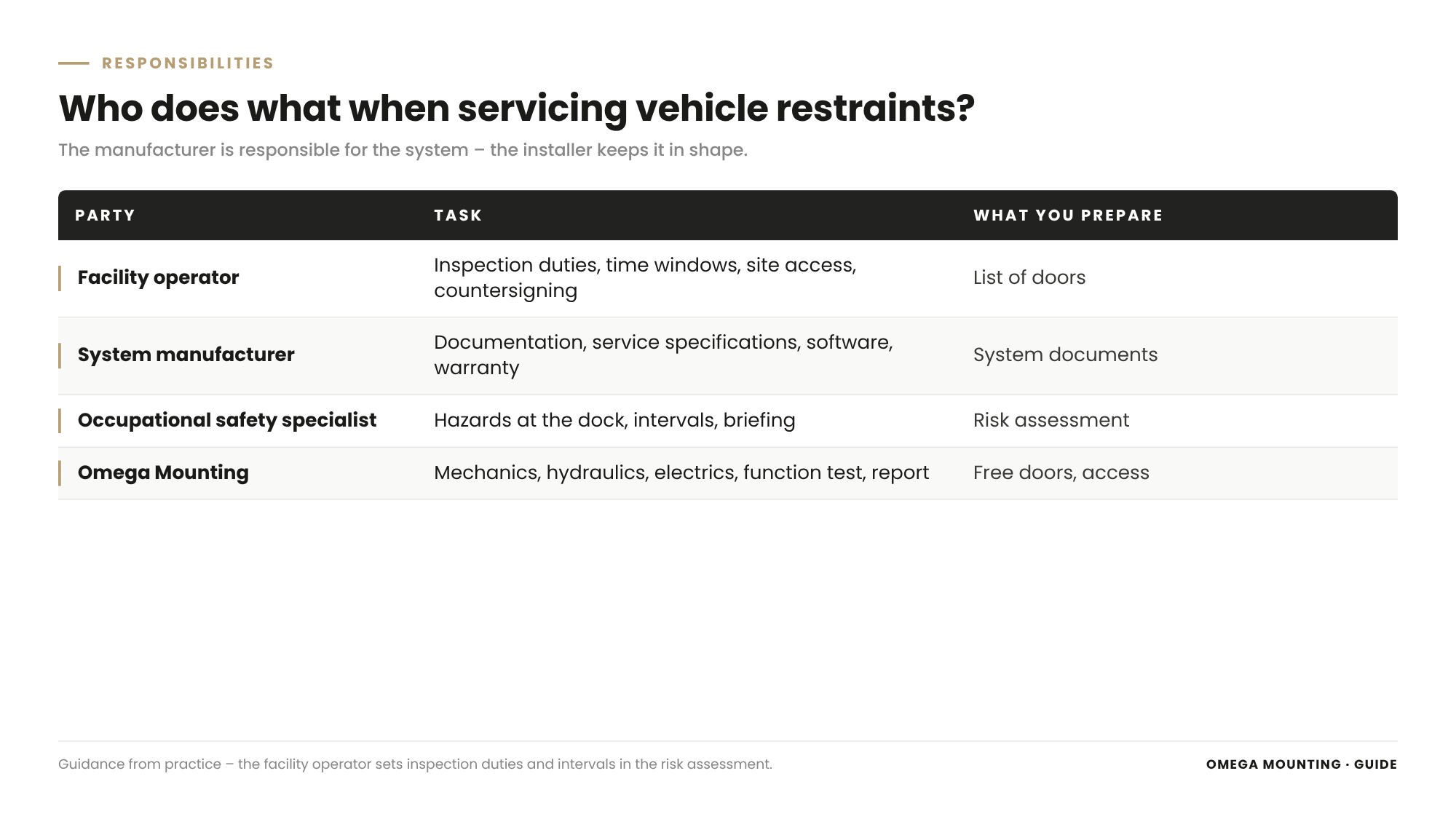
Several parties are involved.
Operator
The operator sets inspection duties and intervals, releases doors and time windows, organises site access and instruction and countersigns the records.
System manufacturer
The manufacturer supplies documentation, servicing specifications and spare parts, is responsible for safety function and software and handles changes and warranty.
Occupational safety specialist
The specialist advises the operator on hazards at the dock, inspection intervals and instruction.
Omega Mounting
We service mechanics, hydraulics, electrics and signals, test the system as a whole, document every loading bay and fix defects after release – with our own mechatronics technicians and electricians. Software, safety function and warranty remain with the manufacturer.
Servicing a vehicle restraint system: what it means for your planning
Four questions help to set up servicing properly.
Which designs do you have?
Manual, automatic or wheel chock? Inspection points and effort follow from this.
When are the doors free?
Set time windows. This determines how many doors can be serviced per round.
What does the manufacturer say?
Check servicing specifications and contracts. This determines what the manufacturer does itself and what an installation contractor can take on.
How should documentation be done?
Decide on record and report. This determines what you can prove later.
Typical mistakes when servicing vehicle restraint systems
Mistakes also happen during servicing itself.
- Serviced alone: signal and movement were not checked together.
- Only lubricated: sensors and release chain were not tested.
- Wrong lubricant: not according to the manufacturer's specification.
- Combined record: individual systems cannot be traced.
- Defects without a rating: nobody knows what has to be done immediately.
- Interfaces forgotten: door and dock leveller not checked as well.
The mistake behind the mistakes
Almost all these mistakes happen when the vehicle restraint system is seen as simple mechanics. It is a safety device made up of mechanics, hydraulics and electrics – and has to be checked as a whole.
Servicing a vehicle restraint system in the Rhine-Main region and throughout Germany: how we do it
From Rodgau we quickly reach Frankfurt, Offenbach, Hanau, Darmstadt, Aschaffenburg and the logistics areas of the region – and we work throughout Germany with our own teams. Anyone who wants their vehicle restraint system serviced, whether in Rhine-Main or elsewhere in Germany, gets mechanical and electrical work from a single source with us.
We survey the systems, agree time windows and manufacturer's specifications and service with two mechatronics technicians per loading bay. How else we work in logistics is on our page on Logistics. How conveyors and intralogistics are maintained is shown in the guide Conveyor technology maintenance.
For you, that means loading bays that hold safely, report correctly and are demonstrably serviced.
Project examples
A job from our project diary shows why we know vehicle restraint systems inside out.
Thirty-two vehicle restraint systems in a logistics centre near Leipzig
In a logistics centre near Leipzig, we installed thirty-two vehicle restraint systems – mechanically and electrically. The scope included the restraint systems themselves, hydraulic power units, signal lights and safety devices, control panels, control cabinets, all cable routes, wiring and control cabinet connections. Commissioning took place together with the system manufacturer. Anyone who has aligned, plumbed and wired every loading bay themselves knows where to look when servicing: at the guide, at the sensors, at the interface with door and dock leveller. The job is described in the report Installing vehicle restraint systems in a logistics centre in Leipzig.
Shall we service your systems?
Send us the number, design and location of your loading bays and the manufacturer's servicing specifications – we will tell you what a service round could look like. Get in touch now.
What this means for your role
Buyers: Ask whether lubricants, hydraulic oil, lamps, a record per system and an action plan are included in the quote.
Site and logistics managers: Plan fixed service windows per door so that loading continues.
Maintenance managers: Keep the maintenance history per system and stock the most common wear parts.
Occupational safety specialists: Check whether inspection intervals and instruction for the dock are defined.
Facility managers: Have vehicle restraint system, door and dock leveller serviced in one round.
Vehicle restraint system maintenance checklist: template on request
For your loading bays, we have put together the vehicle restraint system maintenance checklist. For each loading bay it asks about mechanics, hydraulics, electrics and signals, function test of the whole system and findings with rating. Request the template via our contact form – keyword “Vehicle restraint system maintenance checklist”.
Why Omega Mounting?
With over twenty years of experience in installation and maintenance – and from many loading bays we have installed – we know that a vehicle restraint system is only as safe as its last service. That is why we always service in pairs, check mechanics, hydraulics and electrics as a whole and document every system individually with a clear rating. We work to the manufacturer's specifications and supplement its service instead of replacing it. For you, that means loading bays that hold safely and are demonstrably in order. Talk to us about your systems – get in touch.
Conclusion
Servicing a vehicle restraint system means looking after the blocking arm, guide and lubrication points, keeping the hydraulics leak-free, checking sensors, signal lights and warning tone and running the system together with door and dock leveller. Only then is it released.
With two fitters per loading bay, servicing to the manufacturer's specifications and a record per system with a clear rating, loading bays stay safe and available. If you want your systems serviced, get in touch with us.
Planning a move-in, installation or maintenance in the Rhine-Main region?
Tell us briefly what you need – we'll come back with an honest assessment.
Free, no-obligation callback
You may also be interested in these guides
Maintenance & Servicing

About the author
Tobias Schott
Managing director of Omega Mounting GmbH, Rodgau · more than 20 years of hands-on experience in installation and maintenance
A trained mechatronics technician, working in maintenance, servicing and industrial installation since 2004 – first alongside his father, and with Omega Mounting since 2012: from overhead conveyors in Frankfurt to the crane system in a new-build hall. He plans and leads lifting operations as an appointed person (AP) in data centers and on industrial sites in the Rhine-Main region, trains and examines operators of cranes, mobile elevating work platforms and telehandlers, and is a qualified occupational safety specialist. On jobs abroad he is known as the “German Troubleshooter” – the person you call when a site gets stuck. He learned what quality means from his father, not from a manual: Made in Germany as a standard for his own work, not a label. That is why quality comes first at Omega Mounting – ahead of speed and price. He writes these guides from that practice: what works on our sites is in them – what exists only on paper is not.
Frequently asked questions
Mechanics, hydraulics, electrics, sensors and signals, a function test together with door and dock leveller, and a record per system.
Because the system is operated inside and checked outside. Only then does it show whether signal and movement match, and the loading area stays secured.
At least according to the manufacturer's specification, more often with heavy traffic and harsh conditions. The inspection intervals are set by the operator.
Yes. Both are safety devices at the loading bay and are serviced in the same round with their own inspection points.
The structure is the same, the priorities differ: operating lever and lever lock on manual systems, end positions and wheel detection on automatic systems.
No. We service to its specifications and supplement its service. Software, safety function and warranty remain with the manufacturer.
The finding for every inspection point, inspector, date and an action plan with the rating immediate, plannable or monitor.
Yes. From Rodgau we are quickly on site in the region, and we work throughout Germany with our own teams.
Send us the number, design and location of your loading bays. We will assess the effort and come back with a proposal. Go to the contact page.
 English
 German