
- Guide – Industrial installation
Installation in a clean room: bringing in, cleanliness, tools, release
By Tobias Schott · 21-minute read · Updated October 2026
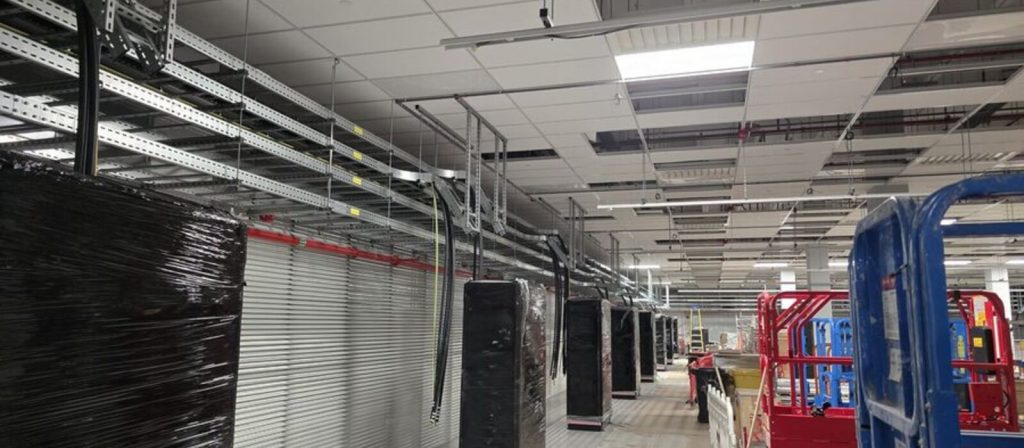
When installing in a clean room, what counts is not just that the machine stands at the end, but that the room is still clean afterwards. Material and tools are cleaned and brought in through airlocks, work is done with low particle emission, and only the operator may release at the end.
A clean room is built to keep particles out. But every installation brings exactly that: people, tools, packaging, drilling dust, swarf and lubricants. That is why installation in a clean room is above all a question of preparation and discipline.
This guide explains what makes a clean room and where clean rooms are found. It shows how staff, material and tools are brought in, how to work with low particle emission and what happens after installation. And it says what operator and installation company each have to prepare.
We are an installation and maintenance company from Rodgau near Frankfurt. How maintenance in hygiene-sensitive areas generally works, with lubricants, tool control and releases, is set out in our guide on Maintenance in food production. Here it is about what a clean room additionally requires.
Key points at a glance
- A clean room is a room in which the number of particles in the air is controlled and limited. Filtered air, pressure cascades and airlocks keep it clean.
- Clean rooms are found mainly in pharmaceuticals, medical technology, semiconductor and electronics manufacturing and in laboratories.
- Before the work, the operator assesses what the installation means for the clean room. It decides whether the area stays in operation or loses its status for the duration of the work.
- Material and tools only enter the clean room cleaned and without cardboard or timber. Packaging is removed layer by layer in the airlock.
- Work is done with low particle emission: drilling with extraction, grinding and cutting outside wherever possible, lubricants only with release, waste in closed containers.
- After installation come cleaning, documentation, measurements and release. Only the operator may release, not the installation company.
- Most of the work of an installation in a clean room lies before and after the installation day.
What is a clean room?
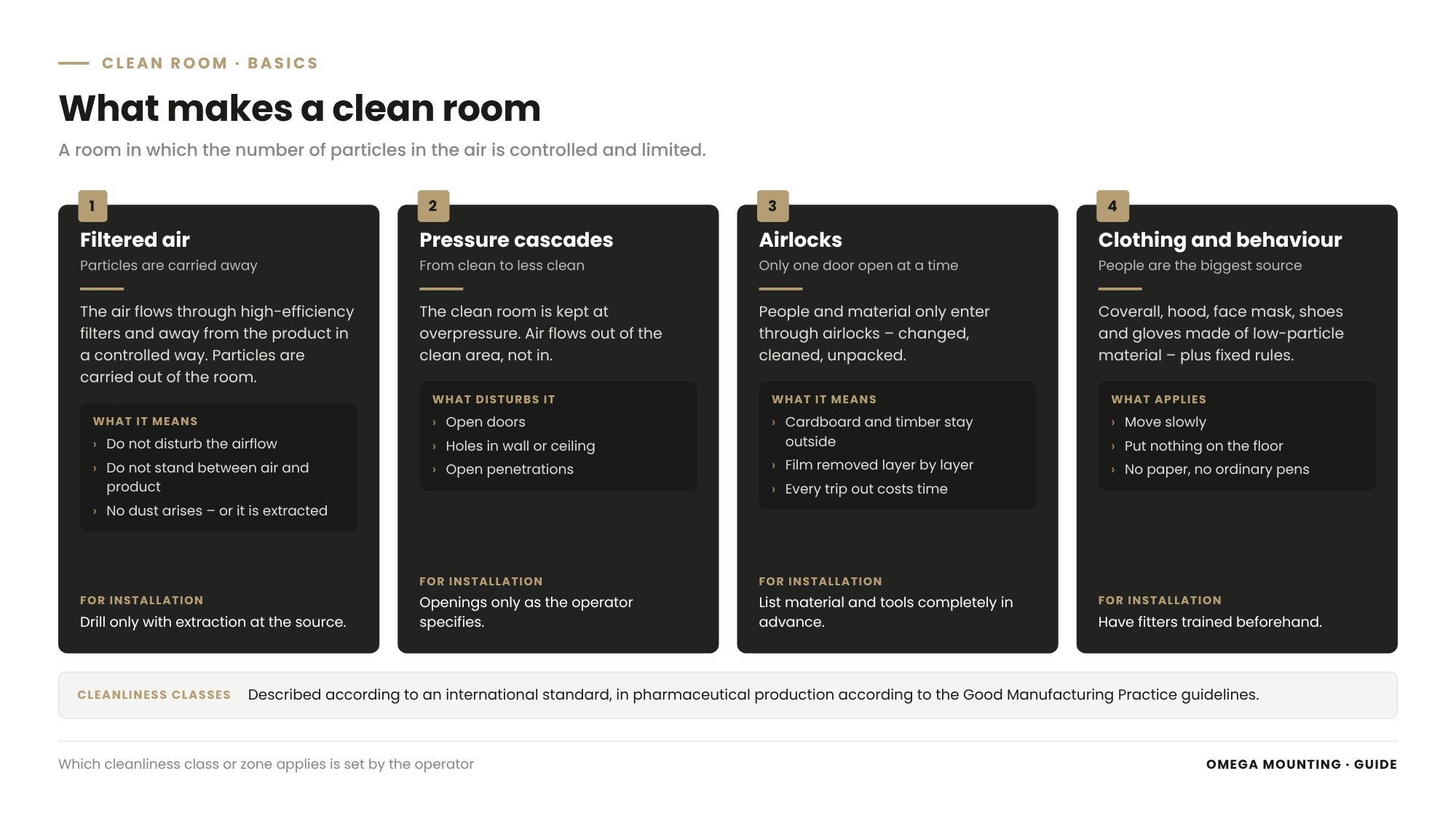
A clean room is a room in which the concentration of airborne particles is controlled and limited to a set value – by filtered air, controlled airflow, pressure cascades to adjacent rooms, airlocks and rules for people and material.
Particles are dust, fibres, skin flakes, abrasion and droplets. Most are invisible to the naked eye. In semiconductor manufacturing a single particle can make a component unusable. In pharmaceutical production there are also germs that can contaminate a medicine.
Filtered air and airflow
The air in the clean room is passed through high-efficiency filters and constantly exchanged. It flows in a controlled way so that particles are carried away from the product and out of the room. Anyone standing where the air reaches the product worsens the cleanliness.
Cleanliness classes
How clean a room must be is described by cleanliness classes according to an international standard. In pharmaceutical production there are separate cleanliness grades according to the Good Manufacturing Practice guidelines. Which class or grade applies is set by the operator. For installation this means: the higher the requirement, the stricter the rules.
Pressure cascades
Clean rooms are usually at overpressure relative to their surroundings. The air therefore flows from clean to less clean. Pressure cascades build up between areas of different cleanliness. An open door, a hole in the wall or a cable penetration disturbs this order.
Airlocks
People and material only enter through airlocks. Personnel airlocks are changing rooms in several stages. Material airlocks and pass-throughs are small rooms or chambers with interlocked doors. Only one door is ever open.
Clothing and behaviour
People are the largest source of particles in a clean room. That is why everyone wears clean room clothing made of low-particle material: coverall, hood, face mask, clean room shoes or overshoes and gloves. Plus rules of behaviour: move slowly, put nothing on the floor, no paper and no ordinary pens.
Clean room or clean area?
Not every clean room is a clean room in the technical sense. A clean room has a defined cleanliness that is measured and verified. Besides that there are controlled areas with hygiene rules but no class. For installation the question matters because it determines how strictly bringing in, working and release are regulated. If in doubt, ask the operator what status the room has.
Where clean rooms are found
Clean rooms are found wherever particles or germs endanger a product or a process: in the manufacture of medicines, in medical technology, in semiconductor and electronics manufacturing, in optics, in laboratories and in parts of the food industry.
Pharmaceuticals and medical technology
Here it is about particles and germs. Work in the clean room is subject to strict documentation rules. Every change is assessed before it happens. An installation in pharmaceutical production therefore needs long lead time and clear coordination with quality assurance.
Semiconductors, electronics and optics
Here particles count above all, but also outgassing from plastics, adhesives and lubricants. Light can also play a role, for example in areas with yellow light where colours are hard to tell apart.
Maintenance in the clean room
In a clean room, installation does not only mean new build. A lot of work arises in maintenance: a drive is replaced, a guide renewed, a plant converted or extended. Maintenance in the clean room follows the same rules as a new installation. Often the pressure is even higher because production is waiting and the window is short.
Laboratories and food
Laboratories have different requirements depending on the work. In the food industry there are hygiene areas similar to a clean room, for example in filling. Many rules from such areas apply in a stricter form in the clean room.
Preparing an installation in a clean room: planning and release by the operator
Before every installation in a clean room the operator assesses what the work means for the room. It decides whether the area stays in operation or loses its status for the work, sets which cleaning and testing follow, and releases the work.
Assessment and change request
Many operators work with a change request. It states what is done, where, with which material and which tools. Quality assurance assesses the risk the work poses to the clean room. Conditions follow from this.
This guide is not legal advice and does not replace qualification. What applies in the individual case is set by operator and quality assurance according to their procedures.
Does the area stay in operation?
Small jobs, for example replacing a component, often take place in the running clean room. Then all rules for clothing, airlock and behaviour apply without exception. Larger jobs involving drilling, dismantling or opening a wall usually take place in an area that is out of operation for that time.
How the area is then separated and ventilated is set by operator and specialist planners. At the end there is always the return to clean room status: cleaning, measurements and release.
What the installation company needs to know beforehand
For an installation company to plan correctly, it needs some details from the operator:
- Status of the room. Does it stay in operation, or is it out of operation for the work?
- Rules for clothing and airlock. Who provides the clothing, how often is it changed?
- Permitted substances and tools. Is there a list, are there operator tools?
- Routes and openings. How do large parts get in, where may material be stored?
- Cleaning and release. What does the installation company clean, what the cleaning team?
- Contact. Who decides on site if something goes differently than planned?
Training the fitters
Fitters who go into a clean room are trained beforehand: changing, airlock, behaviour, material, waste. Many operators require their own clean room training, often with a certificate. Plus personal rules: no cosmetics, no jewellery, and anyone with a cold stays outside.
Access and contractor rules
A clean room is almost always inside a plant with its own access rules. Passes, induction and releases apply in addition. What the operator should generally arrange is described in our guide on contractor management. How approval and permits work at sites with strict rules is shown in our guide on installation in an industrial park.
Bringing in: staff, material and tools
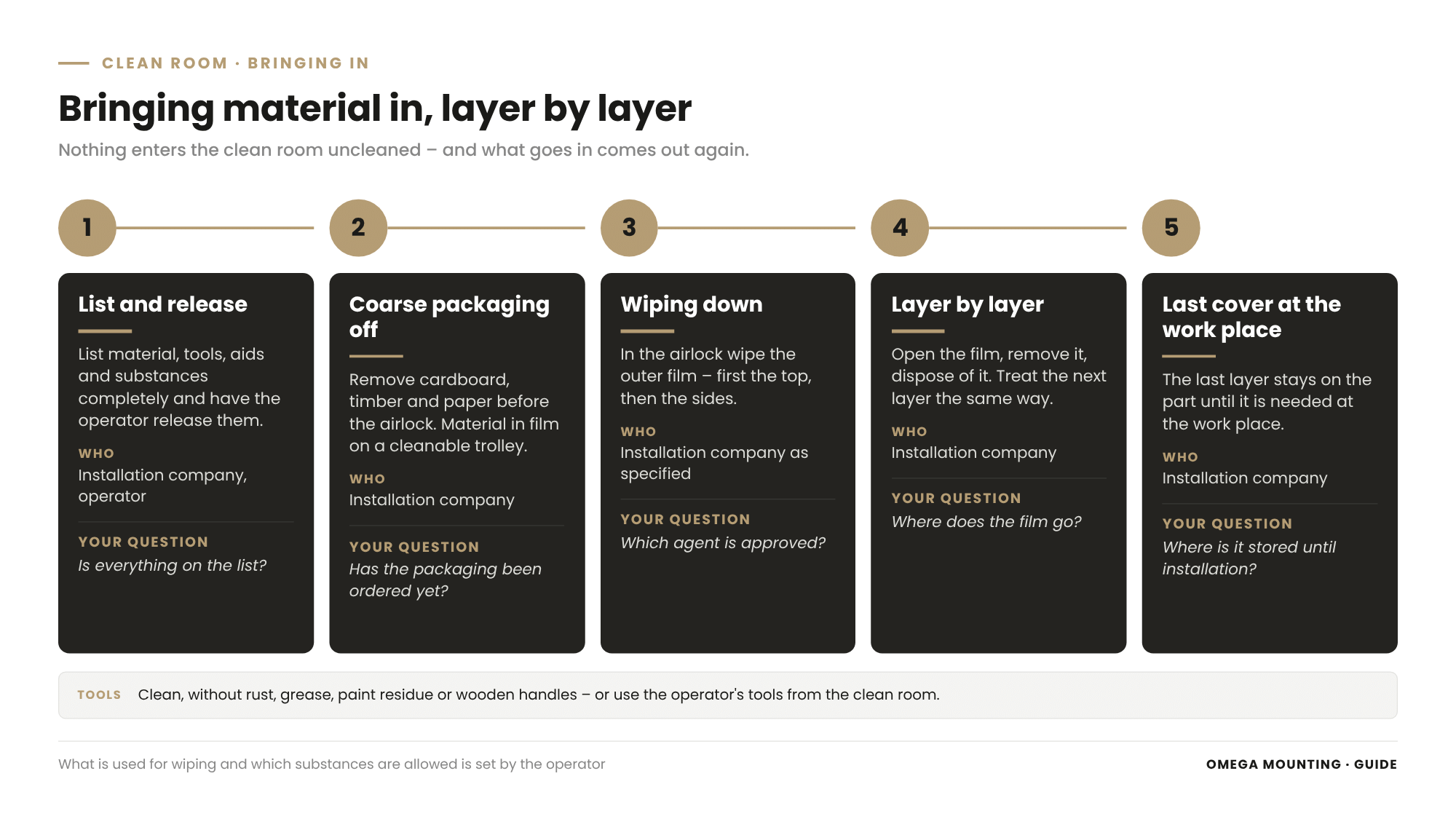
When bringing things in, one simple rule applies: nothing enters the clean room uncleaned. Staff change in a fixed order; material and tools are listed in advance, freed from coarse packaging, wiped down in the airlock and unpacked layer by layer.
Staff
Changing is done in stages, from outside to inside. Street clothes stay outside, clean room clothing is put on in a set order. Some airlocks have an air shower that blows particles off the clothing. Even experienced people need time for this. Anyone who goes out often loses a lot of it.
Food and drink stay outside. Every break and every trip to the toilet means: go out through the airlock, change, come back in through the airlock. So plan breaks deliberately and bundle the work so that the team does not have to keep changing.
Material and tool list
The operator wants to know beforehand what comes into the clean room. A complete list of material, tools, aids and substances is therefore mandatory. It also helps at the end: what went in must come out again.
Tools for the clean room are clean, without rust, without flaking paint and without grease residue. Wooden handles, fabric straps and tape with a paper backing stay outside. Many operators keep their own tools in the clean room. That saves trips through the airlock.
What is installed
The material that stays in the clean room must also be suitable. Surfaces should be smooth, cleanable and resistant to the operator's cleaning agents. Open cavities, rough welds and loose insulation collect particles. Which materials and surfaces are permitted is specified by operator and planners. The installation company sticks to this and reports if a part does not fit.
Packaging before the airlock
Cardboard, timber and paper shed many fibres and particles. They are removed before the airlock. Material arrives at the airlock packed in film on a cleanable trolley or a plastic pallet. Anyone ordering parts should therefore specify the packaging at the same time.
Layer by layer
Anyone bringing material into the clean room works in layers. In the airlock the outer film is wiped – first the top, then the sides. Then it is opened, removed and disposed of. The next layer is treated the same way. The last cover stays on the part until it is needed at the work place. What is used for wiping is specified by the operator.
Large parts and lifting equipment
Large assemblies often do not fit through the material airlock. Then a special route is needed, for example an installation opening that is planned beforehand and closed and cleaned again afterwards. Lifting and transport equipment must be cleanable. Combustion engines have no place in a clean room.
Working with low particle emission: drilling, cutting, lubricating, waste
Working with low particle emission means: producing as little dust, swarf and abrasion as possible and capturing what does arise right at the source – by extraction when drilling, prefabrication outside, bolting instead of welding, approved substances and closed waste containers.
Drilling with extraction
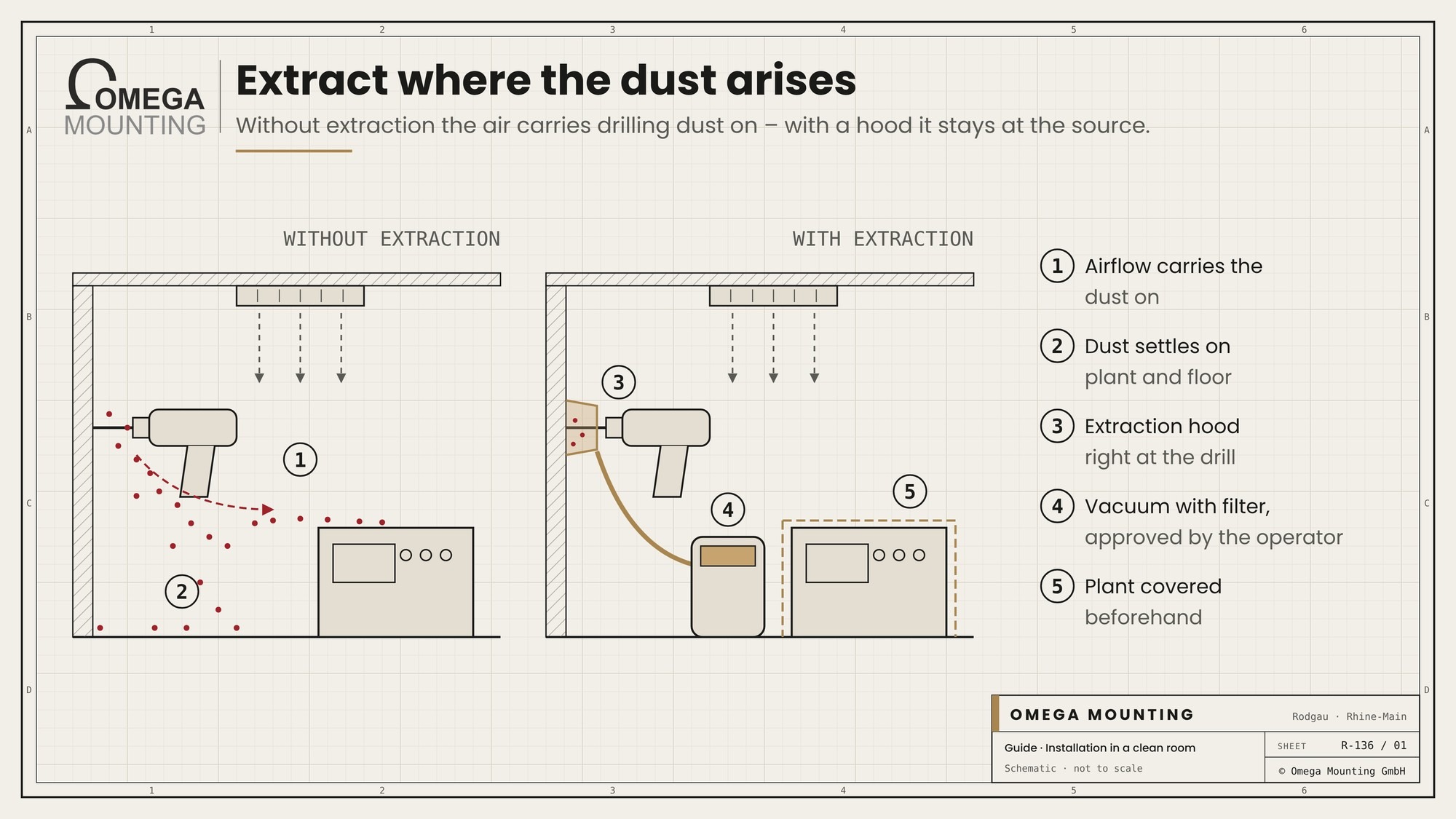
If drilling is necessary in the clean room, a vacuum with a suitable filter extracts directly at the drilling point. Drilling dust must not get into the air in the first place. Holes are cleaned afterwards. Where possible, existing fixing points are used.
Grinding, cutting and welding
Grinding and cutting produce fine particles and sparks. In the running clean room they are usually off limits. Cutting to size, drilling components and adjustments are therefore done outside, in the workshop or an anteroom. Bolting is preferred to welding. If welding is unavoidable, the operator decides on place, time and screening.
Pre-assembly outside
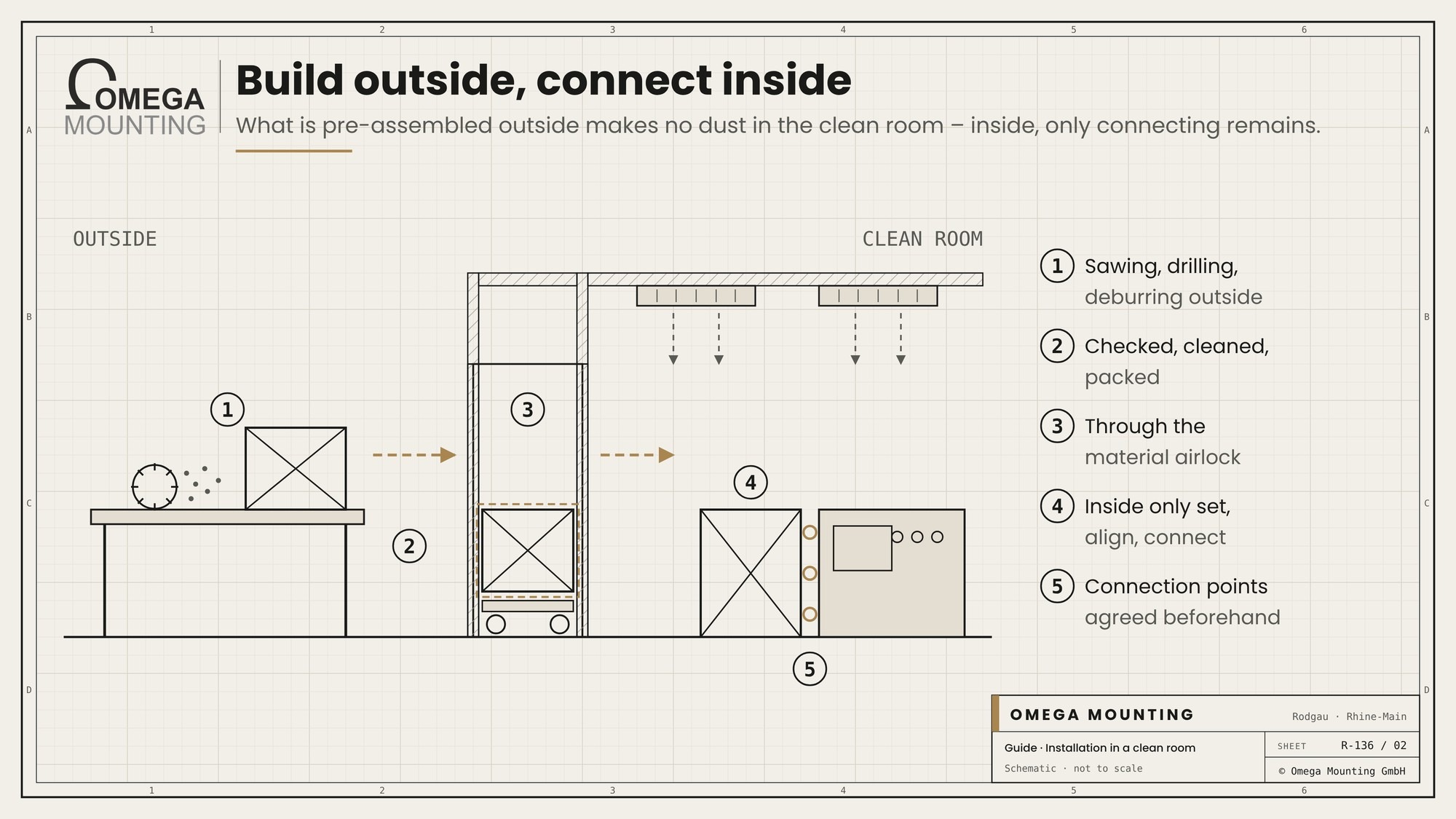
The more is finished outside, the shorter and cleaner the work in the clean room. Assemblies are pre-assembled, checked, cleaned and packed. In the clean room only setting, aligning and connecting remain. How alignment and anchoring are done is described in our guide on aligning and anchoring machines.
Measuring and marking out
Small things count too. Pencils, chalk and paper notes shed particles. For marking, pens and aids approved by the operator are used. Drawings and lists come on clean room paper or in film. Anyone who measures and prepares outside beforehand has less to mark in the room.
Lubricants, sealants, adhesives
Greases, oils, silicones and adhesives can outgas, bind particles or leave residues. In the clean room only substances approved by the operator are used. This also applies to assembly paste and thread locker. Which substances these are is in its specification, not in the tool trolley.
Electrostatics and sensitive products

In electronics and semiconductor manufacturing, electrostatic discharge is added. It can damage components without anything being visible. Separate rules for clothing, shoes, tools and documents often apply there. These rules too are specified by the operator.
Waste and swarf
Waste is not collected until the work is finished. It goes straight into closed containers and is taken out through the airlock regularly. Swarf and residues are vacuumed, not swept and not blown away with compressed air.
Routes and covers
Routes for material and staff are set beforehand. Floors and surfaces are protected with covers suitable for the clean room. Cables and hoses are laid so that nobody trips over them and they stir nothing up. Anyone leaving the clean room for a small matter goes through the airlock again on returning.
After installation: cleaning, documentation, release
After installation in a clean room the fitters tidy the work place roughly, then cleaning follows according to the operator's plan. Work and materials are documented, the room is measured, and only after release by the operator does it go back into operation.
Coarse cleaning by the fitters
The fitters remove waste, swarf, residues and covers. They check the tool list: everything that went in comes out again. If something is missing, it is searched for before work continues.
Cleaning to plan

The actual cleaning follows the operator's plan. Often it is done by a dedicated cleaning team with set agents and procedures. In pharmaceutical production disinfection is often part of it.
Documentation
The installation company documents what it has done: work steps, installed parts, substances used, deviations. The documentation goes to the operator and becomes part of its records.
If something goes wrong
If a part falls, drilling dust escapes or a cover tears, it is reported immediately. Keeping quiet helps nobody. The operator decides whether additional cleaning or measuring is done. In the clean room an open approach to deviations matters more than a nice report.
Measuring and releasing
The operator has measurements taken to see whether the room reaches its values again. Depending on the work, particles, pressure cascades and airflow are included. If the intervention was larger, requalification of the clean room follows. Only then does the operator release the area. How a plant handover generally works is shown in our guide on commissioning and handover.
Installation in a clean room step by step
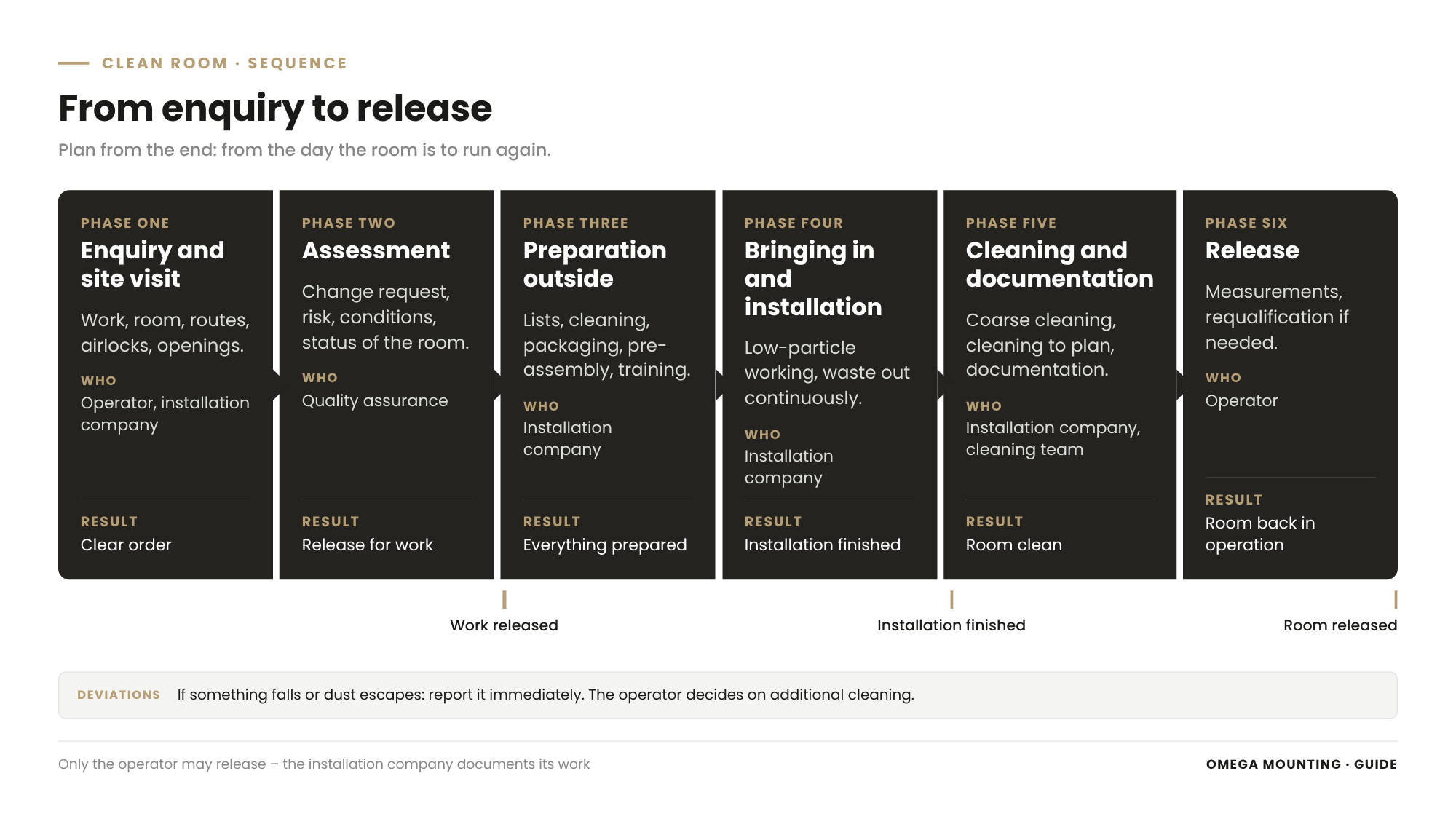
An installation in a clean room runs in six phases: enquiry and site visit, assessment by the operator, preparation outside, bringing in and installation, cleaning and documentation, release by the operator.
Enquiry and site visit
Describe the work, the room and its requirements. A site visit with engineering and quality assurance clarifies routes, airlocks, openings, fixing points and lifting equipment. It often takes place in clean room clothing.
Assessment by the operator
Quality assurance assesses the work and sets conditions. It decides whether the area stays in operation and which cleaning and measurement follow.
Preparation outside
Material and tools are listed, procured, cleaned and packed suitably for the clean room. Assemblies are pre-assembled. Fitters are trained.
Bringing in and installation
Staff, material and tools enter the clean room according to the rules. Work is done with low particle emission, waste goes out continuously.
Cleaning and documentation
Coarse cleaning by the fitters, cleaning to plan, documentation to the operator. The tool list is checked before the team finally leaves the room.
Approval
Measurements, requalification if needed, release by the operator. Then the clean room runs again.
Plan the schedule from the end
Many schedules end with the words “installation finished”. In the clean room that is too early. Cleaning, measurement and release need their own place in the plan. Anyone who forgets them has a finished machine in a room that may not yet produce. So plan backwards: from the day the room is to run again to the first time material is brought in.
Overview: work step, risk to the clean room, measure
Every work step of an installation in a clean room has its own risk to the room – the table shows what helps against it.
| Work step | Risk to the clean room | Action |
|---|---|---|
| Staff enter the room. | Particles from skin, hair and clothing. | Training, changing in stages, clean room clothing, rules of behaviour. |
| Material is delivered. | Fibres and dust from cardboard and timber. | Coarse packaging off before the airlock, film layer by layer. |
| Tools come in. | Rust, grease, abrasion, paint residue. | Clean tools by list, wipe down, use the operator's tools. |
| Drilling. | Drilling dust in the air. | Extract right at the drilling point, clean the hole. |
| Grinding, cutting, welding. | Fine particles, sparks, fumes. | Prefabricate outside, bolt instead of weld. |
| Lubricating, sealing, bonding. | Outgassing and residues. | Approved substances only. |
| Opening wall or ceiling. | Pressure cascades disturbed, dust from cavities. | Area out of operation, separation as specified. |
| Lifting and transport. | Abrasion from wheels, exhaust, dirt from outside. | Cleanable equipment, no combustion engines, clean the wheels. |
| Waste arises. | Swarf and residues spread. | Closed containers, take out continuously, vacuum instead of sweep. |
| Work is finished. | Unnoticed contamination. | Coarse cleaning, cleaning to plan, measurement, release. |
Typical mistakes in installation in a clean room
The typical mistakes in installation in a clean room are material in cardboard at the airlock, tools from the normal installation trolley, work that could have been done outside, unapproved lubricants and a release nobody has planned for.
- Cardboard at the airlock. The part arrives in its original packaging, and nobody thought about clean-room-ready packaging beforehand.
- Tools from the trolley. The usual tools have rust, grease or wooden handles and may not go in.
- Cut to size on site. A profile is shortened in the clean room instead of being adapted beforehand in the workshop.
- Own lubricants. A fitter reaches for the usual can that the operator never approved.
- Waste at the end. Packaging residues and swarf lie in the room all day.
- Going out too often. For every missing part someone leaves the room and comes back through the airlock.
- Deviation kept quiet. A mishap is not reported and only shows up in the measurement.
- No time for release. Installation is finished, but cleaning, measurement and release are in no schedule.
The mistake behind the mistakes
Behind many mistakes lies the same assumption: that a clean room just means working more cleanly than usual. In fact installation is an intervention in a system of air, pressure and rules. Those who understand this plan the installation in a clean room from the end – from the release.
What we know from sensitive environments
We have not yet documented a job in a clean room. What we know are jobs in environments where cleanliness, protection and the operator's rules determine the sequence. Three examples from our project diary show this related experience.
Data center in Frankfurt: airlocks and floor protection
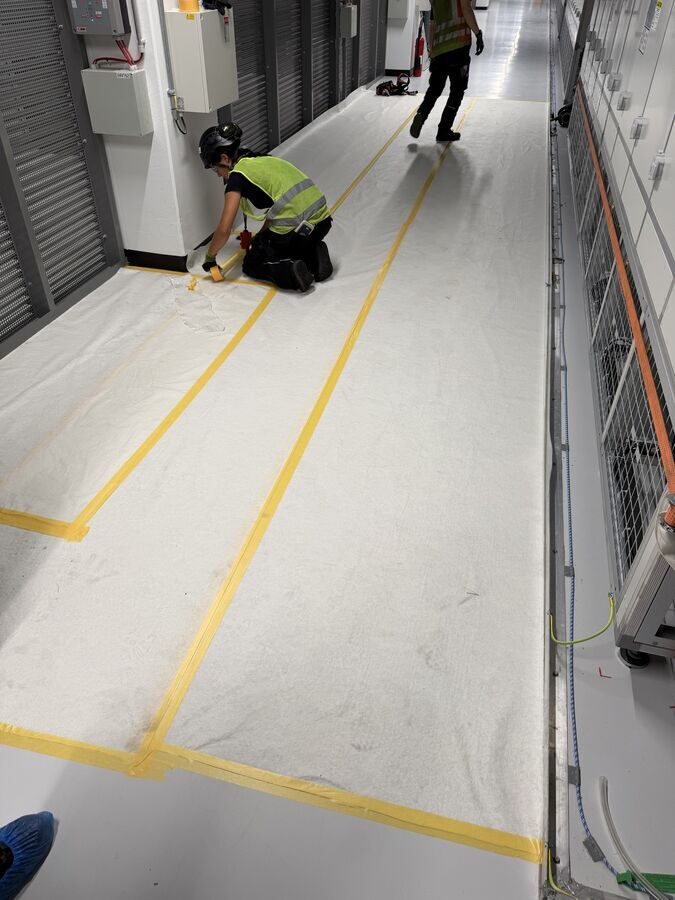
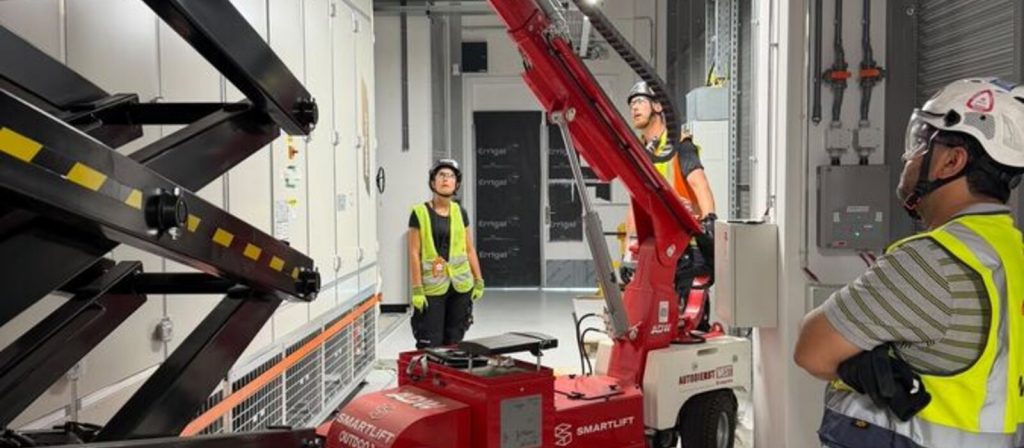
During the replacement of a computer room air handling unit in a live data center in Frankfurt, access led only through several secured zones with airlocks and interlocked doors. Before the first machine moved, all walking and driving routes were laid with protective fleece and taped. The machines' tyres had been checked. At critical points nothing moved without the supervisor's instruction. Work equipment and lifting accessories were checked and documented before every shift, and work releases were coordinated with the operator.
For installation in a clean room this means: protection and release are in place before work begins. What has to be planned when replacing such units is described in our guide on the CRAH unit replacement.
Data center in the Rhine-Main area: finished halls, protected routes
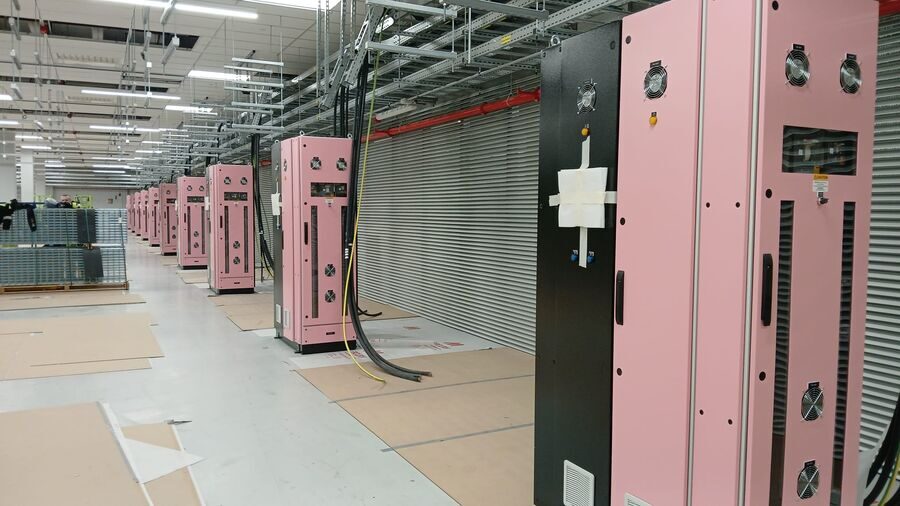
During the installation of power distribution cabinets in a data center in the Rhine-Main area, we worked in finished data halls. Driving and working routes were laid with protective boards and fleece, the walls protected. All machine movements ran on protected routes. The halls had been laser-surveyed beforehand and the set-down positions marked. The handover to the electrical trade went without rework.
One difference from the clean room is easy to see there: the cabinets came into the hall in wooden crates. In the clean room this packaging comes off before the airlock. How series installation in a data center is organised is shown in our guide on series installation in data centers.
Food plant: hygiene and access
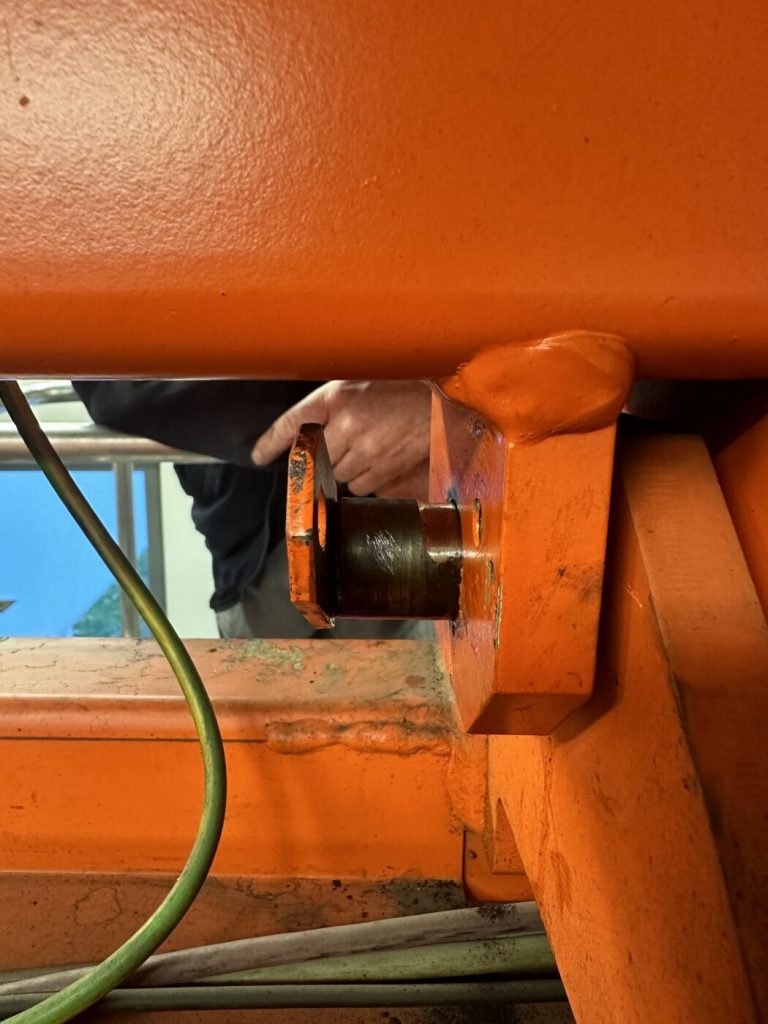
With the pin repair on an electric monorail system in a food plant, all work took place during non-production time at the weekend. We know the hygiene and access requirements of food production plants, from behaviour in the plant to clean working. On every carrier the pin was driven out, the bearing point cleaned and a new one fitted.
For installation in a clean room this means: the rules of the house apply to every action. How to work during operation without disrupting production is described in our guide on Maintenance during live operations.
Questions about installation in a sensitive environment?
Do you have a mechanical installation or conversion coming up in an area where cleanliness decides the release? Then get in touch with us. We say openly what we bring and what your operator has to set.
Installation in a clean room in the Rhine-Main area: what we take on
In the Rhine-Main area we take on the mechanical part of an installation in a clean room: pre-assembling assemblies outside, preparing material and tools to your specifications, bringing in, setting, aligning and anchoring, working with low particle emission and coarse cleaning.
The region has many pharmaceutical, chemical, medical technology and research sites. From Rodgau, Frankfurt, Offenbach, Hanau, Darmstadt and Aschaffenburg are short distances. What we offer in Industrial installation overall is set out on our service page.
For an installation in pharmaceuticals or medical technology we prepare as for any sensitive area: rules in writing beforehand, complete lists, pre-assembly in the workshop, open reporting of deviations.
What we don't take on, we say clearly beforehand. Assessment, cleaning to plan, measurements, requalification and release lie with the operator and its quality assurance. Ventilation and pressure cascades are planned by specialist planners. Electrical connections at the plant up to the main switch are made by our own qualified electricians; the supply cable and building electrics stay with your electricians or building services. If you want to know what we can prepare for your area, write to us.
What this means for your role
For buyers: When ordering parts, specify the packaging too. Clarify in the contract who takes on cleaning, measurement and documentation.
For designers: Plan installation routes, installation openings and fixing points for the clean room from the start. What has to be drilled later costs a lot of effort during operation.
For project managers and site managers: As project manager you coordinate change request, lists and dates with quality assurance. As site manager you watch the airlock, waste and tool list on the installation day.
For technical managers and maintenance managers: You know the room and its limits. Keep tools and approved substances available and name a contact.
For facility managers: You know ventilation, pressure cascades and routes in the building. Clarify early how large parts get in and which openings must be sealed again afterwards.
For quality assurance: Give the rules to the contractor in writing before the job. Plan cleaning, measurement and release as a fixed part of the sequence.
For management: Give the project the time that assessment, preparation and release need.
Clean room installation check: template on request
The clean room installation check is a one-page working document for operator, quality assurance and installation company. It has four blocks: preparation, bringing in, working and completion. Each point has a field for the responsible party and the status “clarified” or “open”. Cleanliness classes and numbers are deliberately not pre-filled – they come from the operator. Request the template via our contact form – keyword “clean room installation check”.
Conclusion
Installation in a clean room is an intervention in a system of filtered air, pressure cascades, airlocks and rules. It can only succeed with preparation: assessment by the operator, cleaned material without cardboard, clean tools by list, pre-assembly outside. In the room work is done with low particle emission, and waste goes out continuously. At the end come cleaning, documentation, measurement and release by the operator. If you are preparing a mechanical installation in a clean area, send us your enquiry – we will get back to you with an honest assessment.
Planning a move-in, installation or maintenance in the Rhine-Main region?
Tell us briefly what you need – we'll come back with an honest assessment.
Free, no-obligation callback
You may also be interested in these guides
Maintenance & Servicing
About the author
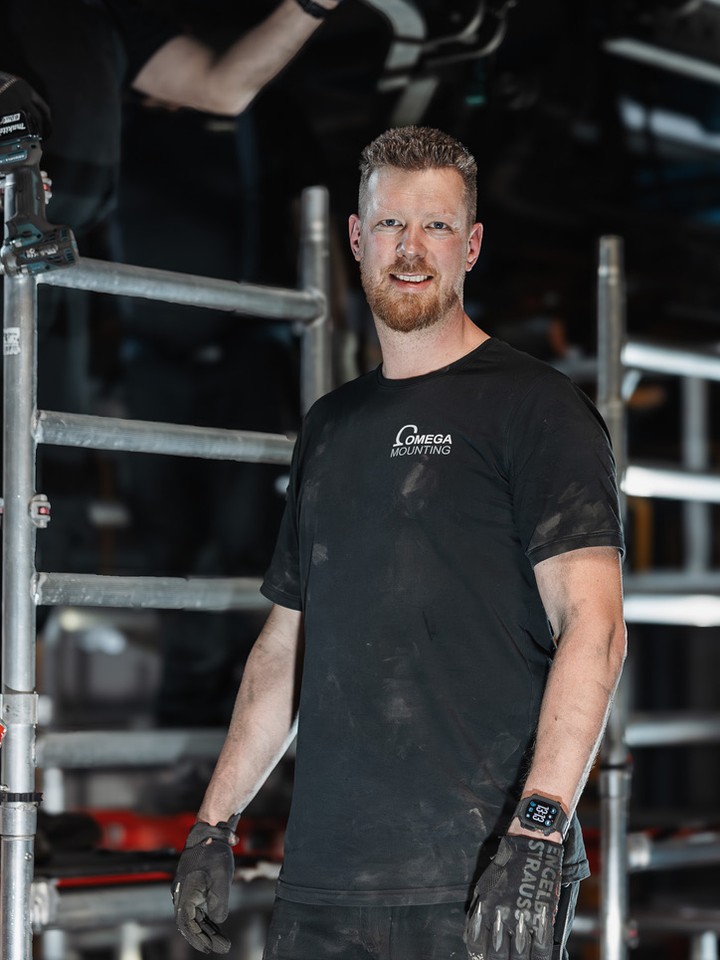
Tobias Schott
Managing director of Omega Mounting GmbH, Rodgau · more than 20 years of hands-on experience in installation and maintenance
A trained mechatronics technician, working in maintenance, servicing and industrial installation since 2004 – first alongside his father, and with Omega Mounting since 2012: from overhead conveyors in Frankfurt to the crane system in a new-build hall. He plans and leads lifting operations as an appointed person (AP) in data centers and on industrial sites in the Rhine-Main region, trains and examines operators of cranes, mobile elevating work platforms and telehandlers, and is a qualified occupational safety specialist. On jobs abroad he is known as the “German Troubleshooter” – the person you call when a site gets stuck. He learned what quality means from his father, not from a manual: Made in Germany as a standard for his own work, not a label. That is why quality comes first at Omega Mounting – ahead of speed and price. He writes these guides from that practice: what works on our sites is in them – what exists only on paper is not.
Frequently asked questions
Three things: nothing goes in uncleaned, work is done with low particle emission, and at the end only the operator releases. Material and tools are listed, cleaned and brought in without cardboard. Drilling dust is extracted at the source, waste goes out continuously. After installation in a clean room come cleaning, measurement and release.
A room in which the number of particles in the air is controlled and limited. Filtered air, controlled airflow, pressure cascades and airlocks keep it clean. Fixed rules apply to people and material.
Cardboard, timber and paper are removed before the airlock. The material comes in film. In the airlock each layer is wiped and then removed. The last cover stays on the part until it is needed at the work place.
Yes, if the operator releases it and the drilling dust is extracted right at the drilling point. Holes are cleaned afterwards. Grinding and cutting are done outside wherever possible.
Clean tools without rust, grease, paint residue or wooden handles that are on the list and have been cleaned. Many operators keep their own tools in the clean room. Which substances are allowed is set by the operator.
Only those the operator has approved. Greases, oils, silicones and adhesives can outgas or leave residues. This also applies to assembly paste and thread locker.
The operator with its quality assurance. It has the room cleaned and measured and decides whether requalification is needed. The installation company documents its work but releases nothing.
Not always. Small jobs often take place in the running clean room under all rules. Larger interventions, such as opening walls or a lot of drilling, usually take place in an area that is out of operation for that time. The operator decides.
Send us a short enquiry with three details: what is to be installed, in which area and which rules your operator specifies. Photos and your clean room specifications help. Together with you we clarify what we can prepare and what is still missing. Your contact is Tobias Schott – reachable via our contact form.
 English
 German