
- Guide – Maintenance
Shortening shutdowns: five levers for shorter, plannable shutdowns
By Tobias Schott · 23-minute read · Updated October 2026
A planned maintenance shutdown does not get shorter by leaving work out, but when everything that does not need a stopped plant happens before or after it – and when nobody in the window itself is waiting, searching or setting up any more.
Anyone who wants to shorten a shutdown usually faces the same picture: the weekend window is set, the list is long, and the plant is supposed to run again on Monday. On Sunday evening a seal kit is missing, the test run slips into the night and the early shift waits. Yet the actual work was often done faster than expected. The time was lost elsewhere.
This guide answers one question: which levers make a planned maintenance shutdown shorter and more plannable? It shows where the time disappears in the window and presents five levers – from bringing work forward via the swap assembly to the restart.
How to organise a large shutdown as a whole, with work packages, contractors and daily control, is described in our basic article on shutdown planning in maintenance. What a shutdown costs is calculated in the guide Calculating downtime costs in detail. This one is about duration.
We write from the point of view of an installation and maintenance contractor from Rodgau near Frankfurt. We do not advise on production processes and changeover times. We work where the plant is stopped and the mechanics are being worked on.
Key points at a glance
- Shortening a shutdown means reducing the time in which the plant is not producing because of maintenance – without leaving work out.
- Most time is not lost in the work itself, but in waiting, searching, setting up, coordinating and in findings that only show up on opening.
- The strongest lever is to pull work out of the window: pre-inspection, survey, pre-assembly, material and hoists on site.
- A swap assembly moves the repair out of the shutdown into the time afterwards.
- Parallel work saves time if workplaces, isolation and hoists are planned for it.
- Approvals, access and decision routes for findings are settled before the window, not during it.
- The restart with test run, inspection and handover belongs in the plan – with the buffer deliberately at the end.
What is meant by “shortening a shutdown”?
Shortening a shutdown means reducing the time in which a plant is not producing because of planned maintenance, while the scope of work stays the same.
The distinction matters. Anyone who deletes check points or leaves findings unaddressed has not shortened the window but prepared the next breakdown. What is meant is the opposite: the same work, but better distributed and better prepared.
Planned and unplanned shutdowns
A planned shutdown is a window set in advance for servicing, inspection, repair or conversion – a weekend, a night shift, the works holiday. An unplanned shutdown is the breakdown. Both can be shortened, but by different means. This guide covers the planned case: you plan a maintenance shutdown yourself, with a date and work packages.
Typical windows are the works holiday and the days between Christmas and New Year. How to use this time is shown in our guide to maintenance between Christmas and New Year.
Shutdown duration is not the same as scope of work
Shutdown duration is the time from switching off to handover to production. The scope of work is the sum of all tasks. The two are related, but not one to one. A package with a lot of work can be short if it is prepared. A small package can blow the window if everyone is waiting for an approval.
Some things do not need to go into the window at all. Work without intervention in the running mechanics can often be done during operation. When that is safe is described in our guide to Maintenance during live operations.
Where time is lost in the shutdown
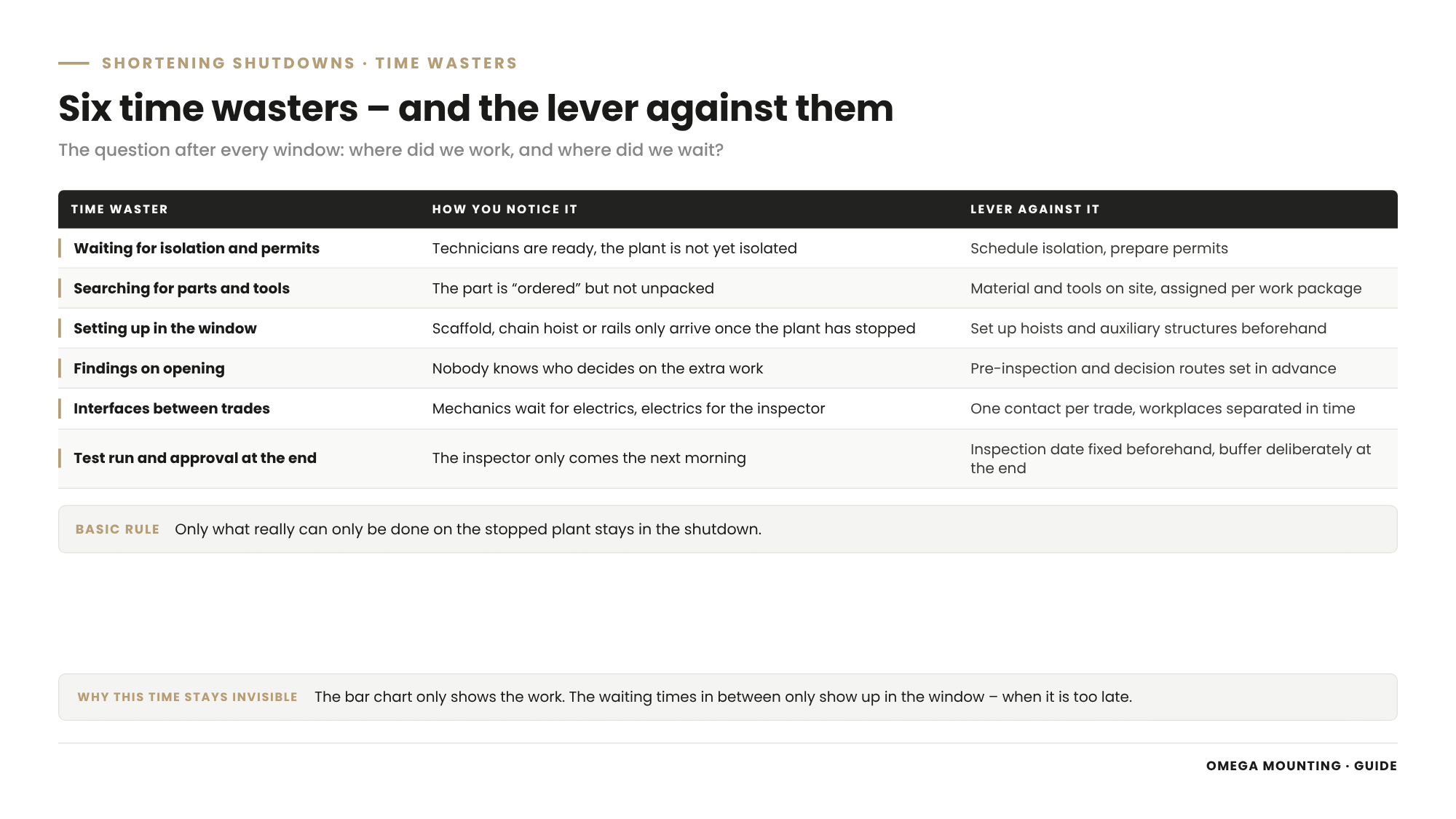
Time in the shutdown is lost mainly waiting for approvals, searching for parts and tools, setting up hoists and scaffolding, with findings after opening, at interfaces between trades and with the test run at the end.
These six time wasters turn up in almost every window. Anyone who knows them will also find the levers.
- Waiting for isolation and permits. The technicians are ready, but the plant is not yet isolated, or the hot work permit is missing.
- Searching for parts and tools. The part is “ordered” but not unpacked. The right spanner is in the other container.
- Setting up in the window. Scaffolding, chain hoist, mobile elevating work platform or rails are only set up once the plant has stopped.
- Findings on opening. Behind the cover there is more wear than expected, and nobody knows who decides on the extra work.
- Interfaces between trades. The mechanics wait for the electrician, the electrician for the inspector, the inspector for the mechanics.
- Test run and approval at the end. The test run shows a leak, or the inspector only comes the next morning.
Why this time stays invisible
The bar chart usually only shows the work. The waiting times in between do not appear. They only show up in the window, when it is too late. That is why an honest look after every shutdown pays off: where did we work, and where did we wait? How to record this is shown in the chapter “After the shutdown”.

Lever 1: pull work out of the shutdown
The most effective lever is to move every task that does not need a stopped plant before or after the window – only what really can only be done there stays in the shutdown.
What maintenance can learn from changeovers
Many search for “machine changeover” and mean changing a machine over from one product to the next. In production, a changeover is the conversion of tools, moulds or fixtures for a new order. The changeover time is the time the machine stands still for it.
Production has developed a method for this: SMED. It divides every changeover task into two groups. Internal tasks can only be done with the machine stopped. External tasks can also be done while the machine is running. The goal is to move as much as possible from internal to external.
This principle can be transferred to maintenance. “SMED in maintenance” then means: every item in the shutdown is asked whether it really needs the stopped plant. We are not consultants for changeover times in production. But we use the “before – during – after” way of thinking in every maintenance window. The set-up time in maintenance, i.e. the time for setting up and clearing away maintenance in the window, is often greater than expected.
What can be done before the shutdown with the plant running
More can be done before the window than many think. Typical work includes:
- Pre-inspection. Visual check, noise, temperature and play with the plant running show which assembly really needs attention.
- Survey. Dimensions for holders, plates and brackets are taken beforehand so that the parts arrive fitting.
- Pre-assembly and prefabrication. Holding plates, rails, auxiliary structures and assemblies are made beforehand in the workshop or next to the plant.
- Material on site. Parts are unpacked, checked and assigned to the work package.
- Hoists on site. Chain hoist, spreader beam, skates and floor protection are ready, and lifting points have been clarified.
- Permits prepared. Applications for hot work or work at height are filled in and only need to be issued.
Whether a beam carries a chain hoist or a ceiling takes the load of a component is clarified by the structural engineer if needed. That also belongs before the window.
What can be done after the shutdown
After the window there is also work that would otherwise block the plant. The removed assembly is repaired calmly, not during the shutdown. The documentation is completed once the plant is running again. Only the handover to production with open items still belongs in the window.
An example from practice
For the fan bearing replacement on a paint shop in the Offenbach area, a rail system made of square steel tubes was built on the preparation day. During the actual shutdown, the unit only had to be driven out, lifted and swapped. More on this in the practice chapter.
Lever 2: swap instead of repair
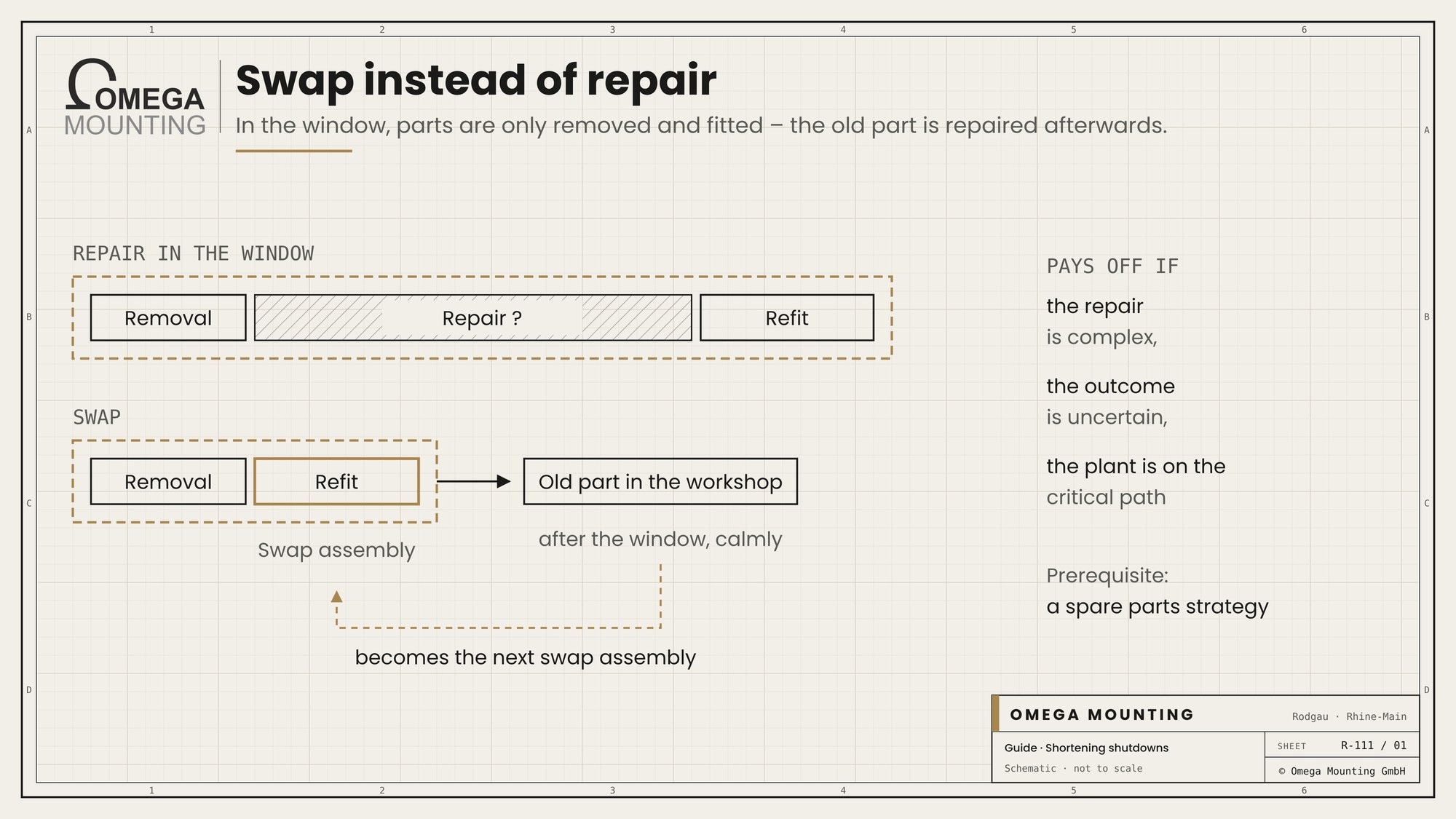
Swap instead of repair means fitting a prepared swap assembly and repairing the old assembly calmly after the shutdown – that way the repair moves out of the window.
A swap assembly is a ready-to-fit assembly that replaces a worn or defective one like for like: a gearbox, a drive, a bearing unit, a running gear. In the window, parts are only removed and fitted. The actual work on the old part happens afterwards.
When a swap assembly pays off
The swap pays off above all in three cases:
- The repair is complex. Bearings, seals and shafts need a workshop, measuring equipment and calm.
- The outcome is uncertain. What is behind the cover only becomes clear on opening.
- The plant is on the critical path. Every delay at this point postpones the restart.
Sometimes the damage itself is the answer. If an assembly cannot be repaired economically on site, it is replaced anyway – the only question is whether that happens prepared or improvised.
Prerequisite: a spare parts strategy
A swap assembly must be there before it is needed. That requires a spare parts strategy: which assemblies are critical, which are in stock, which have long lead times? For parts the market no longer supplies, the usual routes through to re-manufacture are shown in our guide to spare parts that are no longer available.
Clarify rigging in and lifting routes beforehand
A heavy swap assembly needs a route into the plant. Clear door widths, floor load, lifting points and crane set-up area are checked beforehand, not on the day of work. How a move-in works step by step is described in our guide to the machinery move-in process.
Lever 3: in parallel instead of one after another
In parallel instead of one after another means carrying out work packages at the same time where they do not get in each other's way – with separate workplaces, coordinated isolation and planned hoists.
Anyone who works through everything one after another adds up the durations. Anyone who works in parallel shortens the chain to the longest package. But that only works with planning.
Separate the workplaces
Two teams in the same spot get in each other's way. Lay the plan on the hall layout: where does who work, where are scaffolding and mobile elevating work platforms, where do the transport routes run? Hot work next to combustible material, a crane above another team – such collisions belong before the window.
Shifts and sequencing of trades
A shutdown over a weekend can run in shifts. Then each shift needs a clean handover: what is finished, what is open, which approval applies? Trades can be sequenced. The fitters remove parts mechanically while the electricians disconnect and reconnect on another plant. Then both switch.
Bottleneck crane and hoists
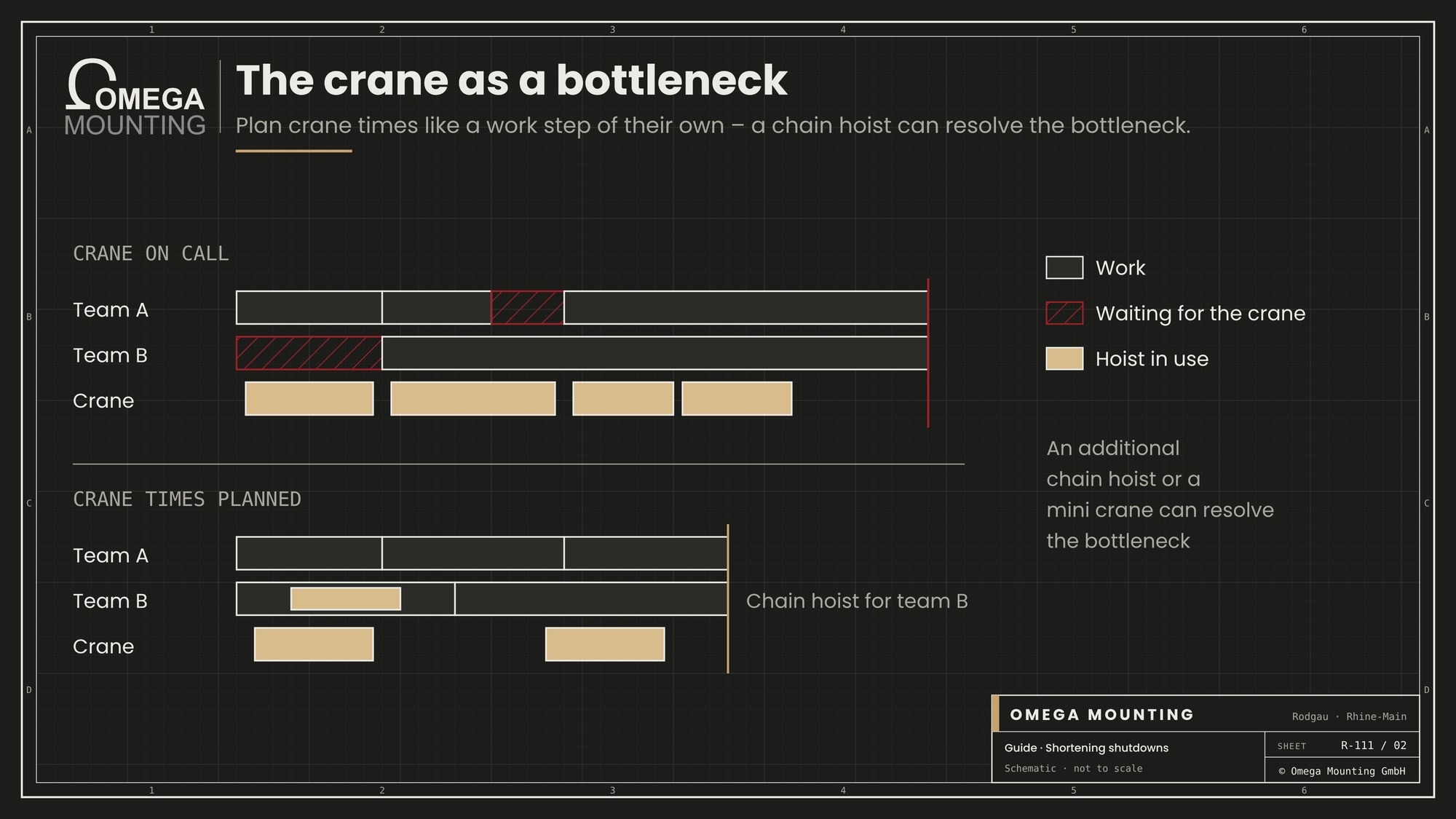
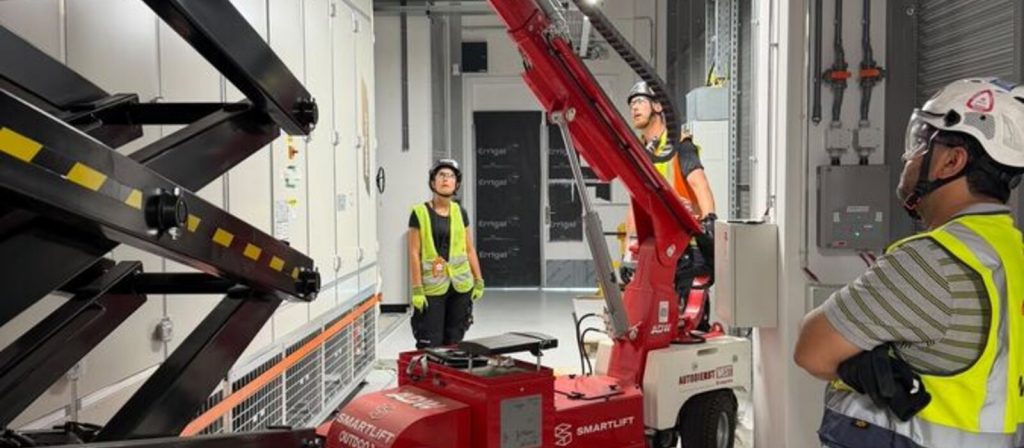
Often there is only one overhead crane or one gantry crane. Then it becomes the bottleneck. Plan crane times like a work step of their own. An additional chain hoist or a mini crane can resolve the bottleneck.
Critical path and safety
Which packages are on the critical path, i.e. the longest chain without buffer, is described in our basic article on shutdown planning. Parallel work needs clear rules for isolation. Each person secures with their own lock, and the plant only runs again when the last lock has been removed. How this works is shown in our guide to Lockout tagout in maintenance.
Lever 4: speed up interfaces and approvals
Interfaces and approvals get faster when isolation, access, induction and decision routes are settled before the window – then nobody waits for a signature during the shutdown.
Schedule isolation
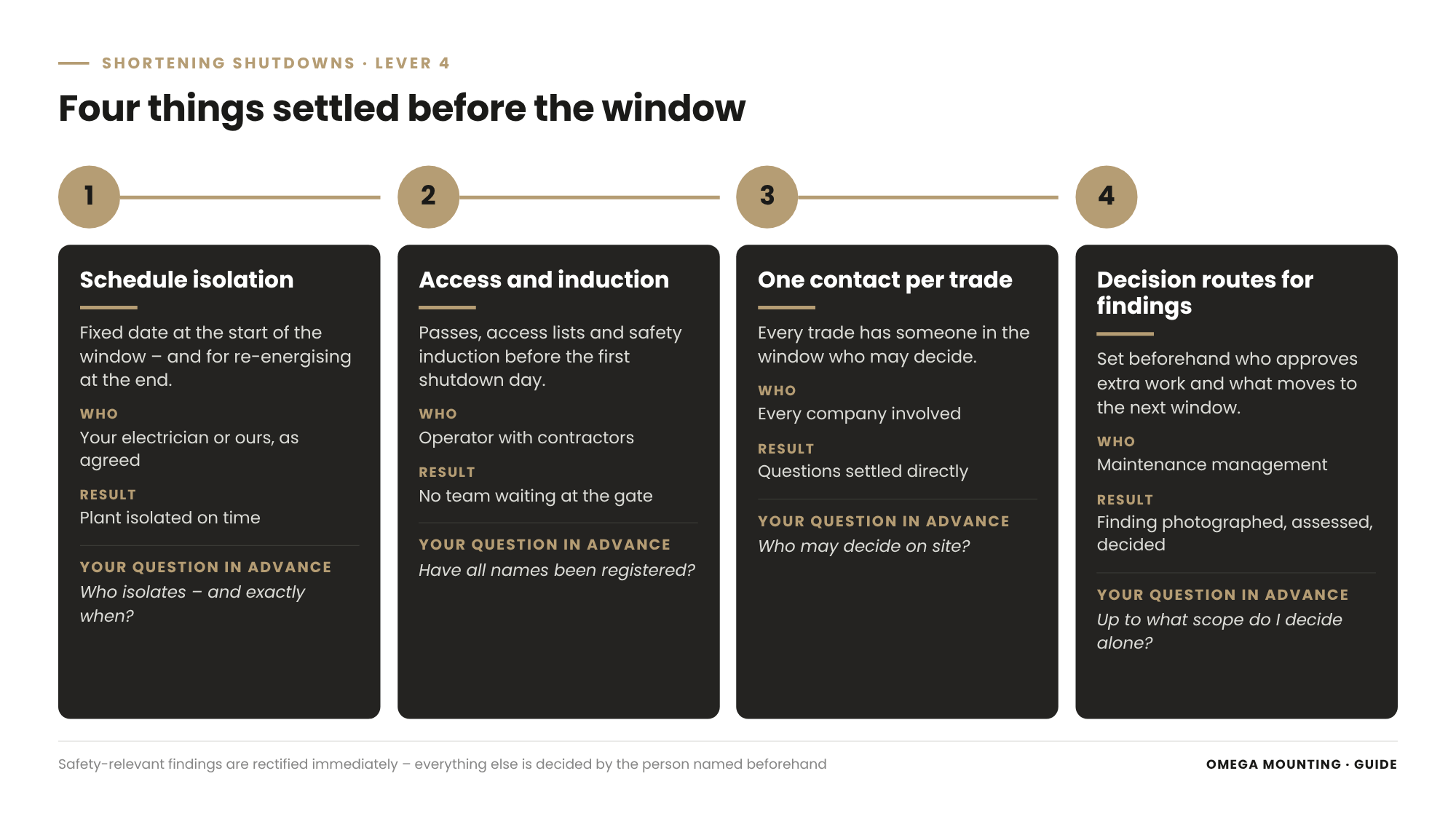
Electrical isolation is carried out by an electrician – ours or yours, following your procedure. This person needs a fixed date at the start of the window and is known before the technicians arrive. The same applies to re-energising at the end. Anyone who plans isolation for “sometime in the morning” loses the start of the window.
Access and induction beforehand
Take care of site passes, access lists and safety induction before the first shutdown day. In data centers, at airports and in security areas this usually takes longer than in a normal hall. A team waiting at the gate for its passes is not at the plant.
One contact per trade
Every trade needs a contact in the window who may decide. Anyone who has to clarify questions via three places loses time. How to coordinate several companies properly is described in our guide to contractor management.
Decision routes for findings
Opening almost always reveals something that was not on the list. Set beforehand: who may approve additional work? Up to what scope does the maintenance manager decide alone? When is the finding only documented and moved to the next window? Safety-relevant findings are rectified immediately. Everything else is photographed, assessed and decided – by the person named for it beforehand.
Lever 5: plan the restart too
The restart becomes plannable when test run, inspection, acceptance and handover are separate items in the plan – and the buffer is deliberately placed at the end.
Many plans end with “refit”. But a lot comes after that: dismantling scaffolding and temporary structures, completeness check, removing the locks, re-energising, test run without load, load run. Anyone who does not plan for this extends the shutdown at the end.
Inspection after repair
The German Ordinance on Industrial Safety and Health requires work equipment to be inspected before reuse after repairs that may affect safety. The inspection is carried out by the person qualified to carry out inspections. For you this means: date, inspector and, if necessary, test loads are fixed before the window, not only after the last task.
Buffer at the end
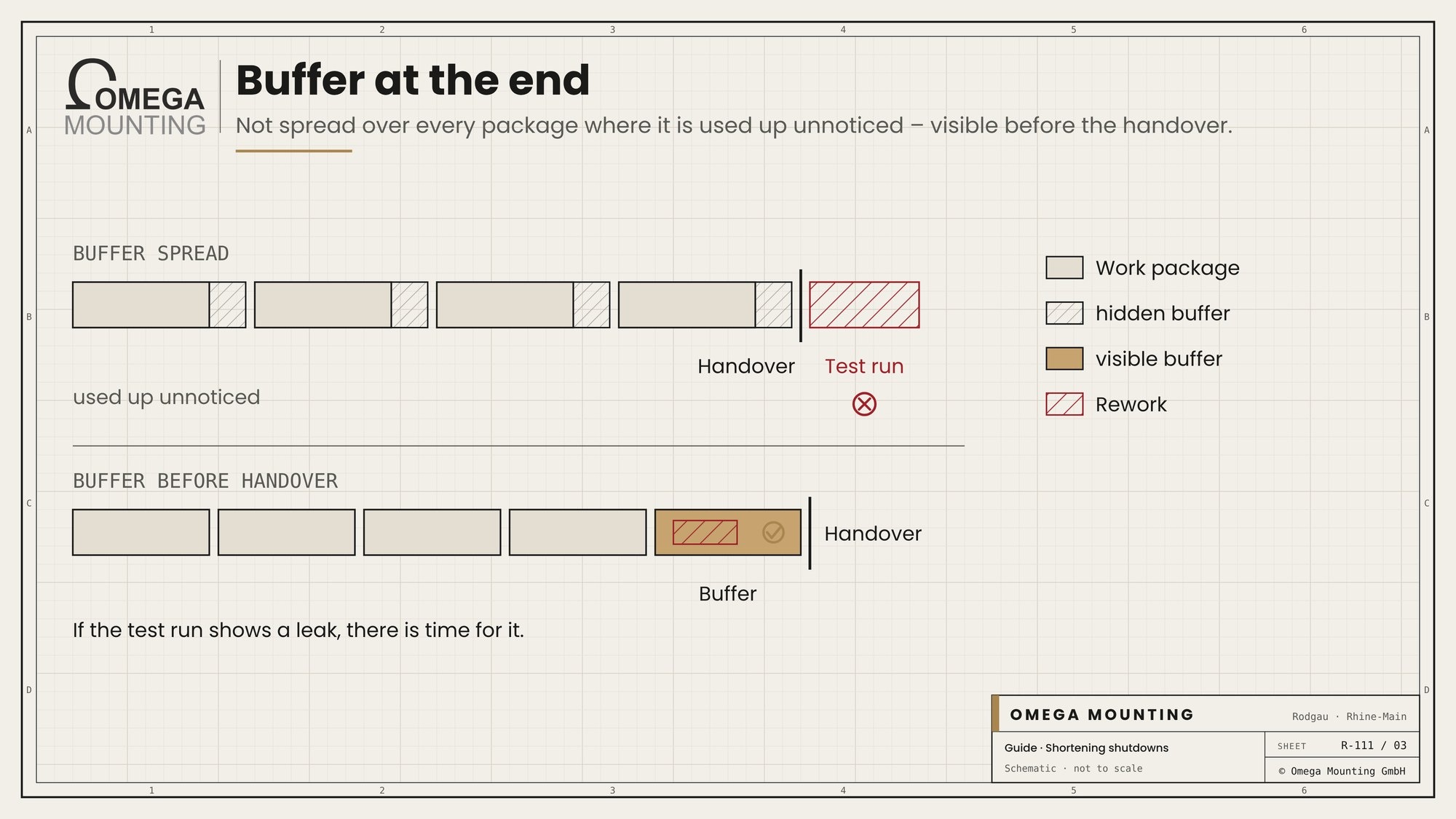
A buffer does not belong spread over every package, where it is used up unnoticed. Place it visibly before the handover. Then there is time if the test run shows a leak. How test run, documentation and handover interact is shown in our guide to commissioning and handover of a plant.
Accompany the first shift
Do not plan the first production shift after the window without a maintenance technician nearby. Newly fitted bearings and freshly adjusted assemblies show in the first operating hours whether the work is right. Minor issues can then be fixed immediately.
The five levers at a glance
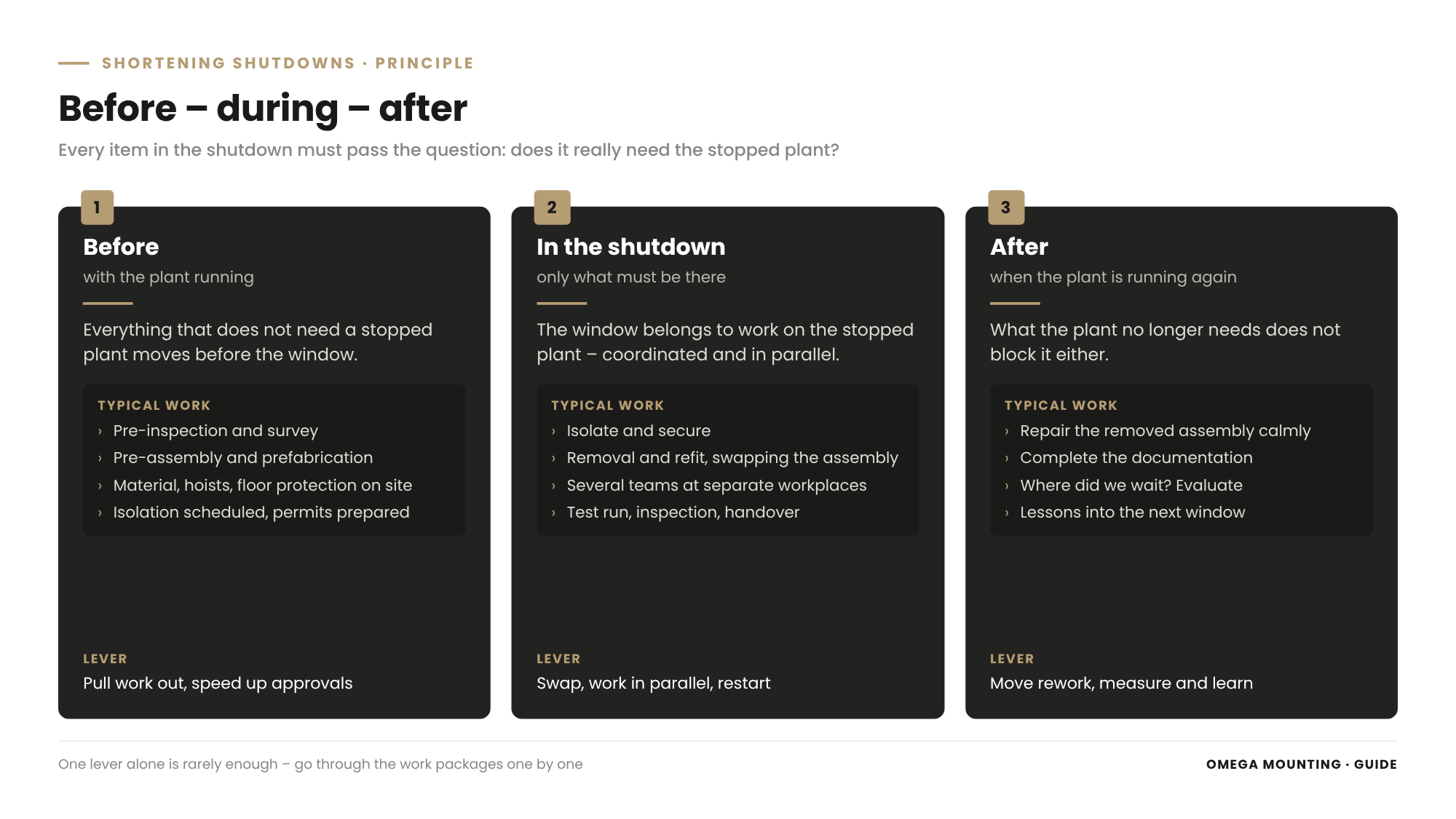
The five levers shorten the shutdown by moving work before or after the window, avoiding waiting times and making the restart plannable.
The table shows for each lever what happens beforehand, what stays in the shutdown and who is responsible.
| Lever | What happens beforehand | What stays in the shutdown | Who |
|---|---|---|---|
| Pull work out. | Pre-inspection, survey, pre-assembly, material and hoists on site. | Only work on the stopped plant. | Maintenance manager with installation contractor. |
| Swap instead of repair. | Procure swap assembly, check rigging route. | Removal and refit. | Maintenance, purchasing, installation contractor. |
| Work in parallel. | Separate workplaces, plan crane times, set shifts. | Coordinated work of several teams. | Shutdown coordinator. |
| Speed up approvals. | Schedule isolation, access, induction, decision routes. | Isolation and decisions according to plan. | Operator with electrician. |
| Plan the restart. | Set inspector and inspection date, buffer at the end. | Test run, inspection, handover. | Maintenance manager, competent person, production. |
| Move rework. | Storage space and workshop order for removed parts. | Only the handover of open items. | Maintenance with workshop. |
How to combine the levers
One lever alone is rarely enough. A swap assembly helps little if the crane is only set up in the window. Pre-assembly helps little if isolation is delayed. Go through the work packages one by one and ask for each: which lever fits here? That way a shorter window emerges step by step.
Typical mistakes when shortening shutdowns
The typical mistakes are leaving work out instead of moving it, counting material as “ordered”, setting up hoists in the window, leaving findings without a decision route and forgetting the restart.
- Leaving work out. Check points are deleted so that the window fits. The breakdown comes later.
- “Ordered” does not mean “here”. The part is in goods receiving, but not at the workplace.
- Setting up in the window. Scaffolding, chain hoist and rails only appear once the plant has stopped.
- No decision route. The finding is open, and nobody may approve the extra work.
- Parallel without a plan. Two teams share one crane and one workplace.
- Restart forgotten. Test run and inspection are not in any plan.
- No debrief. The same waiting times turn up again in the next window.
The mistake behind the mistakes
Behind almost all mistakes is the same thought: the window is planned as working time, not as a sequence. Anyone who only plans the work overlooks everything in between. Anyone who plans the sequence also sees the waiting times – and can eliminate them.
After the shutdown: measure and learn
After the shutdown, compare planned and actual duration, record the causes of every delay and carry the result into the next plan.
Anyone who wants to reduce shutdown time needs an honest review. It does not have to be elaborate. Three questions are enough to start with:
- Where did the window take longer than planned? Per work package, not just overall.
- Why? Waiting, searching, set-up, finding, interface or restart.
- What do we bring forward next time? Which task moves out of the window?
Record causes, not culprits
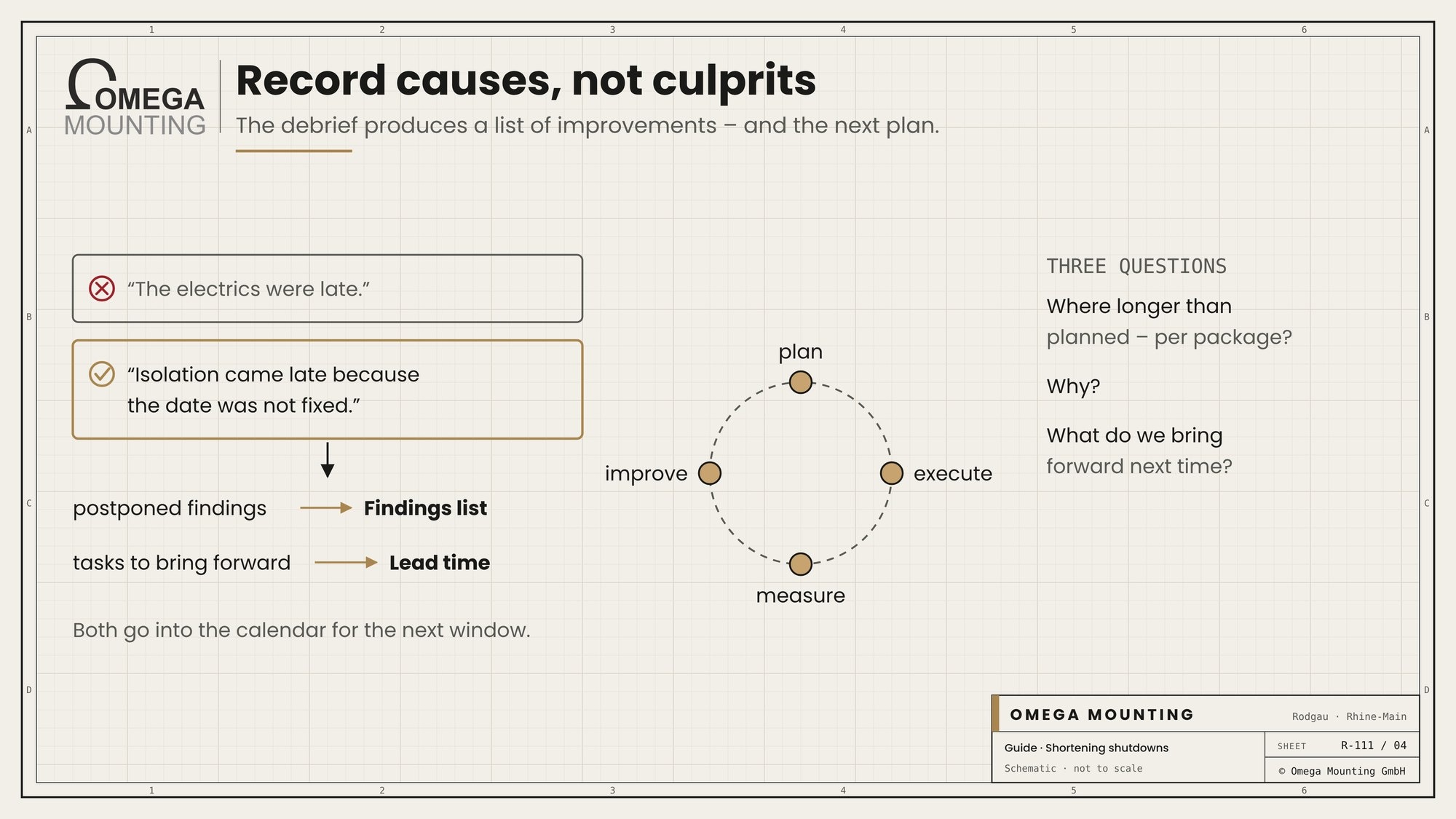
Note causes, not names. That applies to the weekend window just as much as to a major overhaul: anyone who wants to shorten an overhaul needs the same honest list. “Isolation came late because the date was not fixed” helps next time. “The electrics were late” helps nobody. That way the debrief becomes a list of improvements.
Carry the results into the calendar
What you learn belongs in the next plan. Findings that were postponed go into the findings list. Tasks that can be brought forward go into the lead time. How a debrief with everyone involved works is described in the basic article on annual overhaul and shutdown planning. How to spread windows, inspection dates and lead time over the year is shown in our guide to the maintenance calendar.
That way the goal of shortening shutdown times becomes not a one-off project but a cycle: plan, execute, measure, improve.
Shortening shutdowns in the Rhine-Main region: how it works with us
In the Rhine-Main region we take on the mechanical part in planned shutdowns: preparation, pre-assembly, lifting equipment, removal and refit, welding and re-installation.
With us, the starting point is a site visit before the window. We go through the work packages and ask for each what can be done beforehand. Then we take measurements, clarify routes and lifting points and prefabricate holders, rails or auxiliary structures in our workshop in Rodgau. In the window itself, ideally only the work on the stopped plant remains.
From Rodgau, Frankfurt, Offenbach, Hanau, Darmstadt and Aschaffenburg are short trips. That helps with preparation and all the more if a part is missing in the window after all. The scope of our Maintenance and servicing for industrial plants is set out on our service page.
We say beforehand what we do not take on. Electrical isolation is carried out by an electrician – ours or yours, following your procedure. Controls and software stay with the manufacturer. The load capacity of beams and ceilings is assessed by the structural engineer if needed, inspection after repair by the competent person. We do not advise on changeover optimisation in production. We coordinate with everyone involved so that the mechanics do not wait and nobody waits for the mechanics.
Project examples
Five jobs from our project diary show what the levers look like in practice. To be honest up front: none of these reports measures a shutdown duration or compares it with an earlier window. They show ways of working that make a window shorter and more plannable.
Sorting system at Frankfurt Airport: pre-assembly before the window
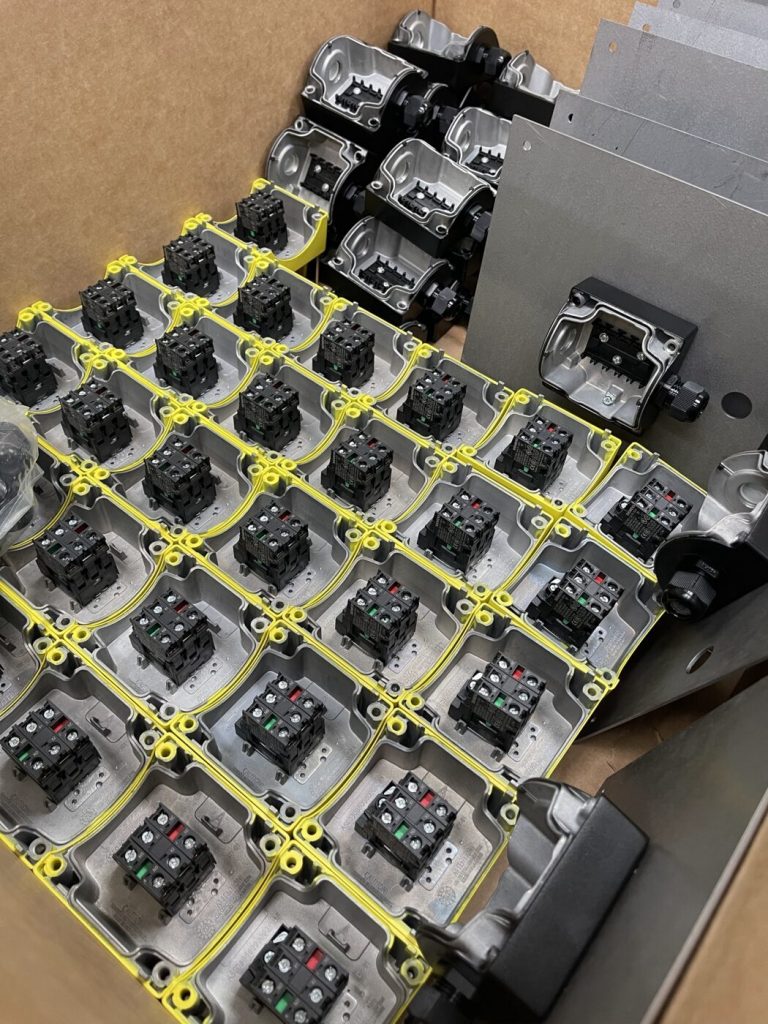
With the installation of emergency stop buttons on a sorting system at Frankfurt Airport an existing parcel sorting system was extended by 32 emergency stop buttons and several sensors. A holding plate was made in advance for each button, to suit the installation situation. The housings were prepared in series before installation and sorted by mounting point. That kept the short shutdown window free for installation and connection. Two technicians worked during the day in the plant's downtimes. The extended system only went into regular operation after installation, integration into the safety circuit and inspection.
For your shutdown this means: everything that can be prepared and sorted belongs before the window.
Data center in Frankfurt: swap instead of repair on site
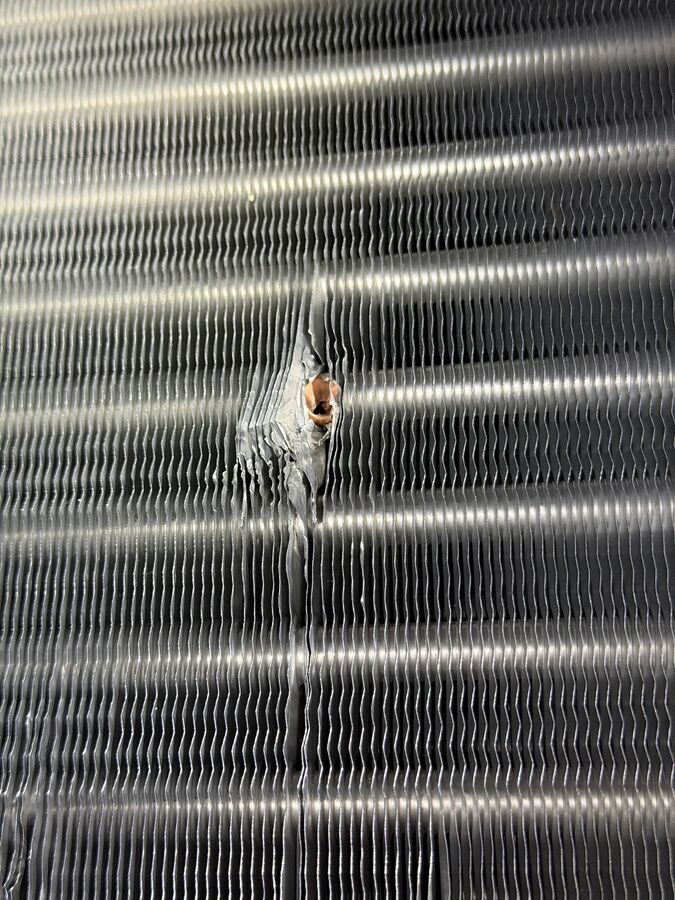
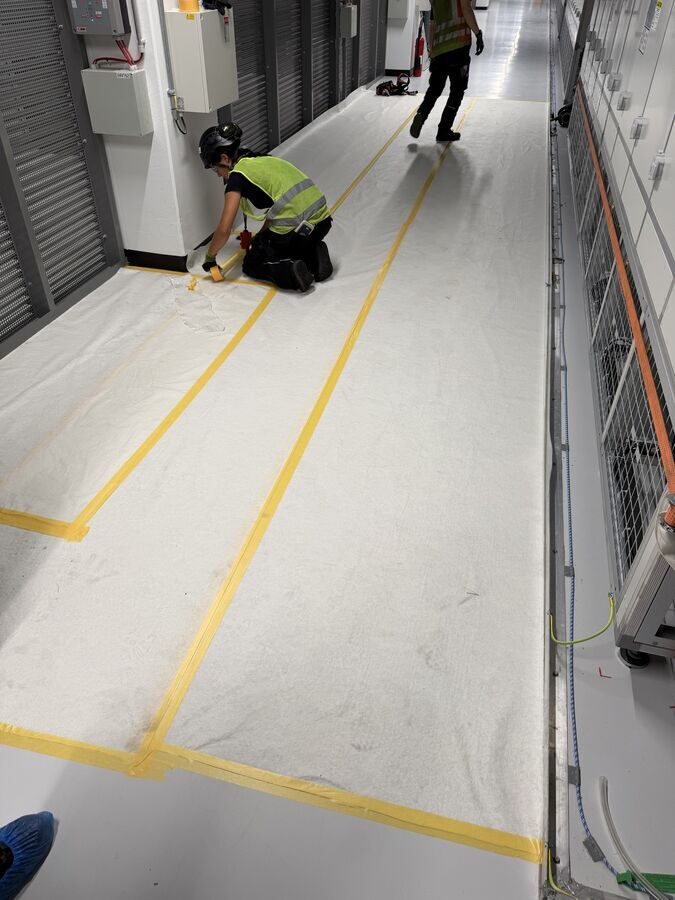
During the CRAH unit replacement in a data center in Frankfurt – a computer room air handler for server rooms – the heat exchanger of the old unit was so damaged that a repair on site did not pay off. The building was fully in operation. Before the job, transport routes, door dimensions, floor load capacity and lifting radii were recorded and lift plans drawn up. All walkways and routes were covered with protective fleece and taped, and the machines checked for suitable tyres. A supervisor and three riggers brought the new unit up to the second floor by lift & shift. The defective unit was removed step by step and taken away for repair.
For your shutdown this means: the repair of the old unit happens after the swap, not in the window.
Paint shop in the Offenbach area: the preparation day
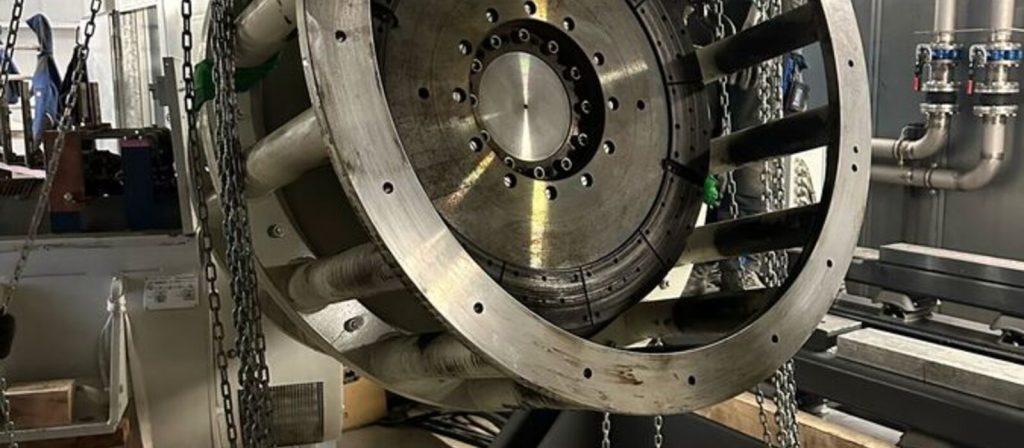
During the fan bearing replacement on a paint shop in the Offenbach area, a fan impeller around 1.40 m in diameter sat directly on the motor. The whole unit had to come out. On the preparation day our technicians fabricated and welded a rail system made of square steel tubes on site, aligned exactly to the direction of extraction. On the day of work during the weekend shutdown, the motor was disconnected, the unit driven out on the rails and lifted off the assembly stand with the gantry crane. Motor overhauled, new bearing fitted, everything pushed back, sealed, fixed, connected, function check. On Monday production ran without restriction.
For your shutdown this means: auxiliary structures are made before the window; in the window, only the swap remains.
Standby generator set in the Rhine-Main region: removal, overhaul, re-installation
With the maintenance of the generator of a standby power system in a larger building complex in the Rhine-Main region, the generator had to be separated from the engine for the overhaul and brought out of the building. Before the job, passages, space, lifting accessories, lifting gear and the load capacity of the suspension points had been checked and lift plans drawn up. The enclosure was dismantled, and custom-made timber frames were ready. Chain hoists on a beam structure lifted the generator, skates brought it to the installation shaft, and a mobile crane lifted it out of the basement. The overhauled parts came back the same way and were positioned, connected to the engine and aligned. A lifting contact and three mechanics carried out the job.
For your shutdown this means: with heavy assemblies the lifting route determines the duration – and it can be planned completely in advance.
Logistics centre in Frankfurt: swapping the complete assembly
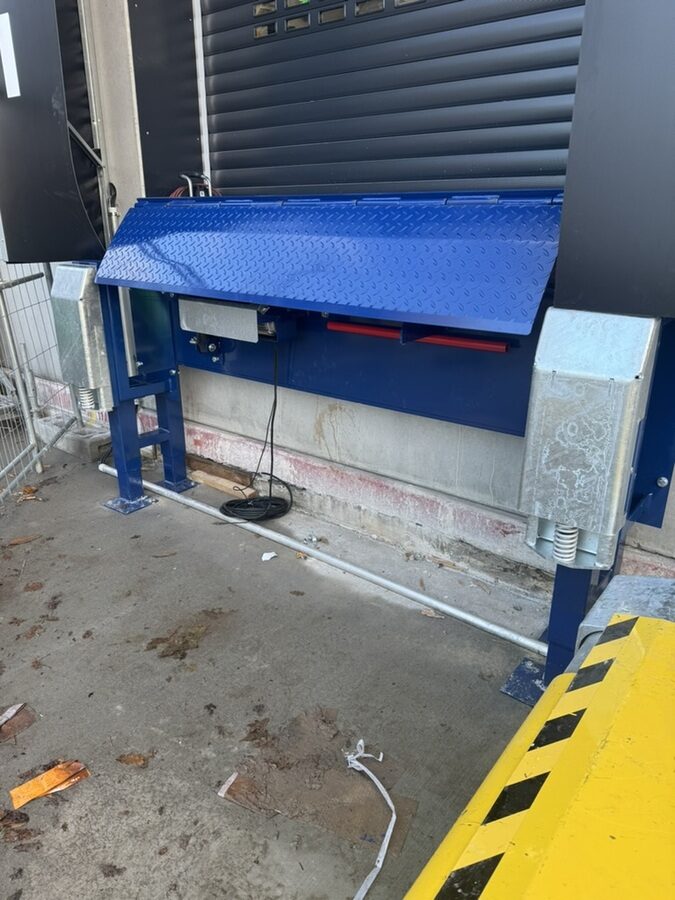
During the replacement of hinged dock levellers at a logistics centre in Frankfurt we replaced two manually operated hinged dock levellers with hydraulic ones. The old levellers were cut out, the new ones positioned and welded to the existing steel structure using MAG welding, a gas-shielded welding process. Hydraulics and control cabinets were installed. The logistics centre kept running throughout. Because the final power connection was still missing, we handed the levellers over in working order via a power distribution board; the power feed was later taken on by the company's electrical department. The report does not compare with a repair. It shows how a complete swap works when the assembly arrives prepared.
For your shutdown this means: a finished assembly on site turns a repair into removal and refit.
Do you want to plan your next window shorter?
Then get in touch with us. Send us the list of work packages for your next shutdown. During a site visit we go through them together and show what can be done beforehand.
What this means for your role
For buyers: Order parts and swap assemblies so that they are checked and on site before the window. Ask installation partners about preparation, not just about the day of work. A quotation with site visit and pre-assembly is often worth more for the shutdown than one without.
For designers: Design plants so that assemblies can be swapped. Lifting points, inspection openings and rigging routes later decide how long a shutdown takes. Record weights and dimensions of the swap assemblies.
For project managers and site managers: As a project manager, you set the sequence of the window, including waiting times and restart. As a site manager, you make sure on site that isolation, access and induction are in place at the start and that every shift hands over cleanly.
For maintenance managers: You decide what happens before, in the window and afterwards. Go through every work package with this question. Name beforehand who approves additional work, and hold the debrief after every window.
For operations and plant managers: A shorter window starts with an earlier date for planning. Give maintenance the lead time that preparation needs. And after the window, ask not just whether it was enough, but where time was lost.
Shutdown check “Before – during – after”: template on request
The shutdown check “Before – during – after” is a one-page working document. There is one row per work package with the columns “can be done before”, “must be in the shutdown” and “can be done after”. On top of that come the fields “material and hoists on site” and “approval settled”. It deliberately contains no time targets – it helps you see in a meeting what can move out of the window. Request the template via our contact form – keyword “Shutdown check”.
Why Omega Mounting?
We are based in Rodgau near Frankfurt, can be reached by phone (Mon–Fri 9 am–3 pm) and via WhatsApp, and have our own workshop. The linked jobs show how we approach a window. On the sorting system at Frankfurt Airport, pre-assembly was done before the plant stopped. On the paint shop near Offenbach, the rail system was built on the preparation day. On the standby generator set, the lift plans were fixed before the first lift. For you this means: a single point of contact for preparation, lifting equipment, removal and refit and restart – with short distances in the Rhine-Main region.
Conclusion
Anyone who wants to shorten a shutdown does not look for time in the work, but before, in between and after it. Pull out what does not need a stopped plant, and use swap assemblies where the repair is uncertain. Work in parallel where the plan allows, and settle approvals before the window. Plan the restart with a buffer at the end, and learn from every window for the next one. When your next shutdown is coming up, send us the list of your work packages – we'll come back with a site visit date and an honest assessment.
Planning a move-in, installation or maintenance in the Rhine-Main region?
Tell us briefly what you need – we'll come back with an honest assessment.
Free, no-obligation callback
You may also be interested in these guides
Maintenance & Servicing
Maintenance & Servicing

About the author
Tobias Schott
Managing director of Omega Mounting GmbH, Rodgau · more than 20 years of hands-on experience in installation and maintenance
A trained mechatronics technician, working in maintenance, servicing and industrial installation since 2004 – first alongside his father, and with Omega Mounting since 2012: from overhead conveyors in Frankfurt to the crane system in a new-build hall. He plans and leads lifting operations as an appointed person (AP) in data centers and on industrial sites in the Rhine-Main region, trains and examines operators of cranes, mobile elevating work platforms and telehandlers, and is a qualified occupational safety specialist. On jobs abroad he is known as the “German Troubleshooter” – the person you call when a site gets stuck. He learned what quality means from his father, not from a manual: Made in Germany as a standard for his own work, not a label. That is why quality comes first at Omega Mounting – ahead of speed and price. He writes these guides from that practice: what works on our sites is in them – what exists only on paper is not.
Frequently asked questions
By moving everything that does not need a stopped plant before or after the window. That includes pre-inspection, survey, pre-assembly and material on site. Swap assemblies move the repair into the time afterwards. Parallel work, approvals settled early and a planned restart shorten the rest. Leaving work out is not part of it.
More than many think. With the plant running, pre-inspection and survey can be done, holders and auxiliary structures prefabricated and parts checked and assigned. Hoists, floor protection and transport routes can also be prepared as far as operations allow. Permits, access and induction are also settled beforehand.
Usually when the repair is complex, its outcome uncertain or the plant on the critical path. In the window, parts are only removed and fitted, and the old assembly is repaired calmly afterwards. The prerequisite is a spare parts strategy so that the assembly is there in time. Whether it pays off economically is shown by comparison with your downtime costs.
Above all the split into internal and external tasks. In production changeovers, work that can be done with the machine running is pulled out of the changeover time. Maintenance can ask the same of every item in the shutdown: does it really need the stopped plant? We do not offer changeover consulting for production – we use the principle in every maintenance window.
The company as the client. The German Occupational Safety and Health Act requires employers to coordinate when their employees work together at one location; where there are particular hazards, a coordinating person is appointed. For the shutdown this means: a named coordinator before the first company arrives. This guide is not legal advice.
Through an honest review per work package. Compare planned and actual duration and note the cause of every delay: waiting, searching, set-up, finding, interface or restart. After a few windows a pattern usually emerges. That is where you apply the first lever.
Yes, the levers apply across industries; only the windows differ. In data centers, maintenance windows are often tight and limited by change freezes – more on this in the guide to change freeze in maintenance. In logistics, weekends and seasonal breaks count; for standby generator sets, coordination with the electrical contractor.
For the mechanical part, installation and maintenance contractors from the region are the shortest route. From Rodgau we support shutdowns in Frankfurt, Offenbach, Hanau, Darmstadt and Aschaffenburg – with site visit, pre-assembly, lifting equipment and removal and refit. On request, our own electricians take on the plant electrics; controls and inspection stay with the responsible partners.
A short enquiry with three details: the plants concerned, the planned date of the window and the list of work packages. We arrange a site visit, go through the packages with you and send a written assessment of what can happen before, in the window and afterwards. Your contact is Tobias Schott – reachable via our contact form.
 English
 German