
- Guide – Lift & Shift
Bringing in an MRI scanner: moving in and replacing large medical equipment in a working hospital
By Tobias Schott · 22-minute read · Updated October 2026
Anyone wanting to bring in an MRI scanner plans three things at once: the unit, the building and the route between them. The manufacturer is responsible for the unit, the structural engineer for openings and slabs – and a rigging company for the route from the vehicle to the examination room.
A magnetic resonance imaging scanner is one of the heaviest and most sensitive units in a hospital. It rarely fits through a normal door, often not into a lift and sometimes not even through the corridor. Still, it has to go in – into a building where operations, examinations and care are going on next door. And after many years the old unit has to come out again so that a new one can take its place.
This guide shows how that works. We explain what bringing in an MRI scanner means, who takes on which task and what the sequence looks like from the site visit to the final position. Plus the special features of a working hospital, removing the old unit and other large equipment such as CT scanners and linear accelerators.
How a move-in day is prepared in principle is described in our guide on the machinery move-in process. This guide is about what is different with large medical equipment.
We are an installation and rigging company from Rodgau near Frankfurt. To be clear from the start: we have not yet documented a large hospital unit in our project diary. But we have brought heavy, sensitive equipment into finished and working buildings and taken it out again. The work steps are comparable; with an MRI scanner the specifications come from the manufacturer.
Key points at a glance
- Bringing in an MRI scanner means planning the route from the vehicle to the examination room, creating an opening, lifting, transporting and positioning the unit to the manufacturer's information.
- Unit, magnet, cooling, shielding and commissioning lie with the manufacturer and its specialist firms.
- Openings in facade or slab and the load capacity of route and target room are clarified by the structural engineer with the building design team.
- The rigging company handles the route in, lifting equipment, floor protection and transport inside the building.
- In a working hospital, hygiene, noise, routes and patient protection determine time windows and working methods.
- The old unit only comes out once the manufacturer has released it – and often along the same route the new one goes in.
- The same principle applies to CT scanners, linear accelerators and other large equipment, with their own specifications.
What is an MRI move-in?
An MRI move-in is the transport of a magnetic resonance imaging scanner from the vehicle to its place in the examination room – along a route planned beforehand, often through a specially created opening, with crane and lifting equipment and under the manufacturer's specifications.
The term sounds like a single lift. In reality it is a chain of work steps involving several companies.
What makes an MRI scanner so special
The heart of an MRI scanner is a large magnet. In most units it is superconducting and cooled to very low temperatures with liquid helium. It is heavy, large and sensitive to impact and tilting. In addition, a superconducting magnet can hold its field even without power supply. Whether and when a field is present is decided solely by the manufacturer.
The examination room is special too. It is shielded against external radio waves, often with its own metal cabin. Sometimes magnetic shielding is also needed. There is a quench pipe to the outside for the helium. All of this is built by specialist firms to the manufacturer's specifications.
Bringing in and replacing
In a new build the route is often already planned in. In a replacement in an existing building it first has to be found. The new unit may be built differently, heavier or larger than the old one. That is why every replacement starts with the question of whether the old route still fits.
Who does what when bringing in an MRI scanner?
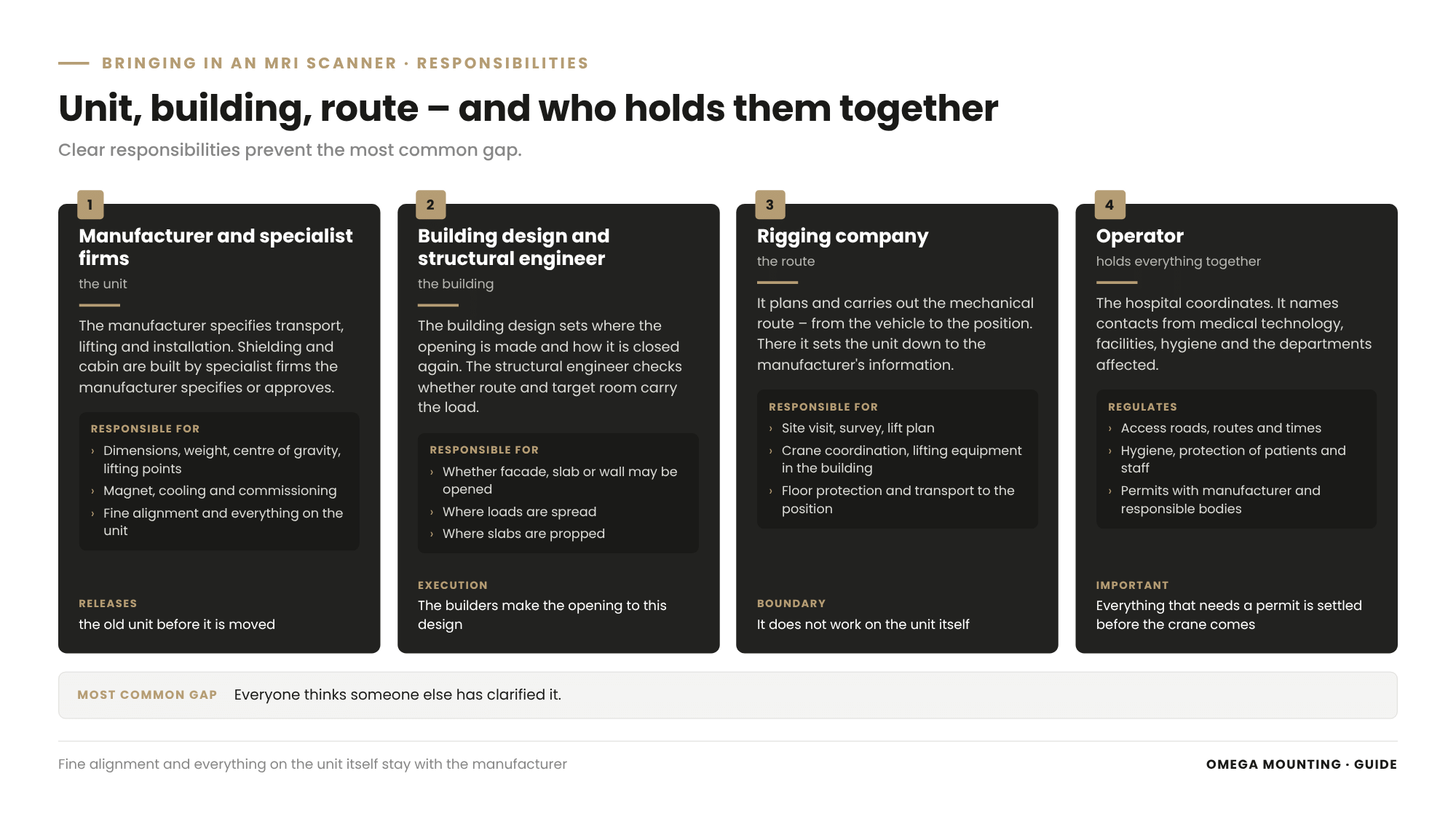
When bringing in an MRI scanner, three sides share the work: the manufacturer is responsible for the unit, the design team and structural engineer for the building, the rigging company for the route – and the operator holds everything together.
Clear responsibilities prevent the most common gap: everyone thinks someone else has clarified it.
The manufacturer and its specialist firms
The manufacturer supplies the unit and sets the specifications for transport, lifting and installation. It states dimensions, weight, centre of gravity, lifting points and permitted orientations. It is responsible for the magnet, its cooling and commissioning. Shielding and cabin are built by specialist firms, usually specified or approved by the manufacturer. For radiation protection of a CT scanner or linear accelerator, separate experts are added.
Building design and structural engineer
The building design team sets where the opening is made and how it is closed again. The structural engineer checks whether facade, slab or wall may be opened and whether route and target room carry the load. They specify where loads must be spread or slabs propped. How access openings and slab loads are planned in principle is shown in our guide on move-in planning with slab loads and openings in mind.
The rigging company
The rigging company plans and carries out the mechanical route: site visit, survey, lift plan, crane coordination, lifting equipment in the building, floor protection and transport to the position. There it sets the unit down to the manufacturer's information and roughly aligns it if the manufacturer provides for this. Fine alignment and everything on the unit itself stay with the manufacturer.
The operator
The hospital coordinates. It regulates access roads, routes, times, hygiene and the protection of patients and staff. It names contacts from medical technology, facilities, hygiene and the departments affected. How contractors are briefed and coordinated on site is described in our guide on contractor management.
Permits and radiation protection
Separate rules apply to the operation and radiation protection of large medical equipment. Which of them apply to your unit is clarified by operator, manufacturer and the responsible bodies. This guide is not legal advice. For the move-in what counts is: everything that needs a permit is settled before the crane comes.
The route in: from the vehicle to the examination room
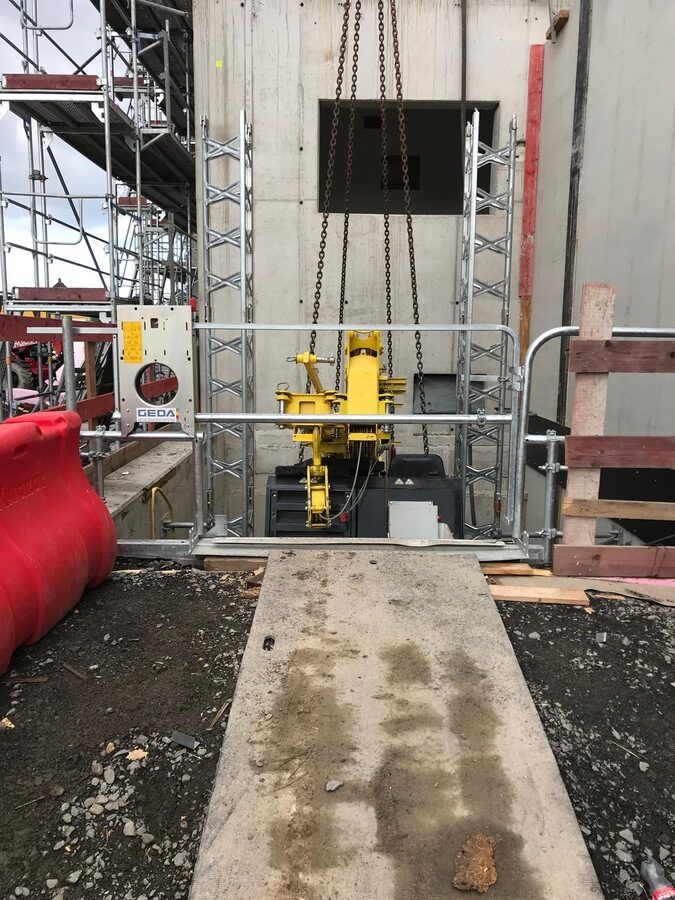
The route in is the complete path from the unloading point to the target room – with crane standing area, opening, corridors, doors, lifts, slabs and every pinch point in between – and it is planned completely before the day.
The route is the part a rigging company is responsible for. It decides method, lifting equipment and floor protection.
Where the unit comes in
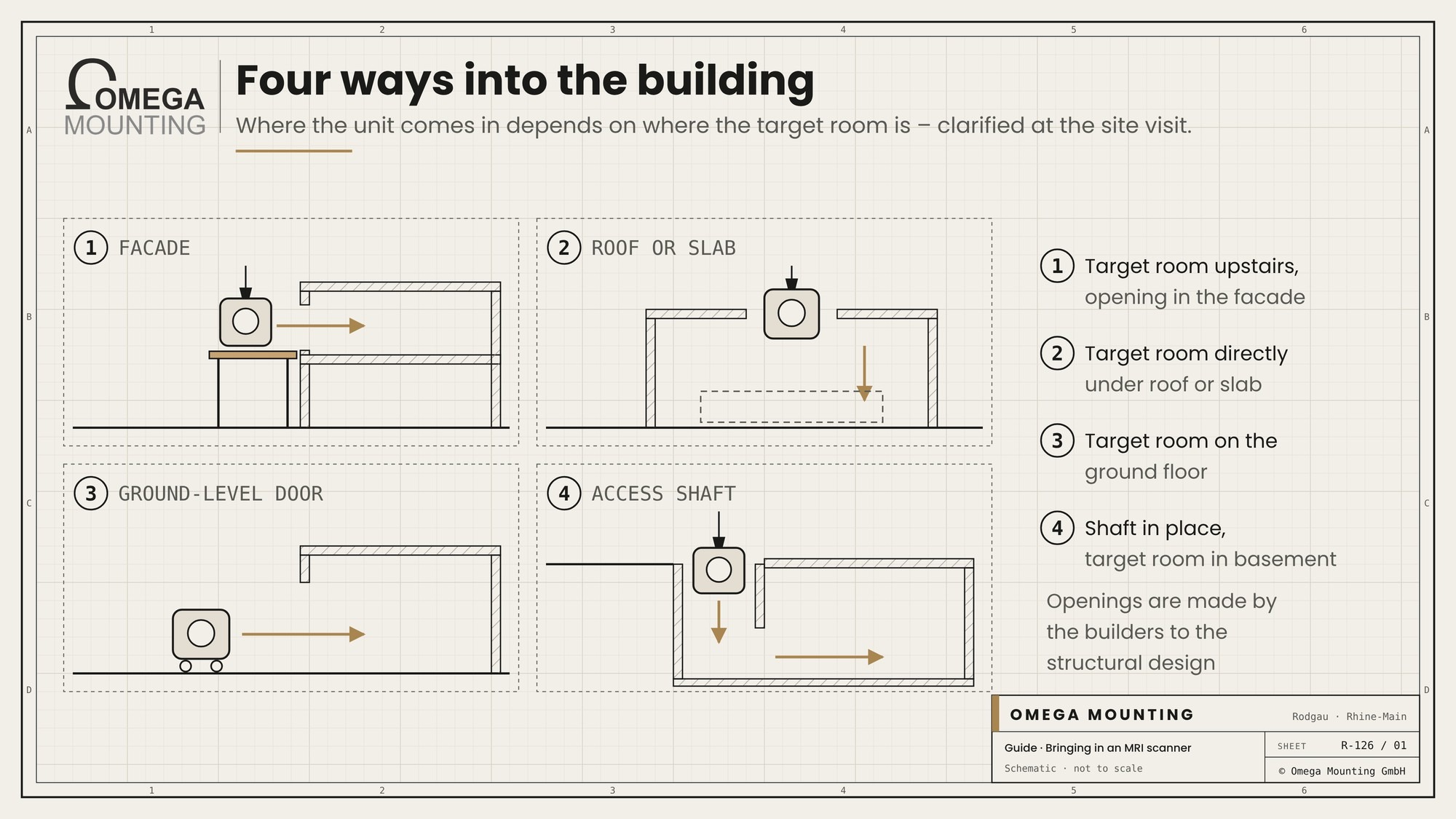
There are essentially four routes. Through the facade via an opening at the level of the target floor. Through the roof or a slab if the room lies below. At ground level through a door or large opening if the room is on the ground floor. Or through an access shaft if the building has one. Some hospitals keep an installation opening that can be opened with reasonable effort. Anyone building new should plan exactly that.
What lies on the route
On the route lie doors, frames, corridors, bends, thresholds, ramps, joints and floor coverings. Add slabs that must carry the load and fixtures in the way: ceiling lights, signs, handrails, fire doors. Every pinch point is measured and photographed. What has to be removed is agreed with the operator.
Lift or no lift
A bed lift carries a lot, but rarely an MRI scanner. Whether a lift may be used for a large unit or parts of it is decided by the operator with the lift manufacturer. Usually the lift is not used for the unit. It stays free for patients and staff.
The right method
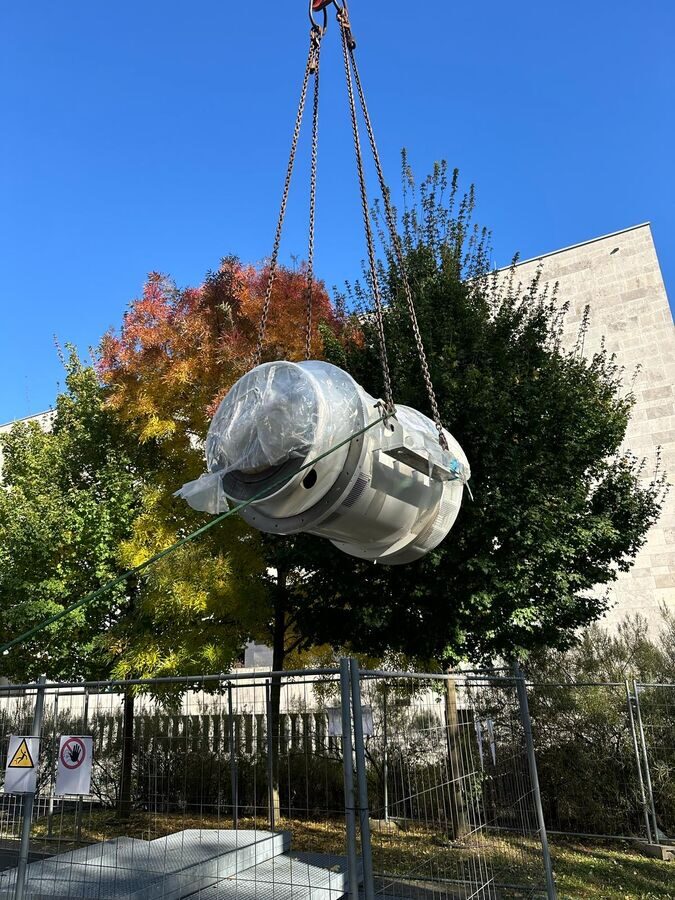
Outside, a mobile crane usually lifts the unit from the vehicle to the opening. There a platform or plinth takes the load. Inside, heavy-duty skates, lifting units and skidding equipment move the unit on. Which lifting method fits when is shown in our guide spider crane or mobile crane for the move-in.
Sequence step by step: from the site visit to the position
Bringing in an MRI scanner almost always follows the same order: site visit, route survey, lift plan, creating the opening, lift, pushing into the building, transport, positioning to the manufacturer's information and closing the opening again.
Each step needs the release of the previous one. The trades take turns.
Step one: site visit
It starts with a site visit with operator, manufacturer and building design team. We look at access road, crane standing area, opening, route and target room. We ask about procedures in the hospital, times and areas that must not be disturbed. And we obtain the manufacturer's documents on transport and lifting.
Step two: route survey
We survey the route completely: widths, heights, bends, thresholds, floor coverings, gradients. We record where loads must be spread and where the structural engineer needs to give an assessment. Without the manufacturer's data on dimensions, centre of gravity and lifting points no route can be planned properly.
Step three: lift plan and lifting concept
The survey produces the lift plan. It sets crane, crane standing area, radius, lifting accessories, lifting path and barriers. Slinging is only done at the points the manufacturer specifies, with lifting gear it has approved. How lifting accessories are selected is explained in our guide on lifting accessories for heavy loads. Who plans and directs lifting operations responsibly is described in our guide on the appointed person for lifting operations.
Step four: creating the opening
The opening is made by the builders as specified by the building design team and structural engineer. Facade elements are removed, walls opened or slabs exposed. Props are installed beforehand where needed. We do not carry out this demolition. But we check whether the opening fits the route before lifting.
Step five: lift
On the day, crane, barriers and banksmen are in place. The unit is lifted from the vehicle and brought to the opening. One person gives the signals. Wind, rain and traffic can postpone the lift, so a back-up date belongs in every plan.
Step six: pushing in and transport inside the building
At the opening a platform or plinth takes the load. From there the unit is pushed into the building on heavy-duty skates or with skidding equipment. Inside it follows the planned route to the target room – slowly, with banksmen front and back.
Step seven: positioning to the manufacturer's information
In the target room the unit is brought to the spot the manufacturer specifies. We set it down and align it as far as the manufacturer provides for. Fine alignment, fixing to the unit, cooling, magnetic field and commissioning stay with the manufacturer. How alignment works in principle is shown in our guide on aligning and anchoring machines.
Step eight: closing the opening and clearing up
Then the builders close the opening again. We clear the route, take up floor protection and load spreading and hand over photos, lift plan and route survey. These documents are worth their weight in gold at the next replacement.
Floor protection and load spreading in the building
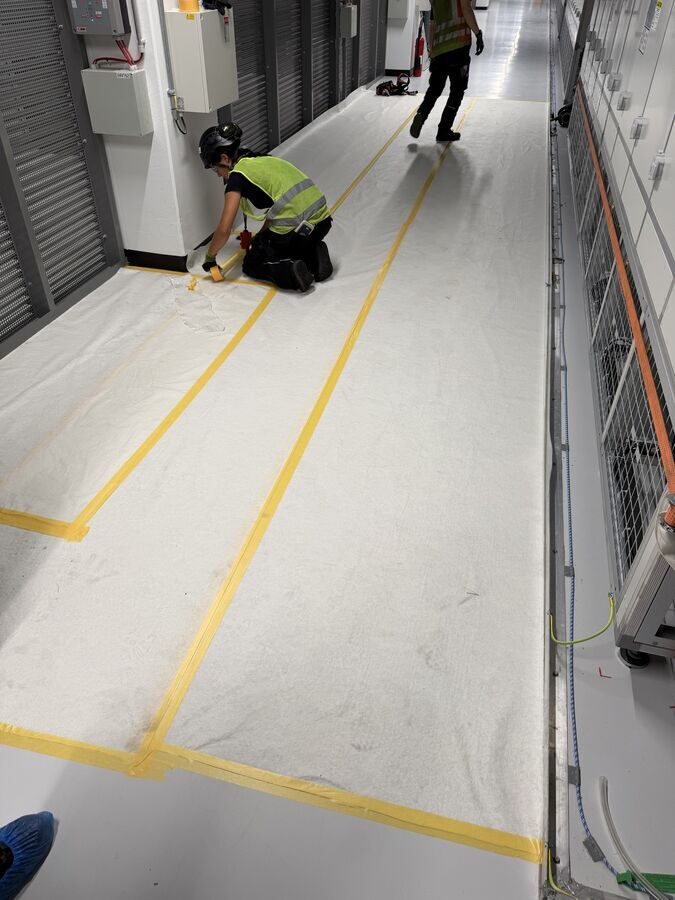
Floor protection and load spreading ensure that a large unit neither damages floors, walls and doors nor overloads slabs on its way – load spreading as specified by the structural engineer, protection by the rigging company.
Hospital floors are sensitive and must remain hygienically perfect. A scratch there is not just a cosmetic problem.
Protecting floors
We lay protection along the whole route: fleece, boards and covers, neatly taped. Edges, frames and wall corners get edge protection. Joints and thresholds are bridged so that rollers do not catch. After transport everything is removed again and the floor is as before.
Spreading loads
A heavy unit on a few rollers presses on the floor at points. Load spreading plates distribute this force over a larger area. Where a slab lies on the route, the structural engineer specifies how the load is spread or whether props are needed. We implement this and check before transport that everything is in place.
No exhaust fumes in the building
Inside the building we only work with equipment without combustion engines: heavy-duty skates, electric or hydraulic lifting units, manual force. Exhaust fumes have no place in a hospital.
In a working hospital: hygiene, noise, routes and patient protection
In a working hospital, hygiene, noise, routes and patient protection determine when and how work is done – coordinated with hygiene, facilities and the departments affected.
A hospital does not close for a move-in. Next door patients are treated, upstairs they are cared for, downstairs the emergency department is waiting.
Hygiene
Dust in a hospital is a risk to patients. Work areas are therefore sealed off, routes kept clean, tools and material cleaned before use. Which measures are needed is decided by the hospital's hygiene team. We follow these rules and build them into floor protection and barriers.
Noise and vibration
Noise disturbs patients, vibration can affect sensitive equipment nearby – for example another MRI scanner in the next room. Noisy work is therefore placed in times the operator releases. What vibration is tolerable is stated by the manufacturers of the neighbouring equipment.
Routes and access roads
Escape routes, ambulance access and patient routes remain clear. The crane standing area must not block the emergency department. If there is a helipad nearby, the operator coordinates crane work with the responsible bodies. Barriers are placed so that nobody inadvertently enters the slewing area.
Protecting patients and staff
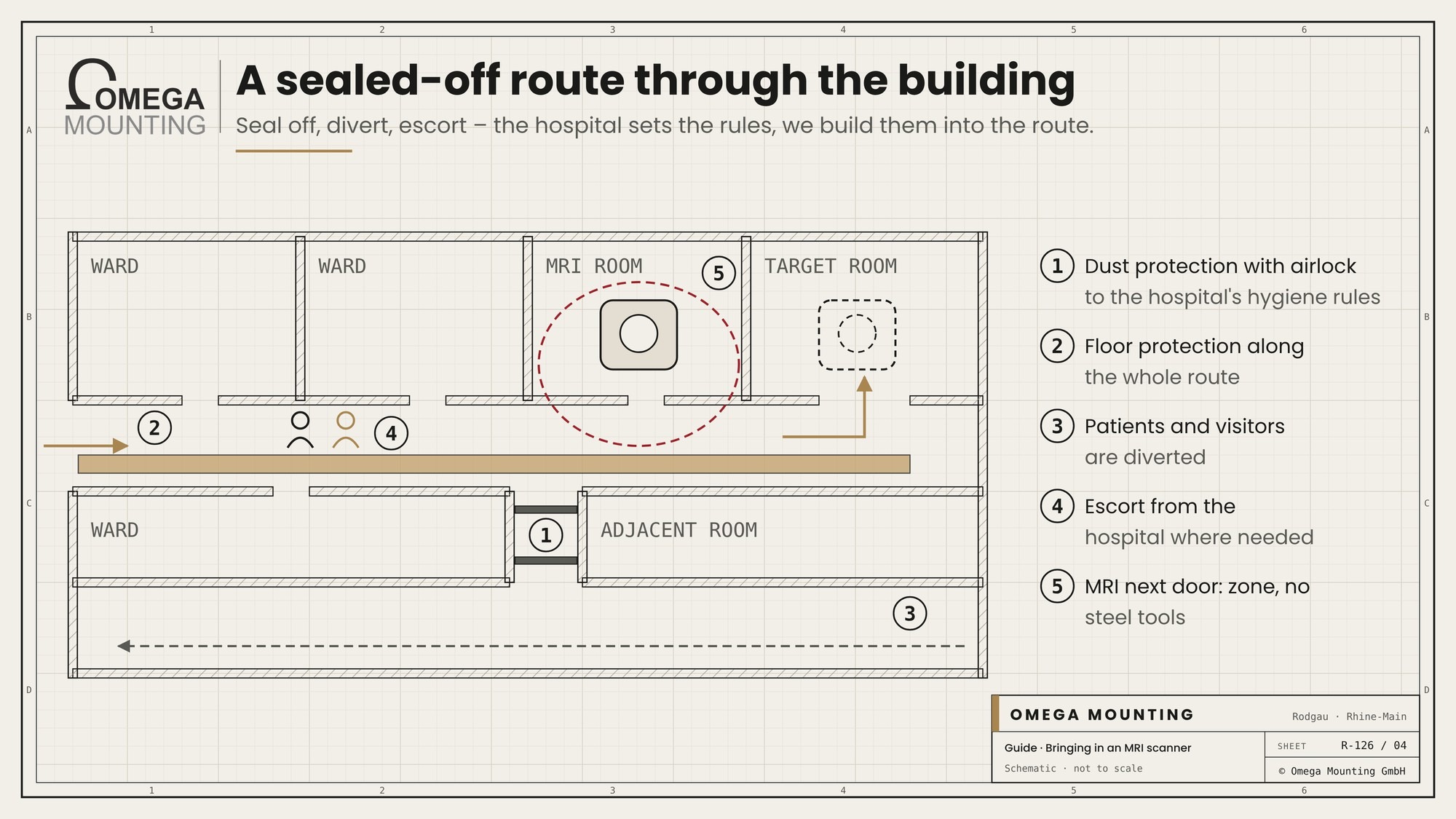
Only briefed persons work in the move-in area. Patients and visitors are diverted, staff are informed. Where we have to pass through areas with patient traffic, someone from the hospital escorts us. How access, escort and checks are regulated in sensitive areas is shown in our guide on installation in security areas.
Time windows at night and at weekends
Many hospitals schedule move-ins at night or at weekends when there is less activity. This requires good preparation because queries are harder then. How work alongside live operations is organised is described in our guide on Maintenance during live operations.
The magnetic field next door
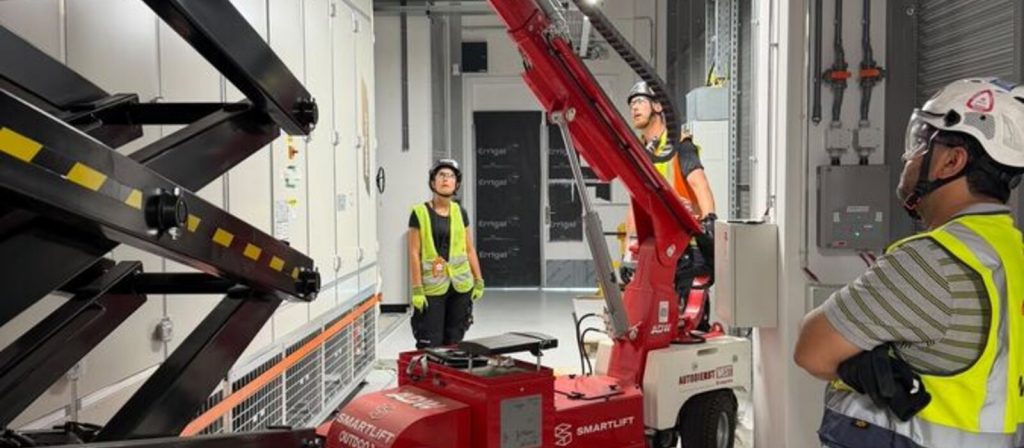
If another MRI scanner stands nearby, its field may be active. Then access zones apply, and steel tools have no place there. Which zones apply is set by operator and manufacturer. We adapt our way of working accordingly.
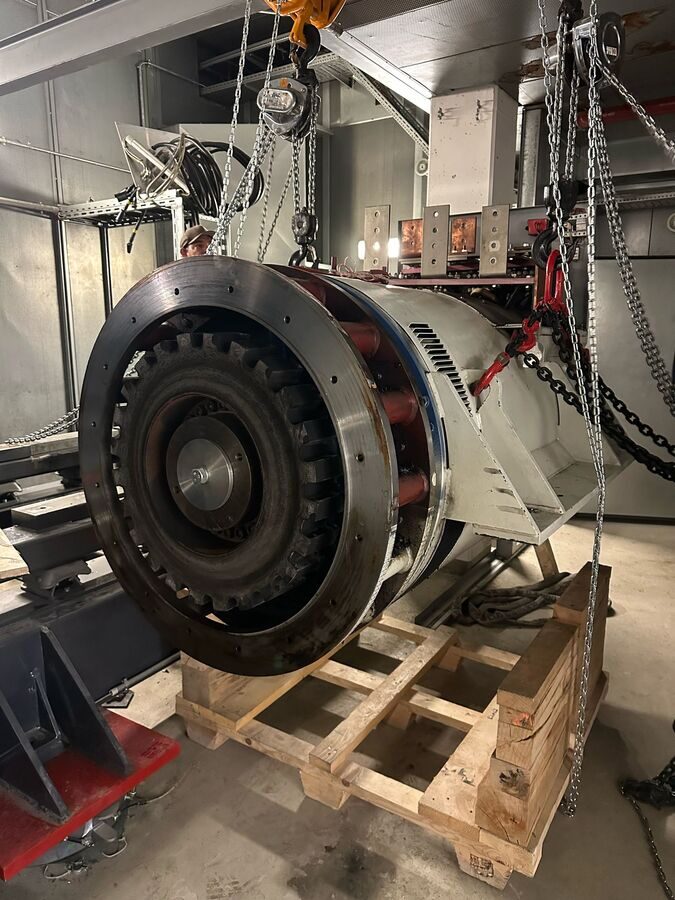
Removing the old unit
The old unit is only removed once the manufacturer has decommissioned and released it – after that it often goes out along the same route the new unit comes in.
In a replacement, removal is the first big step. It determines when the new unit can come.
Release by the manufacturer
Before an old MRI scanner is moved, the manufacturer decommissions it. It decides what happens to the magnetic field and helium and when the unit may be released mechanically. We only start with this release. The same applies to CT scanners and other units: release first, then mechanics.
Release, secure, remove
We undo the fixings as instructed, sling to the manufacturer's information and move the unit onto the route. Bulky parts go on transport frames. Where the route is too narrow, we clarify beforehand with the manufacturer whether and how the unit may be dismantled. How dismantling and strip-out work in principle is described in our guide on Industrial dismantling and deconstruction.
Loading and removal
Outside, the crane lifts the old unit onto the vehicle. The load is secured. How heavy goods are loaded safely is shown in our guide on Load securing for heavy goods. What happens to the unit afterwards is decided by operator and manufacturer.
Out and in within one window
Often the old unit is removed on the same day or in the same window in which the new one comes in. Then crane, opening and route are only prepared once. That saves effort but requires a precise order. If one step fails, everything shifts.
Bringing in CT scanners, linear accelerators and other large equipment
CT scanners, linear accelerators, angiography systems and other large medical equipment are brought in on the same principle as an MRI scanner – with the manufacturer's own specifications for route, lifting and installation.
The units differ, the questions are similar: how does the unit get in, what does the route carry, who releases?
CT scanner
A CT scanner is usually smaller and lighter than an MRI scanner, but still heavy and sensitive. Often a ground-level route or a suitable lift is enough. The room is shielded against X-rays. Shielding and radiation protection are the responsibility of manufacturer, specialist firms and operator.
Linear accelerator
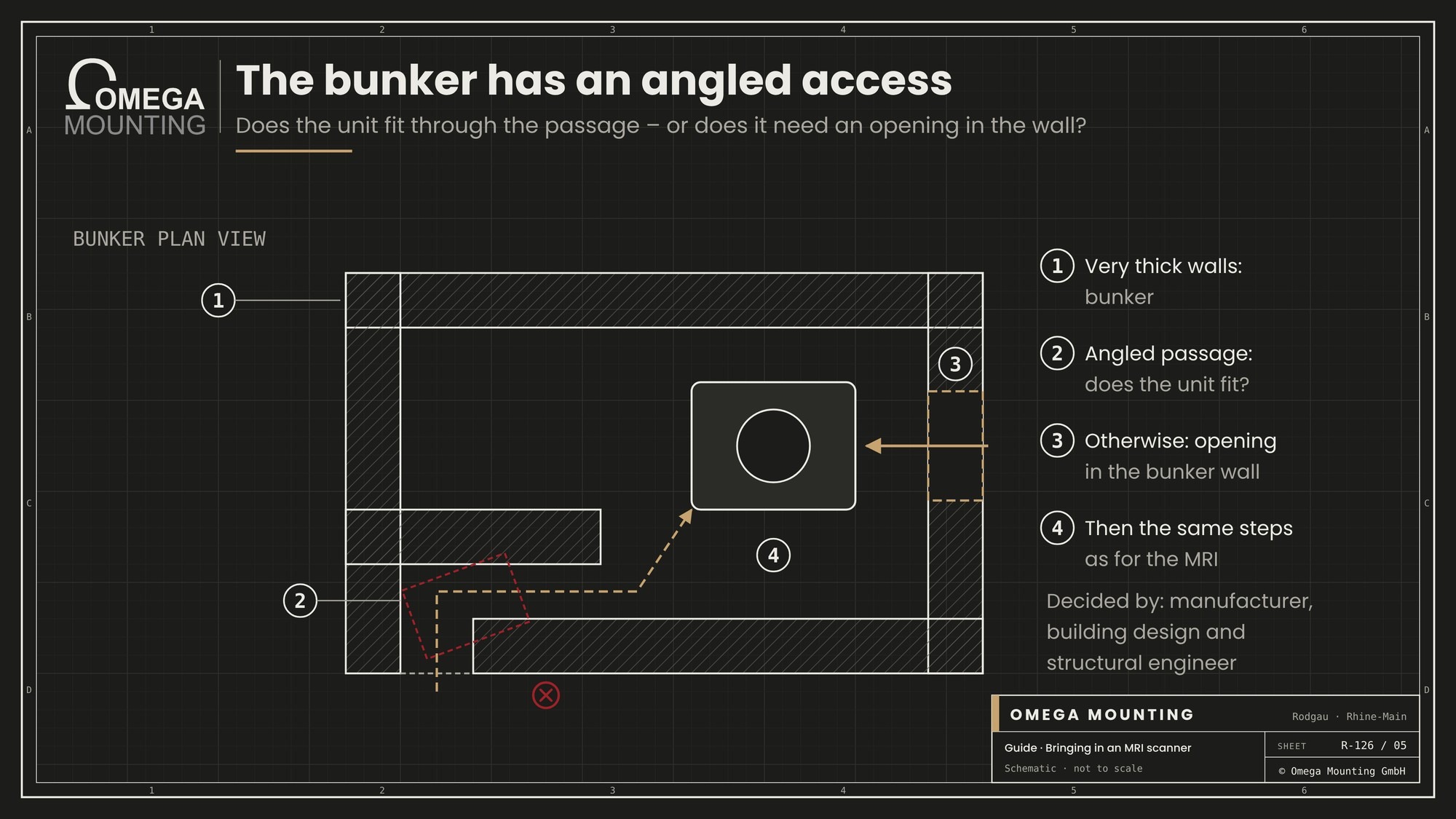
A linear accelerator for radiotherapy stands in a room with very thick walls, often called a bunker. Access usually runs through an angled passage. Whether the unit fits through or an opening in the bunker is needed is clarified by manufacturer, building design team and structural engineer. The move-in itself follows the same steps as for the MRI scanner.
Other large equipment
Angiography systems, nuclear medicine equipment or large laboratory units are also heavy, sensitive loads. For all of them: manufacturer's information first, plan the route completely, have loads checked, protect the unit.
Overview: step, task and responsibility
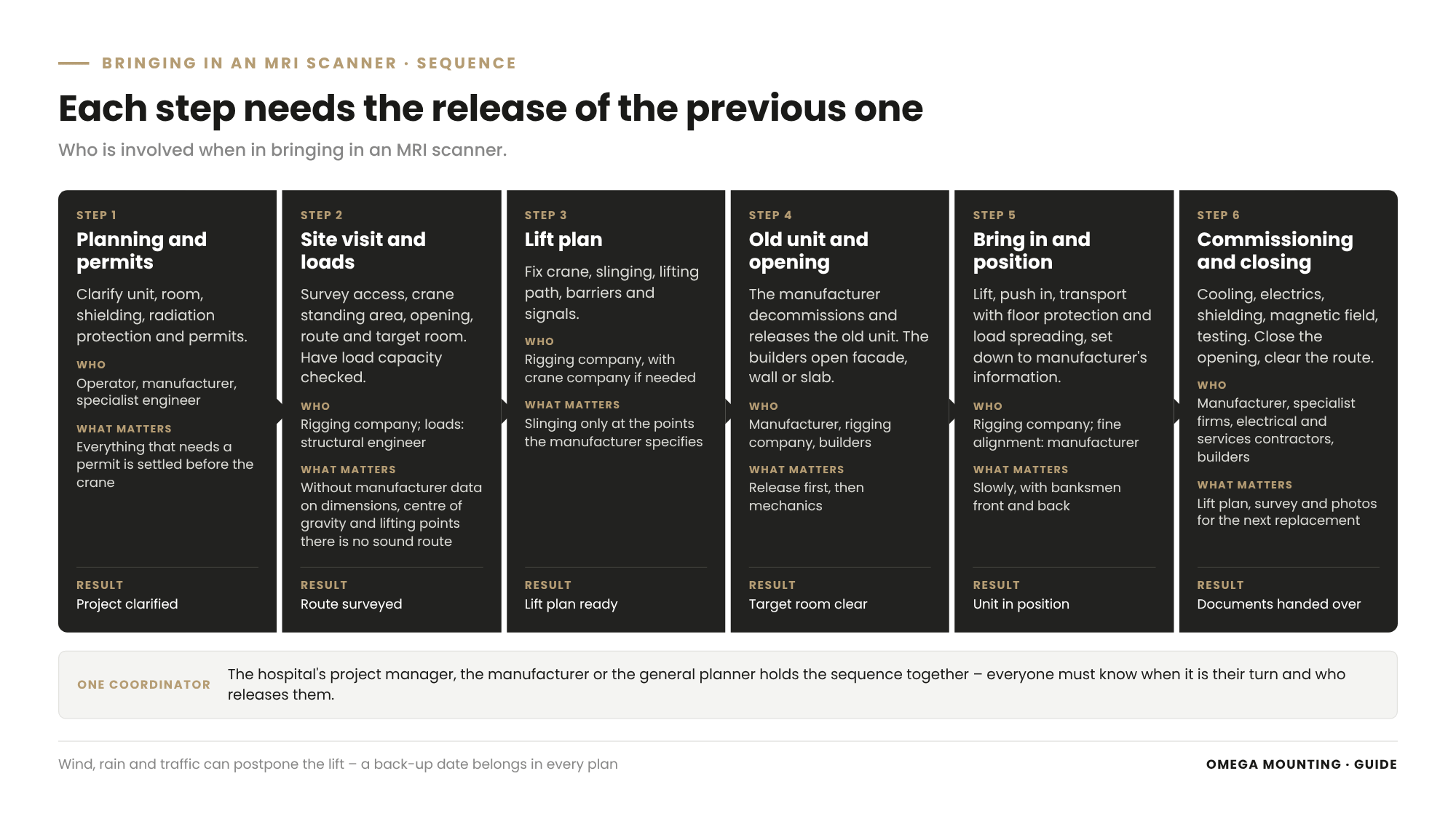
The overview shows for each step of an MRI move-in what happens and who is responsible.
| Step | What happens | Who |
|---|---|---|
| Planning and permits. | Clarify unit, room, shielding, radiation protection and permits. | Operator, manufacturer, specialist engineer. |
| Site visit and survey. | Survey access road, crane standing area, opening, route and target room. | Rigging company with operator and manufacturer. |
| Loads and opening. | Load capacity of route and target room, position and sizing of the opening. | Structural engineer and building design team. |
| Lift plan. | Fix crane, slinging, lifting path, barriers and signals. | Rigging company, with crane company if needed. |
| Old unit decommissioned. | Magnetic field, helium and connections as specified by the manufacturer. | Manufacturer and specialist firms. |
| Removing the old unit. | Release, sling, transport, load. | Rigging company. |
| Creating the opening. | Open facade, wall or slab, install props. | Builders as specified by design team and structural engineer. |
| Bringing in. | Lift, pushing in, transport in the building, floor protection, load spreading. | Rigging company. |
| Positioning. | Setting down to manufacturer's information, fine alignment. | Rigging company, fine alignment by manufacturer. |
| Connection and commissioning. | Cooling, electrics, shielding, magnetic field, testing. | Manufacturer, specialist firms, electrical and building services contractors. |
| Closing the opening. | Close opening, clear route, hand over documents. | Builders and rigging company. |
One coordinator for all
With so many parties, someone is needed to hold the sequence together. That can be the hospital's project manager, the manufacturer or a general planner. What matters is that everyone knows when it is their turn and who releases them. How move-in services are described and awarded properly is shown in our guide on scope of works for plant installation.
Typical mistakes when bringing in an MRI scanner
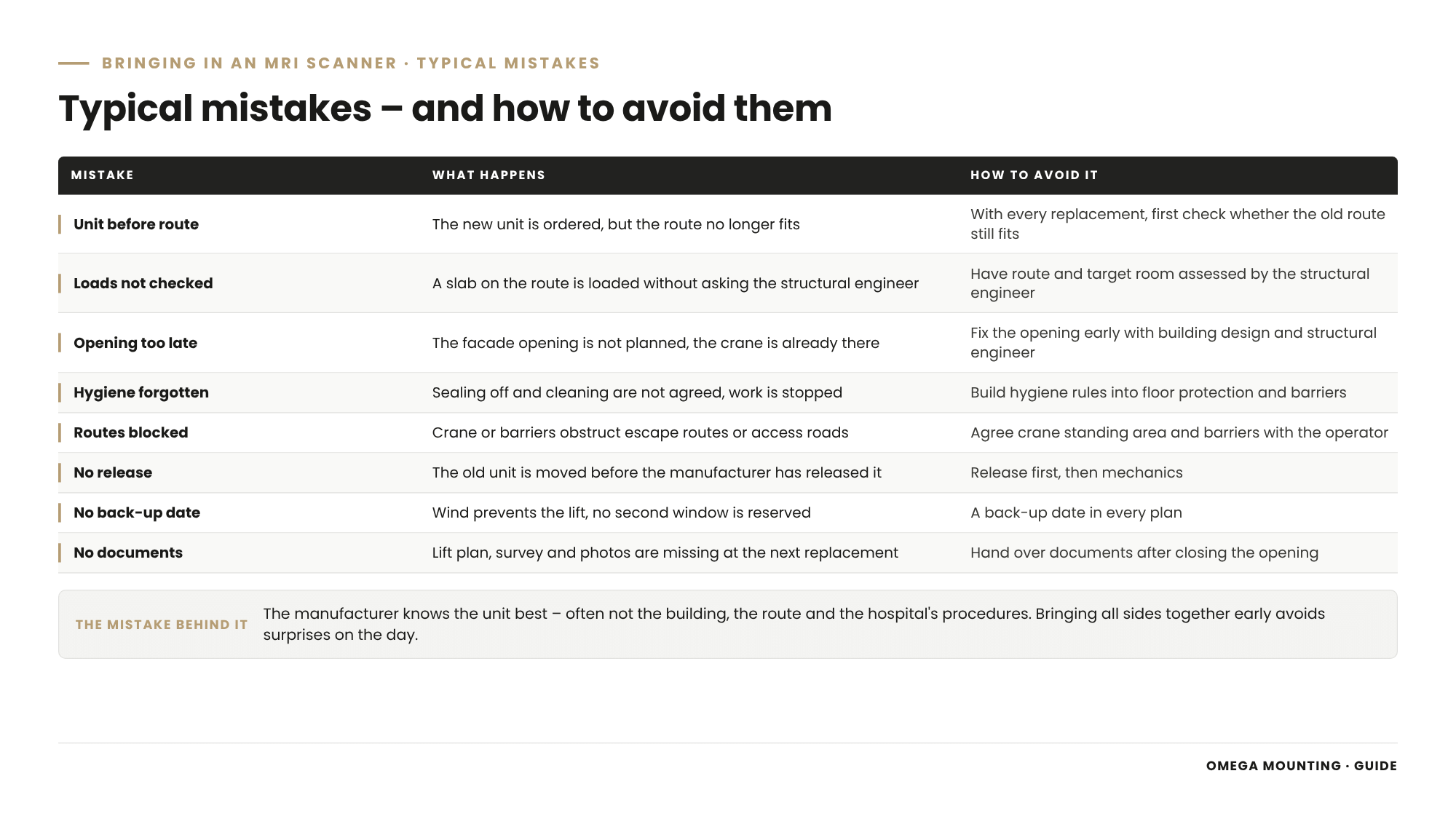
The typical mistakes are planning the unit before the route, not having loads checked, involving the hospital's hygiene and procedures too late and moving the old unit without the manufacturer's release.
- Unit before route. The new unit is ordered, but the route no longer fits.
- Loads not checked. A slab on the route is loaded without asking the structural engineer.
- Opening too late. The facade opening is not planned, the crane is already there.
- Hygiene forgotten. Sealing off and cleaning are not agreed, work is stopped.
- Routes blocked. Crane or barriers obstruct escape routes or access roads.
- No release. The old unit is moved before the manufacturer has released it.
- No back-up date. Wind prevents the lift, and no second window is reserved.
- No documents. Lift plan, survey and photos are missing at the next replacement.
The mistake behind the mistakes
Behind most mistakes lies the assumption that the move-in is the manufacturer's business alone. The manufacturer knows the unit best. The building, the route and the hospital's procedures it often does not know. Bringing these three sides together early avoids surprises on the day.
Bringing in an MRI scanner in the Rhine-Main area: how we do it
In the Rhine-Main area we take on the mechanical part of bringing in an MRI scanner: site visit, route survey, lift plan, crane coordination, lifting equipment in the building, floor protection, transport and removing the old unit.
It starts with a site visit with operator and manufacturer. We look at access road, opening, route and target room and talk to the building design team and structural engineer about loads and opening. Then we prepare the route survey and lift plan, agree windows and, if needed, coordinate the mobile crane. For the route through the building we bring our own lifting equipment.
From Rodgau, Frankfurt, Offenbach, Hanau, Darmstadt, Wiesbaden and Aschaffenburg are short distances. That helps with site visits and even more when a lift has to be postponed because of wind. What we offer in Lift & Shift and heavy-load installation is set out on our service page.
What we don't do, we say clearly beforehand. Unit, magnet, cooling, shielding, radiation protection and commissioning lie with the manufacturer and its specialist firms. Openings and slabs are sized by the structural engineer. Permits are clarified by the operator. We make sure the unit arrives safely where the manufacturer wants it.
Project examples
Three jobs from our project diary show how we bring heavy, sensitive equipment into finished and working buildings. To be clear from the start: we have not yet documented a large hospital unit. The examples come from data centers and an emergency power plant – environments with similarly strict rules for access, cleanliness and operation.
Raunheim: removal from a finished basement
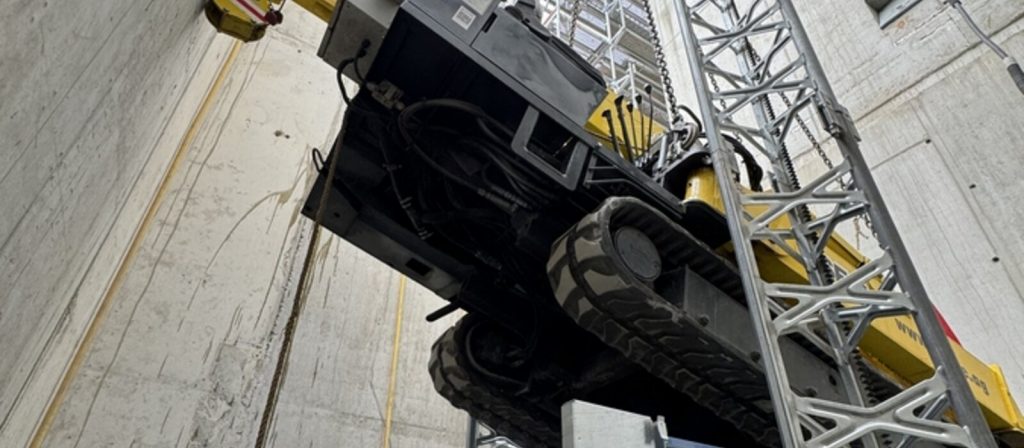
With the retrieval of a spider crane from the basement of a data center in Raunheim the building had been finished around the crane. The basement was fitted out, and a construction hoist that could not be dismantled stood in the only shaft. The route was surveyed and a lift plan prepared. A temporary heavy-current cable allowed purely electric operation. Banksmen stood on every side. Timber blocks transferred the load into the floor instead of into the hoist. We solved a pinch point in the shaft with an angled sling on an adjustable chain. A tower crane took the crane out without damage.
For your large unit this means: even in a finished building there is a route – if it has been surveyed completely beforehand.
Frankfurt: replacement in a working data center
During the CRAH unit replacement in a data center in Frankfurt – a computer room air handling unit – the building was fully in operation. Every transport route was surveyed, every door opening checked, floor load capacity and lifting radii verified. There were lift plans for all lifting operations. The walkways were covered with protective fleece and taped. Access ran through airlocks. Because forklifts and overhead crane could not be used, compact lifting units worked in sync. Floor and existing equipment remained undamaged.
For your large unit this means: floor protection, access rules and coordinated lifting equipment are not optional extras in live operations but a precondition.
Rhine-Main: out and back in
With the maintenance of the generator of a standby power system in a larger building complex in the Rhine-Main area, the generator had to come out of the basement. The enclosure was removed, chain hoists on a tested beam structure separated the assemblies. On custom-made transport frames and heavy-duty skates they went to the access shaft. A mobile crane lifted the parts out vertically. After the overhaul they came back the same way. One contact person gave all signals.
For your large unit this means: out and in along the same route can be planned – with frames, lift plan and clear signals.
Planning to replace or install a large medical unit?
Then get in touch with us. Send us the manufacturer's documents on transport and lifting, a floor plan with the target room and photos of the possible route. During a site visit we clarify how the unit gets in – and the old one out.
What this means for your role
For buyers: When buying the unit, clarify who orders and pays for the move-in. Ask for dimensions, weight, centre of gravity and lifting points. Do not award the route as an extra item.
For designers: In new builds and conversions, keep a route in and an installation opening available. Document both in the building records. Involve the structural engineer and rigging company before the unit is ordered. If the target room is in the basement, think about water too – our guide on flood protection for plant rooms shows what matters.
For project managers and site managers: As project manager you sequence manufacturer, builders, structural engineer, rigging and hospital. As site manager you make sure on site that opening, barriers, routes and releases are in place on the day.
For heads of medical technology and facility managers: You know the building, procedures and contacts. Bring hygiene, facilities and the departments affected to the table early. Decide which windows are possible.
For management and hospital leadership: A unit replacement is also a construction project. Give planning and medical technology the lead time a safe route needs – and the mandate to coordinate the parties.
Route-in check for large equipment: template on request
The route-in check for large equipment is a one-page working document for the first meeting. It contains fields for unit and target room, manufacturer's documents, route with pinch points, opening, load approval, lifting path, floor protection, hygiene, routes, work windows, old unit and trades with contacts. It deliberately contains no figures, dimensions or dates – it shows which questions must be settled before the lift. Request the template via our contact form – keyword “route-in check large equipment”.
Why Omega Mounting?
We are based in Rodgau near Frankfurt and bring our own lifting equipment. We have not yet documented a large hospital unit, and we say so openly. But the linked jobs show how we work in finished and working buildings. In Raunheim a crane came out of a fitted-out basement. In Frankfurt a replacement took place in a working data center, with floor protection and airlocks. In the Rhine-Main area a generator went out and back in. For you this means: a single point of contact for route survey, lift plan, crane coordination, floor protection and transport inside the building – coordinated with manufacturer, structural engineer and hospital.
Conclusion
Anyone wanting to bring in an MRI scanner needs three sides at one table: the manufacturer for the unit, the design team and structural engineer for the building and a rigging company for the route. Plan the route as early as the unit, have loads and opening checked and involve the hospital's hygiene and procedures. Then the replacement becomes a planned job and not improvisation in the hospital corridor. If you are preparing a move-in, send us documents and photos – we'll come back with a site visit date and an honest assessment.
Planning a move-in, installation or maintenance in the Rhine-Main region?
Tell us briefly what you need – we'll come back with an honest assessment.
Free, no-obligation callback
You may also be interested in these guides
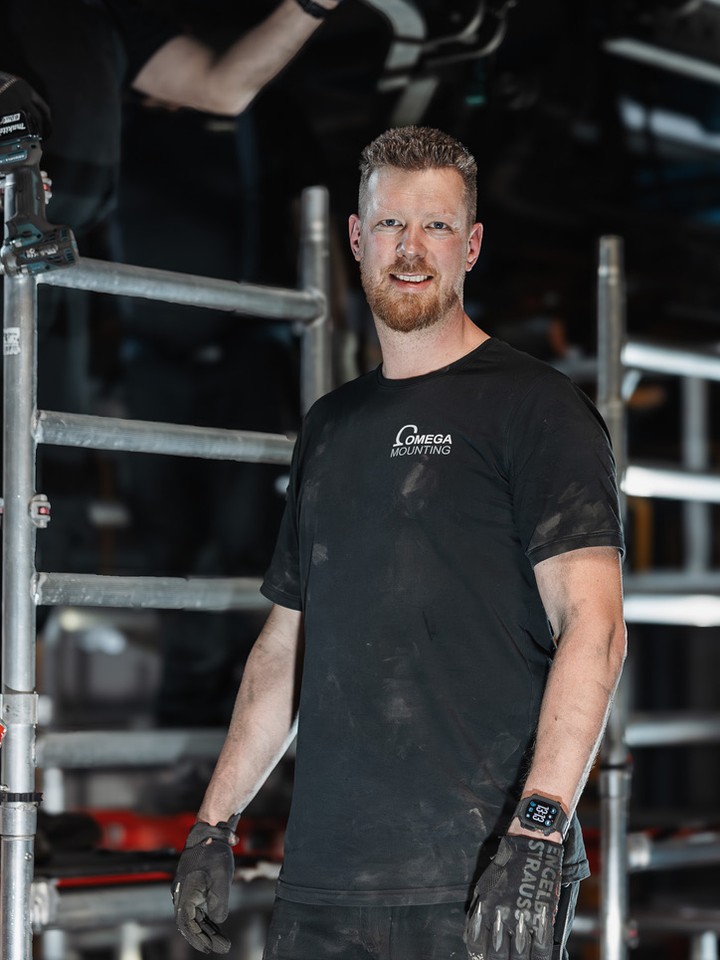
About the author
Tobias Schott
Managing director of Omega Mounting GmbH, Rodgau · more than 20 years of hands-on experience in installation and maintenance
A trained mechatronics technician, working in maintenance, servicing and industrial installation since 2004 – first alongside his father, and with Omega Mounting since 2012: from overhead conveyors in Frankfurt to the crane system in a new-build hall. He plans and leads lifting operations as an appointed person (AP) in data centers and on industrial sites in the Rhine-Main region, trains and examines operators of cranes, mobile elevating work platforms and telehandlers, and is a qualified occupational safety specialist. On jobs abroad he is known as the “German Troubleshooter” – the person you call when a site gets stuck. He learned what quality means from his father, not from a manual: Made in Germany as a standard for his own work, not a label. That is why quality comes first at Omega Mounting – ahead of speed and price. He writes these guides from that practice: what works on our sites is in them – what exists only on paper is not.
Frequently asked questions
Along a route planned beforehand: a mobile crane lifts the unit from the vehicle to an opening in facade, roof or wall. From there it goes on heavy-duty skates or with skidding equipment through the building to the examination room. There it is set down to the manufacturer's information. The unit and commissioning are the manufacturer's responsibility, opening and loads the structural engineer's, the route the rigging company's.
Often yes, because the unit does not fit through doors or lifts. Some buildings have a reserved installation opening or an access shaft. If the room is on the ground floor, a large door is sometimes enough. Whether and where an opening is made is decided by the building design team and structural engineer.
The manufacturer alone. It decides whether and when a field is present, how the magnet is cooled and when the unit may be moved. If another MRI scanner stands nearby, operator and manufacturer set access zones. The rigging company works to these specifications.
Yes, that is the normal case. What matters is coordination with hygiene and departments, clear escape routes and access roads, floor protection, barriers and time windows released by the operator. Noisy work is placed in quieter periods.
The manufacturer decommissions and releases it. Then it is released mechanically, removed along the planned route, loaded and transported away secured. What happens afterwards is decided by operator and manufacturer. Removal and move-in often take place in the same window.
Yes, with their own specifications. A CT scanner is usually lighter and often comes in at ground level or via a suitable lift. A linear accelerator stands in a shielded bunker with angled access. For both: manufacturer's information first, plan the route completely, have loads checked.
No, we have not yet documented a large hospital unit. We have brought heavy, sensitive equipment into and out of finished and working buildings, for example in data centers in Frankfurt and Raunheim. We transfer this way of working to the route in for a large unit – the specifications for the unit stay with the manufacturer.
For the mechanical part, rigging companies from the region are the shortest route. From Rodgau we handle route survey, lift plan, lifting equipment, floor protection and transport inside the building in Frankfurt, Offenbach, Hanau, Darmstadt, Wiesbaden and Aschaffenburg. Unit, shielding and commissioning stay with the manufacturer.
A short enquiry with three details: which unit is coming, where the target room is and whether an old unit has to come out. Manufacturer's documents, floor plan and photos of the route help. We arrange a site visit and send a written assessment of the mechanical part. Your contact is Tobias Schott – reachable via our contact form.
 English
 German