
- Guide – Lift & Shift
Relocating a machine within the hall: foundation, utilities, restart
By Tobias Schott · Reading time approx. 24 minutes · Last updated: October 2026
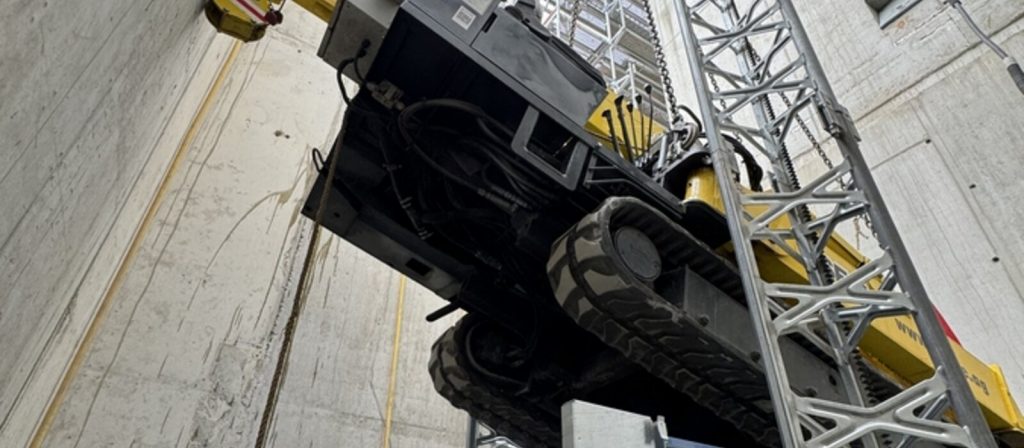
Moving a machine a few metres is not a transport but a small installation project – because foundation, utilities and surroundings do not travel with it, but have to be recreated at the new position.
The layout changes, a new line arrives, the value stream is straightened or a new machine needs exactly the space where the old one stands today. Then it is time to relocate the machine – within the same hall, often by only a few metres. What sounds like an afternoon with a forklift in reality has the same phases as a relocation between two sites. Only the route is shorter.
The risk lies not in the moving but in what stays behind at the old position and is missing at the new one. The compressed air connection is on the wrong wall. The extraction duct ends three metres too early. Nobody has calculated the floor slab at the new position for the point loads of the machine feet.
This guide goes deeper than our foundation page on machinery relocation by a contractor for the case where the machine does not leave the hall: why “just a few metres” is a project, what must be clarified beforehand, what the sequence looks like and what is inspected before the restart. You will not find prices or time promises here – both only follow from a site visit.
Key points at a glance
- Relocating a machine within the hall has the same phases as a relocation between sites – only transport and packaging are omitted.
- The foundation does not travel with it: floor load, flatness and anchoring at the new position are checked beforehand, in case of doubt by the structural engineer.
- Utility connections – power, compressed air, cooling water, extraction – are re-installed at the new position by the respective specialist contractor; the installation contractor coordinates and takes on the mechanical connections for which it is commissioned.
- Before lifting, the machine is isolated, drained of utilities and secured for transport – moving axes and tool changers as specified by the manufacturer.
- The transport route in the hall is surveyed: travel surfaces, floor load, pinch points, escape routes – the lifting and moving method follows from this.
- After setting down come alignment, anchoring, utility connection, trial run and the inspection before recommissioning as an operator duty.
- During live operations, work is done in stages: cordon off the load area, define time windows, protect neighbouring equipment.
What is a machine relocation within the hall?
Relocating a machine within the hall is moving an installed and connected machine to a different installation position within the same building – including isolation, transport securing, moving, alignment, anchoring, reconnection and inspection before recommissioning.
The term is distinguished on two sides. A Machinery relocation runs over public roads to another site – with packaging, load securing and two sites; it is described on our service page on Machinery relocation. A plant relocation moves many machines in a defined sequence while production continues; see the guide on planning a plant relocation. Relocating within the hall is the smallest form – and is therefore underestimated most often.
Typical triggers
- Layout change in production. The material flow is reorganised, machines move closer together or into a U-shape.
- New line or new machine. The free space is where an existing machine stands today.
- Value stream and routes. The machine moves closer to supply, inspection station or dispatch.
- Structural reasons. A ceiling opening, a new crane runway or a fire wall needs the area.
Relocating a machine: why “just a few metres” is still a project
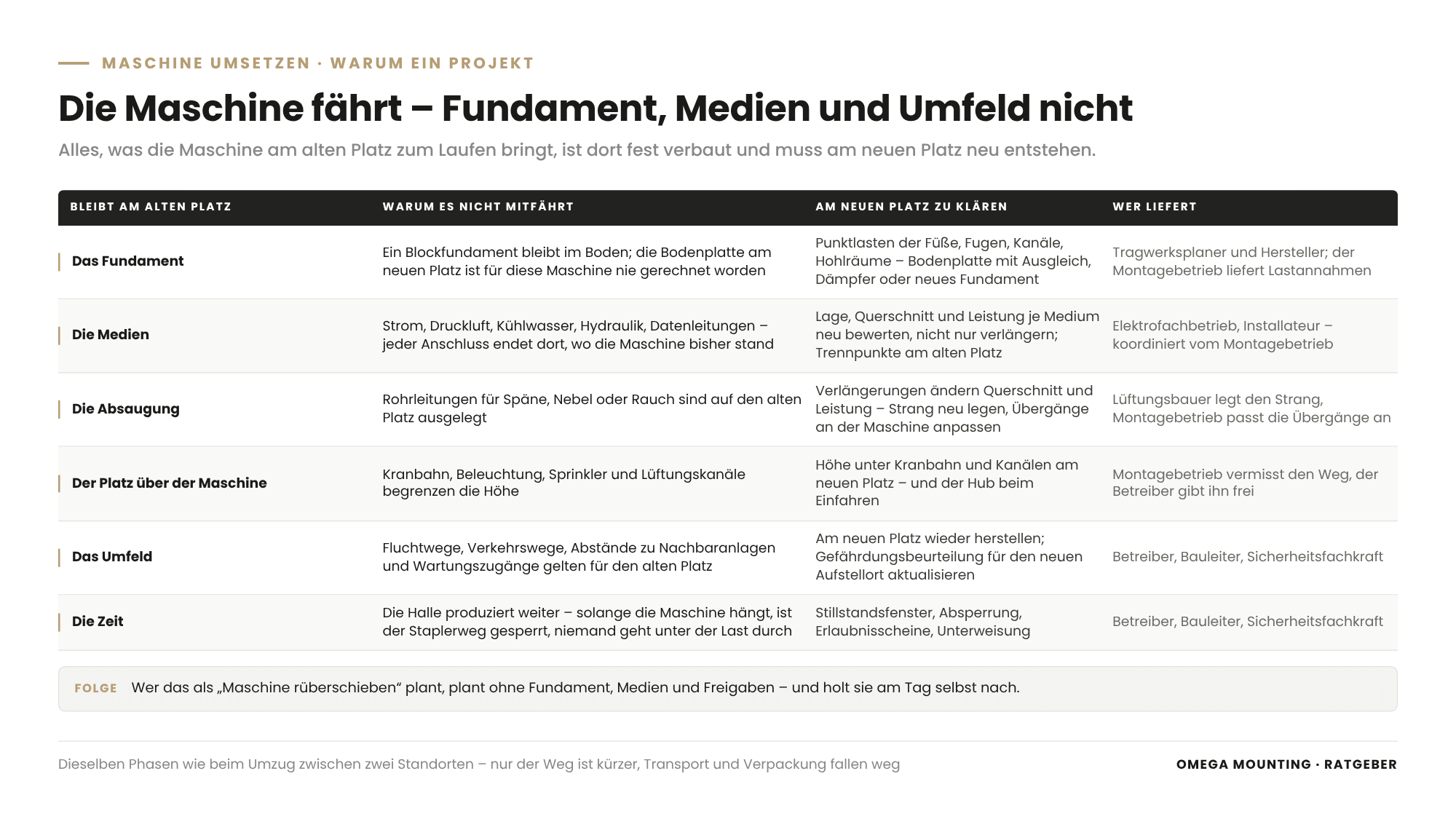
Relocating over a few metres is a project because everything that makes the machine run at the old position is permanently installed there and has to be recreated at the new position: foundation, utilities, extraction, crane runway zone and escape routes.
The machine itself can be lifted and moved. What does not travel with it:
- The foundation. A block foundation stays in the ground; the floor slab at the new position has never been calculated for this machine.
- The utilities. Power, compressed air, cooling water, hydraulic supply, data lines – every connection ends where the machine stood until now.
- The extraction. Ducts for chips, mist or fumes are designed for the old position; extensions change cross-section and performance.
- The space above the machine. Crane runway, lighting, sprinklers and ventilation ducts limit the height – and the lift when moving in.
- The surroundings. Escape routes, traffic routes, clearances to neighbouring equipment and maintenance access must be right again at the new position.
Add to that the time factor: the hall keeps producing. As long as the machine is suspended, the forklift route is closed and nobody walks under the load. Anyone who plans this as “pushing the machine over” plans without foundation, utilities and releases – and catches up on them on the day itself.
Preparation: what must be clarified before the first move
Before the first move, six things must be clarified: the survey of the machine with all attachments, the floor load at the new position, the utility connections, foundation or vibration dampers, the transport route in the hall and the releases from operations.
| Preparation item | What is clarified | Who provides it |
|---|---|---|
| Survey and weight. | Dimensions with attachments, weight, centre of gravity, lifting points, transport position according to the operating instructions. | Operator with manufacturer documents; installation contractor checks on site. |
| Floor load at the new position. | Point loads of the machine feet, area load, joints, ducts, voids under the slab. | Structural engineer; installation contractor provides load assumptions. |
| Utility connections. | Location, cross-section and capacity of each utility at the new position, disconnection points at the old one. | Electrical contractor, plumber, ventilation contractor – coordinated by the installation contractor. |
| Foundation or dampers. | Manufacturer's installation specification, flatness, vibration isolation. | Manufacturer, structural engineer, installation contractor. |
| Transport route in the hall. | Travel surfaces, floor covering, floor load along the way, pinch points, height, obstacles. | Installation contractor; operator releases the routes. |
| Releases. | Maintenance window, isolation, barriers, permits to work, briefing. | Operator, site manager, safety specialist. |
Survey: the machine as it stands today
The data sheet shows the machine in its as-delivered condition. In the hall, it stands with chip conveyor, second control cabinet, extraction hood and a feeder that someone added years ago. The survey records today's condition: external dimensions, weight with attachments, centre of gravity, lifting points – the points at which the load may be slung – and the transport position as specified by the manufacturer.
Floor load at the new position
The floor slab of a hall carries an area load. A machine introduces point loads through a few feet – that is where it is decided whether the slab cracks, settles or holds. Add to that joints, floor ducts and voids that do not appear in the layout plan. How to have floor load, point load and load distribution checked in advance is described in the guide on moving in and floor load. For you this means: the structural engineer gets the foot loads before the new position is fixed in the layout.
Utilities: location, cross-section, capacity
Every utility is reassessed at the new position, not just extended. A longer compressed air route costs pressure, an extended extraction duct costs performance, a longer cooling water network costs pump reserve. The electrical contractor checks the power supply for cable length, protection and safety measures. The installation contractor provides the machine's utility list – the specialist contractor plans the connection.
Transport route in the hall
The route from the old to the new position is walked and surveyed: width between machines and racking, height under crane runway and ducts, floor covering, joints, floor load on every metre, turning radii. For heavy machines over short distances, machine skates are the tool of choice – how they work is explained in our article on machine skates and heavy-duty skates. If lifting over a plant is required, a mini crane is an option; what a spider crane can and cannot do is in the knowledge-base article on it. How tight it gets inside buildings is shown by the retrieval of a spider crane from the basement of a data center in Raunheim: the route was fully surveyed, banksmen stood on each side, and in the only shaft two centimetres were missing – solved with angled slinging on an adjustable chain.
Sequence: relocating a machine in eight steps
You relocate a machine in eight steps: isolate and drain utilities, secure for transport, lift and move, set down and align, anchor, connect utilities, commission mechanically and trial run, inspect and release.
| Step | Content | Responsible |
|---|---|---|
| 1 Isolate and drain utilities. | Disconnect, secure, label and drain power, compressed air, hydraulics, water. | Qualified electrician and specialist contractors; installation contractor coordinates. |
| 2 Transport securing. | Secure axes, spindles, doors, tool changer, loose parts – as specified by the manufacturer. | Installation contractor with operating instructions. |
| 3 Lift and move. | Sling, trial lift, travel along the surveyed route, load area closed. | Installation contractor, appointed person for lifting operations. |
| 4 Set down and align. | Position, level, bring into alignment with neighbouring equipment. | Installation contractor. |
| 5 Anchor. | Set anchors, torques to specification, record. | Installation contractor to manufacturer and structural specification. |
| 6 Connect utilities. | Power supply, compressed air, water, extraction at the new position. | Specialist contractors; mechanical connections by the installation contractor as commissioned. |
| 7 Mechanical commissioning and trial run. | Idle run, axes, lubrication, leak-tightness, then run with material. | Installation contractor; manufacturer for control system and geometry. |
| 8 Inspection and release. | Electrical testing, risk assessment, briefing, release for production. | Operator, competent person, qualified electrician. |
Step 1: isolate and drain utilities
Before the first move, the machine is isolated and secured against reconnection – with lock and tag, i.e. lockout/tagout. For electricity, the five safety rules of electrical engineering apply, carried out by the qualified electrician. Compressed air is depressurised and capped, hydraulics depressurised and secured against lowering, cooling water shut off and drained. How to organise release, key control and feedback is described in the guide on lockout/tagout in maintenance. Every disconnection point receives a label that matches the reconnection.
Step 2: transport securing of the machine
Transport securing protects the machine from itself. Moving axes are driven to the transport position and locked, spindles and slides clamped, doors and hoods secured, the tool changer emptied or locked. Heavy attachments that shift the centre of gravity are removed. What the manufacturer provides for this is in the operating instructions – transport locks, clamping strips, prescribed axis positions. If the machine is partially disassembled for this, the rules from the guide on dismantling and reassembly of a plant: label, photograph, secure dowel pins.
Step 3: lift and move
Slinging is done at the designated lifting points with inspected lifting accessories – which round sling, which chain sling and which spreader beam suit which load is in the guide on lifting accessories for heavy loads. A trial lift of a few centimetres shows whether the centre of gravity is right. Then the move: on machine skates, on the overhead crane, with the forklift over load spreading plates or on the mini crane. The lift is directed by the appointed person for lifting operations with a lift plan and a closed load area; what they may and must do is explained in the guide on the appointed person for lifting operations. If the route goes across the yard into the neighbouring hall, the rules of load securing for heavy goods.
Steps 4 and 5: set down, align, anchor
At the new position, the machine is positioned, levelled and brought into alignment with feeders, rails or neighbouring equipment – with spirit level, dial gauge or laser surveying. Only after fine adjustment is it anchored: heavy-duty anchors, chemical anchors or grouting as specified by the manufacturer, every bolt tightened to torque and recorded in the torque record. Sequence and typical mistakes are described in the guide on aligning and anchoring machines.
Does the relocated machine need a new machine foundation?

Whether a relocated machine needs a new machine foundation is decided by three questions: Does it stand on its own foundation today, does the manufacturer require one, and does the floor slab at the new position carry the point loads without settlement and vibration?
Three answers, three options
- Floor slab with levelling. The machine previously stood on the hall slab and the manufacturer permits this. Then a level surface, shim plates or levelling elements under the feet and anchoring to specification are sufficient at the new position – provided the structural engineer confirms the point loads.
- Vibration dampers. Presses, punching machines, grinding machines and test rigs emit vibrations or cannot tolerate them. Vibration dampers under the feet decouple machine and floor; type and design come from the manufacturer or the damper supplier, not from the catalogue.
- New foundation. If the machine previously stood on a block foundation or the manufacturer requires one, a foundation is planned, poured and cured at the new position – dimensioned by the structural engineer, built by the construction company. The curing time belongs in the schedule before the maintenance window is fixed.
What is in the floor
The new position is free in the layout, but rarely in the floor: floor ducts, conduits, underfloor heating, joints and old foundation remnants lie exactly where the anchors are supposed to go. Before drilling, we search rather than hope. And at the old position, a hole often remains – a removed foundation, anchor bolts, an oil sump – that is closed or secured before the next machine arrives. How closely foundation, utilities and space are linked is shown in the practice chapter by the conversion of a test rig in Munich.
Who reconnects the utilities?
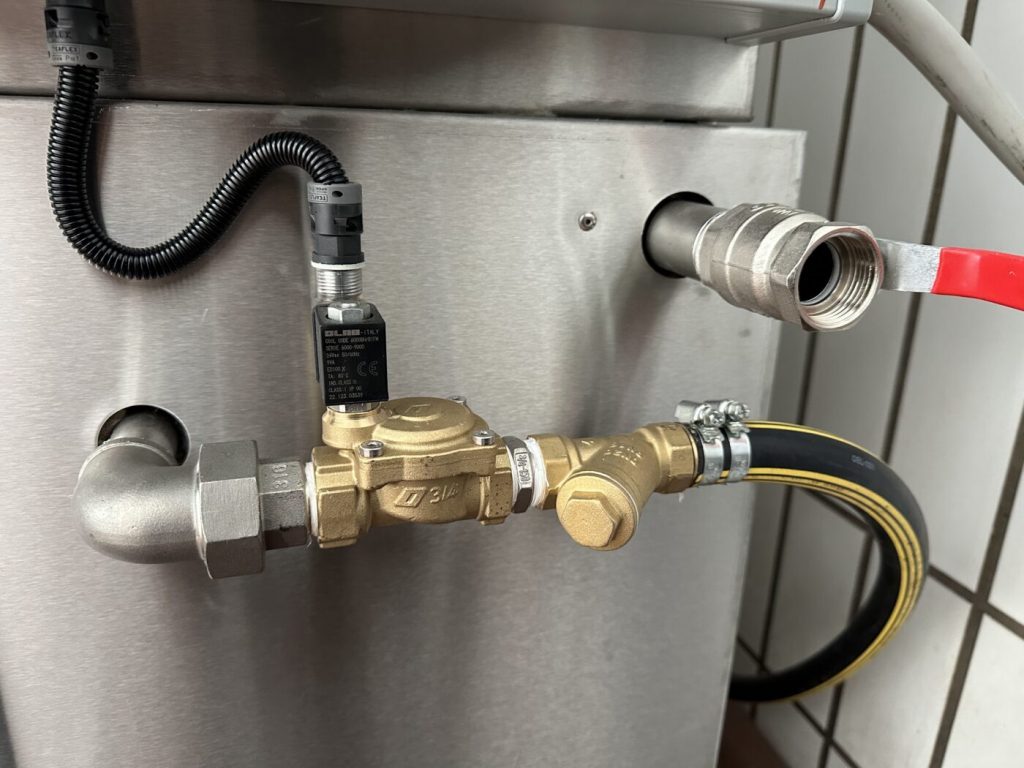
At the new position, the utilities are reconnected by the specialist contractor for each utility: the electrical contractor the power supply, the plumber water and the compressed air network, the ventilation contractor the extraction – the installation contractor coordinates the sequence and takes on the mechanical connections at the machine for which it is commissioned and qualified.
This demarcation prevents three trades waiting for each other. Before relocating, the interface list states who lays which connection up to where: the electrical contractor brings the power supply to the control cabinet, the installation contractor connects machine and cabinet, the qualified electrician tests and switches on. For the compressed air network, the plumber ends at the service unit; for the extraction, the ventilation contractor lays the main duct and the installation contractor adapts the transitions at the machine.
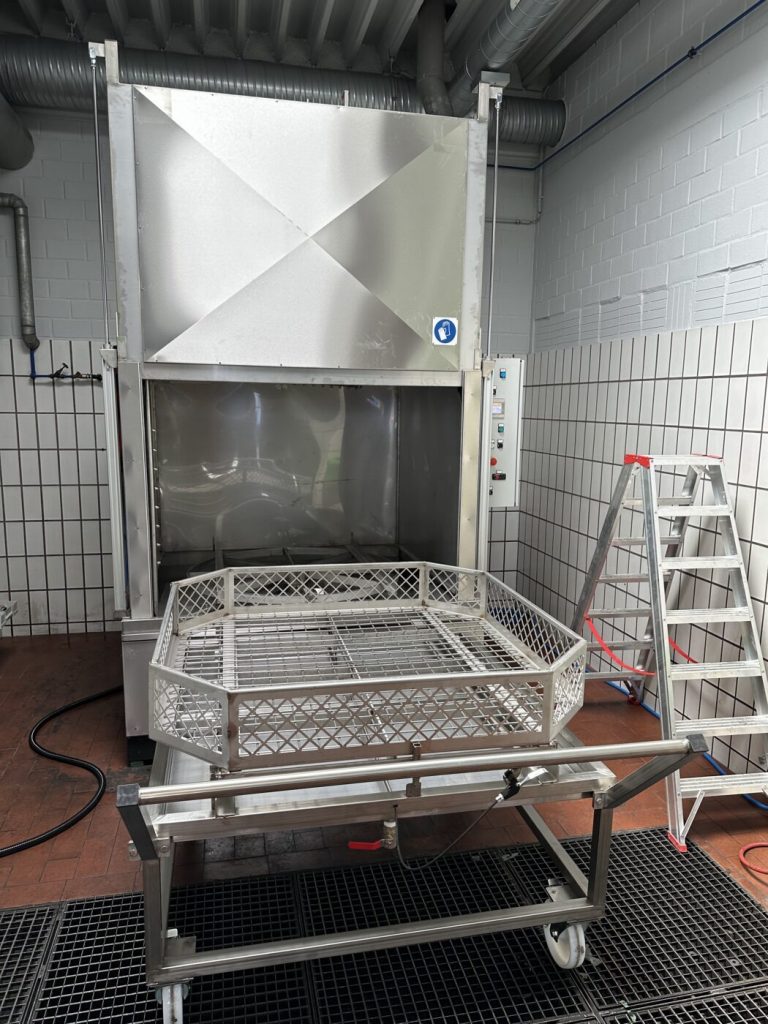
How this fits together in one day is shown by the installation of a parts washing system at a vehicle workshop in Kassel: supply line in cable ducts up to the control cabinet, compressed air with pressure gauges and shut-off valves, fresh water and drainage with leak test, exhaust air as a stainless steel pipe system welded on site. For you this means: a utility connection is only finished when it is leak-tight, tested and labelled – not when the hose is attached.
Relocating during live operations: stages, barriers, time windows
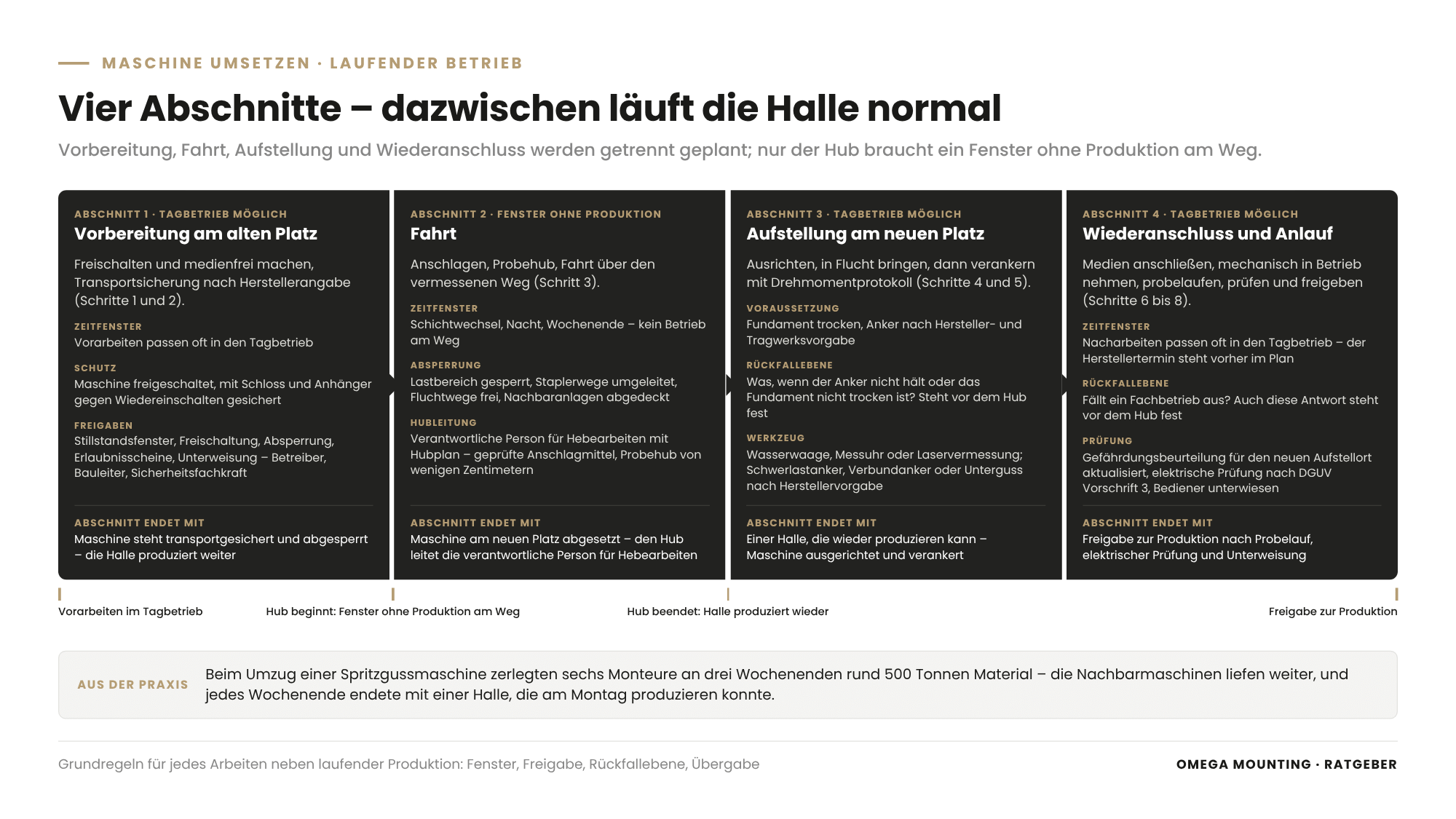
During live operations, a machine is relocated in stages: the load area and the transport route are closed for a defined time window, neighbouring equipment is protected, and every stage ends with a hall that can produce again.
The basic rules for any work alongside running production – window, release, fallback level, handover – are in the guide on Maintenance during live operations. When relocating, the following is added:
- Form stages. Preparation at the old position, move, installation and reconnection are planned separately. In between, the hall runs normally; the machine stands secured for transport and cordoned off.
- Barriers and load area. Nobody stands under or next to the suspended load. Forklift routes are diverted, escape routes stay clear, neighbouring equipment is covered.
- Time window. The lift belongs in a window without production along the route – shift change, night, weekend. Preparatory and follow-up work often fits into daytime operations.
- Fallback level. What happens if the anchor does not hold, the foundation is not dry or the specialist contractor drops out? The answer is fixed before the lift.
How a machine is moved in the middle of running production is shown by the relocation of an injection moulding machine: six fitters disassembled around 500 tonnes of material over three weekends, the heaviest single part weighed 95 tonnes, lifted with overhead crane, forklift and a lifting system of the 100-tonne class. The neighbouring machines kept running, and every weekend ended with a hall that could produce on Monday. At the new position, the same principle applies to access: maintenance access and platforms are set so that plant and conveyor belts keep their space – as with a working platform above an existing plant at an automotive company, whose feet were not allowed to impair production processes.
Relocating a CNC machine: what is different with machining centres
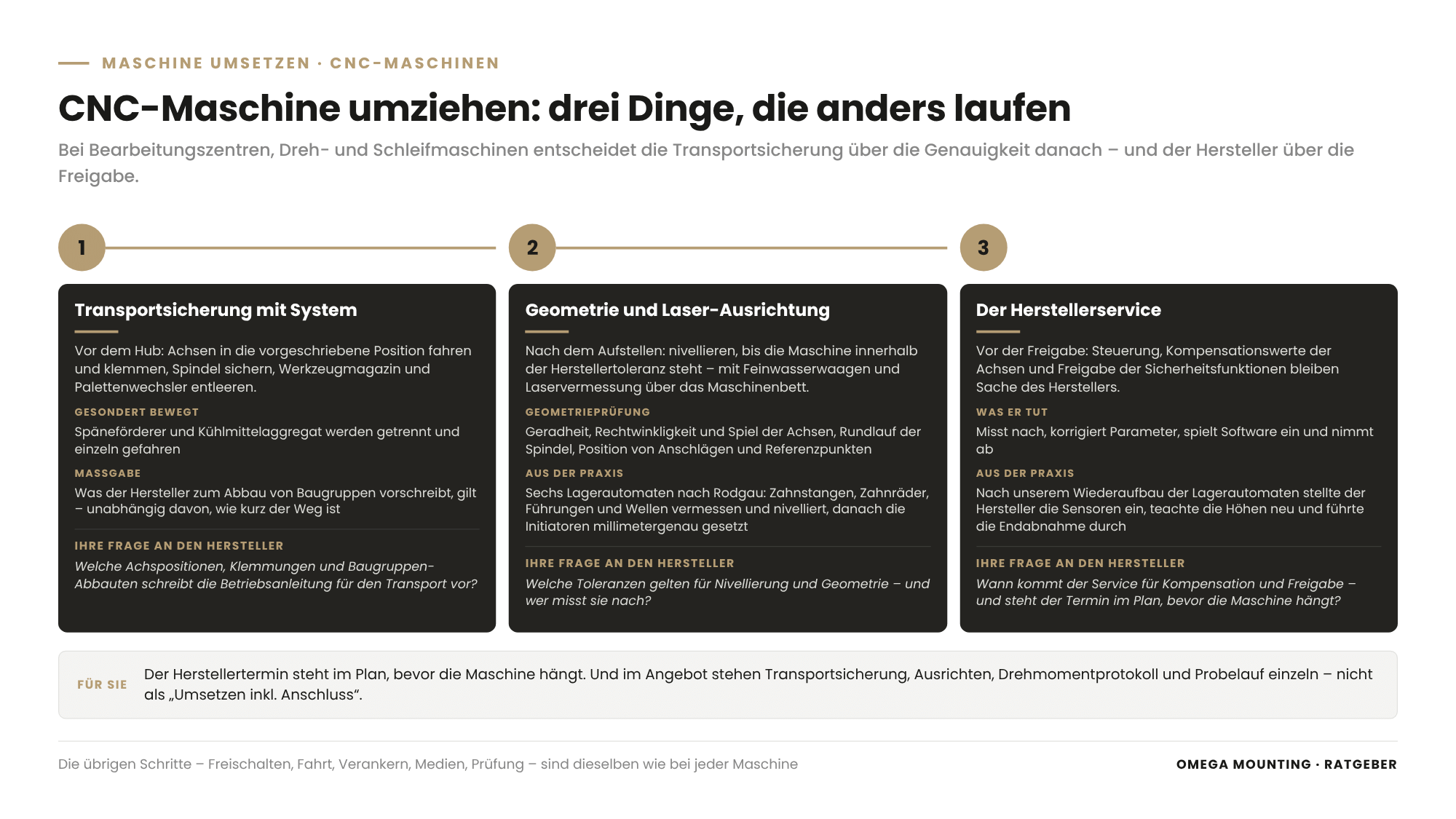
Anyone who wants to relocate a CNC machine must do three things differently from a simple machine: secure axes and spindle for transport as specified by the manufacturer, re-survey the geometry after installation and schedule the manufacturer service for release and compensation.
Systematic transport securing
With machining centres, lathes and grinding machines, transport securing decides the accuracy afterwards. Axes are driven to the prescribed position and clamped, the spindle secured, tool magazine and pallet changer emptied, chip conveyor and coolant unit disconnected and moved separately. What the manufacturer prescribes for removing assemblies applies – regardless of how short the route is.
Geometry and laser alignment
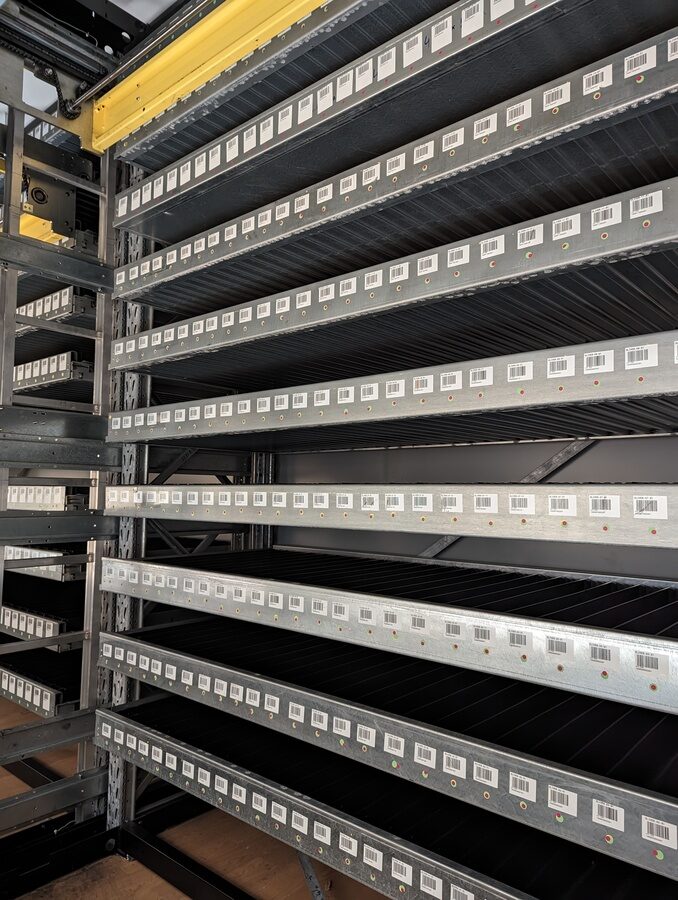
After installation, the machine is levelled until it stands within the manufacturer's tolerance – for precision machines with precision spirit levels and laser surveying across the machine bed. Then follows the geometry check: straightness, squareness and play of the axes, run-out of the spindle, position of stops and reference points. During the relocation of six storage lifts from an office building in Frankfurt to Rodgau that meant: surveying and levelling racks, gears, guides and shafts, then setting the proximity sensors – inductive sensors for position – to the millimetre.
The manufacturer service
Control system, axis compensation values and release of the safety functions remain the manufacturer's responsibility. They re-measure, correct parameters, install software and accept – just as, during the storage lift relocation, the manufacturer adjusted the sensors after our reassembly, re-taught the heights and carried out the final acceptance. For you this means: the manufacturer's date is in the plan before the machine is lifted.
Recommissioning: trial run, inspection, release
Recommissioning after relocation runs in three stages: mechanical commissioning with trial run by the installation contractor, release of control system and geometry by the manufacturer, then the inspection before renewed use by the operator.
Mechanical commissioning and trial run
The trial run begins without material: traverse axes, check lubrication and hydraulics for pressure and leak-tightness, bleed the cooling circuit, check extraction for air volume, protective devices for function. Then the run with material and the handover with record and punch list – as described in the guide on commissioning and handover of a plant .
Inspection before recommissioning as an operator duty
After relocation, the machine stands at a new workplace. Under the BetrSichV (German Industrial Safety Ordinance), the risk assessment is updated for the new installation site – traffic routes, neighbouring equipment, escape routes and access have changed – and work equipment whose safety depends on the installation is inspected before renewed use. The electrical installation is tested by the qualified electrician under DGUV Vorschrift 3 (DGUV Regulation 3) before it is switched on. The operators are briefed at the new position. Which inspections which equipment needs and who may carry them out is set out in the guide on inspection obligations for operators – without its own intervals, because those are defined by your risk assessment. This guide is no substitute for legal advice; it tells you which questions must be answered before release.
A note on the Machinery Regulation (EU) 2023/1230, which applies from 20 January 2027: anyone who leaves a machine unchanged when relocating or reassembling it does not substantially modify it; anyone who changes control system, protective devices or function clarifies beforehand with the manufacturer or an expert whether a substantial modification exists.
Rhine-Main: where we relocate machines
In the Rhine-Main region, we relocate machines in production halls between Hanau, Offenbach and Darmstadt, in workshops and logistics companies around Frankfurt and in data centers in Raunheim and Frankfurt – with short distances from Rodgau.
The halls in the region are full, and almost every company runs multiple shifts: the time window for the lift is short, and the forklift route next to it never stands still. From Rodgau, we are quickly on site for the site visit – in Dietzenbach, Rüsselsheim or Aschaffenburg just as in Frankfurt – and repeat it if the layout changes again. If an adapter plate or a bracket for the extraction is missing on the day itself, our workshop in Rodgau makes it. What we take on from the single machine relocation to the whole line is shown on our service page on Machinery relocation.
How we do it in practice
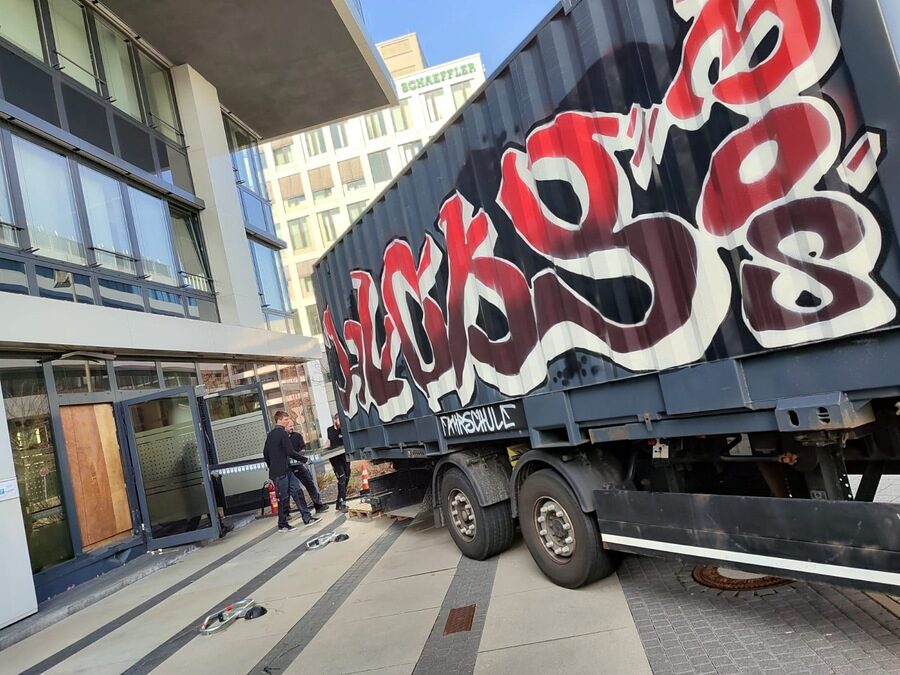
Four jobs from our project diary show the way of working we bring into every hall – none of them was just about the move.
Frankfurt to Rodgau: disassemble, label, realign
During the relocation of six storage lifts from an office building near Frankfurt Airport three interior doors set the maximum dimension for every component. Because of the parquet, only dollies and muscle power were used – no forklift, no pallet truck, no crane. Every component was labelled, photographed and recorded with its installation position; six fitters were on site for the loading.
For your relocation, this means: the tightest point of the route determines how far the machine is disassembled – and the labelling determines how quickly it runs again afterwards.
Kassel: align, connect, run in within one day
With the installation of a parts washer in Kassel the plant, feeder trolley and rail had to fit together exactly and stand level before anything was fixed. Then came power up to the control cabinet, compressed air, water and exhaust air – every connection tested. Two mechatronics technicians, one day on site, and after a joint test run and briefing, the first wash cycles the same day.
For your relocation, this means: alignment comes before fixing, and utilities only count as connected when they are leak-tight and tested.
Raunheim: moving a crane through a finished building
With the retrieval of a spider crane from the basement of a data center in Raunheim the basement had meanwhile been fully fitted out, the only shaft occupied by a construction hoist. Four fitters surveyed the route, drew up the lift plan, laid a heavy-current cable for all-electric operation and guided the crane through the building with banksmen. Timber baulks transferred the load into the floor rather than into the lift. One day, no damage.
For your relocation, this means: the route in the hall is surveyed like a move-in – every metre, every height, every edge.
Munich: foundation, utilities and space at the installation position
During the conversion of a hydraulically operated test rig in Munich the machine stayed in place – the work was on what holds a machine in its place: hydraulic line, oil pan around the foundation, seal to the wall, extraction and fresh air in the cramped basement. It is exactly these points that have to be recreated at the new position when a machine moves.
Are you facing a layout change in which a machine has to move?
Then get in touch with us. Send us the machine type, weight, the old and new position in the hall plan and your possible maintenance window. During a site visit in the Rhine-Main region, we walk the route with you and tell you honestly what needs to be clarified beforehand regarding foundation, utilities and releases.
What this means for your role
For buyers: Do not enquire about “relocating a machine” as a lump sum, but about the eight steps with responsible persons and the interfaces to the electrical contractor, structural engineer and manufacturer. A quotation that names transport securing, alignment, torque record and trial run individually is comparable; one that writes “relocation incl. connection” is not. Client-provided services belong in the interface list before the price is compared.
For designers: Anyone who draws a layout change in production also draws foot loads, utility connections and transport routes. Check the height under crane runway and ducts, the escape routes and maintenance access at the new position. The machine that constrains the layout most is usually not the heaviest, but the one with the most attachments.
For project managers and site managers: As project manager, you keep the manufacturer's date, foundation curing, specialist contractors and maintenance window in one schedule with a fallback level. As site manager, you release the lift on site, close the load area and transport route, issue permits to work and accept with a record after trial run and inspection.
For maintenance managers: Use the relocation as an inspection window. A machine that is isolated and lifted anyway can be assessed, cleaned and reinstalled with new wear parts. Afterwards, update the utility list, terminal diagrams, risk assessment and inspection intervals.
For operations and plant managers: For you, what counts is when the machine delivers again at the new position. Define the maintenance window, buffer stocks and the sequence of stages before the installation contractor plans – and demand a fallback level in case the foundation or the manufacturer's date falls through.
For safety officers and HSE coordinators: Check the installation contractor's risk assessment for what is special about relocating in a running hall: suspended load next to workplaces, closed forklift routes, clear escape routes, isolation with lock. The risk assessment for the new installation site belongs before the release, not in the week after.
Machine relocation checklist: template on request
The machine relocation checklist is a one-page template in three columns – before, during, after. It lists utilities with disconnection point, specialist contractor and reconnection, foundation and floor load at the new position, the transport route with pinch points and floor protection, the releases for isolation, lift and stage during live operations, as well as trial run and inspection before recommissioning. It deliberately contains no price fields. Request the template via our Contact form – quoting the keyword “Machine relocation checklist”.
Why Omega Mounting?
We are based in Rodgau near Frankfurt, reachable via our 24-hour hotline, and have our own workshop that remanufactures adapter plates, transport frames and brackets. The linked jobs show our way of working: six storage lifts disassembled through three pinch points and realigned in Rodgau, a parts washer in Kassel aligned and connected in one day, a spider crane moved through a finished basement in Raunheim. We coordinate electrical contractor, structural engineer and manufacturer – and claim no service for which someone else is responsible. For you this means: a single point of contact from site visit to release, lifting, installation and workshop from a single source – and short distances in the Rhine-Main region.
Conclusion
Relocating a machine means recreating at the new position everything that was permanently installed at the old one: foundation, utilities, extraction, surroundings. The route is short, the phases are the same as for a relocation between sites – survey, floor load, isolation, transport securing, lift, alignment, anchoring, reconnection, trial run, inspection. Anyone who has the floor load released by the structural engineer, the utilities by the specialist contractor and the geometry by the manufacturer before the machine is lifted has no surprises at the new position. If a machine at your site is to move within the hall, send us the machine type, weight, old and new position in the hall plan and your maintenance window – we will get back to you with a site visit date and an honest assessment.
Planning maintenance, moving in or installation in the Rhine-Main region?
Tell us briefly what it is about – we will come back to you with an honest assessment.
100% free and without obligation
You may also be interested in these guides

About the author
Tobias Schott
Managing director of Omega Mounting GmbH, Rodgau · more than 20 years of hands-on experience in installation and maintenance
A trained mechatronics technician, at home in maintenance, servicing and industrial installation since 2004 – first at his father's side, since 2012 with Omega Mounting: from the overhead conveyor in Frankfurt to the crane system in a new-build hall. Plans and leads lifting operations as appointed person in data centers and on industrial sites in the Rhine-Main region, is an instructor and examiner for cranes, mobile elevating work platforms and telehandlers, and a safety officer. On jobs abroad he is known as the “German Troubleshooter” – the one you call when things get stuck on site. He learned what quality means not from a manual but from his father: Made in Germany as a standard for his own work, not as a label. That is why it comes first at Omega Mounting – before speed and before price. He writes these guides from that practice: what works on our sites is in them – what only exists in the standard is not.
Frequently asked questions
An industrial installation contractor with its own lifting equipment, mechatronics technicians and an appointed person for lifting operations, which plans isolation, transport securing, lift, alignment, anchoring and trial run from a single source and coordinates the specialist contractors for power, utilities and structural matters. What matters are references of comparable relocations, a lift plan before the lift and a concept for stages, barriers and time windows in the running hall. Omega Mounting from Rodgau takes on such relocations in the Rhine-Main region and throughout Germany.
That can only be said after a site visit. The effort depends on the weight and attachments of the machine, the transport route in the hall, the lifting method, whether a new foundation or vibration dampers are needed, the extent of utility work by the specialist contractors, the manufacturer's involvement and the time window – daytime, night or weekend. Anyone who wants to relocate a machine gets a reliable figure only with hall plan, weight and maintenance window.
Not always. If the machine previously stood on the hall slab and the manufacturer permits this, flatness, levelling under the feet and anchoring to specification are sufficient at the new position – if the structural engineer confirms the point loads. Vibrating or vibration-sensitive machines get dampers. If it stood on a block foundation or the manufacturer requires one, a foundation is planned, poured and cured at the new position before the machine arrives.
The specialist contractor for each utility: the electrical contractor the power supply up to the control cabinet with testing and switch-on, the plumber water and the compressed air network, the ventilation contractor the extraction. The installation contractor coordinates the sequence and takes on the mechanical connections at the machine for which it is commissioned. Who lays what up to where is in the interface list before relocating.
Yes. The new installation site is a new workplace: the risk assessment is updated, the electrical installation is tested by the qualified electrician, the machine is inspected before renewed use after trial run and manufacturer release, and the operators are briefed at the new position. Intervals and scope follow from your risk assessment and the manufacturer's specifications, not from a blanket rule.
Three things: axes, spindle, tool magazine and pallet changer are secured for transport as specified by the manufacturer, and assemblies are often removed for transport. After installation, the machine is levelled with precision spirit level and laser and the geometry of the axes is checked. Control system, compensation values and safety functions are released by the manufacturer service – their date is in the plan before the machine is lifted.
From Rodgau, we visit your hall in Frankfurt, Offenbach, Hanau, Darmstadt or Aschaffenburg, survey the route, clarify floor load and utilities with your specialist contractors and define stages and time windows with your production. The lift takes place in a window without traffic along the route; preparatory and follow-up work runs alongside. If an adapter or bracket is missing, it comes from our workshop in Rodgau.
Yes. The eight steps apply to the injection moulding machine in the plastics plant just as to the storage lift in the office building, the washing system in the workshop or the CRAH unit in the data center. What changes are the boundary conditions: hygiene in the food business, dust and access rules in the data center, background checks at the airport. The core – survey, floor load, isolation, lift, alignment, utilities, inspection – stays the same.
The machine is isolated and secured against reconnection with a lock; power is disconnected by the qualified electrician according to the five safety rules. The load area is cordoned off, nobody stands under or next to the suspended load, escape routes stay clear. The lift is directed by an appointed person with a lift plan; lifting accessories are inspected. Before recommissioning follow risk assessment, electrical testing and briefing.
With a short enquiry containing four details: machine type with weight and attachments, old and new position in the hall plan, utilities at the new position and the possible maintenance window. We arrange a site visit, walk the route, clarify the interfaces to the electrical contractor, structural engineer and manufacturer and send you a written assessment with the sequence in eight steps. Your contact is Tobias Schott – reachable via our Contact form.
 English
 German