
- Guide – Lift & Shift
Dismantling and reassembly of a plant: labelling, photos, packaging
By Tobias Schott · Reading time approx. 24 minutes · Last updated: October 2026
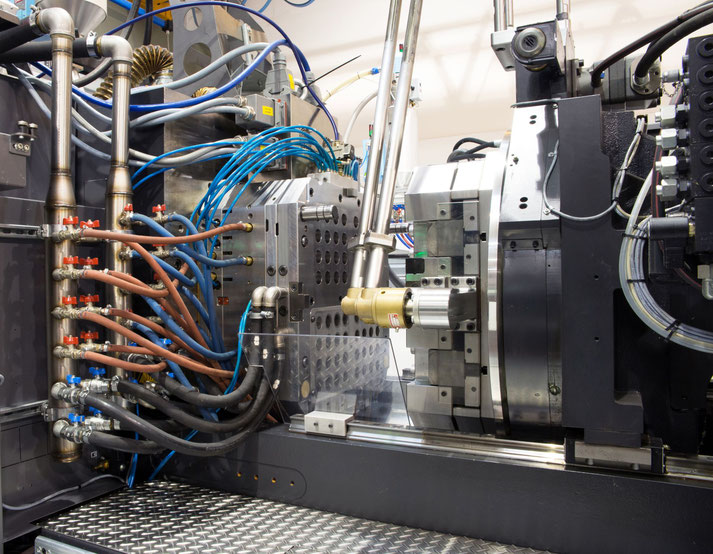
Dismantling and reassembly of a plant succeed when every component gets a number, a photo and a place in the crate as it is released – because at the destination everything has to fit together again without anyone guessing.
The plant is not going away; it is to continue running somewhere else. An injection moulding machine goes to a sister plant, a storage lift moves to another hall, a robot cell is integrated into a new line. Anyone who has a plant dismantled in order to rebuild it has a different problem from removal: nothing may be lost – no bolt, no dowel pin, no setting, no information.
That is exactly where reassemblies fail. Not at the lifting equipment, but at a crate with forty unlabelled cables, at a shim nobody photographed, at a setting value that only the fitter knew who is now on another site. Dismantling a machine is therefore above all documentation work with tools in hand.
This guide goes deeper than our foundation article on industrial dismantling and plant removal for the case where the plant is to run again afterwards: dismantling plan, labelling, photo documentation, utilities, packaging and reassembly through to the trial run. You will not find prices or time estimates – both follow from the plant, the dismantling depth and the transport route.
Key points at a glance
- In dismantling and reassembly, the plant is to run again at the end – so as little as possible is disassembled and everything that is released is documented.
- The dismantling plan defines assemblies, sequence, interfaces, utilities and packaging units – in reverse of the installation sequence, before the first move.
- Every component, every cable and every line receives a number that outlasts transport and interim storage; dowel pins and shims stay with their assembly.
- Photographs are taken before releasing: the plant as a whole, every interface, every cable run, every setting dimension – with photo number in the assembly list.
- Oil, cooling water and compressed air are drained, collected and disposed of according to regulations; bare surfaces are preserved, openings sealed.
- Packaging and transport securing depend on route and destination: crate, corrosion protection, centre of gravity marking, and for export wooden packaging according to the import rules.
- Reassembly follows the documentation: align, torques as specified by the manufacturer, mechanical trial run – electrics, software and release remain with the electrical contractor and manufacturer.
What is dismantling and reassembly?
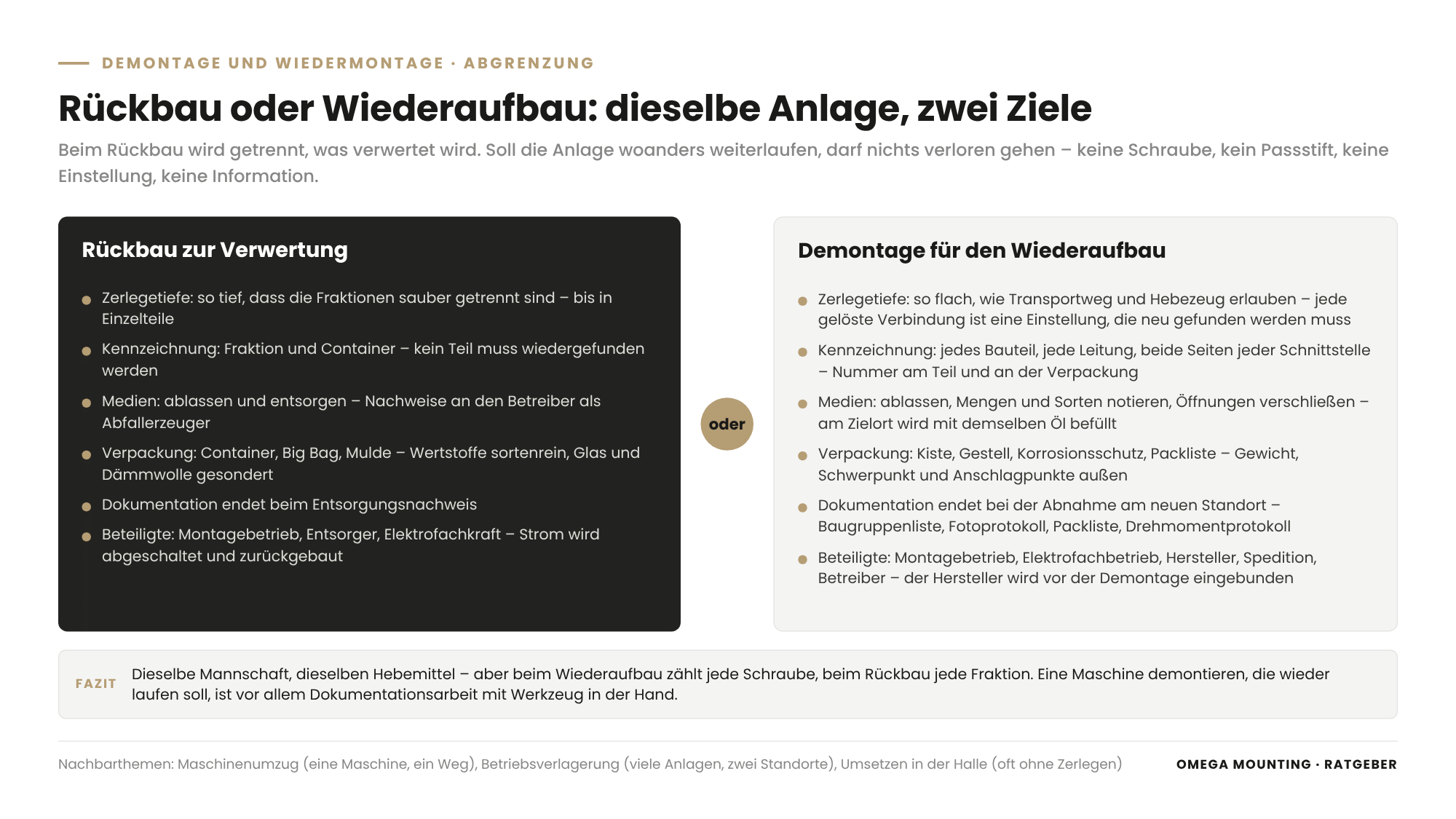
Dismantling and reassembly is the planned disassembly of a machine or plant into transportable assemblies and its reassembly at another location – with the aim that the plant then runs as it did before.
The difference from removal lies in the goal. In removal, what is to be recycled is separated; documentation ends with the disposal certificate. Here, it only ends with acceptance at the new site – that changes dismantling depth, labelling, packaging and sequence. What we contribute to both is shown on our service page on industrial dismantling and plant removal.
| Characteristic | Removal for recycling. | Dismantling for reassembly. |
|---|---|---|
| Dismantling depth. | Deep enough for the fractions to be cleanly separated. | As shallow as transport route and lifting equipment allow. |
| Labelling. | Fraction and container. | Every component, every line, both sides of every interface. |
| Utilities. | Drain and dispose. | Drain, record quantities and grades, seal openings. |
| Packaging. | Container, big bag, skip. | Crate, frame, corrosion protection, packing list. |
| Documentation ends. | With the disposal certificate. | At acceptance at the new site. |
| Parties involved. | Installation contractor, waste disposal company, qualified electrician. | Installation contractor, electrical contractor, manufacturer, haulier, operator. |
Three neighbouring topics delimit the subject:
- Machinery relocation. One machine, one route, one window – the seven phases are described in the guide on machinery relocation by a contractor; disassembly and reassembly are two of them there, here they are the topic.
- Plant relocation. Many machines, two sites, sequence and buffer stock – see the guide on planning a plant relocation.
- Relocating within the hall. A few metres further, often without disassembly – see the guide on relocating a machine within the hall.
Whether dismantling a press or dismantling an entire line: the procedure is the same, only the number of assemblies grows.
The dismantling plan: sequence in reverse, assemblies instead of individual parts
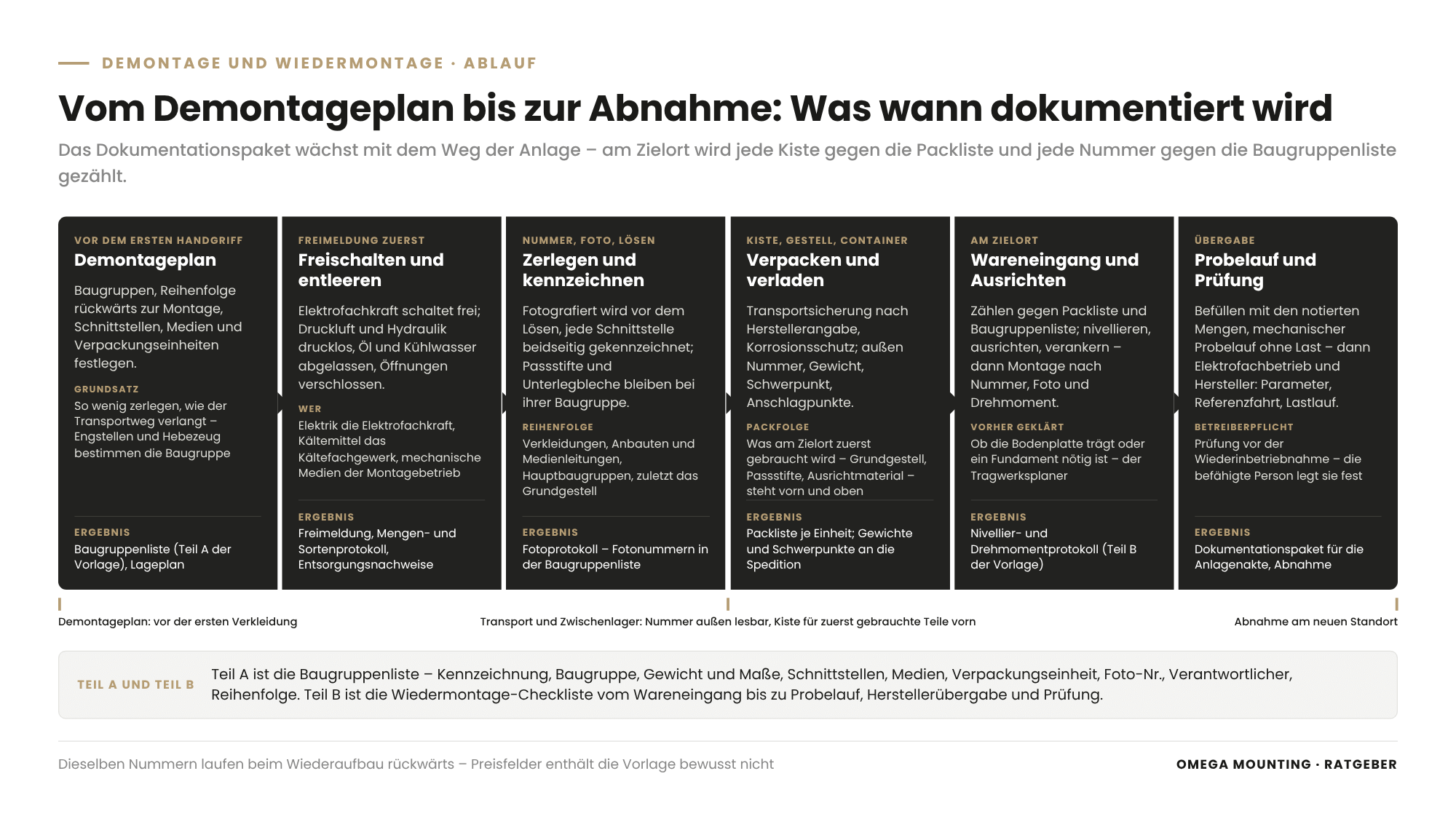
Before the first move, the dismantling plan defines into which assemblies the plant is disassembled, in which sequence, at which interfaces it is separated, which utilities have to come out beforehand and into which packaging unit each assembly goes.
Assemblies instead of individual parts
The first principle is: disassemble as little as the transport route requires. Every released connection is a setting that has to be found again at the destination. During the relocation of six storage lifts in Frankfurt disassembly went only as far as necessary – three interior doors set the maximum dimension of each assembly. Near Fulda, an industrial robot of around 600 kilograms left its cell in one piece.
Two things determine the size of the assemblies. First, the pinch points of the route: door, gate, stairs, lift, container opening, loading area. Second, weight, centre of gravity and lifting equipment: what the overhead crane or mini crane can safely lift and sling stays together – how round slings, chains and spreader beams are chosen for this is in the guide on lifting accessories for heavy loads.
Sequence in reverse of installation
What was installed last comes off first: panels and peripherals, then attachments and utility lines, then the main assemblies, finally the base frame. During the dismantling of an office container that meant: electrics, floor, supply lines and air conditioning, roof of sandwich panels, side walls – disassembled in that order and reassembled elsewhere during live operations. The sequence is numbered; the same numbers run backwards during reassembly. It is also about stability: every released component hangs from the lifting equipment or is supported before the last connection is released – with lift plan, responsible person and release, as in the guide on the appointed person for lifting operations .
Defining interfaces
An interface is the point at which separation takes place: flange, connector, coupling, bolted connection, hose connection. Welds are not separated – otherwise dismantling becomes a conversion. For every interface, the dismantling plan records: type of connection, counterpart, labelling of both sides, seal or cap, and who separates it. Electrical interfaces are separated by the qualified electrician, hydraulic ones by the fitter after depressurising.
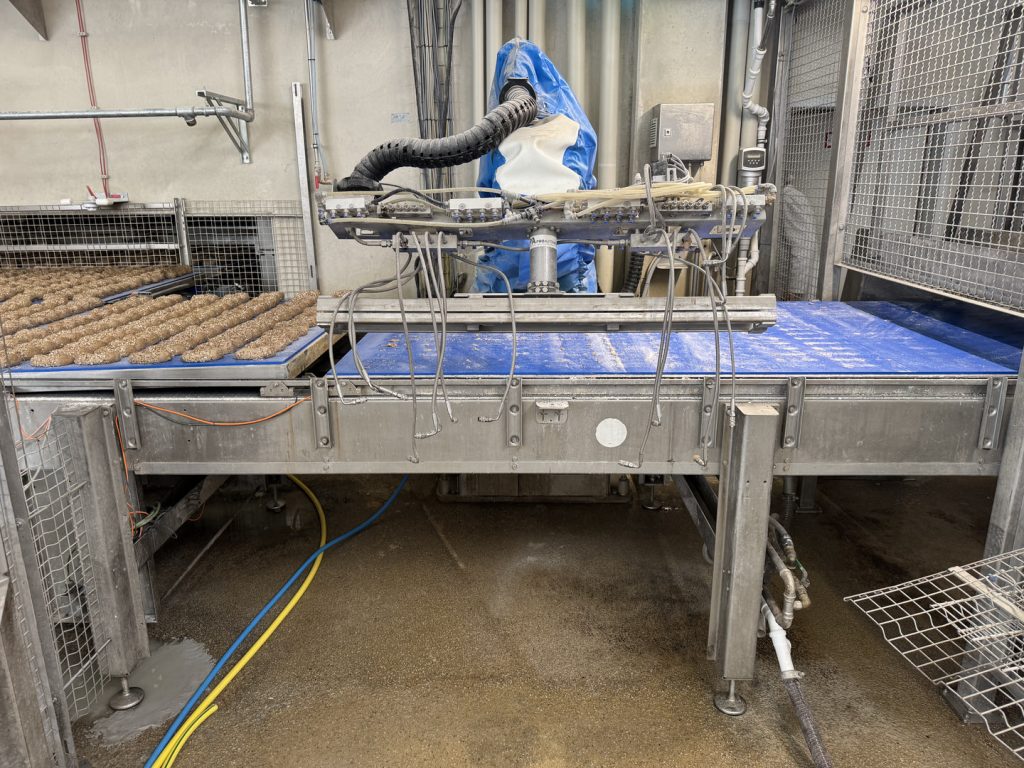
The most important interface is often the one to the neighbouring plant. During the removal of an industrial robot at a bakery near Fulda the robot was tied into the plant's control system; instead of disconnecting it, the bus system was bypassed so that the rest of the line kept running. Anyone taking a plant out of an interlinked system clarifies beforehand what the neighbours will notice.
The assembly list
The result of the dismantling plan is an assembly list that accompanies every part from dismantling to acceptance.
| Column | What is entered |
|---|---|
| Labelling. | Plant, assembly, position – the number on the part. |
| Assembly. | Designation as in the operating instructions. |
| Weight and dimensions. | From nameplate, manufacturer's data or weighing. |
| Interfaces. | Released connections with counterpart. |
| Utilities. | What is drained or disconnected beforehand, with quantity and grade. |
| Packaging unit. | Crate, pallet, frame or container with number. |
| Photo no. | The photos of this assembly. |
| Responsible person. | Fitter, qualified electrician, manufacturer or operator. |
| Sequence. | Number for dismantling and reassembly. |
Labelling: a numbering system that survives transport and interim storage
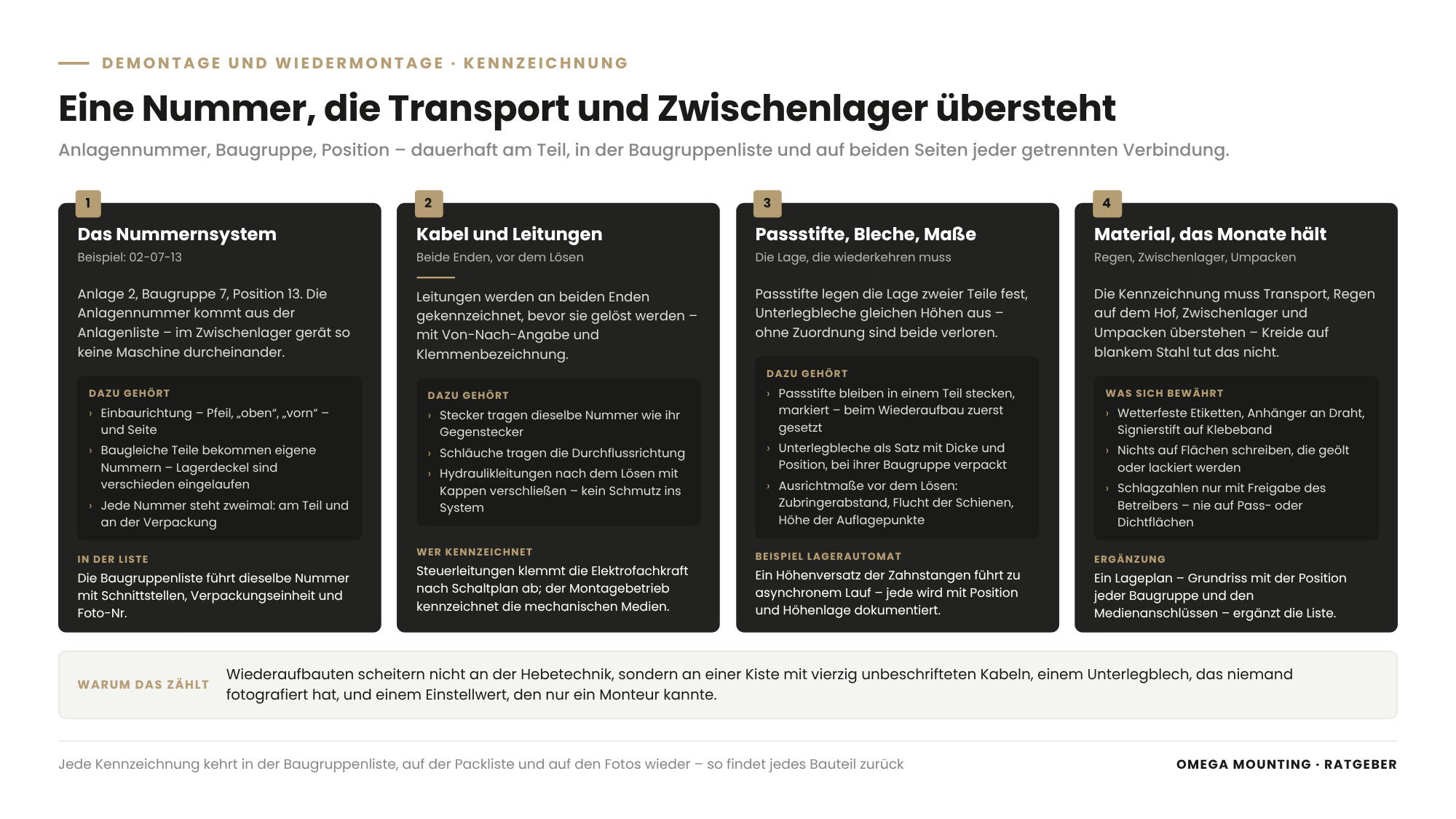
Every component receives a label made up of plant number, assembly and position, which stays permanently on the part, is in the assembly list and recurs on both sides of every separated connection.
The numbering system
An example: 02-07-13 means plant 2, assembly 7, position 13. In a relocation, the plant number comes from the plant list so that no two machines get mixed up in interim storage. Added to that are installation direction (arrow, “top”, “front”) and side. Identical parts still get their own numbers – two bearing caps look the same but have run in differently.
Labelling during dismantling has to survive months – transport, rain in the yard, interim storage, repacking. Hence: weatherproof labels, tags on wire, marker pen on tape instead of chalk on bare steel. Nothing is written on surfaces that will be oiled or painted; stamped numbers only with the operator's approval and never on fitting or sealing surfaces. Every number appears twice: on the part and on the packaging.
Cables and lines
Lines are labelled at both ends before they are released – with from-to designation and terminal designation. Connectors receive the same number as their mating connector; hoses carry the flow direction. Hydraulic lines are capped after release so that no dirt gets into the system. Control cables are disconnected by the qualified electrician according to the circuit diagram, who documents the terminal assignment; the installation contractor labels the mechanical utilities.
Dowel pins, shims, layout plans
Dowel pins fix the position of two parts relative to each other. They stay in one of the two parts and are marked so that they are set first during reassembly. Shims – thin levelling plates under machine feet or between assemblies – are bundled as a set, labelled with thickness and position and packed with their assembly. Alignment dimensions are recorded before releasing: distance to the feeder, alignment of the rails, height of the support points. On the storage lift, even a height offset of the racks leads to asynchronous running and tilted trays – which is why every rack is documented with position and height. A layout plan complements the list: a floor plan with the position of every assembly and the utility connections.
Photo documentation: what is photographed before every bolt is released
Photographs are taken before releasing, not after: the plant as a whole, every interface with visible labelling, every cable and hose run, every setting dimension with measuring instrument in the picture – and every photo gets a number that is in the assembly list.
Four levels
- Overall view. The plant from four sides, plus neighbouring plant, utility supplies, floor fixings, guard fences.
- Assembly. Every assembly before releasing, with labelling in the picture and its connections to the neighbouring assembly.
- Interface. The connection in detail: seal, cable route, hose run, clamps, earthing straps, position of the bolts.
- Setting. Dial gauge, tape measure, scale or display in the picture – the dimension that must be right during reassembly.
Photo numbers and order
A photo without assignment is worthless after three months. That is why the label is in the picture in every shot, and the files are filed by assembly. The assembly list carries the photo numbers, the packing list refers to them, and the operator receives a copy before the crates leave the premises. The photos are taken by the fitter who releases – not by someone who comes by an hour later.
Securing setting values through the manufacturer
What is in the control system is backed up by the manufacturer or the electrical contractor: parameters, reference points, software version, safety configuration, data backup. The installation contractor photographs displays and scales and notes mechanical setting values – preload, stops, levelling, belt tension. Photo documentation also includes the condition before transport: wear, damage, missing parts. How a condition assessment is structured is shown in the guide on inspecting a used machine.
Draining, preserving and disposing of utilities
Before the first mechanical connection is released, the plant is isolated, depressurised, drained and secured against reconnection – and what comes out is collected, labelled and disposed of according to regulations or kept for reassembly.
Isolating
Electrical isolation is carried out by the qualified electrician according to the five safety rules of electrical engineering; only their clearance releases the plant for mechanical work. Compressed air and hydraulics are depressurised, accumulators discharged, springs and counterweights secured, lifting axes supported. Lock and tag secure against reconnection – see the guide on lockout and tagout in maintenance.
Oil, cooling water, compressed air
Hydraulic oil, gear oil and coolant are drained into suitable containers; quantities and grades are recorded so that the same oil is used for filling at the destination. Waste oil is disposed of under the German Waste Oil Ordinance, coolant as hazardous waste; the certificates go to the operator as the waste producer. Water circuits are drained and blown out – standing water corrodes coolers and pumps and freezes in winter storage. Compressed air lines are drained, condensate released. Refrigerant is extracted exclusively by the certified refrigeration specialist. Every drain point has its container, not a drop ends up on the floor – the same discipline as in a Test rig conversion with an oil pan, where drain cocks with hoses lead directly into a container.
Preserving and sealing
Bare guideways, spindles, piston rods and flange faces are oiled or waxed. Open connections receive caps or blind flanges. Control cabinets stay closed and dry, with desiccant for longer storage. The longer the assemblies wait between disassembly and reassembly, the closer the packaging comes to decommissioning – the measures for that are in the guide on decommissioning and preserving a machine.
Packaging and transport securing: crate, corrosion protection, centre of gravity
Packaging and transport securing depend on assembly, transport route and destination – from the pallet with film for the lorry to the neighbouring plant to the wooden crate with corrosion protection for the sea container.
Transport securing on the assembly
Moving axes, slides, doors and hoods are locked as specified by the manufacturer; many manufacturers supply transport locks, and what is missing is supplemented by the installation contractor with timber baulks, ratchet straps and retaining brackets. Loose parts are removed or lashed down; sensitive components – control systems, screens, sensors, measuring systems – are packed separately and padded.
Packaging units and packing list
Every packaging unit – crate, pallet, frame, container – carries on the outside a number, its weight, the centre of gravity marking and the lifting points. Small parts are packed by assembly in labelled bags, never collected in a bucket. The packing list per unit names all the labels inside. Packing follows the installation sequence: what is needed first at the destination – base frame, alignment material, dowel pins – is at the front and on top. Loading follows the guide on Load securing for heavy goods: weight, centre of gravity and lifting points per unit go to the haulier.
Corrosion protection and export packaging
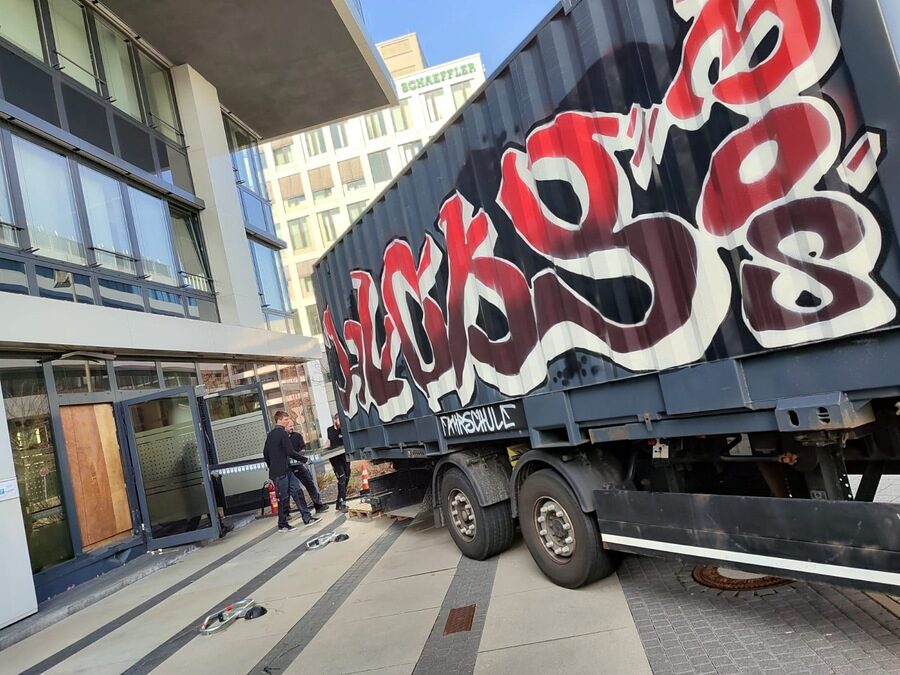
For storage periods of weeks and for every sea freight, corrosion protection goes into the crate: protective film, desiccant, sealed inner packaging. For the export packaging of a machine, the following also applies: wooden crates and pallets must comply with the international standard for wood packaging (ISPM 15) – treated and marked. Customs and import papers are clarified by your haulier or customs agent, not by the installation contractor. During the relocation of an injection moulding machine a packaging company packed the parts in wooden crates and containers for overseas; our job was disassembling, lifting and handing over – with labelling that still had to be legible on the other side of the world.
Dismantling and reassembly: rebuilding in reverse order
Reassembly follows the assembly list backwards: set, level and align the base frame, install assemblies by numbers and photos, tighten bolts to the torques specified by the manufacturer, fill utilities, commission mechanically – and only then hand over to the electrical contractor and manufacturer.
Goods receipt and installation
At the destination, counting comes first: every packaging unit against the packing list, every label against the assembly list, every transport damage against the condition photos. What is missing is noticed now – not when the plant is half assembled. Then the base frame is set on the prepared floor; whether the floor slab bears the load or a foundation is needed is clarified beforehand by the structural engineer – see the guide on planning a move-in with floor load.
Alignment before everything else
Levelling is done with a machinist's level or laser, alignment to feeders, rails and neighbouring plant, anchoring only afterwards. During the reassembly of the storage lifts in Rodgau, racks, gears, guides and shafts were surveyed and levelled before the sensors were fitted – because sensors only report what is mechanically correct. The procedures are described in the guide on aligning and anchoring machines.
Installation by number, photo and torque
The assemblies go into place in reverse numerical order: dowel pins first, then the bolts, shims as documented. Bolts are tightened with a torque wrench to the manufacturer's specification and recorded in the torque record; seals, lock nuts and split pins are renewed. Lines follow their from-to labelling, hoses their flow direction. The photos lie alongside – for comparison at every interface, not just for reference in case of doubt.
Filling, trial run, handover
Utilities are filled with the recorded quantities and grades, hydraulics bled, leak-tightness checked. The mechanical trial run checks without load whether everything runs freely: axes turned by hand, end positions approached, protective devices closed. Then the electrical contractor and manufacturer take over: direction of rotation, parameters, reference run, safety functions, load run – documented as in the guide on commissioning and handover of a plant.
A plant whose safety depends on the installation is inspected under the BetrSichV (German Industrial Safety Ordinance) before recommissioning at the new site – that is an operator duty, and the competent person defines the inspection. The guide on inspection obligations for operators sets out which inspection applies to which plant. A note on the Machinery Regulation (EU) 2023/1230, which applies from 20 January 2027: anyone who leaves a machine unchanged when relocating or reassembling it does not substantially modify it; anyone who changes control system, protective devices or function clarifies beforehand with the manufacturer or an expert whether a substantial modification exists. This guide is no substitute for legal advice – it tells you which question you should ask before reassembly.
What the installation contractor does not do: electrics, software, manufacturer release
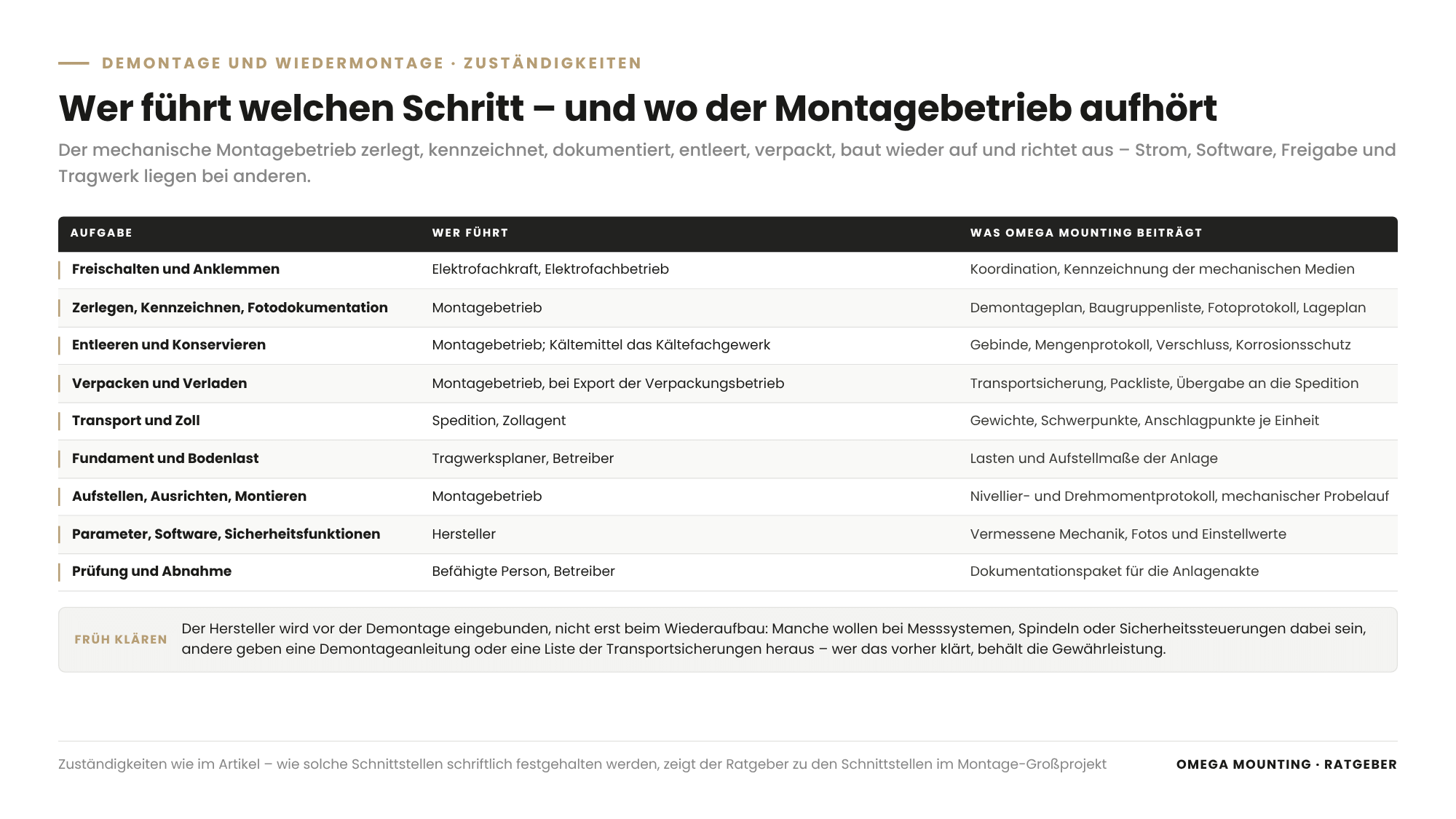
The mechanical installation contractor disassembles, labels, documents, drains, packs, reassembles and aligns – disconnecting and reconnecting the electrical installation is done by the electrical contractor, software, parameters and release by the manufacturer, structure and foundation by the structural engineer.
| Task | Who leads | What Omega Mounting contributes |
|---|---|---|
| Isolating and reconnecting. | Qualified electrician, electrical contractor. | Coordination, labelling of the mechanical utilities. |
| Disassembling, labelling, photo documentation. | Installation contractor. | Dismantling plan, assembly list, photo record, layout plan. |
| Draining and preserving. | Installation contractor; refrigerant by the refrigeration specialist. | Containers, quantity record, sealing, corrosion protection. |
| Packing and loading. | Installation contractor; for export the packaging company. | Transport securing, packing list, handover to the haulier. |
| Transport and customs. | Haulier, customs agent. | Weights, centres of gravity, lifting points per unit. |
| Foundation and floor load. | Structural engineer, operator. | Loads and installation dimensions of the plant. |
| Installing, aligning, assembling. | Installation contractor. | Levelling and torque record, mechanical trial run. |
| Parameters, software, safety functions. | Manufacturer. | Surveyed mechanics, photos and setting values. |
| Inspection and acceptance. | Competent person, operator. | Documentation package for the plant file. |
The manufacturer is involved early – before dismantling, not only at reassembly. Some manufacturers insist on being present for certain assemblies: measuring systems, spindles, safety controllers; others issue dismantling instructions or a list of transport locks. Anyone who clarifies this beforehand keeps the warranty and spares themselves the discussion about who releases the reassembly of the machine. How such interfaces are recorded in writing is shown in the guide on interfaces in large installation projects.
Rhine-Main: where we dismantle and reassemble plant
In the Rhine-Main region, we dismantle and reassemble plant between Frankfurt, Hanau, Darmstadt and Aschaffenburg – in production halls, logistics centres and office buildings, often while work continues next door.
Distances are short: from Rodgau, Offenbach, Dietzenbach and Rüsselsheim are quickly reached, for the site visit as well as for the assembly that still needs an auxiliary frame. Our workshop in Rodgau makes transport frames, adapters for lifting points and protective frames – what the manufacturer does not supply for transport. The six storage lifts from Frankfurt were reassembled and surveyed in a hall in Rodgau.
Typical for the region is dismantling during live operations: the neighbouring machine is producing, the forklift route stays open, the load area is cordoned off, the window is the weekend. In cramped halls, the mini crane does the lifting – what a spider crane can do is explained on our knowledge-base page; the basic rules for working alongside running production are in the guide on Maintenance during live operations.
How we do it in practice
Five jobs from our project diary show how we set up a dismantling for reassembly – and one shows, for comparison, what a removal looks like.
Injection moulding machine: around 500 tonnes in crates and containers
During the relocation of an injection moulding machine six fitters disassembled around 500 tonnes of material over three weekends – machine, guarding, removal robot, conveyor belts; the heaviest part was the moving platen at 95 tonnes. Smaller assemblies went via overhead crane and forklift; for the machine bed and platens, a lifting system of the 100-tonne class was used while the neighbouring machines continued producing. A packaging company packed everything in wooden crates and containers for overseas; the customer handled the reassembly. For your project, this means: the labelling must be good enough for a different crew on a different continent to rebuild with it.
Storage lifts: labelled, photographed, re-surveyed in Rodgau
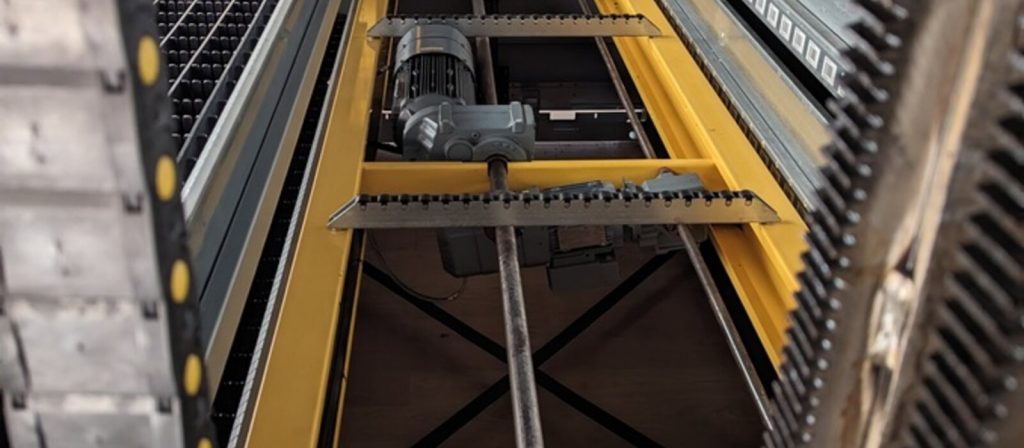
During the relocation of six storage lifts from an office building near Frankfurt Airport three interior doors and a parquet floor determined the dismantling plan: disassemble as far as necessary, dollies and muscle power only, every component labelled, photographed and documented; six fitters were on site for the loading. In Rodgau, racks, gears, guides and shafts were surveyed and levelled; then the manufacturer adjusted the sensors, taught the heights, installed the software update and accepted. For your project, this means: the boundary between mechanics and control system was fixed beforehand.
Robot cell near Fulda: in one piece and with the bus system bypassed
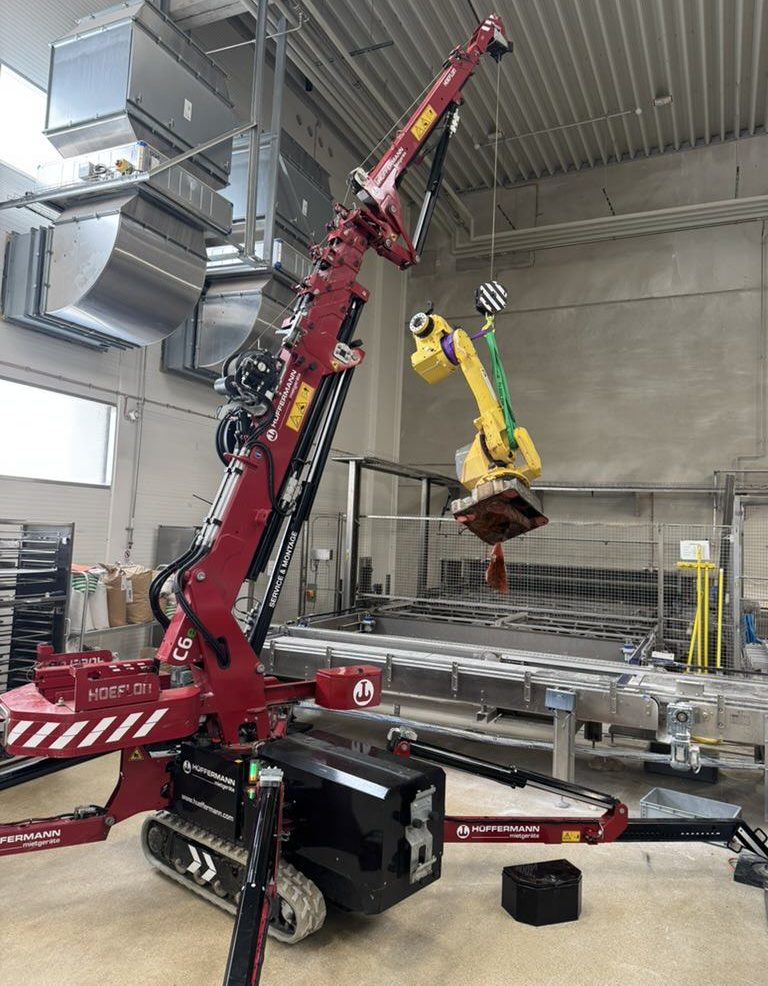
During the removal of an industrial robot at a bakery near Fulda weight calculation, risk assessment and lift plan came before the first move. Two mechatronics technicians disconnected power, water and compressed air and bypassed the bus system; a lifting manager and a crane operator lifted the robot of around 600 kilograms in one piece over the production line with the mini crane, slung with certified round slings. The base was too heavy for a direct lift and was first pulled forward under the conveyor belt; the removal took one day. For your project, this means: what fits through the hall in one piece stays in one piece – and still gets a number and photos.
Office container and paternoster: reassembly and removal compared
During the dismantling of an office container a production office was disassembled during live operations in a fixed sequence – electrics, floor, supply lines and air conditioning, roof, side walls – and reassembled elsewhere. During the dismantling of a paternoster storage unit and a hall office the goal was removal: power switched off and removed, side panels set down with forklift and round slings and driven out of the hall on dollies, glass and insulation wool separated, recyclables sorted by type into containers and big bags. For your project, this means: the same crew, the same lifting equipment – but in reassembly every bolt counts, in removal every fraction.
Test rig: converting hydraulics, collecting oil
During the Test rig conversion with an oil pan two fitters adapted the hydraulic lines of a servo-hydraulic test rig with angle fittings in three days and welded a leak-tight collection pan around the concrete foundation. No dismantling, but the same discipline at the interface that demands the most care: hydraulics depressurised, lines labelled, oil collected. Anyone who has the utilities under control has half the dismantling done.
Is a plant at your site to be disassembled that has to run again afterwards?
Then get in touch with us. Send us the plant type, operating instructions, the transport route with pinch points and the destination country. During a site visit in the Rhine-Main region, we define assemblies and interfaces with you and tell you honestly what can stay together.
What this means for your role
For buyers: Award dismantling and reassembly to the same installation contractor wherever possible – whoever disassembles knows their own labelling. Ask for the documentation package: assembly list, photo record, packing list, torque record. A quotation that names dismantling depth, interfaces and the boundary to the manufacturer is comparable; a “lump sum” one is not – see the guide on commissioning industrial installation.
For designers: Provide the pinch points of both sites with dimensions, the floor at the destination with loads and foundations, and the position of the utility connections. Whoever plans the transport route plans the assembly size – and thus the dismantling depth.
For project managers and site managers: As project manager, you hold the chain of dates between electrical contractor, installation contractor, haulier and manufacturer – clearance before disassembly, foundation before arrival, manufacturer for commissioning. As site manager, you release the load area, check the isolation, countersign the packing list and accept the goods receipt at the destination against the assembly list.
For maintenance managers: You know the plant best: weak points, setting values, spare parts. Use the dismantling for a condition assessment and replace wear parts while the assemblies are exposed. The plant file at the new site begins with the documentation package from the dismantling.
For warehouse and logistics managers: Interim storage is your part of the project: dry, accessible, sorted by packing list, with room for the forklift. If crates are moved, the number stays legible on the outside – and the crate needed first stands at the front.
For manufacturers and system builders looking for an installation partner: We work as a mechanical installation partner on behalf of manufacturers – with your dismantling instructions, your transport locks and your tolerances. You keep control system, parameters and release; we deliver mechanics, documentation and a plant that stands surveyed on the foundation when your service technician arrives.
Dismantling plan template: template on request
The dismantling plan template is a two-page working aid for project managers and maintenance managers. Part A is the assembly list with the columns labelling, assembly, weight and dimensions, interfaces, utilities, packaging unit, photo no., responsible person and sequence. Part B is the reassembly checklist from goods receipt through alignment, torques, lines and filling to trial run, manufacturer handover and inspection before recommissioning. It deliberately contains no price fields. Request the template via our Contact form – quoting the keyword “Dismantling plan template”.
Why Omega Mounting?
We are based in Rodgau near Frankfurt, reachable via our 24-hour hotline, and have our own workshop that makes transport frames, adapters and protective frames. The linked jobs show our way of working: around 500 tonnes of injection moulding machine in crates and containers, six storage lifts labelled and photographed to Rodgau, a robot in one piece out of a running bakery, an office container reassembled in a fixed sequence. We disassemble as little as possible, document as much as necessary and know the boundary to the electrical contractor and manufacturer. For you this means: a single point of contact from the dismantling plan to the mechanical trial run, installation, lifting and workshop from a single source – and short distances in the Rhine-Main region.
Conclusion
Dismantling and reassembly of a plant are a documentation project with lifting equipment. The dismantling plan defines assemblies, sequence, interfaces and packaging units before the first panel comes off. Every component gets a number that survives transport and interim storage; every interface is photographed before it is released; utilities are collected, recorded and disposed of. Reassembly follows the list backwards – align, torques, trial run – and ends at the boundary to the electrical contractor and manufacturer. If a plant at your site is to be disassembled that has to run again afterwards, send us the plant type, transport route and destination – we will get back to you with a site visit date and an honest assessment.
Planning maintenance, moving in or installation in the Rhine-Main region?
Tell us briefly what it is about – we will come back to you with an honest assessment.
100% free and without obligation
You may also be interested in these guides

About the author
Tobias Schott
Managing director of Omega Mounting GmbH, Rodgau · more than 20 years of hands-on experience in installation and maintenance
A trained mechatronics technician, at home in maintenance, servicing and industrial installation since 2004 – first at his father's side, since 2012 with Omega Mounting: from the overhead conveyor in Frankfurt to the crane system in a new-build hall. Plans and leads lifting operations as appointed person in data centers and on industrial sites in the Rhine-Main region, is an instructor and examiner for cranes, mobile elevating work platforms and telehandlers, and a safety officer. On jobs abroad he is known as the “German Troubleshooter” – the one you call when things get stuck on site. He learned what quality means not from a manual but from his father: Made in Germany as a standard for his own work, not as a label. That is why it comes first at Omega Mounting – before speed and before price. He writes these guides from that practice: what works on our sites is in them – what only exists in the standard is not.
Frequently asked questions
An industrial installation contractor with its own lifting equipment, its own installation supervision and experience with heavy assemblies – together with an electrical contractor for isolation, a haulier for transport and, for export, a packaging company. During the relocation of an injection moulding machine, we disassembled around 500 tonnes of material over three weekends and lifted the 95-tonne moving platen with a lifting system of the 100-tonne class while the neighbouring machines kept running. Ask for the dismantling plan, lift plan and labelling system – not just the crane size.
That depends on dismantling depth, number of interfaces, utilities in the plant, lifting equipment and whether production continues next door. An assembly that fits through the gate in one piece is out quickly; a plant that has to be broken down into individual parts because of interior doors takes many times longer – and the documentation takes its own time. A reliable duration is only available after the site visit.
That cannot be said seriously without a site visit. The effort depends on dismantling depth, weight and lifting equipment, number of interfaces and utilities, type of packaging and transport route, duration of interim storage, manufacturer involvement and whether work is done during the day, at night or at the weekend. Costs also arise with the electrical contractor, the haulier and disposal – these items should be shown separately.
The packaging and the papers. Wooden crates and pallets must comply with the international standard for wood packaging, the crate needs corrosion protection for sea freight and long storage periods, and every crate needs a packing list with weight and contents. The labelling must be readable by a crew that has never seen the plant – unambiguous, language-independent, with photos. Customs and import are clarified by your haulier or customs agent.
Nobody alone – the responsibility is shared. The installation contractor owes the mechanical service: disassembled, labelled, documented, reassembled as specified by the manufacturer, aligned and mechanically commissioned, with records. The manufacturer releases control system, parameters and safety functions and is usually a prerequisite for the warranty; the electrical contractor is responsible for the connection, the operator for the inspection before recommissioning. This boundary should be recorded in writing before dismantling.
Mechanically yes, in most cases. The installation contractor disassembles according to operating instructions, dismantling plan and photo documentation, even without a manufacturer's technician. There are limits with assemblies that the manufacturer reserves for its own service – measuring systems, spindles, safety controllers – and at commissioning: parameters, software version and release lie with the manufacturer, and without them the warranty may end. Clarify this before dismantling, not after reassembly.
From Rodgau, we take on dismantling and reassembly of machines and plant in Frankfurt, Offenbach, Hanau, Darmstadt, Aschaffenburg and the rest of the Rhine-Main region – with our own lifting equipment, our own installation supervision and a workshop for transport frames and adapters. We reassembled and surveyed the six storage lifts from Frankfurt in Rodgau.
Yes, dismantling plan, labelling and photo documentation are the same in every sector. What differs are the boundary conditions: in the data center, dust protection and access count; in logistics, the window next to running conveyor technology; in the food business, hygiene – at the bakery near Fulda, the crew worked throughout with hairnets and face masks, including during crane and welding work. The documentation does not change; the operator's induction is added.
Before the first component is released, the plant is isolated, depressurised, drained and secured against reconnection; stored energies – springs, counterweights, accumulators, raised axes – are discharged or secured. Every lift has a lift plan and a responsible person, nobody stands under the load, lifting accessories are inspected, the load area is cordoned off. The risk assessment is drawn up for this dismantling; after reassembly, a competent person inspects before the plant produces again.
With a short enquiry containing three details: plant type with operating instructions or nameplate, transport route with pinch points at both sites, and destination with preferred period. We arrange a site visit in the Rhine-Main region, define assemblies and interfaces with you and the manufacturer and send you a written assessment with a dismantling plan. Your contact is Tobias Schott – reachable via our Contact form.
 English
 German